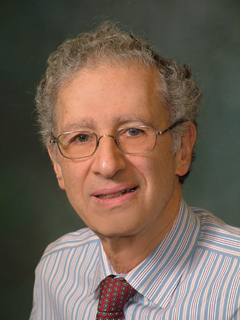
Jonathan L. Gross is a Professor of Computer Science at Columbia University, with a joint appointment in the School of Engineering and Applied Science. He previously held a position at Princeton University, where he worked with Ralph Fox, and earned his Ph.D. in 3-dimensional topology from Dartmouth College, solving a problem posed by John Milnor. His undergraduate studies were at MIT. His research spans topological graph theory, knot theory, computer graphics, and mathematical models for social anthropology. Notable contributions include the voltage graph construction for graph imbeddings and foundational work on enumerative techniques in topological graph theory. He has authored/co-authored influential books such as Topological Graph Theory and Graph Theory and Its Applications . Research Interests: Genus polynomials, Celtic knots, woven shapes, voltage graphs, grid-group theory, 3-manifold topology. Teaching: Courses include Graph Theory (COMS 4203), Combinatorial Theory (COMS 4205), and Topics in Graph Theory (COMS 6204). Recognition: Alfred P. Sloan Fellowship, IBM Postdoctoral Fellowship, and the Columbia Great Teacher Award. His work bridges pure mathematics and applied domains, including collaborations with artists and computer scientists on weaving algorithms and 3D modeling tools. He has developed software for performance evaluation and reusable software design at Bell Labs and IBM.
Jose Navarro Salas is a Professor in the Department of Theoretical Physics at the Faculty of Physics, University of Valencia. He is affiliated with the Institute of Corpuscular Physics (IFIC) and leads research in the QBHSC group focused on Quantum Black Holes, Supergravity, and Cosmology. His academic career is deeply rooted in mathematical and theoretical physics, with a PhD from the University of Valencia in 1989. His research interests span Theoretical Physics , Quantum Gravity , Black Hole Physics , Supergravity , Cosmology , and String Theory . His work often bridges quantum field theory in curved spacetime with gravitational phenomena, particularly in low-dimensional models and holography. The analysis of his recent publications reveals a strong focus on black hole thermodynamics, AdS/CFT correspondence, quantum anomalies, and the role of the Planck scale in gravitational phenomena. His work contributes significantly to understanding Hawking radiation, entropy, and quantum evolution in extremal and near-extremal black holes. He has received no explicitly mentioned scientific awards in the provided texts, but his extensive publication record in top journals like Nuclear Physics B , Classical and Quantum Gravity , and Physical Review Letters underscores his scholarly impact. Navarro Salas has collaborated with prominent physicists such as Iván Agulló, Alessandro Fabbri, Victor Aldaya, and Leonard Parker. While specific advisees are not listed, his long-standing position and research activity suggest mentorship roles. He has no known part-time appointments and is actively contributing to theoretical physics. He is a member of the QBHSC research group and affiliated with IFIC, a joint center of the University of Valencia and CSIC, indicating strong institutional support for collaborative and interdisciplinary research in fundamental physics.
Richard Cole is a Silver Professor of Computer Science at the Courant Institute of Mathematical Sciences, New York University. His research focuses on algorithm design and analysis, with a current emphasis on algorithmic economic market theory and game theory. He has held academic positions at NYU since 1982, including roles as department chair and interim director. Cole's work spans theoretical computer science, parallel algorithms, and string/pattern matching. He has authored over 100 papers and holds awards such as the Guggenheim Fellowship and ACM Fellowship. Education: BA in Mathematics from University College, Oxford (1978); PhD in Computer Science from Cornell University (1982). Research Interests: Current work emphasizes algorithmic economics and game theory, building on prior contributions to string algorithms, amortization, parallelism, and network routing. His methods often integrate visualization for teaching algorithms. Awards: Guggenheim Fellow (1988-89), ACM Fellow (1998), Silver Professor (2011). Advising: Supervised numerous PhD students, including Ishan Agarwal, Yixin Tao, and Yun Kuen Cheung. Also mentored high school students in programming and theoretical projects. Labs/Teams: Active in the Courant Institute's theoretical computer science community, contributing to interdisciplinary research in economics and computation.
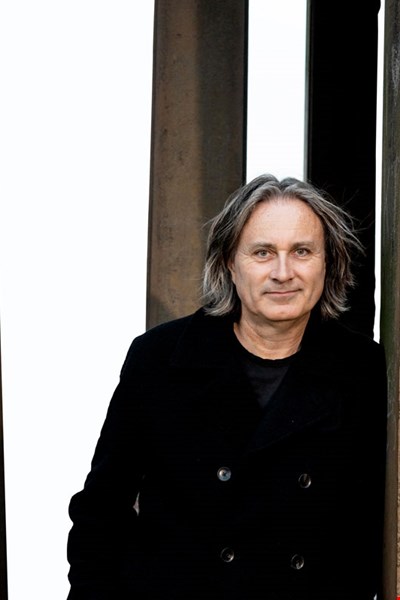
Kurt Rohde is a Professor of Music at the University of California, Davis, where he serves as a faculty composer. He is also composer-in-residence with Southwest Chamber Music in Pasadena, California, and has participated in international cultural exchange programs such as the U.S. State Department's Ascending Dragon initiative in Vietnam. University: University of California, Davis School: College of Letters and Science Department: Department of Music Role: Professor of Music, Faculty Composer Residency: Southwest Chamber Music, Pasadena Rohde’s research and creative work centers on contemporary classical composition, with deep engagement in form, repetition, narrative, and interdisciplinary collaboration. His music often draws from poetry and philosophical texts, exploring emotional and structural complexity through innovative orchestration and formal experimentation. He is particularly interested in how repetition can disorient, transform, and create new sonic pathways. His recent works, including seeking all that's still unsung (2024), The Hardest Folksongs Never Written (2023), and circling/revealing (2022), reflect a consistent exploration of fractured forms, recursive structures, and hybrid genres. These compositions span solo, chamber, vocal, and large ensemble formats, often incorporating electronics and text. His work has been commissioned by ensembles like the Lydian Quartet and supported by Chamber Music America and The Andrew W. Mellon Foundation. Commission from Chamber Music America Classical Commissioning Program Funding from The Andrew W. Mellon Foundation Rohde actively collaborates with performers and ensembles such as the Grossman Ensemble, Left Coast Chamber Ensemble, and Brooklyn Art Song Society. He mentors emerging musicians and emphasizes inclusivity and belonging in programming. He has no formal PhD or Master’s advisees listed, but his works are frequently performed by dedicated ensembles and soloists. He leads creative projects such as Newtown Odyssey , an open-air opera centered on environmental and social themes.
Armee Hong is an Instructor in Upper Strings Faculty at the University of Mississippi. She holds a Doctor of Music (DM) degree from Indiana University-Bloomington (2020). Her work focuses on music education, string instrument pedagogy, and violin performance. Education : DM in Music, Indiana University-Bloomington (2020) Her research and teaching interests include string instrument pedagogy, chamber music, and orchestral training. While no specific publications or awards are listed, her academic background and faculty role indicate expertise in music education and performance.
Yu-Fang Chen is a research professor at Academia Sinica, Taiwan, active across premier programming-languages venues such as PLDI, POPL, OOPSLA, SAS, APLAS and VMCAI. His work sits at the intersection of program verification , automata theory and constraint solving , with recent emphasis on quantum-circuit verification and string-number constraint solving . Research interests revolve around rigorous methods to ensure software reliability: developing novel automata models (level-synchronized tree automata, position-constrained string automata), building practical solvers that blend length, substring and numeric constraints, and extending automated reasoning to the quantum domain. His papers consistently introduce new decision procedures, learning algorithms and tool-chains that improve the scalability of static analysis and formal verification. Between 2017 and 2025 he (co-)authored more than a dozen peer-reviewed papers and served on over thirty program committees, including steering and organization chair roles for VMCAI 2026 and SAS 2023 . No doctoral students or funded-grant details are disclosed in the supplied sources.
John Roberts is a Teaching Assistant Professor in Media Studies at the University of Colorado Boulder and serves as Director of the CommRAP program within the Department of Media Studies. He teaches courses focused on contemporary media analysis and production. His research centers on the relationship between aesthetics and knowledge production in contemporary media, grounded in aesthetic theory, critical theory, and close formal analysis. Current work examines the 'conspiracy wall' visual trope—where investigations are depicted through string-connected collages of images and text—as a cultural phenomenon reflecting epistemological frameworks. His scholarship bridges film studies, digital media theory, and conspiracy discourse, emphasizing labor dynamics in found-footage horror and narrative construction across media forms. Roberts has published on labor and digitality in found-footage horror ( InVisible Culture ), game-playing mechanics in cinematic narration ( Hitchcock Annual ), and figurality in conspiracy theory (forthcoming Routledge collection Plots ). His work reveals interdisciplinary connections between media formalism, narrative theory, and socio-political interpretation. As Director of CommRAP, Roberts leads community media initiatives that integrate participatory research with student pedagogy, fostering public engagement through media production and critical analysis frameworks.
Sherwin T. Love is a Professor of Physics at Purdue University, where he has been a faculty member since 1984, progressing from Assistant Professor to Associate Professor and finally to Professor in 1991. His academic journey began with undergraduate and master's studies at Drexel University, where he graduated with highest honors in Physics in 1973, followed by a Ph.D. in Physics from Stanford University in 1978. Prior to joining Purdue, he held research associate positions at the University of Washington, Purdue University, Max-Planck-Institut für Physik, and Fermilab. Dr. Love's primary research interests lie in quantum field theory and its applications to elementary particle physics, with a particular focus on dynamical symmetry breaking, supersymmetric field theories, and the renormalization group. His work bridges theoretical frameworks with potential experimental implications, exploring both fundamental aspects of quantum field theory and their applications to phenomena beyond the Standard Model of particle physics. Over his career, he has made significant contributions to understanding symmetry breaking mechanisms, brane world models, holographic theories, and connections between particle physics and cosmology. His extensive publication record, spanning several decades, reveals a consistent focus on theoretical particle physics with evolving interests that have incorporated contemporary developments in the field. Early work concentrated on chiral symmetry breaking and scale invariance in quantum electrodynamics, while more recent publications explore brane world phenomenology, holographic walking technicolor, and connections between the Higgs boson, inflation, and dark matter. His research often involves collaborations with other prominent theoretical physicists, demonstrating the interdisciplinary nature of modern particle physics research. Fellow, American Physical Society, 1999 DOE Outstanding Junior Investigator, 1985-87 Monbusho (Ministry of Education, Science and Culture) of Japan Visiting Professor, 1990 Throughout his career, Dr. Love has maintained an active research program, securing funding from major agencies including the Department of Energy. His work has influenced both theoretical developments and potential experimental signatures in particle physics. While specific details of his mentoring activities are not provided in the available information, his long-standing position as a professor suggests significant contributions to educating and training the next generation of physicists.
Colin Riley is a Senior Lecturer at Brunel University London, affiliated with the Music department under the College of Business, Arts and Social Sciences. He is a composer whose work integrates new technologies, improvisation, song-writing, and large-scale classical forms, creating genre-defying music performed by leading UK ensembles like the BBC Symphony Orchestra and London Sinfonietta. His research interests focus on blending diverse stylistic approaches, with recent compositions including the concerto Warp and Weft , collaborative work In Place , and the percussion piece Rock Paper Scissors . Riley also runs the independent label Squeaky Kate, releasing his own and associated artists' works, and is active in mentoring through the Adopt A Composer Scheme. His recent articles span compositions from 2013 to 2024, covering choral cycles like It Speaks Without Answer , orchestral works like Earth Voices , and experimental chamber pieces. These works often involve commissions from organizations such as the Arts Council of England, Wellcome Foundation, and international ensembles. Riley's teaching emphasizes composition mentorship, and he leads his ensembles Homemade Orchestra and MooV. He has collaborated with artists like Bill Bruford and Michael Rosen, and his works have been performed at venues including the Purcell Room and Queen Elizabeth Hall.
Oren Weimann is a Professor in the Department of Computer Science at the University of Haifa, Faculty of Natural Sciences. His research lies at the intersection of theoretical computer science, algorithm design, and data structures, with a strong focus on planar graphs, combinatorial pattern matching, and fine-grained complexity. He has published extensively in top-tier venues such as STOC, SODA, ICALP, PODC, and ESA. Education: Ph.D., Massachusetts Institute of Technology (MIT), 2005–2009. Advisor: Erik Demaine. Dissertation: "Accelerating Dynamic Programming" Postdoc, Weizmann Institute of Science, 2009–2011. Host: David Peleg M.Sc., University of Haifa, 2004–2005. Advisor: Gad Landau. Dissertation: "Using PQ trees for Comparative Genomics" B.A., Technion – Israel Institute of Technology, 1999–2002 Oren Weimann's research centers on the design and analysis of efficient algorithms, particularly for planar and structured graphs. His work explores fundamental problems such as shortest paths, distance oracles, fault tolerance, edit distance, and pattern matching. He investigates both upper and lower bounds, often pushing the limits of what is computationally feasible under fine-grained complexity assumptions. His contributions include optimal labeling schemes, compressed data structures, and breakthroughs in dynamic and distributed graph algorithms. His recent publications reveal a consistent trend in developing highly efficient algorithms for planar graphs, with a focus on distance computation, fault tolerance, and compression. Keywords across these works include planar graphs, dynamic programming, string matching, and conditional lower bounds, reflecting a deep integration of algorithmic techniques and complexity theory. He frequently collaborates with leading researchers such as Shay Mozes, Paweł Gawrychowski, and Philip Bille. Scientific Awards: Best Paper Award, CPM 2007 Best Paper Award, ICALP 2020 (mentioned in context of work) Oren Weimann has advised numerous PhD and Master’s students, including Yaseen Abd-Elhaleem, Nathan Wallheimer, Aviv Bar-natan, and Shon Feller, whose dissertations have led to publications in major conferences. He has also mentored several postdoctoral researchers such as Shay Golan, Itai Boneh, and Panagiotis Charalampopoulos. His work has been supported by competitive research grants, though specific grant titles are not listed in the text. He has served on the program committees of key conferences including SODA, ICALP, CPM, ESA, and SPIRE, demonstrating active leadership in the theoretical computer science community. He is associated with a vibrant research group focused on algorithms and data structures, likely involving collaboration with students and postdocs on projects related to graph algorithms, string processing, and complexity. While no formal lab name is mentioned, his collaborative output suggests a strong, productive research team at the University of Haifa.
Tomohiro I is an Associate Professor in the Department of Artificial Intelligence at Kyushu Institute of Technology, Japan. He has been in this position since January 2019, following a research associate role at the same institution from 2015 to 2018. Prior to that, he held postdoctoral positions at Kyushu University and TU Dortmund, Germany. His academic foundation includes a Ph.D. in Science from Kyushu University, awarded in 2012. His research primarily centers on string algorithms , with a strong emphasis on compressed data structures , pattern matching , indexing , and algorithmic efficiency . Key interests include Lyndon factorization, Lempel-Ziv compression, palindrome matching, and reverse engineering of string data structures. He frequently collaborates with prominent researchers like Hideo Bannai and Shunsuke Inenaga, producing high-impact work in theoretical computer science. His recent publications demonstrate a consistent focus on improving algorithms for string processing in compressed formats. Work on Re-Pair , RLBWT , and SLP encoding highlights his expertise in space-efficient computation. The 2022 Best Paper Award at IWOCA for work on Lyndon subsequences underscores the quality and recognition of his contributions. His research bridges theoretical analysis with practical algorithm design. Best Paper Award, International Workshop on Combinatorial Algorithms (IWOCA) 2022 Tomohiro I advises graduate students in his laboratory, although he currently notes that the lab is not accepting new research students. His work involves significant algorithmic research, often supported by theoretical grants or institutional funding, leading to numerous publications in peer-reviewed journals and conferences. He has also presented his work in invited talks, such as at CompressedAI2025 and WCTA 2024, indicating active engagement with the research community. He leads a research laboratory at Kyushu Institute of Technology, focused on advanced string processing and compressed data structures. His team collaborates extensively on algorithm design and analysis, contributing to the broader field of combinatorial pattern matching.
Loris D'Antoni is an Associate Professor at the University of California San Diego, affiliated with the Programming Systems Group and serving as a visiting academic at AWS . Previously, he co-founded a research group at UW-Madison. His research focuses on trustworthy software through Program synthesis (e.g., SemGuS toolkit) Formal verification of machine learning and network protocols Automata theory and symbolic constraints Trustworthy LLMs with grammar alignment Recent work explores semantics-guided synthesis and unrealizability logic , with applications to decision trees, LSTMs, and network routing. Publications span top venues like PLDI , OOPSLA , NeurIPS , and CAV . Notable scientific awards include Best Paper Award at ICDCN 23 Distinguished Paper Award at SBES 21 Oral Presentation at EMNLP 21 Nomination for EAPLS Award (part of ESOP 20 ) He teaches courses in programming languages ( CS-536 ) and synthesis/verification ( CS-703 ), and actively contributes to program committees at conferences like PLDI , CAV , and POPL .
Lawrence Berkeley National LaboratoryUnited States
Geraldine Servant is a theoretical physicist with active research positions at CERN and the Institute of Theoretical Physics II at Hamburg University. She earned her PhD from Orsay, Laboratoire de Physique Théorique (LPT) in 2001 under advisor Carlos Alberto Savoy. Her research spans particle physics and cosmology with a focus on dark matter phenomena and gravitational signatures. Dr. Servant's research interests include: Dark matter physics, particularly axion and axion-like particle (ALP) models Gravitational wave signatures from cosmological phenomena Electroweak baryogenesis and composite Higgs models Kination cosmology and early universe dynamics Cosmic strings and topological defects Particle physics beyond the Standard Model Her recent publications (2021-2025) reveal a strong focus on axion dark matter production mechanisms, particularly through kinetic misalignment and fragmentation processes. She has made significant contributions to understanding how these mechanisms can open new parameter spaces for dark matter models and produce detectable gravitational signatures. Her work bridges theoretical particle physics with observational cosmology, providing testable predictions for current and future gravitational wave detectors like LISA and the Einstein Telescope. Dr. Servant maintains an extensive collaborative network across European research institutions including DESY, CERN, and various universities. She has been particularly active in the LISA Cosmology Working Group, contributing to the scientific case for space-based gravitational wave detection. Her publications appear in leading journals including Physical Review D, Journal of High Energy Physics, and Journal of Cosmology and Astroparticle Physics.
Roman Buniy is an Associate Professor in the Department of Physics at Schmid College of Science and Technology , Chapman University. His research spans quantum mechanics, high-energy physics, and topology, with a focus on superoscillations, entanglement, and knot theory applications. Education : Diploma from Ivan Franko National University of Lviv; PhD from University of Kansas Research interests include: Quantum foundations and superoscillatory phenomena Topological structures in spacetime and QCD Entanglement classification and decoherence Publications highlight interdisciplinary work connecting quantum theory, cosmology, and mathematical physics. Collaborators include T. W. Kephart, S. D. H. Hsu, and international institutions like Politecnico di Milano.
Riho Esko Maimets is a part-time Lecturer in Solfeggio and Music Theory at the Estonian Academy of Music and Theatre (EAMT), with a permanent appointment since 2014. He is also a doctoral student at EAMT under Kerri Kotta, focusing on temporality in contemporary music from a composer's perspective. Professional Artist Diploma, Curtis Institute of Music (2012–2014) Master of Music, University of Toronto (2010–2012) Bachelor of Music, EAMT (2006–2010) His research and creative work centers on contemporary music composition, exploring temporal structures, sacred themes, and interdisciplinary collaborations with choral, chamber, and orchestral forms. Recent compositions like riburadapidi (2023) and Ecdysis (2022–2023) integrate experimental temporal frameworks with diverse instrumental ensembles. Key trends in his 15 most recent works (2015–2025) include sacred music motifs ( Two Prayers to the Holy Light ), temporal experimentation ( Three Contemplations ), and collaborations with international ensembles such as the Estonian Philharmonic Chamber Choir and Kitchener-Waterloo Symphony Orchestra. First Prize, Rudolf Tobias Composition Competition (2024)