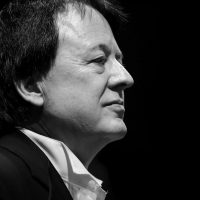
Niels Anne Jacob Obers is a Professor at the Niels Bohr Institute , University of Copenhagen, specializing in Theoretical High Energy, Astroparticle, and Gravitational Physics. He leads research in string theory, quantum field theory, and gravity, with a focus on non-relativistic gravity, holography, and higher-dimensional black holes. Education: PhD in Physics (1991) from the University of California, Berkeley, and earlier studies at Universiteit Nijmegen (cum laude Drs, 1987). His research spans AdS/CFT correspondence , black hole dynamics , non-perturbative string dualities , and non-Lorentzian geometries . He has published extensively on matrix theories, gravitational solitons, and the interplay between string theory and holography. Recent work explores non-relativistic string theory and its applications to gravity and thermodynamics. Scientific awards include a CERN-Fellowship . He teaches foundational and advanced courses such as General Relativity , Advanced Quantum Field Theory , and String Theory . Fluent in Dutch, English, and Danish, with proficiency in French and German.
Dr. John Hails is a Senior Lecturer and Reader in Music at Edinburgh Napier University , where he teaches aesthetics, music psychology, composition, and ethnomusicology. He holds a PhD in Music from Durham University (2008) and has trained under notable composers like Brian Ferneyhough and Richard Barrett. His research focuses on experimental composition, marginal musical practices, and interdisciplinary aesthetics. Educations: Bachelor’s and Master’s training at Durham University and University of Huddersfield PhD by Portfolio of Compositions (Durham University, 2008) Research Interests: John’s work explores unorthodox intonations, fixed media installations, and the intersection of composition with philosophy and ethnomusicology. He actively presents at international conferences on topics like post-structuralist critiques in music education and communal performance practices. Notable Works: His compositions have been performed by ensembles like the London Sinfonietta and broadcast on BBC Radio 3. Key pieces include enlightenment (microtonal trumpet and media) and Nine for ones in nine , reflecting his experimental approach. Awards & Grants: While no explicit awards are listed, his research is funded by Edinburgh Napier University. He is a core member of the Applied Music Research Centre . Supervision & Grants: He has supervised over 15 postgraduate projects, including PhDs on topics like Musical Cultures of Melanesia and Dialogical Music Systems . His supervisory roles span composition, ethnomusicology, and interdisciplinary studies. Labs/Teams: Active in the Applied Music Research Centre , focusing on creative practice and experimental music dissemination.
Donald Crockett is a Professor and Chair of the Composition Department at the University of Southern California (USC) Thornton School of Music, and Senior Composer-in-Residence with the Bennington Chamber Music Conference. He has held significant roles in contemporary music composition and conducting, including Assistant Dean for Faculty Affairs at USC. His research and creative work spans orchestral and chamber music, opera, and instrumental compositions. Notable projects include conducting and composing for ensembles like SAKURA, HOCKET, and Xtet, with a focus on ecological themes and interdisciplinary collaboration. Major compositions include Carving an Alphabet (2020) for cello quintet, And the River (2018) for piano duo and chamber orchestra, and Night Scenes (2017) for piano trio, alongside a diverse portfolio of chamber operas and concertos. Arts and Letters Award in Music (2013), American Academy of Arts and Letters Guggenheim Fellowship (2006) Grants: Barlow Endowment, Bogliasco Foundation, Copland Fund, National Endowment for the Arts Active as a conductor, Crockett has premiered over a hundred orchestral works by student composers and collaborated with renowned ensembles like the Los Angeles Chamber Orchestra and Hilliard Ensemble. His music is published by Keiser Classical and recorded on labels including Albany, ECM, and New World Records.
Miguel Chuaqui is a Chilean-American composer and Professor at the University of Utah School of Music, where he serves as Chair of the Composition Area since 2009. Born in 1964 in Berkeley, California, and raised in Santiago, Chile, he holds a PhD in Composition from the University of California at Berkeley, with academic roots in both Mathematics and Music. Education: BA in Mathematics and Music (University of California-Berkeley, 1987), MA in Music (University of California-Berkeley, 1989), PhD in Music (University of California-Berkeley, 1994) Chuaqui's creative practice spans orchestral, chamber, vocal, and electroacoustic works, with performances across the U.S. and internationally by ensembles such as Speculum Musicae, Earplay, and the Society for Electro-Acoustic Music in the United States (SEAMUS). His research emphasizes collaborations in diverse areas, including interactive dance systems with Modern Dance and therapeutic musical applications with the School of Medicine. His compositions reflect an intersection of technology and traditional instruments, often incorporating live electronics and interactive elements. Recent compositions like La Búsqueda (2024), Inseparable (2024), and Encuentro Fugaz (2024) highlight his focus on chamber works and electroacoustic innovation. He has also demonstrated a sustained commitment to solo and ensemble works, integrating Latin American cultural motifs with contemporary techniques. Scientific and Musical Awards Award in Music from the American Academy of Arts and Letters Aaron Copland Recording Grant Eisner Prize Nicola de Lorenzo Award Society for Universal Sacred Music award Induction into the National Association of Composers of Chile President’s Award from SEAMUS (2008) 2024-2025 Big 12 Faculty Fellowship As an educator, Chuaqui has taught courses including Advanced Electronic Music Composition, Senior Composition, and PhD-level Composition at the University of Utah since 2024. He hosted the 2008 SEAMUS National Conference and serves as a NASM Visiting Evaluator, maintaining leadership roles in music education and composition pedagogy.
Alexander D Maloney serves as the Kathy and Stan Walters Endowed Professor of Quantum Science and Director of the Institute for Quantum and Information Science at Syracuse University's College of Arts and Sciences, Department of Physics. His leadership bridges theoretical physics and quantum information science through institutional and research initiatives. His academic foundation includes a Ph.D. in Physics from Harvard University (2003) with dissertation "Time-Dependent Backgrounds of String Theory," complemented by dual B.Sc. and M.Sc. degrees in Physics and Mathematics from Stanford University (1998). Maloney's research centers on quantum gravity and information theory, exploring black hole physics through string theory frameworks. His work connects quantum field theory, cosmology, and information paradox resolution, with particular focus on wormhole geometries, resurgence phenomena, and holographic dualities. This interdisciplinary approach examines how quantum information principles shape spacetime structure. Recent publications reveal evolving emphasis on Narain ensemble statistics, modular invariance applications, and quantum cosmology in reduced dimensions. His 2020-2025 output demonstrates methodological progression from semiclassical gravity to non-perturbative quantum gravity techniques, increasingly integrating machine learning concepts with theoretical frameworks. His scientific recognition includes: James McGill Professor at McGill University (2023) Sir William Macdonald Chair in Physics at McGill University (2020) Maloney secures major research funding including NSERC Discovery Grants (2015-2020, 2020-2025) and Simons Foundation's "It from Qubit" collaboration (2015-2022). He actively shapes academic discourse through search committee leadership, journal reviewing (Journal of High Energy Physics since 2007), and international conference organization at Aspen Center for Physics and Institute for Advanced Study. As Director of Syracuse's Institute for Quantum and Information Science, he cultivates collaborative research environments exploring quantum gravity applications to quantum computing and cosmological modeling.
Dr David Milsom is a Senior Lecturer in Music at the University of Huddersfield , specializing in performance practice and historical violin techniques. He coordinates classical performance studies and teaches both performance and musicology. University of Sheffield: BMus (1st Class), MMus, PhD His research focuses on 19th-century violin performing practices , including acoustic recordings analysis and annotated score studies. Recent projects explore Brahms and Franck violin sonatas through historically informed approaches. David leads the Historical Performance Research Group and collaborates on digital performance projects via the MMT YouTube channel. He co-founded the professional Brigantes Orchestra and period instrument group Four's Company . Scientific Awards Edison Fellowship (British Library, 2003) AHRC Fellowship (2006) He serves as external examiner for Royal Birmingham Conservatoire and Leeds Conservatoire, and actively supervises PhD students while integrating research into undergraduate teaching.
Isabel Gabbe , University Professor of Piano & Piano Didactics at Mozarteum University Salzburg's Innsbruck Department since 2016, is a German-French pianist and music educator with extensive international experience. She heads the Music Education Department and contributes to artistic higher education through her work with the European Piano Teachers Association (EPTA) and the Austrian Society for Music and Medicine (ÖGFMM). Studied with Hans Leygraf and Rainer Becker Certified music physiologist Founder of "Moments Musicaux" festival in France Active in teacher training across Europe and South America Her research focuses on music education , physiological piano teaching methods , and musicians' health . Isabel integrates creative approaches to piano instruction for children, emphasizing cross-cultural communication through music. Her recent work explores alternative keyboard techniques and inclusive pedagogy. Professor Gabbe's publications analyze piano didactics, including " Alles ist erlaubt, nur nicht Alles spielen! " on practical repertoire use and " Musizieren lernen? Ein Kinderspiel! " on playful learning approaches. She contributes to Schott Verlag's "Üben&Musizieren" series and Waxmann Verlag's music education publications. Scientific recognitions include: German Music Council Artist List (2000) EPTA Austria Vice Chair (2018–present) Deutsche Tonkünstlerverband Deputy Chair (2015–2023) Richard Wagner Association Stipend (2002) Aspen Music Festival Stipend (1995,1996) Isabel Gabbe actively mentors educators through workshops and masterclasses across Europe and South America, focusing on sustainable teaching practices and physiological approaches to piano instruction. She has participated in numerous festivals and serves on academic committees for music education curricula.
Christopher D. Azzara is the Eisenhart Professor of Music Teaching & Learning at the Eastman School of Music, University of Rochester. He holds affiliate roles in Jazz Studies & Contemporary Media and Woodwinds, Brass & Percussion. His research focuses on creativity, improvisation, and music pedagogy. Azzara earned a B.M. from George Mason University (1981), M.M. (1988), and Ph.D. (1992) from Eastman. Previously, he taught at The Hartt School (1991–2002) before joining Eastman's faculty in 2002, later serving as Chair of Music Teaching & Learning (2010–2018). He has received prestigious awards, including the Edward Peck Curtis Award (2022) and the Eisenhart Professorship (2023). His academic work emphasizes the integration of listening, creating, improvising, and composing in music education. Key publications include Developing Musicianship through Improvisation and Jump Right In: The Instrumental Series . Azzara’s arrangements are published by GIA and Oxford University Press. He performs with the Chris Azzara Trio and collaborates with Eastman faculty and the Rochester Philharmonic Orchestra. Internationally recognized, Azzara has conducted workshops in over 20 countries, including TEDxRochester and Carnegie Hall. His engagements in 2024–2026 include teaching clinics in Germany, the U.S., and Australia, emphasizing creativity-driven music education. His research appears in journals such as the Journal of Research in Music Education and Oxford Handbooks Online . Azzara advocates for innovative teaching methods, blending academic rigor with practical performance experiences.
Ann-Katrin Zimmermann is an apl. Professor (non-tenured professor) at the Musicological Institute within the Faculty of Philosophy at the University of Tübingen. She has held this position since 2018, following her time as a private lecturer from 2012-2018. In addition to her academic work, she serves as a dramaturg at the Gewandhaus Leipzig since 2013 and has teaching assignments at LMU Munich, Felix Mendelssohn Bartholdy University of Music and Theatre, and Leipzig University since 2012. Her educational background includes: Habilitation (2012) on "Forms of slow movements in the classical cycle" Promotion/PhD (2006) on "Studies on medieval three-part harmony" Master's degree in musicology, philosophy and art history from University of Tübingen and University of Oxford (1998-2003) Professor Zimmermann's research spans multiple eras and aspects of music history and theory. Her work focuses particularly on polyphony of the 12th and 13th centuries, keyboard music from the 15th-18th centuries, early German-language music terminology, and the works of Heinrich Schütz, composers of the Viennese classics, and Richard Strauss. She has made significant contributions to the fields of organology, instrumentation, music iconography, and 19th-century symphonies, with particular interest in cross-temporal aspects of genre, form, and composition. Her extensive publication record shows a consistent focus on historical music analysis, particularly examining compositional strategies across different periods. Her recent work has increasingly focused on Richard Strauss and Mozart, while maintaining her longstanding interest in early music traditions and terminology. She has published numerous articles in prestigious journals and contributed to important edited volumes in musicology. Professor Zimmermann is actively involved in the academic community: Member of the Society for Music History in Baden-Württemberg since 2009 Member of the DHV since 2012 Throughout her career, Zimmermann has balanced academic research with practical musical experience. She has been a bassoonist and leader of various vocal and instrumental ensembles since 1998, and served as a church musician from 1997-2014. Her work as a dramaturg at the Gewandhaus Leipzig since 2013 demonstrates her commitment to connecting scholarly research with contemporary musical practice.
Gulnara Mashurova serves as Artist Faculty in Harp at the Yong Siew Toh Conservatory of Music, National University of Singapore, and holds the position of Principal Harpist with the Singapore Symphony Orchestra since 2003. Her academic background includes: Pre Moscow Conservatory studies with Natalia Sibor (beginning age 9) Moscow Conservatory under Vera Dulova (1991-1993) Juilliard School: Bachelor and Master's in Harp Performance (Jerome Green full scholarship) Manhattan School of Music: Master's in Orchestra Performance (full scholarship) Specializing in harp performance across orchestral, chamber, and solo contexts, Mashurova maintains an active international career. Her performance portfolio spans classical repertoire with major orchestras, contemporary works with ensembles like Absolute Ensemble and Suspeso Contemporary Ensemble, and cross-cultural collaborations including the Silk Road Ensemble with Yo-Yo Ma. She has premiered Kazakh harp repertoire internationally and maintains strong connections to her native Kazakhstan through performance initiatives. Notable accolades include her 1994 World International Harp Competition finalist placement in Cardiff. Her performance history features extensive touring with the New York Philharmonic, Metropolitan Opera Orchestra, and Concertgebouw Orchestra. As a recording artist, she appears on albums with the New York Philharmonic, Singapore Symphony Orchestra, NHK Japan, and The Silk Road Ensemble. She performs exclusively on a Lyon and Healy Style 23 harp.
Cillian O’Breachain is a faculty member at the Royal Irish Academy of Music (RIAM), specializing in Violin and conducting. He coordinates Beginner Group Violin classes and teaches violin performance. His conducting roles include leading the DYO Intermediate Orchestra, St. Agnes’ Chamber Orchestra, RIAM Junior and Divertimenti String Orchestras, and serving as rehearsal conductor for the DYO Symphony Orchestra. He holds a Master’s in Music Performance from the Royal Conservatoire of Scotland and a Bachelor of Music Education from Trinity College Dublin/RIAM, under Maeve Broderick. Education: Bachelor of Music Education (Trinity College Dublin/Royal Irish Academy of Music, 2014) Master’s in Music Performance (Royal Conservatoire of Scotland) Orchestral Experience: BBC Scottish Symphony Orchestra Ulster Orchestra RTE National Symphony Orchestra Camerata Ireland (touring globally) His research interests span violin performance techniques, Baroque violin practices, and traditional Irish fiddle traditions. He has performed with the Irish National Opera, Wexford Festival Opera, and the Irish Chamber Orchestra. In 2018, he received the Liam Healy Bursary for his contributions to opera performance. He has conducted numerous ensembles, including the Trinity Orchestra, Kirkos Ensemble, and the Orchestra of the Irish National Youth Ballet (2014–2018). His work bridges classical and traditional music, emphasizing collaborative performance and educational outreach.
Matt DeChamplain serves as Assistant Professor of Jazz at the Jackie McLean Institute of Jazz within The Hartt School at the University of Hartford, while also teaching at the Greater Hartford Academy of the Arts and directing Glastonbury High School's big band. His academic credentials include: Master of Music (MM) from the University of Toledo Bachelor of Music (BM) from The Hartt School, University of Hartford Artistic Focus: DeChamplain specializes in synthesizing historical jazz traditions with contemporary expression. His creative work centers on fusing Harlem stride piano techniques with bebop and hard bop language, emphasizing rhythmic innovation and harmonic sophistication. He actively explores the continuum between early jazz pioneers like Fats Waller and modern innovators including McCoy Tyner, seeking to honor jazz heritage through original compositions and arrangements that integrate stride, swing, bebop and blues elements. His recorded output reveals an artistic trajectory from collaborative sideman work to leadership roles, consistently investigating the dialogue between historical jazz forms and modern sensibilities. Key thematic threads include reimagining jazz standards through stride-bebop synthesis and developing original compositions that bridge traditional piano techniques with contemporary ensemble concepts. Notable recognitions: Betty Carter Jazz Ahead Program selection (2008) Semifinalist in Martial Solal Jazz Piano Competition (2010) DeChamplain mentors students across multiple institutions including The Hartt School, Greater Hartford Academy of the Arts, and Glastonbury High School where he directs the big band program. His pedagogical reach extends to summer intensives at Litchfield Jazz Camp and New Hampshire’s Jazz All State. While specific research grants aren't detailed, his active performance schedule and recording projects demonstrate sustained professional development funding. He leads Glastonbury High School's big band and performs regularly with ensembles that have shared stages with jazz legends including Hank Jones, Wynton Marsalis, and Dave Brubeck.
James Wright is a Professor in the School for Studies in Art and Culture at Carleton University’s Faculty of Arts and Social Sciences. He holds a Ph.D. from McGill University and is a distinguished scholar and composer with a focus on music philosophy, aesthetics, film music, 20th-century music, and post-tonal theory. His research and creative work bridge academic and artistic domains, with international recognition for both scholarly publications and musical compositions. Ph.D., McGill University Dr. Wright’s research interests include music philosophy and aesthetics, music perception, film music, 20th-century music history, post-tonal analysis, dance and music, and the history of music theory. His interdisciplinary approach connects music with philosophy, literature, visual art, and cultural studies. He has published extensively on Schoenberg, Wittgenstein, and Canadian composers like Eldon Rathburn, exploring the intersections of music, identity, and modernity. His recent creative and scholarly works span books, edited volumes, and compositions. Notably, his 2022 co-edited volume Monstrosity, Identity, and Music examines music in horror and speculative media, while his 2023 string quartet Ellen at Scattergood received the 2022 Petrichor Prize. His compositions have been performed globally and recorded by ensembles such as the Gryphon Trio and Quatuor Andara. He has also composed choral works, art songs, and pieces inspired by Canadian art and social themes. Governor-General’s Gold Medal, McGill University Lewis Lockwood Award, American Musicological Society 2022 Petrichor Prize for Composition University of Toronto Louis Applebaum Distinguished Visiting Professor in Composition (2019) James Wright has hosted major academic events, including the international conference “Music and Antifascism,” and his works have been featured in CBC Music, Fanfare Magazine, and international performances. He teaches courses in Western music history and mentors emerging musicians. He is also active in community music initiatives, including collaborations with youth choirs and educational programs. Dr. Wright leads creative projects that integrate music with dance, visual art, and social commentary. His work A Gallery of Song was choreographed and performed at the National Gallery and National Arts Centre, reflecting his commitment to interdisciplinary collaboration. He continues to compose and publish, with upcoming works such as What Angels See (2025) for cello and piano.
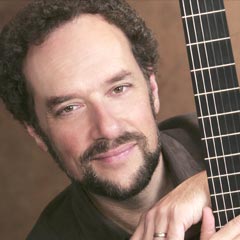
William Kanengiser serves as Interim Vice Dean for Classical Music and Composition and Professor of Practice at the USC Thornton School of Music, a position he has held since joining the guitar faculty in 1983. Recognized as one of America's finest classical guitarists, he has won major international competitions and Grammy awards, and is celebrated for his unique repertoire and dedication to music education and wellness. His academic background includes: Master of Music, USC School of Music, 1983 Bachelor of Music, USC School of Music, 1981 Mannes Conservatory Preparatory School, 1974-1977 Kanengiser's artistic focus encompasses classical guitar performance and repertoire expansion, ranging from Baroque and Classical arrangements to jazz-inspired compositions and world music. He is also a pioneer in musician wellness, developing and teaching a course on "Musician's Health and Wellness" at USC, and advocates for holistic education that integrates music with broader academic disciplines. His recent projects, including the Grammy-nominated "LAGQ: Latin" and Grammy-winning "LAGQ’s Guitar Heroes", as well as the 2023 album "British Invasion" with the Alexander String Quartet, demonstrate a consistent theme of innovative collaborations and narrative storytelling, bridging classical traditions with popular and global influences. His accolades include: First Prize, Concert Artists Guild International Competition (1987) First Prize, Toronto International Guitar Competition (1981) First Prize, Paris International Guitar Competition (1983) Solo Recitalist Fellowship Grant, National Endowment for the Arts (twice) INDIE Award for Best Classical Recording Grammy Nomination, Classical Crossover (2001) for "LAGQ: Latin" Grammy Award, Classical Crossover (2005) for "LAGQ’s Guitar Heroes" As an educator, Kanengiser has mentored generations of guitarists, including notable students such as Andras Csaki, Mak Grgic, and David Steinhardt. He directs the USC Guitar Orchestra and has organized tours for student ensembles like the Helios Guitar Quartet. His teaching philosophy emphasizes a supportive, family-like environment that nurtures individual potential without competition. He is a founding member of the internationally acclaimed Los Angeles Guitar Quartet (LAGQ), which has performed and recorded extensively for over three decades, and continues to be active in master classes and educational outreach programs worldwide.
Jonathan Novak is an Associate Professor of Mathematics at the University of California San Diego (UCSD). His research focuses on the combinatorial structure and high-dimensional behavior of multivariate special functions in random matrix theory, representation theory, and mathematical physics. He serves on the editorial board of the open-access journal Algebraic Combinatorics . Key research interests include algebraic combinatorics, special functions, and their intersections with random matrices and mathematical physics. His work explores combinatorial structures in high-dimensional spaces, asymptotic analysis of integrals, and connections between probability theory and algebraic structures. Recent publications emphasize topics like Berezin-Karpelevich integrals, quasimodular asymptotics, and topological expansions in matrix models. These studies highlight advancements in understanding complex systems through combinatorial and probabilistic lenses. No scientific awards are explicitly mentioned in the provided information. His contributions extend to editorial work and advancing interdisciplinary research in algebraic combinatorics and mathematical physics.