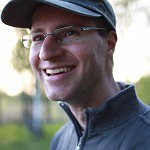
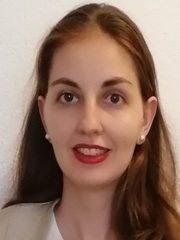
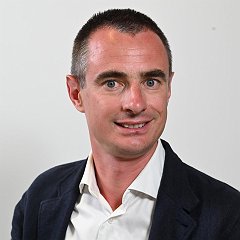
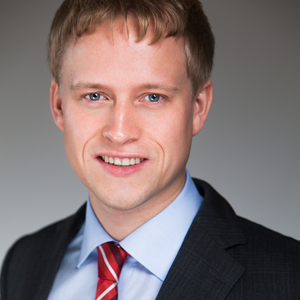
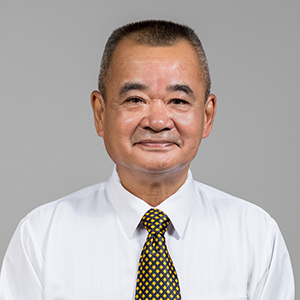
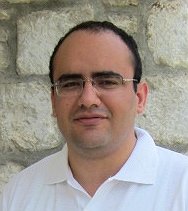
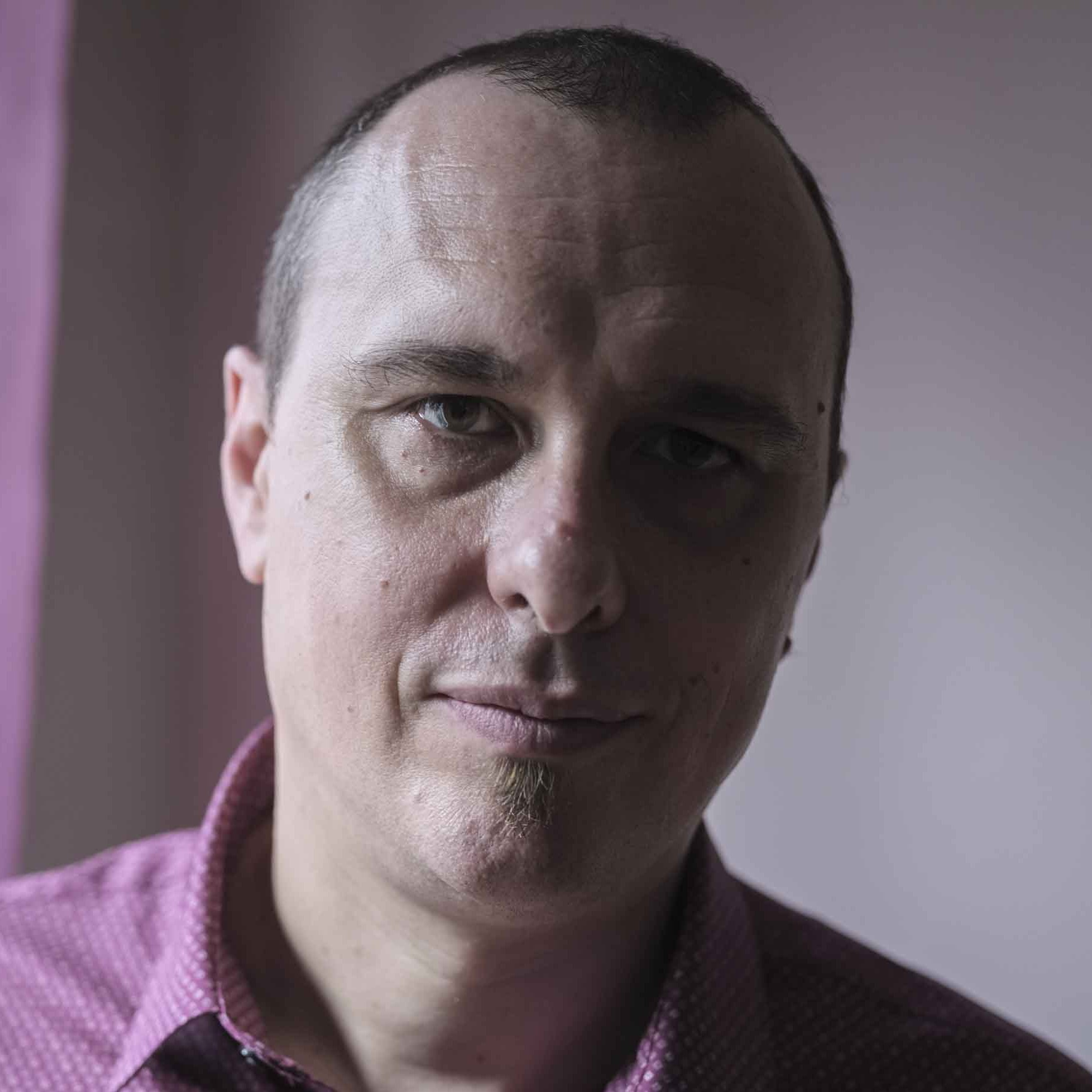
Ștefan Ciobaca is a researcher at the Faculty of Computer Science of the Alexandru Ioan Cuza University of Iasi , Romania. His work focuses on formal verification, programming language theory, and security protocols, with significant contributions to reachability logic and term rewriting systems. He actively mentors students in Dafny and F* verification techniques and develops tools for program equivalence proofs. Research Interests : Formal verification of cryptographic protocols, reachability logic, program equivalence, term rewriting systems, static analysis tools, and unification modulo builtins. Key Contributions : Developed the AKiSS tool for security protocol verification and contributed to the K Framework for programming language semantics. Students : Supervised multiple BSc/MSc theses on algorithm verification using Dafny and F*, including projects on SAT solvers, string algorithms, and data structure correctness. Collaborations : Partnered with Bitdefender on static analysis tool development and participated in international conferences like POPL, ICFP, and IJCAR. His recent work includes verifying image compression algorithms in Dafny and developing educational tools for logic-based program verification.
Philipp Ruemmer is a Professor of Theoretical Computer Science at University of Regensburg (2022–present) and a Senior Lecturer at Uppsala University's Department of Information Technology (2018–present). His research focuses on Program verification and theorem proving SMT/SAT solving and automata theory Embedded systems analysis and Java verification Machine learning applications in formal methods Concurrent and timed systems modeling His recent work includes string constraint solvers (Norn, OSTRICH, Sloth) and model checking tools (JayHorn, Eldarica). He has authored key papers in POPL, CPP, PLDI, and VMCAI on topics like Transducer-based string solving Certified decision procedures Regular constraint propagation Flattening techniques for constraints Notable scientific awards include the 2013 Uppsala University Oscar Prize and the 2005 SAP Award for academic excellence. He has led and participated in research grants from the Knut and Alice Wallenberg Foundation, Swedish Research Council, and Microsoft.
Alexandra Bugariu is a postdoctoral researcher at the Max Planck Institute for Software Systems (MPI-SWS) in Kaiserslautern, Germany, advised by Prof. Rupak Majumdar. Her research focuses on ensuring correctness, consistency, and performance in software systems, including program analysis tools, SMT solvers, distributed systems, and large language models. She holds a PhD in Computer Science from ETH Zürich (2022), an MSc from the European Master in Software Engineering (Free University of Bozen-Bolzano and TU Kaiserslautern), and a BSc from Politehnica University of Timisoara. Her work has led to significant contributions in automated testing of formal verification tools and identifying errors in program analysis. She has advised multiple students on topics like SMT solver testing, LLM-generated answer validation, and numerical abstract domains. Bugariu actively serves on the program committees of top venues including ICSE, ASE, and PLDI, and has reviewed for journals like ACM TOSEM and STTT. Teaching roles include co-lecturing and teaching assistant positions at ETH Zürich for courses in rigorous software engineering, parallel programming, and software architecture. She has participated in prestigious events such as the Heidelberg Laureate Forum and Marktoberdorf Summer School.
Pietro Ferrara is an Associate Professor at Ca' Foscari University of Venice, specializing in static analysis techniques applied to industrial and academic software contexts. His career spans roles at leading technology institutions including JuliaSoft SRL, IBM T.J. Watson Center, Microsoft Research, and ETH Zurich. Research Focus: Programming Languages, Abstract Interpretation, Software Architecture Academic Affiliation: Ca' Foscari University of Venice Conference Involvement: Active in OOPSLA, VMCAI, SPLASH, and ECOOP committees Pietro's publications (over 50) focus on advancing static analysis methodologies for program verification, blockchain determinism, IoT security, and microservices reliability. Recent work includes developing the LiSA framework for practical static analysis implementations and GoLiSA for blockchain validation. His research intersects automated reasoning, security vulnerability detection, and distributed systems verification. Current contributions include serving on the OOPSLA Review Committee for SPLASH 2025 and organizing tutorials on rapid static analysis development. He maintains an active GitHub profile with 33 repositories focused on software verification tools and educational projects.
Christoph Haase is an Associate Professor at the University of Oxford's Department of Computer Science and a Tutorial Fellow at St Catherine's College. His research focuses on algorithmic verification, automated reasoning, and logic in computer science, with a particular emphasis on decision procedures for arithmetic theories. He leads the ARiAT ERC-funded project investigating arithmetic theories' decision procedures and serves as an Associate Editor for the Journal of Computer and System Sciences. Education: DPhil (PhD) in Computer Science, University of Oxford (2012) Diplom-Informatiker (BSc/MSc), Technische Universität Dresden (2007) Visiting Student, University of Bristol (2005–2006) Research Interests: Algorithmic Verification of Software/Hardware Systems Automated Reasoning Techniques Automata Theory and its Applications Formal Methods for Decision Procedures in Arithmetic Publications: His recent work spans Presburger arithmetic, vector addition systems, and automated deduction tools. Key trends include advancements in decision procedures, complexity analysis, and applications in formal verification. Awards: Recipient of the ERC Starting Grant (2019) and EPSRC Doctoral Prize. His student Ruiwen Dong earned the EATCS Distinguished Dissertation Award. Advising & Grants: Supervises DPhil students and postdocs in arithmetic theories and verification. Active in organizing workshops (e.g., Trends in Arithmetic Theories) and serves on program committees for major conferences like ICALP, FOSSACS, and STACS. Labs/Teams: Leads the Automated Verification Group at Oxford and collaborates with researchers globally on projects like ARiAT and tool development (e.g., SeLoger).
Professor Joxan Jaffar is affiliated with the Department of Computer Science at the National University of Singapore (NUS) School of Computing. He earned his Ph.D. from Monash University (1985), M.Sc. (1981) and B.Sc. (1979) from the University of Melbourne. Ph.D., Monash University, 1985 M.Sc., University of Melbourne, 1981 B.Sc. (Honours), University of Melbourne, 1979 His research focuses on Programming Languages , Constraint Logic Programming , and Software Verification . Recent work involves symbolic execution methods for program analysis, memory usage, and string constraint reasoning using tools like Tracer-X. He has received significant recognition, including the MOE Academic Research Fund (AcRF) grant in 2021. Selected publications highlight advancements in symbolic execution, constraint-based program analysis, and verification of recursive data structures. His leadership roles at NUS include Head of Department (1998-2001) and Dean (2001-2007) of the School of Computing. Scientific Awards: MOE AcRF grant (2021)
Lukas Holik is an Associate Professor in the Department of Computer Science at Aalborg University, affiliated with the Technical Faculty of IT and Design. He also holds an external position as Associate Professor at Brno University of Technology. His research focuses on formal methods, logic, and automata theory applied to the analysis and verification of computing systems. Key areas include string constraint solving, network monitoring, web-application security, parallelism analysis, and shape analysis. His work integrates theoretical foundations with practical applications in system verification, such as optimizing automata size reduction and procedure analysis. Recent contributions include a 2025 publication on automata size reduction techniques. No scientific awards are explicitly mentioned in the provided text. Research grants and advising activities are not detailed here. Holik’s affiliations span both Aalborg University and Brno University of Technology, reflecting his collaborative academic network.
Ondřej Lengál is an Associate Professor at the Faculty of Information Technology, Brno University of Technology, Czech Republic. He earned his Ph.D. from the same institution in 2015 and was promoted to Associate Professor in 2025. His academic career centers on theoretical computer science with applications in formal verification and quantum computing. Education: Ph.D. in Computer Science, Brno University of Technology, 2015 Research Focus: Lengál's work bridges Formal Verification , Automata Theory , and Quantum Computing . He develops automata-based frameworks for string constraint solving and quantum circuit verification, with significant contributions to counting automata determinisation and regex matching algorithms. His research integrates logic and formal methods to address challenges in program analysis and quantum software correctness. Publication Trends: Analysis of his 12 publications (2017-2025) reveals a strategic evolution from classical automata theory (2017-2020) toward quantum verification (2023-2025). String constraint solving remains a consistent thread, while recent work demonstrates pioneering integration of tree automata in quantum circuit analysis. His research shows increasing interdisciplinary collaboration, particularly in quantum computing applications. Professional Engagement: Lengál actively contributes to the programming languages community as a PLDI Review Committee member (2026), VMCAI 2026 co-chair, and program committee member for APLAS (2022). He has served as session chair for TACAS 2019 and artifact evaluation co-chair, demonstrating leadership in conference organization and research validation.
Nikolaj Bjørner is a Principal Researcher at Microsoft Research , renowned for his foundational contributions to automated reasoning and formal verification. He is the co-creator and lead architect of the award-winning Z3 SMT solver , one of the most widely used tools in formal methods and program analysis. His research interests lie at the intersection of formal methods , programming languages , and automated reasoning . Specific areas include: SMT solving – theory solvers, quantifiers, and solver architectures Program verification – symbolic execution, model checking, and scalable analysis Constraint solving – linear arithmetic, strings, bit-vectors, and custom theories Network and cloud verification – configuration synthesis and policy checking Bjørner's recent work emphasizes scalable verification techniques for complex systems including cloud configurations, parameterized protocols, and sparse code optimizations. His publications span foundational theory, tool design, and real-world applications. He has served on the program committees of premier conferences such as POPL , PLDI , VMCAI , ASE , and SPLASH , shaping the direction of the field. He is a frequent invited speaker and tutorial presenter, including at PADL 2020 and POPL 2023 TutorialFest .
Mohamed Faouzi Atig is currently a Professor in Computer Systems at the Department of Information Technology, Uppsala University, Sweden. He was promoted to Senior Lecturer (associate professor) in 2018 and held an associate senior lecturer position (assistant professor equivalent) from 2014-2018. He completed a postdoctoral fellowship at Uppsala University (2010-2012) and earned his PhD in Computer Science from University of Paris Diderot-Paris 7 (France) in 2010. Academic Roles : Professor (2021-present), Senior Lecturer (2018-2021), Associate Senior Lecturer (2014-2018), Researcher (2012-2018) Education : PhD (2010, University of Paris Diderot) and Docent (2017, Uppsala University) His research focuses on Formal Verification of concurrent systems, particularly verification of infinite state systems, weak memory models, automata theory, and concurrency analysis. His recent work addresses verification challenges in hardware-software interactions and string constraints. His publications span topics including thread synchronization , stateless model checking , string constraint solving , and TSO memory model verification , with contributions presented at top conferences like POPL, PLDI, and APLAS. Scientific Achievements : Habilitation (Docent degree) in Computer Science (2017, Uppsala University) Key committee roles at VMCAI (2023), POPL (multiple years), and SPLASH/PLDI conferences
Aleksandar Kartelj is an Associate professor at the Department for Computer Science, Faculty of Mathematics, University of Belgrade. He has been working at the Faculty of Mathematics since 2008, starting as a Teaching assistant, then becoming Assistant professor (2015-2023), and currently Associate professor (since October 2023). He also serves as a Guest professor at the Faculty of Natural Science and Mathematics, University of Banjaluka since 2018. Education: B.Sc. in Computer Science from Faculty of Mathematics, University of Belgrade (2005-2008, GPA 9.94/10.00) M.Sc. in Computer Science from Faculty of Mathematics, University of Belgrade (2008-2010, GPA 9.92/10.00) PhD in Computer Science from Faculty of Mathematics, University of Belgrade (2010-2014, GPA 10.00/10.00) M.Sc. in Quantitative Finance from Faculty of Economics, University of Belgrade (2010-present) Aleksandar Kartelj's research primarily focuses on optimization and data mining. He is a member of the "Modelling and optimization group" at the Faculty of Mathematics. His work involves designing exact and non-exact optimization techniques such as integer (linear) programming models, branch & bound, beam search, variable neighborhood search, and genetic algorithms. These techniques are applied to solve NP-hard problems in computational biology, transportation, logistics, social networks, and for improving machine learning algorithms. His recent publications (2021-2025) span diverse areas including symbolic regression, constrained longest common subsequence problems, graph protection algorithms, Roman domination in graphs, and applications in computational biology and epidemiology. His work frequently appears in high-impact journals such as Journal of Big Data, Expert Systems with Applications, and Knowledge-Based Systems, with many publications classified as M21a (Q1). Scientific Awards: Best paper award at the 2023 Second Serbian International Conference on Applied Artificial Intelligence (SICAAI) for "Integrating Top-level Constraints into a Symbolic Regression Search Algorithm" Aleksandar Kartelj has been involved in several research projects, including being a Research member on the project "Mathematical Models and Optimization Methods for Large-Scale Systems" (2011-2020) and a Research leader on the project "Combinatorial optimization for cancer progression inference and comparison" (2019-present). He has also developed numerous software applications for various organizations including the UN FAO, International Monetary Fund, and several private companies. He has been actively involved in teaching, serving as a Computer science teacher at Computer Gymnasium and Mathematical Grammar School in Belgrade, in addition to his university teaching responsibilities.
Jean-Marc Lasgouttes is a Researcher at Inria Paris working within the Astra project team, a joint research initiative between Inria Paris and Valeo. He also holds a teaching position at INSA Rouen Normandie's Department of Mathematical Engineering, where he has instructed courses including Boosting methods (until 2024), Functional Data Analysis (until 2018), and general Data Analysis (until 2024) for both the Mathematical Engineering department and the Specialized Master's program in Data Science. Dr. Lasgouttes' primary research focuses on probabilistic modeling of large systems using statistical physics tools, with particular emphasis on Intelligent Transportation Systems. His work spans traffic flow modeling, vehicle platooning, urban traffic prediction, and geopositioning systems. He frequently employs Markov Random Fields, statistical physics approaches, and game theory to address complex transportation challenges, bridging theoretical statistical methods with practical applications. His research methodology often involves developing novel algorithms like the ★-IPS family for incremental GMRF estimation. Analysis of his recent publications reveals a consistent trajectory of applying advanced probabilistic models to increasingly sophisticated transportation scenarios. His work demonstrates strong expertise in spatio-temporal modeling, with publications covering car-following dynamics, landmark-based positioning, cooperative ITS, and autonomous vehicle systems. The interdisciplinary nature of his research connects statistical physics, machine learning, and transportation engineering to solve real-world mobility challenges. At INSA Rouen Normandie, Dr. Lasgouttes has developed comprehensive teaching materials for data analysis courses, including practical applications of principal component analysis and correspondence analysis using real-world datasets such as European protein consumption patterns and Titanic passenger data. His educational approach emphasizes hands-on implementation with R programming, reflecting his commitment to practical statistical applications. The Astra project team serves as Dr. Lasgouttes' primary research environment, facilitating collaboration between academic researchers and industry partners to address contemporary transportation challenges. His work has contributed to significant research events including the 2018 workshop on Large Random Networks and Constrained Walks honoring Guy Fayolle's 75th birthday, and the 2012 interdisciplinary workshop on inference associated with the Travesti ANR grant.
Gen-Huey Chen is a Distinguished Professor in the Department of Computer Science and Information Engineering at National Taiwan University, where he has served since 1987 (Associate Professor 1987-1992, Professor since 1992). He previously held leadership roles as Dean of the College of Science and Technology (2001-2005) and Department Chair (2001-2002) at National Chi Nan University. Education Ph.D. in Computer Management Decision, National Tsing Hua University, 1987 B.S. in Computer Science and Information Engineering, National Taiwan University, 1981 Research Interests Professor Chen's work centers on Graph Theory , Combinatorial Optimization , and Algorithm Analysis and Design , with significant contributions to discrete mathematics and network theory. His research bridges theoretical foundations and practical applications, particularly in structural graph problems and wireless network protocols, emphasizing efficient algorithmic solutions for complex computational challenges. Publications Trends His 2007-2009 publications reveal a cohesive research trajectory focused on graph-theoretic applications in networking. Key patterns include structural analysis of specialized graphs (chordal/circular-arc), fault tolerance in multiprocessor topologies (grids/tori), and bandwidth-optimized routing in mobile ad-hoc networks. These works consistently apply combinatorial optimization to solve real-world networking constraints while advancing theoretical graph algorithms. Advising and Grants No specific information regarding student advising or research grant funding is provided in the source material. Laboratory He directs the Discrete Algorithm Lab at National Taiwan University, which specializes in discrete algorithm development and wireless network protocol research.
Shing-Tung Yau is Professor of Mathematics at Harvard University and Honorary Affiliate of the Black Hole Initiative. His fundamental contributions to differential geometry have profoundly influenced theoretical physics and astronomy. With Richard Schoen, Yau solved key problems in Einstein's theory of relativity, proving the positive mass theorem which established constraints on black hole formation. His mathematical innovations provide essential tools for understanding spacetime geometry and gravitational physics. Honors include the Fields Medal (1982) for work on partial differential equations and the Crafoord Prize (1994) for solving outstanding problems using nonlinear techniques in differential geometry. His research continues to bridge mathematics and theoretical physics.
Bojan Bašić is Full Professor in Mathematical Logic and Discrete Mathematics at the Faculty of Sciences, University of Novi Sad. His office is located in building DMI&DF (second floor, room 27). His research spans discrete mathematics with focus areas in combinatorial word theory, geometric tiling problems (Heesch number analysis), and discrete structures. He maintains an active publication record in combinatorial mathematics. His recent articles demonstrate sustained focus on combinatorial problems in discrete geometry (particularly Heesch tiling problems) and combinatorics on words (palindromic structures and permutation theory). The research combines abstract combinatorial reasoning with algorithmic approaches. He maintains a personal research website and provides academic consultations.