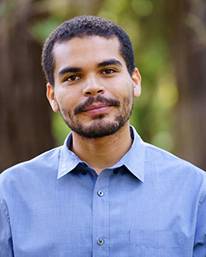
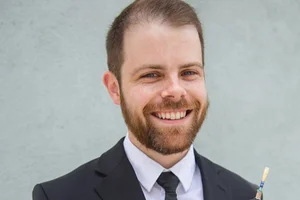
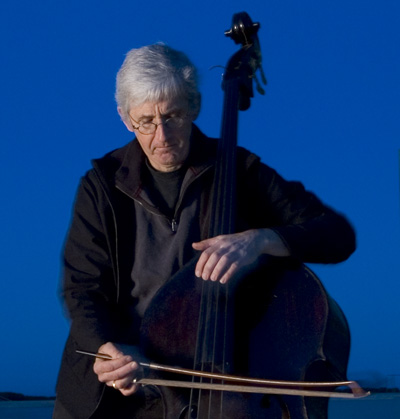
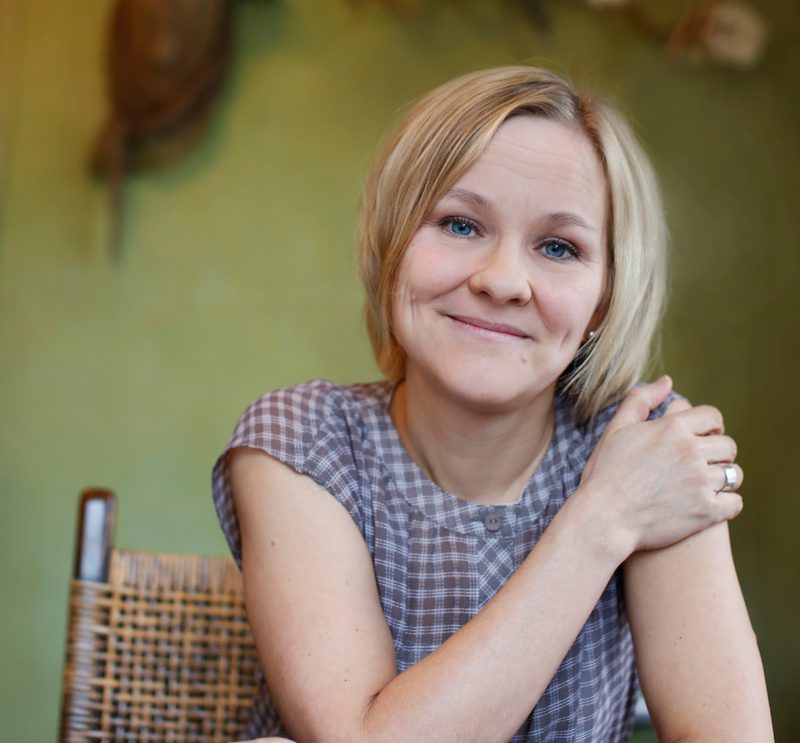
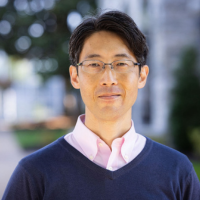
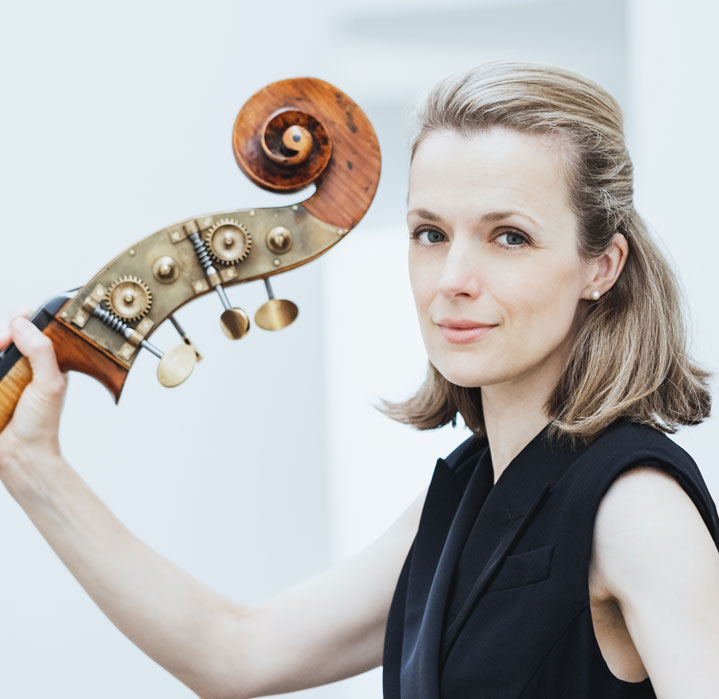
Jonathan Nangle is a Lecturer in Music Technology and Electro-Acoustic Composition at the Royal Irish Academy of Music. His work spans acoustic/electro-acoustic composition, live electronics, installations, and improvisation. Educated at Trinity College Dublin under Donnacha Dennehy, Rob Canning, and later privately with Kevin Volans, his music has been performed by ensembles like RTÉ National Symphony Orchestra and Crash Ensemble. Research interests include spatial music, interactive installations, and hybrid acoustic/digital forms. Notable works include Pause (Ergodos, 2017), Iridescent Cobalt Glow (2015), and our headlights blew softly... which earned a 2009 Rostrum commendation. Awards include dual Irish Rostrum representations (2009/2011) and the 2007 AIC/Music 21 Prize. Recordings span solo piano works to ensemble commissions, often integrating innovative electronic elements. His work has been broadcast internationally and choreographed for stage/film. Current roles include academic teaching and ongoing creative exploration at the intersection of technology and traditional composition.
Christopher Castro serves as an Assistant Professor of Composition at Chapman University's College of Performing Arts. A composer and double bassist from Brooklyn, New York, he combines academic rigor with avant-garde experimentation. Ph.D. in Composition and Theory from University of California, Davis Bachelor of Music from Juilliard School (Double Bass & Composition) His research bridges Western Art Music traditions with contemporary innovations , creating works that merge: Johannes Ockeghem's polyphonic complexity John Coltrane's spiritual intensity Modernist structural experimentation Historical reconstruction techniques Jazz-classical hybrid forms Interdisciplinary performance formats Recent compositions demonstrate trends in flexible instrumentation , text-music relationships , and genre synthesis . His output spans chamber works, orchestral pieces, and vocal compositions with equal mastery. Scientific recognition includes: 2023 Fromm Music Foundation Commission (Harvard University) Chamber Music America's 2021 Classical Commissioning Award As a new music advocate , Castro collaborates with ensembles like: Left Coast Chamber Ensemble (artistic advisory board) New Mexico Contemporary Ensemble Los Angeles Philharmonic's Upbeat Live series Lyris Quartet and Sharon Harms
Dr. John Hails is a Senior Lecturer and Reader in Music at Edinburgh Napier University , where he teaches aesthetics, music psychology, composition, and ethnomusicology. He holds a PhD in Music from Durham University (2008) and has trained under notable composers like Brian Ferneyhough and Richard Barrett. His research focuses on experimental composition, marginal musical practices, and interdisciplinary aesthetics. Educations: Bachelor’s and Master’s training at Durham University and University of Huddersfield PhD by Portfolio of Compositions (Durham University, 2008) Research Interests: John’s work explores unorthodox intonations, fixed media installations, and the intersection of composition with philosophy and ethnomusicology. He actively presents at international conferences on topics like post-structuralist critiques in music education and communal performance practices. Notable Works: His compositions have been performed by ensembles like the London Sinfonietta and broadcast on BBC Radio 3. Key pieces include enlightenment (microtonal trumpet and media) and Nine for ones in nine , reflecting his experimental approach. Awards & Grants: While no explicit awards are listed, his research is funded by Edinburgh Napier University. He is a core member of the Applied Music Research Centre . Supervision & Grants: He has supervised over 15 postgraduate projects, including PhDs on topics like Musical Cultures of Melanesia and Dialogical Music Systems . His supervisory roles span composition, ethnomusicology, and interdisciplinary studies. Labs/Teams: Active in the Applied Music Research Centre , focusing on creative practice and experimental music dissemination.
Miguel Chuaqui is a Chilean-American composer and Professor at the University of Utah School of Music, where he serves as Chair of the Composition Area since 2009. Born in 1964 in Berkeley, California, and raised in Santiago, Chile, he holds a PhD in Composition from the University of California at Berkeley, with academic roots in both Mathematics and Music. Education: BA in Mathematics and Music (University of California-Berkeley, 1987), MA in Music (University of California-Berkeley, 1989), PhD in Music (University of California-Berkeley, 1994) Chuaqui's creative practice spans orchestral, chamber, vocal, and electroacoustic works, with performances across the U.S. and internationally by ensembles such as Speculum Musicae, Earplay, and the Society for Electro-Acoustic Music in the United States (SEAMUS). His research emphasizes collaborations in diverse areas, including interactive dance systems with Modern Dance and therapeutic musical applications with the School of Medicine. His compositions reflect an intersection of technology and traditional instruments, often incorporating live electronics and interactive elements. Recent compositions like La Búsqueda (2024), Inseparable (2024), and Encuentro Fugaz (2024) highlight his focus on chamber works and electroacoustic innovation. He has also demonstrated a sustained commitment to solo and ensemble works, integrating Latin American cultural motifs with contemporary techniques. Scientific and Musical Awards Award in Music from the American Academy of Arts and Letters Aaron Copland Recording Grant Eisner Prize Nicola de Lorenzo Award Society for Universal Sacred Music award Induction into the National Association of Composers of Chile President’s Award from SEAMUS (2008) 2024-2025 Big 12 Faculty Fellowship As an educator, Chuaqui has taught courses including Advanced Electronic Music Composition, Senior Composition, and PhD-level Composition at the University of Utah since 2024. He hosted the 2008 SEAMUS National Conference and serves as a NASM Visiting Evaluator, maintaining leadership roles in music education and composition pedagogy.
Roseen Giles is an Assistant Professor of Music at Duke University, affiliated with Trinity College of Arts & Sciences. She also serves as Curator of the Duke University Musical Instrument Collections (DUMIC). Her expertise lies in early modern Italian musical culture, particularly the intersections between poetry and music in the 17th century. Giles holds a Ph.D. and B.Mus. from the University of Toronto. Her research explores the aesthetic, professional, and personal relationships between poets and musicians, with a focus on Claudio Monteverdi and Giambattista Marino. Key works include her monograph Monteverdi and the Marvellous: Poetry, Sound, and Representation (2023) and the forthcoming Lettera amorosa Musical Love-Letters in Early Modern Italy (2025). She has been recognized with the 2025 Bass Chair award. Teaching spans courses on music history, Baroque studies, and interdisciplinary topics. Recent courses include Music History I/II , Focus Seminars , and Analysis of Early Music . Outreach activities include leadership in Duke’s Story+ program, fostering collaborative research projects. Awards: 2025 Bass Chair Publications: Over 20 scholarly works, including books and chapters on Monteverdi, Marino, and Baroque aesthetics Grants/Advising: Not explicitly detailed in provided texts Labs/Teams: Curator of DUMIC, engaged in musicological curation and public outreach
Simon Mawhinney is a Professor in the School of Arts, English and Languages at Queen's University Belfast, specializing in composition with a focus on instrumental and electronic media. His work bridges complexist music, post-spectral harmonies, and cultural cantillation influences. Notable collaborations include projects with ensembles in Germany, France, and Iceland. He holds a Queen’s University Teaching Award (2012) and has pioneered modules on Messiaen’s music. His research explores new music performance, computer-assisted composition (using OpenMusic), and experimental technologies. Current roles include PhD supervision in composition, convening MA research methods modules, and undergraduate composition instruction. Key achievements include commissions from Ensemble Caput (Iceland) and Garth Knox/Quatuor Béla, resulting in works such as Marlacoo and a viola d’amore/string quartet piece premiered in Paris (2013). Recent projects involve recordings with pianist Mary Dullea and bass flutist Kolbeinn Bjarnason. His fingerprint research areas include labour studies in composition, technical performance practices, and avant-garde instrumentation. Over 35 compositions span decades, with 2016-2019 works emphasizing electronic integration and algorithmic processes. Awards include the AIC Composition Prize (2001) and Ann Driver Trust Award (2000). Professional service roles include Elected Member of the Academic Council since 2010 and Exams Liason Officer (2009-2011). Teaching: Undergraduate modules on Messiaen, Beethoven's late works, and composition techniques Research: Focus on postwar modernism, new musical technologies, and performance-based creation Public Engagement: Active in festivals, radio interviews, and international recitals
Mara Gibson is an Associate Professor of Composition at Louisiana State University (LSU) School of Music, where she serves as area coordinator with tenure. Originally from Charlottesville, VA, Dr. Gibson completed her Ph.D. at SUNY Buffalo after graduating from Bennington College. She has also studied at London College of Music, L'École des Beaux-Arts in Fontainebleau, France, and the International Music Institute at Darmstadt, Germany. Dr. Gibson's creative work spans contemporary composition with emphasis on cross-disciplinary collaborations. Her music has been described as "shocking, gripping and thought-provoking... conjuring a flurry of emotions" (PARMA Recordings). She is a regular collaborator with choreographers, visual artists, writers, and filmmakers, with notable projects including the ArtSounds initiative which ran for 11 years at UMKC. Her recent compositions demonstrate consistent innovation in technique and interdisciplinary approaches. Works like Escher Keys (2021), a bassoon concerto inspired by M.C. Escher, and Galetea's Dream (2021/23), a staged song cycle, showcase her ability to merge visual art concepts with musical expression. Her compositions often draw inspiration from poetry, visual arts, and natural phenomena, resulting in works that are both technically sophisticated and emotionally resonant. Dr. Gibson has received numerous prestigious awards including: LSU Provost Fund for Innovation in Research ($7,500 for "The Devil's Dream" opera, 2024) GRAMMY nomination eligibility for "Unseen World" album (2024) ATLAS grant through Louisiana Board of Regents ($32,000 for bassoon concerto project, 2021) MacDowell Colony Fellowship (2016) Virginia Center for the Arts residency (2015) Yale University Distinguished Music Educator Award (2015) As an educator, Dr. Gibson has significantly expanded the composition program at LSU, more than doubling its size since her arrival. She founded the Constantinides New Music Ensemble, which debuted at Carnegie Hall in April 2022. Previously, at UMKC Conservatory of Music and Dance, she coordinated undergraduate composition and tripled enrollment in the program. She is currently working on her first opera, "The Devil's Dream," based on Lee Smith's novel and inspired by the country music powerhouse Carter family.
Danilo Pérez is a Grammy Award-winning Panamanian pianist, composer, and educator, currently serving as the Founder and Artistic Director of the Berklee Global Jazz Institute at Berklee College of Music in Boston. He is also the Artistic Director of the Panama Jazz Festival and holds the prestigious title of UNESCO Artist for Peace and Cultural Ambassador for Panama. Educational Background: National Conservatory of Panama (Classical Piano) Berklee College of Music (Jazz Composition) Bachelor’s Degree in Electronics, Panama Danilo Pérez’s research and artistic interests center on Global Jazz , a genre he pioneered by fusing Panamanian roots, Latin American folk music, West African rhythms, and European impressionism. His work transcends music, promoting it as a multidimensional bridge for community, democracy, and social change. He emphasizes values such as listening, compromise, and discipline in his teaching, viewing music as a tool for personal and societal transformation. His recent artistic works, including albums like Lumen (2024), Crisálida (2022), and Children of the Light (2015), reflect a consistent trend of spiritual depth, cross-cultural collaboration, and narrative composition. These works explore themes of identity, history, and human connection, often commissioned by major institutions like Carnegie Hall and the Banff Centre. His compositions range from intimate piano trios to large orchestral and chamber pieces, demonstrating a mastery of both improvisational jazz and structured composition. Scientific and Artistic Awards: Grammy Award (2006, 2019) United States Artists Fellowship (2018) Smithsonian Latino Center’s Legacy Award (2009) Gloria Career Achievement Award (2015) Boston Music Awards (1999, 2000) UNESCO Artist for Peace (2012) Former UNICEF Goodwill Ambassador Danilo Pérez has been a dedicated mentor and educator, advising and influencing generations of jazz musicians through his leadership at the Berklee Global Jazz Institute and the Panama Jazz Festival. His work has been supported by major commissions from Lincoln Center, Carnegie Hall, and the Detroit Jazz Festival, among others. He has not received traditional research grants but has secured significant artistic funding through fellowships and institutional commissions. His leadership extends to founding the Danilo Pérez Foundation, which provides music education for youth in Panama. Labs and Teams: Pérez leads the Berklee Global Jazz Institute , a dynamic educational and performance lab that fosters innovation in jazz. He also directs the Panama Jazz Festival , a major international event and educational platform. His primary performance ensembles include the Danilo Pérez Trio , the Children of the Light (with John Patitucci and Brian Blade), and the Global Messengers , all of which serve as living laboratories for his global jazz philosophy.
John Supko is an Associate Professor of Music and Theater Studies at Duke University's Trinity College of Arts & Sciences. He also serves as Core Faculty in Innovation & Entrepreneurship and previously held roles like Interim Director of the PhD Program in Computational Media, Arts & Culture. Educated at Indiana University (B.Mus., 2002), Princeton University (M.F.A., 2005; Ph.D., 2009), he specializes in generative music that blends human creativity with algorithmic processes. His research explores intersections of chance, traditional notation, and real-time score generation. Notable projects include s_traits (a generative environment based on Bill Seaman’s text) and USINE (a 24-hour work combining ensemble and algorithmic electronics). His work has been hailed as 'spellbindingly beautiful' and 'hypnotic' for its fusion of sound, text, and technology. Recent artistic works include Time Becomes Again (2024) and Crossed Shadows (2024), emphasizing algorithmic innovation. Awards include the Hunt Family Publication Award (2013) and the Leo Kaplan Award (2008). Teaching spans composition, generative media, and arts entrepreneurship, reflecting his commitment to interdisciplinary creativity. Supko’s collaborations extend to computational media and experimental performance, with works exhibited globally. His lab focuses on using technology to disrupt conventional musical frameworks, advocating for 'exuberant rule-breaking' in artistic exploration.
Mark Dresser is Professor of Music at the University of California, San Diego (UCSD), where he has been a faculty member since 2004. He earned both his B.A. and M.A. from UCSD, studying under Professor Bertram Turetzky. He has also taught at Princeton University, the New School University, and Hampshire College. Education: B.A., University of California, San Diego M.A., University of California, San Diego Fulbright Fellow, Italy (1983), studying with Maestro Franco Petracchi Mark Dresser is a Grammy-nominated bassist, composer, and innovator in contemporary music. His research focuses on expanding the sonic possibilities of the double bass through extended techniques, unconventional amplification, and interdisciplinary collaboration. He has authored a chapter in ARCANA and articles in The Strad on multiphonics and harmonics. His artistic work spans solo performance, ensemble leadership (e.g., Trio M, Arcado String Trio), and telematic music projects like Deep Tones for Peace . He is deeply engaged in improvisation, silent film scoring, and collaborative composition across media. His recent articles and recordings reflect a sustained exploration in avant-garde jazz, experimental composition, and telematic performance. Themes include extended instrumental techniques, interdisciplinary art, and innovative ensemble dynamics. His works blend jazz, classical, and free improvisation traditions into a unique sonic language. Scientific and Artistic Awards: Doris Duke Impact Award (2015) Shifting Foundation Award (2015) Fulbright Fellowship (1983) Two New York Foundation for the Arts Grants Meet the Composer Commissions Fellowships: MacDowell Colony, Civitella Ranieri, Bellagio, Akrai Mark Dresser has advised numerous emerging musicians and has been involved in significant research grants supporting telematic performance and interdisciplinary projects. He curates performance series and educational initiatives, including the Virtual Tour: A Reduced-Carbon Footprint Concert Series. He serves on the boards of the International Society of Bassists, the International Society of Improvised Music, and the Deep Listening Institute, contributing to the advancement of experimental music and improvisational practices. He leads and collaborates with several ensembles, including Trio M (with Myra Melford and Matt Wilson), Mauger (with Rudresh Mahanthappa and Gerry Hemingway), and a septet performing his original compositions. His UCSD-based research lab and performance groups focus on telematic music, real-time networked performance, and sonic experimentation with the double bass.
Lotta Wennäkoski, a Finnish composer born in 1970, is renowned for her transparent timbres and innovative orchestration techniques. Her work spans orchestral, chamber, and vocal genres, with commissions from prestigious institutions like the BBC and Savonlinna Opera Festival. Current Artist Professor (2022-2026) by The Arts Promotion Centre Finland. Gramophone Award winner (2023) for Sigla recording. Her compositions emphasize economy of means and originality, blending drive, energy, and humor. Recent works include violin concertos, string quartets, and a recorder concerto for Lucie Horsch, highlighting collaborations with global orchestras and soloists. Key trends in her compositions include exploration of Nordic themes, dynamic instrumental contrasts, and integration of ecological motifs in chamber works. The Gramophone Award-winning Sigla exemplifies her mastery in harp concerto writing. Scientific Awards: Finland’s State Prize of Music (2020) Gramophone Award 2023 (Contemporary Music Category) Lotta Wennäkoski maintains active international commissions, including collaborations with the Danish String Quartet, BBC Symphony Orchestra, and Royal Concertgebouw Orchestra. Her recordings with Ondine have further solidified her reputation as a leading contemporary composer.
Dr. Eric Skytterholm Egan serves as Associate Professor of Composition in Durham University's Department of Music and holds an Associate Fellowship at the Institute of Advanced Study. An Irish-Norwegian composer based in northern England, Egan's creative practice centers on formal clarity through the synthesis of historical musical elements and innovative instrumental techniques, resulting in expansive textural palettes across diverse ensembles. Egan completed his PhD in Composition in May 2010 under Richard Rijnvos at Durham University. His scholarly trajectory demonstrates deep integration of academic research with practical composition, evidenced by extensive collaborations with leading international ensembles and performances at major venues including Konzerthaus Wien and Southbank Centre. Egan's research explores contemporary composition through dual lenses of historical synthesis and technical innovation. His work systematically investigates textural complexity, extended instrumental techniques, and formal architecture across solo, chamber, and orchestral contexts. Key thematic strands include political narratives (e.g., North Korea conflict studies), literary engagement (James Joyce), and environmental soundscapes (Arctic fieldwork), often manifested through experimental notation and spatialized performance practices. Recent publications reveal intensified focus on geopolitical themes and interdisciplinary collaboration. The 2025 Geohumanities journal article on Arctic soundscapes exemplifies his expansion into environmental fieldwork, while compositions like 'Conflict as Artefact' demonstrate sustained political engagement. His output increasingly integrates technology with acoustic performance, particularly through ensemble residencies exploring real-time sound processing and spatial audio techniques. Egan actively cultivates next-generation musicians through hands-on leadership of Durham's performance ecosystems. As producer of Ensemble 7Bridges and E7B SoundLab, director of student ensemble NAME, and curator of the annual KLANG festival, he creates vital platforms for emerging composers. These initiatives facilitate direct mentorship with professional ensembles like Arditti Quartet while connecting academic research with public performance at venues including Sage Gateshead and National Concert Hall Dublin. Through Ensemble 7Bridges' residency program and E7B SoundLab's experimental studio, Egan has established Durham as a hub for contemporary music innovation. These platforms enable collaborative development of new works with ensembles including Roentgen Connection and Cikada, while KLANG festival serves as the department's flagship public engagement vehicle, featuring premieres from international composers and student works alike. His leadership fosters a distinctive creative ecosystem bridging academic research, professional performance, and community outreach.
Masa Ishikawa serves as Assistant Professor of Jazz Piano at James Madison University's School of Music. Originally from Fukushima, Japan, he relocated to the United States in 2003 for musical training in Seattle and maintains an active international performance career across Italy, China, Japan, and the U.S., emphasizing meaningful musical connections with audiences and collaborators. His artistic practice centers on jazz composition and cross-cultural dialogue, particularly through works addressing the 2011 Fukushima disaster including 'Suite for the Forgotten' (2015) and 'Haseru' (2021). He specializes in blending traditional Japanese instrumentation with contemporary jazz ensembles, creating socially engaged projects that explore memory, resilience, and cultural identity through original compositions. Recent creative output demonstrates consistent evolution toward original compositions that integrate Japanese musical elements with modern jazz structures. His 2023 releases 'Montage' (trio) and 'First Note' (sextet) continue this trajectory while expanding ensemble complexity, showing clear thematic focus on cultural heritage and disaster commemoration through increasingly sophisticated arranging techniques across diverse ensemble formats.
David Jones is the Head of Accompaniment and a Lecturer in Piano at the Royal Northern College of Music (RNCM). He holds roles as Staff Pianist Co-ordinator, Junior RNCM Tutor, and academic supervisor. His career spans over 25 years, including a PhD on Jeffrey Lewis's music (2011) and extensive editorial work for Cathedral Press. He specializes in 19th-20th century French and British music, with a focus on accompaniment, mélodie, and opera coaching. Education: BMus (First Class Honours, University of Wales, Bangor), PGDip and MusM (RNCM). Research interests include music archiving, collaborative performance practices, and the works of overlooked composers like Jeffrey Lewis and Robin Stevens. He supervises PhD students on topics such as Arnold Cooke, Louise Farrenc, and Gabriel Pierné. Professional Activities: Pianist for Hallé Choir, founder of Altèri chamber choir, ABRSM examiner (2005-2019). Recordings: Over 10 albums featuring Lewis, Stevens, Bingham, and Williamson. Recent releases include Robin Stevens' Chasing Shadows (2023) and Blooms of Dublin (Anthony Burgess project, 2022). Current projects include archiving Jeffrey Lewis's manuscripts and preparing the Anthony Burgess Foundation's Joycean music collections. His teaching includes undergrad electives on French mélodie and 19th-century opera, alongside postgraduate accompaniment coaching.
Professor Alexandra Scott is a renowned double bass educator and performer affiliated with the Institute for Artistic Instrumental Studies at HMTM (Hochschule für Tonkunst München) since 2020. Previously, she taught at the Karlsruhe University of Music (2012–2020) and has conducted masterclasses globally at institutions including the Royal Academy of Music in London, Universidade Federal do Rio de Janeiro, and Universidade de São Paulo. Her career combines academic instruction, orchestral leadership, and chamber music performance. Her research and teaching focus on double bass pedagogy , historical performance practice , and Baroque music , informed by her extensive performance experience as principal double bass with the Bavarian Radio Symphony Orchestra (2007–2020) and NDR Radio Philharmonic Orchestra. She is a founding member of the Baroque ensemble l'Accademia Giocosa. Alexandra Scott’s career includes jury roles at prestigious competitions such as the German Music Competition, Jugend Musiziert, and the Royal Academy of Music Double Bass Competition. She received foundational training at the Yehudi Menuhin School and later studied with esteemed artists including Chi-chi Nwanaku, Duncan McTier, and Rinat Ibragimov.