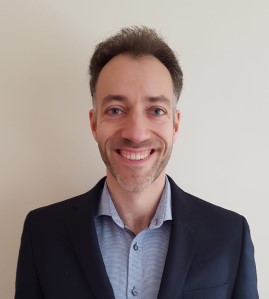
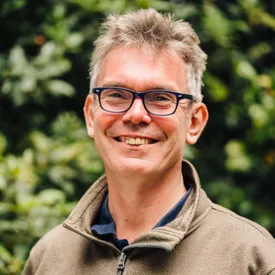
Dr Henry Moss is a Researcher at the Department of Applied Mathematics and Theoretical Physics within the School of Physical Sciences at the University of Cambridge. His work focuses on machine learning applications in climate modeling, Bayesian optimization, and Gaussian processes, bridging computational mathematics with environmental science and chemistry. His research interests include: Bayesian optimization for environmental and chemical systems Reinforcement learning in climate modeling Gaussian processes for molecular property prediction High-throughput machine learning in scientific domains Interpretable AI for coastal flooding prediction Hybrid ML-physics modeling Dr Moss's publications highlight his contributions to federated learning for climate models, sparse Gaussian process techniques, and multi-objective optimization frameworks. These works span applications in weather prediction, chemical engineering, and oceanography. Email: hwm26@cam.ac.uk
Perla Maiolino serves as an Associate Professor in Engineering Science at the University of Oxford and Principal Investigator of the Soft Robotics Lab (SRL) within the Oxford Robotics Institute. Her academic foundation includes BEng, MEng, and PhD degrees in Robotics and Automation from the University of Genoa, where she pioneered CySkin technology for distributed tactile sensing in robots—later exhibited at the Science Museum in London. She expanded her expertise during a 2017-2018 postdoctoral fellowship at Cambridge University's Biologically Inspired Robotics Lab, focusing on soft robotics and tactile perception. Dr. Maiolino's research centers on developing artificial skin systems, soft robotic actuators, and distributed sensing architectures. Her work bridges biological inspiration with engineering innovation to create robots capable of safe human interaction and dexterous manipulation in unstructured environments. Key contributions include compliant beaded-string jamming mechanisms for anthropomorphic fingers, monolithic 3D-printed soft pneumatic arms (JAMMit!), and distributed time-of-flight sensor networks for robotic self-awareness. Recent publications (2024-2025) reveal a strong convergence of tactile sensing with machine learning, featuring optical flow for gesture recognition, diffusion models for artificial skin simulation, and zero-shot sim-to-real transfer techniques. Her team has made significant advances in multi-modal sensing integration, variable stiffness actuation, and scene flow estimation for robots operating in dynamic surroundings. Scientific Awards No specific awards were documented in the provided institutional materials. Advising and Grants While her leadership of the Soft Robotics Lab implies active student supervision and grant management, detailed information about advisees or funded projects was not included in the source documentation. Labs and Teams As Principal Investigator of the Soft Robotics Lab at Oxford Robotics Institute, Dr. Maiolino directs research on tactile perception systems, soft actuation mechanisms, and sensor-integrated robotic structures. The lab's work focuses on applications requiring safe physical interaction, including healthcare robotics and human-robot collaboration scenarios, with emphasis on multi-material 3D printing and embedded sensing technologies.
Jens Groth is an Honorary Professor at the Department of Computer Science, University College London (UCL), and serves as Chief Scientist at Nexus. His primary research focuses on cryptography, with an emphasis on cryptographic protocols, zero-knowledge proofs, and privacy-preserving technologies. Groth has contributed significantly to advancements in digital signatures, homomorphic encryption, and secure multi-party computation. He holds a leadership role as Program Chair for the 15th IMA International Conference on Cryptography and Coding (2015) and has been a key figure in shaping modern cryptographic standards. His work often bridges theoretical foundations with practical implementations, emphasizing efficiency and security. Groth's research interests include but are not limited to: cryptographic protocol design, lattice-based cryptography, and the application of zero-knowledge proofs in real-world systems such as blockchain and voting systems. His publications span venues like CRYPTO, EUROCRYPT, and ASIACRYPT, reflecting his impact on the field. Notably, he advocates for open access to research and has contributed to strategies ensuring conferences adopt de facto open-access policies. His current focus at Nexus centers on verifiable computation and distributed cryptographic systems.
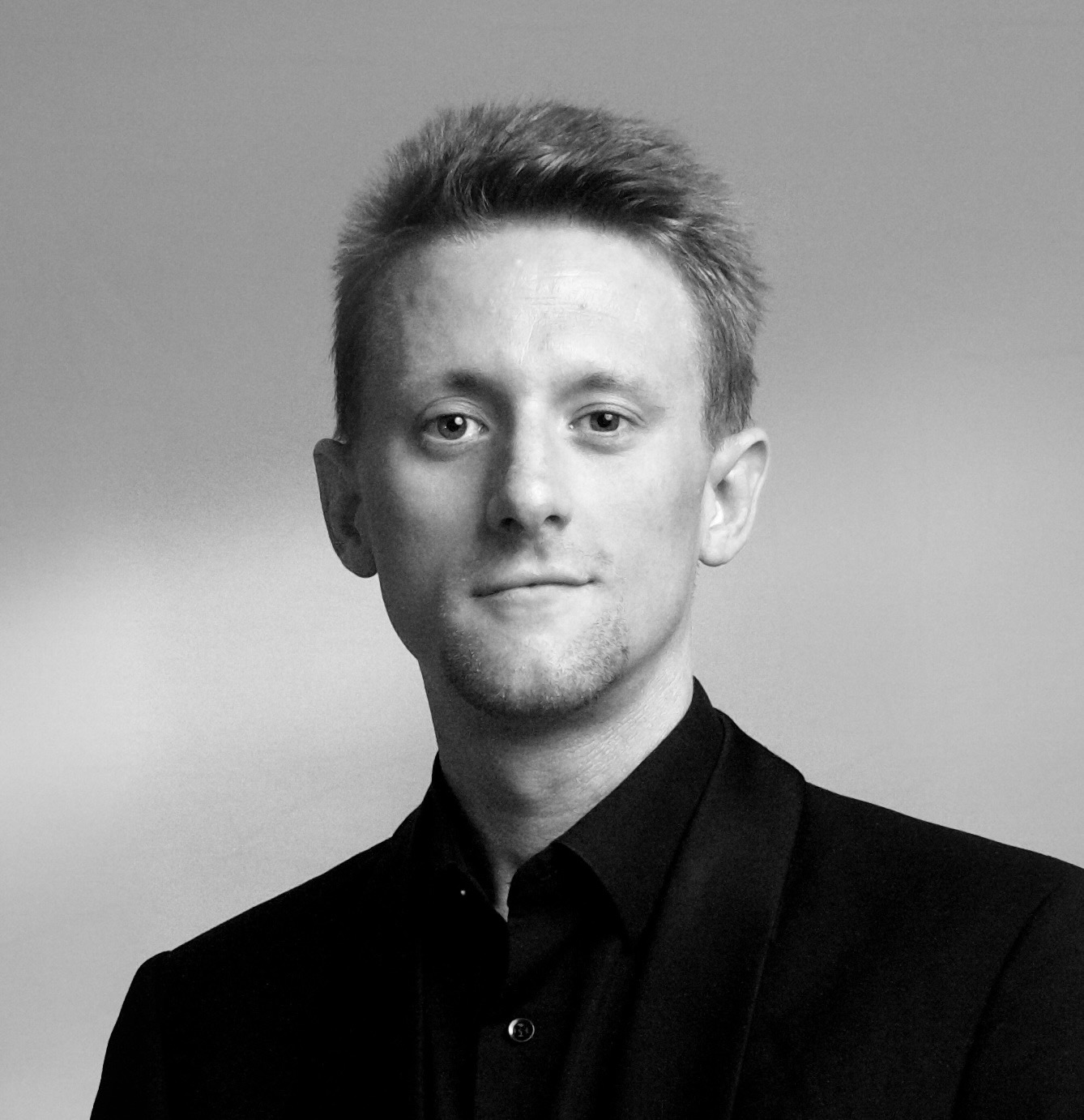
Laurens Lootens is a Researcher in the Department of Applied Mathematics and Theoretical Physics (DAMTP) at the University of Cambridge. His work focuses on theoretical physics, particularly in quantum lattice models, topological phases of matter, and mathematical structures underlying quantum systems. He is affiliated with the High Energy Physics research group within DAMTP. His research interests include dualities in quantum systems, matrix product operator symmetries, conformal field theories, and tensor network methods. Lootens explores topics such as entanglement in many-body systems, symmetry-protected topological phases, and the interplay between algebraic structures and physical phenomena. Publications highlight his contributions to understanding lattice representations of dualities, topological sectors in quantum models, and critical lattice models for conformal field theories. His work bridges theoretical frameworks with computational methods, advancing both fundamental physics and quantum information science.
Mark Gotham is a Senior Lecturer in Cultural Computation at King’s College London’s Department of Digital Humanities. He holds a unique position bridging STEM and the humanities, with prior roles as an Assistant Professor of Computer Science at Durham University and a Professor of Music Theory at Technische Universität Dortmund. His research focuses on computational methods for music theory, corpus creation, and accessibility. Gotham completed a Ph.D. in Music Theory at the University of Cambridge, an MMus in Composition at the Royal Northern College of Music, and a First-Class Bachelor’s in Music from the University of Oxford. His work spans computational musicology, including projects like the OpenScore initiative, which digitizes and opens music scores. He is affiliated with King’s Computational Humanities Research Group and the Centre for Digital Culture. Gotham’s compositions, such as the award-winning CD *Utrumne est Ornatum*, blend theoretical rigor with creative expression. He collaborates with institutions like Deutsche Telekom on projects like *Beethoven X* and leads the Music Computing Lab at King’s. Gotham’s research emphasizes interdisciplinary approaches, using computational tools to explore musical structures and democratize access to music theory. His contributions include frameworks for aligning symbolic music, standards for harmonic analysis, and pedagogical innovations in music education.
Professor Edward Paul Scott Shellard is a leading cosmologist at the University of Cambridge, where he serves as Director of the Centre for Theoretical Cosmology and holds a professorship in Cosmology within the Department of Applied Mathematics and Theoretical Physics (DAMTP) in the Faculty of Mathematics. His career at Cambridge spans over three decades, beginning with his PhD under Stephen Hawking in 1986. Shellard's research focuses on the confrontation between theories of the early universe and empirical cosmology, with particular emphasis on primordial fluctuations for large-scale structure formation. His work includes critical tests to distinguish between inflationary models and identifying signatures of cosmic defects in the cosmic microwave background. He leads the Cosmic Defects and Non-Gaussianity project for the ESA Planck Satellite and has coordinated COSMOS, the UK National Cosmology Supercomputer, since its inception in 1997. His recent publications demonstrate a strong focus on cosmic strings, non-Gaussianity in the CMB, and computational methods for analyzing cosmological data. His work spans theoretical modeling, numerical simulations, and analysis of observational data from major cosmological surveys. Shellard has made significant contributions to the Planck mission publications, particularly in areas related to non-Gaussianity, cosmic strings, and constraints on inflationary models. His research connects fundamental physics with observational cosmology through sophisticated computational techniques. As Director of the Centre for Theoretical Cosmology, Shellard leads a research group focused on Relativity and Gravitation within DAMTP. His work bridges theoretical physics, computational science, and observational cosmology to advance our understanding of the early universe and its evolution.
Professor Allan Rennie serves as Professor in Manufacturing Engineering at Lancaster University's School of Engineering and holds the administrative position of Associate Dean for Engagement within the Faculty of Science and Technology. With a career spanning over 30 years since initiating work in additive manufacturing during the mid-1990s, he has established himself as a leading figure in industrial applications of advanced manufacturing technologies across diverse sectors. His research expertise centers on Additive Manufacturing , Engineering Design , and Manufacturing Process Optimization , with current specializations including design for additive manufacturing (as co-leader of the UK's EPSRC DfAM Network), industrial digitalisation of manufacturing processes, and innovative tooling development using metallic and hybrid approaches. Rennie has significantly contributed to Engineering Education , particularly examining the integration of business and management principles into engineering curricula and analyzing the impacts of online/hybrid delivery modes on student engagement and graduate employability following the COVID-19 pandemic. Recent publication trends reveal Rennie's dual focus on practical manufacturing applications and scholarly analysis of technological evolution. His 2025 bibliometric study maps a decade of Design for Additive Manufacturing research, while his structural analysis of musical instruments demonstrates cross-disciplinary applications of manufacturing techniques. These works reflect his commitment to both advancing manufacturing technology and documenting its academic trajectory through rigorous analysis. Professor Rennie actively supervises PhD candidates including Jenny Roberts, Eunike Sembiring, and Joe Taylor while leading substantial research projects such as the EPSRC DfAM Network (2020-2023), Automating Design for Additive Manufacture with AI (2023-2024), and multiple Engineers in Business Competitions. His extensive grant portfolio spans industrial digitalization, sustainable manufacturing, and educational innovation, with notable projects including RENDER (powder recycling), TecHnology and EntrepreneUrship Education, and Production Capable Additive Manufacturing of Polymers. Rennie contributes to Lancaster's research ecosystem through affiliations with the Centre for Global Eco-innovation, Energy Lancaster initiative, and the Lancaster Product Development Unit. These platforms enable him to bridge academic research with industrial applications across multiple sectors, particularly supporting his work on sustainable manufacturing practices, technology commercialization, and industry engagement strategies that translate research into real-world impact.
Professor Steve Abel is a Professor in the Department of Mathematical Sciences and the Department of Physics at Durham University, with additional affiliation to the Institute for Particle Physics Phenomenology. His research spans theoretical physics with a strong focus on string theory, particle physics phenomenology, and emerging applications of quantum computing. Professor Abel's research interests include: Beyond the Standard Model physics Supersymmetry and string model building Applications of quantum computing to particle physics Genetic algorithms in theoretical physics Non-supersymmetric string vacua Analysis of Professor Abel's recent publications reveals a significant shift toward interdisciplinary research combining traditional theoretical physics with cutting-edge computational techniques. His work increasingly focuses on applying quantum computing and machine learning methods to solve complex problems in string theory and particle physics. Many recent papers explore quantum simulation of field theories, quantum annealing for string model building, and genetic algorithms for solving physics problems. This represents a convergence of theoretical physics with computational science that is transforming how fundamental physics research is conducted. Professor Abel has received recognition for his work, most notably a Cern Theory 6 month Scientific Associateship. His research collaborations span international institutions across Europe and North America, reflecting the global nature of theoretical physics research. Professor Abel actively supervises graduate students, including Puya Mirkarimi. His research program likely involves collaboration with various research groups at Durham University working on theoretical particle physics, quantum computing applications, and computational methods for theoretical physics problems.
Dr. Michael Shekelyan is a Lecturer (Assistant Professor) in Computer Science at Queen Mary University of London (QMUL), part of the School of Electronic Engineering and Computer Science. He holds a PhD in Computer Science from the Libera Università di Bolzano (2018) and a Diploma in Media Informatics from the University of Munich (2014). His research focuses on developing algorithms and data structures for managing large and sensitive datasets, with a particular emphasis on privacy-preserving techniques like differential privacy and federated learning. He has held postdoctoral roles at the University of Warwick and King's College London before joining QMUL in 2023. Research Interests: Privacy-preserving algorithms, differential privacy, federated learning, data management systems, randomized algorithms, and efficient query processing. His work bridges theoretical foundations with practical applications, aiming to enable secure data sharing while preserving individual privacy. Teaching: Leads undergraduate modules in Database Systems and Operating Systems at QMUL. His teaching emphasizes foundational concepts in computer science through rigorous coursework and practical projects. Grants and Funding: Currently supervises a PhD studentship titled 'Privacy-Preserving Algorithms: Unlocking Data Sharing for Medical Sciences & Machine Learning', funded by QMUL and open to UK home students. The role involves exploring privacy-preserving frameworks for collaborative data analysis. Professional Contributions: Serves as a reviewer for top-tier conferences (NeurIPS, ICML, SIGMOD, ICDE) and journals (IEEE TKDE, Data & Knowledge Engineering). Actively involved in conference organization, including NeurIPS Area Chair (2024) and ICDT Proceedings Chair (2024). Labs and Collaborations: Affiliated with the Centre for Fundamental Computer Science at QMUL, fostering interdisciplinary research in theoretical and applied computing. Engages with industry partners on privacy-enhancing technologies and data management solutions.
Dr. Yinglong He is a Lecturer in Automated Electrified Transport (AcT) Systems at the School of Mechanical Engineering Sciences, University of Surrey, UK, and an Honorary Assistant Professor at the School of Engineering, University of Birmingham. His research focuses on intelligent transportation systems, energy management, vehicle dynamics, and AI-driven optimisation. He has held positions including Postdoctoral Research Associate at the University of Cambridge and Technology Expert at the European Commission's Joint Research Centre (JRC). Research interests include autonomous vehicle control, traffic simulation, hybrid/electric vehicle dynamics, and sustainable transport solutions. Notable contributions include advancing microscopic traffic models for automated vehicles and optimising energy systems for hybrid powertrains. His work integrates machine learning, multi-agent systems, and data-driven approaches to address challenges in transport decarbonisation and safety. Recent publications highlight advancements in hybrid vehicle dynamics simulation, lithium-air battery modelling, and energy mapping of urban buildings. He has received the Chinese Government Award for Outstanding Self-Financed Students (2022) and is a Fellow of the Institute for Sustainability (IfS). His expertise spans interdisciplinary collaborations in automotive engineering, energy systems, and smart infrastructure.
Simon Mawhinney is a Professor in the School of Arts, English and Languages at Queen's University Belfast, specializing in composition with a focus on instrumental and electronic media. His work bridges complexist music, post-spectral harmonies, and cultural cantillation influences. Notable collaborations include projects with ensembles in Germany, France, and Iceland. He holds a Queen’s University Teaching Award (2012) and has pioneered modules on Messiaen’s music. His research explores new music performance, computer-assisted composition (using OpenMusic), and experimental technologies. Current roles include PhD supervision in composition, convening MA research methods modules, and undergraduate composition instruction. Key achievements include commissions from Ensemble Caput (Iceland) and Garth Knox/Quatuor Béla, resulting in works such as Marlacoo and a viola d’amore/string quartet piece premiered in Paris (2013). Recent projects involve recordings with pianist Mary Dullea and bass flutist Kolbeinn Bjarnason. His fingerprint research areas include labour studies in composition, technical performance practices, and avant-garde instrumentation. Over 35 compositions span decades, with 2016-2019 works emphasizing electronic integration and algorithmic processes. Awards include the AIC Composition Prize (2001) and Ann Driver Trust Award (2000). Professional service roles include Elected Member of the Academic Council since 2010 and Exams Liason Officer (2009-2011). Teaching: Undergraduate modules on Messiaen, Beethoven's late works, and composition techniques Research: Focus on postwar modernism, new musical technologies, and performance-based creation Public Engagement: Active in festivals, radio interviews, and international recitals
William Heath is a Professor and Head of the School of Computer Science and Engineering at Bangor University. He holds the position of Chair of the UKACC from 2024 to 2027. His research focuses on feedback control theory, particularly addressing actuator nonlinearities such as saturation, rate constraints, backlash, and hysteresis. He employs multiplier theory within absolute stability frameworks to analyze model predictive control and antiwindup strategies. His research interests include nonlinear control systems design, stability criteria for Lur’e systems, and discrete-time extensions of classical control methodologies. He has contributed to foundational work on O’Shea-Zames-Falb multipliers and their applications in robust control. Key collaborations involve international researchers in control systems and applications, though specific partnerships are not detailed. His work bridges theoretical advancements with practical implementations, such as in biomedical BCIs and industrial systems like wind turbines and diesel engines. No awards or grants are explicitly listed, but his extensive publication record (105+ outputs) reflects sustained academic engagement. As Head of School, he leads a team advancing interdisciplinary research in computer science and engineering.
Gavin Brown is Professor of Mathematics at the University of Warwick's Mathematics Institute. His research focuses on birational classification in algebraic geometry using computer-assisted constructions and databases. He investigates complex geometric structures including Fano varieties and Calabi-Yau manifolds through both theoretical frameworks and computational approaches. Research interests center on developing mathematical models for noncommutative functions, deformation theory of algebraic curves, and singularity classifications. This work bridges pure mathematics with computational applications to solve geometric classification problems. Recent publications demonstrate consistent themes in computational algebraic geometry, particularly in developing databases for geometric structures and advancing theoretical understanding of deformation spaces. The research integrates computational methods with deep geometric insights.
Professor Phil McMinn is the School PGR Lead and head of the Testing Research Group at the University of Sheffield 's School of Computer Science . His research focuses on automated software testing , particularly addressing test flakiness, mutation analysis, and pseudo-tested code identification. Research Interests : Software testing, search-based software engineering, test oracles, test flakiness, mutation analysis Grants : EPSRC, Meta, RCUK Recent work includes empirical studies on test flakiness and mutation analysis for relational database schemas , with applications in autograding systems and Rust programming . He has published extensively in journals like IEEE Transactions on Software Engineering and ACM Transactions on Software Engineering and Methodology . Scientific awards include the Best Paper Award at SSBSE 2010 . Current PhD students include Owain Parry , Islam Elgendy , Zalán Lévai , Megan Maton , and Olek Osikowicz . His team collaborates on projects funded by EPSRC and industry partners.
Dr. Suman Kumar Ghosh is a Lecturer in Data Science and Computer Science at the London campus of York St John University, affiliated with the York Business School. His research focuses on computer vision, machine learning, natural language processing, and large language models, with over a decade of experience in these domains. His work spans applications in handwritten character recognition, scene text analysis, and document processing. His research contributions include advancements in word spotting techniques, segmentation-free CNN models, and the development of datasets for historical document analysis. He has published in leading conferences such as ICDAR and CVPR, as well as journals like Pattern Recognition Letters and the International Journal on Document Analysis and Recognition (IJDAR). Dr. Ghosh’s expertise bridges academic research and practical industry applications, particularly in areas such as scene text understanding for advertisements and cultural heritage digitization. His teaching includes modules on machine learning and artificial intelligence concepts.