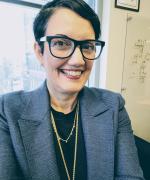
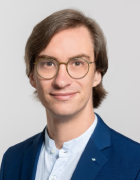
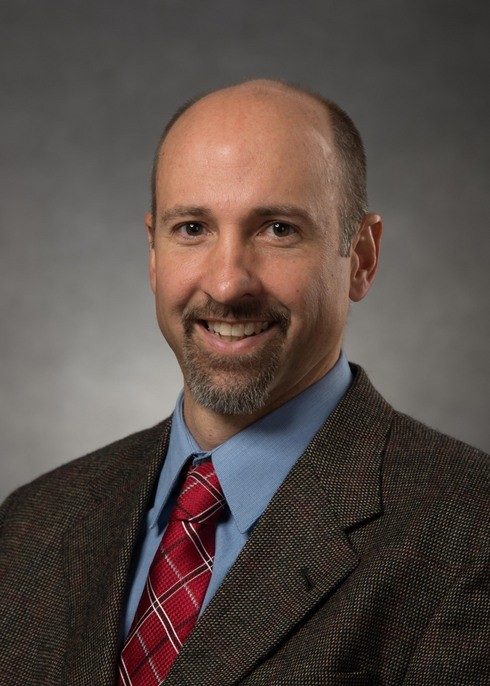
Rosa I. Arriaga is an Associate Professor in the School of Interactive Computing at Georgia Institute of Technology, where she directs the Ubicomp Health and Wellness Lab. Her research focuses on Human-Computer Interaction (HCI), Ubiquitous Computing, and mHealth, with applications in mental health, chronic disease management (e.g., diabetes), and pediatric asthma care. She designs technology systems to improve patient engagement, continuity of care, and clinician-patient communication. Research Areas: Chronic Care Management PTSD Therapy Support (PECSS project) Diabetes Management (DUCSS project) mHealth System Design AI in Healthcare Key Projects: PECSS: Leverages ubiquitous computing and machine learning to address clinical challenges in PTSD therapy. DUCSS: A diabetes management system to streamline patient education and self-monitoring, particularly for underserved populations. ZenVR: A virtual reality system for meditation education, validated through longitudinal studies. Teaching: Teaches undergraduate courses in HCI and graduate courses in Human-Centered Computing (HCC). Her Coursera course Intro to User Experience Design has over 50K learners. Grants & Partnerships: Funded by GT-Emory AI Humanity, American Diabetes Association, and Georgia Center for Diabetes Translation Research. Collaborations with Emory University, University of Rochester, and medical professionals. Labs & Teams: Leads the Ubicomp Health and Wellness Lab, fostering interdisciplinary research with graduate and undergraduate students focusing on health technology innovation.
Sara Zahedi is a Professor of Numerical Analysis at the Department of Mathematics, KTH Royal Institute of Technology, working within the Division of Numerical Analysis, Optimization and Systems Theory. She serves as an Associate Editor for the SIAM Journal on Numerical Analysis and contributes to the SCI Faculty Board to enhance collaboration and transparency in academic decision-making. Her educational background includes a doctorate from KTH on numerical methods for fluid interface problems followed by a postdoctoral position at Uppsala University. Doctorate: KTH Royal Institute of Technology Postdoctoral Position: Uppsala University Zahedi's research bridges mathematical theory and practical applications, focusing on computational methods for partial differential equations in evolving domains. She pioneers Cut Finite Element Methods (CutFEM) to eliminate re-meshing requirements in multiphase flow simulations, ensuring accuracy and robustness when interfaces separate immiscible fluids. Her work specifically targets challenges in large deformations and time-dependent geometries. Analysis of her recent publications reveals a concentrated research trajectory in advancing CutFEM for diverse applications including Stokes flow, Darcy flow, Maxwell's equations, and hyperbolic conservation laws. Key trends include high-order conservative schemes, divergence preservation, stabilization techniques for unfitted meshes, and extensions to surface PDEs and multi-physics problems. Her scientific recognition includes: European Mathematical Society Prize (2016) for outstanding contributions by young researchers Wallenberg Fellowship (2019) with extension granted in 2024 Zahedi serves as examiner for Degree Projects in Scientific Computing (SF250X, SF259X) and course responsible for Engineering Mathematics projects (SA120X). Her Wallenberg Fellowship provides substantial research funding supporting her work on numerical algorithm development. While specific lab structures aren't detailed, her research operates within KTH's Division of Numerical Analysis, emphasizing collaborative development of simulation tools for industrial and scientific applications. Her current research focuses on extending CutFEM to complex multi-physics scenarios with emphasis on conservation properties and computational efficiency, with potential applications in aerospace, biomedical engineering, and environmental modeling.
Hank Childs is a Professor in the School of Computer and Data Sciences at the University of Oregon, specializing in scientific visualization and high-performance computing. He leads the Research Group on Computing and Data Understanding at eXtreme Scale (CDUX) and has held leadership roles including Interim Executive Director of the School of Computer and Data Sciences. His educational background includes a Ph.D. (2006) and B.S. (1999) in Computer Science from the University of California at Davis. Prior to academia, he worked for 14 years at Lawrence Livermore and Lawrence Berkeley National Laboratories, where he served as architect of the VisIt open-source visualization tool. Research interests center on visualizing extreme-scale scientific datasets from supercomputers, with a focus on in situ visualization for cosmology, seismology, and fluid dynamics. He has pioneered projects like VTK-m and Ascent, and his work explores power-performance tradeoffs and data-parallel algorithms for GPUs. Recent publications emphasize scalable visualization techniques for exascale computing, with 15 notable works from 2021-2020 covering particle advection, in situ triggering, and power-aware frameworks. His research has been honored with multiple best paper awards at IEEE LDAV, EGPGV, and SC conferences. DOE Early Career Award (2012) University of Oregon Faculty Excellence Award (2018) 4+ million dollars in research funding since 2013 5 Best Paper awards in 2021 alone As an educator, he received four consecutive CIS Best Teacher Awards (2014-2019). He has served as Associate Editor for IEEE Transactions journals and organized numerous visualization workshops including Dagstuhl seminars and Shonan workshops.
Juha Järvelä is a Staff Scientist at the Department of Built Environment , Aalto University, and a member of the Aalto Environmental Hydraulics Lab . His research focuses on environmental hydraulics, particularly on Hydraulics of environmental channels Modeling of vegetated flows Environmentally sound hydraulic engineering Järvelä's research spans fluid dynamics in river systems, with an emphasis on vegetation-flow-sediment interactions. Key areas include flow resistance in flexible and rigid vegetation, hydrodynamic modeling of floodplains, and nature-based solutions for water management. His recent publications investigate Blockage effects of woody vegetation Longitudinal dispersion in patchy vegetation Two-stage channel performance in agricultural settings Hydrodynamic characterization of natural-like plants Järvelä has received notable scientific recognition, including 2014 : Outstanding Reviewer Award from the American Geophysical Union for Water Resources Research 2005 : Doctoral Dissertation Award from the Oskari Vilamo Foundation Contact: juha.jarvela@aalto.fi | Phone: +358505626727 | Postal: Tietotie 1 E, 02150 Espoo, Finland
Patrick Kastner is an Assistant Professor at the School of Architecture and holds an adjunct appointment at the H. Milton Stewart School of Industrial and Systems Engineering at Georgia Tech. He directs the Sustainable Urban Systems Lab, focusing on environmental performance simulation and urban decarbonization. His work emphasizes software tools for sustainable urban decision-making, such as Eddy3D, a microclimate modeling toolkit widely adopted in academia and practice. Education: Ph.D. and M.S. in Systems Science and Engineering, Cornell University (2022, 2021) M.S. in Sustainable Building Science, Technical University of Munich (2017) B.S. in Energy Engineering, University of Erlangen–Nuremberg (2012) Research Interests: Environmental performance simulation, urban decarbonization, machine learning applications in urban systems, spatial analysis, and software development for sustainability. His work integrates computational fluid dynamics (CFD), surrogate modeling, and data-driven approaches to address urban climate challenges. Key Projects: Leads the Vertically Integrated Project SMUR (Surrogate Modeling for Urban Regeneration), fostering interdisciplinary collaboration across Georgia Tech. Developed Eddy3D, which streamlines microclimate simulations for architects and urban planners. Grants & Advising: Engages students from sophomore to graduate levels in sustainability research. Teaches at Cornell and UPenn previously. Advises on projects blending engineering, urban design, and climate science. Labs & Teams: Director of the Sustainable Urban Systems Lab, focusing on software tools for sustainable urban transformation. Collaborates with industry partners and global institutions on decarbonization strategies.
Erhan Kutanoglu is an Associate Professor in the Operations Research and Industrial Engineering Graduate Program at The University of Texas at Austin's Cockrell School of Engineering. He joined the faculty in 2002 and received a National Science Foundation Early Career Development Award that year. His research focuses on integrating predictive models with stochastic optimization to address challenges in disaster resilience, humanitarian logistics, and semiconductor manufacturing. Key areas include hurricane mitigation, power grid resilience, and supply chain optimization. Education: PhD in Industrial Engineering from Lehigh University (1999). Research Interests: Applied operations research for manufacturing/service logistics, disaster resilience decision-making, semiconductor cycle time optimization, and inventory modeling. Recent work emphasizes hurricane evacuation planning, flood mitigation for critical infrastructure, and equity considerations in grid resilience. Publications: Over 50 peer-reviewed articles in journals like IEEE Transactions, European Journal of Operational Research, and Annals of Operations Research. Notable work includes models for power grid resilience, patient evacuation strategies, and semiconductor manufacturing efficiency. Awards: NSF CAREER Award (2002), recognized for contributions to service logistics optimization and stochastic modeling. Advising & Grants: Advised graduate students on projects involving hurricane preparedness and semiconductor scheduling. Active in collaborative research with industry partners to streamline manufacturing processes and enhance disaster response systems. Labs/Teams: Engaged with the Cockrell School's infrastructure resilience research groups and interdisciplinary teams addressing climate adaptation challenges.
Prof. Helge Stein is a Professor in the Department of Chemistry at the Technical University of Munich (TUM), leading the Professorship for Digital Catalysis. He holds a doctorate in mechanical engineering from Ruhr University Bochum (summa cum laude) and conducted postdoctoral research at Caltech before joining TUM in 2023. His research focuses on accelerating materials discovery and optimization through digital tools like machine learning, robotics, and data management, with applications in catalysis and battery systems. Stein has pioneered the development of Materials Acceleration Platforms (MAPs) to streamline experimental and computational workflows globally. Education: Bachelor/Master in Physics, Georg August University of Göttingen (2008–2013) Doctorate in Mechanical Engineering, Ruhr University Bochum (2017, summa cum laude) Postdoc, California Institute of Technology (2017–2020) Tenure-track Professor, Karlsruhe Institute of Technology (2020–2023) Research Interests: Integration of robotics and AI in materials research High-throughput experimentation for battery and catalysis systems Data-driven approaches to nonlinear material-behavior analysis Development of decentralized Materials Acceleration Platforms (MAPs) Key Awards: ACS Engineering Au Rising Star (2023) Kit Innovation Award (2023) Masao Horiba Award (2021) Eickhoff Prize (2018) Teaching: Leads courses on high-throughput methods, data management in chemistry, and digital catalysis seminars. Collaborates with interdisciplinary teams across TUM's School of Natural Sciences and the Munich Institute of Robotics and Machine Intelligence. Labs/Teams: Directs research groups focused on automated electrochemistry, materials robotics, and AI-driven battery design, with partnerships spanning academia and industry for global MAP implementations.
Judith Fauth is a researcher at the Technical University of Munich's Chair of Computing in Civil and Building Engineering, where she pioneers digital transformation in building permit processes through Building Information Modeling (BIM) and digital twin technologies. Her work bridges civil engineering, computer science, and public policy to streamline regulatory compliance across international contexts. Her research expertise spans Building Permit Processes , Digital Building Permits , Ontology Engineering , and Process Modeling , with emphasis on developing standardized frameworks for global permit system benchmarking. She investigates how semantic technologies and digital twins can automate regulatory compliance while accommodating regional variations in construction law and administrative practices. Analysis of her 2023-2025 publications reveals three dominant trends: (1) integration of digital building permits with digital building logbooks for lifecycle data management, (2) development of ontologies like OBPA for automated permit reviews, and (3) creation of taxonomies and process models (e.g., PACE-BP framework) enabling cross-national comparisons of permit systems. This work increasingly incorporates sustainability metrics and stakeholder-specific KPIs. Within TUM's research infrastructure, Dr. Fauth contributes to the BIM Lab and Digital Twinning research groups, collaborating on projects involving Gaia-X-based data frameworks and semantic modeling of the built environment. She teaches practical software development skills through the SoftwareLab course, preparing engineering students for digital construction workflows.
Sinisa Krajnovic is a Professor of Computational Fluid Dynamics and Head of the Department of Mechanics and Maritime Sciences at Chalmers University of Technology. His research focuses on vehicle aerodynamics, bluff-body flows, and time-dependent numerical simulations, particularly in ground vehicle flows (trains, cars, buses) and high-speed train dynamics. He leads studies on flow control mechanisms, bi-stable wake phenomena, and turbulence modeling using advanced CFD techniques like LES and PANS. Recent work emphasizes active flow control optimization, snow-resistance performance of bogies, and aerodynamic interactions in platoons. His 247+ publications span topics including high-speed train aerodynamics, ship airflow control, and bluff-body wake dynamics. Collaborations involve experimental validation and industrial applications in rail and marine transportation.
Igor Jankovic is an Associate Professor in the Department of Civil, Structural and Environmental Engineering at the University at Buffalo's School of Engineering and Applied Sciences. His research focuses on groundwater flow and contaminant transport in heterogeneous aquifers, with particular emphasis on the impact of aquifer heterogeneity on solute movement and transport modeling. Education: PhD in Civil Engineering, University of Minnesota (1997) MS in Civil Engineering, University of Minnesota (1993) BS in Civil Engineering, University of Split, Croatia (1990) His work addresses critical issues in groundwater hydrology including: Advective transport mechanisms in heterogeneous media Breakthrough curve prediction and analysis Effective hydraulic conductivity modeling Upscaling of flow and transport parameters Application of the Analytic Element Method (AEM) for complex aquifer simulations Comparison of transport models (CTRW, MRMT) in heterogeneous environments Research trends in his publications reveal a focus on: Three-dimensional heterogeneous aquifer modeling Non-Fickian and anomalous transport behavior Impact of spatial variability on contaminant migration Development of numerical algorithms for large-scale groundwater simulations Validation of stochastic transport theories against field experiments (e.g., MADE and Borden aquifers) Interaction between physical and chemical heterogeneity in reactive transport
Michele Gattullo serves as an Assistant Professor within the Department of Mechanics, Mathematics & Management at the Polytechnic University of Bari, Italy, specializing in design methods for industrial engineering (ING-IND/15). His research bridges cutting-edge extended reality technologies with practical industrial applications, focusing on human-centered solutions for manufacturing, maintenance, and workplace design. Dr. Gattullo's research portfolio centers on Augmented Reality, Virtual Reality, and Biophilic Design, with significant contributions to Human-Computer Interaction in industrial contexts. He investigates how nature-inspired elements in virtual workspaces enhance employee well-being and productivity, while simultaneously developing practical AR tools for assembly guidance, technical documentation, and maintenance support. His work uniquely integrates ergonomics, cognitive psychology, and industrial engineering to optimize human-technology interaction in complex production environments. Analysis of his 15 most recent publications reveals two dominant research trajectories: biophilic design frameworks for virtual/metaverse workspaces (2023-2025) and industrial AR authoring methodologies. The biophilic stream establishes evidence-based guidelines for digital nature integration, while the AR stream delivers validated tools like ADAM and minimal AR approaches that streamline technical documentation creation. Both trajectories emphasize user experience validation through rigorous industrial studies, demonstrating strong interdisciplinary impact across computer science, industrial engineering, and environmental psychology. Scientific Awards: No awards or honors were documented in the available sources. Advising and Grants: The provided materials contain no information regarding graduate student supervision, research grants, or funding sources. His academic profile emphasizes publication output over mentoring activities or project financing details. Laboratories and Teams: While Dr. Gattullo's research involves advanced XR technologies, the source text does not specify laboratory facilities, research groups, or collaborative teams associated with his work at Politecnico di Bari.
Toufik AZIB is a Full Professor and scientific coordinator of the ECMS (Energy and Conception of Mechatronic Systems) research theme at ESTACA Engineering School in France. He leads a team of 6 teacher-researchers and 13 PhD students, focusing on optimal design of power electronics and energy management for hybrid power systems. His work bridges academic research and industrial applications in sustainable mobility, with strong collaborations across Europe and Algeria. Dr. AZIB received his Electrotechnical Engineering Diploma from the University of Setif, Algeria in 2006, followed by an M.Sc. in Electrical Engineering from ENSEM-INPL, France in 2007. He earned his Ph.D. in electrical engineering from the University of Paris South XI in 2010 and completed his HDR (Habilitation à Diriger des Recherches) from the University of Paris Saclay in 2021. His academic journey reflects a strong foundation in both theoretical and applied electrical engineering. His research focuses on the modeling, control, and optimal design of embedded energy systems under multi-physical constraints (electrical, thermal, electromagnetic compatibility, volume, reliability). He specializes in energy management strategies for hybrid systems combining fuel cells, batteries, and ultracapacitors, with applications in electric vehicles and the 'more electric aircraft.' His work integrates numerical and experimental approaches to develop methodologies for pre-dimensioning and real-time energy management, addressing challenges in sustainable transportation. Analysis of Dr. AZIB's recent publications reveals a strong trend toward multidisciplinary design optimization for automotive applications, particularly electronic throttle systems. His research increasingly incorporates knowledge management techniques and addresses reliability considerations in hybrid power source design. There's a clear progression from fundamental energy management strategies to sophisticated eco-driving solutions for electric vehicles, reflecting the evolving demands of sustainable mobility. Best Paper Award for 'Structure and Control Strategy for a Parallel Hybrid Fuel Cell/Supercapacitors Power Source' at IEEE VPPC'09 Dr. AZIB has supervised numerous PhD and Master's students across multiple institutions in France, Algeria, and Colombia. He leads significant research projects including MIMe (Module d'Intégration et de simulation Mécatronique), ECOS Nord (Eco-driving strategies for electric motorcycle), and AmCoAIR (improving air quality in vehicle cabins), securing funding from national and international sources. His work demonstrates strong industry collaboration with partners like Valeo, PSA, and Renault. As experimental platforms coordinator since 2012, Dr. AZIB oversees 10 specialized experimental facilities at ESTACA's S2ET-Paris Saclay research pole, including those for autonomous electric vehicles, drones, electric machines, and power modulators. His team regularly develops proof-of-concept demonstrators to validate research findings, such as the Formula Student electric vehicle and the 'Electric Appeal' streamliner project, demonstrating practical applications of their theoretical work.
Panagiotis (Panos) Dimitrakopoulos is an Associate Professor in the Department of Chemical & Biomolecular Engineering at the University of Maryland, College Park. His research focuses on computational fluid dynamics, multiphase flows, and biophysical systems. He specializes in modeling elastic capsules, microfluidic devices, and polymer dynamics using advanced numerical algorithms. His work intersects fluid mechanics, biomedical engineering, and materials science. He has developed spectral boundary element methods for interfacial dynamics and contributed to understanding capsule deformation in microfluidic environments. His studies address drug delivery systems, microfluidic sorting mechanisms, and hemodynamic forces in biological systems. Key applications include designing next-generation drug carriers and analyzing blood cell mechanics in microcirculation. Notable contributions include analyzing elastic capsule migration in converging micro-capillaries, multi-compartment micro-capsule fabrication, and non-Newtonian fluid dynamics in confined geometries. His research spans from theoretical fluid mechanics to biomedical applications, emphasizing computational modeling and experimental validation.
Dr. Christopher Roy is a Professor and Assistant Department Head for Graduate Studies in the Aerospace and Ocean Engineering Department at Virginia Tech (since 2013). He holds a Ph.D. from North Carolina State University (1998) and has held roles at Sandia National Laboratories and Auburn University. His research focuses on Computational Fluid Dynamics (CFD) , Verification and Validation , Turbulence Modeling , and Uncertainty Quantification , with notable contributions to CFD validation frameworks and error estimation techniques. He leads the CFD Research Group and co-teaches courses like Computational Fluid Dynamics and Verification and Validation in Scientific Computing . Education : Ph.D., 1998, Aerospace Engineering, North Carolina State University M.S., 1994, Aerospace Engineering, Texas A&M University B.S.E., 1992, Mechanical Engineering and Materials Science, Duke University Research Interests : Dr. Roy’s work emphasizes advancing CFD methodologies for complex flows, including turbulence modeling for hypersonic and high Reynolds number flows, and validation strategies for non-equilibrium boundary layers. He explores computational acceleration techniques (e.g., GPU-CPU hybrid systems) and error transport equations to improve simulation accuracy and efficiency. His team collaborates with NASA and industry on challenges like the VT-NASA CFD Validation Challenge and BlueRidge CFD solver development. Awards : Presidential Early Career Award for Scientists and Engineers (2006) Associate Fellow, AIAA (2006) Faculty Fellow Award, Virginia Tech (2009) Advising and Grants : Dr. Roy oversees graduate studies and has secured grants for research in CFD validation and turbulence modeling. His work bridges academic, industrial, and federal collaborations, including projects with Sandia National Labs and NASA. He actively contributes to AIAA technical committees and organizes CFD validation workshops. Labs and Teams : He leads the CFD Research Group at Virginia Tech, focusing on code development, validation experiments, and computational methodologies. His team develops tools like the SENSEI and BlueRidge solvers and participates in NATO-AVT349 projects for naval applications.
Dr. Mohamed Elamien is an Assistant Professor in the Department of Electrical and Computer Engineering at McMaster University . His research focuses on automating high-performance integrated circuit (IC) design, addressing Power-Performance-Area (PPA) challenges in semiconductors, and developing self-powered platforms for emerging technologies like biomedical and IoT applications. He holds a BSc (Highest Honors) and MSc from the University of Sharjah (2015–2017), and a PhD in Electrical and Computer Engineering from the University of Calgary (2021). Prior to academia, he worked as a senior analog/mixed-signal circuit design engineer at Synopsys (2022). Education: BSc (Highest Honors) in Electrical & Electronics Engineering – University of Sharjah (2015) MSc in Electrical & Electronics Engineering – University of Sharjah (2017) PhD in Electrical & Computer Engineering – University of Calgary (2021) His research interests span analog and mixed-signal circuit design , CMOS integrated circuits , biomedical technologies , and energy-efficient systems . He has developed innovative designs for oscillators, filters, and low-power circuits with applications in IoT and healthcare. His work emphasizes automation and symbolic math tools to streamline circuit synthesis. Dr. Elamien has published extensively in top-tier journals like IEEE Transactions on VLSI Systems and IEEE Transactions on Microwave Theory and Techniques , focusing on topics such as all-pass filters , low-power oscillators , and AI-driven circuit design . His articles often address challenges in high-frequency communication systems and noise reduction . Awards: Alberta Innovates Graduate Student Award (2020 – Technology Category) Alberta Graduate Excellence Scholarship (2019–2020) 2022 Schulich School of Engineering Graduate Student Research Excellence Award He currently teaches ELECENG 2CJ4: Circuits and Systems and ELECENG 3TP3: Signals and Systems , emphasizing advanced circuit analysis and systems theory. His lab explores next-generation circuit architectures for energy-efficient and biomedical applications.