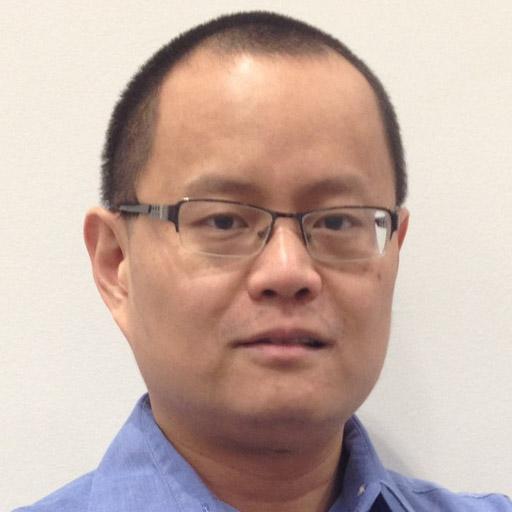
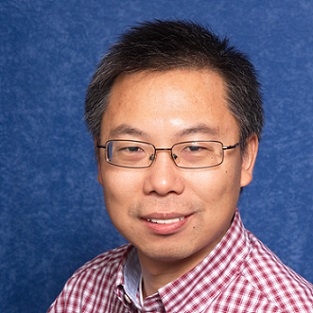
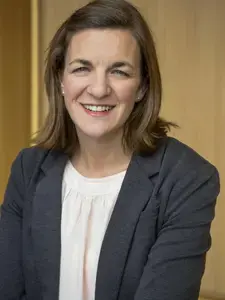
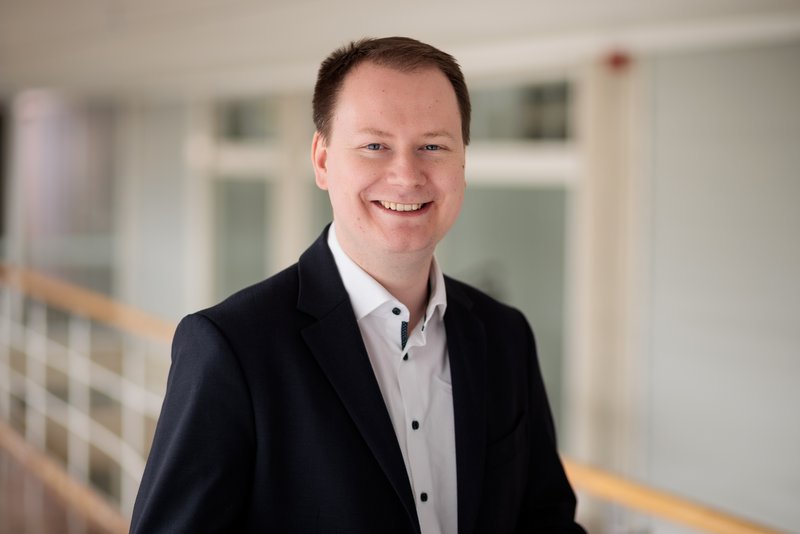
Dr. Yang Wang is an Associate Professor in the Department of Computer Science and Software Engineering at Concordia University. His research focuses on computer vision and machine learning, with a particular emphasis on domain adaptation, meta-learning, and privacy-preserving techniques. He actively advises prospective graduate students through a dedicated webpage outlining application procedures. Research interests include few-shot learning, test-time adaptation, and cross-modal applications such as handwritten text recognition and gaze estimation. His work explores how models can adapt dynamically to new domains using limited labeled data, with applications in crowd counting, medical data analysis, and cybersecurity. He also investigates privacy-preserving methods for deep learning models to protect user attributes and sensitive information. Recent publications highlight advancements in meta-auxiliary learning frameworks and efficient user adaptation techniques. His contributions span journals and conferences, showcasing innovations in both foundational machine learning methodologies and real-world applications.
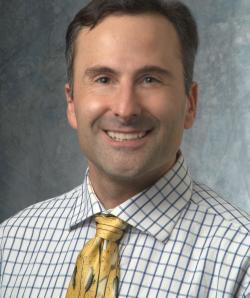
Vincenzo Liberatore is an Associate Professor in the Department of Computer and Data Sciences at Case Western Reserve University’s Case School of Engineering, and currently serves as Associate Chair. His research focuses on smart grid technologies, real-time network control, distributed systems, and randomized algorithms. He holds a PhD and MS in Computer Science from Rutgers University (1998 and 1994), and a BS in Electrical Engineering from Sapienza University of Rome (1992). Dr. Liberatore developed the Energy Information Dashboard (EIDA) with FirstEnergy, an educational tool modeling electricity markets and grid dynamics. He has contributed to patents like the 2014 'High-Performance Streaming Dictionary.' His work spans publications in control systems, theoretical computer science, and energy grid communication. He has served on program committees for the Workshop on Factory Communication Systems (WFCS) and International Conference on Mobile Data Management (MDM). Teaching responsibilities include courses in computer science and engineering, reflecting his expertise in both academia and industry-relevant research.
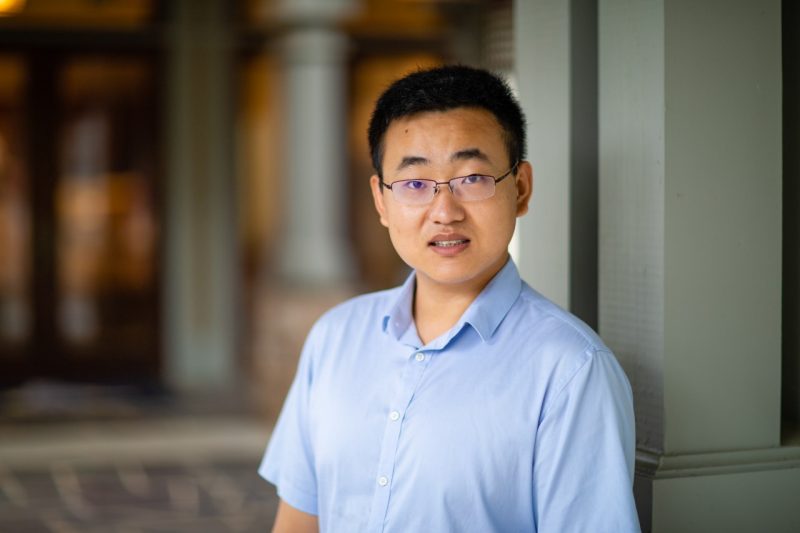
Peng Gao is an Assistant Professor in the Department of Computer Science at Virginia Tech. He is affiliated with the Virginia Tech Security & Intelligence Lab and holds a Ph.D. in Electrical Engineering from Princeton University. Prior to his faculty position, he was a postdoctoral researcher at UC Berkeley and held research internships at Microsoft Research, Facebook, and NEC Laboratories America. Education includes a B.Eng. from Shanghai Jiao Tong University (2009-2013), M.A. and Ph.D. from Princeton (2013-2019), and an exchange program at the University of Hong Kong (2012). Key roles include Technical Program Committee memberships for conferences like IEEE S&P, USENIX Security, and CCS. Research focuses on Cybersecurity (APT prevention, network security with P4/eBPF) AI applications (LLMs for security, AI safety) Systems security (attack investigation, threat intelligence) AI for science (molecular/materials prediction) Notable awards include the 2022 Amazon-VT Initiative Faculty Award, CCI Fellowships, and multiple best paper nominations. His lab has received grants from CCI, NSF, and industry partners like Google Cloud and Cisco. Teaching includes courses on Principles of Computer Security (CS 4264) and Blockchain Technologies (CS 5594). He advises ~20 students across Ph.D., MS, and undergraduate levels.
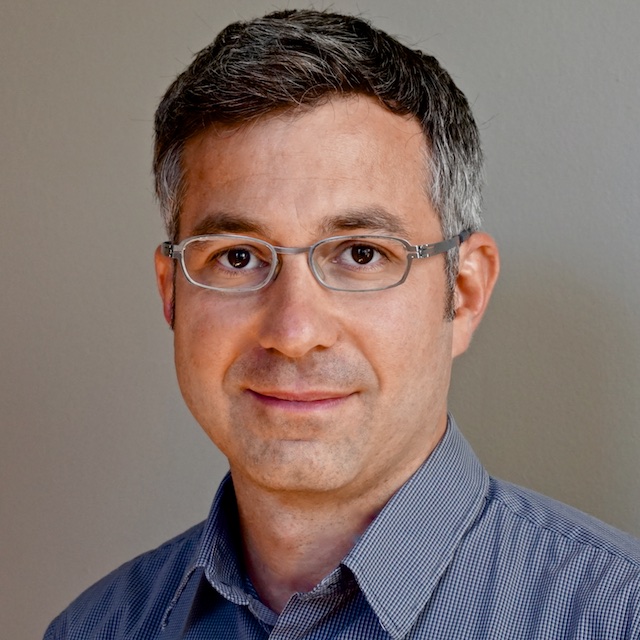
Gerome Miklau is a Professor of Computer Science at the University of Massachusetts Amherst, affiliated with the Manning College of Information and Computer Sciences (CICS). He leads the DREAM Lab and focuses on privacy, security, and equitable data management, particularly in differential privacy and fair data analysis. His work includes designing algorithms for private data synthesis, privacy-preserving SQL engines, and auditing systems like AuditGuard. He co-founded Tumult Labs to commercialize privacy technology and advised the U.S. Census Bureau on privacy for the 2020 decennial census. Education: Ph.D. in Computer Science from the University of Washington (2005), B.S. in Mathematics and Rhetoric from UC Berkeley (1995). Research Interests: Differential privacy, secure data management, fairness in algorithms, privacy-preserving data synthesis, and forensic database analysis. His lab develops tools like Ektelo and PrivateSQL, addressing challenges in privacy-accurate tradeoffs and scalable private data processing. Awards: 2006 ACM SIGMOD Dissertation Award, 2007 NSF CAREER Award, 2013 ICDT Best Paper Award, and two ACM PODS Test-of-Time Awards (2020 and 2012). Grants & Service: Co-chair of OpenDP Advisory Board, steering committee member for TPDP workshops, and organizer of the 'Data, Responsibly' Dagstuhl workshop. His service includes program committees for SIGMOD, ICML, and FAT*. He teaches courses on databases, privacy, and programming. Labs/Teams: DREAM Lab (Data systems Research for Exploration, Analytics, and Modeling) and collaborations with the Center for Data Science and Cybersecurity Institute at UMass Amherst.
Liqiang Wang is a Professor in the Department of Computer Science at the University of Central Florida (UCF), where he directs the Big Data Lab. Previously, he served as faculty at the University of Wyoming (2006-2015). He holds a Ph.D. in Computer Science from Stony Brook University (2006) and spent a visiting research period at IBM T.J. Watson Research Center (2012-2013). His research focuses on big data analytics, high-performance computing, parallel systems optimization, and applying deep learning to detect programming errors and enhance model robustness. Education: Ph.D., Computer Science, Stony Brook University (2006); Visiting Researcher, IBM Watson (2012-2013). Research Interests: Improving accuracy and security of big data models, optimizing parallel computing systems (HPC, Cloud, GPUs), program analysis for concurrency errors, and deep learning applications in anomaly detection and adversarial robustness. Notable projects include scalable LSQR algorithms for seismic tomography and the OpenMP Analysis Toolkit (OAT) for concurrency error detection. Key Awards: NSF CAREER Award (2011), Castagne Faculty Fellowship (2013-2015), UCF Mid-Career Refresh Award (2020), and grants including a $50K NSF CIVIC-PG grant (2022) and Google/Meta donations. Advising and Grants: Supervises over 20 Ph.D./M.S. students and has secured grants totaling over $100K. Notable collaborations include seismic tomography with NCAR and cloud computing optimization. Labs/Teams: Director of UCF’s Big Data Lab, collaborating on projects like Parallel LSQR and Anti-Neuron Watermarking.
Professor Xiaodong Liu is a faculty member at Edinburgh Napier University, affiliated with the School of Computing, Engineering and the Built Environment . His research spans Internet of Things , Edge Computing , Artificial Intelligence , and Cybersecurity , with a focus on decentralized systems and data-driven decision-making. Research Themes : IoT orchestration, federated learning, smart city infrastructure, building maintenance optimization, and automotive cybersecurity. Current Projects : Leading Swarmchestrate (EU-funded), Long-range Perceptive Autonomous Vehicles (Royal Society), and Met-Bot for Disaster Surveillance (Royal Society). His recent publications emphasize privacy-preserving edge learning , semantic IoT data validation , and deep learning for weather prediction . As a supervisor, he has guided PhD students in areas like federated learning, smart building systems, and IoT security. Collaborations include partnerships with institutions in Scotland, China, and Italy, alongside funding from European Commission , Royal Society , and Scottish Funding Council . He contributes to international conferences and journals, with notable work in IEEE Transactions , ACM TAAS , and MDPI publications.
Hiroshi Toyoizumi is a Professor at Waseda University's Faculty of Commerce and Graduate School of Accountancy, with a Ph.D. in Mathematical Physics from Waseda University. His work bridges Applied Probability , Operations Research , and Computational Biology , focusing on stochastic modeling across biological and network systems. Research Interests Stochastic Models in Biology : Analyzing social queues in hover wasps and meiotic DSB regulation using quasi-birth-death processes and survival analysis. Network Security : Modeling computer virus spread on scale-free networks and proposing active defense strategies. Queueing Theory : Developing analytical frameworks for on-demand streaming, quantum merging, and blockchain-based systems. Article Trends Recent work (2020-2024) explores nonlocal diffusion , quantum queueing , and swarm behavior in financial markets . Mid-2010s studies focus on cooperative breeding and DNA recombination dynamics . Early papers (pre-2010) examine computer virus ecology , secure group communication , and deterministic queue analysis . Scientific Awards Biotechno 2013 Best Paper Award IEICE Switching Workshop SSE Research Award (1999) IEICE Young Research Engineer Award (1997) Teaching Activities Graduate-level courses in Operations Research and Financial Engineering . Undergraduate and graduate seminars in Applied Mathematics and Probabilistic Models .
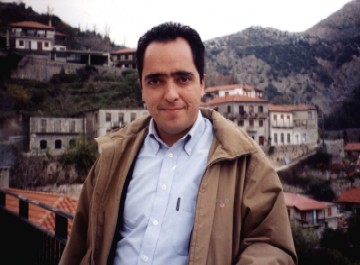
Yannis Theodoridis is a Professor at the Department of Informatics, University of Piraeus, leading the Information Systems Laboratory (InfoLab). He specializes in spatiotemporal databases, mobility analytics, and maritime data science. His research focuses on trajectory analysis, location-based services, and big data frameworks for transportation and maritime surveillance. Key projects include the MOD (Moving Objects Databases) initiative, the ARGOS framework for real-time trajectory prediction, and contributions to the HERMES trajectory database engine. He has advised 7 PhD students and co-authored numerous papers in IEEE and ACM venues. His work addresses challenges like vessel collision risk assessment, urban mobility optimization, and maritime event detection. He serves on the editorial board of the International Journal of Data Warehousing and Mining and contributes to conferences like PCI and ECML PKDD. His labs emphasize interdisciplinary approaches to mobility data science, integrating machine learning with domain-specific analytics.
Jagath Samarabandu is a Professor in the Department of Electrical and Computer Engineering at Western University. He holds a Ph.D. and M.S. in Electrical Engineering from SUNY Buffalo, and a B.Sc. in Electronics and Telecommunication Engineering from the University of Moratuwa, Sri Lanka. His academic career spans since joining Western University in 2000, with prior post-doctoral experience at SUNY Buffalo and industry work at Life Imaging Systems Inc. Education: Ph.D. Electrical Engineering, SUNY Buffalo M.S. Electrical Engineering, SUNY Buffalo B.Sc (Eng) Electronics and Telecommunication, University of Moratuwa His research focuses on Artificial Intelligence, Machine Learning, Image Analysis, and Cyber Security , with applications in biomedical imaging, network intrusion detection, and civil infrastructure monitoring. He has supervised numerous graduate students working on topics ranging from chromosome analysis to smart grid security. Recent publications highlight his work in medical AI applications (auditory processing disorder diagnosis), industrial time-series analysis (using contrastive predictive coding), and network security frameworks (INSecS system development). He has contributed to 3D ultrasound segmentation, prostate motion compensation algorithms, and synthetic aperture radar systems. Key projects include NSERC-funded intelligent home monitoring systems for elderly care and low-cost synthetic aperture radar development for search-and-rescue applications.
Professor Tova Milo is the Chair for Information Management at the School of Computer Science, Tel Aviv University, leading the prominent Databases Lab (DB Group). Her research spans databases, big data management, crowd-based data sourcing, and business process querying, with significant contributions to data integration and semi-structured data systems. Her research interests focus on innovative approaches to data management challenges through machine learning integration, crowd computing, and business process analysis. Key projects include Business Process Querying (BPQ) for analyzing BPEL specifications, MoDaS for crowd-based data management, and PROX for data provenance summarization. Her work bridges theoretical foundations with practical applications in fraud detection, recommendation systems, and data cleaning. Analysis of her recent publications reveals strong trends in human-in-the-loop data management systems, with growing emphasis on crowd integration for data cleaning and knowledge acquisition. Her research increasingly combines traditional database theory with machine learning techniques for scalable big data processing, while maintaining focus on business process modeling and provenance tracking. ACM PODS Alberto O. Mendelzon Test-of-Time Award (2010) ERC Advanced Investigators grant MoDaS (2011) The Weizmann Prize for Exact Sciences (2017) VLDB Women in Database Research award (2017) IEEE TCDE Impact award (2022) ISF Breakthrough Research Grant (2022) Doctorate Honoris Causa, University of Zurich (2023) ACM Fellow Member of Academia Europaea Professor Milo has advised over 30 graduate students including PhD candidates like Yael Amsterdamer and Ohad Greenshpan, and numerous MSc students working on projects including MoDaS, BPQ, and EDOS. Her research has been supported by major grants including the ERC Advanced Investigators grant and ISF Breakthrough Research Grant. She actively collaborates with industry partners including IBM and Microsoft, particularly in business process management standards. She directs Tel Aviv University's Databases Lab, which maintains the DB Group with multiple research streams including business process querying (BPQ), crowd-based data management (MoDaS), and self-adaptive data dissemination (EDOS/COLT). The lab operates from the Schreiber Building (M-20) and maintains strong international collaborations, particularly with European institutions through the ERC-funded MoDaS project.
Michele Gattullo serves as an Assistant Professor within the Department of Mechanics, Mathematics & Management at the Polytechnic University of Bari, Italy, specializing in design methods for industrial engineering (ING-IND/15). His research bridges cutting-edge extended reality technologies with practical industrial applications, focusing on human-centered solutions for manufacturing, maintenance, and workplace design. Dr. Gattullo's research portfolio centers on Augmented Reality, Virtual Reality, and Biophilic Design, with significant contributions to Human-Computer Interaction in industrial contexts. He investigates how nature-inspired elements in virtual workspaces enhance employee well-being and productivity, while simultaneously developing practical AR tools for assembly guidance, technical documentation, and maintenance support. His work uniquely integrates ergonomics, cognitive psychology, and industrial engineering to optimize human-technology interaction in complex production environments. Analysis of his 15 most recent publications reveals two dominant research trajectories: biophilic design frameworks for virtual/metaverse workspaces (2023-2025) and industrial AR authoring methodologies. The biophilic stream establishes evidence-based guidelines for digital nature integration, while the AR stream delivers validated tools like ADAM and minimal AR approaches that streamline technical documentation creation. Both trajectories emphasize user experience validation through rigorous industrial studies, demonstrating strong interdisciplinary impact across computer science, industrial engineering, and environmental psychology. Scientific Awards: No awards or honors were documented in the available sources. Advising and Grants: The provided materials contain no information regarding graduate student supervision, research grants, or funding sources. His academic profile emphasizes publication output over mentoring activities or project financing details. Laboratories and Teams: While Dr. Gattullo's research involves advanced XR technologies, the source text does not specify laboratory facilities, research groups, or collaborative teams associated with his work at Politecnico di Bari.
Stefan Decker is a full University Professor (Universitätsprofessor) at RWTH Aachen University, Germany, where he heads the Chair of Information Systems and Databases (Informatik 5) within the Faculty of Mathematics, Computer Science and Natural Sciences. He is actively involved in teaching, research, and the supervision of numerous ongoing and completed doctoral, master’s, and bachelor theses. Education & Academic Background Doctorate (Dr. rer. pol.) – field of Information Systems or related (exact institution/year not stated in text). Appointed as University Professor and Chair of Information Systems and Databases at RWTH Aachen University. Research Interests Prof. Decker’s work lies at the intersection of databases, knowledge graphs, semantic web technologies, data science, and cybersecurity . He investigates architectures and algorithms for large-scale, privacy-preserving, decentralized data analytics , develops ontology-driven information systems , and explores the use of large language models (LLMs) for educational technology, anomaly detection, and incident-response playbooks. Additional focal areas include smart energy systems, mixed-reality learning environments, FAIR data principles, and federated machine learning . Scientific Contributions & Trends His recent publications (2022-2025) demonstrate a clear trend toward explainable AI, LLM-enhanced systems, secure data spaces, and semantic interoperability . Key contributions include novel anomaly-detection frameworks for encrypted power-grid communications, knowledge-graph-driven chatbots for higher-education support, and methodological advances in decentralized analytics and FAIR data sharing. These works are disseminated in top-tier venues such as AAAI, IEEE ISGT Europe, ESWC, IDEAL, and various Springer LNCS and IEEE Transactions. Supervision & Grants Doctoral Theses Advised: A. T. Neumann – “Chatbots as professional companions in large-scale community information systems” (2024) S. M. Welten – “Methods for practical data sharing and decentralized analytics” (2025) Master’s Theses Co-Advised: A. R. Küsters – “Object-centric process constraints using variable bindings” (2025) Additionally supervising more than 30 ongoing bachelor, master, and doctoral projects covering topics such as LLM-driven cybersecurity playbooks, knowledge-graph construction for German law, privacy-preserving analytics in smart grids, and mixed-reality learning agents. Principal investigator or senior researcher in large collaborative projects including NFDI4DS, WestAI, champI4.0ns and several EU/national initiatives on sovereign data spaces and AI services. Labs & Teams Prof. Decker leads the Information Systems & Databases (DBIS) Research Group . The group operates well-equipped laboratories for knowledge-graph engineering, mixed-reality applications, privacy-enhancing technologies, and secure distributed analytics . Current team size exceeds 30 researchers including PhD candidates, postdocs, and scientific programmers, supported by national and EU funding streams.
Amin Mesmoudi serves as Associate Professor in Data Engineering at the University of Poitiers' IUT (Institut Universitaire de Technologie), with dual laboratory affiliations at LIAS-ENSIP (Poitiers campus) and LIAS-ISAE-ENSMA (Chasseneuil campus). His research bridges theoretical database systems with practical large-scale data engineering challenges, particularly in semantic web technologies and machine learning applications. The laboratory maintains physical presences at both ENSIP's Bâtiment B25 in Poitiers and ISAE-ENSMA's Téléport 2 facility in Chasseneuil, facilitating cross-institutional collaboration. Mesmoudi's research program centers on scalable data management systems, with three interconnected pillars: (1) RDF and graph-based query optimization techniques for billion-triple datasets, (2) machine learning integration for spatial query performance and anomaly detection, and (3) explainability frameworks for complex black-box models. His work demonstrates consistent evolution from foundational database systems (2011-2016) toward contemporary AI-driven data engineering, particularly evident in his 2023-2025 publications on temporal dependency preservation and co-selection explainability. The Data Engineering team within LIAS laboratory provides the primary research context for these investigations. Publication analysis reveals strong methodological continuity in addressing scalability bottlenecks across database paradigms. Early work focused on SQL-on-MapReduce benchmarking for astronomy databases (2015-2016), transitioning to specialized RDF processing frameworks (2019-2021), and culminating in current hybrid approaches combining temporal modeling with machine learning (2023-2025). Key technical themes include fragmentation strategies for distributed data, optimizer feedback mechanisms, and graph-based query acceleration - all targeting real-world performance constraints in big data environments. As a core member of LIAS laboratory's Data Engineering team, Mesmoudi contributes to France's national research infrastructure in computer science and automation systems. The laboratory's dual-university structure enables unique cross-pollination between University of Poitiers' academic programs and ISAE-ENSMA's engineering specialization, with Mesmoudi's work exemplifying this synergy through applications spanning astronomy databases to wireless sensor networks.
Amber Hupp is a Professor in the Department of Chemistry at the College of the Holy Cross, where she serves as both a faculty member and Gifted High School Advisor. Her expertise spans Analytical Chemistry and Environmental Chemistry, with significant contributions to biodiesel analysis and chemistry education. She earned her Ph.D. from Michigan State University and teaches courses including Environmental Chemistry, Atoms & Molecules, Equilibrium & Reactivity, and Instrumental Chemistry/Analytical Methods. Professor Hupp's research focuses on applying Gas Chromatography-Mass Spectrometry (GC-MS) and chemometric methods like Principal Component Analysis (PCA) to characterize biodiesel feedstocks and blends. Her work develops analytical frameworks for identifying biodiesel sources, optimizing chromatographic separations, and extending ASTM standards to renewable fuels. She also pioneers creative pedagogical approaches for non-science majors, emphasizing societal relevance in chemistry education. Her publication record from 2006-2022 reveals three interconnected research streams: 1) Advanced chromatographic techniques for biodiesel analysis, 2) Chemometric modeling of complex fuel systems, and 3) Educational innovations in chemistry curriculum design. This work consistently bridges analytical method development with practical environmental applications. No scientific awards were mentioned in the source material. While specific grant details aren't provided, Professor Hupp actively mentors undergraduate researchers as evidenced by student co-authorships across her publications. Her educational work demonstrates commitment to advising non-science majors through curriculum development. She leads the Hupp Lab at Holy Cross, which specializes in analytical environmental chemistry using GC-MS instrumentation. The lab focuses on biodiesel characterization, chemometric data analysis, and forensic applications of fuel analysis, providing hands-on research experience for undergraduate students.
Prof. Dr.-Ing. Michael Möhring is a Professor of Data Science at Reutlingen University's Faculty of Informatics. He serves as Prodekan for the Herman Hollerith Zentrum (HHZ) and leads research in data analytics, Industry 4.0, and process mining. Previously, he held roles as an IT consultant, project manager at Bosch Group/BSH, and academic researcher. Education: Dr.-Ing. (PhD) in Business Informatics M.Sc. in Business Informatics B.Sc. in Business Informatics Research Interests: Focuses on leveraging structured/unstructured data for industrial applications, enterprise architecture management, digital twins integration, and AI-driven decision support. Specializes in bridging technical systems with organizational processes in manufacturing and service industries. Lab Affiliations: AI-Real Lab AIDA Future Mobility Lab Internet of Things Lab Virtual Reality Lab Articles Trends: Recent work emphasizes practical implementations of AI in production failure analysis (language models), energy optimization systems (HollerithEnergyML), and technical debt management in SMEs. Consistently explores data integration challenges across manufacturing, service ecosystems, and digital twin frameworks. Grants & Collaborations: Active in EU-funded projects like 5G-PreCiSe and bwHealthApp. Collaborates with industry partners on digital transformation initiatives through HHZ's applied research programs.