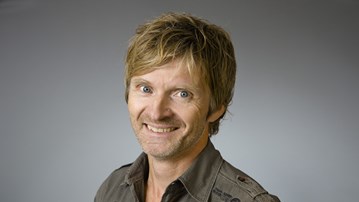
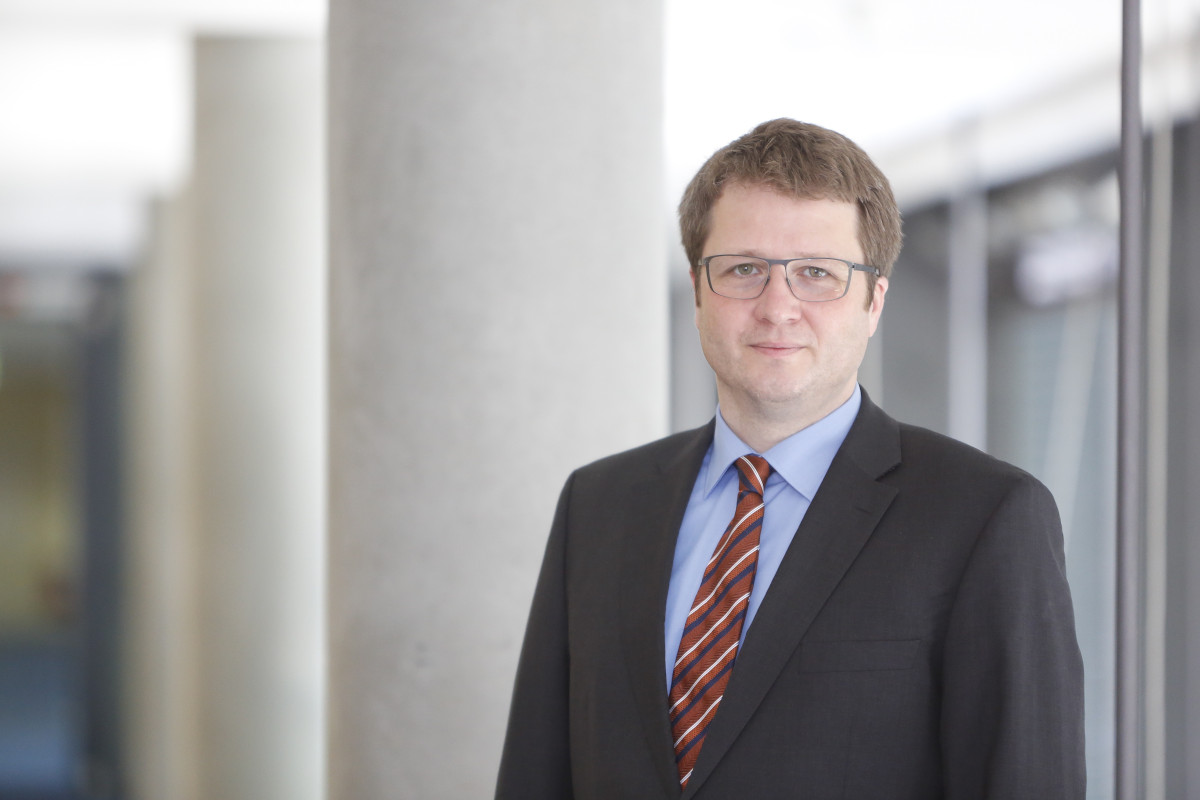
Glenn Van Wallendael is an Associate Professor at Ghent University's Faculty of Engineering and Architecture , affiliated with the Department of Electronics and Information Systems . He leads research in video coding, digital watermarking, and immersive media technologies. Academic Focus: Video compression standards (HEVC, H.266), AI for multimedia, virtual reality Key Collaborations: iMinds, imec, European research consortia Research Interests include: Video compression algorithms (HEVC, SVC, MV-HEVC) Digital watermarking for copyright protection Machine learning applications in image/video analysis Quality of Experience (QoE) in immersive environments Recent Publications (2024-2025) show expertise in: Deepfake detection using vision transformers Medical image landmarking tools Lightweight geometric approximation methods AI-driven video quality assessment Doctoral Mentorship includes supervising: 2021: Hannes Mareen (video forensics) 2020: Vasileios Avramelos (light field coding) 2017: Johan De Praeter (adaptive video encoding)
Erik Elmroth is a Professor at the Department of Computing Science, Umeå University. He leads research in distributed systems, cloud/edge computing, and autonomous resource management, directing a 30+ member research group. His leadership includes transformative roles as department head (2009-2021) and Deputy Director at High Performance Computing Center North (HPC2N). Elmroth serves on executive committees for the SEK 6.2B Wallenberg AI program (WASP) and SEK 390M eSSENCE initiative, and leads multiple Kempe Foundation projects. Research interests center on: Autonomous control of cloud/edge infrastructures Software-defined systems and federated clouds AI-driven resource optimization High-performance computing architectures Robust machine learning for distributed environments His publications emphasize adaptive cloud systems, anomaly detection, and federated learning, with consistent focus on scalability and resilience in edge/cloud deployments. Awards and honors: Member of Royal Swedish Academy of Engineering Sciences (IVA) Nordea Scientific Prize (2011) SIAM Linear Algebra Prize (2000) National HPC Lecturer appointment He has supervised 40+ PhD students and secured major grants including the Swedish Research Council's second-largest award for the Cloud Control project. Elmroth founded the Control Workshops series and co-founded Elastisys AB, a cloud security firm with 50+ employees recognized as Umeå's Spin-off Company of the Year.
Max Pachali is an Associate Professor of Marketing at the Tilburg School of Economics and Management , Tilburg University. His research integrates Bayesian econometric models with empirical industrial organization to analyze consumer responses to regulatory policies and digital platform dynamics. Education: PhD (2015-2019), Master of Science in Quantitative Economics (2015), Bachelor of Science in Business Administration and Economics (2011) at Goethe University Frankfurt. On the substantive side , Pachali focuses on sustainable food policies (e.g., nutritional warning labels, animal welfare certifications) and digital platform economics (e.g., Spotify playlist dynamics, fashion e-commerce). Methodologically, he specializes in: Bayesian models of consumer heterogeneity Conjoint analysis with budget constraints Causal inference techniques Two-way fixed effects and difference-in-differences models His article trends analyze: Environmental impact of food choices through policy interventions Platform power over content suppliers via algorithmic promotion Budget constraint biases in competitive pricing models Scientific awards include: 2023 Paul E. Green Award ISMS Early Career Fellow (2022) University of Washington Foster School Early Career Fellow (2024) He contributes to the Marketing Research Group , collaborating on datasets like the Spotify demand replication package , and engages in interdisciplinary work connecting econometrics with sustainable development goals.
James Danckert is a Professor in the Department of Psychology at the University of Waterloo, where he also serves as the Cognitive Neuroscience Area Head. He is cross-appointed to the Research Institute in Aging and leads the Danckert Attention and Action Group (Danckert Lab). His research spans cognitive neuroscience with particular focus on understanding the mechanisms and brain states that give rise to boredom and mental model updating. Dr. Danckert earned his BA from Melbourne University (Australia), followed by his MA and PhD from La Trobe University (Australia). His academic journey has positioned him as a leading expert in cognitive neuroscience with a specific emphasis on boredom psychology and attention mechanisms. His primary research interests include the cognitive and neural mechanisms of boredom, particularly in individuals with traumatic brain injuries, and mental model updating in relation to neglect syndrome. Danckert's work explores boredom through behavioral tasks like foraging, sustained attention tasks, and executive control tasks, utilizing neuroimaging techniques such as fMRI and tDCS. His mental model updating research involves working with stroke patients (with access to a database of over 800 patients), fMRI, and computational modeling. Analysis of Dr. Danckert's most recent publications reveals a continued focus on boredom and mental model updating, with increasing interdisciplinary approaches incorporating computational modeling, AI, and genetic perspectives. His work bridges cognitive psychology, neuroscience, and clinical applications, with particular emphasis on how boredom relates to attention, agency, and decision-making processes. Dr. Danckert has received significant recognition for his work, including: Former Canada Research Chair (Tier II) in Cognitive Neuroscience Recipient of the 40 Under 40 Award from the Region of Waterloo As a mentor, Dr. Danckert supervises graduate students in the Psychology Department at Waterloo, teaching advanced courses such as Psych 783: Neuroimaging and Cognition. His research is supported by prestigious funding sources including the Natural Sciences and Engineering Research Council (NSERC) and the Canada Foundation for Innovation (CFI). The Danckert Lab maintains a comprehensive research program with two main streams: boredom research and mental model updating. The lab utilizes diverse methodologies including behavioral testing, neuroimaging, computational modeling, and collaborations with experts in evolutionary genetics. The lab's work has significant implications for understanding cognitive processes in both healthy individuals and those with neurological conditions.
Olivier Festor is a Researcher at INRIA (French National Institute for Research in Digital Science and Technology), specializing in network security, cloud computing, and IoT. His work focuses on developing scalable solutions for modern network challenges, including in-network computation, cloud service security, and anomaly detection. Research Interests: Dr. Festor investigates vulnerabilities in distributed systems, designs protocols for efficient data processing (e.g., stateful in-network computation), and pioneers frameworks for IoT threat emulation. His recent work emphasizes cloud gaming optimization, automated security for service migrations, and darknet-based threat intelligence. Publication Trends: Over 200 publications (1993–2024) reflect a shift toward cloud/IoT security and programmable networks. Recent articles prioritize machine learning for traffic classification, TOSCA-based cloud orchestration, and P4-enabled data planes, highlighting applied research with industry relevance.
Florije Ismaili is a Full Professor at the Faculty of Contemporary Sciences and Technologies at South East European University (SEEU) in Tetovo, Macedonia. With a PhD in Computer Science from Technical University of Sofia and a Master's in Informatics from New Bulgarian University, her research focuses on Machine Learning , Semantic Web , Internet of Things (IoT) , and Data Mining . She has led research initiatives and taught courses including Web Programming and Distributed Systems. Doctor of Computer Science (2011), Technical University of Sofia, Bulgaria Master of Science (2005), New Bulgarian University, Sofia Bachelor of Mathematics (2003), EGE University, Izmir, Turkey Her publications demonstrate expertise in applying Machine Learning to domains like education, healthcare, and smart farming. She specializes in Semantic Web techniques for IoT data integration and causal reasoning in complex datasets. Recent work includes predictive modeling of student success and ethical considerations in AI applications. Professor Ismaili's research spans IoT semantic annotation, Cloud Computing architectures for healthcare, and causal rule mining. She has contributed to journals such as IEEE Transactions and Springer publications, with a focus on contextual data integration and ethical data analysis. Her career at SEEU includes prior roles as Assistant Professor, Head of Research Office (CST Faculty), and Young Assistant. She has collaborated on projects addressing database migration, hate speech detection, and e-Government maturity assessment.
Praveen Kumar Donta is an Associate Professor (Docent) and Senior Lecturer at the Department of Computer and Systems Sciences, Stockholm University, Sweden. His research focuses on distributed computing continuum systems, learning-driven approaches for IoT and edge computing, and intelligent data protocols. He leads the Distributed Immersive Participation research group which investigates how humans and things can be more connected and exchange information in real and virtual societies. Education: Ph.D. in Computer Science & Engineering from Indian Institute of Technology (Indian School of Mines), Dhanbad (2021) Visiting Ph.D. Fellow at Mobile&Cloud Lab, University of Tartu, Estonia (2019-2020) Master in Technology from JNTUA, Ananthapur (2014) Bachelor in Technology from JNTUA, Ananthapur (2012) Dr. Donta's research centers on distributed computing continuum systems that integrate cloud, edge, and IoT devices to deliver scalable and low-latency computing resources. His work explores learning techniques in IoT, AI/ML for computing systems, cognition and causality in computing systems, and cyber-physical continuum applications. He investigates how human body analogies can inform the design of more resilient and efficient distributed systems, as well as developing frameworks for privacy enforcement, equilibrium in computing continuum systems, and energy-efficient user interactions with smart environments. His research has significant applications in smart city management, satellite services, and intelligent transportation systems. Dr. Donta's publication record demonstrates a strong focus on the intersection of distributed systems, machine learning, and privacy-preserving technologies. His recent work shows an increasing emphasis on human-inspired approaches to distributed computing, with particular attention to making these systems more interpretable, efficient, and adaptable. His research spans theoretical foundations of computing continuum systems to practical implementations in areas like satellite services, smart environments, and anomaly detection. Scientific Awards and Recognition: IEEE Senior Member ACM Professional Member Dr. Donta serves as an editorial board member for several prestigious journals including IEEE Internet of Things Journal, Computing (Springer), Transactions on Emerging Telecommunications Technologies (Wiley), Measurement, and Computer Communications (Elsevier). He actively mentors the next generation of researchers, currently supervising PhD student Alfreds Lapkovskis and co-supervising Shubham Vaishnav. His research is supported by projects such as the Heterogeneous Computing Continuum for a Sustainable Smart City Management (HCSCM), which aims to develop scalable, secure solutions for urban environments by integrating IoT, edge, and cloud computing. As part of the Distributed Immersive Participation research group, Dr. Donta collaborates with researchers across disciplines to explore how technological advances enable humans and things to be more connected. The group focuses on application areas such as culture, transport, intelligent vehicles and e-health, developing solutions that enhance participation in both real and virtual societies.
Wang-chien Lee is an active Associate Professor in Computer Science and Engineering, specializing in machine learning, data mining, and graph optimization. His work spans domains including social networks, wireless sensor systems, and location-based services. Key research focus areas: Recommendation systems, Graph neural networks, and Social network analysis Pioneering applications in traffic safety, VR configuration, and blockchain marketing His publications demonstrate expertise in transfer learning, deep learning frameworks, and heterogeneous network modeling. Recent work explores traffic crash prediction, social-aware VR systems, and NFT marketing optimization. Current projects include: Learning Latent Representations of Heterogeneous Information Networks Link Quality Estimation for Wireless Sensor Networks Community Clickthrough Model Development
Anand Sivasubramaniam is a Professor in the Department of Computer Science and Engineering, specializing in systems optimization and energy efficiency. His research spans hardware-software co-design, edge computing, and sustainable computing infrastructures. He leads multiple NSF-funded projects, including dynamic edge platforms for XR applications and power management in consolidated servers. His research interests focus on: Energy-efficient computer systems and data centers Hardware-software co-design for heterogeneous architectures Storage systems, memory tiering, and SSD optimization Edge computing for VR/AR and IoT applications Latency-aware resource provisioning and power regulation Recent publications emphasize emerging trends in edge-device streaming (e.g., low-bandwidth VR), neural network performance estimation, and adaptive resource orchestration. His work consistently bridges theoretical models with practical system implementations, particularly in distributed environments and green computing. Grant leadership includes: NSF projects on edge platforms (2022-2025), power allocation (2017-2023), and latency reduction (2019-2022) Collaborations on multi-stakeholder systems and ReRAM-based memory architectures
Haeran Cho is Professor of Statistical Science in the School of Mathematics at the University of Bristol, holding a BSc and PhD in Statistics. Her research focuses on developing foundational methodologies for detecting structural changes in complex high-dimensional data streams, with applications spanning finance, environmental monitoring, and biomedical engineering. Her primary research interests include changepoint detection in non-sparse regression frameworks, factor model diagnostics for tensor time series, and robust nonparametric segmentation techniques. She pioneers approaches that handle heavy-tailed distributions, temporal dependence, and high-dimensional scaling—addressing critical limitations in classical change point theory through adaptive covariance scanning and multiscale inference frameworks. Professor Cho received the Research Prize in 2013 for her contributions to statistical theory. She currently leads the £1.2M EPSRC-funded project Statistical Foundations for Detecting Anomalous Structure in Stream Settings (DASS, 2024-2029), developing real-time anomaly detection systems for industrial applications. Previous projects include quantile factor modeling for high-dimensional time series (2019). Her software implementations ( CptNonPar , mosum , fnets ) have become standard tools in statistical computing, with over 500 citations. She actively collaborates through Horizon Europe initiatives and supervises postgraduate researchers in statistical methodology development.
Andrew Nelson is a part-time Assistant Professor at the Electronic Systems department, College of Engineering , Eindhoven University of Technology . He also serves as a founder and R&D lead at Verintec Solutions B.V. . Research Focus : Predictable and composable embedded systems, real-time robotics, multi-sensor fusion for industrial positioning, multi-core processor optimization. Key Contributions : Development of the CompSOC platform, CompROS architecture for ROS2, and novel multi-rate control strategies. Recent Article Trends : His work emphasizes predictable execution on multi-core platforms, sensor fusion techniques (linear encoders + vision systems), and real-time robotics. Articles span 2015–2025, highlighting collaborations with institutions like TU/e and ECSEL JU grant projects IMOCO4.E (2021–2023) and COMP4DRONES (2021).
Håvard Raddum serves as Chief Research Scientist in the Department of Cryptography at Simula UiB, a joint research entity of Simula Research Laboratory and the University of Bergen. His primary focus involves advancing cryptographic security through algorithm analysis, Fully Homomorphic Encryption applications, and hardware-level attack mitigation. Raddum's research spans cryptography with specialization in security analysis of cryptographic algorithms, practical deployment of Fully Homomorphic Encryption, and physical attacks on hardware implementations. His work addresses vulnerabilities in symmetric ciphers, multivariate schemes, and lattice-based systems through algebraic cryptanalysis, side-channel techniques, and theoretical security proofs. Analysis of his 2019-2025 publications reveals concentrated expertise in cryptanalysis across diverse primitives. Key trends include algebraic attacks on arithmetization-oriented cryptography, side-channel analysis of lightweight ciphers, error detection in lattice computations, and security evaluations of Fully Homomorphic Encryption. His research consistently bridges theoretical frameworks with practical implementation vulnerabilities.
Prof. Dr. Andreas Harth holds the Chair of Business Information Systems, especially Technical Information Systems, at Friedrich-Alexander University Erlangen-Nuremberg (FAU), where he has been a faculty member since 2018. He also serves as a department head at the Fraunhofer IIS-SCS in Nuremberg. His academic work spans both theoretical research and practical applications in decentralized information systems, with strong connections to industry through numerous collaborative projects. Harth completed an apprenticeship as a banker before studying computer science. He earned his doctorate from the Digital Enterprise Research Institute at the National University of Ireland, Galway, and completed his habilitation at the Karlsruhe Institute of Technology. His academic journey included teaching and research stays at the universities of Heidelberg, Innsbruck, Stanford, and Southern California, providing him with a global perspective on information systems research. His research focuses on developing methods and technologies for decentralized information systems found in the World Wide Web and blockchain environments, with applications in companies. He investigates data integration using Semantic Web and Linked Data technologies, process modeling languages, and their applications in the Internet of Things, Web of Things, and Industry 4.0 contexts. His work bridges theoretical computer science with practical business applications, particularly in data sovereignty and decentralized architectures. Analysis of his recent publications reveals a strong trend toward Solid protocol applications, knowledge graph technologies, and the integration of large language models with semantic web technologies. His research increasingly focuses on practical implementations in enterprise settings, healthcare data management, and manufacturing systems, demonstrating the real-world applicability of his theoretical work. As a member of FAU's research focus on Digitalization and Innovation, Harth collaborates with strategic partners including the Fraunhofer Institute for Information Systems (IIS) and major German industrial companies. His work contributes significantly to FAU's position as one of Germany's most research-intensive universities, particularly in the fields of business informatics and decentralized systems.
Estefanía Talavera Martínez is an Assistant Professor specializing in Datamanagement & Biometrics , with research spanning artificial intelligence, computer vision, and health informatics. Her work addresses surveillance, emotion recognition, and egocentric data analysis.
Mehrdad Naderi is a Lecturer in Statistics at the Department of Mathematics, Physics, and Electrical Engineering , Northumbria University . His academic journey includes a PhD in Mathematical Statistics from Shahid Bahonar University of Kerman (2017) and postdoctoral research at National Chung Hsing University (Taiwan), Ferdowsi University of Mashhad (Iran), and University of Pretoria (South Africa). Education: PhD in Mathematical Statistics, Shahid Bahonar University of Kerman (2017) His research focuses on applied statistical inference with emphasis on classification , cluster analysis , factor analysis , finite mixture models , and EM algorithm for robust estimation. He has contributed to multivariate and matrix-variate analysis, particularly in handling outliers and asymmetrical data structures. Recent work includes three-way data clustering using matrix-variate normal distributions and robust Bayesian inference for censored mixture models. His publications demonstrate expertise in distribution theory, statistical computation, and applications to financial data, environmental modeling, and astrophysics. Current collaborations span multiple institutions, focusing on heavy-tailed distributions and computational methods for complex data structures.