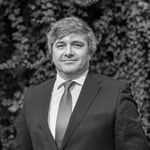
Miguel Sales Dias is affiliated with ISCTE - Instituto Universitário de Lisboa, specifically the Iscte Business School. His research spans multiple domains, including Machine Learning , Immersive Technologies , and Urban Mobility . His work focuses on: Developing AI-driven systems for energy consumption optimization in public buildings Creating co-design interfaces for housing customization Exploring mHealth applications for cardiac diagnostics Advancing virtual reality for education and visitor experiences Recent publications demonstrate expertise in smart city solutions , bioinformatics , and human-computer interaction . While specific awards or educational background weren't explicitly mentioned, his extensive publication record indicates significant contributions to interdisciplinary research.
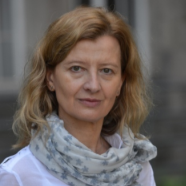
Dr. Franz Hölker is a Senior Scientist and Research Group Leader at the Leibniz-Institute of Freshwater Ecology and Inland Fisheries (IGB Berlin) and holds the position of Associate Professor (Privatdozent) in Zoology at the Department of Biology, Chemistry and Pharmacy, Freie Universität Berlin. Since 2022, he has served as Programme Area Speaker for 'Aquatic Biodiversity in the Anthropocene' at IGB Berlin, leading research on ecological responses to anthropogenic pressures. Leibniz-Institute of Freshwater Ecology and Inland Fisheries (IGB Berlin): Senior Scientist, Research Group Leader since 2008 Freie Universität Berlin: Associate Professor (Privatdozent) for Zoology since 2009 2012-2017: Deputy Head of Department Ecohydrology, IGB Dr. Hölker earned his Diploma in Biology from the University of Hamburg in 1992, completed his doctorate there in 1999 on fish bioenergetics in eutrophic lakes, and achieved his Habilitation at Humboldt-Universität zu Berlin in 2007 with research bridging ecology, behavior, physiology, and modeling in aquatic food webs. Dr. Hölker's research primarily focuses on freshwater ecology with particular expertise in light pollution, ecophysiology, night ecology, ecological modeling, and citizen science. His work investigates how artificial light at night (ALAN) affects aquatic ecosystems, including impacts on fish physiology, insect behavior, and broader ecological community dynamics. He has pioneered research on the ecological consequences of skyglow and developed methodologies for measuring and assessing ecological light pollution. His research group at IGB Berlin employs a combination of field measurements, laboratory experiments, and modeling approaches to understand how light pollution alters species interactions, community composition, and ecosystem functioning in aquatic environments. His extensive publication record demonstrates a consistent focus on understanding anthropogenic impacts on freshwater systems. Recent work shows increasing emphasis on interdisciplinary approaches, combining ecological field studies with modeling techniques to address complex environmental challenges. His research spans from organism-level physiological responses to ecosystem-level consequences of light pollution, with growing attention to conservation applications and citizen science engagement. The trend in his publications reveals expanding scope from fish ecology to broader ecosystem impacts, with increasing international collaboration and policy relevance. Dr. Hölker has led significant research projects examining the impacts of artificial light at night on freshwater ecosystems, often involving international collaborations across Europe. His work has contributed to policy discussions on sustainable lighting practices through participation in projects like the 'White Paper Citizen Science Strategy 2030 for Germany' and collaborations with lighting professionals to develop ecologically sustainable outdoor lighting guidelines. He leads a research team investigating the ecological impacts of light pollution, with particular focus on how artificial lighting affects nocturnal processes in freshwater ecosystems. His group has developed innovative methodologies for measuring ecological light pollution and has conducted extensive field and laboratory studies to document the impacts of different light spectra and intensities on aquatic organisms. The team's work has significant implications for conservation biology, particularly regarding the protection of nocturnal biodiversity in increasingly illuminated landscapes.
Aristides Gionis is a Research Professor Fellow at Aalto University specializing in advanced network analysis and data mining. His work bridges theoretical graph algorithms with practical applications in dynamic and signed networks. His research focuses on graph theory and temporal network analysis , particularly in discovering dense subgraphs, community structures, and event patterns in evolving networks. Key methodologies include contrastive subgraph mining for explainable AI in brain networks and polarization detection in social systems. His publication trends reveal consistent contributions to top-tier venues like KDD, PAKDD, and ECML PKDD, with emphasis on algorithmic solutions for network segmentation, correlation mining, and interpretable classification. Primary application domains include social networks, neuroscience, and temporal data streams. As a Fellow at Aalto University, he leads research in computational network science without explicit departmental affiliation stated in available sources.
Dr. Pedro Trapero Fernandez is a Postdoctoral Researcher at the University of Cádiz, affiliated with the Department of History, Geography and Philosophy and the Institute of Viticulture and Agri-Food Research (IVAGRO). He leads the HUM240 Historical Heritage of Andalusia in Antiquity research group and specializes in Ancient History, with particular focus on Roman viticulture, landscape archaeology, and geospatial analysis. PhD in Ancient History and Archaeology (2020) with thesis on Roman Viticulture in the Hasta Regia and the Guadalquivir Estuary Research expertise in non-invasive techniques: GIS, drones, ground-penetrating radar, magnetometry Active academic collaborations with international institutions including FORTH (Greece) His research integrates classical agronomic texts like Columella with modern geospatial technologies to reconstruct ancient agricultural practices and mobility networks. Key projects include Roman road network analysis, viticulture modeling, and archaeological applications of GIS in Spain and Portugal. He has contributed to coastal and inland connectivity studies in Roman and Medieval contexts. Scientific publications demonstrate technical proficiency in geophysical prospecting and historical modeling. Notable works include: GIS applications for Roman property surveying, multidisciplinary analysis of wine production, and innovative methodologies for studying ancient transportation networks. As an educator, he has taught at undergraduate and master's levels through predoctoral contracts and developed flipped classroom methodologies for humanities teaching. Current affiliations include the Agustín de Horozco Seminar on Economic Studies and multiple international research partnerships.
Prof. Lucyna Nyka serves as Professor and Head of the Department of Urban Architecture and Waterfront Spaces at the Faculty of Architecture, Gdańsk University of Technology. Her leadership role encompasses academic administration and research direction within this specialized department focused on climate-resilient urban design. Her research interests center on urban flood resilience , nature-based solutions , and waterfront adaptation strategies in the face of climate change. She employs advanced methodologies including GIS spatial analysis , multi-objective optimization algorithms , and comparative urban studies to develop practical frameworks for sustainable urban development. Her work bridges theoretical research with real-world implementation through numerous international projects. Recent publication trends reveal a strong focus on climate-sensitive urban environments , particularly examining the intersection of walkability and flood resilience in waterfront public spaces across the Baltic Sea Region. Her research portfolio demonstrates consistent evolution from theoretical explorations of architecture-water relationships toward actionable strategies for climate adaptation, with increasing emphasis on nature-based solutions and spatial optimization techniques since 2020. Prof. Nyka leads significant international research initiatives including the Horizon 2020 project 'SOS Climate Waterfront' (agreement 823901) and the 'Premium on the Horizon' funded initiative, both focused on improving waterfront adaptation strategies to climate change. Additional projects include 'Urban ElemenTREE' for smart green space development and the 'ENACT 15mC' initiative for neighborhood co-creation within the 15-minute city framework. Her department actively engages in practical implementation through projects like the revitalization of Potok Królewski stream on the university campus, demonstrating integration of academic research with tangible urban interventions. Current work emphasizes data-driven approaches to climate adaptation, particularly through nature-based solutions that address both flood risk and socio-economic considerations in urban planning.
Professor Vasilis Katos is a Professor in Cyber Security at Bournemouth University, specializing in digital forensics, incident response, and intellectual property security. With over 160 publications and extensive industry experience as an Information Security Consultant, he serves as an expert witness in criminal courts in both the UK and Greece. His research has significant impact in digital forensics for intellectual property infringement investigations through collaborations with the EU Intellectual Property Office (EUIPO) and UNICRI. Professor Katos holds a Diploma in Electrical Engineering from Democritus University of Thrace, an MBA from Keele University, and a PhD in Computer Science (network security and cryptography) from Aston University. He is a certified Computer Hacking Forensic Investigator (CHFI) with extensive practical experience in cybersecurity. His research primarily focuses on digital forensics and incident response, with recent emphasis on intellectual property infringement investigations, IoT security, blockchain applications, and traffic prediction systems. His work bridges academic research with practical security applications, particularly in intellectual property protection and smart city security frameworks. Professor Katos has coordinated significant research projects including Illegal IPTV in the European Union and IP Infringement on online trading platforms, funded by the EUIPO Observatory. His extensive publication record shows strong trends in digital forensics, cybersecurity for intellectual property protection, IoT security, and increasingly in smart city security frameworks. The research demonstrates a progression from foundational cybersecurity work to specialized applications in intellectual property protection and circular economy security models, with recent incorporation of AI and machine learning techniques for threat intelligence and traffic prediction. Certified Computer Hacking Forensic Investigator (CHFI) Editorial Board Member of Computers & Security Journal Professor Katos has successfully supervised multiple PhD students including Amalia Damianou (Digital Forensics in Smart, Circular Cities), Christos Iliou (Machine Learning Based Detection and Evasion Techniques for Advanced Web Bots), and Mohammed Al Qurashi (Intrusion Detection for IoT). He has secured significant research funding including the ECHO project (European network of Cybersecurity centres), IDEAL-CITIES, and multiple EUIPO-funded initiatives focusing on intellectual property protection. His work connects with the Centre for Intellectual Property Policy & Management (CIPPM) at Bournemouth University, where he contributes to research on intellectual property in emerging technologies. Professor Katos maintains active collaborations with international organizations including UNICRI and the EU Intellectual Property Office, focusing on practical applications of digital forensics in intellectual property protection.
Santosh Mahapatra serves as Professor in the Operations & Information Systems Department at Clarkson University's Reh School of Business, teaching core courses including Quality Management, Logistics Strategy, Strategic Sourcing, and Environmental Supply Chain Management. Education: Ph.D. from Michigan State University Research Focus: His work bridges theoretical operations management with practical sustainability challenges, emphasizing Sourcing Strategy, E-Procurement, Supply Chain Flexibility, Environmental Management, and Remanufacturing. Key contributions address carbon footprint reduction, closed-loop operations, and risk-averse procurement in complex supply networks. Publication Trends: Recent research (2021-2024) reveals intensified focus on environmental sustainability, with significant output on closed-loop supply chains, carbon management, and luxury sector supplier development. His methodology combines empirical data analysis with mathematical modeling to solve real-world operational dilemmas.
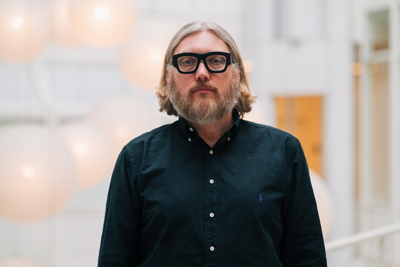
Anders Olof Larsson is a Professor at the School of Communication, Leadership and Marketing at Kristiania University College in Oslo, Norway. Originally from Sweden, he specializes in digital political communication, with particular expertise in social media platforms' role in political processes, journalism, and election campaigns. His research takes a strongly comparative approach across countries, platforms, and time periods. Professor Larsson's research interests focus on political communication in digital environments, with particular attention to how political actors use social media platforms for campaigning and public engagement. His work examines cross-national differences in digital political communication, platform-specific affordances, and longitudinal changes in how political actors utilize emerging technologies. He has conducted extensive research on Facebook, Twitter, Instagram, and newer platforms like TikTok, with special attention to comparative Scandinavian contexts. His recent publications reveal a strong focus on comparative digital political communication across multiple dimensions - comparing different countries' approaches, analyzing various social media platforms' unique characteristics, and examining longitudinal changes in digital campaigning. His work spans theoretical, methodological, and empirical contributions to understanding how digital technologies reshape political communication globally. Professor Larsson actively supervises research and has sought both master's level research assistants and PhD candidates for projects including the 'Scandinavian Political Communication During the Pandemic' initiative. He has organized academic events including the 'Comparative Digital Political Communication' preconference for the International Communication Association. His research is conducted through several collaborative projects including the DigiWorld project and CamforS (Campaigning for Strasbourg), which conducts cross-national comparisons of campaign mobilization in social media. These projects adopt comparative approaches to studying political communication across different contexts and platforms.
Yanlei Diao is a Professor of Computer Science at École Polytechnique (France) with a joint appointment at the University of Massachusetts Amherst. She received her PhD from UC Berkeley in 2005. Her research focuses on scalable data systems, particularly in big data analytics, cloud computing optimization, and real-time stream processing. Research Interests: Her work spans cloud infrastructure optimization (UDAO project), explainable anomaly detection in data streams (EXAD), interactive data exploration (AIDEme), genomic data analysis (GESALL), and uncertain data management (CLARO). She leads the CEDAR team at Inria/LIX focusing on cloud-scale data exploration. Awards & Honors: ERC Consolidator Grant (2017-2023) CRA-W Borg Early Career Award (2013) NSF CAREER Award (2008) Keynote speaker at ACM DEBS 2021 and SWIFT 2023 AI Forum Best Paper Award at SIGMOD 2011 ACM SIGMOD Dissertation Honorable Mention (2005) Advising & Leadership: Mentored over 20 PhD students and postdocs, currently supervising 7 researchers. Served as PVLDB PC Co-Chair (2025-2026) and ACM SIGMOD Editor-in-Chief (2014-2019). Leads multiple projects with industry partners including Alibaba Cloud.
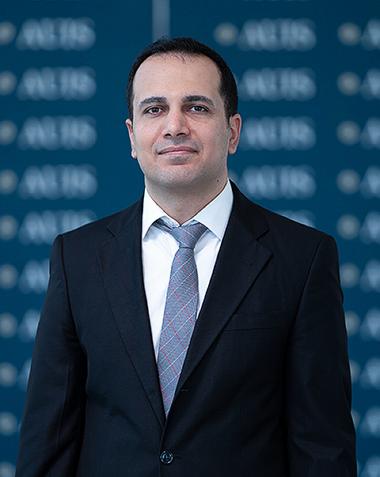
Mustafa Alattar serves as an Assistant Professor in the Department of Engineering at the American University of Iraq, Sulaimani (AUIS), where he has been employed since 2021. He holds a Ph.D. in Civil Engineering from Lehigh University (USA) and an M.A. from the University of Babylon. His academic qualifications include: Ph.D. in Civil Engineering, Lehigh University, USA M.A., University of Babylon, Iraq Dr. Alattar's research centers on hydrology with specialized focus on surface water-groundwater interactions, employing advanced modeling frameworks like MODFLOW-OWHM to analyze water budgets across the United States and Iraq. His work addresses critical water resource challenges including baseflow recession dynamics, groundwater mapping through multi-source data integration, and climate variable impacts on regional hydrology. Recent publications demonstrate increasing emphasis on Iraq's water systems, particularly groundwater dynamics in the Euphrates basin and climate analysis of precipitation-temperature patterns. His 11 publications from 2013-2024 reveal a clear research trajectory: early work focused on flood routing in Iraqi rivers using Saint Venant equations, evolving into large-scale US water budget modeling, and culminating in recent composite modeling approaches for baseflow analysis and Iraq-specific groundwater dynamics. The consistent thread is integrated hydrological modeling addressing both theoretical advancements (e.g., composite Boussinesq equations) and practical water management applications in data-scarce regions. No scientific awards are documented in the available information. The provided materials do not indicate any student advisees or research grant funding. Professional activities include membership in the American Geophysical Union where he presents research annually. Prior to AUIS, he served as research/teaching assistant at Lehigh University and the Institute of Technology in Baghdad, plus industry experience as a CAD Engineer for Nippon Koei Co., Ltd. on Iraqi infrastructure projects.
Marlies Temper is a Professor at St. Pölten University of Applied Sciences, serving as Academic Director for the Data Intelligence (MA) and Data Science and Artificial Intelligence (BA) programs. She is Deputy Head of the Department of Computer Science and Security and a member of the UAS Board from 2023 to 2026. Her roles include leading educational initiatives, conducting research, and managing continuing education programs. Academic Director, Data Intelligence (MA) Academic Director, Data Science and Artificial Intelligence (BA) Deputy Head, Department of Computer Science and Security Continuing Education Officer Marlies Temper's research focuses on Artificial Intelligence , Cybersecurity , and Big Data Analytics . She explores the ethical implications of AI, develops gamified models for security training, and investigates continuous biometric authentication methods. Her work bridges the gap between theoretical advancements and practical applications in AI-driven security solutions. Her recent publications highlight trends in AI Security (e.g., risk frameworks), Biometric Authentication (e.g., touch dynamics), and Cybersecurity Education (e.g., gamified simulations). She emphasizes the responsible use of AI and Big Data while addressing technical and ethical challenges.
Prof. Dr. Stefan Brönnimann serves as a Professor and Unit Leader of Climatology at the Institute of Geography, University of Bern. His extensive research portfolio spans historical climatology, climate dynamics, and atmospheric circulation reconstruction, with particular focus on the past 400 years. He plays a leadership role in major international climate initiatives including the IPCC assessment reports and various climate reanalysis projects. Brönnimann's research centers on reconstructing historical weather and climate patterns through the innovative combination of early instrumental data, proxy records, and climate models. His work examines large-scale climate variability, interannual-to-decadal atmospheric circulation patterns, volcanic eruption effects on climate, and climate-society interactions. His methodologies often involve transforming historical documents into usable climate datasets and applying advanced machine learning techniques to weather reconstruction challenges. Recent publications reveal a strong emphasis on European climate patterns, hydroclimate extremes, and the development of novel datasets and tools for climate research across high-impact journals in climate science, paleoclimatology, and climate informatics. Notable scientific achievements include: Lead author for Chapter 2 of the IPCC Working Group I 5th Assessment Report President of the Commission 'Atmospheric Chemistry and Physics' (ACP) of sc.nat Editorial leadership for multiple prestigious journals including Meteorologische Zeitschrift, Climate of the Past, and Geographica Bernensia Leadership roles at the Oeschger Centre for Climate Change Research Active participation in international initiatives like the Twentieth Century Reanalysis Project and Atmospheric Circulation Reconstructions over the Earth (ACRE) Brönnimann has secured substantial funding through numerous national and international projects including SNF, NCCR Climate, EU FP-7, HORIZON2020, COST, and ERAnet.RUS. He has organized multiple international workshops on weather and climate extremes, atmospheric circulation variability, and historical climate events like the Tambora eruption. His work connects closely with the Oeschger Centre for Climate Change Research at the University of Bern, where he leads Work Package 2 and serves on the Steering Group, demonstrating his significant institutional leadership within Bern's climate research community.
Zoi Kaoudi is a researcher at the IT University of Copenhagen , specializing in Data Management , Knowledge Graphs , and Machine Learning . Her work focuses on cross-platform data processing, query optimization, and scalable systems for graph analytics. She has published extensively in venues like SIGMOD , VLDB , and ISWC , with recent contributions to Apache Wayang , DORIAN , and Space-Efficient Graph Algorithms . Her research bridges theoretical advancements with practical frameworks for data science pipelines. Collaborations include Volker Markl, Jorge-Arnulfo Quiané-Ruiz, and Ioana Manolescu. She has explored topics such as Parameter Servers , Knowledge Graph Embeddings , and RDF Data Management in the cloud. Her work emphasizes open science and system integration.
Dana E. Hunt is an Associate Professor of Microbial Ecology at Duke University's Department of Civil and Environmental Engineering within the Marine Science and Conservation school. Her research focuses on microbial interactions with the environment, including temperature effects and responses to pollutants. Academic Rank: Associate Professor University: Duke University Department: Civil and Environmental Engineering Research Interests: Marine microbial ecology, bacterial interactions, environmental stressors Email: dana.hunt@duke.edu The Hunt lab investigates bacterial dynamics in marine systems, emphasizing temporal and spatial scales. Recent publications highlight studies on nutrient cycling, pollutant adaptation, and microbial community responses to environmental changes. Key topics include marine microbiomes, niche partitioning, and climate stressors. Her teaching portfolio includes courses like Ecological Perspectives: Evolution to Ecosystems and Coastal Watershed Management and Restoration . Collaborations span oceanographic phenomena like Gulf Stream eddies and biogeochemical processes in coastal environments.
John Paparrizos is an Assistant Professor of Computer Science and Engineering at The Ohio State University's College of Engineering, where he directs The DATUM Lab (Data Analytics, Understanding, Mining, and Management Lab). He maintains an adjunct affiliation with the School of Informatics at Aristotle University of Thessaloniki. His research spans databases, data science, machine learning, and artificial intelligence , with focus areas including: Time-series analysis (clustering, anomaly detection) Scalable data mining for structured/unstructured data Adaptive algorithms for resource-constrained environments Foundational technologies for data-intensive applications His work addresses real-world challenges across relational, time-series, multimedia, text, graph, web, and IoT data domains. Notable recognition includes: 2025 ACM SIGMOD Test-of-Time Award for k-Shape time-series clustering 2023 IEEE TCDE Rising Star Award ACM SIGMOD Research Highlight Award NetApp Faculty Award His research has been featured in New York Times (front page), Washington Post , Forbes , and adopted by Fortune 500 companies (Exelon, Nokia) and the European Space Agency. He actively serves on program committees for premier conferences including ACM SIGMOD, VLDB, IEEE ICDE, ACM SIGKDD, and NeurIPS. His open-source tools have exceeded 100,000 downloads and are integrated into academic curricula at Brown, Columbia, Purdue, and University of Chicago.