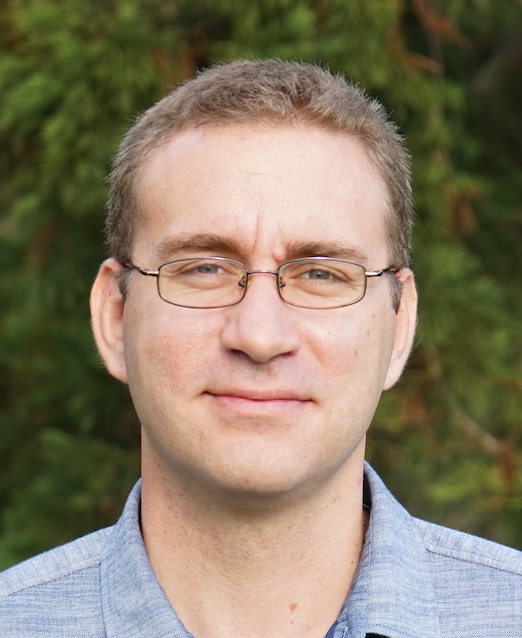
Dr. Robert Lunde is an Assistant Professor in the Department of Mathematics and Statistics at Washington University in St. Louis. He holds a PhD in Statistics and Data Science from Carnegie Mellon University and completed postdoctoral research at the University of Michigan and University of Texas at Austin. His research encompasses statistical inference for network data, resampling methods, and distribution-free inference. Key areas include conformal prediction for network-assisted regression, bootstrap methods for streaming algorithms, and theoretical analysis of network resampling techniques. His work bridges high-dimensional statistics with computational efficiency in network analysis. Dr. Lunde has taught courses including Mathematical Statistics at Washington University and Probability Theory at Carnegie Mellon. His instructional approach emphasizes foundational theory and practical applications of statistical methods.
Helen Amanda Fricker is a Professor and Researcher at the Institute of Geophysics and Planetary Physics, Scripps Institution of Oceanography, UC San Diego. Her expertise spans satellite radar/laser altimetry, Antarctic ice shelf evolution, and climate science. She investigates ice mass loss processes, subglacial hydrology, and remote sensing innovations. Fricker holds a B.Sc. from University College London and a Ph.D. from the University of Tasmania. Research focuses include Antarctic ice dynamics, grounding line migration, and the impact of climate change on polar environments. She leads projects leveraging NASA missions like ICESat-2 and GEDI to monitor cryospheric changes. Her work integrates satellite data with field observations to advance understanding of ice-ocean interactions and subglacial systems. Key contributions include frameworks for automated lake detection, analysis of ice shelf stability, and studies on extreme precipitation impacts. Fricker collaborates internationally on initiatives like the Polar Center and Earth Dynamics Geodetic Explorer (EDGE). Her research underscores the critical role of Antarctic ice in global sea level rise projections. Publications highlight advancements in laser altimetry techniques, grounding line migration patterns, and subglacial lake dynamics. Current projects aim to refine models of ice sheet response to warming oceans and atmospheric changes. Fricker’s interdisciplinary approach bridges geophysics, remote sensing, and climate science to address urgent environmental challenges.
John Gardner is an Assistant Professor in the Department of Geology and Environmental Science at the University of North Carolina - Chapel Hill, affiliated with the Dietrich School of Arts & Sciences. He holds a Ph.D. from Duke University (2018) and an M.S. from the University of Maryland (2014). Prior to his current role, he was a National Science Foundation Postdoctoral Fellow at UNC (2018–2020). His research focuses on understanding how rivers, lakes, and landscapes move, store, and transform water, sediment, and elements, with an emphasis on human impacts. He employs hydrology, ecosystem ecology, and geomorphology, leveraging remote sensing, satellite data, and in-situ sensors. Current projects include monitoring sediment delivery from continents to coasts, deciphering ecosystem processes via spatial water quality patterns, and developing satellite-derived water quality databases. Key research contributions include studies on riverine phosphorus estimation, suspended sediment fluxes, and algal bloom dynamics. His work has been supported by NASA awards and the Hillman Family Foundation. The Gardner Lab collaborates widely, with recent projects involving citizen science, satellite analytics, and global river monitoring. Students and collaborators include Rajaram Prajapati (PhD), Claire Kemick (undergraduate researcher), Punwath Prum, and Elad Dente. Grants and funding highlight initiatives like NASA’s SWOT satellite project and Ohio River Basin algal bloom studies.
Benjamin C. Pierce is Henry Salvatori Professor of Computer and Information Science at the University of Pennsylvania, with appointments in the School of Engineering and Applied Science. A Fellow of the ACM, his research spans programming languages, formal verification, and security-privacy technologies. He directs the DeepSpec project on verified systems infrastructure and leads climate computing initiatives. Research interests focus on: Formal methods for reliable software via proof assistants like Coq Bidirectional programming and data synchronization Language-based security and differential privacy Publication trends show consistent contributions to type theory foundations, with recent emphasis on property-based testing methodologies and real-world verification. Articles frequently appear in top PL/SEC venues with practical applications in compilers and secure systems. Scientific Awards: ACM Fellow (systems verification) SIGPLAN Distinguished Educator Award (textbook innovations) Advises graduate students through the Penn PL Club. PI for NSF Expeditions in Sustainable Computing. Leads the VERSE project for verified C code and Unison file synchronizer. Directs the Penn Programming Languages Research Group collaborating with industry partners including Amazon and Microsoft Research.
Pablo Timoner is a Researcher at the Institute of Global Health, part of the Faculty of Medicine at the University of Geneva. He holds a PhD in Environmental Sciences (2021) and a Master’s in aquatic ecology (2017). His work focuses on climate change impacts on biodiversity, geospatial modeling for health accessibility, and river ecosystem dynamics. Currently, he collaborates with the WHO on geospatial models to enhance healthcare accessibility in emergencies and fragile contexts. Education : PhD in Environmental Sciences, University of Geneva (2021) Master’s thesis on aquatic macroinvertebrates in restored river channels, University of Geneva (2017) Research Interests : Climate change impacts on biodiversity, geospatial health service modeling, river ecosystem resilience, and freshwater invertebrate ecology. His work integrates GIS tools, biostatistical approaches, and environmental data to address global challenges in health and ecology. Articles Trends : Recent publications emphasize snow cover dynamics in Swiss alpine regions, healthcare accessibility modeling in Mali, and biodiversity shifts in freshwater ecosystems. Tools like the inAccessMod R package reflect his focus on open-source geospatial solutions. Scientific Awards : No awards explicitly listed. Advising & Grants : Collaborates on WHO-funded projects and contributes to initiatives like EUROPONDS. No formal advisees listed. Labs/Teams : Active member of the GeoHealth group, focusing on global health and environmental data integration.
Dr. Greg Eisenhauer is a Senior Research Scientist at the Georgia Institute of Technology's School of Computer Science and affiliated with the Center for Experimental Research in Computer Systems (CERCS). His research focuses on high-performance computing (HPC), systems, and enterprise computing, with an emphasis on program monitoring, dynamic adaptation, performance evaluation, and I/O systems like ADIOS. Supported by NSF, DOE, DARPA, and industry grants, his work addresses challenges in HPC workflows, data management, and streaming analytics. He leads efforts in scalable data environments, metadata optimization, and exascale computing resilience.
Ilham Akhundov is an Associate Professor (Teaching Stream) and Director of Mathematics, Business, and Accounting Programs at the University of Waterloo. His primary affiliation is with the University of Waterloo, where he holds a leadership role in academic program development. He is also a member of the Steering Committee and Affiliated Faculty Members groups. His contact information includes the email ilham.akhundov@uwaterloo.ca and phone extension 43113. Research interests focus on statistical methodologies, particularly distribution theory, probability, and regression analysis. Key areas include characterization of distributions (e.g., Student's t-distribution), record values, and stochastic processes. His work often explores regression properties and conditional distributions in probabilistic contexts. A notable emphasis is placed on theoretical advancements in statistical modeling and their applications. His publications from 2002 to 2013 highlight recurring themes in distributional analysis, regression frameworks, and probabilistic systems. No scientific awards or grants are explicitly listed, though his contributions to academic leadership and program direction are central to his profile. Advising roles or student collaborations are not detailed in the provided materials.
Holly Munro is a Senior Research Scientist (Forest Biometrics and Ecology) at the National Council for Air and Stream Improvement and serves as an Adjunct Assistant Professor in Forest Biometrics Education at the University of Georgia. She holds a Ph.D. in Forestry and Natural Resources from the University of Georgia, an M.S. in Data Science from the same institution, and a B.S. in Biology from the University of North Georgia. Her research focuses on forest biometrics, disturbance ecology, forest entomology, and the application of machine learning to ecological problems. Notable work includes developing predictive models for bark beetle outbreaks and studying the ecological impacts of invasive pests under climate change scenarios. She has contributed to interdisciplinary projects blending data science with traditional ecological methods. Munro’s publications span high-impact journals such as Forest Ecology and Management and Ecological Informatics , with a thematic focus on pest-behavior analysis, climate adaptation strategies, and forest health monitoring. Her work bridges theoretical ecology with practical management solutions for forest ecosystems. No scientific awards are explicitly listed in the provided text. Her advising and grants information is currently unavailable, though her research collaborations suggest active involvement in funded projects. She is affiliated with the Department of Forest Biometrics Education at UGA and contributes to forest management initiatives through her dual roles in academia and industry.
Karl Wegmann is a Professor and Associate Head of the Marine, Earth and Atmospheric Sciences (MEAS) department at North Carolina State University. He holds a faculty fellowship at the Center for Geospatial Analytics. His research focuses on Earth surface processes, integrating geospatial analysis with field investigations to study landscape responses to tectonic and climatic forces. Key areas include geomorphology, active tectonics, paleoseismology, and geoarchaeology. Education: Ph.D. (2008, Lehigh University), M.S. (1999, University of New Mexico), B.A. (1996, Whitman College). Research emphasizes landslide dynamics, paleoclimatic reconstructions, and planetary geoarchaeology. Notable projects include studies in Mongolia, Greece, and the Pacific Northwest. He teaches courses in geology, natural hazards, and field geology. His work bridges disciplines, applying remote sensing and machine learning to geohazard assessment and cultural heritage preservation. Scientific achievements include the 2023 NCSU Outstanding Teaching Award. Ongoing research explores lunar anthropocene frameworks and Martian surface processes. Collaborative projects involve students in global fieldwork and innovative geospatial methodologies.
Tobias Meuser is a Researcher at the Multimedia Communications Lab of Technische Universität Darmstadt, leading the "Adaptive Communication Systems" group since 2020. He holds a PhD (2019) focused on vehicular network data management and has been a central figure in the third phase of the Collaborative Research Center (CRC) MAKI as a principal investigator in subproject B1. His work emphasizes resilient 5G networks, edge AI, and distributed systems. Education: B.Sc. Business Informatics (Fernuniversität Hagen) M.Sc. Informatics (TU Darmstadt) Research Interests: Resilience in 5G and beyond Edge AI and distributed machine learning Information assessment in vehicular networks Collaborative perception systems Hardware acceleration for network functions Key Projects: Principal Investigator in CRC MAKI's B1 (Monitoring and Analysis) Collaborations with Opel (cooperative maneuvering) and Deutsche Bahn (5G resilience) Labs/Teams: Head of Adaptive Communication Systems group at Multimedia Communications Lab Member of Distributed Sensing Systems group (2016–2020)
Evaggelia Pitoura is a Professor in the Department of Computer Engineering and Informatics at the University of Ioannina, Greece, and a Lead Researcher at the Archimedes Research Unit, ATHENA Research Center. Her work spans data management, distributed systems, and mobile computing, with a strong focus on database personalization and diversity. Her research interests include data diversity, contextual preferences, XML data management, peer-to-peer systems, and mobile computing . She has pioneered work in result diversification, preference-aware querying, and distributed data indexing, publishing extensively in top venues such as PVLDB, ICDE, SIGMOD, and IEEE TPDS. The recent publications highlight a consistent trend in personalized, context-aware database systems , with emphasis on improving user experience through intelligent query processing, recommendation, and efficient data organization in distributed environments. Best Paper Award, SIGMOD 1999 Best Paper Award, PVLDB 2013 She has advised several PhD students, including Georgia Koloniari, Kostas Stefanidis, Marina Drosou, and Konstantinos Semertzidis, who now hold positions in academia and industry. She teaches courses in Databases and Information Retrieval and actively contributes to the academic community through program committee roles in major conferences like ICDE, VLDB, SIGMOD, and WWW. She leads the Distributed Management of Data Group , fostering innovation in scalable and intelligent data systems.
Minsu Park is an Assistant Professor of Social Research and Public Policy at New York University Abu Dhabi (NYUAD), with affiliate status at the Center for Data Science at New York University (NYU). He holds a PhD in Information Science from Cornell University, where he was advised by Michael W. Macy and Mor Naaman. His academic work bridges computational techniques and social science theory, focusing on cultural consumption, social networks, and human-centered data science. PhD in Information Science, Cornell University His research centers on understanding how individuals form cultural preferences through social and psychological mechanisms, particularly in domains like music, food, fashion, and science. He leverages large-scale digital trace data—including social media, streaming platforms, and physiological signals from smart devices—to model behavior. His interdisciplinary approach draws from sociology, social computing, and data science, aiming to uncover both individual and global patterns in cultural dynamics. Key themes include variety-seeking behaviors, affective preferences, and the interplay between social position and taste. The 15 most recent publications reflect a strong trend toward using computational methods to explore sociocultural phenomena. Topics span affective preference rhythms in music, testing sociological theories like cultural omnivory, imputing user attributes from digital behavior, and enhancing model interpretability. These works are published in high-impact venues such as Nature Human Behaviour and ICWSM, indicating recognition in both computer and social sciences. Minsu Park is deeply committed to responsible data science, addressing issues like algorithmic bias, transparency, fairness, data privacy, and research ethics. He emphasizes mixed-methods approaches and critical reflection on data generation and usage. Published in Nature Human Behaviour Presented at ICWSM Focus on ethical and interpretable AI Advocate for reproducibility and data curation He mentors students through capstone projects in computer science and teaches courses such as Human-Centered Data Science and Textual Analysis for the Social Sciences. While specific grants are not detailed in the text, his research program suggests involvement in interdisciplinary, data-intensive projects likely supported by academic or scientific funding bodies. His technical expertise includes Python, R, machine learning frameworks (TensorFlow, Keras), and tools like Gephi and AWS. He leads or contributes to research initiatives involving smartwatch-based data collection, surname-based ethnicity matching, and global music consumption analysis, as evidenced by his public GitHub repositories. These projects highlight his commitment to open science and collaborative research.
Milos Nikolic is a Lecturer in Database Systems at the School of Informatics, University of Edinburgh. He is a member of the Database Group and the Laboratory for Foundations of Computer Science. Prior to joining Edinburgh, he was a Departmental Lecturer in the Department of Computer Science at the University of Oxford. He holds a PhD in Computer Science from EPFL. Research Interests: Milos Nikolic's research focuses on databases and large-scale data management, with emphasis on incremental computation, in-database learning, stream processing, and query compilation. His work explores how complex analytical queries—such as SQL, linear algebra, and machine learning tasks—can be efficiently maintained and evaluated in dynamic and distributed environments. He develops novel techniques in query optimization and compilation to enable real-time analytics over evolving data. His recent publications demonstrate a strong trend in dynamic query evaluation, particularly around conjunctive and hierarchical queries under updates, incremental view maintenance (e.g., F-IVM), and scalable processing of nested and biomedical data. His work often leverages theoretical foundations to achieve worst-case optimal performance, grounded in conjectures like the Online Matrix-Vector Multiplication (OMv) hypothesis. Scientific Awards: Best Paper Award, ICDT 2019 Advising and Grants: Milos is actively seeking PhD students to work on data management topics. While no formal list of advisees is provided, he collaborates extensively with researchers such as Dan Olteanu, Ahmet Kara, and Haozhe Zhang. His projects, including Adaptive Query Processing , Incremental Maintenance of Complex Analytics , and Declarative Data Pipelines (industry-supported), suggest ongoing grant and industry collaborations. Labs and Teams: He is a key member of the Database Group and the Laboratory for Foundations of Computer Science at the University of Edinburgh, contributing to cutting-edge research in foundational and applied database systems.
Salman Zubair Toor is a researcher at Uppsala University, Sweden, specializing in distributed computing, federated learning, and cloud/edge infrastructure optimization. His work spans resource scheduling, data streaming, and secure anomaly detection.
Dan Steinberg is a senior research scientist and team leader of the Decisions & Statistical Learning team at CSIRO Data61 in Canberra, Australia. His expertise lies in probabilistic machine learning, variational inference, Bayesian deep learning, causal inference, and their application to domains spanning synthetic biology, geospatial analytics, and algorithmic fairness. Education PhD in Computer Vision / Machine Learning (2013) – University of Sydney, Australian Centre for Field Robotics Bachelor of Engineering (Mechatronics, First-Class Honours) – University of Sydney (2008) Bachelor of Commerce (Finance) – University of Sydney (2008) Research Interests Steinberg’s core research agenda revolves around building scalable probabilistic models that can learn efficiently from limited or noisy data and provide principled uncertainty estimates. Key themes include: Variational Inference & Bayesian Deep Learning: developing lightweight yet powerful algorithms for approximate posterior inference in complex models (e.g., Aboleth, Revrand). Active Learning & Experimental Design: creating methods that decide which experiments or measurements will maximise information gain, with recent focus on in-silico protein engineering via Variational Search Distributions (VSD). Causal Inference: leveraging machine-learning tools to perform robust observational causal studies for evidence-based policy, including work on youth well-being and academic outcomes. Algorithmic Fairness: translating normative notions of equity into quantifiable objectives for regression-based decision systems. Large-scale Spatial Analytics: Landshark—an open-source TensorFlow toolkit for supervised learning on massive geospatial raster datasets. Notable Software & Tools Aboleth: A minimal-overhead TensorFlow framework for Bayesian deep learning. Landshark: Command-line tools for large-scale spatial inference. Revrand: Scalable Bayesian generalised linear models with non-conjugate likelihoods. libcluster: Extensible C++ library for hierarchical Bayesian clustering. Scientific Awards Oral Presentation Award – ICML 2025 Workshop on Scaling up Intervention Models (SIMS) Oral Presentation Award – NeurIPS 2024 Workshop on Bayesian Decision-making and Uncertainty (BDU) Oral Presentation Award – NeurIPS 2023 Workshop on Adaptive Experimental Design and Active Learning Spotlight Paper Award – NeurIPS 2014 (Extended and Unscented Gaussian Processes) Research Team & Collaborations As Team Leader – Decisions & Statistical Learning at CSIRO Data61, Steinberg directs a multi-disciplinary group that partners with government agencies (e.g., Jobs and Skills Australia, Australian Institute of Health and Welfare) and industry to deploy machine-learning solutions at scale. He has previously held roles as Principal Researcher at Gradient Institute (2019-2023), Senior Research Engineer at CSIRO Data61 (2016-2019), Researcher at NICTA (2013-2016), and Research Associate at the University of Sydney (2012-2013).