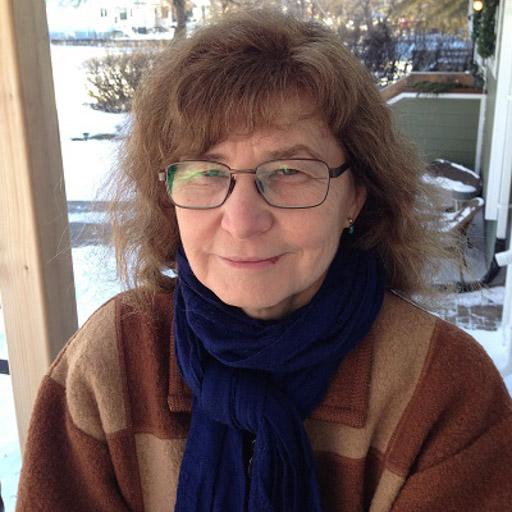
Nathaniel Chaneyمشاهده پروفایل
استادیار
- Hydrology
- Earth System Science
- Soil Science
- +۱۲ مورد دیگر
Nathaniel Chaney is an Assistant Professor in the Department of Civil and Environmental Engineering at Duke University’s Pratt School of Engineering. He leads the Chaney Lab, a research group focused on computational hydrology and Earth system modeling. His work centers on understanding and representing land surface heterogeneity in hydrological and climate models using big data, machine learning, and high-performance computing. Ph.D. in Hydrology, Princeton University, 2015 B.A. in Atmospheric Sciences and Applied Mathematics, U.C. Berkeley Postdoctoral Research Associate, Princeton University and NOAA Geophysical Fluid Dynamics Laboratory His research interests include hydrology, Earth system science, soil science, ecology, geomorphology, numerical modeling, high performance computing, machine learning, and environmental data assimilation. He develops and applies models like HydroBlocks and POLARIS to improve the representation of land heterogeneity in Earth system models. His work bridges field-scale and macro-scale hydrology, addressing challenges in land-atmosphere interactions, drought monitoring, and climate prediction. The most recent publications highlight advancements in modeling land heterogeneity, improving soil moisture estimates, characterizing land surface temperature patterns, and enhancing Earth system models through better representation of catchment-scale processes. Key themes include spatial heterogeneity, land-atmosphere coupling, and the integration of remote sensing data with high-resolution modeling. He is actively mentoring several Ph.D. students, including Laura Torres Rojas, Tyler Waterman, Emma Xu, Jiaxuan Cai, Luiz Bacelar, Daniel Guyumus, and undergraduate Sarah Bailey. His lab fosters interdisciplinary research in hydrology, climate science, and data science. Nathaniel Chaney teaches courses such as CEE 584: Physical Hydrology, CEE 506: Environmental Spatial Data Analysis, and various independent study and advanced topics courses in civil and environmental engineering. He is currently recruiting motivated Ph.D. and postdoctoral researchers interested in his research themes.