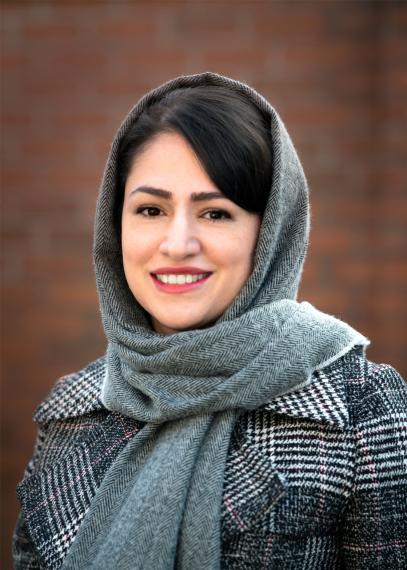
Kiwan Maeng is an Assistant Professor in Computer Science and Engineering, focusing on the intersection of machine learning systems, privacy-preserving techniques, and low-latency computing architectures. His research emphasizes algorithm-system co-design for scalable and secure AI implementations. Research Trends : His recent work explores retrieval-augmented generation systems, low-latency diffusion models, privacy-preserving federated learning, and energy-harvesting intermittent computing frameworks. Publications highlight collaborations across machine learning, cryptography, and hardware-software co-design. Key Projects : He leads a 3-year NSF SaTC grant (2024-2027) addressing privacy-preserving data embedding for untrusted ML services, and contributes to serverless video analytics frameworks (SVDE) and VR streaming optimization (PIRATE). Technical Contributions : His scholarship spans 17 conference contributions and 3 journal articles since 2007, with notable work on memory encryption for edge devices, secure MPC-based inference, and sustainable AI systems. Current research focuses on balancing privacy guarantees with model utility while optimizing for environmental efficiency.
Phillip B. Gibbons is a Professor in both the Computer Science Department and Electrical & Computer Engineering Department at Carnegie Mellon University. He received his Ph.D. in Computer Science from the University of California at Berkeley in 1989 and has held research positions at AT&T Bell Laboratories, Lucent Bell Laboratories, and Intel Research Pittsburgh before joining CMU's faculty. His research spans parallel computing, distributed systems, databases, computer architecture, and machine learning. Gibbons' work bridges theory and systems, with publications in top-tier conferences including SOSP, OSDI, SIGMOD, VLDB, NeurIPS, and many others across computer science and engineering disciplines. His research has been supported by significant funding from NSF, Intel, and other organizations. Gibbons has made substantial contributions to streaming algorithms, parallel computing frameworks, distributed systems security, and large-scale machine learning systems. His work on data stream algorithms with Alon, Matias, and Szegedy has been particularly influential in the field. He has served in numerous leadership roles including Editor-in-Chief of ACM Transactions on Parallel Computing (2012-2018) and on the editorial boards of Journal of the ACM and IEEE Transactions on Cloud Computing. He has also been active on program committees for major conferences in systems, databases, and theory. IEEE Fellow (2014) - For contributions to parallel computing and databases ACM Fellow (2006) - For contributions to parallel computing, databases, and sensor networks Selected for Oral Presentation at NeurIPS '13 (only 20 selected out of 1420 submissions) Co-winner of the best paper award for NSDI '06 Gibbons has advised numerous students and mentored researchers who have gone on to make significant contributions in academia and industry. His research has been supported by major grants including the $15M Intel Science and Technology Center for Cloud Computing (2011-2015) where he served as Co-PI/Co-Director. He currently leads research projects on write-efficient algorithms, big learning systems, and visual cloud systems. His laboratory work focuses on bridging theoretical computer science with practical systems implementation, particularly in the areas of parallel and distributed computing. Current research directions include adapting algorithms for emerging memory technologies and optimizing machine learning systems for large-scale deployment.
Ruben Verborgh is a Professor of Decentralized Web Technology at the Ghent University – imec and a Visiting Fellow at the Oxford Martin School (University of Oxford). He leads the Internet Technology and Data Science Lab (IDLab) and co-founded the Solid platform with Tim Berners-Lee to re-decentralize the Web. His research focuses on Linked Data Fragments , a paradigm for Web-scale query execution, and explores decentralized data governance , user-controlled data ownership , and rule-based Web agents for policy enforcement. He has co-authored two books on Linked Data and contributed to over 250 publications. Recent articles highlight trends in decentralized data ecosystems , including ODRL policy interoperability , event notification systems , and personal data vaults . His work bridges Linked Data , hypermedia APIs , and privacy-preserving technologies . Verborgh collaborates with institutions like MIT, Oxford, and the European Commission, and advises companies through Inrupt . His labs ( IDLab , Solid Ecosystem ) focus on sustainable data-driven societies.
Jennifer Widom is the Frederick Emmons Terman Dean of Stanford University's School of Engineering and holds the Fletcher Jones Professorship in Computer Science and Electrical Engineering. She previously served as Chair of the Computer Science Department (2009–2014) and Senior Associate Dean (2014–2016). Widom earned her Ph.D. in Computer Science from Cornell University (1987) and completed her undergraduate degree in Music at Indiana University (1982). She joined Stanford in 1993 after research at IBM Almaden. Education: Ph.D., Computer Science, Cornell University, 1987 MS, Computer Science, Cornell University, 1985 MS, Computer Science, Indiana University, 1983 BS, Music, Indiana University Jacobs School of Music, 1982 Research Interests: Widom's work focuses on nontraditional data management, including data streams, uncertain databases, crowdsourcing, and query processing systems like STREAM and Deco . She has pioneered methods for managing and querying uncertain data, optimizing graph algorithms, and integrating human computation into data systems. Key Contributions: Developed the STREAM system for real-time data stream management Advanced techniques for crowdsourcing quality management Contributed to foundational work in uncertain databases and provenance tracking Awards & Recognition: ACM Fellow (2005) Member, National Academy of Engineering (2005) Edgar F. Codd Innovations Award (2007) ACM-W Athena Lecturer (2015) EPFL-WISH Erna Hamburger Prize (2018) Teaching & Leadership: Widom teaches courses on data analytics and database systems, advising students like Arnav Joshi. She has led major initiatives in computational education and institutional leadership at Stanford.
Artur Czumaj is a Professor in the Department of Computer Science at the University of Warwick and serves as the Director of the Centre for Discrete Mathematics and its Applications (DIMAP). He is a member of the Division of Theory and Foundations (FoCS) and holds affiliations with the Alan Turing Institute, the Warwick Data Science Institute (WDSI), and the Warwick Centre for Doctoral Training in Mathematics of Real-world Systems (MathSys). Previously, he served as Head of Department and President of the European Association for Theoretical Computer Science (EATCS) from 2020 to 2024. His research lies at the core of theoretical computer science, focusing on the design and analysis of algorithms, particularly randomized, sublinear, parallel, and distributed algorithms. His work spans graph theory, combinatorics, computational geometry, algorithmic game theory, and property testing. He has led major research initiatives funded by EPSRC, IBM, the Royal Society, and Weizmann-UK grants. The trends in his recent publications highlight a strong emphasis on sublinear algorithms, dynamic graph algorithms, and property testing, with recurring themes in randomized methods, graph processing, and efficient data structures. His work bridges foundational theory with applications in data summarization, network analysis, and computational geometry. EPSRC grants: EP/D063191/1, EP/G064679/1, EP/G069034/1, EP/J021814/1, EP/N011163/1, EP/V01305X/1, EPSRC studentship IBM Faculty Award Royal Society International Exchanges Scheme Weizmann-UK Making Connections Grants on combinatorial and algorithmic primitives and the interplay between algorithms and randomness Peter Davies received the 2020 Warwick Faculty of Science Thesis Prize under his supervision Artur Czumaj has supervised numerous PhD students, including Anna Adamaszek, Michal Adamaszek, Sam Coy, Peter Davies, Michail Fasoulakis, Jan Hladky, Wang Xin, and Hairong Zhao. His research has been supported by sustained grant funding, reflecting his leadership in theoretical computer science. He has organized major workshops at Dagstuhl, Oberwolfach, Simons Institute, and the University of Warwick, and has served on the steering committees of HALG and as PC Chair for SODA 2018 and ICALP 2020. He is actively involved in organizing key research events, including the Simons Institute Special Semester on Sublinear Algorithms (2024), the Workshop on Sublinear Graph Simplification (2024), and the Computational Complexity Conference (CCC 2023) at Warwick. He also co-organizes the Warwick-Weizmann workshops and the IGAFIT Algorithmic Postdocs Workshop, fostering international collaboration in algorithms research.
M. Tamer Özsu is a University Professor of Computer Science at the David R. Cheriton School of Computer Science, University of Waterloo, where he holds a Cheriton Faculty Fellowship. He also serves as a Distinguished Visiting Professor at Tsinghua University and is the Founding Director of Waterloo-Huawei Joint Innovation Laboratory since 2018. His extensive contributions to computing have earned him numerous prestigious awards including the 2024 ACM Presidential Award for long-standing and significant contributions to the computing field. Professor Özsu's research focuses on data engineering aspects of data science, particularly addressing data management issues with two main foci: management of non-traditional data and large-scale distributed data management. He is renowned for his seminal book "Principles of Distributed Database Systems" (co-authored with Patrick Valduriez), now in its fourth edition, and the "Encyclopedia of Database Systems" (co-edited with Ling Liu), in its second edition. His work bridges theoretical foundations with practical system implementations, targeting grand societal challenges through computational approaches. His recent publications reveal a strong trend toward graph analytics, streaming data processing, and the integration of large language models with vector data management. The research shows increasing focus on GPU-accelerated graph processing, RDF query optimization, and multimodal data analysis, reflecting the evolution of data management challenges in the era of big data and AI. His work continues to address fundamental challenges in distributed data systems while adapting to emerging technologies and application domains. Scientific Awards and Fellowships ACM Presidential Award (2024) IEEE TCDE Education Award (2024) IEEE Innovation in Societal Infrastructure Award (2022) CS Can | Info Can Lifetime Achievement Award (2018/2019) ACM SIGMOD Test-of-Time Award (2015) ACM SIGMOD Contributions Award (2006) The Ohio State University College of Engineering Distinguished Alumnus Award (2008) Fellow of the Royal Society of Canada Fellow of the American Association for the Advancement of Science (AAAS) Life Fellow of the Association for Computing Machinery (ACM) Life Fellow of the Institute of Electrical and Electronics Engineers (IEEE) Fellow of the Asia-Pacific Artificial Intelligence Association (AAIA) Elected member of the Science Academy, Türkiye Professor Özsu has been deeply involved in academic leadership and community building. As Founding Editor-in-Chief of ACM Books (2013-2019), he launched a series that by 2019 had published 28 major books with another 30 under contract. His service to ACM, particularly through SIGMOD, has been exemplary and widely recognized. He directs the Waterloo-Huawei Joint Innovation Laboratory, which focuses on cutting-edge research in data management and distributed systems, fostering strong industry-academia collaboration.
Amol Deshpande is a Professor in the Department of Electrical Engineering and Computer Sciences at the University of California, Berkeley, College of Engineering. With over 160 publications spanning from 2000 to 2025, his research has significantly impacted the database systems community. His work bridges theoretical foundations with practical systems, evidenced by numerous publications in top-tier venues including SIGMOD, VLDB, and ICDE. Professor Deshpande's research focuses on database systems, with particular expertise in graph databases, data management, probabilistic databases, query optimization, and data provenance. His work addresses fundamental challenges in managing complex data, including efficient graph analytics, dataset versioning, streaming data processing, and privacy-preserving data management. Recent research directions include entity-relationship abstractions beyond traditional relations, standalone catalog engines for large data systems, and graph theoretical approaches to dataset versioning. His publication trends show a consistent focus on evolving database technologies, with early work on probabilistic databases and query optimization, transitioning to graph analytics and data provenance, and more recently addressing modern challenges in data cataloging, privacy-first data management, and serverless stream processing. His research spans both theoretical contributions (e.g., approximation algorithms for stochastic optimization) and practical systems building (e.g., RStore, TreeCat). Professor Deshpande has mentored numerous PhD students who have become active researchers in the database community, including Hui Miao, Souvik Bhattacherjee, and Konstantinos Xirogiannopoulos. His collaborative work spans across institutions, with frequent collaborations with researchers from MIT, University of Maryland, and other leading institutions. His research has been supported by major funding agencies and has influenced both academic research and industry practices in data management. The evolution of his work reflects the changing landscape of data management, from traditional relational systems to modern graph and streaming data challenges.
Jon Weissman is a Professor of Computer Science at the University of Minnesota, Twin Cities. His research focuses on distributed systems, edge and cloud computing, and high-performance computing (HPC), aiming to enhance performance, reliability, and energy efficiency. Education: Ph.D. in Computer Science, University of Virginia (1995) M.S. in Computer Science, University of Virginia (1989) B.S. in Applied Mathematics and Computer Science, Carnegie-Mellon University (1984) His research explores edge and cloud computing, IoT, and HPC, including subtopics like storage systems, resource management, and security. Publications highlight trends in adaptive prefetching, compressed sensing for medical devices, and IoT-informed autoscaling. Scientific Awards: NSF CAREER Award (1995) Senior Member, IEEE He has advised Ph.D. students like Albert Jonathan, Kwangsung Oh, and Francis Liu. His lab is located in 4-204A Keller Hall, and he serves on steering committees for conferences like HPDC.
Kirk Roberts, PhD, is an Associate Professor in the Department of Health Data Science and Artificial Intelligence at the McWilliams School of Biomedical Informatics, UTHealth Houston. He specializes in Natural Language Processing (NLP), with a focus on clinical information extraction, spatial information extraction, and medical information retrieval. His work bridges computer science, medicine, linguistics, and machine learning to improve accessibility and usability of biomedical data. Education: PhD (2013) and MS (2009) in Computer Science from the University of Texas at Dallas; BS (2005) in Computer Science from Georgia Institute of Technology. Research emphasizes NLP applications for healthcare, including question-answering systems, EHR analysis, and spatial relation extraction. He leads the TREC Clinical Decision Support track and has been recognized with a National Library of Medicine Career Development Award. His contributions span over 20 peer-reviewed publications in journals like JAMIA and conferences such as ACL and AMIA. Key areas include: advancing clinical decision support via NLP, optimizing biomedical literature retrieval, and improving health data dissemination through natural language systems.
Hayato Yamana serves as Professor at Waseda University's Faculty of Science and Engineering and concurrently holds the position of Vice President for IT Promotion and Chief Information Officer since October 2020. His academic journey began with a Dr. Eng. degree from Waseda University in 1993, followed by positions at the Electrotechnical Laboratory of MITI, before joining Waseda University as Associate Professor in 2000 and becoming full Professor in 2005. He has held significant leadership roles including Director of the Database Society of Japan and the Information Processing Society of Japan, as well as Vice Chair of IEICE's Information and Communication Society. Waseda University, Faculty of Science and Engineering (2005-Present) National Institute of Informatics, Visiting Professor (2005-Present) Waseda University, Vice President for IT Promotion (2020-Present) Deputy Chief Information Officer (2015-2020) His research spans homomorphic encryption, big data analysis, and computer architecture, with notable contributions in privacy-preserving computation, recommender systems, and secure data processing. His work bridges theoretical cryptography with practical applications in smart cities, healthcare, and e-commerce security. Recent publications demonstrate strong focus on accelerating homomorphic encryption operations, improving recommendation system diversity, and developing novel authentication mechanisms. Analysis of his 15 most recent publications reveals consistent emphasis on privacy-preserving technologies (particularly homomorphic encryption applications), innovative recommender system architectures, and biometric security solutions. His research group produces highly cited work at the intersection of cryptography, machine learning, and systems security, with practical implementations in real-world scenarios including smart grids, e-commerce, and healthcare. Fellow, Information Processing Society of Japan (IPSJ), 2020 Golden Core Award, IEEE Computer Society, 2018 Fellow, Institute of Electronics, Information and Communication Engineers (IEICE), 2018 IBM Faculty Award, 2009 Multiple Best Paper Awards from IEICE, IPSJ, and ITE Yamana has secured substantial research funding for projects in homomorphic encryption, smart city infrastructure, and privacy-preserving systems. His leadership extends to advising numerous doctoral students and directing major research initiatives including the Smart Systems and Services Innovative Professional Education Program. He maintains active collaborations with industry partners through projects involving secure computation and data analytics. His research group operates at the forefront of secure computing, with specialized laboratories focused on homomorphic encryption acceleration, privacy-preserving machine learning, and secure mobile authentication. The team actively develops practical implementations of cryptographic protocols for real-world applications in healthcare, finance, and smart city infrastructure, bridging theoretical cryptography with deployable security solutions.
Walid G. Aref is a Professor of Computer Science at Purdue University since Fall 1999. His research focuses on database systems, spatial and spatio-temporal data management, query processing, and indexing. He has led projects funded by NSF, NIH, and industry partners. Aref is a Fellow of the IEEE and has received awards including the NSF CAREER Award (2001) and VLDB’s Ten-Year Best Paper Award (2016). He serves as Editor-in-Chief of ACM Transactions on Spatial Algorithms and Systems and has authored numerous influential papers. Education: BSc/MSc from Alexandria University (Egypt), PhD from University of Maryland (1993). Research Interests: Extending database functionality for emerging applications like spatial, graph, and sensor databases. Notable contributions include the Chameleon project, AQWA system for big spatial data, and privacy-preserving Casper framework. Selected Projects: NSF-funded work on multi-predicate spatial queries, in-memory graph relational systems, and adaptive spatio-textual processing. Systems like Tornado (spatio-textual streams) and LocationSpark (distributed spatial data) exemplify his contributions. Awards: Multiple best paper awards, IEEE Fellow, and leadership roles in ACM SIGSPATIAL.
Felix Xiaozhu Lin serves as Associate Professor and William Wulf Faculty Fellow in the Department of Computer Science at the University of Virginia's School of Engineering and Applied Science, where he directs the Computer Science Ph.D. Program and MCS/MS Program. Previously a tenured Associate Professor at Purdue University's School of Electrical and Computer Engineering, Lin joined UVA Engineering in August 2020 after completing his doctoral research at Rice University. His educational credentials include: Ph.D. in Computer Science, Rice University (2014) M.S. in Computer Science, Tsinghua University (2008) B.S. in Automation, Tsinghua University (2006) Lin's research centers on systems software at the intersection of operating systems, compilers, and computer architecture, with emphasis on accelerating and safeguarding software systems. His current projects target on-device large language models and speech processing for low-cost hardware ( Analysis of his recent publications reveals a strong trajectory in edge computing and efficient AI systems. His research demonstrates increasing focus on hardware-software co-design for autonomous devices, with significant contributions in video analytics for energy-constrained cameras, kernel virtualization for heterogeneous architectures, and stream processing frameworks leveraging emerging memory technologies. The work consistently addresses real-world constraints like power limitations and network intermittency while maintaining rigorous academic standards. His scientific recognition includes: National Science Foundation CAREER Award (2019) Google Faculty Research Award (2016) NSF CISE Research Initiation Initiative Award (2015) ACM ASPLOS Best Paper Award (2014) Lin leads the XSEL research group mentoring graduate and undergraduate students in systems software development. His educational initiatives include CS4414/CS6456, a modern operating systems course featuring Arm64 baremetal kernel development, multicore systems, trusted execution environments, and filesystem forensics. The course's experiential approach has received strong student feedback for its modern content and practical relevance. His group actively recruits for projects spanning on-device AI, hardware-accelerated speech processing, and next-generation OS development. Based in Charlottesville, Virginia, Lin's research benefits from UVA's proximity to Shenandoah National Park and collaborative opportunities within the university's vibrant computing ecosystem, including the 2024 LLM Workshop he co-organized with Professor Yangfeng Ji.
Fattane Zarrinkalam is an Assistant Professor in the School of Engineering at the University of Guelph. She holds a PhD from Ferdowsi University of Mashhad, Iran, and completed a Postdoctoral Research Fellowship at Ryerson University (2018–2020). Her research focuses on social media mining, semantic technologies, and user modeling, with applications in healthcare, legal tech, and e-commerce. She is a Vector Institute Postgraduate Affiliate and serves on editorial boards for journals like Information Processing & Management and IEEE Transactions on Network Science and Engineering . Her work emphasizes actionable insights from social data, including sarcasm detection, user interest prediction, and fairness in social media analytics. Zarrinkalam has contributed to over 30 peer-reviewed publications and holds multiple patents in data analysis and social media sentiment modeling. Education: PhD, Ferdowsi University of Mashhad, Iran Postdoctoral Fellowship, Ryerson University Research Scientist, Thomson Reuters Labs Research Interests: Semantic interpretation of social content User modeling via temporal analysis Social good applications (e.g., mental health, telecommunication) Fairness in social media mining Recent Work Trends: Her articles span network representation learning, dynamic user interest prediction, and interdisciplinary applications. Notable themes include neural networks for sarcasm detection, heterogeneous graph embeddings, and leveraging Twitter data for psychological insights. Awards & Service: Co-chair, International Workshop on Mining Actionable Insights from Social Networks (MAISoN) Editorial board roles for top journals Labs & Teams: Involved in interdisciplinary collaborations at the Vector Institute and partnerships with industry on legal tech and social analytics projects.
Stephen Alstrup is a Professor in the Algorithms and Complexity section at the Department of Computer Science (DIKU), University of Copenhagen, Faculty of Science. His research bridges theoretical computer science with practical applications in modern computational challenges. His primary research interests include: Algorithm design and analysis Graph algorithms and data structures Big Data processing techniques Streaming algorithms and Internet distribution Theoretical foundations with practical implementations Alstrup's work demonstrates how theoretical algorithm research can lead to real-world applications, as evidenced by his development of Octoshape technology for large-scale Internet streaming. His research spans from fundamental theoretical problems to applications in Big Data, cloud computing, and information retrieval systems. He has published extensively with 93 research outputs including journal articles, conference proceedings, and books. His recent work focuses on graph spanners, semantic hashing, recommendation systems, and universal graph structures, showing continued productivity in theoretical computer science. Alstrup actively engages with industry and media, contributing to discussions about Big Data applications, technology innovation, and how businesses can collaborate with universities to access cutting-edge knowledge and funding opportunities. His work has been featured in 10 media contributions discussing practical applications of algorithms in education, municipal IT projects, and business innovation.
Daniel J. Abadi is a prominent researcher in database systems at Yale University. With over two decades of impactful research, he has made significant contributions to the fields of distributed databases, transaction processing, and column-oriented database systems. His work bridges theoretical foundations with practical implementations that have influenced both academia and industry. Dr. Abadi's research primarily focuses on database system architecture, with particular emphasis on: Distributed and geo-replicated database systems High-performance transaction processing Column-oriented and analytical database systems Stream processing and real-time analytics Cloud and serverless database technologies Integration of machine learning with database systems His recent work shows a continued focus on addressing scalability challenges in modern database systems, with particular attention to multi-region transaction processing, automated data management, and the integration of machine learning techniques. The trend in his publications indicates a strong emphasis on practical, deployable systems that solve real-world problems faced by industry. Dr. Abadi has been instrumental in several major research initiatives and reports that have shaped the direction of database research, including the Seattle Report and the Cambridge Report on Database Research. Throughout his career, Dr. Abadi has mentored numerous students and collaborated extensively with leading researchers in the field. His work has received significant recognition through widespread citations and adoption of his ideas in both academic and industrial database systems.