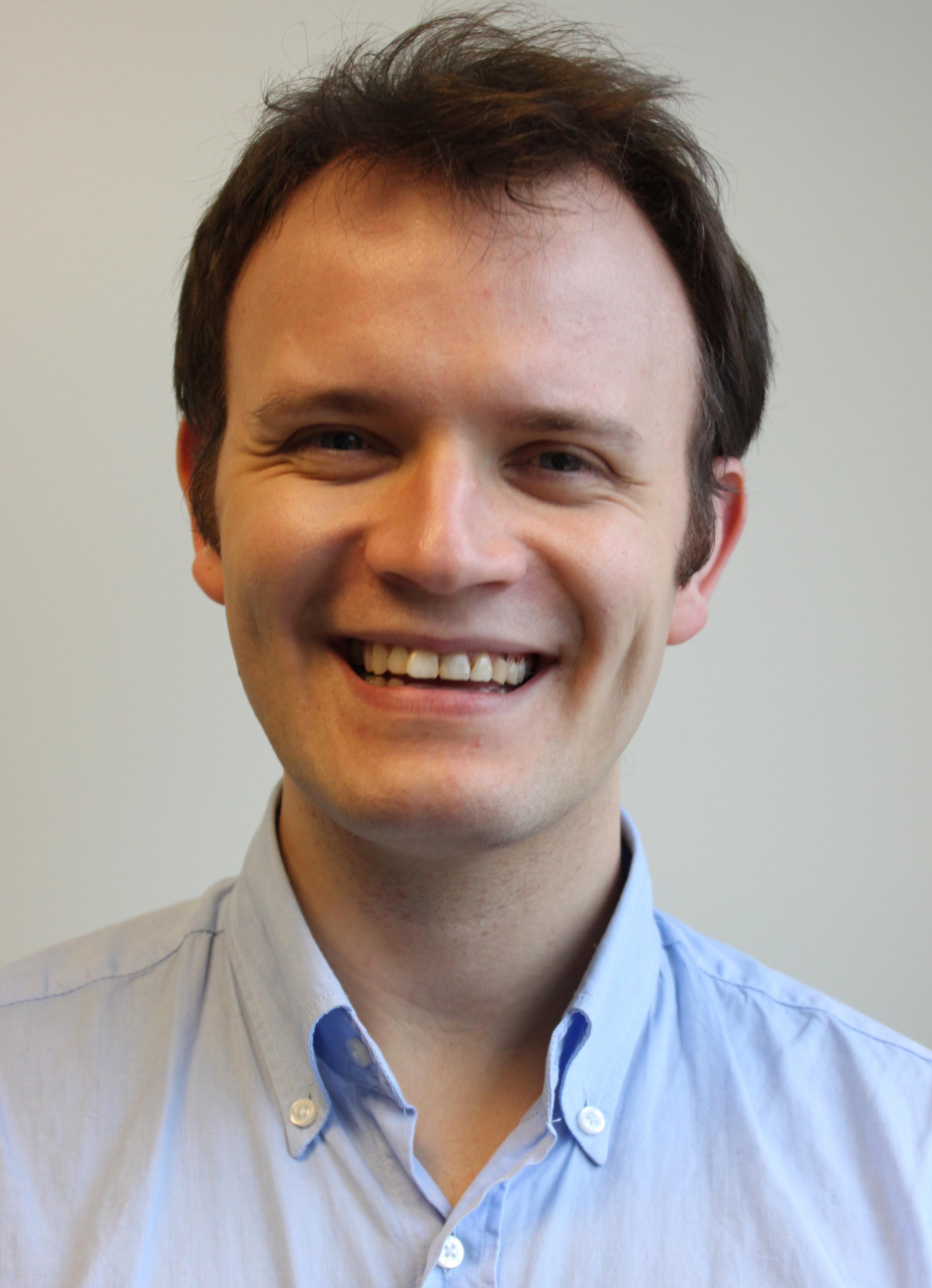
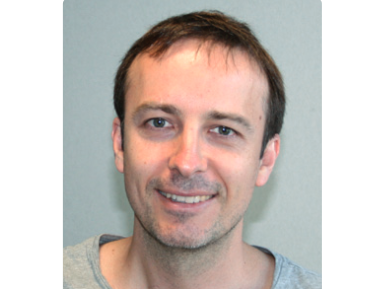
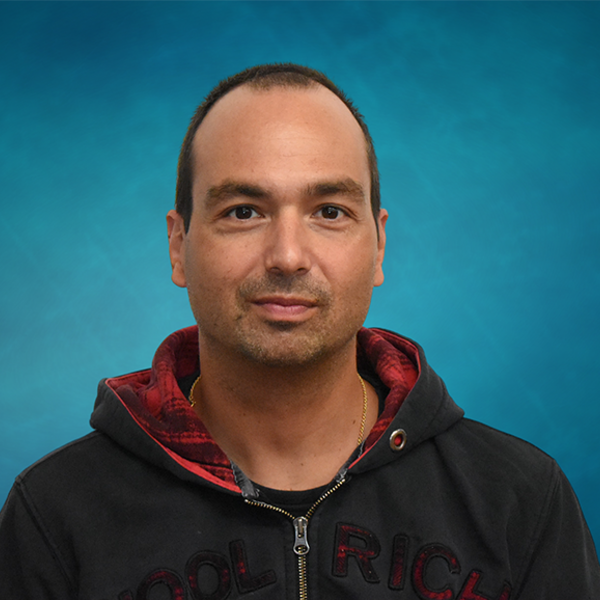
Krasimir Hristakiev is a Senior Lecturer at the Department of Romance Languages within the University of Veliko Tarnovo. His academic career spans over two decades, focusing on literature and theater studies with a particular emphasis on French and Bulgarian cultural intersections. Primary Affiliations: University of Veliko Tarnovo (Department of Romance Languages) Research Themes: French literature (Molière, Rabelais), Bulgarian literary theory, theater and visual studies, intertextuality, and philosophical discourse. His publications analyze the dialogue between classical and modern literary forms, with recurring themes of madness, labor, and cultural identity. Notable works include studies on Giuseppe Tornatore's cinema, Bakhtinian theory in Bulgarian contexts, and the adaptation of Molière's plays in regional festivals. Recent articles explore the blurring lines between theater and digital media , focusing on structural differences and audience engagement in virtual performances. His bibliography reflects a deep engagement with philological rigor and comparative cultural analysis. Key trends in his work include the reception of French classics in Bulgaria, stylistic evolution in literature, and the metaphorical representation of labor and death in contemporary narratives. He contributes regularly to journals like Visual Studies and Proglas .
Lorenzo De Stefani serves as an Assistant Teaching Professor (formally titled Lecturer) in Brown University's Department of Computer Science, teaching core courses including Theory of Computation (CSCI1010), Design and Analysis of Algorithms (CSCI1570), and Data Science (CSCI1951A). His academic credentials feature dual doctoral degrees: a PhD in Computer Science from Brown University (2020) under Eli Upfal, and a PhD in Computer Engineering from the University of Padova (2016) under Gianfranco Bilardi. Additional qualifications include a Master of Science (2012) and Bachelor of Science (2009) in Computer Engineering from the University of Padova. PhD, Brown University, 2020 PhD, University of Padova, 2016 MSc, University of Padova, 2012 BSc, University of Padova, 2009 De Stefani's research centers on algorithmic innovation for large-scale data challenges, with emphasis on memory-efficient graph stream processing, statistical learning for multiple hypothesis testing, and Byzantine-resilient computation. His work bridges theoretical computer science and practical data analysis through rigorous probabilistic frameworks. Publication trends reveal consistent contributions to graph algorithm optimization, particularly in single-pass triangle counting for dynamic networks and I/O complexity bounds for fundamental operations like matrix multiplication. His methodologies prioritize computational efficiency while maintaining statistical validity in massive datasets. Scientific recognition includes: KDD Best Student Paper Award (2016) for Tríest streaming algorithms While advising PhD candidates during his doctoral studies at Brown and Padova, current student mentorship details remain unspecified. No major grant awards are documented in available materials. He actively participates in Brown's computer science research ecosystem through collaborative networks focused on algorithmic foundations and data science applications.
Evangelia Petridou serves as Associate Professor in the Department of Humanities and Social Sciences at Mid Sweden University, where she is core faculty at the Risk and Crisis Research Centre (RCR). Her academic work bridges political science and practical crisis management, with emphasis on European policy processes and Swedish governance structures. Her research focuses on policy entrepreneurship dynamics during crises, particularly examining how actors navigate institutional constraints in emergency contexts. Key areas include reactive policy entrepreneurship, risk communication across EU nations, and the operationalization of national policy styles during pandemics. She integrates theoretical frameworks like Kingdon's Multiple Streams with empirical analyses of Swedish municipal responses to disasters. Recent publications (2022-2025) reveal three dominant trends: conceptual expansion of policy entrepreneurship to street-level bureaucrats, methodological innovation through immersive simulations in crisis training, and comparative analyses of European pandemic responses. Her work consistently addresses the tension between centralized policy directives and local implementation challenges, especially in decentralized systems like Sweden. Dr. Petridou leads multiple externally funded projects including FUTURESILIENCE, LEGITIPREP, and RISE (Resilience in Sweden: Governance, Social Networks and Learning). She directs the RCR Lab at Mid Sweden University, which pioneers experimental design in crisis management education through virtual/physical immersion classrooms. Her collaborative network spans 15+ European institutions with frequent co-authorship on cross-national policy studies.
Associate Professor Pierre Lafaye de Micheaux is a statistician based at the School of Mathematics and Statistics, University of New South Wales , where he has worked since 2020. He previously held academic roles at Université Paul Valéry (2020, Associate Professor), ENSAI (2015–2017, Professor), Université de Montréal (2011–2016, Associate Professor), and Grenoble Alps University (2003–present, Assistant Professor). His research spans theoretical and applied statistics , focusing on complex random vectors , neuroimaging genetics , and data science for IoT . Education: PhD in Statistics (2003, Université de Montréal & Montpellier) MSc in Biostatistics (1998, Montpellier) BSc in Mathematics and Physics (1996, Montpellier) MSc in Cognitive Neuroscience (2007, Grenoble Institute of Technology) Research interests include: Dependence Measures : Leveraging complex analysis for big data dependence testing under 3V's (Volume, Variety, Velocity). Neuroimaging Genetics : Developing statistical tools for fMRI/EEG/DTI phenotyping of genetic variation with institutions like CHeBA and INSERM. IoT Data Science : Creating Raspberry Pi-based statistical computing tools for real-time sensor data streams. Complex-Valued Inference : Building a unified framework for complex random vectors in neuroimaging and nuclear engineering. Recent publications demonstrate expertise in circular data analysis , nonparametric testing , and central limit theorem counterexamples , with applications in medical imaging and finance. He has supervised numerous PhD, MSc, and honors students on topics ranging from deep learning to stochastic processes. Scientific achievements include: Université de Montréal Provost Honor List (2003) Editor of the Journal of Statistical Software (2017–present) Co-leader of three research groups: Dependence Measures , Neuroimaging Genetics , and Data Science & IoT He has secured grants from UNSW Research Infrastructure Scheme and NSERC , with industry collaborations including BNP Paribas (credit risk) and Olea Medical (stroke treatment analytics). Current teaching includes Statistical Inference (ZZSC5905) and Data Science (DATA3001) at UNSW.
Giorgio Scorzelli is a researcher at the University of Utah, serving as Director of Software Development for the Center for Extreme Data Management, Analysis, and Visualization (CEDMAV) and the National Science Data Fabric (NSDF) . He specializes in extreme data management, scientific visualization, and computational topology, with a focus on scalable solutions for climate science, materials science, and neuroscience datasets. His work emphasizes democratizing data access through platforms like OpenVisus , enabling efficient analysis of petascale and exascale data. Key contributions include orchestrating cyberinfrastructure, optimizing parallel I/O, and developing real-time visualization systems for heterogeneous resources. Notable scientific contributions include the NSF Grant #2127548 for NSDF development . His projects integrate cloud computing, geo-distributed storage, and FAIR digital objects to lower barriers to data democratization. Giorgio's research spans multi-resolution algorithms , computational topology , and 3D geometric modeling , with applications in infrastructure security, archaeological reconstruction, and biomedical imaging. His work bridges abstract mathematical frameworks (e.g., Boolean algebras, chain complexes) with practical software solutions.
Arijit Bishnu is an Associate Professor at the Indian Statistical Institute in the Advanced Computing and Microelectronics Unit (ACMU). He has taught courses such as Design and Analysis of Algorithms , Randomized Algorithms , Computational Geometry , and Algorithms for Big Data over multiple years (2008–2025), focusing on theoretical and applied aspects of computer science. Research Interests: His work spans Theoretical Computer Science , Randomized and Approximation Algorithms , Computational Geometry , and Combinatorics . He explores problems in sublinear algorithms, streaming computation, geometric data analysis, and complexity theory. Publications: Recent papers include contributions to STOC 2025 , RANDOM 2025 , and APPROX 2024 , covering topics like property testing, triangle counting complexity, and streaming algorithms. Collaborations with researchers like Sourav Chakraborty, Gopinath Mishra, and Sayantan Sen highlight his interdisciplinary approach. Academic Leadership: He has co-organized research courses such as Approximation Algorithms and Topics in Algorithms and Complexity , emphasizing mentorship and knowledge dissemination in theoretical computer science. His comprehensive work integrates algorithmic innovation with rigorous mathematical analysis, advancing computational techniques for large-scale and geometric data.
Michael M. Goldman is Professor of Sport Management and Associate Dean of Graduate Programs and Strategic Initiatives at the University of San Francisco’s College of Arts & Sciences. He is a full-time faculty member who also serves as adjunct faculty at the Gordon Institute of Business Science (GIBS) in Johannesburg and sits on the board of the Case Research Foundation. Education & Prior Roles DBA, Gordon Institute of Business Science (GIBS), 2014 MBA, Gordon Institute of Business Science (GIBS), 2005 Former Senior Lecturer in Marketing, University of Pretoria (GIBS) Advisor to the 2018 Rugby World Cup Sevens Host Committee Advisor, Rumble Ventures Sports Innovation Fund Research & Applied Expertise Goldman’s scholarship lies at the intersection of sport marketing, sponsorship analytics, and consumer psychology. He studies how fans form identities with teams, how brands leverage sport partnerships, and how organizations can translate these insights into revenue growth. His work spans professional sport franchises (San Francisco Giants, LA Clippers), global sponsors (MTN Group), and governing bodies such as CONCACAF and Cricket South Africa. Across more than fifteen recent publications, Goldman’s research trajectory reveals a consistent focus on three themes: fan engagement and disengagement , sponsorship ROI and brand building , and innovative case-based pedagogy . He employs mixed methods—qualitative case studies, quantitative market analyses, and experimental designs—to tackle questions ranging from esports broadcasting during COVID-19 to the financial impact of team rebranding. Honours & Awards Visiting Professorship, Universidad Peruana de Ciencias Aplicadas (2020) North American Case Research Association – Silver Best Case Award (2019) Sarlo Prize for Excellence in Teaching, USF (2017) NACRA – Bronze Best Case Award (2017) Paul R. Lawrence Fellowship, Case Research Foundation (2015) Consulting, Grants & Labs Goldman maintains an active portfolio of industry partnerships that function as living laboratories for his research and teaching. Recent collaborations include designing sales-skills workshops with the Los Angeles Clippers, advising MTN on FIFA World Cup activation, and assessing brand equity for the San Francisco Giants’ season-ticket retention campaigns. While specific grant amounts are not disclosed, his ongoing work with teams and federations provides continuous funding for case development and experiential-learning initiatives.
Associate Professor with Habilitation at the School of Engineering, University of Minho , where he also serves as a Senior Researcher at Centro ALGORITMI. Member of both the IEM R&D Group and LPSL R&D Lab. Education: Degree in Production Engineering (1989) - University of Minho MSc in Computer Integrated Manufacturing (1992) - Loughborough University Ph.D. in Scheduling and Process Planning Integration (1997) - University of Nottingham His research spans Lean Approaches across diverse environments including industry, healthcare, construction, offices, and education. Key focus areas include pull flow methods for complex production environments, stable continuous improvement systems , and the integration of Scrum methodology in educational settings. Recent publications show a clear trend toward applying lean principles in retail logistics, healthcare operations, and sustainability frameworks, with increasing emphasis on performance measurement systems and Science-Based Targets. He has authored the book "Continuous Improvement in Organizations" and published over 100 scientific articles with an h-index of 17 and 1131 citations. His current projects include "HOMLean - Hospital Operations Management" and a Smart Retail initiative with Sonae company funded by PRR program. He actively applies his expertise through project-based learning approaches in engineering education, having documented over ten years of experience with PBL at the University of Minho. His work bridges academic research with practical industry applications, particularly in lean manufacturing implementation across various sectors.
Tom Wild is a Lecturer at the School of Architecture and Landscape , University of Sheffield, specializing in nature-based solutions (NBS) for urban sustainability. His work bridges ecology, environmental planning, and socio-economic policy to address climate change adaptation, river restoration, and equitable green infrastructure investments. Focuses on biophysical and socio-political conditions enabling ecosystem rehabilitation Principal Investigator for Horizon 2020 CONEXUS project (€5M, 30+ partners) Active in economic valuation of blue-green infrastructure and governance frameworks Coordinates ESRC-funded Planning for Nature and NERC-funded GP4Streets projects His research spans urban ecology , river daylighting , and green space equity , with extensive publications on NBS implementation across Europe and Latin America. Current work examines climate adaptation strategies through the lens of community engagement and policy innovation. Key research trends include: Integration of NBS in urban drainage systems Transdisciplinary governance models Cultural and economic barriers to adoption Long-term viability of green infrastructure Professional engagements include Chartered Biologist status (Society of Biology) and prior leadership roles in environmental agencies, reflecting his commitment to translating research into practice through community partnerships and policy advocacy.
Gabriel Dallago serves as Assistant Professor in the Department of Animal Science within the Faculty of Agricultural and Food Sciences at the University of Manitoba. His research integrates advanced data analytics with livestock production systems to enhance animal welfare and farm decision-making processes. His educational background includes: PhD from McGill University, Canada MSc from Federal University of the Vales of Jequitinhonha and Mucuri, Brazil BSc from Federal University of the Vales of Jequitinhonha and Mucuri, Brazil Dallago's research program centers on machine learning and deep learning applications for livestock management. Key initiatives include developing predictive models for animal bio-responses, integrating multimodal data streams to analyze complex farm systems, and optimizing dairy cow longevity through data-driven interventions. His work bridges computational science with practical agricultural challenges, focusing on tangible improvements in production efficiency and animal well-being. Precision monitoring of dairy cow behavior and welfare Early-life management impacts on herd productivity Computer vision applications for livestock assessment Economic modeling of livestock production systems Analysis of his 15 most recent publications (2022-2025) reveals strong thematic concentration in dairy science (47%), swine production (20%), and animal nutrition (20%), with consistent application of computational methods. Notable trends include increasing use of machine learning for welfare assessment (evident in 60% of recent works), growing emphasis on economic sustainability metrics, and innovative sensor integration for real-time livestock monitoring. Dallago teaches ANSC 7500 (Methodology in Agricultural and Food Sciences) and AGRI 4100 (Current Issues in Agricultural Systems), though specific advising relationships and grant details remain unreported in available materials. His research appears to operate through interdisciplinary collaborations leveraging computational tools and on-farm data collection systems, though dedicated laboratory descriptions are absent from current documentation.
Alex Enrich Prast is a Professor in Theme Environmental Change at Linköping University (LiU), Sweden, with a research focus on biogeochemistry, particularly in Amazon forest ecosystems and biogas production. His work bridges environmental science with practical applications for climate change mitigation and sustainable resource management. Dr. Prast's research interests center on biogeochemical cycles in tropical ecosystems, with special emphasis on methane emissions from Amazonian forests, nitrogen transformations in soil, and biogas production technologies. His work has revealed significant insights into how trees in the Amazon contribute to methane emissions and carbon cycling, challenging previous assumptions about forest-atmosphere interactions. He investigates the role of different management strategies on gas emissions and ecosystem services in the Amazon region, working in collaboration with communities in the Mamirauá reserve in Brazil. His recent publications (2024-2025) demonstrate a strong focus on Amazon forest ecology, methane dynamics, and biogas technologies. These works reveal patterns in nitrogen transformations across Amazon forests, identify significant methane emissions from Amazonian trees that rival global oceanic emissions, and explore innovative approaches to enhance biogas production from various feedstocks. His research shows an interdisciplinary approach combining field measurements, laboratory analyses, and modeling to address complex environmental challenges. Dr. Prast is actively involved in two major research initiatives: the Sustainable Management of Amazon Forests project, which examines how different management strategies affect gas emissions and ecosystem assimilation in the Amazon region, and the Biogas Solutions Research Center (BSRC), a national competence center administered by Linköping University that develops innovative and resource-efficient biogas solutions with positive environmental and economic impacts.
Alvin Cheung is an Associate Professor in the Computer Science Division at UC Berkeley's EECS department. He is affiliated with the Data Systems and Foundations group, Programming Systems group, Sky Lab, and SLICE Lab, and serves as a faculty affiliate at the Berkeley Institute for Data Science. He advises the Data Science Discovery Program and provides technical guidance to industry partners. His research spans data management, programming languages, and scalable software systems, with emphasis on helping users process large datasets efficiently. Key innovations include verified lifting (applying formal methods and ML to infer program properties) and systems for optimizing database-backed applications and geospatial analytics. Recent work explores LLM-driven code optimization and transpilation techniques. His publications (2023-2025) show strong trends in ML-enhanced systems, verified compilation, and data management tools. Articles frequently integrate formal methods, program synthesis, and hardware-aware optimizations across domains like databases, distributed computing, and HCI. Scientific Awards: ACSIC Rock Star Award (2025) Dahl-Nygaard Junior Prize (2024) VLDB Early Career Research Contribution Award (2023) IEEE TCDE Rising Star Award (2020) Sloan Fellowship (2019) NSF CAREER Award (2017) 20+ additional honors Advising & Grants: He mentors PhD/MS students (e.g., Lily Liu at OpenAI, Chenglong Wang at Microsoft Research). Research is funded by: NSF DOE ONR ARO Intel Notable grants include ONR Young Investigator Award and ARO Early Career Program Award. Labs & Teams: Leads projects in Berkeley's Data Systems/Programming Systems groups and collaborates with Sky Lab/SLICE Lab. Manages labs focused on verified compilation (e.g., Tenspiler) and data infrastructure (e.g., Spatialyze).
Professor Saman Amarasinghe is a faculty member in the Department of Electrical Engineering and Computer Science at the Massachusetts Institute of Technology (MIT), where he leads the Commit compiler research group at MIT's Computer Science and Artificial Intelligence Laboratory (CSAIL). His research focuses on programming languages and compilers that maximize application performance on modern computing platforms, with a particular emphasis on high-performance domain-specific languages. Professor Amarasinghe received his bachelor's degree in electrical engineering and computer science from Cornell University in 1988, followed by master's and PhD degrees in electrical engineering from Stanford University in 1990 and 1997, respectively. He joined the MIT faculty as an assistant professor in 1997 and has since become a world leader in his field. Professor Amarasinghe's research interests span programming languages, compiler design, and high-performance computing, with a particular focus on domain-specific languages. His group has developed numerous influential languages and compilers including Halide, TACO, Simit, StreamIt, StreamJIT, PetaBricks, MILK, Cimple, and GraphIt, which deliver unprecedented performance for application domains such as image processing, stream computations, and graph analytics. He has also pioneered the application of machine learning for compiler optimizations, from Meta optimization in 2003 to the OpenTuner autotuner framework. Professor Amarasinghe's publication history reveals a consistent research trajectory toward creating specialized language and compiler solutions that address performance challenges in specific domains while hiding complexity from application developers. His recent work focuses heavily on sparse computing, tensor algebra, graph processing, and the integration of machine learning techniques into compiler technology, demonstrating his ability to identify and address emerging computational challenges. ACM Fellow (2019) As an educator, Professor Amarasinghe has developed the popular Performance Engineering of Software Systems (6.172) class with Professor Charles Leiserson and created innovative project-based courses including the Open Source Software Project Lab, the Open Source Entrepreneurship Lab, and the Bring Your Own Software Project Lab. He also serves as the faculty director of MIT Global Startup Labs, which has helped create more than 20 startups across 17 countries. His research has translated into practical applications through startups like Determina, Inc. (acquired by VMware), demonstrating the real-world impact of his academic work. Professor Amarasinghe co-led the Raw architecture project with Professor Anant Agarwal, which did pioneering work on scalable multicores. His entrepreneurial activities include founding Determina, Inc. based on computer security research from his MIT lab and co-founding Lanka Internet Services, Ltd., the first Internet Service Provider in Sri Lanka, showcasing his ability to bridge academic research with commercial applications.
James Shackleford serves as Associate Professor and Interim Associate Dean for Enrollment Management and Graduate Education in the Department of Electrical and Computer Engineering at Drexel University. His research bridges medical image processing, high performance computing, and emerging neuromorphic architectures with significant contributions to radiation therapy applications. Education: PhD in Electrical Engineering, Drexel University, 2011 MS in Electrical Engineering, Drexel University BS in Electrical Engineering, Drexel University Research Focus: Professor Shackleford's work centers on GPU-accelerated medical image registration (forming the core of the open-source Plastimatch software), real-time tumor motion management for radiation therapy, and digital spiking neuromorphic systems . His research integrates computer vision, machine learning, and embedded systems to solve clinical imaging challenges. Publication Trends: Recent work (2020-2024) reveals dual research trajectories: (1) advancing deformable image registration through CycleGAN-based domain adaptation for CT auto-segmentation in radiation oncology, and (2) pioneering neuromorphic computing with configurable hardware architectures, dataflow-based compilers, and resource-aware neural network mapping. These streams converge on high-performance solutions for medical imaging and efficient neural processing.
Dr. Stephanie Lansing is a Professor in the Department of Environmental Science & Technology at the University of Maryland's College of Agriculture and Natural Resources. She directs the Bioenergy and Biotechnology Lab, focusing on renewable energy systems, waste treatment, and the Food-Energy-Water Nexus. Her work spans ecological engineering, antimicrobial resistance mitigation, and sustainable bioplastic production from organic waste. College of Agriculture and Natural Resources Environmental Science & Technology Bioenergy and Biotechnology Lab Her research integrates anaerobic digestion , microbial fuel cells , and nutrient recovery to address global sustainability challenges. Recent projects examine bioplastic formation from food waste and AMR dynamics in manure systems , with fieldwork in the US, Africa, and Latin America. She co-developed the NourishNet platform combining real-time surplus food distribution ( FoodLoops ) with spoilage detection ( Quantum Nose ). Active grants exceed $6 million, including two major DOE awards for biofuel and bioplastic production from food waste. Her lab collaborates with institutions like Virginia Tech, Idaho National Laboratory, and international partners. Current team members include PhD candidates Maureen Nabulime and Adanyro Atilago, MS student Rafian Aziz, and undergrad researchers exploring waste-to-energy systems.