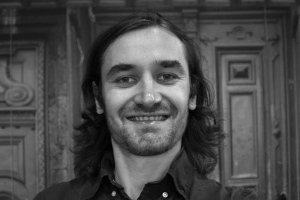
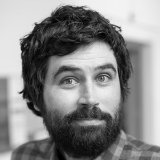
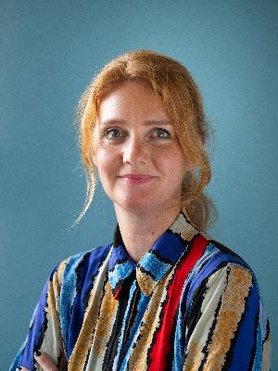
Kerstin Bunte is a Professor of Machine Learning for interdisciplinary data analysis at the University of Groningen, affiliated with the Faculty of Science and Engineering and the Bernoulli Institute's Intelligent Systems Group. She holds an Honorary Fellowship at the University of Birmingham and leads the Intelligent Systems Group. Her research focuses on interpretable machine learning, interdisciplinary applications (e.g., astrophysics and biomedical data), and visualization techniques. Research Interests: - Machine Learning - Artificial Intelligence - Explainable AI (XAI) - Interpretable Models - Dimensionality Reduction - Data Visualization - Astrophysical Data Analysis - Medical Imaging Awards & Grants: - DSSC XS funding (2023) - NWO VIDI grant (2020) - Rosalind Franklin Fellowship (2016–present) Advising & Students: Supervised PhD students include Elisa Oostwal, Janis Norden, Matteo Marcantoni, and Petra Awad. Research spans topics like tumor segmentation in medical imaging, astrophysical structure detection, and autonomous navigation systems. Labs & Collaborations: Leads the Intelligent Systems Group, collaborating with institutions like the University of Birmingham and the University of Warwick. Work involves interdisciplinary projects combining machine learning with astronomy, biomedical sciences, and robotics.
Dr. Faezeh Maghami Nick is an Assistant Professor in Physical Geography at the Faculty of Geosciences, Utrecht University. She holds a PhD in glaciology and specializes in glacier dynamics, numerical modeling, and climate change impacts. Her work focuses on ice-ocean interaction, calving behaviors, and proglacial lake formation, using satellite remote sensing and field observations. She is active in sustainability initiatives, particularly in Greenland and Tajikistan through her charitable organization. Education: PhD in Geosciences (Utrecht University, 2006). Research interests include glacial lake outburst floods (GLOFs), ice sheet modeling, and climate-driven glacial retreat. She has contributed to over 25 peer-reviewed publications, emphasizing Greenland and Arctic glaciology. Research highlights include modeling Petermann Glacier stability and quantifying future sea-level contributions from Greenland's outlet glaciers. Her work bridges field studies with computational models to address climate change impacts on cryospheric systems.
Chiel van Heerwaarden is an Associate Professor of Meteorology at Wageningen University & Research. His work focuses on cloud dynamics, radiative transfer, and their impacts on climate processes. He leads projects on solar irradiance variability, convective cloud organization, and atmospheric modeling. He has received a NWO Vidi grant for his research on cloud shadows and radiative effects. His research integrates machine learning, large-eddy simulations, and observational data to advance understanding of boundary layer processes and climate feedbacks. Key research areas include: irradiance variability under broken clouds, 3D radiative effects in shallow cumulus clouds, and the interaction between clouds and land surface processes. He collaborates on field experiments like CloudRoots-Amazon22 and Fesstval, advancing multiscale modeling approaches. His team addresses challenges in kilometer-scale Earth system modeling and wildfire-atmosphere interactions. Recent achievements include developing efficient radiative transfer parameterizations and analyzing extreme weather phenomena like heatwaves linked to soil drought. He advises five PhD candidates on topics ranging from convective self-aggregation to forest fire plumes. His work bridges computational science and observational data to improve climate projections and atmospheric understanding. Grants: NWO Vidi Grant (2019) Labs/Teams: Meteorology and Air Quality Group at Wageningen University Key Projects: CloudRoots-Amazon22, Shedding Light on Cloud Shadows, Real-Weather Large Eddy Simulation
Dr. Susanne Baumgartner is an Associate Professor in the Faculty of Social and Behavioural Sciences at the University of Amsterdam, specializing in Youth & Media Entertainment. Her research examines the effects of digital media on attention, well-being, and development. Her work investigates: Media multitasking and attention processes Smartphone usage patterns and effects on sleep Digital stress and well-being interventions Adolescent development in digital environments Longitudinal effects of media use Dr. Baumgartner's current research employs mobile tracking, experience sampling, and experimental methods to understand how digital behaviors affect psychological functioning. Her work on notification-disabling interventions and grayscale smartphone displays examines practical approaches to digital well-being. She contributes to the Centre for Research on Children Adolescents and the Media and the Digital Communication Methods Lab, developing innovative approaches to studying digital behaviors in everyday life contexts.
Dominique Wirz is an Assistant Professor in the Communication Science department at the University of Amsterdam's Faculty of Social and Behavioural Sciences. Her research examines media effects, political communication, and entertainment experiences, with a focus on social media platforms and emotional responses to media content. Her work investigates hate speech perception, infotainment strategies on Instagram/TikTok, psychologically rich entertainment, and binge-watching behaviors. Current projects explore the intersection of negative emotions and populist communication effectiveness. Recent publications analyze how news organizations adapt content for social media, psychological dimensions of entertainment experiences, and motivational factors in media consumption patterns.
Walter G.J. van der Meer is a full Professor at the Department of Water Management, Faculty of Civil Engineering and Geosciences, Delft University of Technology. He is a leading researcher in membrane technologies, water treatment, and sustainable water systems, with over 100 research outputs and an h-index of 36. His work focuses on reverse osmosis, filtration, PFAS removal, and micropollutant management in potable and wastewater systems. His research interests lie at the intersection of environmental and chemical engineering, particularly in advancing membrane-based separation processes. Key areas include reverse osmosis modeling, adsorption mechanisms, brine management, and the removal of emerging contaminants such as perfluoroalkyl substances (PFAS). His work integrates experimental studies with theoretical modeling to improve efficiency and sustainability in water treatment. Recent publications (2020–2025) reveal a strong trend toward sustainable water solutions, with emphasis on PFAS remediation, bio-based adsorbents, energy-efficient desalination, and wastewater reuse. His research combines material science, process engineering, and environmental chemistry, contributing to both fundamental understanding and practical applications in water infrastructure. Walter van der Meer has secured significant research impact through extensive collaboration, particularly within the Dutch 4TU federation. He has co-supervised at least 10 student projects and contributes to open science through public data repositories. His work is frequently published in high-impact journals such as Desalination , Water Research , and ACS ES&T Water .
Maris Ozols is an Assistant Professor at the University of Amsterdam and a researcher at QuSoft, affiliated with the Algorithms and Complexity department at Centrum Wiskunde & Informatica (CWI). His primary research focuses on quantum algorithms and quantum information theory, with significant contributions to quantum complexity, quantum cryptography, and quantum state discrimination. His research interests span quantum algorithms, quantum information theory, quantum cryptography, quantum complexity, and theoretical computer science. Ozols has developed fundamental techniques in quantum query complexity, quantum state discrimination, and quantum cryptographic security models. His work often bridges theoretical computer science with quantum information physics, demonstrating practical implications for quantum computing architectures. His publication record shows consistent output in top venues including Communications in Mathematical Physics, Leibniz International Proceedings in Informatics, and Quantum journal. Recent work (2022-2025) focuses on quantum state discrimination, quantum circuit optimization, quantum machine learning, and cryptographic applications of quantum algorithms. His research demonstrates strong theoretical foundations with practical implications for quantum computing development. Leverhulme Early Career Fellow (University of Cambridge) Ozols has secured research funding through multiple Netherlands Organisation for Scientific Research (NWO) grants including the Quantum Software Consortium (QSC) and Quantum Computation with Bounded Space projects. His collaborative work spans international institutions including the University of Waterloo (where he earned his PhD), University of Cambridge, IBM Research, and various European quantum computing groups. He maintains active research groups in quantum algorithms at both QuSoft and CWI, with recent focus on quantum machine learning applications and quantum cryptographic protocols.
Pablo Cesar is Professor holding the Human-Centered Multimedia Systems Chair at Delft University of Technology and leads the Distributed and Interactive Systems (DIS) group at Centrum Wiskunde & Informatica (CWI), the Netherlands' national research institute for mathematics and computer science. His work bridges academic research at TU Delft with applied innovation at CWI. Education: Doctorate (2005) from Helsinki University of Technology, Department of Computer Science and Engineering Master's (2002) from Universidad Politécnica de Madrid His research pioneers human-centered multimedia systems focusing on modeling and controlling distributed media collections across time and space, integrating real-time media streams and sensor data to enable novel remote collaboration scenarios. This work directly addresses challenges in distributed human interaction through system-level innovations in media orchestration. Scientific Awards: 2020 Netherlands Prize for ICT Research (recognized for scientific impact and communication) ACM Distinguished Member (top 10% of ACM members) IEEE Senior Member (top 10% of IEEE members) No specific student advising details or grant funding information appears in the source text, though his leadership of the DIS research group implies supervisory responsibilities. His inaugural lecture 'Human-Centered Multimedia: Making Remote Togetherness Possible' (May 20, 2022) featured a dedicated two-day symposium highlighting his research vision. The DIS group at CWI serves as his primary research laboratory, driving innovation in distributed interactive systems with applications spanning remote collaboration, telepresence, and context-aware media environments.
Rob Basten is an Associate Professor in the Department of Industrial Engineering and Innovation Sciences at Eindhoven University of Technology (TU/e). He has been with TU/e since October 2014, initially as an Assistant Professor before being promoted. His work focuses on operations management and behavioral operations management, with particular expertise in maintenance, spare parts supply, and after-sales services for high-tech equipment. Basten's research is highly applied, often conducted in collaboration with industry partners such as ASML, NXP, Canon Production Printing, Marel Poultry, and the Ministry of Defence. Dr. Basten's educational background includes: Master's in Industrial Engineering and Management (2004) from University of Twente Master's in Computer Science (2005) from University of Twente PhD in Operations Management (2010) from University of Twente Rob Basten's research centers on improving after-sales services for high-tech equipment, with a focus on incorporating new technologies such as 3D printing and IoT. His work spans both analytical and empirical approaches, with increasing emphasis on behavioral operations management as human decision-makers interact with AI-based decision support systems. Basten investigates how to design and control after-sales service supply chains when spare parts can be 3D printed, and how to optimize maintenance policies for complex systems. His interdisciplinary research bridges operations management, maintenance engineering, and human behavior. Analysis of Basten's recent publications reveals a strong focus on the application of new technologies in after-sales services. Key trends include the integration of additive manufacturing in spare parts supply chains, condition-based and predictive maintenance driven by Industry 4.0 technologies, and the behavioral aspects of human-AI collaboration in maintenance decision-making. His work frequently addresses challenges in high-tech manufacturing contexts, particularly semiconductor equipment, with a growing emphasis on Industry 5.0 concepts that integrate human-centered approaches with advanced technologies. Dr. Basten has received recognition for his work, including: Finalist for the 2020 Daniel H. Wagner Prize for Excellence in Operations Research Practice ISIR Best Student Paper Award 2018 Rob Basten actively supervises numerous PhD students and has led several major research projects. He currently supervises nine PhD students including Maryam Azani, Ragnar Eggertsson, Bibi de Jong, Zhao Kang, Niccolò Maccarini, Aran Nasiri, Bas van Oudenhoven, İpek Tanıl, and Alireza Yazdani. He has successfully guided six PhD students to completion. Basten has been project leader and work package leader in significant research initiatives including ProSeLoNext (funded by NWO with industry co-funding), PrimaVera, SINTAS, and OCPROM projects. His research is consistently supported by both public funding agencies and industry partnerships, reflecting the practical relevance of his work. Basten is an active member of the Operations, Planning, Accounting & Control group at TU/e and contributes to the EAISI High Tech Systems initiative. He has organized key academic events including the first two editions of the Maintenance Research Day and the Behavioral Operations Conference 2019. His work connects academic research with industry practice through ongoing collaborations with leading high-tech companies, creating a dynamic research environment focused on solving real-world challenges in maintenance and service logistics.
Dr. V. Menkovski serves as an Associate Professor in Data Mining at Eindhoven University of Technology's Department of Mathematics and Computer Science. He also holds associate professor positions with EAISI Health and EAISI High Tech Systems, and is an ICMS Affiliated member. His work spans multiple domains of artificial intelligence and computational physics, with significant contributions to fusion energy research. Mathematics and Computer Science, Data Mining (Primary Appointment) EAISI Health (Associate Professor) EAISI High Tech Systems (Associate Professor) ICMS (Affiliated Member) Menkovski's research focuses on Graph Neural Networks, Machine Learning, Deep Learning, and their applications in diverse fields from plasma physics to metamaterials. His work demonstrates strong interdisciplinary connections, particularly between computer science and fusion energy research. He has developed novel approaches for crowd simulation, tokamak plasma monitoring, and metamaterials homogenization using advanced neural architectures. His fingerprint reveals expertise in Quality-of-Experience, Autoencoders, Neural Networks, Annotation, Graph Neural Networks, Video Streaming, Adversarial Machine Learning, and Anomaly Detection. Analysis of his recent publications (2023-2025) shows a clear trend toward applying Graph Neural Networks to complex physical systems, particularly in fusion energy research and materials science. His work increasingly integrates symmetry principles with neural architectures, as seen in his research on equivariant networks for metamaterials and symmetry-informed networks for zeolite analysis. There's also significant focus on practical applications in fake news detection, anomaly detection, and plasma state monitoring. Best Paper Award ICPM 2021 (with Sommers and Fahland) Best Paper Award of LoG 2022 (with multiple co-authors including Huang, Chen, Fang, Zhao, Yin, Pei, Mocanu, Wang, Pechenizkiy, and Liu) Menkovski teaches several advanced courses including Deep Learning, Advanced Topics in Artificial Intelligence, and Sociophysics 2, which runs through August 2025. His supervised work portfolio includes 79 projects, indicating substantial mentorship activity. He has received significant media attention for his research, including coverage by 11 news outlets, blog posts, and mentions on social media platforms. His work on 'Supervised Learning of Process Discovery Techniques Using Graph Neural Networks' was particularly noted in media coverage. His research involves collaboration with multiple institutions and teams, particularly in fusion energy research (Eurofusion Tokamak Exploitation Team, ASDEX-Upgrade team, EUROfusion MST1 Team). He works closely with researchers across disciplines, including physicists working on tokamak plasma and materials scientists studying metamaterials and zeolites.
Hugo Ledoux is an academic affiliated with the Faculty of Architecture and the Built Environment at Delft University of Technology, specializing in Urban Data Science. His research focuses on 3D geospatial modeling, including CityGML standards, terrain analysis, and automated reconstruction of urban structures. He has contributed to projects like the DeltaDTM coastal terrain model and the cjdb database solution for CityGML. Education: Not explicitly detailed in text, but inferred through academic roles and publications. Research interests emphasize 3D geoinformation systems, remote sensing applications, and urban data science. His work addresses challenges in 3D city models, building reconstruction, and geospatial validation tools like Val3dity. Recent efforts include improving global terrain models using ICESat-2 and GEDI lidar data. Publications span automated building reconstruction workflows, terrain accuracy assessments, and semantic-guided facade modeling. Awards include the Best Presentation at 3DGeoInfo 2020 and the U.V. Helava Award for Best Paper in 2011. Ledoux has supervised 4 academic works and actively participates in conferences, editorial activities, and open-source software development for geospatial applications. Labs/Teams: Involved in TU Delft’s 3D geoinformation research, contributing to tools like 3dfier and CityJSON for 3D data interoperability.
Doris van Halem is Professor in Drinking Water Quality & Treatment at Delft University of Technology's Civil Engineering & Geosciences faculty, where she leads the Sanitary Engineering department. As program leader of TU Delft | Water for Impact, she drives water research initiatives focused on the Global South. MSc in Civil Engineering & Geosciences (cum laude, Gijs Oskam Award recipient) PhD in Subsurface Iron and Arsenic Removal (cum laude, 2011) Her research centers on contaminant behavior in natural waters and sustainable treatment technologies, with particular focus on biological-chemical-physical interaction mechanisms. She has pioneered work on biological sand filters, ceramic membranes, dune filtration, and electrochemical treatment systems for removing health-threatening contaminants like arsenic and iron. Recent publications reveal a strong trend toward integrating biotechnological approaches with traditional water treatment methods, particularly in groundwater remediation and resource recovery from waste streams. Her work increasingly addresses climate resilience and emissions reduction in water infrastructure. Steven Hoogendijk Award (2013) UNESCO-L'Oréal For Women in Science Fellowship (2015) NWO VIDI Grant (2020) Fulbright Scholar (2024) RELX Environmental Challenge Winner (2023) Professor van Halem actively mentors through her Massive Open Online Course on drinking water treatment (EdX), reaching global audiences. She leads NWO-funded research projects and collaborates with international organizations including UNICEF and UNESCO. Her current work includes developing the 'Water for Impact' initiative to strengthen water research capacity in developing regions. She maintains active research partnerships with EAWAG (Zurich), Universidad de las Américas Puebla, and serves on the SIA RAAK committee (2024-2026), while contributing to policy discussions through media appearances and UN side-events.
Rashid Zaman is a researcher affiliated with Eindhoven University of Technology (TU/e), focusing on intersections of process mining , GDPR compliance , and event stream processing . His work addresses conformance checking, data retention constraints, and memory optimization in dynamic business processes. Research Trends: Recent publications emphasize technical solutions for aligning business processes with privacy regulations like GDPR, with specialized attention to memory-efficient algorithms for real-time conformance checking and orphan event handling in data streams. Collaborations: Active collaborator with researchers including Boudewijn van Dongen and Mohammad Hassani , contributing to projects on GDPR-compliant business process frameworks.
Prof. D.M. van Solingen serves as a Professor in the Software Engineering department within the Electrical Engineering, Mathematics and Computer Science school at Delft University of Technology. His academic career spans over two decades with continuous research output through 2024, demonstrating active engagement in both theoretical and practical aspects of software development. His research interests focus on Agile methodologies , global software development , and value-driven project management . Key areas include empirical studies on offshoring economics, Scrum framework optimization, stakeholder value quantification, and organizational transformation during Agile adoption. His work bridges academic rigor with industry applicability, particularly in measuring the true costs of distributed development and identifying critical turnover impacts in global teams. Analysis of his recent publications (2016-2024) reveals a strong trend toward practical Agile implementation and value measurement . Over 60% of his work addresses real-world challenges in scaling Scrum, optimizing offshoring strategies, and quantifying business value. His research increasingly incorporates empirical data from industry collaborations, with significant focus on the human factors affecting software project outcomes. EASE 2016 Best Paper Award for research on stakeholder satisfaction and project impact Prof. van Solingen's advisory work includes doctoral supervision and industry collaborations focused on software process improvement. His research has attracted significant industry interest, evidenced by 118 Mendeley readers for his 2013 media coverage on hyperproductive Scrum teams and consistent Scopus citations across his publications. His work demonstrates sustained engagement with both academic and practitioner communities through books, conference workshops, and empirical studies.
Dr. A.A.A. Qahtan is an Assistant Professor in the Data Intensive Systems research group within the Department of Information and Computing Sciences at Utrecht University's Faculty of Science. His academic appointment focuses on advancing research and education in data-intensive computing with particular expertise in data stream mining, data cleaning, and explainability of machine learning techniques. Dr. Qahtan completed his PhD studies at KAUST (King Abdullah University of Science and Technology) under the supervision of Xiangliang Zhang and Soujin Wang. Prior to joining Utrecht University, he worked as a postdoc at QCRI (Qatar Computing Research Institute) where he developed pattern functional dependencies (PFDs) for data cleaning. His research spans several critical areas in data science: Data Stream Mining and Real-time Processing Data Cleaning and Quality Assessment Pattern Recognition and Functional Dependencies Outlier and Anomaly Detection Concept Drift Detection in Streaming Data Fairness in Machine Learning Systems Missing Data Imputation Techniques Dr. Qahtan's publication record demonstrates consistent contributions to top-tier venues including PVLDB, KDD, ICDE, and SIGMOD. His recent work shows a progression from foundational data cleaning techniques to advanced applications in categorical data analysis, fairness in AI, and cryptocurrency market analysis. His research bridges theoretical foundations with practical applications across multiple domains. Dr. Qahtan actively contributes to academic education at Utrecht University, teaching courses including Data Analytics, Data Science and Society, Data Wrangling and Data Analysis, and Databases across multiple academic years from 2019 to 2024.