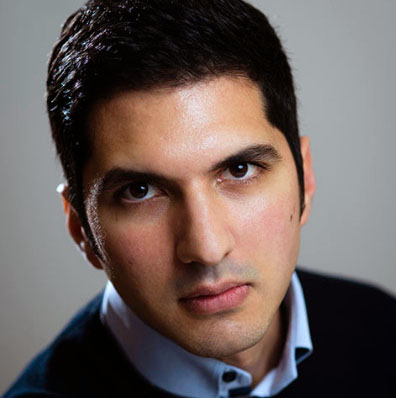
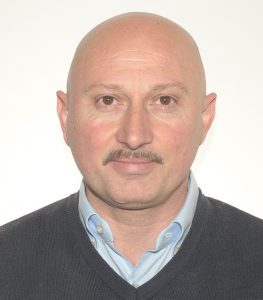
Flavio De Paoli is an Associate Professor affiliated with the Insid&s LAB. His research focuses on semantic web technologies, data enrichment, and interactive tools for data management. Key projects include the enrichMyData initiative and the development of frameworks like SemT and Protobject . His work spans geospatial data analysis, services-oriented computing, and scalable data solutions. Notable contributions include tools for semantic table interpretation (e.g., MantisTable ), API-based data enrichment, and event-driven analytics. He has also contributed to cloud computing frameworks and semantic wiki integration for knowledge management. His research emphasizes human-in-the-loop systems, automated data processing, and tool development for both academic and industrial applications. Projects like EW-shopp and BEEO demonstrate his focus on applying semantic technologies to real-world challenges in marketing, urban planning, and smart systems.
Katarzyna Kaczmarek-Majer is an Associate Professor at the Department of Stochastic Methods, Systems Research Institute, Polish Academy of Sciences in Warsaw, Poland. She specializes in explainable and trustworthy artificial intelligence with applications in medical data stream analysis and fuzzy systems. Principal Investigator of "ExplainMe: Explainable Artificial Intelligence for Monitoring Acoustic Features extracted from Speech" (since 07.2024) Lead Researcher of Trustworthy AI for Healthcare Lab (since 07.2024) Research Interests : Medical data stream analysis and linguistic summarization Time series forecasting with fuzzy Bayesian methods Smartphone-based mental health monitoring Scientific Contributions : Best Paper Award at FUZZ-IEEE 2022 (Padova) Over 50 publications in computational statistics and fuzzy systems Active reviewer for 15+ journals and committee member at 20+ conferences
Floriana Esposito is a Full Professor and current Director of the Department of Computer Science at the University of Bari, Italy. With a career spanning over 50 years since her 1974 appointment, she has held pivotal leadership roles including Dean of the Faculty of Computer Science (1997-2002) and Director of the Interdepartmental Center for Logic and Applications (1997-2001). She teaches core courses including Algorithms and Data Structures, Knowledge Engineering, and Machine Learning. Education: Degree in Electronic Physics from University of Bari (1970) First Academic Appointment at University of Bari (1974) Research Focus: Her work centers on Artificial Intelligence and Machine Learning with emphasis on logical/algebraic foundations. Initial research in statistical pattern recognition evolved into Intelligent Tutoring Systems and Machine Learning, now focusing on similarity-based learning, multistrategy approaches, and integration of symbolic/numeric methods. Major applications target Document Analysis and Understanding for paper-based systems, with significant contributions to symbolic data analysis and knowledge discovery. Publication Trends: Recent work shows strong continuity in multistrategy and incremental learning techniques applied to document processing and symbolic data analysis. Her research consistently bridges theoretical foundations (logical theories, concept drift handling) with practical implementations in spatial data mining, e-learning systems, and urban planning, demonstrating a 30-year trajectory from knowledge acquisition fundamentals to real-world AI deployment. Scientific Awards: No specific awards were mentioned in the source text. Advising & Grants: As founder of LACAM Laboratory (1986), she has mentored numerous PhD students and researchers. Her group secured extensive EU funding through ESPRIT, IST, and Framework programs including MLNet, KDNET, and DELOS Networks of Excellence, focusing on machine learning applications in document analysis, digital libraries, and spatial data mining across 15+ European collaborative projects. Labs & Teams: She chairs LACAM Laboratory (2 full professors, 3 associate professors, 5 assistant professors, multiple PhD students), which serves as a European hub for AI research. The lab has been integral to ESPRIT Intrepid (document processing), CONCERTO (digital document retrieval), COLLATE (historical archive systems), and SODAS (symbolic data analysis), maintaining continuous involvement in EU Networks of Excellence since the 1990s.
Donato Malerba is a Full Professor at the Department of Computer Science, University of Bari, Italy, and Director of the CINI Lab on Big Data. His research focuses on Machine Learning, Data Mining, and Big Data applications, with notable contributions to spatial data analysis, process mining, and cybersecurity. He has led multiple European and national research projects and received the IBM Faculty Award in 2004. Malerba serves on the Board of Directors of the Big Data Value Association and chairs international conferences like ECML PKDD and ALT/DS. His work bridges theory and practice, addressing challenges in environmental monitoring, network security, and explainable AI. Research interests include inductive logic programming, multi-relational mining, bioinformatics, and cyber threat detection. He has published over 200 papers in top venues and actively collaborates with industry stakeholders through projects like the PPP Big Data Value initiative. Awards: IBM Faculty Award 2004 Roles: Director of Computer Science Department, Director of CINI Lab on Big Data Key Projects: Lead investigator in EU-funded projects on Big Data analytics, cybersecurity, and environmental monitoring. Recent work emphasizes LLM applications for environmental monitoring (e.g., bark beetle outbreak detection via Sentinel-2 imagery) and quantum machine learning for incremental learning. His lab develops tools like PROPHET (explainable predictive process monitoring) and PANACEA (neural ensemble-based cyber threat detection).
Michele Torregrossa is a Full Professor at the University of Palermo's Department of Hydraulic Engineering and Environmental Applications. He holds a Ph.D. in Sanitary Engineering from Politecnico di Milano and specializes in wastewater treatment technologies. His research focuses on Membrane Bioreactors (MBR), Moving Bed Biofilm Reactors (MBBR), sludge minimization, and sustainable water reuse. Torregrossa's work explores advanced treatment processes like granular bioreactors, foaming control in activated sludge, and organic waste degradation. His recent publications emphasize operational efficiency, risk assessment, and resource recovery in water infrastructure. Key research trends include robustness optimization under challenging conditions, multi-hazard vulnerability mapping, and integrated biopolymer/water recovery systems. He contributes to environmental engineering through international collaborations and experimental validations at pilot scales. Though no awards are documented, his leadership in developing novel treatment methodologies demonstrates significant scientific impact.
Claudio Scali is a Full Professor at the Department of Civil and Industrial Engineering, University of Pisa, specializing in Chemical Engineering. He has held academic roles since 1978, progressing from Assistant to Full Professor since 2001. His primary affiliations include the University of Pisa, where he serves as President of the PhD Council in Chemical Engineering and Materials (2009–2016) and representative in the Administrative Board of Consorzio Polo Tecnologico Magona. He is also President of CLUI AS (Club Utilizzatori Italiani Automazione e Strumentazione) since 2017, focusing on Industry 4.0 training. Education: Graduated in Chemical Engineering (1975, University of Pisa). Visiting roles include California Institute of Technology (1985–87) and Université de Picardie (1996). Teaching focuses on Process Control and Chemical Plant Design, with past roles in Aerospace and Energy Engineering courses. Research interests: Modeling and Control of Chemical Processes, Robust Process Control, Performance Monitoring, and Advanced Diagnosis of Control Loops. Current work emphasizes cloud-based monitoring and Industry 4.0 integration. Collaborations include ENI R&M and ENEL Research. Over 180 publications in journals and conferences, with recent foci on valve stiction analysis, closed-loop monitoring, and cloud architectures. Editorial roles: Associate Editor of the Journal of Process Control (2001–2012), member of IFAC committees. Organized major conferences like IFAC-ADCHEM 2000 in Pisa and contributed to events in Mumbai, Hiroshima, and Milan. Grants/Advising: Collaboration with industrial partners on performance monitoring and diagnostics. Research labs include Polo Magona and IdroLab4.0 for cloud-monitoring applications.
Salvatore Andolina is an Associate Professor at the Department of Electronics, Information and Bioengineering at Politecnico di Milano, Italy. His research focuses on Human-Computer Interaction (HCI), Artificial Intelligence (AI), and Information Retrieval, with a particular emphasis on designing human-centered AI systems for collaborative, social, and ubiquitous settings. He has held academic affiliations at the University of Palermo, Helsinki Institute for Information Technology HIIT, University of Helsinki, Aalto University, and served as a visiting scholar at Carnegie Mellon University's Human-Computer Interaction Institute. Key research areas include: Human-Centered AI Exploratory Search and Information Systems Crowdsourcing and Collaborative Creativity Augmented Reality and Wearable Technologies Entity-Centric Interaction Design Notable achievements include co-chair roles for the C&C conference (2025-2026), winning the Google Award for Inclusion Research (2023), and contributions to projects like the "Conversational Patterns for Inclusive Prompt Engineering" as a co-PI. He is an ACM Senior Member and has published extensively in top-tier venues including CHI, DIS, SIGIR, and TOIS. His work spans theoretical frameworks and applied systems, with recent focus on balancing sustainability in AI systems and advancing inclusive conversational interfaces.
Fiora Pirri is a Full Professor at Sapienza University of Rome, leading the ALCOR Laboratory since 1998. She holds a PhD from Université Pierre et Marie Curie Paris VI, a DEA in Artificial Intelligence (ENPC), and dual Master's degrees in Statistics and Architecture from Sapienza. Her research focuses on Computer Vision, Cognitive Robotics, Perception, and Machine Learning, with applications in 3D reconstruction, Green AI (e.g., vertical farming), multimedia forensics, and edge vision. Current projects include Horizon2020 initiatives like Second HAND and FP7/TRADR in disaster response robotics. **Education:** PhD: Université Pierre et Marie Curie Paris VI DEA IARFAG: ENPC (Ecole Nationale des Ponts et Chaussées) Master's in Statistics: Sapienza University of Rome Master's in Architecture: Sapienza University of Rome **Research Interests:** Her work bridges visual perception and cognitive systems, emphasizing robust solutions for unstructured environments. Key areas include semantic segmentation, robotic action anticipation, SAR-optical data fusion, and plant phenotyping in controlled agriculture. ALCOR Lab's projects address challenges in urban search and rescue, environmental monitoring, and human-robot collaboration. **Grants & Projects:** Leads EU-funded initiatives such as Second HAND (2024), TRADR (FP7), and NIFTI (Cognitive Systems & Robotics). Collaborates on SARFIRE (ASI Contract) for fire susceptibility modeling. Recent publications highlight advancements in unsupervised segmentation, spatiotemporal fusion, and low-resolution action recognition. **Lab & Infrastructure:** ALCOR Lab (Rooms S012/S011, Via Ariosto 25) focuses on perception-driven robotics, with active research in XAI, adversarial learning, and edge computing. The lab integrates theoretical and applied research to advance autonomous systems in dynamic environments.
Massimo Torquati is an Associate Professor in the Computer Science Department at the University of Pisa. He holds Italian National Scientific Qualifications (ASN) for Full Professor (2023) and Associate Professor (2018) roles in Computer Science and Engineering. His research focuses on high-level tools for parallel programming, autonomic computing, and high-performance data stream processing. He is a member of key organizations like the CINI HPC-KTT National Laboratory, the European HiPEAC Network, and the Parallel Programming Models Group at Pisa. Research Interests: Parallel programming models, distributed systems, concurrency control, and software frameworks like CAPIO and WindFlow. Recent work includes advancements in distributed-memory FastFlow, adaptive streaming, and middleware for scientific workflows. Awards include the ASN qualifications, reflecting his academic standing. He actively contributes to conferences like Euro-Par and workshops on HPC infrastructure. His work emphasizes practical implementations of parallel patterns and scalable computing solutions.
Stefano Rozzi is an Associate Professor of Physiology at the University of Parma within the Department of Medicine and Surgery . His research focuses on the multidisciplinary study of the cerebral cortex using anatomical and physiological techniques. Education : Medical Doctor (MD), University of Pavia PhD in Neuroscience, University of Parma Research Interests : Neural networks in the insular cortex Motor control and sensorimotor transformations Mirror neuron systems in action perception Prefrontal cortex and executive functions Visual stream integration in motor tasks Cortical connections of premotor areas Teaching Appointments : Neuroscience of Cognitive and Motor Functions (2025/2026, First Cycle Degree) Physiology courses across multiple programs (2013–2025) Office Location : Plesso Biotecnologico Integrato, Via Volturno 39, 43125 Parma, Italy.
David Chiaramonti is a Full Professor at the Department of Energy (DENERG) at the Polytechnic University of Turin, where he serves as Bioenergy and Biofuels Representative and Scientific Advisor for the Partnership Agreement with TECHNIP ENERGIES and the European Energy Research Alliance (EERA). His research spans the complete biobased value chains, focusing on thermochemical and biochemical conversion processes for sustainable energy production. His research interests include anaerobic digestion, aviation and maritime fuels, biochar, bioenergy and bioeconomy, biofuels, energy policy, hydrothermal processing, life cycle assessment, marginal land utilization, and pyrolysis and gasification. He applies these interests to address critical sustainability challenges aligned with multiple UN Sustainable Development Goals including affordable and clean energy, industry innovation, sustainable cities, climate action, and life on land. Professor Chiaramonti's publication record demonstrates a strong focus on sustainable biofuels, biomass conversion technologies, and circular economy approaches. His recent work shows increasing emphasis on practical applications of biochar, advanced biofuel production for aviation and maritime sectors, and integration of waste streams into sustainable energy systems, with significant contributions to European research initiatives. Scientific Awards: Linneborn Prize (2017) awarded by Linneborn International Committee at European Biomass Conference and Exhibition Full member of Accademia dei Georgofili (since 2007) Professor Chiaramonti serves on the editorial boards of several prestigious journals including APPLIED ENERGY , BIOMASS & BIOENERGY , BIOMASS CONVERSION AND BIOREFINERY , and BIOFUELS . He actively supervises numerous PhD students working on energy sustainability topics and leads multiple EU-funded research projects including THELMA, H2loop, BioRECAST, and H2STEEL, focusing on decarbonization, sustainable biofuels, and circular economy approaches for industrial applications. His research group collaborates extensively with the Consortium for Research and Demonstration on Renewable Energy (RE-CORD) and maintains strong connections with European energy research initiatives through the European Energy Research Alliance.
Francesco Zammori is an Associate Professor at the Department of Systems Engineering and Industrial Technologies (DISTI) , University of Parma. His career spans academic research, teaching, and industry collaboration, focusing on lean manufacturing, supply chain innovation, and simulation modeling. Scientific High School Diploma, 100/100, Leonardo da Vinci Scientific High School (2000) Bachelor's in Management Engineering (logistics and production), 110/110 cum laude , University of Pisa (2002) Master's in Management Engineering (logistics and production), 110/110 cum laude , University of Pisa (2004) PhD in Mechanical Engineering (plants and technologies), University of Pisa (2009) Zammori's research centers on lean manufacturing , where he develops techniques for identifying inefficiencies using Value Stream Mapping (VSM) and Overall Equipment Effectiveness (OEE). He specializes in Vendor Managed Inventory (VMI) modeling, discrete-event simulation of complex systems with multivariate statistical analysis, and solving NP-hard problems in operations management using mathematical programming and heuristics. His work also explores process mapping with IDEF/BPMN methods and IT system prototyping for transactional data. Recent publications highlight trends in supply chain circularity (2024), automated storage systems (2023), and educational gamification (2023). He applies Monte Carlo simulation , Markov chains , and life cycle analysis to industrial challenges. Scientific Contributions: Editor-in-Chief (European area), Decision Science Letters (Growing Science) Organizer & Chair, IESM2015 special session on 'Lean in Make To Order Firms' Member, AIIE2015 international conference scientific committee Zammori has taught 40+ corporate training modules for Tuscan companies and delivered university courses on ERP systems , business process management , and management information systems across multiple Italian universities since 2005. His funded projects include RFID tracking systems for paper coils and plasma bags, extended enterprise logistics frameworks, and lean process reengineering for manufacturing firms.
Halar Haleem is a Research Fellow at the Department of Naval, Electrical, Electronic, and Telecommunications Engineering (DITEN) within the University of Genoa. Their research spans interdisciplinary domains at the intersection of computer vision, robotics, drone technology, and wireless systems. Academic Rank: Research Fellow Affiliation: University of Genoa, Department of Naval, Electrical, Electronic, and Telecommunications Engineering Contact: halar.haleem@edu.unige.it Research interests focus on drone technology , computer vision , and wireless surveillance systems . They explore applications in traffic monitoring, aerial object detection, and energy-efficient drone operations, with recent work on AI-enabled medical IoT and biomechanical monitoring using smart glasses. Key article trends include: Drone-based traffic analysis using deep learning and image segmentation Privacy-preserving Wi-Fi monitoring systems Monocular vision for activity recognition in makerspaces RF/WiFi signal utilization for UAV surveillance Energy-accuracy trade-offs in drone video processing Trimetallic nanoparticle electrocatalysts for hydrogen production
David Cappelletti is a Full Professor of Chemistry at the University of Perugia and Coordinator of the Environmental Chemistry and Technology (ECT) research group within the Department of Chemistry, Biology and Biotechnology (DCBB). He also holds affiliations with ISAC-CNR and Centro di Eccellenza SMAArt. Cappelletti serves as Director of the Center for Climate Research (CRC-CIRIAF) and is a Member of the Accademia Nazionale delle Scienze, detta dei XL. His extensive academic leadership includes roles as Delegate to scientific research for DCBB, Coordinator of the AB2C section, and Member of the CSA of Area 03 (Chemistry) at the University of Perugia. Cappelletti's research focuses on environmental chemistry with particular emphasis on atmospheric aerosols, polar research, and climate change impacts. His work spans atmospheric chemistry and physics, chemistry of water and snow, applications of analytical chemistry to environmental samples, and the search for novel bio-indicators. Key research areas include climatology of aerosol in the Arctic, atmosphere-cryosphere interactions, long-term aerosol measurements, atmospheric dispersion modeling, and atmosphere-plant-bacteria interactions. His publication record demonstrates a strong trajectory in atmospheric science, with recent work concentrating on Arctic aerosols, Saharan dust transport, snowpack physics, and environmental monitoring using bioindicators. The research shows increasing interdisciplinary collaboration across environmental chemistry, climate science, and ecological monitoring, with notable contributions to understanding long-range pollutant transport to polar regions and developing innovative environmental monitoring techniques. Member of Accademia Nazionale delle Scienze, detta dei XL Editor of Springer Special Issue: 'Environmental Changes in the Arctic: an Italian Perspective' (2016) Member of the Editorial Board of Environmental Research Communications (IOP) Outstanding Contribution in Reviewing for The Science of the Total Environment, Atmospheric Environment and Atmospheric Research Cappelletti has supervised numerous graduate students and mentored over 40 undergraduate theses across Chemistry, Physics, Environmental Engineering, and Biology. His research has been supported by significant grants including multiple projects with the Norwegian Research Council, EU Horizon 2020 funding, and Italian national research programs. He has participated in numerous Italian Arctic Expeditions (2011-2024) and serves as an operator for the World Glacier Monitoring Service since 2009. His work has established important monitoring sites including the Regional Background site of Monte Martano, which is part of both the WMO's SDS-WAS network and the European Monitoring and Evaluation Programme (EMEP).
Ombretta Gaggi is an Associate Professor at the Department of Mathematics, University of Padua, where she has been conducting research and teaching since April 2006. Her academic journey began with a Laurea degree cum laude in Computer Science from Ca' Foscari University of Venice in 1998, followed by a PhD in Computer Science from the Consortium of Universities of Bologna, Padova and Venice in 2003. Her research spans mobile computing and networking, web technologies, social networks, and semantic web, with a strong emphasis on accessibility technologies and serious games for educational and medical applications. She has made significant contributions to developing solutions for visually impaired users, early identification of developmental dyslexia, and safety mechanisms for mobile communications. Professor Gaggi's recent publications demonstrate a consistent track record of high-impact research in top venues including ACM Transactions on the Web, IEEE Transactions on Mobile Computing, and IEEE Access. Her work increasingly focuses on leveraging technology for social good, addressing challenges in accessibility, education, and online safety. Best Paper Award at IEEE International Conference on Multimedia and Expo (ICME 2013) As an educator, Professor Gaggi teaches Web Technologies and Mobile Programming and Multimedia courses at the University of Padua. Her research group offers opportunities for students to work on cutting-edge projects at the intersection of mobile computing, web technologies, and accessibility solutions. She has established international collaborations and regularly publishes in top-tier conferences and journals, demonstrating sustained research productivity across multiple domains. Her laboratory work focuses on practical implementations of theoretical frameworks, particularly in accessibility technologies and serious games applications, with strong connections to real-world challenges in education and healthcare.