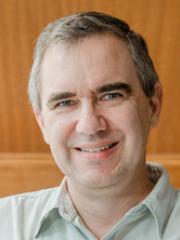
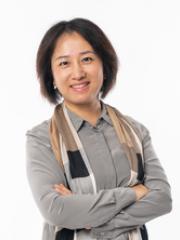
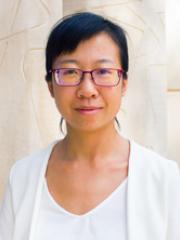
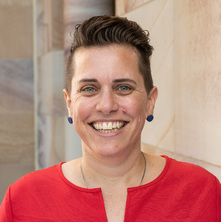
Associate Professor Vic Ciesielski is affiliated with RMIT University's School of Computing Technologies. His research focuses on Artificial Intelligence, Evolutionary Computing, Computer Vision, and Genetic Programming, with applications in areas like robot soccer and aesthetic analysis of images. He has supervised projects including efficient neural architecture search and off-line handwritten text recognition. His work bridges computational techniques with creative fields such as art history and digital media. Key research interests include machine learning, data management, and graphics/augmented reality. He actively contributes to conferences like GECCO and IJCNN, publishing on topics ranging from neural architecture optimization to sensor-based activity recognition. His research often integrates evolutionary algorithms with deep learning methodologies. He can be contacted via vic.ciesielski@rmit.edu.au and has an ORCID identifier: 0000-0001-7273-9566 .
Dr. Tien-Vinh Nguyen is a Senior Lecturer at the School of Civil and Environmental Engineering, Faculty of Engineering and IT (FEIT) at the University of Technology Sydney (UTS), Australia. He is a core member of the Center for Technology in Water and Wastewater (CTWW) and the UTS-VNU Joint Technology and Innovation Research Centre. His research interests focus on water and wastewater treatment and reuse technologies, desalination, and sludge dewatering. Dr. Nguyen has published over 90 refereed journal papers in reputable journals including Bioresource Technology, Journal of Membrane Science, Journal of Hazardous Materials, and Chemical Engineering Journal. His work spans theoretical modeling, experimental studies, and practical applications of water treatment technologies with particular emphasis on sustainable and low-cost solutions applicable in developing countries. Dr. Nguyen's recent publications (2022-2025) demonstrate a strong focus on emerging contaminants like microplastics and bisphenols, advanced adsorption techniques for arsenic removal, and innovative approaches for resource recovery from water streams. His research shows a consistent pattern of applying fundamental engineering principles to solve practical water treatment challenges, with particular emphasis on sustainable and low-cost solutions applicable in both developed and developing countries. UTS Vice-Chancellor's Awards for Research Excellence, through Collaboration and Partnership, 2021 IWA Development Congress Best Poster Award 2019 Google Impact Challenge Technology Against Poverty Prize Winner, 2017 Vietnam Golden Book of Creativity 2017 IWA Asia Pacific Regional Project Innovation Award in the Applied Research Category 2008 Dr. Nguyen has extensive experience supervising PhD and master's students as both principal and co-supervisor. He has secured significant research funding from diverse sources including government agencies, industry partners, and international collaborations. His research projects often involve strong partnerships with water authorities, shire councils in Australia, and organizations in developing countries, particularly Vietnam. He has played a key role in establishing collaborative research activities between UTS and the Vietnam Academy of Science and Technology (VAST) and Vietnam National University (VNU). As a core member of the Center for Technology in Water and Wastewater (CTWW), Dr. Nguyen contributes to a multidisciplinary team focused on developing innovative solutions for water treatment challenges. His work often bridges theoretical modeling with practical applications, resulting in technologies that can be implemented in real-world settings, including household filter systems for arsenic removal in Vietnam.
Summary Associate Professor Mehrdad Arashpour is an internationally recognized researcher and educator in construction and civil infrastructure, focusing on automation and information technologies. He leads the ASCII Lab at Monash University's Department of Civil and Environmental Engineering. His academic roles include Head of Construction Engineering and membership in the CIB's Working Commission on Off-site Construction (W121) and Infrastructure Task Group (TG91). Education: Ph.D., RMIT University, Australia M.Sc., Grenoble University, France B.Sc., IU University, Iran Research Interests: Digital twins, computer vision, robotics, BIM integration, sustainable construction, and automation in construction processes. His work contributes to UN Sustainable Development Goals, particularly in sustainable cities and communities. Grants & Awards: Over $6M in grants from ARC, Austroads, and industry partnerships. Recognitions include Editor's Choice Paper (ASCE, 2019) and Outstanding Reviewer (Elsevier, 2016). Teaching: Courses like Risk Management in Engineering Projects and Infrastructure Research Project. Advises on PhD topics in computer vision, robotics, and BIM. Labs & Collaborations: ASCII Lab focuses on smart, sustainable solutions for construction. Collaborates with global researchers and organizations like SPARC Hub and Building 4.0 CRC.
Professor Xue Li is a faculty member in the School of Electrical Engineering and Computer Science at the University of Queensland. His research focuses on machine learning, data mining, and their applications in healthcare, materials science, and computer vision. He has authored over 300 publications, including seminal works on knowledge graph completion, video quality enhancement, and alloy design using machine learning. His work bridges theoretical advancements with real-world applications, such as clinical diagnosis andTinyML systems. Key research interests include graph representation learning, medical informatics, and efficient algorithms for multimedia data. Notable contributions include developing commonsense-enhanced relation extraction models and frameworks for compressed video reconstruction. His research also addresses challenges in federated learning and privacy-preserving genomics. Prof. Li has collaborated extensively with industry and academia, contributing to projects in RFID systems, electronic nose pattern recognition, and cybersecurity. His work is published in top-tier venues like IEEE Transactions and ACM conferences. Despite no listed awards, his prolific output underscores academic impact.
Dr. Madhushi Bandara is a Lecturer at the School of Computer Science, University of Technology Sydney (UTS), specializing in knowledge representation, complex system modeling, and data analytics. She leads the data management research stream at the UTS DigiSAS lab and is a core member of the Biomedical Data Science Laboratory within the UTS Australian Artificial Intelligence Institute. Her industry collaborations include Telstra, Cancer Australia, and Capsifi, focusing on AI integration in healthcare and finance. She coordinates the Business Information Systems major in UTS's Master of Information Technology program and convenes the Future Generation Enterprise Architecture Community of Practice. Education PhD in AI Systems Engineering, University of New South Wales (2020) BSc (Hons) in Engineering, University of Moratuwa, Sri Lanka (2015) Research Interests Madhushi's work bridges machine learning, knowledge graphs, and enterprise architecture to address challenges in data governance for SMEs, ESG metric management, and healthcare pathway analysis. Her research emphasizes translating cutting-edge AI into industry solutions through contextual domain knowledge integration. Scientific Awards UNSW-UTS Trustworthy Digital Society Scholarship Teaching & Leadership She teaches enterprise information systems, digital strategy, and AI for enterprises in UTS's online postgraduate programs. Her service roles include co-chairing tracks at the Australasian Conference on Information Systems and reviewing for Expert Systems with Applications.
Associate Professor Peter Sutton is an academic at the University of Queensland (UQ), holding roles as Deputy Head of School (Teaching and Learning) and Associate Professor in the School of Electrical Engineering and Computer Science. His research focuses on Engineering Education, Embedded Systems, Reconfigurable Computing, and Electronic Design Automation. He has contributed to curriculum design, remote lab management during the pandemic, and hardware-software co-design for embedded systems. Sutton completed his undergraduate studies at UQ and earned advanced degrees at Carnegie Mellon University, with over three decades of experience in computer systems research and education. Education Bachelor of Science, University of Queensland Bachelor (Honours) of Engineering, University of Queensland Masters of Science (Coursework), Carnegie Mellon University Doctor of Philosophy, Carnegie Mellon University Research Interests Sutton’s work spans engineering pedagogy, embedded system design, and reconfigurable computing. Recent projects include adapting hands-on labs for remote learning during the pandemic and optimizing FPGA-based architectures for data compression and encryption. His contributions to cache optimization and multiprocessor systems highlight his expertise in hardware-software integration. Publications His 50+ publications cover topics like FPGA implementations of neural networks, code compression techniques for VLIW processors, and embedded system design tools. Notable contributions include frameworks for reconfigurable system-on-chip development and methods to enhance debugging practices in post-novice students. Labs & Teams He collaborates within UQ’s School of Electrical Engineering and Computer Science, contributing to research groups focused on embedded systems and engineering education innovation.
Liu Ye is a Professor at The University of Queensland (UQ) within the School of Chemical Engineering. She leads the Greenhouse Gas (GHG) research program at UQ Urban Water Engineering and has secured over AU$10M in competitive research funding. Her work focuses on achieving net-zero emissions through innovations in urban wastewater systems, with collaborations spanning 15+ water utilities, governments, and technology firms like Suez and Veolia. Research Areas: Greenhouse gas mitigation, sludge minimization, biogas production, advanced biological nutrient removal, online process control, and resource recovery from wastes. Key Awards: Research Innovation Award (Australia Water Association), UQ Foundation Research Excellence Award, EAIT Faculty Teaching Excellence Award, and Fellow of the Royal Society of Chemistry (RSC). Teaching: Courses include CHEE2020 (Process Equipment and Control), CHEE2501 (Environmental Systems Engineering I), CHEE4012 (Industrial Wastewater Management), and thesis supervision. Leadership: Associate Editor for Environmental Science: Water Research and Technology , member of IWA Strategic Council, and contributor to industry peak bodies like WSAA and WaterRA. Recent Articles: Her 2025 publications highlight strategies for balancing energy recovery with GHG emissions, systematic frameworks for N2O quantification, and advancements in phosphorus removal. Earlier works (2024–2022) explore electrochemical iron applications, ferric salt enhancements, and hybrid modeling techniques combining mechanistic and deep learning approaches. Scientific Impact: Her research has driven a 35% reduction in N2O emissions at an Adelaide treatment plant, saving $50M annually, and pioneered free nitrous acid (FNA) technology for biofilm control and sludge reduction.
Dennis Fehrenbacher is an Associate Professor in the Department of Accounting at Monash Business School, Monash University. He is actively engaged in research and teaching at the intersection of information systems and management accounting, with a strong focus on digital technologies and their organizational impact. Monash Business School, Monash University Department of Accounting Chair, Monash Business School Behavioral Laboratory Organizer, Experimental Research Cluster Associate Editor, Decision Support Systems Editorial Board Member, Behavioral Research in Accounting His research interests center on information system success, performance measurement, analytics, and the behavioral aspects of accounting. He employs empirical methods such as experiments, surveys, and archival analysis, often integrating emerging technologies like eye tracking and big data analytics to study cognitive biases in performance evaluation and decision-making. Dennis has developed innovative teaching methods, including workshops on Social Media Analytics using Python and MongoDB, and machine learning for business decisions. His recent research outputs span topics such as professional scepticism, multitasking, accountability in capital budgeting, and causal inference in judgment using balanced scorecards. These works reflect a consistent trend toward understanding human behavior in accounting systems through technological and experimental lenses. He has received recognition for his work, including: Best Paper Award - Management Accounting Stream (2020) Dennis has served as a reviewer for top journals like Journal of Management Information Systems and Accounting, Organizations and Society , and has been invited to speak internationally. He has led two major research projects funded by CIMA and AFAANZ, focusing on performance evaluation and information processing. His work contributes to the UN Sustainable Development Goals, particularly those related to quality education and decent work. He leads the Monash Business School Behavioral Laboratory, supporting experimental research in accounting and management. The lab facilitates advanced research using tools like eye tracking and data analytics, fostering a collaborative environment for empirical inquiry.
Dr. Lisa Bai is a Research Fellow at the Australian Centre for Water and Environmental Biotechnology (ACWEB) within the School of Chemical Engineering at the University of Queensland. She also maintains affiliations with the ARC Training Centre for Bioplastics and Biocomposites. Her research focuses on sustainable waste and wastewater management with expertise in resource recovery technologies and bioenergy production from organic waste streams. Dr. Bai earned her PhD from the University of Queensland and has a background in Bioengineering and Environmental Engineering. Prior to her academic career, she spent four years working at an environmental consultancy in North Queensland, where she specialized in aquaculture water bioremediation using macroalgae technologies and waste stream utilization for biomass production. Her research program spans four interconnected themes: 1) Data-Based Waste Identification and Characterisation for both core and non-core organic wastes; 2) Tailored Organic Waste and Wastewater Treatment Technology focusing on anaerobic digestion and nutrient recovery; 3) Biotechnology Assisted Process Optimisation for co-digestion modeling; and 4) Biotechnology Based Process Enhancement investigating microbial ecology mechanisms. Her work bridges molecular biology with engineering applications for practical waste management solutions. Analysis of her publication record reveals a consistent research trajectory in anaerobic digestion technologies and resource recovery, with recent work (2023-2025) focusing on enhancing digestion of challenging waste streams like paunch waste from meat processing. Her research demonstrates progression from fundamental laboratory studies to pilot-scale implementation with industry partners. Dr. Bai is actively involved in research funding, currently leading the 'Pilot-scale Validation of Anaerobic Co-digestion at Large Municipal STP' project (2024-2025) funded by Urban Utilities. Previously, she contributed to the 'Waste-to-Energy' project (2020-2024) under the Fight Food Waste CRC program. She serves as an Associate Advisor for PhD students working on biotechnologies for PHA production. Her research team collaborates closely with industry partners including Central SEQ Distributor-Retailer Authority and Red-Meat-Processing facilities to translate laboratory findings into commercial applications for sustainable waste management, demonstrating strong industry engagement and practical implementation focus.
Dr. Kanika Goel is a Lecturer in the School of Information Systems at Queensland University of Technology (QUT), specializing in Business Process Management (BPM), Data Governance, and Process Analytics. She holds a PhD from QUT and has over 9 years of teaching experience, coordinating programs such as BIT Honours (IN10) and Masters of Philosophy (IN80). Her research focuses on process-oriented data analytics, data quality, and process mining, with industry collaborations spanning health, retail, and asset management sectors. She is a Lean Six Sigma Green Belt certified trainer and a Fellow of the Higher Education Academy (FHEA). Dr. Goel has led several industry-funded projects, emphasizing applied research in data governance, process mining, and process improvement. Notably, she received the Vice-Chancellor's Award for Excellence (2019) for innovative BPM integration in research management systems. Her work bridges academic research and real-world applications, contributing to journals like Business and Information Systems Engineering and IEEE Access . She teaches courses on Business Process Technologies, Modern Data Management, and BPM units in QUT's continuing professional education programs. Her articles explore topics like data imperfections in healthcare systems, process standardization strategies, and privacy risks in NoSQL databases. She advocates for digital literacy and has published on initiatives to build tech-savvy communities. Dr. Goel is also involved in supervising research topics such as prescriptive process analytics and process-data governance patterns.
Professor Kylie Tucker is a distinguished academic at the University of Queensland, serving as Professor and School Director of Teaching and Learning in the School of Biomedical Sciences within the Faculty of Health, Medicine and Behavioural Sciences. She is also an Affiliate of the Centre for Innovation in Pain and Health Research (CIPHeR) and currently serves as President of the International Society of Electrophysiology and Kinesiology (ISEK) for the term 2024-2026. Professor Tucker leads a dynamic research environment focused on advancing knowledge about muscles and movement control, with significant contributions to understanding how pain impacts movement, methods for estimating muscle forces, and assessment of childhood movement control and adolescent skeletal maturity. Professor Tucker earned her Bachelor of Arts, Bachelor of Science, and Doctor of Philosophy from the University of Adelaide. Her academic journey has positioned her as a leader in neuromuscular research, particularly in the areas of motor control and pain adaptation. Within the School of Biomedical Sciences, she has held significant leadership roles including Deputy Director of Teaching and Learning (2018-2020), inaugural chair of the REMEDE committee (2021-2023), and Director of Teaching and Learning (2024-2025). She also co-facilitates UQ's flagship Career Progression for Women program. Her research interests span motor control, pain research, biomechanics, electromyography, neuromuscular control, pediatric movement, scoliosis, and muscle physiology. Professor Tucker's work has transformed understanding of pain's impact on movement and advanced assessment methods for childhood movement control and skeletal maturity. She has recently proposed new insights into scoliosis progression, identifying unique muscle features that can be non-invasively detected early in curve progression. Approximately 3-7% of children worldwide develop adolescent idiopathic scoliosis, often requiring surgical intervention when conservative treatments fail. Analysis of Professor Tucker's recent publications reveals a strong focus on neuromuscular control mechanisms, particularly in relation to pain, scoliosis, and pediatric movement disorders. Her work integrates advanced methodologies including electromyography, shear wave elastography, and biomechanical modeling to investigate muscle function across diverse populations. A notable trend is her leadership in consensus projects (CEDE) establishing standardized methodologies for electromyography research, reflecting her commitment to methodological rigor in the field. Professor Tucker actively mentors the next generation of researchers, supervising numerous PhD students across projects related to scoliosis, knee osteoarthritis, pain research, and pediatric movement disorders. Her research is supported by significant funding including NHMRC MRFF EPCDR grants for chronic musculoskeletal conditions in children and the SRS Research Grant for novel insights into adolescent idiopathic scoliosis. She leads the Motor Control and Pain Research Lab, a collaborative environment bringing together basic science and clinical researchers. The lab focuses on two main research streams: Motor Control and Pain Research and Child and Adolescent Neuromotor Control Research. Professor Tucker teaches across 10 UQ programs with class sizes ranging from 70-1400 students, demonstrating her commitment to education alongside her research leadership.
Justin Harvey is a Lecturer at the University of Technology Sydney (UTS) within the Faculty of Design, Architecture and Building, specializing in Media Arts and Production. He is an active member of the Creative Practice Research Group and serves on the Faculty Board and Faculty Research Committee. Harvey holds a PhD in Media Art & Design from the University of New South Wales and a Bachelor of Arts in Communication (Media Arts & Production) with First Class Honors from UTS. Harvey's research interests focus on creative uses of generative Artificial Intelligence, experimental approaches to media art making, and creative practice led research. His artistic practice spans moving image, installation, and virtual reality experiences, with a particular fascination for human-machine interaction and the creative potentials of digital technologies. He explores glitch aesthetics, digital video feedback, and imagery generated using diffusion models, often collaborating with AI systems in unexpected ways. Harvey has exhibited his work internationally at venues including VIVID Sydney, ISEA (International Symposium on Electronic Art) in Vancouver, Hong Kong, and South Korea. His 2023 collaboration with generative AI, Unprompted Studies 1-3 , was a finalist in the Fisher's Ghost Art Award. In 2024, he was selected as a Scholar in the Sydney Powerhouse Museum's Research Scholars Program for the "Knit Forward" project, which reimagines historical garments using generative AI and seamless knitwear technology. His research on creative applications of GenAI directly informs his teaching in Experimental Media and Creative Project Development. Harvey has extensive studio-based teaching experience since 2010, covering subjects such as Situated Media Installation Studio, Drama Production, and Experimental Media. Fisher's Ghost Art Award (2023 finalist) Powerhouse Museum Scholars Program funding (2024) UTS ECR Capability Development Initiative funding (2024) FASS ECR Funding (2024) Harvey supervises PhD and Masters of Research students in creative practice research and has mentored hundreds of students through capstone projects in drama, documentary, animation, and media arts installation. His current research projects include collaborations with Dr. Doris Li on reimagining historical garments using AI, and exploring the intersection of Surrealist techniques with generative AI in works like Oneironaut , exhibited at VIVID Sydney 2025.
Dr. Alireza Ahmadian Fard Fini is an Associate Professor at the University of Technology Sydney within the Faculty of Design and Society. With over 23 years of experience in the construction industry, his work bridges professional practice, teaching, and research, focusing on construction automation and workforce management . His research aims to enhance construction productivity through digital technologies and personalized workforce solutions. Education: PhD, University of New South Wales, Australia MEng, University of Calgary, Canada MSc, Iran University of Science and Technology, Iran BSc, Shiraz University, Iran Dr. Fini’s research spans construction automation (off-site processes, digital integration) and workforce management (skill development, safety). His recent publications highlight deep learning applications for progress monitoring, drone technology in material handling, and sustainable practices in timber construction. Collaborative projects with industry partners emphasize data analytics and cloud-based deployment for practical outcomes. Scientific grants include the CRC-P Industrialization of Nail-Laminated Timber , Beverly Homes’ Industrialization of Dowel Laminated Timber , and Edwards Scholarship for prefabricated timber systems . His teaching portfolio includes Design Team Management , Site Establishment , and Time Management at UTS. Future work will focus on standardizing timber panel stability , expanding UAV applications , and aligning mental health research with policy frameworks.
Daniela Andrei is an Associate Professor at Curtin University's School of Management and Marketing, affiliated with the Faculty of Business and Law. She coordinates large-scale applied research projects addressing workforce aging, safety, and employee wellbeing. Her work focuses on understanding forces shaping work experiences across the lifespan and their impacts on performance and safety. She is an Associate Investigator with CEPAR Stream 3 (Organisations and the Mature Workforce) and a member of Cost Action - LeverAGE. Research interests include aging workforce management, safety culture in high-risk industries (e.g., maritime), and HR practices for age diversity. Her studies often involve collaborations with industry and government bodies like Safe Work Australia and the International Mining for Development Centre. Her recent articles analyze interventions for aged care job demands, safety leadership behaviors, and maritime industry fatigue. Notable contributions include frameworks for 'Include, Individualize, Integrate' HR practices and meta-strategies for age-diverse workforces. She has advised on organizational metastrategies for managing younger and older workers, emphasizing inclusive design. Labs/Teams: Active in CEPAR's benchmarking surveys of the Australian workforce and the Age in the Workplace research network. Engaged in cross-disciplinary projects linking occupational health, leadership, and sustainable work design.
Dr Miao Xu is a Research Fellow at the University of Queensland (UQ), affiliated with the School of Electrical Engineering and Computer Science within the Faculty of Engineering, Architecture and Information Technology. She holds an Australian Research Council DECRA Fellowship (ARC DECRA), recognizing her early-career research excellence. Her research focuses on machine learning, data science, and time series analysis, with applications in healthcare, materials science, and algorithmic fairness. Dr Xu's work addresses challenges in noisy label handling, unlearning mechanisms, and adaptive modeling for irregular data. Education: She earned a Doctor of Philosophy (PhD) from Nanjing University. She is actively involved in supervising research and contributes to the Centre for Enterprise AI at UQ. Research Interests: Dr Xu’s expertise spans machine learning , time series analysis , deep learning , and unsupervised learning . Her recent work emphasizes robust learning with noisy or incomplete labels, model unlearning, and applications in alloy design and medical informatics. She explores methods like instance-attention GNNs for irregular time series and confidence-guided techniques for adversarial attack detection. Publications: Her recent work includes advancements in GNN-based time series modeling, bias mitigation in text classification, and active learning for alloy design. Key themes include improving generalization, reducing algorithmic bias, and enhancing model transparency. Awards: Her ARC DECRA fellowship (202X–202X) supports her research on data-driven methodologies. Supervision & Grants: Available for PhD supervision in machine learning and data science. Her grants include funding for projects in unlearning mechanisms and spatiotemporal modeling. Labs/Teams: Affiliated with the Centre for Enterprise AI at UQ, collaborating on enterprise-scale AI applications and interdisciplinary research.