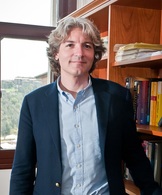
Alp Atakan Overview Alp Atakan is a Professor and Head of School in the School of Economics and Finance at Queen Mary University of London. He holds a PhD from Columbia University and previously served as an Assistant Professor at Northwestern University and Associate Professor at Koç University. His research focuses on Microeconomic Theory, Game Theory, Auction Design, and Information Economics. Key contributions include studies on reputation dynamics, search markets, and information aggregation in auctions. Education PhD in Economics (with distinction), Columbia University, 2003 MA in Economics, Columbia University, 2000 MBA, Columbia University, 1997 BS in Economics, University of Pennsylvania, 1993 Research & Grants Recipient of an ERC Consolidator Grant (2016–2021) for 'Market Selection, Frictions, and the Information Content of Prices'. Notable research includes work on bargaining dynamics, price discovery mechanisms, and the role of information asymmetry in auctions. He has published in top journals like Econometrica , Journal of Economic Theory , and American Economic Review . Teaching spans MBA/EMBA courses on managerial economics and microeconomic theory, alongside advanced graduate courses in game theory and dynamic programming. Grants & Projects ERC Consolidator Grant: Market Selection & Price Information (€1,089,000) Tubitak Grants: Sequential Debate (2014–2015) and Auctions & Information (2012–2014) His work bridges theoretical economics with practical market design, emphasizing strategic interactions in decentralized systems.
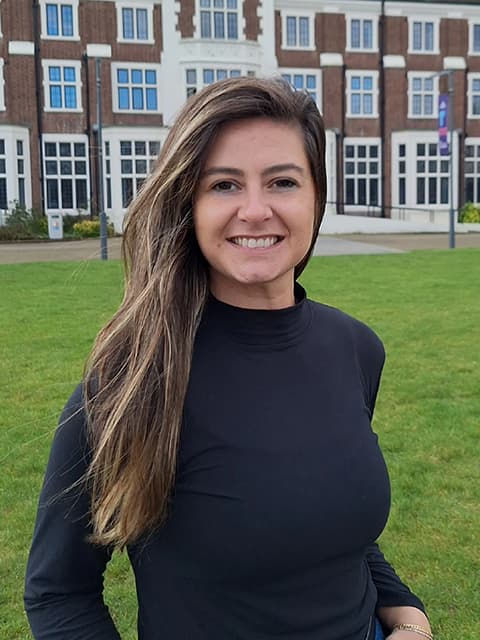
Marina Agranov is Professor of Economics at the California Institute of Technology (Caltech), affiliated with the Division of Humanities and Social Sciences. She directs research through the Ronald and Maxine Linde Institute of Economic and Management Sciences, Center for Social Information Sciences (CSIS), and Center for Theoretical and Experimental Social Sciences (CTESS), and serves as Research Associate at the National Bureau of Economic Research (NBER). Her academic credentials include a B.A. from St. Petersburg State Technical University (1999), M.A. from Tel Aviv University (2004), and Ph.D. from New York University (2010). She joined Caltech as Assistant Professor in 2010 and was promoted to full Professor in 2017. Agranov's research pioneers experimental and behavioral economics, focusing on strategic decision-making in bargaining games, social learning environments, network interactions, and information dynamics. Her work examines how individuals form beliefs and navigate tensions between personal goals and collective outcomes, often using controlled laboratory experiments to test theoretical predictions about human behavior under uncertainty. Her recent publications reveal a consistent methodological approach: blending game-theoretic models with experimental validation to investigate communication effects, randomization preferences, and institutional design. Key trends include analyzing how uncertainty impacts committee negotiations, how complexity influences egalitarian outcomes in legislative bargaining, and how information structures shape social learning on networks. Her scientific recognition includes: Associated Students of Caltech (ASCIT) Teaching Award (2017-18) Professor Agranov's research has secured significant institutional support through Caltech centers and NBER affiliation, with findings featured in major economics journals and Caltech news coverage including "Decision by Committee: How Uncertainty Shapes Negotiations" (December 2024) and "Experimental Economics in Theory and Practice" (July 2023). Her work on committee decision-making under uncertainty has direct implications for institutional design in political and corporate governance. She actively contributes to Caltech's research ecosystem through CSIS and CTESS, which facilitate interdisciplinary collaborations in social sciences and experimental methodology development.
Janna Parker is a professor in the Department of Marketing at James Madison University, specializing in digital marketing, retailing, and nonprofit marketing. With a career transition from political campaigns, she focuses on social media's role in personal and professional branding. Her research examines work-personal social media boundaries, employer governance policies, and volunteerism in nonprofit contexts. Education: Bachelor's in History (California State University Sacramento), Master's (Cameron University), Doctorate (Louisiana Tech) Teaching Interests: Digital marketing education, social media strategy, nonprofit marketing Her scholarly work spans social media governance, volunteer engagement, and retail dynamics, with recent emphasis on digital marketing pedagogy and cancel culture implications. Parker has contributed to academic journals through empirical studies and conceptual commentaries. Key article trends include: Digital marketing education evolution (2024) Social media governance in corporate and nonprofit contexts (2024) Online teaching satisfaction in higher education (2022) Volunteer brand community dynamics (2020) Consumer behavior frameworks (2019) Her media appearances include expert commentary on holiday retail strategies and social media research, reflecting practical applications of her academic work.
Sabrina Furtado is a Lecturer in Sport Management and Dean’s Associate Fellow at Loughborough University’s School of Sport, Exercise and Health Sciences. She holds a BSc, MSc, and PhD. Previously, she taught at the Federal University of Paraná and State University of Santa Catarina in Brazil, focusing on sport management, sports law, and entrepreneurship in the sports sector. Her research focuses on sports governance, strategic planning, and policy development in public and private sports entities. Key areas include Olympic and Paralympic federations, sports financing, and the impact of media representation on disability inclusion. She contributes to the Sport, Business and Society and Lifestyle for Health and Wellbeing research groups, as well as the Inteligência Esportiva Research Institute . Recent work analyzes governance structures in Santa Catarina municipalities, business intelligence applications in sports management, and modernization processes in Brazilian Olympic federations. Her publications span topics like Paralympic organizational roles, media stigma in disability sports reporting, and funding mechanisms for sports initiatives. No scientific awards are mentioned. Sabrina advises master’s students on sport management and policy but no grant details are provided. Her current projects aim to strengthen sports policies and enhance stakeholders’ engagement in the sport system.
Jörg Bohlmann is a Professor in the Department of Forest and Conservation Sciences at the University of British Columbia , affiliated with the Michael Smith Laboratories, Botany Department (Faculty of Science), and Wine Research Centre. His research spans genomics, biochemistry, and chemical ecology of plant specialized metabolism, focusing on terpenoids and phenolics for applications in forest health and bioproducts. Research Streams : Plant defense against insects/pathogens, metabolic engineering of bioproducts, forest genomics, and molecular evolution of terpenoid pathways. Collaborations : National and international partnerships with academia, government, and biotech industries. Recent Publications highlight genomic insights into Western Redcedar (2023), including its low genetic diversity and adaptation mechanisms despite self-fertilization. Earlier work (2001–2022) covers conifer defense systems, Arabidopsis terpenoid pathways, cannabis flavor genetics, and mass spectrometry infrastructure. Scientific Awards include: NSERC E.W.R. Steacie Fellow (2015), Fellow of the Royal Society of Canada (2015), Feodor Lynen Postdoctoral Fellowship (1995–1998), and Distinguished University Scholar (UBC). Funding Sources : NSERC (Discovery/Strategic grants), CFI, Genome Canada/BC, provincial/federal agencies. Labs & Facilities : Michael Smith Laboratories (UBC), National Centre of Excellence, Forest Sciences Centre, and a dedicated mass spectrometry lab for metabolite analysis.
Ram Cnaan is a Professor of Social Work and Associate Dean for Research at the University of Pennsylvania, affiliated with The Weitzman School of Design. He chairs the Doctoral Program in Social Welfare and directs the Program for Religion and Social Policy Research. His work focuses on faith-based social services, congregational welfare provision, and nonprofit management. Cnaan has authored influential books like The Invisible Caring Hand and serves on seven academic journal editorial boards. His research explores volunteerism dynamics, including pandemic impacts on donor retention, cross-national civic participation, and episodic volunteering at religious events. He investigates social entrepreneurship in public sectors and evaluates faith-based organizations' roles in reentry programs for ex-prisoners. Cnaan's recent studies address CSR innovations, donor-advised funds strategies, and prosocial behavior in diverse cultural contexts. Notable contributions include pioneering national studies on congregational social service provision and analyzing Israeli-Palestinian Muslim collaboration in aid work. His work bridges academic research with practical policy solutions for urban quality-of-life challenges.
Yuriy Rogovchenko is a Professor in the Department of Mathematical Sciences at the University of Agder. His research spans differential equations, mathematical modeling, and education innovation, with applications in biology, social sciences, and engineering. Rogovchenko has contributed extensively to mathematics education through projects like PLATINUM (Erasmus+ Strategic Partnership) and CPEA-ST-2019/10067 (Eurasia project). PhD in differential equations (Institute of Mathematics, Kyiv, 1987) Regular Associate at Abdus Salam ICTP, Trieste (2004-2011) Editor for 11 international journals Referee for over 70 journals Research Interests: Qualitative theory of differential equations, perturbation methods, mathematical modeling in interdisciplinary contexts. He focuses on enhancing conceptual understanding through inquiry-based learning and nonstandard problems. Publications: Recent works include advancements in linear system observability, parameter identification methods, and educational studies on exact differential equations. His collaborations with Svitlana Rogovchenko and Matthias Pätzold highlight applications in engineering and biology. Awards: Sørlandet kompetansefonds research award (2016).
Robert Newbery is a Professor and Head of Entrepreneurship and Innovation at Northumbria University's Entrepreneurship, Innovation and Strategy Department. He holds a PhD from Newcastle University, specializing in rural business associations, alongside an MBA and MSc in Rural Social Science. His research focuses on entrepreneurship's role in development, particularly in poverty-stricken regions of the Global North and Global South. He leads the Entrepreneurship Educator Foundation for East Africa (EEFEA) and evaluates entrepreneurship programs' impacts, including serious games and research commercialization. Education: PhD in Business and Management Studies, Newcastle University (2011) MSc in Rural Social Science, Newcastle University (2007) MBA, Newcastle University (2003) Research Interests: Entrepreneurship for poverty alleviation Rural business models in Europe and Africa Innovative supply chains in East Africa Social entrepreneurship in South America Impact assessment of entrepreneurship education Geographic Foci: UK/Europe: Farming entrepreneurship and rural business models East Africa: Entrepreneurship and poverty reduction West Africa: Business models and development South America: Social entrepreneurship Collaborations: Visiting roles at Kenyatta University and University of Nairobi (2022). Active in the Institute of Small Business & Entrepreneurship as Deputy President. Advising & Grants: Accepting PhD students in development-linked entrepreneurship. Research commercialization and serious games impact studies are current priorities. Labs/Teams: Leads the EEFEA, collaborates with interdisciplinary teams on rural development and global entrepreneurship challenges.
Michael Baldea is an Associate Professor in the Department of Chemical Engineering at the University of Texas at Austin . He holds a Ph.D. in Chemical Engineering from the University of Minnesota (2006), with prior degrees from 'Babeş-Bolyai' University in Romania (M.Sc. 2001, Diploma 2000). His research group develops theoretical and computational methods for Process and Energy Systems Engineering , focusing on integrated decision-making, performance optimization, and process intensification with industrial validation. Education: Ph.D., Chemical Engineering, University of Minnesota (2006) M.Sc., Interface Process Engineering, 'Babeş-Bolyai' University (2001) Diploma, Chemical Engineering, 'Babeş-Bolyai' University (2000) Research Thrusts: Integrated decision-making in chemical/energy supply chains Process performance monitoring and optimization Process integration and intensification Key applications include grid-responsive chemical plants, intensified distillation/column designs, and renewable energy integration for building systems. Scientific Awards: Frank A. Liddell, Jr. Fellowship NSF CAREER Award (2015-2020) Moncrief Grand Challenges Faculty Award (2014) AIChE Outstanding Young Researcher Award (2017) Implementation : His group has translated research into commercial tools through partnerships with industrial test beds and is working to integrate methods into commercial simulators. They explore predictive approaches for building energy management and strategic capital investment analysis in next-generation energy systems.
Jakob Foerster is an Associate Professor at the University of Oxford's Department of Engineering Science and a Supernumerary Fellow at St Anne's College. He leads the FLAIR lab, focusing on multi-agent reinforcement learning (MARL), human-AI coordination, and AI foundational research. Previously, he was a Research Scientist at Facebook AI Research (FAIR) and holds a DPhil from Oxford. His work has been cited over 5,000 times and includes seminal contributions like QMIX and the Hanabi Challenge. Research interests span compute-efficient scaling of AI, MARL applications in finance and bio, and ethical AI. He actively collaborates across academia and industry, co-organizing workshops like NeurIPS' Emergent Communication. His lab emphasizes open-ended RL, environment design, and scalable algorithms. Notable awards include the CIFAR AI Chair (2019) and NeurIPS Best Paper Runner-Up (2018). Current efforts include FLAIR's research on zero-shot coordination and the JaxMARL framework. He advises students in Oxford's Engineering DPhil and AIMS CDT programs.
Jungsang Kim is the Schiciano Family Distinguished Professor of Electrical and Computer Engineering and Professor of Physics at Duke University. He serves as Associate Director of the Duke Quantum Center and leads the Multifunctional Integrated Systems Technology group. Quantum Computing with Trapped Ions Quantum Information Science Photonic Device Development Quantum Communication Networks His research focuses on scalable quantum information processors using trapped atomic ions and advanced photonic technologies. Key innovations include microfabricated ion traps, optical MEMS, and cryogenic systems for quantum integration. Recent publications highlight trapped ion quantum simulation, high-fidelity gate design, and photonic error mitigation. His group develops practical quantum hardware and co-founded IonQ, the first publicly traded pure-play quantum computing company. Fellow, American Physics Society (2021) Stansell Family Distinguished Research Award (2016) Fellow, National Academy of Inventors Fellow, Optica (formerly OSA) Kim's work bridges quantum physics and engineering, with over 80 patents and leadership in Duke's quantum computing initiatives. He recently stepped down as IonQ's CTO while maintaining active research and strategic roles at Duke.
Raphaël Fischler is a Full Professor and former Dean of the Faculty of Urban Planning and Landscape Architecture at the University of Montreal. He holds dual expertise in urban planning theory, history, and practice, with a focus on North American urban development, land-use regulation, and governance. His academic roles include teaching at McGill University and serving as Dean from 2018–2023, during which he led strategic initiatives like the Quartier de l’Innovation and addressed urban challenges such as housing affordability and metropolitan governance. **Education:** PhD in Urban Planning, UC Berkeley (1993) Master of City Planning, MIT (1987) Master of Science in Architecture, MIT (1987) Bachelor of Engineering, Eindhoven University of Technology (1984) **Research Interests:** Fischler’s work explores urban planning’s historical foundations, particularly zoning’s evolution, and integrates reflective practice into pedagogy. He advises on municipal projects and contributes to policy debates on density, public participation, and sustainable urbanism. His research bridges academia and practice, emphasizing ethical planning and community engagement. **Articles Trends:** His recent publications analyze zoning’s historical role, social justice in urban redevelopment, and governance challenges in Montréal. He critiques systemic issues like housing affordability and advocates for equitable urban policies. **Awards & Recognition:** Fellow of the Canadian Institute of Planners (2020) Émérite Member, Order of Quebec Urban Planners (2014) McGill Principal’s Excellence in Teaching Award (2013) **Grants & Teams:** He collaborates with institutions like the Centre de recherche interdisciplinaire en études montréalaises (CRIEM) and advises public agencies on metropolitan development. His work spans academic leadership, professional practice, and public advocacy, addressing urban challenges through interdisciplinary approaches. **Labs/Teams:** Affiliated with the CRIEM , focusing on Montréal’s urban history and contemporary planning issues. He mentors students in urban policy and design through studio courses and thesis supervision.
Mushtaq Khan is a Professor in the Department of Economics at SOAS University of London . His research focuses on governance, corruption, industrial policy, and structural transformation in developing countries, with particular emphasis on Bangladesh, Nepal, and Nigeria. Research Interests : Corruption and Anti-Corruption Strategies Political Settlements and Governance Industrial Policy Design Climate Adaptation and Public Health Systems Policy Contributions : His work addresses challenges such as collusive contracting in energy sectors, doctor absenteeism in rural healthcare, and dual-use climate projects as anti-corruption tools. Advising : He has supervised theses on industrial policy in Nigeria, economic transformation in Rwanda, and federalism in Nepal.
Anand Bhojan is an Associate Professor (Educator Track) at the Department of Computer Science, School of Computing, National University of Singapore (NUS). He is a member of the Communication and Internet Research Lab and serves on the Graduate Studies Committee. Dr. Bhojan is also the founder of Anuflora Systems and Virtual and Augmented Reality Labs (www.varlabs.org), and serves as Associate Editor of Computers and Electrical Engineering Journal, Elsevier, and Vice President of International Researchers Club, Singapore. Dr. Bhojan earned his Ph.D. in Computer Science & Engineering from NUS in 2011, where his thesis was nominated for the Best PhD Thesis Award. He also holds a Professional Master's in Computer Applications from Bharathidasan University (1999), a Bachelor's degree in Computing with Gold Medal (University topper) from Bharathiar University (1994), and a Postgraduate Certificate in Teaching Higher Education from University of Sheffield, UK (2003). His research spans multiple domains including Distributed Computing and Wireless Networks (IoT, Security, Blockchain), Artificial Intelligence (Generative AI, FinTech), and Entertainment Computing with focus on Games, VR/AR/Metaverse technologies. Dr. Bhojan leads the Metaverse Foundry research group which focuses on content generation for games & XR simulations across multiple domains including entertainment, healthcare, and architecture, while also experimenting with innovative teaching methods for entertainment media technologies. Dr. Bhojan's recent research has pioneered hybrid rendering techniques that strategically combine ray tracing and rasterization to create more realistic video game graphics without compromising performance. His work addresses critical challenges in real-time rendering, particularly in depth of field and motion blur effects, with the goal of making Hollywood-quality graphics accessible on a wider range of hardware. Earlier work focused on energy efficiency in mobile gaming, including power management techniques and latency optimization for cloud gaming. Among his notable achievements: 2012 Nominated for Best PhD Thesis Award (Wang Gungwu Medal & Prize), NUS 2011 Dean's Graduate Research Achievement Award (PhD), SoC, NUS 2006 Best R&D Project award from TOTE Board, Singapore 1995 Gold medal for first Rank (out of 4000) in Computing, Bharathiar University Dr. Bhojan has served as Organizing Chair and Program Chair for multiple international conferences and has delivered keynote talks at IEEE/ACM International Conferences. He teaches courses including Computer Networks Practice, Game Development, Interaction Design for Virtual and Augmented Reality, and Game Development Project. He leads the Metaverse Foundry research group and the Virtual and Augmented Reality Labs, where undergraduate and graduate students have won multiple research and innovation awards. His research bridges entertainment, education, and emerging technologies with practical applications in making immersive experiences more accessible across different hardware capabilities while maintaining energy efficiency.
Benjamin Brooks is a Professor in the Department of Economics and the College at the University of Chicago, serving as Director of Graduate Studies. He holds a Ph.D. from Princeton University (2014), an M.A. from Princeton (2010), and a B.A. in Mathematics and Quantitative Economics from Tufts University (2008). His research focuses on microeconomic theory, mechanism design, auction theory, repeated games, and computational game theory. Brooks has published extensively in top journals such as the American Economic Review, Econometrica, and the Journal of Political Economy. His work often explores informationally robust mechanisms and strategic behavior in auctions and stochastic games. Brooks has received grants from the National Science Foundation for projects on mechanism design and stochastic game algorithms. He is an Associate Editor of the American Economic Review: Insights, Theoretical Economics, and Economic Theory. His teaching spans game theory, price theory, and advanced topics in economic theory at both undergraduate and graduate levels. Brooks has also contributed to software tools like BCESolve and SGSolve for analyzing Bayesian correlated equilibria and stochastic games. Research Highlights: Contributions to auction design under incomplete information, robust mechanism design, and algorithmic solutions for stochastic games. Awards: Excellence in Refereeing Award (2017), NSF grants (2015-2025), and Fellow of the Society for the Advancement of Economic Theory (2024).