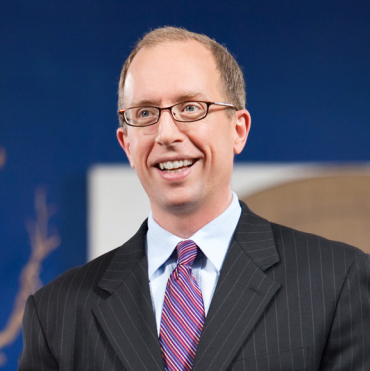
John Lowe is a Teaching Professor of Sequential Art at Savannah College of Art and Design (SCAD), holding this position since 2012. Previously, he served as Dean of the School of Communication Arts (2008–2012), Chair of the Sequential Art Department (2003–2008), and Professor of Sequential Art (2002). His career spans academic leadership and professional inking for major comic publishers like DC Comics, Marvel Comics, and Archie Comics. Education: M.F.A., Sequential Art, Savannah College of Art and Design B.F.A., Drawing/Studio Art, University of Knoxville His research interests focus on advancing sequential art education and visual storytelling techniques. He has curated exhibitions such as Contemporary Cartoonists (2006) and Panel Progressions: 100 Years of Sequential Art (2005). His publications include textbooks like Foundations in Comic Book Art (2014) and articles in Varoom Magazine . Awards: Presidential Fellowship (SCAD, 2006) Outstanding Graduate Student (SCAD, 2002) Board of Trustees Fellowship (SCAD, 2000) He has advised numerous students through his editorial roles in anthologies and has engaged in civic initiatives linking art education to community projects.
Michael Nebeling is an Associate Professor at the University of Michigan's School of Information (UMSI), leading the Information Interaction Lab. His research focuses on Augmented, Virtual, and Mixed Reality (XR) interfaces, emphasizing usability, accessibility, and privacy. He co-directs the HCI seminar series in the Michigan Interactive and Social Computing (MISC) group and teaches AR/VR courses (SI 559/659). Nebeling has held roles such as UIST 2026 General Co-Chair and CHI 2026 Subcommittee Co-Chair. He pioneered the Extended Reality for Everybody Coursera specialization and the XR MOOC series . His work includes projects like XRDirector , MRAT , and 360proto , addressing challenges in XR design and tool development. Awards include the Disney Research Faculty Award, Mozilla Research Award, and Epic MegaGrant. He advises the student-led Alternate Reality Initiative (ARI) and collaborates with industry partners like Meta, Epic, and Disney. Education: PhD in Computer Science from ETH Zurich (2015), Postdoc at Carnegie Mellon University's Human-Computer Interaction Institute (2016). Research Themes: XR toolkits, privacy/security in AR/VR, inclusive design, educational applications, and ethical considerations in mixed reality. Over 90 publications in venues like CHI, UIST, and ACM Transactions on CHI. Awards: Disney Research Faculty Award (2018), Mozilla Research Award (2018), Epic MegaGrant (2019), Meta Reality Labs Gift (2020). Recognized with Best Paper Awards at CHI and UIST.
David Salesin is an Affiliate Professor in the Department of Computer Science & Engineering at the University of Washington and a Principal Scientist/Director at Google Research since 2019. He has held academic roles at Cornell University (Visiting Assistant Professor, 1991-92) and guest professorships at Zhejiang University. His career spans academia and industry, including leadership at Adobe's Creative Technologies Lab (2005-17) and Microsoft Research (1999-2005). PhD, Stanford University (1991) Sc.B., Brown University (1983) His research focuses on computer graphics, particularly non-photorealistic rendering, digital typography, color science, and adaptive document layout. He pioneered techniques in image-based rendering, pen-and-ink illustration, and facial animation, with applications in multimedia and user interface design. Article Trends : His work bridges procedural content generation, 3D visualization, and artistic computing, emphasizing user-driven tools for creative industries. Key subfields include texture advection, multiresolution modeling, and real-time camera control for virtual cinematography. Scientific Awards : ACM Fellow (2002) ACM SIGGRAPH Achievement Award (2000) Carnegie Foundation Professor of the Year (1998) NSF Presidential Faculty Fellow (1995-98) Alfred P. Sloan Research Fellowship (1995-97) Numerous industry grants and lab donations He has advised over 30 PhD and Master's students, including leaders at Microsoft, Pixar, and Google. His labs at UW and Adobe focused on graphics, imaging, and creativity tools.
Sheelagh Carpendale is a Professor and Canada Research Chair in Information Visualization at Simon Fraser University's School of Computing Science. Her research focuses on Information Visualization, Interaction Design, and Human-Computer Interaction, with a strong emphasis on large display interaction, visual analytics, and personal visualization. She leads the Innovations in Visualization Interactive Experiences (ixLab) and has contributed to over 200 publications. Education: PhD (Computing Science, Simon Fraser University, 1999); BSc (Computing Science, Simon Fraser University, 1992). Research Interests: Dr. Carpendale's work bridges theory and practice, emphasizing user-centered design and interdisciplinary collaboration. Key areas include data physicalization (e.g., Kirigami-inspired visualizations), interactive technologies for healthcare, and educational tools like TangiBooks for programming concepts. Her lab explores novel interaction paradigms for large displays and mobile devices. Recognition: Recipient of the 2018 IEEE Visualization Career Award, numerous best paper awards, and leadership roles in conferences like IEEE VIS. Her contributions span academic, industrial, and public engagement contexts, including projects on clinical decision support and public data literacy. Grants & Labs: Active in securing research grants for projects like the Arctic Movement visualization and Energy Data initiatives. The ixLab collaborates with artists, scientists, and healthcare professionals to create impactful visualizations.
Changjian Li is an Assistant Professor in the School of Informatics at the University of Edinburgh. He leads the GraphViX Group (Graphics, Vision and X) and is a member of the Institute of Perception, Action and Behaviour (IPAB). His research spans computer graphics, computer vision, and human-computer interaction with a focus on 3D generation and analysis. Education: Bachelor's Degree from Shandong University (2014) Ph.D. from the University of Hong Kong (2019) under Prof. Wenping Wang Postdoc at University College London (UCL) with Prof. Niloy Mitra Starting Researcher position at Inria with Dr. Adrien Bousseau Research Interests: Changjian's research focuses on sketch-based 3D modeling, CAD modeling, point cloud processing, and medical imaging applications. He develops systems that bridge intuitive sketching with precise CAD workflows, enhances 3D animation pipelines, and applies neural methods to sparse medical data reconstruction. Scientific Recognition: Best Paper Honorable Mention Award (MICCAI 2021) CADTalk selected as Highlight (CVPR 2024 top 10%) ACM SIGGRAPH Asia 2018 cover image selection ACM SIGGRAPH Asia 2015 technical paper highlight CVPR 2019 poster highlighted in 'Computer Vision News' Advising & Collaborations: He mentors postdocs and PhD students including Duolikun Danier, Haocheng Yuan, Ankan Bhunia, and Lei Zhong. Former advisees include Salvatore Esposito (now at Edinburgh), Guangshun Wei (Shandong University), and Mingjun Yang (University of Melbourne). Collaborates with Oisin Mac Aodha, Hakan Bilen, and Niloy Mitra. Professional Service: Currently serves as Associate Editor for IEEE TVCG and participates in program committees for SIGGRAPH Asia, SIGGRAPH, EuroGraphics, and Geometry Design and Computing (GDC) conferences.
Jian Zhao is an Associate Professor at the University of Waterloo's School of Computer Science, specializing in Information Visualization (InfoVis), Human-Computer Interaction (HCI), and Data Science. With a Ph.D. from the University of Toronto (2016), his research emphasizes interactive visualization techniques, AI integration in design processes, and socio-technical systems. He explores how human-AI collaboration can enhance data analysis, presentation, and user experience in complex systems. Key research areas include: 1) AI-Driven Design (e.g., code generation via sketching, infographic creation), 2) Health Informatics (therapeutic AI tools for autism support), 3) Immersive Technologies (VR/AR interfaces for presentations and education), and 4) Social Computing (remote family communication, multi-modal emoticons). His work bridges technical innovation with human-centered design principles. His publications (2021–2025) reflect a focus on interactive visualization frameworks (e.g., iTrace for cross-view data analysis), AI-human collaboration (CoLadder for hierarchical code editing), and specialized applications like TherAIssist for art therapy and EMooly for autism support. Zhao frequently explores novel interaction modalities , including gesture-based VR interfaces and sketch-based programming tools. He leads projects in computational notebooks (EDAssistant, Slide4N), visual analytics (MissBin for bipartite networks), and neurofeedback training games (Eggly). His work often emphasizes systematic design considerations for missing data, cross-view analysis, and contextual visualization in spatial AR environments.
Dr. Armin Mustafa is an Associate Professor in Computer Vision and AI at the University of Surrey, where he holds a prestigious Royal Academy of Engineering Research Fellow position. He is affiliated with the Centre for Vision, Speech and Signal Processing (CVSSP), the School of Computer Science and Electronic Engineering, and the Surrey Institute for People-Centred Artificial Intelligence (PAI). His research focuses on developing AI systems for visual understanding of complex dynamic scenes, with applications in entertainment, autonomous systems, and augmented/virtual reality. Dr. Mustafa completed his PhD in general dynamic scene reconstruction from multi-view videos in 2016 from the University of Surrey under the supervision of Prof. Adrian Hilton. Prior to his doctoral studies, he worked for three years (2010-2013) at Samsung Research Institute in Bangalore, India, in the field of Computer Vision. His research expertise spans Computer Vision, Scene Understanding, 3D/4D Vision, Virtual Reality, Light Fields, Machine Learning, Video Captioning, Augmented Reality, Artificial Intelligence, and Audio-visual Video Understanding. Dr. Mustafa has pioneered advances in 4D vision, NLP, and Scene Understanding over the past decade, with a particular focus on enabling machines to model and interpret real-world environments for socially beneficial applications. His work bridges theoretical advances in computer vision with practical applications in media production, virtual reality, and autonomous systems. Analysis of Dr. Mustafa's recent publications reveals a strong focus on multimodal learning, particularly the integration of audio and visual information for scene understanding. His work spans diverse areas including shadow detection and removal, audio event classification, video captioning, person image generation, and dynamic scene reconstruction. A notable trend is his exploration of transformer architectures for both vision and audio tasks, as well as the application of self-supervised learning techniques to reduce dependency on labeled data. Dr. Mustafa has received numerous prestigious awards: 2018 - Research Fellowship, The Royal Academy of Engineering, UK 2017 - Young Researcher award, CVPR 2016 - Doctoral Consortium grant, CVPR 2015 - BMVA travel grant for ICCV 2014 - Set-Squared Research to Innovator grant 2013 - Overseas Research Scholarship, FEPS, The University of Surrey 2010 - Cadence Silver Medal, Indian Institute of Technology, Kanpur As a dedicated mentor, Dr. Mustafa supervises several PhD students working on cutting-edge topics including multi-person reconstruction, audio-visual scene understanding, and automatic storyboard generation. His research is supported by significant grants including a £15 million UKRI Prosperity Partnership with the BBC (AI4ME), a 5-year Royal Academy of Engineering fellowship (4D Vision for Perceptive Machines), and multiple projects with industry partners such as Figment Productions and Foundry. Dr. Mustafa is an active member of the Centre for Vision, Speech and Signal Processing (CVSSP), one of the world's leading research centers in vision, speech, and signal processing. He also contributes to the Surrey Institute for People-Centred Artificial Intelligence (PAI), where he serves as a Surrey AI Fellow. His work often involves collaboration with industry partners and other academic institutions across Europe.
Steven P. Dow is a Professor at the University of California San Diego leading the ProtoLab, which investigates collective intelligence, creativity, and decision-making through social computing and human-centered design. His work develops systems leveraging LLMs, crowdsourcing, and visualization to scaffold problem-solving for individuals and communities. His research spans Social Computing , Human-Computer Interaction , and Participatory Design , focusing on cognitive/social aspects of collaborative processes. Key areas include AI-augmented creativity tools, value-centered civic engagement frameworks, and metadata-driven collective ideation systems that bridge technical and cultural dimensions of design. 2025 publications reveal a strong trend toward LLM-crowd integration for creative workflows, with work appearing at UIST and Collective Intelligence conferences. Research emphasizes inclusive idea convergence in civic contexts and dynamic exploration in design processes using forward-backward propagation techniques. Prof. Dow actively mentors students, with advisees like Sangho Suh and Nancy Qiu leading publications on AI storyboarding and self-reflective crowds. His ProtoLab drives projects including community-driven design environments and context-aware exploratory search systems. The ProtoLab serves as an interdisciplinary hub developing socio-technical systems for community co-design, leveraging ubiquitous devices and mixed-initiative interfaces to transform how teams solve complex problems through emergent scaffolding and value-centered frameworks.
Patricio G. Herbst is a Professor in the Marsal Family School of Education and the Department of Mathematics at the University of Michigan. He holds dual roles as a professor of education and mathematics, bridging both the College of Literature, Science, and the Arts and the School of Education. His research focuses on understanding the professional work of mathematics teachers and university instructors, with an emphasis on teacher knowledge, decision-making, and the design of online learning environments. Key areas of interest include geometry education, mathematical proof, and the development of technologies such as Anotemos and LessonDepict for learning from video and storyboarding. Herbst has led numerous grants and projects, including 'GRIP: Mathematics Grasping the Rationality of Instructional Practice,' which explores geometry teaching and teacher training. He has also contributed to initiatives like the 'LessonSketch' platform and 'GeT Support' for teacher professional development. His work spans international collaborations and curriculum development efforts in secondary mathematics education. Herbst’s research publications emphasize the integration of theoretical frameworks with practical classroom applications, particularly in geometry instruction and teacher cognition. His book, *The Learning and Teaching of Geometry in Secondary Schools: A Modeling Perspective*, underscores his commitment to advancing pedagogical models in mathematics education. He is affiliated with the GRIP lab, a research group dedicated to studying geometry, reasoning, and instructional practices. His contributions to mathematics education include designing interventions, analyzing teacher rationality, and advancing the use of multimedia tools in teacher training.
Wook-Jin Clark is a Professor of Sequential Art at the Savannah College of Art and Design (SCAD) since 2020, where he also earned his MFA and BFA in Sequential Art. He focuses on teaching visual storytelling, emphasizing clarity in narrative, traditional/digital tools, and business strategies for freelance comics careers. Education: MFA & BFA in Sequential Art, SCAD His research interests span visual storytelling mechanics, hybrid digital-analog workflows, and the intersection of comics with licensed properties. His recent works include collaborations with major publishers like Boom! Studios, Image Comics, and Gudetama Comics. Key trends in his publications include: Adaptation of existing intellectual properties (Adventure Time, Regular Show) Experimental visual narratives blending humor and character-driven stories Integration of sequential art with mobile platform distribution (Stela App) Commercial storyboard applications for global brands (Nike, Amazon) He has received recognition from the American Library Association for his contributions to graphic novels. His industry experience includes partnerships with: Boom! Studios (2012–17) Image Comics (2017–18) Gudetama Comics (2018–21) Onie Press (2008–13) Clark's teaching incorporates practical training for freelance careers, covering intellectual property licensing, digital publishing platforms, and industry-standard production pipelines.
Dr. Gail Ferguson is a Professor at the Institute of Child Development within the College of Education and Human Development at the University of Minnesota. Her interdisciplinary work bridges developmental, cross-cultural, and clinical psychology, focusing on globalization's impact on cultural socialization, youth identity, parenting, and health across diverse racial and national contexts. As a translational researcher, she develops culturally adapted interventions to promote resilience and reduce health disparities. Her educational background includes: Post-Doctoral Fellow (2007) from the Children's Institute at the University of Rochester PhD (2006) in Child/Adolescent Clinical Psychology from Bowling Green State University MA (2003) in Child/Adolescent Clinical Psychology from Bowling Green State University BA (2001) in Psychology from Williams College Dr. Ferguson's research centers on acculturation and enculturation dynamics in the digital age, examining how media, migration, and multiculturalism reshape cultural transmission. She identifies risk and protective factors to design prevention programs like CARPE DIEM and JUS Media, targeting resilience in children and adolescents. Her work emphasizes cultural adaptation of interventions for diverse populations, particularly Black immigrant and refugee communities. Her publication trends reveal strong focus on remote acculturation/enculturation mechanisms, digital community-based research, and Whiteness socialization. Recent work explores media literacy interventions for immigrant youth and family resilience during crises like the George Floyd protests and COVID-19 pandemic, earning prestigious awards including the APA George A. Miller Award. Her accolades include: Fellow of APA Division 7 (2023) Fellow of the International Academy of Intercultural Relations (2023) APA George A. Miller Award for Outstanding Article (2022) University of Minnesota Excellence in Academic Advising Award (2021) University of Illinois Faculty Research Excellence Award (2018) APA Division 52 Outstanding Early Career Psychologist (2016) As an award-winning advisor, Dr. Ferguson mentors future scholars through her translational research framework and is recruiting PhD students for Fall 2026. Her grant-funded work includes the JUS Media Programme and CARPE DIEM interventions, with transdisciplinary teams addressing global health challenges through cultural adaptation and digital innovation. She directs the Culture and Family Life Lab, which conducts cutting-edge research on cultural socialization using mixed-methods approaches. Current projects involve digital community-based studies with Black immigrant families, remote enculturation analyses, and culturally adapted media literacy programs for diverse youth populations across international settings.
Dr. Konstantin Aal is a researcher at the Department of Business Informatics and New Media within the Faculty of Information Systems and New Media at the University of Siegen, Germany. Having joined the university in 2012 after completing his studies in Business Informatics there, Dr. Aal has established himself as a prominent researcher at the intersection of technology, social activism, and human-computer interaction. Dr. Aal's educational background is rooted in Business Informatics at the University of Siegen, where he also completed his major dissertation on the social platform come_NET and its use by children as part of the come_IN project. His academic journey reflects a consistent focus on the social implications of technology. His research interests span several critical areas in contemporary socio-technical studies. Dr. Aal investigates how social media platforms are used in political conflicts and activism, particularly in the Middle East and North Africa region, with specific attention to the Palestinian-Israeli conflict and content moderation practices. He also explores human-technology interaction in contexts of aging and dementia care, human-wildlife conflict, and the digital transformation of rural communities. His work consistently emphasizes participatory design approaches, ethical considerations in technology development, and the importance of cultural sensitivity in global technology deployments. Dr. Aal's publication record shows a strong trajectory of impactful research, with particular emphasis on understanding how marginalized communities appropriate technology for their needs. His recent work on the "PlurAIverse" concept expands design paradigms for artificial intelligence to be more inclusive and culturally sensitive, while his ethnographic work in conflict zones reveals critical insights about digital activism under surveillance. Member of the research team for iStoppFalls (fall prevention for elderly) Contributor to multiple EU-funded projects on digital inclusion and socio-informatics Active participant in the Socio-Informatics research program at the University of Siegen Dr. Aal's work bridges theoretical insights with practical applications, often developing technologies in close collaboration with community stakeholders. His approach emphasizes "grounded design" - developing technological solutions that emerge from deep understanding of local practices and needs.
Patrick (Pat) Quinn serves as a Teaching Professor in Sequential Art at Savannah College of Art and Design (SCAD) since January 2025, following his tenure as Associate Chair of Sequential Art (2014-2024) and multiple administrative roles including Associate Dean of Academic Service (2012-2014) and Associate Dean of Communication Arts (2009-2012). His academic credentials include: M.F.A. in Sequential Art from Savannah College of Art and Design B.S. in Art Education from Towson University Quinn's professional focus centers on Sequential Art and Comic Book Art, blending academic instruction with extensive industry practice. His expertise spans graphic narrative creation, illustration techniques, and storyboarding applications across entertainment and aerospace industries, informed by 20+ years of professional comics work for Marvel, DC, and Image Comics. Recognition for his contributions includes: Outstanding Achievement in Sequential Art, SCAD (Spring 2001) Propes Fellowship, SCAD (Fall 1999) As an educator, Quinn has shaped sequential art pedagogy through curriculum development, mentorship of emerging artists, and authorship of foundational instructional materials including "Pat Quinn's Basic Perspective for Comics and Illustration," establishing him as a bridge between academic theory and professional comics practice.
Dr. Wenbin Li is a Senior Lecturer (Associate Professor) in Robotics at the University of Bath's Department of Computer Science. He leads the Pering Laboratory (Perceptual Intelligence Laboratory), affiliated with the AI & Machine Learning and Visual Computing groups. Previously, he held postdoctoral positions at Imperial College London (2016-2018) and UCL (2014-2016), and earned his PhD from the University of Bath in 2013, with earlier degrees from Imperial College London (MSc, 2009) and Xidian University (B.Eng, 2008). His research focuses on unified autonomous systems, including multi-sensory localization/mapping, dynamic motion capture, and uncontrolled scene understanding with applications in manufacturing and professional capture. Key areas include Robotics, Computer Vision, Graphics, and Machine Learning. He actively supervises doctoral students in these fields and has funded PhD openings. Dr. Li has been involved in major initiatives such as the My World - Strength in Places Fund (2021–2027), SLAM with Reinforcement Learning (2022–2023), and the CAMERA MC2 Award (2019–2023). His work aligns with UN Sustainable Development Goals, particularly in advancing technology for societal benefit. Recent publications emphasize aerial robotics, autonomous systems, and computer vision applications, including UAV package delivery reviews, Bayesian optimization for balloon station-keeping, and generative models for intrinsic image decomposition.
Dr. Daniela Wentz is a researcher at Leuphana University of Lüneburg, where she serves as Scientific Project Manager for the ongoing research initiative 'Making Sense(s). The Mediality of the Near Senses' (active since June 2019). Her academic work bridges media theory, digital cultures, and sensory studies, with particular emphasis on television seriality and postdigital criticism. Wentz's research explores: The transformation of criticism in digital environments Narrative structures in television series (e.g., Stranger Things , Lost ) Diagrammatic reasoning in visual media Sensory mediation and perceptual technologies Post-9/11 cultural representations Media archaeology and historical transitions in broadcasting Her scholarly output demonstrates strong engagement with media theory and visual semiotics, particularly through analyses of television seriality and cinematic epistemology. Recent work (2019-2023) shows increased focus on postdigital critique and sensory media. Wentz frequently collaborates on edited volumes and special journal issues, notably co-editing Kritik postdigital (2023) and Filmische Moderne: 60 Fragmente (2019). She maintains active research partnerships with scholars including Lorenz Engell, Jens Schröter, and Katharina Niemeyer.