Massimo Bongiorno is an Assistant Professor in Electrical Engineering at Chalmers University of Technology. He holds a Master’s degree in Electronics Engineering from the University of Palermo (2002) and earned his Licentiate and PhD from Chalmers University. His research focuses on power electronics applications in power systems, particularly grid-forming converter systems, power quality, and renewable energy integration. MSc in Electronics Engineering (University of Palermo, 2002) Licentiate and PhD (Chalmers University of Technology) Research interests include: Power electronics in power systems Grid-forming converter stability Renewable energy integration Modular multilevel converter design Small-signal and large-signal stability analysis Energy storage system applications Recent publications highlight trends in: Converter control strategies for grid stability Dynamic modeling of power electronics systems Applications in offshore wind and hydro microgrids Impedance analysis and resonance mitigation Advanced fault ride-through techniques Multi-terminal HVDC grid control
Dr. Ahmed Badawy is a Lecturer in Electrical Engineering at Lancaster University's School of Engineering, where he has been serving since 2017. His academic journey includes advanced degrees in electrical engineering and significant research experience in power electronics and renewable energy systems. Dr. Badawy's educational background includes: B.Sc. in Electrical Engineering from the Faculty of Engineering, Alexandria University, Egypt (2008) M.Sc. in Electrical Engineering from the Faculty of Engineering, Alexandria University, Egypt (2012) Ph.D. in Electrical Engineering from the Electric and Electronic Engineering Department at the University of Strathclyde, Glasgow, U.K. (2016) Dr. Badawy's research focuses on power electronics and energy conversion systems, with particular expertise in DC-DC converters, multi-level converters, and electric machines. His work emphasizes digital control of power electronic systems for applications in renewable energy integration, electric vehicles, and power quality improvement. His research has significant implications for sustainable energy systems and transportation electrification. His recent publication record demonstrates a strong focus on electric vehicle power systems, particularly modular converter topologies for on-board charging applications. There's a clear trend toward integrated solutions for EV charging that combine renewable energy sources with grid connectivity. His work also shows significant contributions to control methodologies, including model predictive control and hierarchical control systems for power electronic converters. Dr. Badawy mentors several PhD students working on cutting-edge research in power electronics and renewable energy systems. His research group is actively involved in projects related to sustainable energy conversion and electric transportation. Dr. Badawy is affiliated with Energy Lancaster and the TALOS research group at Lancaster University, where he contributes to interdisciplinary research on sustainable energy systems and power electronics applications.
Yuanyuan Shi is an Assistant Professor in the Electrical and Computer Engineering Department at the University of California, San Diego (UCSD), with affiliations at the Center for Energy Research and the MICS. Her research integrates machine learning with control theory, focusing on energy systems, cyber-physical systems, and PDE-governed systems, aiming to provide reliable and efficient decision-making in complex environments like power grids and buildings. Assistant Professor, UCSD (2021–present) Postdoctoral Fellow, Caltech (2020–2021) Ph.D., Electrical and Computer Engineering, University of Washington (2020) M.Sc., Electrical Engineering and Statistics, University of Washington B.Eng., Nanjing University, China Her work spans machine learning, optimization, and control theory, with applications in power systems, PDEs, and intelligent systems. She develops algorithms that combine learning with control guarantees, enabling robust solutions for energy management and grid stability. Recent publications highlight her focus on neural operators for PDE and delay systems, stability-constrained reinforcement learning, and multi-agent control in sustainability contexts. These works advance physics-informed models, grid frequency regulation, and commercialized energy storage integration. She has received prestigious awards, including: NSF CAREER Award (2025) Schmidt Sciences AI2050 Early Career Fellowship (2025) Hellman Fellowship (2023) Jacobs School Early-Career Faculty Acceleration Award (2024) MIT Rising Star in EECS (2018) Clean Energy Institute Scientific Achievement Award (2020) At UCSD, her lab collaborates on projects like FedNeMO (federated neural operators) and BEAR-Data (multi-zone building dataset). She co-organized Control Meets Learning seminars and serves as guest co-editor for the Applied Energy special issue on Trustworthy Machine Learning.
Meire Ellen Gorete Ribeiro Domingos is a Lecturer and Postdoctoral Researcher at École Polytechnique Fédérale de Lausanne (EPFL), affiliated with the School of Engineering (STI) and Industrial Process and Energy Systems Engineering (IPESE) department. She works on process modeling, techno-economic and environmental analyses, and optimization of energy conversion systems, particularly in biorefineries, hydrogen production, and industrial decarbonization. Education PhD in Chemical Engineering, Polytechnic School of the University of Sao Paulo (2022) BSc in Chemical Engineering, University of Brasilia (2017) Research Interests Exergy and energy integration of chemical/industrial processes Modeling and optimization of energy systems Decarbonization via renewable energy integration Techno-economic and environmental analysis of industrial processes High-temperature heat pumps and carbon capture Multi-time scale optimization for industrial-urban systems Publication Trends Focus on decarbonization pathways (2023-2025) Black liquor gasification for integrated chemical/fuel production (2019-2022) Renewable energy and solid oxide cells for industrial-urban symbiosis (2024-2025) Development of decision-support tools like ROSMose (2023-2024) Life cycle assessment and CO2 management strategies Thermal integration and process simulation for sustainability Laboratory & Teams Industrial Process and Energy Systems Engineering (IPESE), EPFL Valais Wallis SCI-STI-FM and SCI-STI-JVH research groups EPFL School of Engineering (STI)
George Kesidis is a Professor in Computer Science and Engineering and Electrical Engineering at Penn State University. His research spans deep learning security, virtual reality optimization, and cloud computing. College of Engineering (Penn State University) Research Focus: Backdoor Attacks, DNN Robustness, Edge Caching Active in NSF and U.S. Navy-funded projects (2022-2026) His work addresses backdoor data poisoning , test-time evasion attacks , and DNN overfitting mitigation . He develops techniques like activation clipping, perturbation analysis, and statistical defense models. Recent projects include edge caching systems for VR and security-driven AI frameworks. Key article trends reveal expertise in adversarial deep learning, immersive media delivery, and cloud resource optimization. Current grants focus on multi-user VR, GPU scheduling, and serverless-cloud hybrid architectures. He collaborates extensively with researchers like David J. Miller and Xinyu Li, particularly on cloud-based adversarial defense mechanisms and VR streaming benchmarks.
Yeonghyeon Gu serves as Assistant Professor in the Department of Artificial Intelligence Data Science at Sejong University, South Korea, a position held since 2022 after progressing from Principal Researcher (2014-2019) to Acting Professor (2019-2022). He maintains active affiliation with the university's AI Convergence Research Center and has produced 84 research outputs with 795 Scopus citations and an h-index of 14. His academic credentials include: B.A. from Sejong University (2004) M.A. from Sejong University (2006) Ph.D. from Sejong University (2014) Dr. Gu's research centers on Artificial Intelligence with specialization in Meta Learning, Transfer Learning, and Deep Learning methodologies. His work demonstrates strong interdisciplinary application across robotics, agricultural technology, energy systems, and meteorology. Key contributions include district heater load forecasting using parallel CNN-LSTM attention, image-based hot pepper disease diagnosis, and potato late blight prediction models. Analysis of his 2024-2025 publications reveals concentrated innovation in hybrid AI architectures, particularly combining graph networks with reinforcement learning for blockchain security and integrating physical models with deep learning for weather prediction. His work consistently addresses real-world engineering challenges through novel neural network applications while maintaining strong theoretical foundations in transfer learning frameworks. No scientific awards were documented in the source materials. While specific student advisees and grant details weren't listed, his extensive publication record (29 outputs in 2025 alone) and international collaborations suggest active mentorship and research funding. His work shows particular strength in cross-institutional projects with researchers from Turkey, Nigeria, Saudi Arabia, and South Korea. As a core member of Sejong University's AI Convergence Research Center, Dr. Gu contributes to institutional initiatives bridging AI theory with practical implementation across multiple sectors. The center's structure facilitates his interdisciplinary approach, connecting computer science with engineering, agriculture, and environmental science domains through shared computational infrastructure and collaborative research frameworks.
Julian Adamek is a computational cosmologist and lead developer of gevolution , a general-relativistic N-body code for cosmological simulations. His work focuses on modeling relativistic effects in cosmic structure formation to better understand gravity’s role on large scales and dark energy. Research Interests: Computational Cosmology, Theoretical Cosmology, Large-scale structure of the Universe, Relativistic N-body simulations. Technical Leadership: Lead developer of gevolution , a public cosmological simulation code available via GitHub. Recent publications span diverse applications of deep learning in geospatial analytics, environmental monitoring, and computer vision, including phenology modeling, biomass mapping, conflict assessment, and 3D reconstruction from point clouds. Key Trends: Integration of AI/ML for environmental tasks, cross-domain applications (cosmology, ecology, forestry), and satellite data processing. Technical Focus: Transformer networks, diffusion models, super-resolution imaging, and ensemble learning for uncertainty quantification. Julian collaborates with researchers in cosmology and geospatial science, though specific students or awards are not mentioned in the provided texts.
Professor Masashi Okubo at Waseda University's School of Advanced Science and Engineering specializes in electrochemistry and energy materials development. With cross-appointments at Kyoto University and the Advanced Collaborative Research Organization for SmartSociety, his work focuses on sustainable battery systems including aqueous proton batteries, MXene-based electrodes, and oxygen-redox chemistry. His research bridges fundamental materials science with practical energy storage applications through combined experimental-theoretical approaches. Education : Ph.D. in Basic Science (2005) and M.Sc./B.Sc. in Basic Science from The University of Tokyo Research Strengths : Solid-state ionics and intercalation chemistry MXene electrode engineering Oxygen-redox reaction mechanisms High-rate energy storage systems Hydrate-melt electrolyte optimization Scientific Contributions include: Discovering near-zero-volume-phase battery materials Developing distortion-relieving voids in host structures Elucidating multiorbital bond formation in oxygen-redox reactions Advancing aqueous redox-flow battery catholyte design Prominent Awards : Waseda Research Award (2021) ACS Reviewer Excellence Award (2018) Ministry of Education Young Scientist Award (2017) Multiple Young Investigator Awards (2016)
Professor Daniel Catchpoole serves as Deputy Head of School (Research) at the School of Computer Science, University of Technology Sydney (UTS), holding dual appointments at UTS and The Children's Hospital at Westmead. With over 20 years of research experience, he bridges computational sciences and pediatric cancer research through the Biomedical Data Science Lab in the Australian Artificial Intelligence Institute. His work integrates data analytics, artificial intelligence, and software development with molecular cancer biology to transform pediatric cancer treatment pathways. PhD in Cancer Cell Biology, University of New South Wales (1991-1995) Founding Fellow, Royal College of Pathologists Australasia (2010-present) Head, Children's Hospital at Westmead Tumour Bank (2001-present) Professor Catchpoole's research focuses on translational applications of genomics in childhood cancers, particularly acute lymphoblastic leukemia and neuroblastoma. His work combines high-throughput genomic technologies with advanced computational analysis to develop systems biology approaches for cancer patient assessment. Recent projects explore virtual reality applications for complex genomic data visualization and copper chelation therapies to enhance neuroblastoma immunotherapy. His research has received significant funding from Cancer Institute NSW, Sony Foundation, ARC, and NHMRC. His publication record spans biomedical data science, cancer genomics, and virtual reality applications in oncology. Recent work demonstrates leadership in 3D latent diffusion models for tumor segmentation, biobank economics, and innovative immunotherapies. His research consistently addresses the critical need for actionable knowledge from complex multidimensional biomedical data. Editorial Board Member, Cancers (2023) Associate Editor, Innovations in Digital Health, Diagnostics and Biomarkers (2019) Founding member and first President, Australasian Biospecimens Network Association Professor Catchpoole has supervised 17 Honours students (including 6 First Class Honours), 3 MSc students, and 12 PhD candidates across multiple institutions, with 6 current PhD students. His collaborative research bridges UTS's Faculty of Engineering and IT with The Children's Cancer Research Unit at The Children's Hospital at Westmead. Significant research funding includes Cancer Institute NSW grants, Sony Foundation VR projects, and ARC Discovery Projects focused on genomic data analysis and clinical decision support systems. His leadership extends to building frameworks for translational research, managing biobanks and clinical data linkages, and navigating governance requirements for cancer research. The Tumour Bank at Kids Research, CCRU, represents his long-standing commitment to pediatric cancer infrastructure development.
A/Pr Steven Goh is an Associate Professor in Mechanical and Mechatronic Engineering at the University of Southern Queensland (USQ), affiliated with the School of Engineering. He holds advanced degrees including a DEng from USQ and is a Fellow of Engineers Australia. His research focuses on engineering education, practice, management, and biomedical engineering. He has received notable awards such as the 2015 Australian Government OLT Citation for Outstanding Contribution to Student Learning and multiple USQ accolades. Education: BEng(Hons) in Manufacturing & Materials (UQ), MBA (Deakin), MProfAcc (USQ), DEng (USQ), and a Diploma in Company Directorship (AICD). Research Interests: Engineering education innovation, sustainable energy systems, and biomedical applications. He actively contributes to professional bodies like the Australasian Association of Engineering Education and serves as Editor (Strategic) for the Australian Journal of Mechanical Engineering. Awards: Multiple teaching excellence awards from USQ (2008-2010) and the 2015 national OLT Citation. Advising/Grants: Not explicitly detailed in text; his roles include supervising students and leading research projects on engineering education and asset management. Labs/Teams: Associated with the Centre for Future Materials and Centre for Health Research at USQ.
Anna Stuhlmacher is an Assistant Professor in the Department of Electrical and Computer Engineering at Michigan Technological University. Her research focuses on the optimization of uncertain distributed energy resources (DERs) and the coordination of the power grid with other critical infrastructure systems including water and agricultural networks. Dr. Stuhlmacher received her academic credentials from prestigious institutions: PhD in Electrical Engineering, University of Michigan MS in Electrical Engineering, University of Michigan BS in Electrical Engineering, Boston University Her research program addresses a critical challenge in modern energy infrastructure: how distributed generation, storage, and flexible loads can be optimized to provide grid flexibility while coordinating with other essential infrastructure systems. Dr. Stuhlmacher specializes in modeling and optimizing the inherent flexibility and uncertainty propagation between power systems and other infrastructure systems such as drinking water, wastewater treatment, and agricultural systems. This interdisciplinary approach is vital for improving grid reliability, particularly during periods of network stress, by increasing demand flexibility through coordinated management of multiple infrastructure systems. Dr. Stuhlmacher's publication record reveals a consistent progression from fundamental optimization techniques for water distribution networks to more complex systems involving wastewater treatment biogas and agrivoltaics. Her research demonstrates sophisticated application of advanced optimization methods including chance-constrained programming, robust optimization, and machine learning techniques like input convex neural networks to address uncertainty in coupled infrastructure systems. The majority of her work focuses on the water-power nexus, with recent expansion into agrivoltaics as renewable energy and food production compete for land resources. Her notable achievements include: Best paper award for the Electric Energy Systems Track, HICSS 2025 Dr. Stuhlmacher actively secures research funding as Principal Investigator on multiple significant grants including an NSF award focused on biogas from wastewater treatment, a PSERC award on flexible load dispatch (as Co-PI with Georgia Tech researchers), and a Michigan Tech Research Excellence Fund grant on agrivoltaics. While she indicates she is not actively seeking graduate students for the 2025-26 academic year, she remains open to working with exceptional students with strong foundations in power systems and mathematics. Her undergraduate teaching includes courses on Distributed Energy Resources, Electrical Energy Systems, and Power System Optimization, building on her previous teaching experience at the University of Michigan. Her research leverages Michigan Tech's DOE-designated Regional Test Center for Emerging Solar Technologies, particularly for her agrivoltaics research. She has established connections with national laboratories including NREL, where she interned during her PhD studies, and maintains active collaborations with researchers at institutions like Georgia Tech. Her work bridges theoretical optimization techniques with practical applications that have immediate relevance to utility companies and infrastructure operators.
Dr. Thomas Goebel is an Assistant Professor at the Center for Earthquake Research and Information (CERI), University of Memphis. He holds a PhD from the University of Southern California (2013). His research focuses on induced seismicity, fault structure, and earthquake source processes, integrating rock mechanics, seismology, and hydrogeology. Key projects include studies on fault roughness effects, aftershock clustering, and induced seismicity mitigation. He leads the Earthquake Physics Group (EPG), comprising 1 PostDoc and 5 graduate students, and collaborates internationally on volcano monitoring and geothermal energy projects. Dr. Goebel has received the 2023 Tigers Ascending to Excellence Award. Education: PhD in Earth Sciences, University of Southern California, 2013. Research interests emphasize interdisciplinary approaches to understanding stress storage/release in the crust, earthquake size prediction, and fault responses to fluid perturbations. His work bridges laboratory experiments, numerical modeling, and statistical analyses to address fundamental seismological questions. Recent publications highlight contributions to induced seismicity spatial footprints, laboratory-based aftershock dynamics, and volcano-seismic network development. He actively mentors students, with recent accolades including NSF internships and travel awards. Labs/Teams: Earthquake Physics Group (EPG) at CERI, collaborating with institutions in France, El Salvador, and the U.S. on projects like volcanic seismic networks and fault hydrology studies.
Prof. Dr. Andreas Koch leads research on reconfigurable computing at TU Darmstadt, focusing on FPGA-based acceleration, heterogeneous architectures, and hardware/software co-design for database systems and embedded applications.
Marina Pucci is an Associate Professor of Near Eastern Archaeology at the University of Florence's Department of History, Archaeology, Geography, Arts and Entertainment (SAGAS). She specializes in the Late Bronze Age and Iron Age periods in Syria and Anatolia, with particular expertise in ceramic analysis, spatial studies, and cultural contact during these historical periods. Her extensive fieldwork includes directing excavations at key sites such as Kınık Höyük in Turkey and participating in major projects at Alalakh, Zincirli, and Tell Shech Hamad. Her academic background includes a PhD summa cum laude from Freie Universität Berlin and a Master's degree from the University of Pisa. She has held numerous academic positions including Fixed-term Researcher under the Rita Levi Montalcini program and currently serves as an Associate Professor at the University of Florence. Pucci's research focuses on material culture of the Late Bronze Age and Iron Age in Anatolia, the Levant, Central Syria, and Northern Mesopotamia. She examines group identity, migration theories, center-periphery relationships in the Neo-Assyrian and Hittite Empires, functional analysis of pottery, social archaeology, architectural space, and Syrian archaeology. Her work often explores cultural encounters, technological transfers, and the impact of political changes on material culture across the ancient Near East. Her recent publications demonstrate a consistent focus on the Amuq region, ceramic analysis, and Iron Age material culture. Her work increasingly incorporates digital documentation methods and addresses cultural heritage preservation in conflict zones. She examines transitions between historical periods, particularly the Late Bronze to Iron Age transition, analyzing how material culture reflects social, political, and economic changes. Her research connects specific archaeological findings to broader historical narratives about cultural contacts and transformations in the ancient Near East. As an academic advisor, Professor Pucci supervises undergraduate, master's, and doctoral students, guiding thesis work on Near Eastern archaeology. She has secured significant research funding including MAECI grants, OrMe Foundation support, Prin projects, and Rita Levi Montalcini funding. Her international collaborations span institutions in Turkey, Syria, Iran, Israel, Germany, and the United States. Professor Pucci leads archaeological field teams at Kınık Höyük in Niğde, Turkey, directing a group of 6-7 students and postdocs from the University of Florence. She coordinates international collaborations with the Oriental Institute at Chicago, Freie Universität Berlin, and various Turkish and Syrian universities on excavation and preservation projects. Her work has significant implications for understanding cultural heritage in conflict areas and developing preservation strategies for endangered archaeological sites.
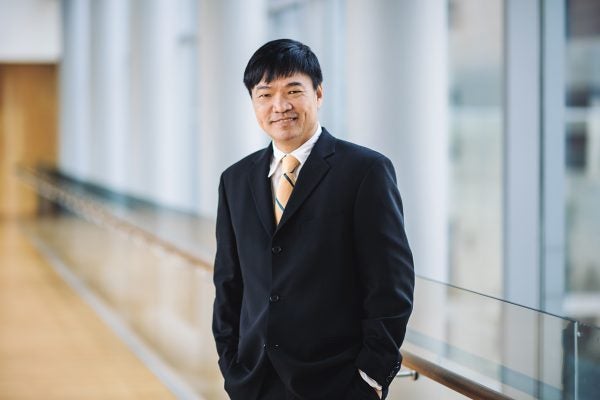
Ooi Beng Chin is a Professor at the School of Computing , National University of Singapore (NUS). He holds concurrent roles as an adjunct Chang Jiang Professor at Zhejiang University, Visiting Distinguished Professor at Tsinghua University, and Director of NUS AI Innovation and Commercialization Centre in Suzhou, China. He earned his B.Sc. (1st Class Honours, 1985) and Ph.D. (1989) from Monash University, Australia. His research spans database systems, blockchain, machine learning, and large-scale analytics , focusing on system architectures, security, and cross-domain applications. Notable contributions include initiating the Apache SINGA distributed deep learning platform and developing Blockbench, the first blockchain benchmarking system. He also co-founded MZH Technologies (2018) for healthcare analytics. Key publications highlight his work in blockchain-database integration, AI for healthcare/finance, and 5G-enabled data systems. Awards include the ACM SIGMOD EF Codd Innovation Award (2020), Singapore President's Science Award (2011), and fellowships from SNAS, IEEE, ACM , and SAEng (2023). He leads the Singapore Blockchain Innovation Programme (SBIP) and contributes to industry collaborations with healthcare institutions and financial organizations. Fellow, Singapore National Academy of Science (SNAS) Fellow, IEEE Fellow, ACM Singapore President's Science Award, 2011 IEEE Kanai Award, 2012 NUS Outstanding Researcher Award, 2013 ACM SIGMOD EF Codd Innovation Award, 2020 Foreign Member, Chinese Academy of Sciences, 2023