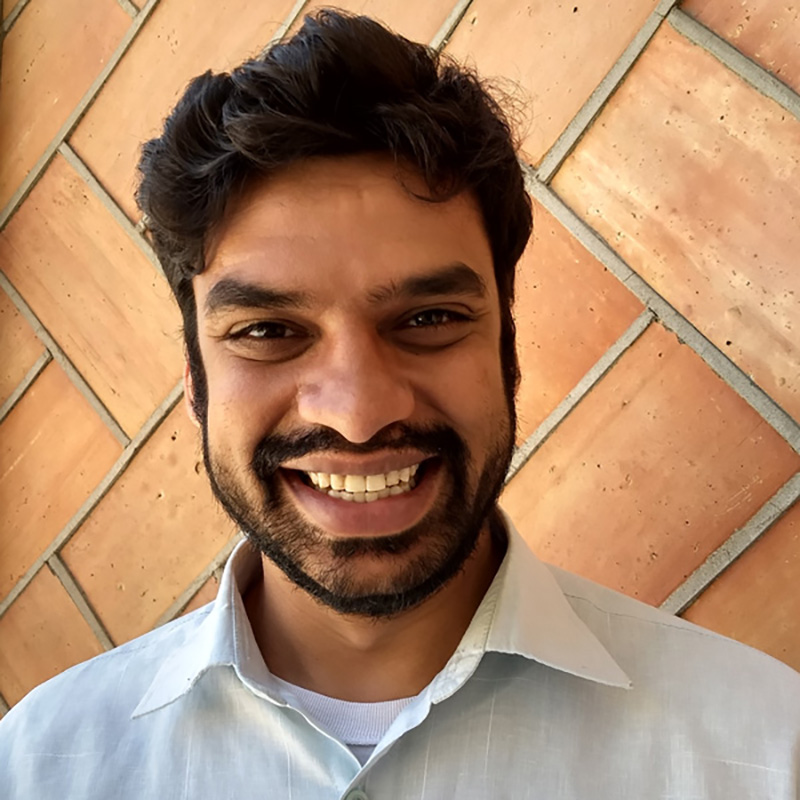
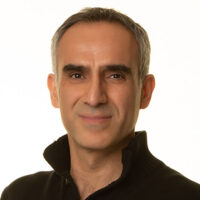
Amritanshu Pandey is an Assistant Professor in Electrical Engineering at the University of Vermont, with a part-time adjunct appointment in Electrical and Computer Engineering at Carnegie Mellon University. His research focuses on enhancing the efficiency, reliability, and security of electric grids through methods in circuit theory, optimization, and machine learning. He pioneered the SUGAR simulation engine for power systems and collaborates globally on grid challenges. Research Interests: Pandey's work spans renewable integration, grid cybersecurity, digital twins, and decarbonization. Key projects include developing algorithms for large-scale grid optimization, anomaly detection, electric vehicle infrastructure modeling, and cyber-resilient energy systems. His research addresses real-world challenges in rapidly evolving grids across Asia and Africa. Awards: Best Paper Award, IEEE PES General Meeting (2017, 2021) Best-of-the-Best Paper Award, IEEE PES General Meeting (2021) Best Student Paper Runner-up, ECML-PKDD (2018) Students & Labs: He advises 7 PhD students and has graduated 11 advisees (PhD/MS/BS). His lab focuses on power systems innovation, including the SUGAR simulation framework and projects on grid cybersecurity and sustainable electrification.
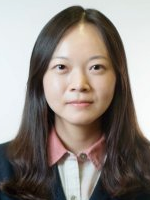
Peyman Servati is a Professor in the Department of Electrical & Computer Engineering at the University of British Columbia (UBC), affiliated with the Faculty of Applied Science. He leads the Flexible Electronics and Energy Lab (FEEL) and the Centre for Flexible Electronics and Textiles (CFET), and is part of the Clean Energy Research Centre (CERC) and Microsystems and Nanotechnology (MiNa) Group. His research focuses on low-cost flexible solar cells, wearable technology, nanomaterials, and energy systems. Education: BASc (University of Tehran, 1998), MASc and PhD (University of Waterloo, 2000 and 2004). Pre-UBC roles included Research Associate at the University of Cambridge (2005–2011) and Senior Research Scientist at Ignis Innovation Inc. Research interests include smart textiles, flexible electronics, nanocomposites, and renewable energy applications. He has over 80 peer-reviewed publications, 4 patents, and 10 patent applications. Awards include the 2006 NSERC Canada-UK Millennium Award and 2005 NSERC Doctoral Prize. Advising highlights include supervising numerous PhD and MASc students in areas like wearable sensors, energy storage, and biomedical applications. Key labs include FEEL and CFET, focusing on textile-based electronics and sustainable energy solutions.
Lee Rybeck Lynd is the Paul E. and Joan H. Queneau Distinguished Professor of Engineering and Adjunct Professor of Biology at Dartmouth College's Thayer School of Engineering. He has been a member of the Dartmouth faculty since 1987 and serves as Co-Founder and Chief Technology Officer of Terragia Corporation, Consolidated Bioprocessing Team Leader for the DOE Center for Bioenergy Innovation, and Director of the Advanced Second Generation Biofuel Laboratory. Professor Lynd's research spans microbial cellulose utilization, metabolic engineering, innovative biomass processing technologies, and sustainable bioenergy futures. His work focuses on cost-effective production of cellulosic biofuels that benefit people and the environment, with particular emphasis on consolidated bioprocessing (CBP) which offers potential for transformative cost reductions in biofuel production. His research integrates molecular biology, microbiology, and chemical/biochemical engineering to advance both fundamental understanding and applied capability in bioenergy. His publication record includes over 300 papers with more than 42,000 citations and an h-index of 88. Recent research trends show increasing focus on sustainability metrics, carbon-negative biofuels, and the integration of bioenergy systems with food production and environmental protection. His work increasingly addresses the socio-economic dimensions of bioenergy deployment alongside technical innovations. Charles Thom Award, Society for Industrial Microbiology and Biotechnology (2021) Thayer Distinguished Research Award for Faculty (2020) Lemelson-MIT Sustainability Award (2007) AAAS Fellow (2012) Charles D. Scott Award for Distinguished Contributions (2005) Professor Lynd has advised numerous graduate students and postdoctoral researchers, currently mentoring several PhD candidates including Nick Cervenka, Madeline Hoey, Shu Huang, Matthew Kubis, and Bishal Sharma. His research has been supported by multiple funding sources including the Department of Energy, USDA NIFA, Sao Paulo Research Foundation (Brazil), and The Link Foundation. He has testified before the US Senate three times and has been featured in Wired, Forbes, and Nova. He leads the Lynd Research Lab which includes postdoctoral associates, graduate students, technicians, and undergraduate researchers. The lab collaborates closely with the DOE Center for Bioenergy Innovation and maintains an international network of collaborators. Current research focuses on consolidated bioprocessing, metabolic engineering of cellulolytic microbes, and sustainable bioenergy futures that integrate environmental, economic, and social considerations.
Mehdi Asheghi is an Adjunct Professor at Stanford University specializing in advanced thermal management solutions. His research focuses on heat transfer optimization, electronics cooling, and energy-efficient systems using cutting-edge materials science and micro/nanofabrication techniques. His work spans high-heat-flux cooling, phase-change materials, and thermal interface technologies, with applications in power electronics, integrated circuits, and sustainable energy systems. Innovations include microchannel coolers, copper nanowire composites, and porous thermal structures. With publications addressing thermal challenges from chip-scale to industrial systems, his research advances reliability and performance in electronic devices and energy infrastructure.
Professor David Hutchinson is a faculty member at the University of Portsmouth within the Faculty of Technology, holding positions as the Founding Director of the Centre for Environmental and Renewable Energy Solutions (CERES) and Director of the International Cleantech Network and Greentech South. His research focuses on decarbonisation, sustainable energy, and cleantech innovation, intersecting with smart technologies, energy management, and policy-making to address global environmental challenges. He leads multidisciplinary teams and has managed over £15 million in externally funded projects, driving impactful research in sustainable energy technologies. His work extends beyond academia, supporting cleantech development through over £65 million in inward investment and creating over 790 jobs. Key research outputs include studies on PVT systems, flood risk visualization, and sustainable drainage systems. Hutchinson is actively involved in policy advocacy and has published extensively in journals like Nature Sustainability and Energies. He is open to media inquiries and supervises PhD students in Environmental Technologies, clean growth, and low-carbon economy transitions. Notable contributions include advancing solar energy feasibility frameworks, optimizing phase change material applications in photovoltaic systems, and exploring collaborative strategies in construction projects across emerging economies. His interdisciplinary approach bridges academia, industry, and policy to foster sustainable economic growth and environmental solutions.
Professor Jihong Wang is a faculty member at the University of Warwick's School of Engineering, where she has held the position since January 2011. She previously served as a Professor of Control and Electrical Power at the University of Birmingham and held academic roles at the University of Liverpool from 1998 to 2007. As the Head of the Power and Control Systems Research Laboratory, her research focuses on power system modeling and control, energy storage integration, and energy-efficient actuators. Her work has led to over 100 journal publications and several industry collaborations, including a smart voltage controller and a clean pneumatic UPS. She led the EPSRC-funded IMAGES project, developing an open-source software tool for energy storage systems. Professor Wang actively contributes to energy storage initiatives, including co-leading the Supergen Energy Storage Hub and the Joint UK-India Clean Energy Centre (JUICE). Her funded projects span compressed air energy storage (CAES), grid-tied photovoltaic inverters, and net-zero engineering innovation. She advises on energy policy and has pioneered innovations in thermal storage, grid decarbonization, and renewable energy integration. Her research bridges academic rigor and practical applications, addressing critical challenges in sustainable energy systems. Her professional engagement includes roles like Deputy Director of the Supergen Energy Storage Network+ and collaborations with global institutions. Her work emphasizes interdisciplinary approaches to energy challenges, combining control systems, thermal engineering, and policy analysis. Professor Wang’s contributions have been recognized through best paper awards and leadership in major energy storage consortia.
Dr. Tarek Alskaif is an Associate Professor of Energy Informatics at Wageningen University & Research, specializing in the intersection of information technology and energy systems. He leads research on smart energy systems, focusing on electricity markets, distributed energy resources, and AI-driven solutions. His work integrates modeling, optimization, and big data analytics to advance the sustainable energy transition. Education: PhD in Energy Informatics (2012–2016, Cum Laude) from Universitat Politècnica de Catalunya, Spain. Postdoc at Utrecht University’s Copernicus Institute (2016–2020). Current roles include coordinating the BSc Data Science Minor and teaching Python and Big Data courses. Research interests emphasize leveraging digitalization for energy systems, including smart grids, electric mobility, and battery storage. Notable projects include HighLO Energy Markets (EU-funded, using particle physics and AI for market transparency) and MESSM (coordinated via TKI Urban Energy). He also leads the AI ELSA Lab (NWO-funded). Editorial roles include Associate Editor for IEEE Transactions on Smart Grid and IEEE Power Engineering Letters . Member of IEEE, the Netherlands Institute for Research on ICT (4TU.NIRICT), and the Technical Program Committee for IEEE SmartGridComm and PSCC 2026. Has supervised over 50 students (MSc/BSc) and 7 PhDs. Projects address challenges like grid congestion, EV charging optimization, and decentralized energy trading. His work bridges academic research with industry collaborations, including partnerships with CERN and ACER.
Shahin Sirouspour is a Professor in the Department of Electrical and Computer Engineering at McMaster University. His research focuses on robotics, autonomous systems, control systems, and optimization, with applications in aerial robotics, teleoperation, haptics, medical robotics, and smart energy grids. He is affiliated with the Telerobotics, Haptics and Computational Vision Laboratory and teaches courses such as Non-linear Control Systems and Electrical Systems Integration Project. He holds a Ph.D. from the University of British Columbia and has supervised numerous graduate students. His lab includes advanced equipment like multi-axis robotic manipulators, haptic interfaces, and real-time computing systems. Education: B.Sc. and M.Sc. from Sharif University of Technology (Iran), Ph.D. from University of British Columbia (Canada). Current roles include accepting graduate students and leading research clusters in Digital & Smart Systems, Energy, and Transportation. Awards include the McMaster President's Award for Excellence in Graduate Supervision. His work bridges theoretical control systems with practical applications in healthcare, energy, and autonomous systems. Research highlights include developing control strategies for multi-agent robotic systems, smart grid optimization, and medical robotics. Collaborations with institutions like MacAUTO and industry partners (e.g., MDA Space Missions) enhance translational impact. His lab supports projects on asymmetric teleoperation, deformable tissue simulation, and microgrid energy management.
Janki Bhimani is a Professor and Director of the Data Management Research Lab (DaMRL) at the School of Computing and Information Science, Florida International University (FIU). Her research focuses on Memory and Storage Systems, Cloud Computing, Performance Modeling, and Applied Machine Learning. She holds a Ph.D. in Computer Engineering from Northeastern University (2019), an M.S. in Electrical and Computer Engineering (2016), and a B.S. in Electrical and Electronics Engineering from GITAM University (2013). Prior to FIU, she taught at Northeastern University and collaborated with Samsung Semiconductor Research Labs on flash-based SSDs. Her research interests include emerging memory technologies, high-performance computing, and datacenter reliability management. She leads innovative projects like Heimdall (machine learning for storage I/O optimization) and MoKE (modular key-value storage emulation). Awards include FIU Top Scholar and KFSCIS Excellence in Applied Research. Teaching highlights include CIS 3530 (Data Structures), CIS 5346 (Storage Systems), and EECE 2560 (Engineering Algorithms). Her work emphasizes bridging theory and practice, with patents on storage system optimization and machine learning integration.
Dr. Shuya Wei is an Assistant Professor in the Department of Chemical and Biological Engineering at the University of New Mexico (UNM). She holds a Ph.D. in Chemical Engineering from Cornell University (2017) and a B.Eng. in Bioengineering from Nanyang Technological University (2013). Her research focuses on advancing electrochemical energy storage technologies, including next-generation batteries for energy and environmental applications. Key areas include developing high-energy batteries using earth-abundant materials, carbon capture through electrochemical processes, and nanomaterials design. Education: Ph.D., Chemical Engineering, Cornell University, 2017 B.Eng., Bioengineering, Nanyang Technological University, 2013 Research Interests: Electrochemical fundamentals and interfaces Rechargeable batteries (e.g., Li-CO₂, Al-CO₂, iron batteries) Carbon capture and conversion via electrochemical systems Design of nanocomposites and biomaterials for energy storage Notable Awards: Materials Research Society (MRS) Graduate Student Silver Award (2017) UNM Women in STEM Awards (2022) NASA MPLAN Prize (2024) NSF EPSCoR Track 2 Funding (2021) Advising & Grants: Advises graduate students (e.g., Chris Fetrow, Jianda Wang) and postdocs (e.g., Raju Vadthya). Secured grants including NSF awards for electrochemical methane conversion and carbon dioxide management. Lab Activities: The Wei Lab at UNM emphasizes interdisciplinary research, with projects like developing low-cost chemical waste batteries and optimizing porous zinc anodes. Recent achievements include breakthroughs in aluminum-CO₂ batteries and gel polymer electrolytes for sodium-sulfur systems.
Jean-Louis Scartezzini is an Honorary Professor at École Polytechnique Fédérale de Lausanne (EPFL), affiliated with the School of Architecture, Civil and Environmental Engineering (ENAC) and the Solar Energy and Building Physics Laboratory (LESO-PB). His research focuses on natural/artificial lighting, solar energy systems, and building technology, with a strong emphasis on energy efficiency and sustainability. Director of LESO-PB since 1994 Founded and led several institutes, including the Institute for Infrastructure, Resources, and Environment (2002–2009) Doctorat in Physics from EPFL (1986) Extensive international collaborations, including visiting roles at NUS (2009) and LBNL/UCLA (1988) Research interests include: - Daylighting and lighting control systems - Passive/active solar technologies - Urban microclimate and energy systems - Stochastic simulation and predictive control Recent work addresses climate change impacts on energy systems, urban sustainability, and machine learning applications in energy optimization. Key publications span lighting health impacts, renewable integration, and microclimate modeling Awards include the European Solar Prize (2001/2002) and Walsh-Weston Bronze Medal (1998) Mentored over 20 PhD students, many leading in academia and industry (e.g., Marilyne Andersen at EPFL, Flavio Foradini at E4Tech).
Christopher Bailey is a Professor of Advanced Semiconductor Packaging and Director of the Centre for Advanced Semiconductor Packaging at Arizona State University (ASU). He previously served as Professor of Computational Mechanics & Reliability and Associate Dean for Research at the University of Greenwich, UK. At ASU, he leads research on advanced semiconductor packaging, including roles as Principal Investigator (PI) and Co-Investigator (Co-I) on major projects such as the SRC-funded Thermo-Mechanical Modelling and US Chips Act initiatives (e.g., SWAP-Hub, SHIELD, ITSI). His research focuses on semiconductor packaging reliability, thermal management, co-design methodologies, and multiphysics modeling. Education: MBA (Technology Management), Open University, UK PhD, Thames Polytechnic, UK Research Interests: Advanced Semiconductor Packaging Thermal Management Solutions Co-Design and Multiphysics Modeling Reliability of Electronic Components His work integrates computational mechanics, materials science, and engineering to address challenges in high-reliability electronics. Recent projects emphasize predictive modeling for semiconductor packaging failures under thermal-mechanical stress. Awards: IEEE Region 8 Europe Award (2024) IEEE David Feldman Award (2022) Visiting Professorships at IIT Kharagpur (2018/2022) and Hong Kong (2018) Service & Leadership: Former President of IEEE Electronics Packaging Society (2020–2021) Associate Editor for IEEE Transactions on Components, Packaging, and Manufacturing Technology Conference Leadership (e.g., Program Chair for IEEE PAINE 2024) He has secured over $40M in research funding and authored 400+ archival papers, with expertise spanning industry collaborations (e.g., BAe Systems, Rolls Royce) and government advisory roles (EPSRC Peer Review College, UK Research Excellence Framework).
Taco Niet is an Associate Professor in the School of Sustainable Energy Engineering at Simon Fraser University. His research focuses on energy systems modelling, energy storage technologies, and climate change mitigation strategies. He holds a Ph.D. (2018), M.A.Sc. (2002), and B.Eng. (1998) in Mechanical Engineering from the University of Victoria. His work bridges technical innovation with societal implications, particularly in renewable energy integration and policy design. Teaching specialties include instrumentation systems, control systems, and the intersection of technology and society. Courses taught span undergraduate and graduate levels, including energy policy frameworks and engineering laboratory practices. He actively contributes to open-source energy modelling tools like OSeMOSYS and CLEWs Global, emphasizing transparency and interdisciplinary collaboration. Recent research emphasizes grid flexibility, decarbonization pathways, and equity in energy transitions. Notable projects include analyzing Canadian consumer preferences for zero-emission vehicles and evaluating hydrogen's role in energy storage. His work often involves international collaboration, addressing challenges in both developed and developing regions. Professional affiliations include leadership roles in sustainable energy education and engagement with industry partners. The Delta-E Research Group under his direction focuses on applied energy solutions. Current initiatives explore multiphysics energy systems and policy impacts on land-use patterns.
Tina Shoa is an Associate Professor in the School of Sustainable Energy Engineering at Simon Fraser University. She holds a Ph.D. in Electrical Engineering from the University of British Columbia (2010), an M.Sc. from the University of Manitoba (2004), and a B.Sc. from Iran University of Science and Technology (2000). Her research focuses on battery performance modeling, electrochemical methods for fault detection, sustainable battery manufacturing, and AI-based diagnostics. Education: Ph.D., Electrical Engineering, University of British Columbia, 2010 M.Sc., Electrical Engineering, University of Manitoba, 2004 B.Sc., Electrical Engineering, Iran University of Science and Technology, 2000 Research Interests: Battery performance modeling, analysis, and optimization Electrochemical and ultrasound-based battery fault detection Sustainable battery manufacturing processes AI-driven battery diagnostics Teaching and Courses: Advanced Battery and Fuel Cell Technologies Power Plant Systems Smart Grids Practicum SEE 354 D100 Energy Storage (Summer 2025) Patents: Battery State-of-health Determination upon charging (US Patent 11079437B2, 2022) Battery State-of-health Determination using multi-factor normalization (US Patent 10,302,709, 2019) Apparatus and Method for testing electrochemical systems (US Provisional Patent 62/994687, 2020) Key Contributions: Her work integrates electrochemical principles and AI to advance battery diagnostics and sustainable energy storage solutions. She has authored over 15 publications in top-tier journals and conferences, addressing battery aging, state estimation, and novel manufacturing techniques.
Dr. Chang Lei is an ARC Discovery Early Career Researcher Award (DECRA) Fellow at the Department of Medical Sciences within the Faculty of Medicine and Health at The University of Sydney. She is also a member of The University of Sydney Nano Institute and the Charles Perkins Centre. With expertise in nanotechnology-based bioanalysis, mass spectrometry, lateral flow immunoassay, and tissue regeneration, Dr. Lei leads several innovative research projects focused on advancing healthcare through nanotechnology. Dr. Lei completed her PhD at the Australian Institute for Bioengineering and Nanotechnology (AIBN) at The University of Queensland (UQ). Her academic journey includes receiving the Queensland Government Advance Queensland Research Fellowship, the UQ Amplify Fellowship in 2021, and the prestigious ARC DECRA in 2024. Her research interests span across nanotechnology applications in healthcare, with particular focus on: Developing novel nanomaterials for single-cell metabolomics analysis Creating affordable and ultra-sensitive biomarker detection platforms Engineering silica bio-nanomaterials for stem cell differentiation and bone repair Advancing lateral flow immunoassay technologies using nanomaterials Applying nanotechnology to dental and craniofacial regeneration Dr. Lei's publication record demonstrates a strong focus on nanotechnology applications across multiple disciplines. Her recent work shows increasing emphasis on medical applications of nanomaterials, particularly in diagnostics, cancer therapy, and tissue regeneration. She has published in high-impact journals including Nature Science Review, Small, Biosensors and Bioelectronics, Angewandte Chemie, and Advanced Materials. Dr. Lei has received several notable awards and honors: 2024 ARC DECRA Fellow 2021 The University of Queensland Amplify Fellow 2020 GC Minimum Intervention Dentistry Research Award 2017 Advanced Queensland Research Fellow As a reviewer for scientific journals such as Science Advances, Journal of Nanobiotechnology, and Journal of Materials Chemistry B, and for ARC and NHMRC grants, Dr. Lei actively contributes to the scientific community. She also serves as an editor for Frontiers in Bioengineering and Biotechnology and Nano TransMed. Her current research projects are supported by grants including the ARC DECRA and the FMH Start-up Scheme. Dr. Lei is actively involved in several research groups and initiatives: Member of The University of Sydney Nano Institute Member of the Charles Perkins Centre Member of Australian and New Zealand Society for Mass Spectrometry Member of The Australian Materials Research Society Member of the Australian Nanotechnology Network