Jason Swanson is an Associate Professor in the Department of Mathematics at the University of Central Florida, specializing in stochastic processes and probability theory. His research encompasses stochastic differential equations, fractional Brownian motion, and the foundations of probability. Recent work includes developing the iterated Dirichlet process for Bayesian inference and extending representations for row-exchangeable arrays. He maintains an active research program connecting mathematical logic with probability theory. Teaching responsibilities include graduate courses in Measure and Probability (MAA 6238) and undergraduate probability (MAP 4113). His lecture notes on measure-theoretic probability are publicly available.
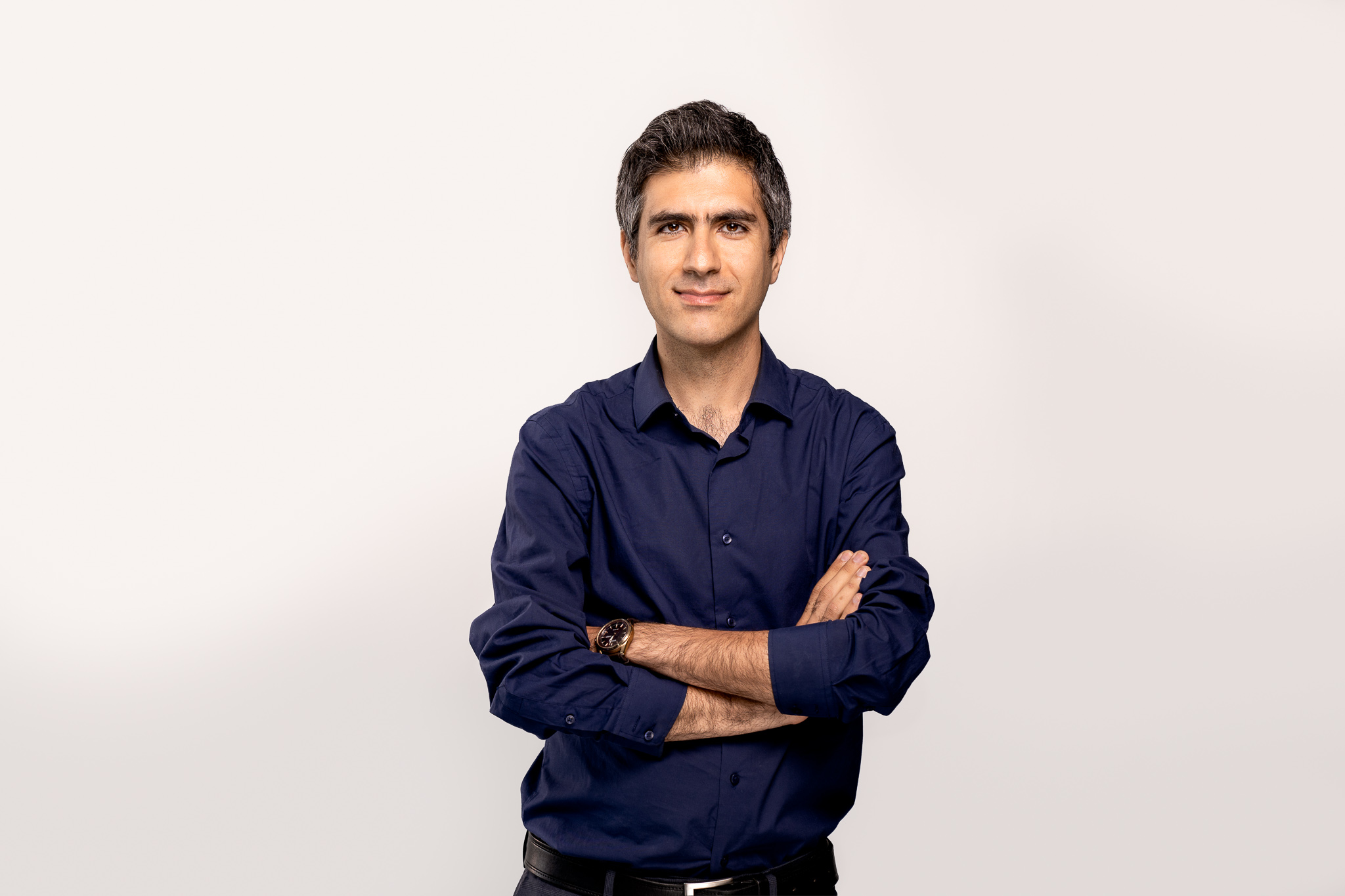
Shahin Kamali is an Associate Professor in the Department of Electrical Engineering & Computer Science at York University's Lassonde School of Engineering. Previously, he served as an Assistant Professor at York University (2022-2024) and the University of Manitoba (2017-2022), where he continues to hold an Adjunct Professor position. He completed his Ph.D. in Computer Science at the University of Waterloo in 2014 and was a postdoctoral fellow at MIT's CSAIL lab from 2015-2017. Dr. Kamali received his B.Sc. from the University of Tehran and his M.Sc. from Concordia University, both in Computer Science. He has earned teaching certifications including the Kaufman Teaching Certificate Program from MIT and the Certificate in University Teaching from the University of Waterloo. His research focuses on algorithms' design, analysis, and limitations, with particular emphasis on online problems such as bin packing, paging, list update, and k-Server. His work extends to big-data applications of algorithms in data compression, graph partitioning, resource allocation in the cloud, and algorithmic aspects of blockchain technology. His recent publications (2023-2025) demonstrate a strong focus on learning-augmented algorithms, online computation with predictions, and novel applications in blockchain and graph theory. His research has been supported by multiple NSERC grants since 2010, with recent projects investigating models, applications, and limitations of online algorithms. He has successfully supervised numerous graduate students and serves on various committees related to algorithms conferences and academic governance. University of Waterloo Doctoral Thesis Completion Award (2014) University of Waterloo Mathematics Graduate Experience Award (2008) Dr. Kamali teaches advanced courses in algorithms and data structures and is scheduled to teach Design and Analysis of Algorithms (EECS 3101) in Fall 2025 and Advanced Data Structures (EECS 4101/5101) in Winter 2026. He is actively involved in organizing major conferences, including CCCG and WADS 2025 at York University.
Cory Simon serves as Associate Professor in the Department of Chemical, Biological, and Environmental Engineering within Oregon State University's College of Engineering. His research integrates machine learning, optimization, and chemical engineering to advance materials discovery and environmental sensing systems. His academic foundation includes a Ph.D. in Chemical Engineering from the University of California, Berkeley and a B.S. in Chemical Engineering from The University of Akron. Simon's work centers on Bayesian methodologies for scientific challenges, featuring: Bayesian optimization for adaptive materials synthesis Statistical inversion of physical systems with uncertainty quantification Computational design of nanoporous sensor arrays Stochastic algorithms for robotic environmental monitoring Recent publications demonstrate accelerating focus on multi-fidelity optimization for molecular design and atmospheric water harvesting, bridging chemical engineering with computational science through data-driven approaches. Leading The Simon Ensemble research group, Simon champions a versatile 'buffet-style' research philosophy—drawing from mathematics, statistical mechanics, and machine learning to address interdisciplinary problems across chemistry, materials science, and environmental engineering.
Alex Gittens is an Assistant Professor in the Department of Computer Science at Rensselaer Polytechnic Institute (RPI), joined in 2017. His research focuses on algorithmic trade-offs between computational efficiency and accuracy in large-scale linear algebra and machine learning contexts. He has expertise in kernel methods, randomized numerical linear algebra, and low-rank approximation techniques. Education: PhD in Applied and Computational Mathematics, Caltech (2013) Industry Postdoc at eBay Research Labs (2013-2015) Postdoctoral Scholar at International Institute of Computer Science (2015-2016) His research explores scalable machine learning algorithms, nonlinear and multilinear sketching applications, and sampling for low-rank tensor/matrix approximation. Current technical interests include attention mechanisms for knowledge graph completion, federated learning trade-offs, and causal inference in adversarial settings. Recent publication trends show active contributions in federated learning (privacy-fairness optimization), causal information extraction (financial text analysis), and adversarial machine learning (robustness-security trade-offs). His work emphasizes trustworthy ML systems and computational efficiency in high-dimensional data processing. Teaching includes foundational discrete mathematics (CSCI 2200) and advanced machine learning courses (CSCI 6968/4968). He offers advising through Slack channels and via email, focusing on course selection, research opportunities, and graduate school preparation.
Somayeh Moazeni is an Associate Professor at the School of Business, Stevens Institute of Technology. She holds a PhD in Computer Science from the University of Waterloo and has held academic appointments including Visiting Associate Professor at Northwestern University and Postdoctoral Research Associate at Princeton University. Her research focuses on Reinforcement Learning, Stochastic Dynamic Optimization, and applications in Energy Markets, Inventory Management, and Algorithmic Trading. She has authored over 30 peer-reviewed articles and serves as an associate editor for INFOR and PLOS One . Education: PhD (Computer Science, 2012), University of Waterloo; Postdoc (Operations Research, 2012-2014), Princeton University Industry Experience: Senior Risk Analyst at RBC (2011-2012), Risk Analyst at BMO (2010) Awards: IEEE Senior Member (2019), Anita Borg Institute GHC Faculty Scholar (2017), MITACS Poster Competition First Place (2009) Her research spans Bayesian Optimization , Resilient Network Design , and Energy Efficiency . Current funded projects include PSEG Foundation grants for energy resilience and NSF funding for distributed energy resource controls. She advises PhD students in Operations Research and Energy Systems and teaches graduate courses in Reinforcement Learning and Financial Engineering. Key Contributions: Developed stochastic optimization frameworks for energy storage, contact center reliability modeling, and risk-aware trading strategies. Her work on sequential learning for consumer-driven demand response programs has advanced smart grid applications.
Daniel McKenzie is an Assistant Professor in the Department of Applied Mathematics and Statistics at the Colorado School of Mines. His research focuses on derivative-free optimization, implicit neural networks, and geometric methods in data science. He holds a B.Sc.(hons) and M.Sc. in Mathematics from the University of Cape Town (2010, 2014) and a PhD in Mathematics from the University of Georgia (2019). B.Sc.(hons): Mathematics and Applied Mathematics, University of Cape Town, 2010 M.Sc.: Mathematics, University of Cape Town, 2014 PhD: Mathematics, University of Georgia, 2019 His research explores the intersection of optimization theory and machine learning, with applications in spatial data modeling, geometric data analysis, and high-dimensional clustering. Recent work emphasizes curvature-aware algorithms, comparison-based optimization, and implicit network architectures like LatticeVision. His methods address challenges in non-stationary spatial data and convex game equilibria prediction. Key contributions include Fermat distance metrics for clustering, Jacobian-Free Backpropagation (JFB) for implicit networks, and zeroth-order algorithms for black-box optimization. While no scientific awards are listed, his publications reflect a strong focus on advancing optimization techniques for modern data science problems. No specific grants or advising roles are detailed in the provided text. His work bridges computational mathematics and applied AI, with potential applications in robotics, spatial statistics, and algorithmic game theory.
Burhaneddin İzgi serves as an Associate Professor in the Department of Mathematics Engineering at Istanbul Technical University, where he maintains an active research profile with projects extending through 2025. His work bridges theoretical mathematics with computational applications, particularly in game-theoretic problem solving. Research interests center on Game Theory and Stochastic Differential Equations, with specialized focus on matrix norm-based solution methods for zero-sum, fuzzy, and stochastic matrix games. Recent work integrates Artificial Intelligence techniques to address large-scale game complexity, reflecting interdisciplinary innovation across Numerical Analysis and Fuzzy Mathematics. Article trends (2022-2025) reveal consistent advancement of matrix norm methodologies across diverse game types, increasingly incorporating machine learning for computational efficiency. Publications demonstrate strong theoretical grounding in Mathematics while addressing practical applications in finance (e.g., IPO modeling) and decision systems. Scientific recognition includes: 2210 - Yurt İçi Yüksek Lisans Burs Programı (2008) 2211 - Yurt İçi Doktora Burs Programı (2010) Matematik Bölüm Birinciliği (2008) Üniversite İkinciliği ödülü (2008) Research funding includes TUBITAK-supported projects such as 'Stokastik Oyunlar İçin Matris Norm Tabanli Yeni Çözüm Yöntemleri Ve Yapay Zeka Uygulamalari' (2021-2023) and current grants developing chaos theory approaches for stochastic matrix games (2024-2025), demonstrating sustained external validation of his research program.
Chihwa Kao is a Professor in the Department of Economics at the University of Connecticut, affiliated with the College of Liberal Arts and Sciences. His research focuses on panel data econometrics, structural change analysis, cointegration, high-dimensional models, and time series econometrics. He has extensively contributed to methodologies addressing cross-sectional dependence, factor models, and non-stationary panel data. Key research interests include developing robust statistical techniques for panel data, testing for structural breaks in economic relationships, and analyzing economic growth factors. His work bridges theoretical econometrics with practical applications in finance and policy analysis. His articles emphasize advancements in panel data methodologies, such as bias-correction in dynamic models, clustering techniques for fixed effects, and handling serial correlation. Recent trends show a focus on high-dimensional data challenges, factor models, and structural stability assessments in large datasets. Awards and honors are not explicitly listed in the provided materials. He advises no students listed here, but his courses include Econ5315/3315 and Econ5323/4323. His CV and additional materials are available via provided links.
Dr. Thalia Anagnos is a former Professor of Civil Engineering and Vice Provost for Undergraduate Education at San José State University (retired 2023). She specializes in earthquake engineering, structural analysis, and engineering education. Her research focuses on seismic hazard assessment, infrastructure resilience, and loss estimation methodologies. Education: Ph.D. in Civil Engineering from Stanford University. Key roles include Past-President of EERI, former editor of Earthquake Spectra, and leader of NEES Education/Outreach programs. Awards include SJSU Outstanding Professor (2012) and EERI Honorary Membership (2018). Research highlights include developing substation equipment fragility databases and leading regional building inventory projects for seismic risk analysis. She has contributed to national initiatives like HAZUS loss estimation frameworks and educational programs such as the Engineering Leadership Pathway Scholars (ELPS). Awards: 1991 Distinguished Alumnus (Stanford), 2000 McCoy Family Award, 2013 Applied Materials Teaching Award. Grants and projects include NSF-funded initiatives on earthquake engineering education, leadership development for engineering students, and public outreach through partnerships like the Golden Gate Bridge educational project.
Dr. Amirali Abari is an Associate Professor in the Faculty of Business and Information Technology at Ontario Tech University, specializing in Artificial Intelligence, Machine Learning, and Computational Decision Making. His research focuses on decision-making under uncertainty, including preference learning, group recommendation systems, and probabilistic inference. He holds a PhD in Computer Science from the University of Toronto (2016) and was an NSERC Postdoctoral Fellow at the University of Toronto and University of Waterloo. Dr. Abari's research has been recognized with awards including the NSERC Postdoctoral Fellowship and a U.S. patent. He serves on program committees for top AI conferences (e.g., AAAI, IJCAI) and reviews for journals like IEEE Transactions and ACM Transactions. His work bridges computational methods with real-world applications in supply chain optimization, risk management, and sustainable infrastructure planning. Key contributions include integrating machine learning with queueing theory for EV charging stations, stochastic optimization for resilient supply chains, and decision support systems for industrial processes. His research group collaborates with industry partners to apply AI-driven solutions to business analytics and operations challenges. Education: PhD in Computer Science, University of Toronto (2016) Awards: NSERC Postdoctoral Fellowship, Bell Scholarship, Student Best Paper Award Service: Program committees for AAAI, IJCAI; reviewer for IEEE, ACM, and Algorithmica
Blanka Horvath is a Lecturer at King's College London and Honorary Lecturer at Imperial College London's Department of Mathematics (Faculty of Natural Sciences). Her research focuses on stochastic analysis and mathematical finance, particularly in numerical methods, machine learning applications, and volatility modeling (e.g., SABR and rough volatility models). She holds a PhD from ETH Zurich (2015), a Diplom in Mathematics from the University of Bonn, and an MSc in Economics from the University of Hong Kong. She has organized major conferences such as the SIAM MMF 2017 mini-symposium and co-organized the Rough Volatility Meeting at Imperial College. Her honors include the 2019 Risk Rising Star Award and the 2024-25 LMS Emmy Noether Fellowship. She collaborates with institutions like UBS, The Alan Turing Institute, and Quantennium LTD. Her teaching includes courses on numerical methods in finance and Python/R programming. She supervises PhD and MSc students in areas like rough volatility, machine learning, and quantitative finance. Recent work explores quantum GANs for option pricing and regime detection using Wasserstein distances.
Karthik Ramachandran is the Dunn Family Professor and Area Chair of Operations Management at the Scheller College of Business, Georgia Institute of Technology. His research focuses on operational and organizational aspects of innovation in product design, technology management, and entrepreneurship. He holds editorial roles at Production and Operations Management and Decision Sciences , and teaches courses in New Product Development and Entrepreneurship. Ramachandran earned his Ph.D. from the University of Texas at Austin and a B.Tech. from the Indian Institute of Technology, Madras. Research interests span behavioral operations, sustainability, and strategic decision-making in innovation ecosystems. He investigates how firms balance operational flexibility with market demands, leveraging analytical models and empirical studies. His work has appeared in top journals like Management Science and Manufacturing & Service Operations Management . Notable contributions include studies on nonprofit service optimization, entrepreneurial advising frameworks, and innovation project delegation. Ramachandran actively mentors startups through Georgia Tech’s CREATE-X initiative, emphasizing hands-on learning and venture creation. Education: Ph.D. Operations Management, McCombs School of Business, UT Austin M.S. Operations Research, UT Austin B.Tech. Mechanical Engineering, IIT Madras Awards: 2024 Best Paper Award (MSOM Society) Grants & Advising: Overseeing research on innovation ecosystems and mentoring dozens of startups, with a focus on scaling entrepreneurial ventures.
Jiaming Liang is an Assistant Professor in the Department of Computer Science and Data Science at the Hajim School of Engineering & Applied Sciences, University of Rochester. His research focuses on designing efficient algorithms for optimization and sampling in data science, with expertise in convex/nonconvex optimization, stochastic programming, and algorithmic game theory. He holds a PhD in Operations Research from Georgia Tech and completed a postdoctoral fellowship at Yale University under Andre Wibisono. Education PhD in Operations Research, Georgia Institute of Technology Postdoctoral Researcher, Yale University (Yale CS Department) Research Interests Liang's work bridges theoretical optimization and practical algorithm design. He develops scalable methods for nonsmooth, stochastic, and high-dimensional problems, with applications in machine learning and data analysis. Key areas include: Proximal bundle methods for hybrid optimization Sampling algorithms under non-smooth conditions Accelerated gradient techniques Algorithmic game theory applications Publications His recent work emphasizes algorithmic unification (e.g., combining accelerated gradients with proximal bundle methods) and variance reduction strategies. He explores stochastic optimization without smoothness assumptions and develops sampling methods for nonconvex potentials. Labs/Teams While specific lab affiliations aren't detailed here, his research aligns with computational optimization and data science groups at the Hajim School.
Alina Ene is an Associate Professor in the Department of Computer Science at Boston University, within the Faculty of Arts & Sciences. She holds a BSE in Computer Science (High Honors) from Princeton University (2008) and a PhD from the University of Illinois at Urbana-Champaign (2013), advised by Chandra Chekuri. Her research focuses on algorithms, combinatorial optimization (submodularity, graph theory), and their applications to machine learning. She previously served as Assistant Professor at the University of Warwick, Faculty Fellow at the Alan Turing Institute, and postdoctoral researcher at Princeton's Center for Computational Intractability. Key research themes include distributed submodular maximization, streaming algorithms, optimization theory, and machine learning. Her work bridges theoretical guarantees with practical applications in data science and distributed systems. Notable contributions include frameworks for submodular maximization under constraints, randomized coordinate descent methods, and routing algorithms with balance considerations. Publications emphasize algorithm design for submodular functions, stochastic optimization, and graph problems. Recent work explores high-probability convergence in stochastic gradient methods, clipped gradient techniques, and online ad allocation strategies. Her 2016 FOCS paper on distributed submodular maximization remains influential in large-scale optimization. Professional service includes editorial work for conferences like FOCS/STOC/SODA and grants from NSF's CAREER program. No explicit scientific awards are listed, though her fellowships and postdoctoral appointments reflect scholarly recognition.
Brandon Karchewski is an Associate Head (Undergraduate) and Teaching Professor in the Department of Earth, Energy and Environment at the University of Calgary. He earned his PhD in Civil Engineering from McMaster University and teaches courses including Engineering Geology, Computational Methods, and Natural Disasters. His research program focuses on: Computational methods in geophysics and geomechanics Geoscience education innovation Climate change impacts on frozen soils Inverse modeling applications Karchewski has pioneered virtual field experiences and developed open-source tools for modeling climate impacts on permafrost. His educational research examines metaphor use in geoscience communication and field pedagogy. Recent computational work includes Python-based permafrost modeling and stochastic inversion methods for biogeochemical transport. He leads the geophysics field school program emphasizing team-based learning. Award recognition includes: Geoscience Teaching Award (2019) Best Poster Award for teaching innovation research (2018) Team Teaching Excellence award (2016) Multiple teaching assistant awards