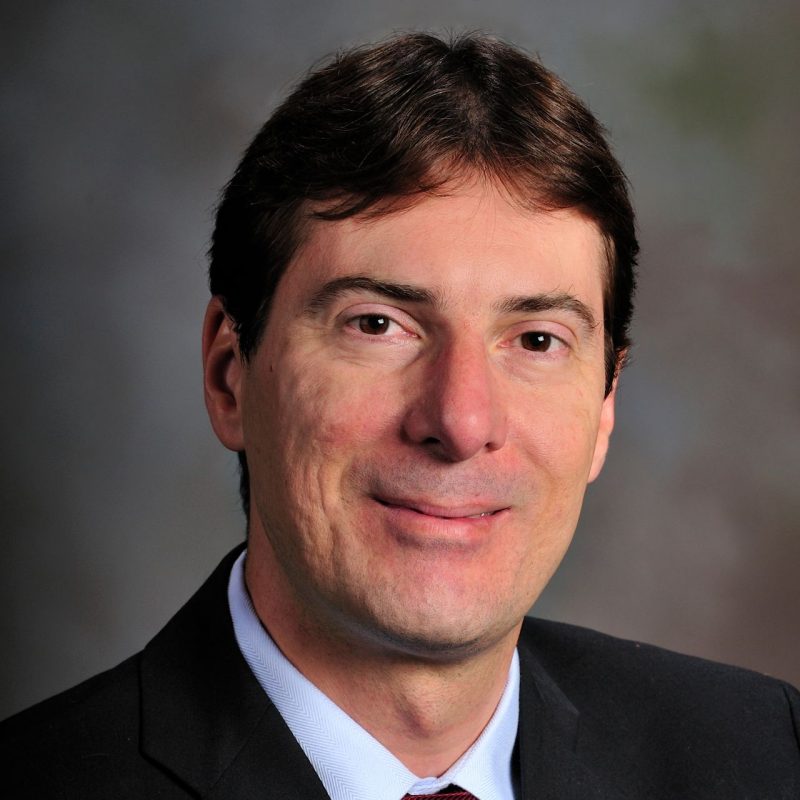
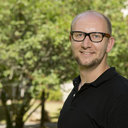
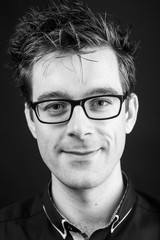
Etienne Mémin is a Research Director (Full Professor status) at Inria and leads the Odyssey research group, which is affiliated with multiple institutions including University of Rennes, IRMAR, Ifremer, LOPS, UBO, IMT Atlantique, and Lab-STICC. He serves as a Visiting Professor at the Department of Mathematics, Imperial College London (2020–2026) and is the Principal Investigator of the ERC STUOD grant. His research spans the intersection of geophysical sciences, fluid mechanics, computational sciences, and applied mathematics, focusing on stochastic modeling of fluid flows, data assimilation, and uncertainty quantification. He has developed frameworks for stochastic geophysical flows, coarse-scale simulations, and robust motion estimation techniques. Recent publications highlight his work on stochastic Navier-Stokes equations, ensemble forecasting, and data assimilation for ocean and atmospheric models. He has applied these methods to numerical weather prediction, turbulence analysis, and real-time flow reconstruction using sparse measurements. Scientific Awards: ERC STUOD grant PhD Students: Francesco Tucciarone (ERC STUOD, NEMO code) Benjamin Dufée (Ensemble Kalman filters, ATER position) Berenger Hug (Stochastic Navier-Stokes analysis, teaching) Antoine Moneyron (Stochastic ocean models) Collaborations: Imperial College London (D. Crisan, S. Laizet), Zhejiang University (S. Cai, C. Xu), MétéoFrance (P. Arbogast, O. Pannekoucke), Ifremer (B. Chapron), IRSTEA Lyon (L. Pénard), IRMAR (R. Lewandovsky), University of Buenos Aires (G. Artana), ISSI Beijing (T. Corpetti).
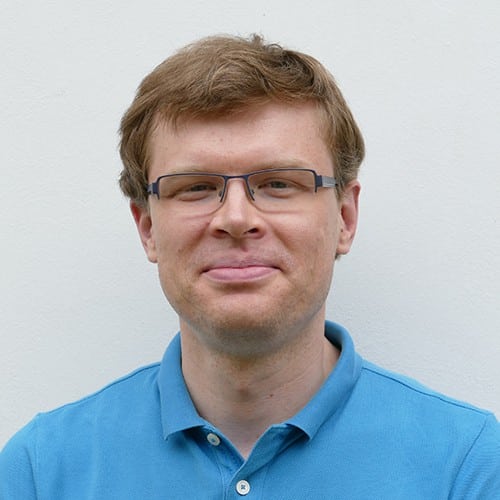
Joakim Lindblad is a Professor at the Department of Information Technology, Uppsala University , and holds affiliated roles as Senior Research Associate at the Mathematical Institute of the Serbian Academy of Sciences and Arts, and Head of Research at Topgolf Sweden AB. With over two decades of expertise in image analysis and machine learning , his work bridges computational methods with biomedical applications. Key affiliations: Uppsala University, Serbian Academy of Sciences, Topgolf Sweden Specializations: Deep Learning, Multimodal Image Registration, Quantitative Microscopy His research focuses on reliable image processing frameworks that integrate intensity and spatial information , particularly for biomedical applications . Recent publications highlight innovations in autofluorescence-based cancer detection , self-supervised one-class learning for sparse instance identification, and rotation-equivariant CNNs for robust analysis of cytology images. Recent article trends demonstrate expertise in multimodal image analysis (2024: 3 papers), oral cancer detection (2025: 2 papers), and multiscale biomedical imaging . His 2025 work on the Uppsala Storytelling Dataset introduces novel frameworks for multimodal dataset creation in AI research. While no scientific awards are explicitly mentioned, his extensive publication record (2000-2025) across top venues like Pattern Recognition , PLOS ONE , and IEEE Transactions indicates significant academic impact. His methodological contributions span stochastic distance transforms , fuzzy set defuzzification , and multimodal image registration techniques. Collaborative work with researchers like Nataša Sladoje and interdisciplinary teams has produced innovations in automated cytology analysis , TEM image enhancement , and AI-driven medical diagnostics . His 2021-2022 projects introduced contrastive learning approaches for multimodal image registration and explainable AI frameworks for infant engagement analysis.
Professor Georg Gottwald is a distinguished academic in the School of Mathematics and Statistics at the University of Sydney, where he has been a faculty member since 2002, progressing from Lecturer to his current position as Professor since 2013. He also holds a Visiting Professor position at the University of Surrey in the UK since 2013. His extensive research career spans dynamical systems theory, geophysical fluid dynamics, and the intersection of machine learning with complex systems. Professor Gottwald's research focuses on dynamical systems theory as an abstract formalism for studying systems evolving in time and space. His work has significant applications across diverse fields including climate modeling, biological systems, and complex networks. He is particularly known for developing methods for model reduction of complex dynamical systems, stochastic modeling approaches, and the application of machine learning techniques to dynamical systems. His research aligns with the Faculty of Science Research Strengths in Understanding the Universe, Fundamental Laws of Nature, Complex Systems, Climate and Environmental Change, Data and Decisions, and National Security. His most recent publications demonstrate a strong trajectory toward integrating machine learning with dynamical systems theory, particularly in developing stable generative models, learning dynamical systems with random feature maps, and combining data assimilation with machine learning for forecasting. His work spans pure mathematical theory to practical applications in climate science, finance, and biological systems, showing remarkable breadth while maintaining deep mathematical rigor. Future Fellowship, 'Stochastic methods in mathematical geophysical fluid dynamics', Australian Research Council, 2010-2014 Australian Research Fellowship, 'Stochastic methods in mathematical geophysical fluid dynamics', Australian Research Council, 2010-2015 (declined) Australian Research Fellowship, 'Geometric methods in geophysical fluid dynamics', Australian Research Council, 2004-2009 Professor Gottwald has successfully supervised numerous PhD and Master's students who have gone on to academic and industry positions worldwide. His current research group includes postdocs and PhD students working on machine learning for dynamical systems, stochastic model reduction, physics-informed machine intelligence, and tensor methods for scientific machine learning. He has secured multiple ARC Discovery Project grants and has been involved in significant international collaborative research projects. He is actively involved with the Sydney Dynamics Group, which he co-founded in 2007, fostering collaboration between the University of Sydney and UNSW. Professor Gottwald maintains strong editorial commitments as Associate Editor for Geophysical and Astrophysical Fluid Dynamics, SIAM Journal of Applied Dynamical Systems, and Journal of Computational Dynamics, and serves on the Editorial Advisory Board for Chaos and the Editorial Board for Physical Review E. His professional activities demonstrate leadership in the dynamical systems community through organizing workshops, seminars, and special journal issues.
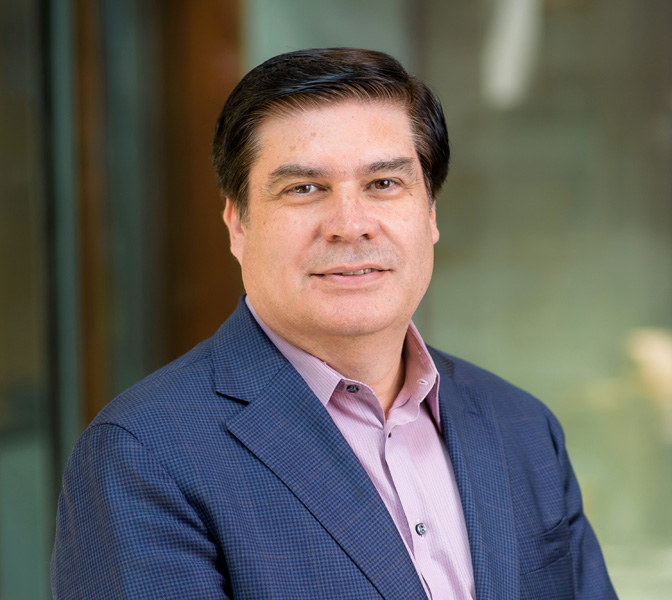
Caglar Oskay is the Cornelius Vanderbilt Professor of Engineering and Chair of the Department of Civil and Environmental Engineering at Vanderbilt University. He is also a Professor of Mechanical Engineering. His research focuses on multiscale computational modeling of material and structural systems under extreme conditions, with expertise in composite materials, failure mechanisms, and computational mechanics. Dr. Oskay earned his Ph.D. in Civil Engineering from Rensselaer Polytechnic Institute (2003) and has held academic roles there before joining Vanderbilt in 2006. He was honored as an ASME Fellow in 2017 and as a Chancellor Faculty Fellow in 2016. Key research areas include multiscale failure modeling, life prediction of heterogeneous materials, and computational methods for composites and multiphysics systems. His work integrates advanced simulation techniques with experimental validation, addressing challenges in infrastructure resilience, additive manufacturing defects, and quantum computing applications in engineering. Education: Ph.D., Civil Engineering, Rensselaer Polytechnic Institute (2003) M.S., Civil Engineering, Rensselaer Polytechnic Institute M.S., Applied Mathematics, Rensselaer Polytechnic Institute B.S., Civil Engineering, Middle East Technical University Recent research highlights include stochastic modeling of geotechnical infrastructure failures, quantum-enhanced finite element methods, and predictive analytics for additive manufacturing defects. He leads interdisciplinary efforts on backward erosion piping in flood protection systems and has secured grants for multiscale modeling of titanium alloys and composites. Awards: ASME Fellow (2017) Chancellor Faculty Fellow (2016) Advising and grants: Dr. Oskay’s grants include NSF-funded studies on backward erosion piping and quantum computing applications. His research group collaborates with industry partners on materials for aerospace and energy sectors, emphasizing computational tools for failure prediction and material design. His work bridges computational mechanics with practical engineering challenges, advancing methods for infrastructure resilience, advanced materials, and sustainable design through multiscale modeling innovations.
Anirban Mondal is an Associate Professor and Director of Graduate Studies at Case Western Reserve University's Department of Mathematics, Applied Mathematics and Statistics, specializing in Bayesian Inference, Markov Chain Monte Carlo Methods, and Uncertainty Quantification. Holding a Ph.D. in Statistics from Texas A&M University, his research spans spatial statistics, inverse problems, and data mining applications across biomedical, materials science, and public health domains. Education: Ph.D. in Statistics, Texas A&M University His recent publications (2022-2024) demonstrate interdisciplinary applications including heart disease prediction via optimized machine learning, additive manufacturing defect analysis, and pandemic transmission modeling. While primarily focused on Bayesian frameworks and computational statistics, his work extends to geomechanics, remote sensing, and environmental risk assessment. Current research explores advanced sampling algorithms, functional data emulation, and multiscale hierarchical modeling for complex systems. Key trends include uncertainty quantification in machine learning systems (2024), Bayesian calibration methods (2023), and pandemic modeling (2022). His work balances methodological innovation with real-world applications in medical diagnostics, materials science, and climate science. Contact: anirban.mondal@case.edu
Brandon Karchewski is an Associate Head (Undergraduate) and Teaching Professor in the Department of Earth, Energy and Environment at the University of Calgary. He earned his PhD in Civil Engineering from McMaster University and teaches courses including Engineering Geology, Computational Methods, and Natural Disasters. His research program focuses on: Computational methods in geophysics and geomechanics Geoscience education innovation Climate change impacts on frozen soils Inverse modeling applications Karchewski has pioneered virtual field experiences and developed open-source tools for modeling climate impacts on permafrost. His educational research examines metaphor use in geoscience communication and field pedagogy. Recent computational work includes Python-based permafrost modeling and stochastic inversion methods for biogeochemical transport. He leads the geophysics field school program emphasizing team-based learning. Award recognition includes: Geoscience Teaching Award (2019) Best Poster Award for teaching innovation research (2018) Team Teaching Excellence award (2016) Multiple teaching assistant awards
Professor Massimiliano Gubinelli is the Wallis Professor of Mathematics at the University of Oxford and a Professorial Fellow at St. Anne's College. He leads the Stochastic Analysis Group within the Mathematical Institute, where his research focuses on stochastic analysis, constructive quantum field theory, and the intersection of probability theory with partial differential equations (PDEs) and renormalization group methods. His work spans statistical mechanics of multiscale systems, analysis of PDEs with random terms, homogenisation theory, mathematical quantum mechanics, path-integral formalisms, and non-commutative probability/geometry. He has pioneered paracontrolled distribution techniques to study singular stochastic PDEs and explored rough paths in ramification and transport equations. Recent publications highlight advancements in the sine-Gordon model via stochastic quantization, nonlinear PDEs with modulated dispersion, and ρ-irregularity in stochastic systems. His research bridges stochastic analysis, quantum field theory, and PDEs, emphasizing pathwise behavior and renormalization. Scientific Awards Junior member of the Institut Universitaire de France (2013–2018) Invited session speaker at the 2018 International Congress of Mathematicians (ICM) in Rio He contributes to scientific software development as a lead developer of TeXmacs , an open-source platform for technical documents, and teaches courses such as C8.1 Stochastic Differential Equations (MT22). No formal student advisement or grant details are provided.
Michal Pavelka is an Associate Professor at the Division of Mathematical Modeling, Mathematical Institute, Faculty of Mathematics and Physics, Charles University, Prague, Czech Republic. His career spans roles from Postdoc (part time) at the Institute of Chemical Technology to positions at École Polytechnique de Montréal and New Technologies Research Centre. He earned his Ph.D. in 2015 and M.Sc. in 2012 at Charles University under František Maršík. Michal Pavelka's research integrates Non-equilibrium Thermodynamics , Geometric Mechanics , and Machine Learning . His work bridges advanced mathematical frameworks like GENERIC and Extended Irreversible Thermodynamics with practical applications in electrochemical systems (fuel cells, batteries) and quantum fluids . Notably, he has contributed to Smoothed Particle Hydrodynamics and Hamiltonian mechanics in complex systems. His recent publications focus on Multiscale Thermodynamics , Superfluid Modeling , and Machine Learning in Physics . Scientific awards include the Best paper award, Entropy (2021) and Czech Grant Agency President's award (2020). He has secured significant grants, including a €363k Czech Grant Agency award (2023–2025) for geometric multiscale thermodynamics of complex fluids. Scientific Awards: Best paper award, Entropy (2021) Czech Grant Agency President's award (2020) High quality monographs of Charles University competition (1st-3rd place, 2020) Current Projects: He leads research on geometric multiscale thermodynamics and co-supervises projects on zinc-air batteries and solid oxide fuel cells. His lab develops the SmoothedParticles.jl Julia package for fluid dynamics simulations.
Sonia Fliss is a Full Professor at ENSTA Paris , affiliated with the Department of Applied Mathematics and the POEMS laboratory (UMR CNRS-INRIA-ENSTA) . She teaches applied mathematics courses on partial differential equations (PDEs) , finite element methods , and periodic homogenization to undergraduate and graduate students. Doctor in Applied Mathematics (2009) Authorized to supervise research (2019) Research Interests : Sonia Fliss specializes in the modeling and numerical analysis of wave propagation in periodic, quasi-periodic, and random media . Her work includes transparent boundary conditions , guided waves , and asymptotic methods for acoustic, electromagnetic, and elastic wave phenomena . Recent Publications highlight her contributions to the Half-Space Matching Method , edge states in honeycomb structures , and scattering problems in unbounded domains . Her numerical techniques address multi-scale waveguides and time-harmonic propagation . Laboratory : As a member of the POEMS team, she collaborates on interdisciplinary projects involving mathematical analysis , computational physics , and engineering applications in domains like defence, energy, and transport .
Marco A.R. Ferreira is an Associate Professor in the Department of Statistics at Virginia Polytechnic Institute and State University (Virginia Tech), affiliated with the College of Science. He holds a Ph.D. in Statistics from Duke University (2002), with a dissertation on Bayesian multi-scale modeling under M. West. He also earned an M.Sc. (1994) and B.Sc. (1993) in Statistics from the Federal University of Rio de Janeiro. Research Interests: Ferreira specializes in Bayesian statistics, multi-scale modeling, spatial-temporal models, computational methods (e.g., MCMC), and applications in environmental science, genomics, and epidemiology. His work emphasizes hierarchical models, inverse problems, and high-dimensional data analysis. Publications Trends: His research spans advanced statistical methodologies for environmental monitoring, civil unrest modeling, and genomic data analysis. Key themes include Bayesian hierarchical models, spatiotemporal fusion, and computational algorithms for optimal experimental design. Awards & Honors: OBAYES Poster Prize (2009) CNPq Fellowship (2003–2006) WNAR/COBAL 2 Award (2005) Springer Poster Prize (2003) Finalist, Savage Award (2003) Best Contributed Paper (JSM 2000) Professional Activities: He serves as an Associate Editor for Bayesian Analysis and is a member of the American Statistical Association and the International Society for Bayesian Analysis.
Christian Kühn is a Professor of Multiscale and Stochastic Dynamics at the Technical University of Munich (TUM), affiliated with the TUM School of Computation, Information and Technology. He has been an External Faculty member at the Complexity Science Hub Vienna since 2017, reflecting his interdisciplinary engagement in complex systems research. His academic background includes a BSc in Mathematics from Jacobs University Bremen (2005), an M.A.St. from the University of Cambridge (2006), and a PhD in Applied Mathematics from Cornell University (2010). He held postdoctoral positions at the Max Planck Institute for the Physics of Complex Systems in Dresden and the Vienna University of Technology, where he also served as an APART-Fellow and Leibniz Fellow. Christian Kühn's research lies at the intersection of differential equations, dynamical systems, and mathematical modeling. He focuses on multiscale problems, the impact of noise and uncertainty in deterministic and stochastic systems, and adaptive networks. Central phenomena of interest include bifurcations, pattern formation, and scaling laws. His work bridges theoretical developments with applications in epidemiology, neuroscience, and complex network dynamics. His recent publications (2021–2024) reflect a strong trend in analyzing nonlinear and stochastic dynamics on networks, with applications ranging from epidemic modeling to synchronization and critical transitions. Key themes include explosive phenomena, adaptive network behavior, moment closure methods, and non-Markovian systems, demonstrating a consistent focus on foundational aspects of dynamical systems with practical relevance. Notable scientific awards include: Richard-von-Mises Prize, GAMM (2017) Lichtenberg Professorship, VolkswagenStiftung (2016) Best Paper Award, TU Vienna (2014) Leibniz Fellow, Oberwolfach (2013) APART-Fellow, Austrian Academy of Sciences (2012) While specific details about advised students are not provided, his role as a full professor and active researcher suggests involvement in mentoring graduate students and postdoctoral researchers. His work has been supported by prestigious grants such as the Lichtenberg Professorship. He leads research in multiscale and stochastic dynamics, contributing to both theoretical advances and interdisciplinary applications. Kühn is part of vibrant research environments at TUM and the Complexity Science Hub Vienna, collaborating with leading scientists in network science, applied mathematics, and complex systems. His work continues to advance the understanding of critical transitions and nonlinear behavior in high-dimensional and stochastic systems.
Horacio Dante Espinosa is the James N. and Nancy J. Farley Professor in Manufacturing and Entrepreneurship at Northwestern University's McCormick School of Engineering, holding the rank of Professor in Mechanical Engineering. He also directs the Theoretical and Applied Mechanics Program and the Micro and Nano Mechanics Lab. His research spans bioinspired materials, single-cell analysis, and multiscale experimentation, with a focus on nanoelectronics and energy harvesting. Espinosa earned his Ph.D. in Applied Mechanics from Brown University and has held academic roles at Purdue University and Harvard University. He leads interdisciplinary teams exploring metamaterials, cell engineering, and advanced fabrication techniques. His honors include the Prager Medal (2019) and multiple fellowships. Espinosa's lab combines experimental and computational methods, with capabilities in nanomechanical testing and biological assay development. Education: Ph.D. in Applied Mechanics (Brown University, 1992), M.Sc. in Structural Engineering (Polytechnic of Milan, 1987), Civil Engineering (Northeastern National University, Argentina, 1981) Key Roles: Director of iCET (2015–2018), Faculty Director of NUFAB (2013–2015), Visiting Professorships at Stanford and Harvard Labs: Micro and Nano Mechanics Lab focuses on biomaterials, metamaterials, and single-cell manipulation with advanced microscopy and electroporation systems Grants/Awards: NSF-CAREER Award, ONR Young Investigator Award, and leadership roles in professional societies His research bridges mechanics, materials science, and biology, with applications in healthcare technologies and advanced materials. Current projects include phononic crystal studies, Kirigami engineering, and high-throughput electroporation platforms for cell analysis.
Andrea Barth is a W3-Professor of Computational Methods for Uncertainty Quantification at the University of Stuttgart, leading the Research Group for Computational Methods for Uncertainty Quantification within the Excellence Cluster for Simulation Technology. She holds a Ph.D. from the University of Oslo (2009) and has held positions at ETH Zürich and the University of Stuttgart. Her work focuses on stochastic partial differential equations, numerical methods for uncertainty quantification, and applications in engineering and natural sciences. Education: Ph.D. in Mathematics, University of Oslo (2006–2009) Lecturer/Postdoc at ETH Zürich (2010–2013) Junior Professor at University of Stuttgart (2013–2017) Research Interests: Stochastic PDEs, uncertainty quantification, Monte Carlo methods, Bayesian inverse problems, and numerical analysis of random fields. Her work bridges stochastic analysis and numerical simulations, addressing challenges in modeling and simulating complex systems with uncertainties. Grants & Funding: Principal Investigator in projects like 'Data-Integrated Simulation Science' (ExC 2075) and 'Quantitative Methods for Visual Computing' (SFB/TRR 161). Her research also explores applications in porous media, carbon dioxide storage, and optical flow analysis. Supervision: Advised PhD students including Oliver König, Fabio Musco, and Robin Merkle. Current students focus on topics like deep learning for stochastic PDEs and continuous level Monte Carlo methods.
Lars BEEX is a Senior Research Scientist at the University of Luxembourg's Faculty of Science, Technology and Medicine, Department of Engineering. He holds the right to supervise PhD students and has directed five to completion. His research focuses on computational mechanics of solids, including Bayesian inference, multiscale methods, and quasicontinuum approaches, with applications to materials like textiles, foams, and medical devices. His academic journey includes a PhD from Eindhoven University of Technology (2008-2012), supervised by Marc Geers and Ron Peerlings, as well as MSc and BSc degrees from the same institution. **Research Interests:** - Computational mechanics of solids - Bayesian inference and uncertainty quantification - Multiscale modeling (quasicontinuum method) - Mechanical modeling of fibrous and discrete materials - Phase-field damage models - Contact mechanics and elastoplasticity **Awards:** - Biezeno Solid Mechanics Award 2013 (Best PhD thesis in solid mechanics, Netherlands) - Cum laude distinction for both MSc and BSc degrees **Industrial Collaborations:** - SISTO Armaturen - IEE - Kiswire International **Teaching:** - Numerical methods for continuous optimization - Courses for Computer Science, Mathematical Modelling, and Engineering students **Lab/Affiliations:** - Legato Team (part of the University of Luxembourg's engineering research cluster)
Wouter M. Koolen-Wijkstra is a Professor of Mathematical Machine Learning at the University of Twente (Statistics group) and a Scientific Staff Member at Centrum Wiskunde & Informatica (CWI), Amsterdam, in the Machine Learning department. His research bridges theoretical machine learning, game theory, and statistics, with active projects on multi-armed bandits, online learning, and safe inference methodologies. He co-leads INRIA-CWI associate teams (6PAC and 4TUNE) and is an ELLIS Scholar. His work emphasizes provable guarantees in learning algorithms, including: Regret minimization under risk-averse scenarios Multi-scale adaptation in online decision-making Game-theoretic equilibria computation Anytime-valid statistical inference via e-processes Recent publications demonstrate a focus on robust learning frameworks , particularly in bandit problems, hypothesis testing, and Nash equilibrium characterization, often leveraging information-theoretic and optimization principles. Awards include: Veni Grant (2015) for 'Learning at the Intrinsic Task Pace' QUT Vice-Chancellor's Fellowship (2013) for multitask learning Rubicon Grant (2010) for game-theoretic online learning ELLIS Scholar recognition He teaches graduate courses on Machine Learning Theory and Graphical Models at CWI. Current grants include collaborations with INRIA (4TUNE and 6PAC teams) and industry partnerships (e.g., PPS Booking.COM).