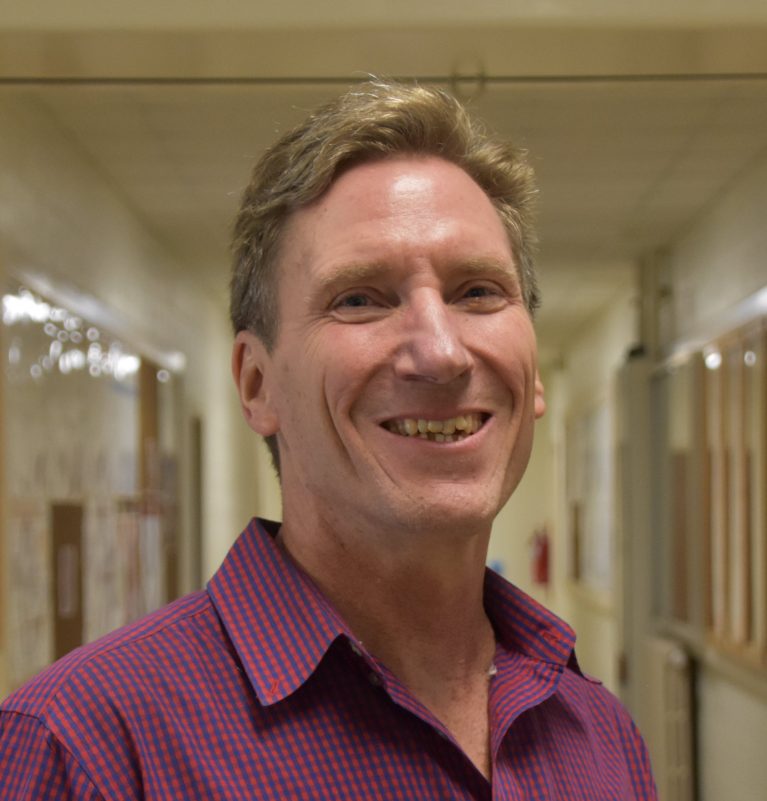
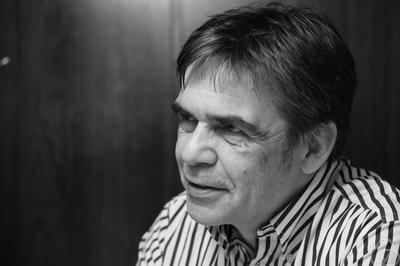
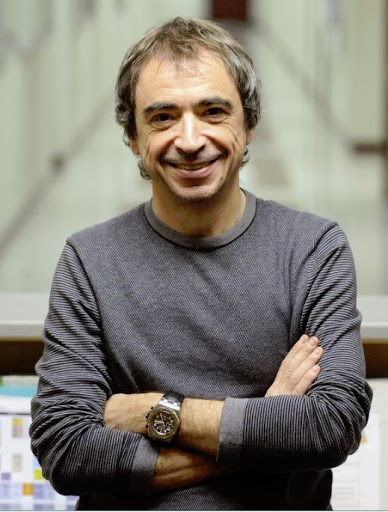
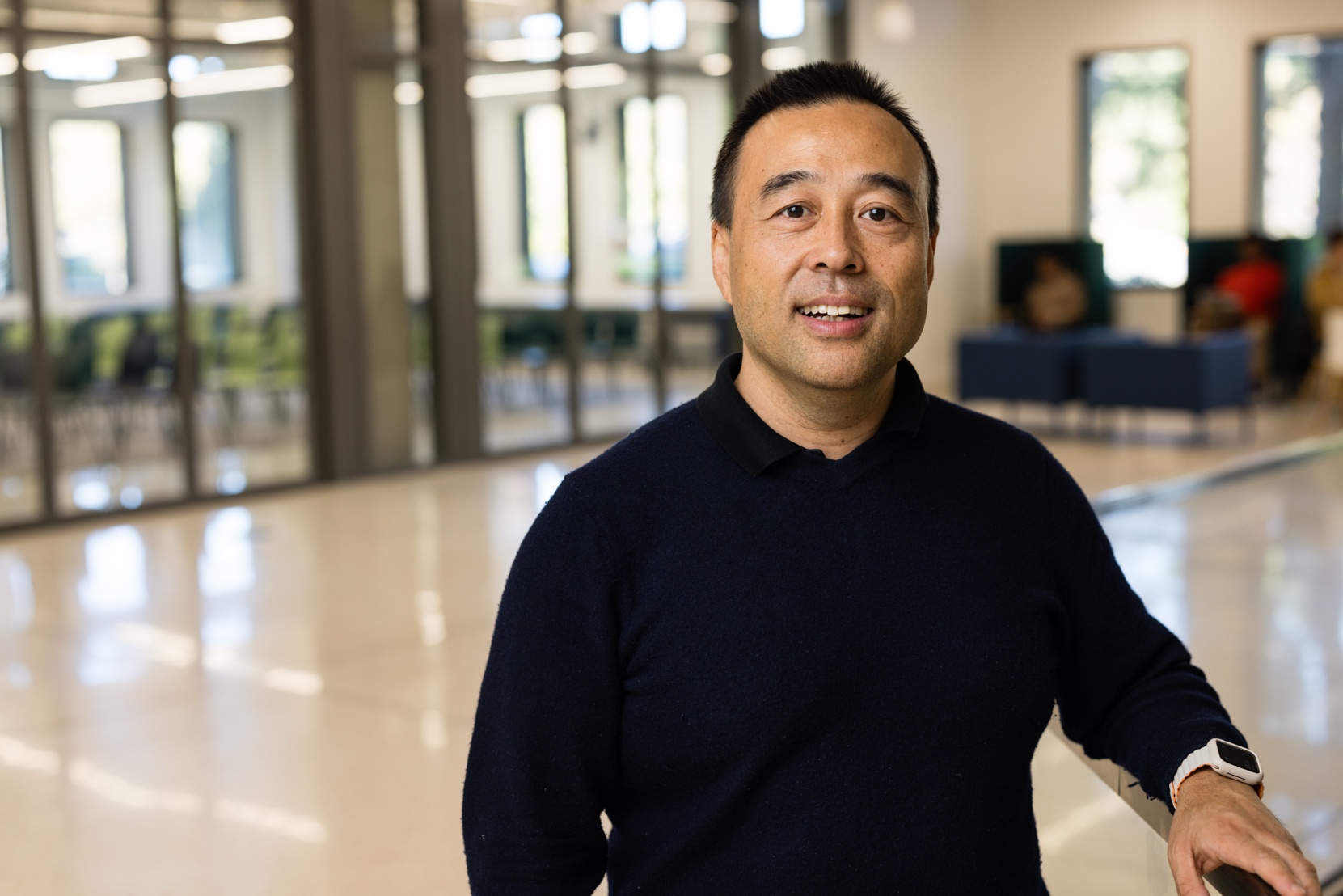
Stefan Vandewalle is a full professor at the Department of Computer Science, Faculty of Engineering Sciences, KU Leuven. His research focuses on numerical analysis, applied mathematics, and computational methods for stochastic differential equations, wind energy modeling, and uncertainty quantification. Department Chair, KU Leuven Member, Subdivision Numerical Analysis and Applied Mathematics Member, iSi Health Institute Observer, Faculty Council of Sciences Chair, Department Council for Computer Science His recent work explores multiscale modeling, Monte Carlo methods, and data assimilation techniques. Projects include micro-macro Parareal algorithms, wind turbine aeroelasticity, and turbulent flow reconstruction for wind farms. He supervises PhD candidates and collaborates on interdisciplinary studies involving structural mechanics and renewable energy systems. Publications highlight advancements in parallel-in-time methods, stochastic optimization for tokamak reactors, and DNS-based control of turbulent flows. Key keywords: Multiscale numerical methods Uncertainty quantification Wind energy simulation Monte Carlo algorithms PDE-constrained optimization Stochastic differential equations He contributes to academic governance as a member of extended faculty boards and evaluation committees.
David M. Higdon is a Professor and Department Head of the Department of Statistics at Virginia Tech within the College of Science. He specializes in Bayesian statistical modeling of environmental and physical systems, focusing on integrating physical observations with computer simulations for prediction and inference. Previously, he spent 14 years at Los Alamos National Laboratory as a scientist and group leader in the Statistical Sciences Group. Education: Ph.D. in Statistics, University of Washington, 1994 M.A. in Mathematics, University of California San Diego, 1989 B.A. in Mathematics, University of California San Diego, 1987 Research Interests: Higdon’s work spans space-time modeling , inverse problems in hydrology and imaging , statistical modeling in ecology and environmental science , and multiscale models . He develops methods for parallel processing in posterior exploration , statistical computing , and Monte Carlo simulations . His research addresses critical challenges in uncertainty quantification (UQ), including climate modeling, nuclear density functional theory, and geophysical imaging. Publications Trends: His recent articles emphasize Bayesian methodologies applied to complex systems, such as climate forecasting, materials science, and cosmology. A recurring theme is the development of emulators and surrogate models to handle computationally intensive simulations. Awards: Fellow of the American Statistical Association Advising & Grants: While no specific advisees are listed, Higdon has contributed to interdisciplinary collaborations in UQ and statistical modeling. His work has been supported by grants from agencies such as the National Science Foundation and Department of Energy. Labs/Teams: He leads the Statistics Department’s efforts in UQ and computational statistics, fostering collaborations across engineering, environmental science, and physics.
Endre Süli is a Professor of Numerical Analysis at the University of Oxford, affiliated with Worcester College and Linacre College. He has held various academic roles since 1985, including Fellowships and Tutorships in Mathematics. University Education: B.Sc. in Mathematics, University of Belgrade (1974-1978) M.Sc. in Mathematics, University of Belgrade (1978-1980) Ph.D. in Mathematics, University of Belgrade (1985) M.A., University of Oxford (1985) British Council Visiting Student, Reading University and University of Oxford (1983/84) Süli's research focuses on numerical methods for partial differential equations (PDEs), with expertise in finite element methods, adaptive algorithms, error control, and computational modeling of fractures and non-Newtonian fluids. His work bridges mathematical theory and practical applications in fluid dynamics and material science. His recent publications emphasize finite element approximations, nonlinear PDEs, and stochastic models for polymer dynamics. Themes include multiscale methods, tensor-sparsity for high-dimensional problems, and compressible flow simulations. Scientific Awards: Fellow of the Royal Society (2021) London Mathematical Society Naylor Prize and Lectureship (2021) Pro Urbe Prize, City of Subotica (2021) SIAM Fellow (2016) Member, Academia Europaea (2020) Foreign Member, Serbian National Academy of Sciences and Arts (2009) IMA Service Award (2011) Fellow, European Academy of Sciences (EurASc) (2010) Fellow, Institute of Mathematics and its Applications (2007) London Mathematical Society/New Zealand Mathematical Society Forder Lecturer (2015) Professor Hospitus, Charles University, Prague (2012) Distinguished Visiting Chair Professor, Shanghai Jiao Tong University (2013) Invited Speaker, International Congress of Mathematicians, Madrid (2006) Süli has supervised numerous research projects and held visiting appointments globally. His contributions to numerical analysis span foundational work on error estimation, nonlinear stability, and advanced computational frameworks for complex physical systems.
Eitan Tadmor is a Distinguished University Professor at the Department of Mathematics and Institute for Physical Science & Technology at the University of Maryland. He holds the 2024 Chaire d'excellence at Sorbonne University's Fondation Sciences Mathématiques de Paris, and has served as Director of multiple research centers including the Center for Scientific Computation and Mathematical Modeling (2002-2016) and The Sackler Institute of Scientific Computation (1993-1996). Current: University of Maryland (2005-present) Previous: UCLA (1995-2002), Tel-Aviv University (1989-1995), CalTech (1980-1982) His research spans nonlinear conservation laws , entropy-stable schemes , collective dynamics , spectral methods , and multiscale modeling . He pioneered the spectral viscosity method and developed stability criteria for numerical schemes. Recent publications focus on swarm-based optimization , Euler-Poisson equations , and hydrodynamic alignment with over 15000 citations. His work on kinetic formulations and regularizing effects in PDEs has become foundational in computational mathematics. 2022 Norbert Wiener Prize (AMS-SIAM) 2022 Gibbs Lecturer (AMS) 2015 Peter Henrici Prize (SIAM-ETH) 2013-2021 Fellow of AMS/SIAM NSF grants (1999, 2008-2012, 2012-2020) He developed CentPack software for hyperbolic conservation laws and co-authored influential review papers on numerical methods and mathematical modeling. His collaborative work with institutions like IPAM, KI-Net, and ETH-ITS demonstrates international scientific leadership.
Federico Toschi is a Full Professor at Eindhoven University of Technology (TU/e), holding joint appointments in Applied Physics and Mathematics and Computer Science departments. His research focuses on multi-scale transport phenomena, combining statistical physics, fluid dynamics, and computational methods. He leads projects in the 4TU Centre for Multiscale Phenomena and EAISI. Education: PhD in Physics (University of Pisa, 1998) and academic background at Scuola Normale Superiore di Pisa. Interdisciplinary expertise in fluid dynamics turbulence, Lagrangian turbulence, crowd dynamics, and Lattice Boltzmann methods. Recipient of APS Fellow (2015), Euromech Fluid Mechanics Fellow (2012), and Ig Nobel Prize for Physics (2021). Research emphasizes turbulence modeling, pedestrian dynamics, and active matter, with applications in environmental flows and crowd management. His work bridges computational innovations with experimental validations. Recent articles explore kinetic data-driven turbulence modeling, pedestrian flow optimization, and turbulence effects in biological systems. Projects include digital twins for seismicity modeling and rarefied gas dynamics. Teaches fluid mechanics, computational physics, and chaos theory courses. Founded Flow Matters Holding BV, applying research to practical solutions.
Dr. Xuzhen He is a Senior Lecturer at the School of Civil and Environmental Engineering, University of Technology Sydney (UTS). He holds a BSc from Tsinghua University and a PhD from the University of Cambridge, where he received the John Winbolt Prize (2015). His research focuses on geotechnics, geomechanics, and numerical methods, with an emphasis on AI integration. Notable contributions include studies on soil erosion, particle segregation, and tunnel engineering. He leads projects funded by ARC, including DECRA (2021) and a Discovery grant (2023). His work bridges experimental and computational approaches, addressing challenges in geotechnical infrastructure and environmental stability. Education: Bachelor of Science, Tsinghua University, China PhD in Civil Engineering, University of Cambridge, UK Research Interests: AI-driven geotechnical analysis (slope stability, tunnelling) Multiscale geomechanical modelling (hypoplasticity, multiphase systems) Numerical methods (DEM, SPH, material point method) Awards: ARC DECRA (2021) John Winbolt Prize (2015) Grants: "Modernise geotechnical investigation and analysis with machine learning" (ARC DP230100678) "Multiscale modelling of fluid–particle transport in porous media" (ARC DE220100763) Labs/Teams: Member of UTS Transport Research Centre (TRC) Associate member of Centre for Advanced Modelling and Geospatial lnformation Systems (CAMGIS)
Dr. Debraj Roy is a Visiting Professor at the University of Amsterdam (UvA), affiliated with the Faculty of Science, Mathematics and Computer Science and the Informatics Institute. His research focuses on agent-based modeling, socio-economic dynamics, environmental resilience, and blockchain technology. He investigates complex systems such as urban slums, disaster recovery, and climate adaptation using computational methods like remote sensing and machine learning. His work bridges theory and practice, offering insights into policy design for sustainable development and social equity. Key research interests include slum dynamics, poverty traps, and the application of blockchain oracles for decentralized systems. He employs advanced techniques such as global sensitivity analysis and manifold learning to explore multi-scale socio-environmental challenges. His recent articles highlight trends in carbon pricing, flood risk valuation, and multi-agent systems. Earlier work concentrated on urban inequality in cities like Bangalore and Mexico City, leveraging geospatial and statistical tools. No scientific awards or grants are explicitly listed. His advising and team collaborations are unspecified in the provided text.
Prof. Radek Erban is a Professor of Applied Mathematics at the Mathematical Institute , University of Oxford. He is affiliated with the Oxford Centre for Industrial and Applied Mathematics and works across interdisciplinary fields including Mathematical Biology, Stochastic Processes, and Reaction-Diffusion Systems. His research focuses on: Multiscale modeling of biological and chemical processes Stochastic simulation algorithms for reaction-diffusion systems Mathematical analysis of collective behavior in biological systems Computational methods for chemotaxis and gene regulatory networks Partial differential equation models for biological phenomena Recent work explores multi-resolution simulations of ions, morphogen gradient modeling, and hybrid numerical methods for stochastic processes. His publications span journals in applied mathematics, computational biology, and physical sciences. Current projects involve bridging atomistic and continuum models for chemical systems.
Qin Li is an Associate Professor in the Mathematics Department at the University of Wisconsin-Madison. She holds affiliations with the Wisconsin Institutes for Discovery and serves as a senior PI at the Institute for Foundations of Data Science. Her research focuses on numerical analysis, scientific computing, and inverse problems, with a strong emphasis on kinetic theory and multiscale PDEs. Her work spans computational methods for inverse transport and radiative transfer equations, Bayesian approaches in optical tomography, and optimization techniques for solving stochastic and deterministic PDEs. Recent publications highlight applications of diffusion models, Wasserstein gradient flow, and random sampling in inverse problems, as well as control theory for Vlasov-Poisson systems and reconstruction of chemotaxis kernels. She leads a research group within the Mathematics Department and has received funding from the National Science Foundation (NSF), the Office of Naval Research (ONR), and the Wisconsin Alumni Research Foundation (WARF). Her lab, Kinetic At Madison, explores nonlinear hyperbolic PDEs and their applications. She also contributes to teaching as a TA Supervisor.
Ankush Agarwal is an Associate Professor in the Department of Statistical and Actuarial Sciences at the University of Western Ontario. His research focuses on mathematical finance, financial statistics, and Monte Carlo methods, with applications to risk management and derivatives pricing. He supervises PhD students in quantitative finance and has taught courses on Monte Carlo methods and advanced financial modeling at Western University. Education: PhD in Mathematics from Tata Institute of Fundamental Research (2015) Research interests span regime-switching models, longevity risk hedging, stochastic differential equations, and rare event simulation. His work combines theoretical probability with computational techniques for financial applications. Recent publications include studies on McKean-Vlasov SDEs, implied Sharpe ratio estimation, and optimal portfolio strategies under stochastic volatility. These works demonstrate his expertise in stochastic processes and financial engineering. Supervision: Current PhD advisees include Ying Liao, Buchun Wang, and Shuya Zhang at the University of Glasgow. Former advisees include Yongjie Wang and Yihan Zou.
Francesco Caravenna is a Full Professor at the Department of Mathematics and Applications of the University of Milan-Bicocca. His research focuses on Probability Theory and Mathematical Statistics, particularly in stochastic processes, disordered systems, and scaling limits. Editorial Roles: Associate Editor for The Annals of Applied Probability (2019) and Annales de l'Institut Henri Poincaré-Probabilités et Statistiques (2018). His recent work includes studies on the critical 2D stochastic heat flow, directed polymers, and the interplay between disorder and criticality. Publications emphasize rigorous mathematical analysis of stochastic partial differential equations, Gaussian multiplicative chaos, and universal scaling properties. He has received grants from MIUR and the Italian-French University (UniTO) for projects like Random Walks and Polymers (2019) and Large Scale Random Structures (2016). Scientific Awards: Fubini Award (2011), Mario Boella High School, with the Polymath Project and Subalpine Mathesis Association. His contributions span stochastic analysis, disordered systems, and interdisciplinary applications in statistical mechanics and financial modeling. Key themes include pathwise analysis, multiscale behavior, and critical phenomena in random systems.
Mauro Maggioni is a Professor in the Departments of Mathematics and Applied Mathematics and Statistics at Johns Hopkins University. His research focuses on the mathematical foundations of Data Science, with applications in molecular dynamics, hyperspectral imaging, and reinforcement learning. He employs techniques from Harmonic Analysis, Approximation Theory, and Probability to develop scalable algorithms, particularly multiscale methods for analyzing high-dimensional data. Maggioni’s work bridges theoretical mathematics and practical applications, including cardiac electrophysiology modeling, unsupervised segmentation of hyperspectral images, and reduced-order modeling of complex systems. Education: B.S. in Mathematics from Università degli Studi in Milan, Italy; Ph.D. in Mathematics from Washington University in St. Louis. He held a Gibbs Assistant Professorship at Yale before moving to Duke University and later becoming a Bloomberg Distinguished Professor at JHU. Research Interests: Mathematical foundations of Data Science, Machine Learning, Partial Differential Equations, and their applications in physical and biological systems. Notable contributions include diffusion wavelets, interaction kernel learning, and multiscale geometric analysis of molecular dynamics data. Scientific Awards: Popov Prize in Approximation Theory (2007), NSF CAREER Award and Sloan Fellowship (2008), Fellow of the American Mathematical Society (2013), Simons Fellowship (2020). Advising & Grants: Maggioni mentors postdocs and students in areas like stochastic systems and signal processing. His group’s work is supported by Simons Foundation grants, NSF funding, and collaborations with institutions like MINDS and CIS at JHU. Labs/Teams: Leads a research group focused on data-driven discovery in mathematics and applied sciences, emphasizing interdisciplinary collaboration across computational methods, statistics, and domain-specific applications.
Jacob Fish is the Robert A.W. and Christine S. Carleton Professor and Chair of the Department of Civil Engineering and Engineering Mechanics at Columbia University. He directs the Multiscale Science and Engineering Center and leads Columbia's Computational Science and Engineering initiative (iCSE), coordinating 65+ faculty. With 35 years of pioneering research, he specializes in multiscale computational methods bridging aerospace, automotive, and healthcare industries. His research integrates multiscale computational science with applications in: Homogenization and reduced-order methods for complex materials Stochastic modeling of heterogeneous systems Coupled thermo-chemo-electro-mechanical processes Data-physics driven frameworks for industrial processes Recent work emphasizes AI-enhanced modeling for composites, porous media, and environmental systems. His 15 most recent publications (2023-2025) demonstrate strong trends toward: Data-physics integration in manufacturing (e.g., resin transfer molding) Multiscale environmental applications (canopy flows, CO2 mineralization) Advanced numerical methods (discontinuous Galerkin, solver-free homogenization) Digital twin development for composite lifecycle management Scientific Awards & Honors: 2018 JSCES Grand Prize 2010 IACM Computational Mechanics Award 2005 USACM Computational Structural Mechanics Award 2003 Rensselaer Research Award Fellowships: AAM, USACM, IACM Two Best Paper awards He founded the commercial Multiscale Designer software suite (250+ global clients) and secured major grants including an NSF-DFG collaboration on thermoplastic interfaces. His textbooks are used in 200+ universities worldwide. Leads the Multiscale Science and Engineering Center focusing on industrial-scale computational challenges and mentors researchers through Columbia's iCSE initiative. Former President of USACM and current IACM Vice-President for the Americas.
Guang Lin is the Associate Dean for Research and Innovation in the College of Science and a Full Professor in the School of Mechanical Engineering and Department of Mathematics at Purdue University. He leads the Data Science Consulting Services and has dual appointments in Statistics and Earth, Atmospheric, and Planetary Sciences. His research focuses on AI, machine learning, uncertainty quantification, and computational science, with applications in fluid mechanics, materials science, and healthcare. Lin holds a Ph.D. from Brown University (2007) and has received numerous awards, including the NSF CAREER Award and Purdue’s University Faculty Scholar distinction. He has authored over 250 publications and secured grants totaling millions, including DOE and NIH funding. His interdisciplinary work bridges academia and industry, emphasizing AI-driven solutions for complex systems. Education: Ph.D. Applied Mathematics (Brown, 2007), M.S. Applied Mathematics (Brown, 2004), M.S. Mechanics (Peking University, 2000), B.S. Mechanics (Zhejiang University, 1997). Research Grants: Includes DOE-funded projects on machine learning for plasma-wall interactions and NSF grants for multiscale modeling. Service: Editorships in SIAM MMS, ASME Journal, and leadership in Purdue’s AI initiatives. Teaching: Courses on Uncertainty Quantification, Fluid Mechanics, and Data Science.
Cynthia D. Rudin is the Gilbert, Louis, and Edward Lehrman Distinguished Professor of Computer Science at Duke University, with joint appointments in the Departments of Electrical and Computer Engineering, Statistical Science, Mathematics, and Biostatistics & Bioinformatics. She directs the Interpretable Machine Learning Lab and has held previous positions at MIT, Columbia, and NYU. Her educational background includes: Undergraduate degree from the University at Buffalo PhD from Princeton University (2004) Research Interests: Dr. Rudin's research focuses on interpretable machine learning and its applications across multiple domains. Her work emphasizes creating machine learning models whose reasoning processes people can understand, which includes algorithms for extremely sparse models, interpretable neural networks, interpretable matching methods for causal inference, and dimension reduction for data visualization. She applies these techniques to critical societal problems in healthcare, criminal justice, materials science, and other domains. Her lab has developed practical code for sparse models such as decision lists, decision trees, and additive models that provably optimize accuracy and sparsity. Dr. Rudin's recent publications (2024-2025) demonstrate a strong focus on interpretable AI applications across diverse fields including healthcare (mortality risk scores, breast cancer prediction), materials science (metamaterials design), and environmental justice (location-based health analysis). Her work consistently emphasizes practical implementations with real-world impact, particularly in high-stakes decision-making domains where model transparency is critical. Scientific Awards: Squirrel AI Award for Artificial Intelligence for the Benefit of Humanity (2022) - often described as the "Nobel Prize of AI" INFORMS Society on Data Mining Prize (2024) Guggenheim Fellowship (2022) Three-time winner of the INFORMS Innovative Applications in Analytics Award (2013, 2016, 2019) Winner of the 2023 John M. Chambers Statistical Software Award for PaCMAP Winner of the 2024 Award for Innovation in Statistical Programming and Analytics Dr. Rudin has advised numerous PhD students and postdocs who have co-authored significant publications with her. Her lab has received substantial funding for projects applying interpretable machine learning to healthcare (seizure prediction in ICU patients), criminal justice (crime series analysis), and energy infrastructure (underground electrical distribution networks). Her work on the Series Finder algorithm has been adapted by the NYPD and has been running live in NYC since 2016. She directs the Interpretable Machine Learning Lab at Duke, which includes the Almost-Matching-Exactly Lab focused on interpretable causal inference. Her team develops practical code implementations for all their research, emphasizing usability and real-world application in critical domains.