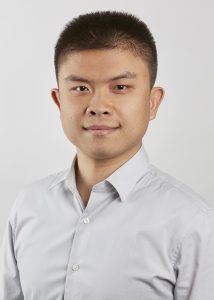
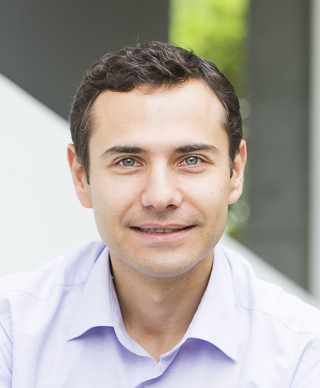
Zhe Liu is an Assistant Professor in the Analytics & Operations group at Imperial College Business School, where he also serves as PhD Director. He holds a PhD in Operations Management from Columbia Business School and a BS in Industrial Engineering from Tsinghua University. His research focuses on revenue management and supply chain optimization, with specialized interests in sharing economy platforms and multi-sourcing strategies. Liu's work examines operational challenges in modern business environments through mathematical modeling, including queueing systems, pricing optimization, and risk management in volatile supply chains. His publications demonstrate consistent themes in platform operations, stochastic optimization, and behavioral interactions within multi-agent systems. Recognized with numerous honors, Liu received the 1st Place Service Science Best Cluster Paper Award (2024), 2nd Place CSAMSE Best Paper Award (2024), and was a finalist in the George Nicholson Student Paper Competition. He actively mentors PhD students and serves as judge for international paper competitions and conference program committees.
Dr. Mike Tehranchi is a faculty member at the University of Cambridge, affiliated with the Statistical Laboratory within the Department of Pure Mathematics and Mathematical Statistics (DPMMS) . His research focuses on mathematical finance, stochastic processes, and probability theory. He holds a Lecturer position and is actively involved in academic research, with notable contributions to financial models, term structure analysis, and stochastic calculus. His work bridges theoretical probability and applied finance, addressing topics such as interest rate modeling, implied volatility, and optimal investment strategies. Tehranchi’s research often intersects with optimization, statistical methods, and interdisciplinary applications in astrophysics and fluid dynamics. He maintains an active publication record and contributes to the academic community through his role in the Statistical Laboratory. Key research trends in his articles include the analysis of financial derivatives, stochastic processes in market dynamics, and the application of advanced mathematical techniques to real-world financial problems. His work emphasizes rigorous theoretical foundations while addressing practical challenges in quantitative finance. Dr. Tehranchi has no listed students or academic awards in the provided texts. He can be reached via email and is based in Room D1.04 at the Statistical Laboratory.
Christoph Frei is a Professor and Chair of the Department of Mathematical and Statistical Sciences at the University of Alberta. He holds a PhD in mathematical finance from ETH Zurich and previously worked as a researcher at École Polytechnique in Paris. His research focuses on quantitative finance, risk management, and mathematical economics, with applications to algorithmic trading, credit risk, and digital currencies. Education: PhD in Mathematical Finance, ETH Zurich Postdoctoral Researcher, École Polytechnique (Paris) Bachelor/Master in Mathematics, ETH Zurich His work bridges academia and industry through collaborations with institutions like ATB Financial, Canadian Western Bank, and the Federal Reserve System. Key research interests include over-the-counter markets, financial regulation, and machine learning applications in risk prediction. Frei has received notable recognition, including the Best Paper in Asset Pricing Award (2019). Current industry partnerships include AI-driven customer risk prediction projects with ATB Financial and credit risk analysis with Canadian Western Bank. He actively contributes to professional organizations like PRMIA Edmonton and advises on financial technology innovation. Research grants come from NSERC, SSHRC, and Mitacs. His consulting roles have spanned risk modeling at UBS and Credit Suisse, emphasizing practical applications of theoretical frameworks.
Prof. Rama Cont is a Statutory Professor of Mathematics at the University of Oxford and a Professorial Fellow at St Hugh's College . He serves as Director of the Centre for Doctoral Training in Mathematics of Random Systems , Faculty Member of the Stochastic Analysis Group , and Senior Research Fellow at the Institute for New Economic Thinking . Additional roles include Director of the Oxford Martin Programme on Systemic Resilience , Principal Investigator at the Oxford Suzhou Centre for Advanced Research , and Editor-in-Chief of Mathematical Finance . His research interests span pathwise methods in stochastic analysis, rough analysis, functional Ito calculus, mathematical modeling in finance, systemic risk, and data-driven decision systems. Recent publications focus on causal transport, rough volatility, and deep residual networks, reflecting his interdisciplinary approach to mathematics and finance. Functional Ito calculus and pathwise integration Rough volatility and financial market dynamics Systemic risk in financial networks Deep learning applications to finance and stochastic processes He has received prestigious awards including the Louis Bachelier Prize , SIAM Fellowship, Royal Society APEX Award, and IMA Fellowship. His editorial roles and seminar leadership underscore his influence in mathematical finance and stochastic analysis.
Lars Augestad Lochstoer is a Professor of Finance at the UCLA Anderson School of Management, where he teaches Empirical Methods in Finance and Data Analytics and Machine Learning in the Master of Financial Engineering program. He previously held faculty positions at Columbia University and London Business School, and served on the Asset Allocation Advisory Committee for the Norwegian Sovereign Wealth Fund from 2016 to 2022. Dr. Lochstoer earned his Ph.D. in Finance from the University of California, Berkeley's Haas School of Business in 2005, following his Sivilingeniør Business Economics degree from the Norwegian University of Science and Technology in 1999. His research focuses on understanding the economic mechanisms that drive asset prices, including stock market return dynamics, cross-sectional stock returns, exchange rates, and commodity markets. He has made significant contributions to asset pricing literature, particularly in volatility expectations, risk-return tradeoffs, and currency risk. His publication record reveals a strong focus on behavioral aspects of asset pricing, with recurring themes of investor expectations, volatility dynamics, and market anomalies. His work often combines theoretical models with empirical evidence, frequently incorporating quantitative methods and data science approaches. Recent publications show increasing attention to currency risk and multi-horizon risk-return relationships, reflecting evolving market conditions and research interests. EFA Viz Risk Management Prize for best paper in Energy Markets, Securities and Prices (2009) Michigan Ross School of Business Mitsui Finance Symposium Best Discussant Award (2012) UCLA Anderson Excellence in Teaching Award (2017, 2020, 2021) RFS Distinguished Referee Award (2021) As an active member of the academic finance community, Lochstoer serves as an associate editor for the Review of Finance and the Critical Finance Review, having previously served in the same capacity for the Review of Financial Studies. His professional service includes committee roles in major finance associations and extensive reviewing for top finance and economics journals. He has also contributed to practical finance through his service on the Asset Allocation Advisory Committee for the Norwegian Sovereign Wealth Fund.
Professor Valentyn Panchenko is a leading academic in Economics at the UNSW Business School, specializing in advanced econometric methodologies and financial modeling. Holding a PhD from the University of Amsterdam and an MPhil from the Tinbergen Institute, his research bridges theoretical econometrics with real-world financial applications, emphasizing big data analysis, network structures, and dependence modeling in economic systems. His expertise spans financial econometrics, time series analysis, non-parametric statistics, and agent-based economic simulations. He focuses on Granger causality, model evaluation, structural economic modeling, and bounded rationality with heterogeneous agents. His work has secured significant grants including ARC Discovery Projects and DECRA fellowships, enabling cutting-edge research on market dynamics and economic interactions. Professor Panchenko's publications appear in top-tier journals like the Journal of Econometric Theory, AEJ: Micro, Journal of Economic Dynamics & Control, and Journal of Banking & Finance. His methodological contributions include novel approaches to copula-based forecasting, nonlinear causality testing, and evolutionary learning models in strategic economic environments. While specific student advising details aren't provided, his research leadership demonstrates sustained impact across econometric theory, financial markets, and experimental economics.
Assoc. Prof. Zehra Eksi-Altay holds a position at the Institute for Statistics and Mathematics at Vienna University of Economics and Business (WU). Her research focuses on financial mathematics, stochastic modeling, and partial information control problems in finance. She has expertise in credit risk modeling, derivatives pricing, and commodity markets. Eksi-Altay has a PhD in Financial Mathematics (2011) and completed her Habilitation in 2017. She has advised one doctoral thesis and has published extensively in top-tier journals like Quantitative Finance and Journal of Computational and Applied Mathematics . Her work bridges theoretical advancements with practical applications in areas such as regime-switching models, optimal portfolio strategies, and liquidity analysis. Education: BSc, MSc (2005), PhD (2011) Habilitation: 2017 Key Research Themes: Partial Information Models, Stochastic Control, Credit Risk, Algorithmic Trading Her recent work explores regime-switching affine term structures, optimal trading strategies under uncertainty, and dark pool liquidity analysis. Eksi-Altay has received one academic prize, though its specific name is not detailed in the provided text. Her contributions span both theoretical developments and applied finance, often collaborating with institutions like WU’s Institute for Statistics and Mathematics.
Christina Nikitopoulos Sklibosios is an Associate Professor in the Finance Discipline Group at the University of Technology Sydney (UTS) Business School. She specializes in energy finance, renewable energy economics, sustainable finance, and commodity markets. Her research focuses on analyzing price dynamics and volatility in energy markets, particularly addressing challenges posed by renewable energy integration, green bond markets, and climate transition risks. She has held leadership roles including Finance PhD Program Coordinator (2015–2023) and currently serves on the UTS Business School's Faculty Board and HDR Director (acting). Education: Doctoral and academic background in finance and energy economics (details not explicitly provided in texts). Her research projects include modeling electricity prices in Australia’s National Electricity Market (NEM), assessing renewable energy impacts on grid stability, and evaluating green bond premiums. Key grants include ARC grants on energy market volatility and climate risk (2010–2017), and recent awards such as the UTS Strategic Research Accelerator grant (2024–2025) for net-zero decision-making tools. Research interests span energy economics, sustainable finance mechanisms, and commodity market dynamics. She collaborates with international organizations like CEMA, IAEE, and AFFECT, and contributes to policy discussions on energy transition and financial market reforms.
Prof. Michael HALLING is a Full Professor in Sustainable Finance at the University of Luxembourg's Faculty of Law, Economics and Finance, Department of Finance. His work focuses on sustainable finance, corporate finance dynamics, climate risk assessment, and financial regulation. He holds the prestigious Chair in Sustainable Finance and has published extensively on topics like MiFID II compliance, mutual fund fee structures, and post-pandemic market recovery. Contact: michael.halling@uni.lu Research Interests : Prof. HALLING’s research bridges theoretical finance with practical applications, emphasizing sustainable investment practices, corporate debt management, and regulatory frameworks. Key themes include: Climate risk modeling using public news sentiment analysis Impact of behavioral preferences on corporate investment decisions Automated compliance systems for financial institutions Market dynamics during crises (e.g., pandemic effects on capital access) Recent Publications Trends : Recent works analyze MiFID II regulatory impacts (2024), stochastic modeling of corporate investment (2023), and firm-specific climate risk quantification. His 2020 studies explored pandemic-driven shifts in corporate financing strategies. Awards : No awards explicitly mentioned in the provided texts. Grants & Advising : No student advisees or grant details provided in available data. Labs/Teams : No specific research group affiliations listed.
Prof. Vladimir Spokoiny is a leading figure in stochastic algorithms and nonparametric statistics at the Weierstrass Institute for Applied Analysis and Stochastics (WIAS) and Humboldt University of Berlin . His work bridges mathematical statistics with practical applications in finance, medicine, and machine learning. Born in 1959 in Moscow, USSR PhD from Lomonosov Moscow State University (1988) Habilitation from Humboldt University (1996) Head of WIAS research group since 2000 Professor at Humboldt University since 2002 Spokoiny's research focuses on adaptive nonparametric methods, high-dimensional data analysis, and statistical finance. His innovations in local homogeneity testing and propagation-separation methods have advanced volatility modeling, image analysis, and manifold learning. He employs Bayesian optimization frameworks and stochastic control techniques for financial instrument pricing. Recent scientific contributions include generalized bootstrap procedures for Bures-Wasserstein barycenters (2024), dimension-free Laplace approximation bounds (2023), and structure-adaptive manifold estimation (2022). His 19+ PhD students and editorial roles in top journals like The Annals of Statistics demonstrate sustained academic impact. International Statistical Institute member American Statistical Association fellow Institute of Mathematical Statistics member Bernoulli Society member
James M. Carson is the Daniel P. Amos Distinguished Professor of Insurance and Head of the Department of Insurance, Legal Studies, and Real Estate at the Terry College of Business, University of Georgia. He also serves as Director of the C. Herman Terry RMI Program, teaching courses at undergraduate, masters, and doctoral levels. Previously, he held the Midyette Eminent Scholar and Department Head roles at Florida State University (2001-2011) and the Katie Research Professor position at Illinois State University (1993-2001). PhD in Risk Management and Insurance, University of Georgia (1993) MA in Finance/Insurance, University of Nebraska-Lincoln (1989) BSBA in Finance/Insurance, University of Nebraska-Lincoln (1986) His research emphasizes the economics of risk and insurance, market discipline, insurer pricing, solvency, regulatory and ethical issues, and financial planning. He has extensively studied corporate risk management, internal capital markets, and the interplay between housing price declines and property insurance fraud. Professor Carson’s publications span journals such as the Journal of Risk and Insurance, Insurance: Mathematics and Economics, and the North American Actuarial Journal. His work explores themes in actuarial modeling, financial ethics, and insurance market efficiency. Past-President of the American Risk and Insurance Association (2004-2005) President of the Western Risk and Insurance Association (2000-2001) Awarded Midyette Eminent Scholar and Katie Research Professor titles He has co-authored seminal texts like Principles of Risk Management and Insurance and a forthcoming volume on Warren Buffett’s risk management principles. His prior roles include leadership in academic insurance programs and editorial contributions to journals such as the Journal of Risk and Insurance.
Louis-Pierre Arguin is a Professor of Mathematics at Baruch College, City University of New York, within the Weissman School of Arts and Sciences. His academic journey includes a Ph.D. in Mathematics from Princeton University, an M.Sc. in Physics from the University of Montreal, and a B.Sc. in Mathematics from the same institution. His research bridges probability theory, number theory, and statistical mechanics, with a focus on extreme value statistics of the Riemann zeta function and spin glass systems. Key areas include logarithmically correlated random fields, branching random walks, and connections between random matrix theory and number-theoretic functions. His work demonstrates how probabilistic methods can solve deep problems in analytic number theory, particularly regarding the distribution of extreme values of the zeta function on the critical line. Arguin's scholarly impact is reflected in publications in premier journals including Annals of Mathematics , Communications on Pure and Applied Mathematics , and Probability Theory and Related Fields . His research program explores the Fyodorov-Hiary-Keating conjecture, large deviations of Selberg's central limit theorem, and disorder chaos in spin glasses, revealing profound connections between number theory and statistical physics. Award for Excellence in Scholarship (Weissman School, 2022) Bourbaki Seminar Presentation (2019) Andre-Aisenstadt Prize (CRM Montreal, 2015) His mentorship includes supervising doctoral dissertations through Baruch's Mathematics Ph.D. program, while his grant portfolio features multiple National Science Foundation awards, including a CAREER grant focused on statistics of extrema in complex systems. He actively serves on departmental and university committees including the Executive Committee of the Mathematics Department and the Real Analysis Qualifying Exam Committee. Arguin maintains a robust research group collaborating with institutions worldwide and frequently presents at major international venues including the Institute for Advanced Study, Princeton University, and the Centre de Recherches Mathématiques in Montreal.
Ankush Agarwal is an Associate Professor in the Department of Statistical and Actuarial Sciences at the University of Western Ontario. His research focuses on mathematical finance, financial statistics, and Monte Carlo methods, with applications to risk management and derivatives pricing. He supervises PhD students in quantitative finance and has taught courses on Monte Carlo methods and advanced financial modeling at Western University. Education: PhD in Mathematics from Tata Institute of Fundamental Research (2015) Research interests span regime-switching models, longevity risk hedging, stochastic differential equations, and rare event simulation. His work combines theoretical probability with computational techniques for financial applications. Recent publications include studies on McKean-Vlasov SDEs, implied Sharpe ratio estimation, and optimal portfolio strategies under stochastic volatility. These works demonstrate his expertise in stochastic processes and financial engineering. Supervision: Current PhD advisees include Ying Liao, Buchun Wang, and Shuya Zhang at the University of Glasgow. Former advisees include Yongjie Wang and Yihan Zou.
Xiaoping Lu is an Associate Professor at the School of Mathematics and Applied Statistics, University of Wollongong, Australia. She has served as Academic Program Director for the Bachelor of Mathematics (Advanced) program since 2008 and holds an ORCID identifier (0000-0003-1090-8437). Her research focuses on applied mathematics and financial mathematics, particularly in option pricing, stochastic volatility models, and computational finance. Research Themes: Transaction cost modeling, regime-switching financial markets, numerical methods for PDEs, utility-indifference valuation, and stochastic optimization algorithms. Awards: 2024 AustMS-WIMSIG Anne Penfold Street Award 2024 Cheryl E. Praeger Travel Award Leadership: President of the Asia Pacific Consortium of Mathematics for Industry (APCMfI) since 2024; leadership roles in ANZIAM and WIMSIG committees. Teaching: Coordinated courses like MATH142, MATH141, and MATH283; currently available for PhD supervision in topics including financial derivatives and stochastic liquidity risk. Funding: Contributed to grants like 'The AI Tutor' (2024) and industry partnerships for advanced mathematics education.
David S. Matteson is a Professor and Associate Department Chair in the Department of Statistics and Data Science at Cornell University. He holds affiliations with the Bowers College of Computing and Information Science, the ILR School, the Center for Applied Mathematics, and the Program in Financial Engineering. His research focuses on developing statistical and machine learning methodologies for complex systems, with applications in finance, environmental science, healthcare, and nanotechnology. He received his PhD in Statistics from the University of Chicago and a BSB in Finance, Mathematics, and Statistics from the University of Minnesota. His awards include the NSF CAREER Award (2015), SUNY Chancellor’s Award (2022), and Fellowships from the Institute of Mathematical Statistics and American Statistical Association (2024). Research interests span theoretical methods like changepoint analysis, high-dimensional time series, and functional data, alongside applied domains such as systemic risk, climate change, and medical imaging. He leads major NSF-funded initiatives including the PRISM Institute for Trans-domain Systemic Risk and the TRIPODS Greater Data Science Cooperative Institute (GDSC). Editorial Roles: Founding Editor-in-Chief of Data Science in Science , Associate Editor for Journal of Econometrics , and former editor for multiple statistical journals. Leadership: Chair of the ASA’s Business and Economic Statistics Section (2024), Director of the National Institute of Statistical Sciences (NISS). Grants: PI/Co-PI on NSF and USAID projects addressing systemic risk, energy systems, and poverty estimation.