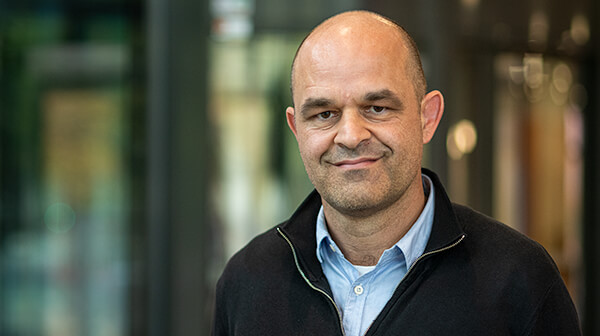
Philip Dutré is a full professor at the Department of Computer Science , Faculty of Engineering Science , KU Leuven. He leads the Computer Graphics Research Group and chairs the Human-Computer Interaction division . His teaching portfolio includes courses on algorithms, data structures, and computer graphics fundamentals. Research Focus : Rendering algorithms, photo-realistic and image-based rendering, perceptual-based rendering, material models, and intuitive controls for computer animation. He explores deep learning applications in global illumination and uses quantum field theory for efficient light transport in participating media. Publications : Recent work includes advancements in temporal coherence for light transport (2017–2023), functional integrals for scattering models (2025), and optimization of spatial data structures (2019). Teaching Innovations : Advocate for ungrading (feedback-only assignments), flipped classroom techniques, and interactive learning. His approach emphasizes conceptual understanding over rote memorization, with structured, self-contained lessons and active student engagement. Leadership : Serves on multiple academic councils and committees including the Commission on Research Integrity and Student Services Council .
Andreas Grothey is a Senior Lecturer in the School of Mathematics at The University of Edinburgh, a position he has held since 2011. He completed his MSc in Numerical Algebra and Mathematical Computing at the University of Dundee (1995) and his PhD in Optimization at the University of Edinburgh (2001), supervised by Ken McKinnon. His research focuses on stochastic programming, interior point methods, decomposition approaches, high-performance computing, and energy systems optimization. He has contributed to energy planning, power grid reliability, and emergency response strategies for power networks. Grothey has advised seven PhD students, including work on unit commitment, top-percentile traffic routing, and power flow optimization. His projects include the OOPS solver, CESI energy integration center, and the Structured Modelling Language (SML). Recent work addresses pandemic policy optimization and exascale computational challenges. Education: MSc in Numerical Algebra and Mathematical Computing (University of Dundee, 1995) PhD in Optimization (University of Edinburgh, 2001) Research Interests: Stochastic Programming Interior Point Methods Decomposition Methods High-Performance Computing Energy Systems Optimization Advising & Projects: PhD Supervision (7 students, 2007–2022) OOPS Parallel Solver Development CESI Energy Systems Integration SML Structured Modelling Language Labs/Teams: Member of the Edinburgh Research Group on Optimization, leading projects in power grid stability and energy planning.
Glaucio H. Paulino holds the Margareta Engman Augustine Professorship in Civil and Environmental Engineering at Princeton University, where he also serves as a Professor at the Princeton Institute for the Science and Technology of Materials (PRISM). His work bridges computational mechanics, topology optimization, and materials science. Paulino leads a research group focused on advancing structural design methodologies, fracture mechanics, and functionally graded materials. His team has pioneered polygonal finite elements and multiresolution topology optimization techniques, addressing challenges in mesh bias and computational efficiency. He has published over 240 peer-reviewed articles and mentored 19 PhD and 11 MS students. Notable contributions include the PPR cohesive model for fracture analysis and adaptive mesh refinement for dynamic simulations. Paulino's research extends to practical applications such as high-rise building design and sustainable construction materials. Awards include election to the European Academy of Sciences and Arts and ASME’s Melville Medal. Current projects involve functionally graded cement-based materials, extrusion processing, and digital image correlation for material characterization. His lab collaborates with industry partners like Skidmore, Owings & Merrill LLP to translate topology optimization into real-world engineering solutions. Paulino’s interdisciplinary approach integrates computational modeling with experimental validation, fostering innovations in civil infrastructure resilience.
Niels Richard Hansen is a Professor at the Department of Mathematical Sciences , University of Copenhagen, leading research at the intersection of Artificial Intelligence and Statistics . He co-founded the Copenhagen Causality Lab and focuses on automating causal explanation discovery from data using Bayesian networks, stochastic processes, predictive models, and machine learning. His work emphasizes creating interpretable and robust AI systems capable of generalizing across domains. His research has produced over 56 publications spanning causal inference , graphical modeling , stochastic processes , and machine learning . Recent work includes: Predictive and causal learning (2018 keynote) High-dimensional regression solutions (2016 lecture) Interdisciplinary applications in actuarial science , environmental statistics , and neuroscience He actively contributes to scientific communication through media appearances and public explanations of statistical concepts, including analyses of: Gaussian correlation inequality proofs Daylight saving time and blood clots Mathematical approaches to lotteries Climate change vs lunar effects
Professor Ashish Sharma is a Professor of Hydrology and Water Resources in the School of Civil and Environmental Engineering at the University of New South Wales, Sydney, Australia. With a PhD in Civil Engineering from Utah State University and extensive experience in hydrological research, he has established himself as a leading expert in his field. Dr. Sharma's research focuses on hydrological uncertainty, with particular emphasis on the impact of climate change and variability on hydrological practice. His work spans multiple areas including remote sensing applications, stochastic hydrological modeling approaches, development of hydrological models, and addressing key hydrology challenges such as design flood estimation and water resources management. He has made significant contributions to understanding how climate change affects hydrological extremes and water availability. His publications reveal a strong trend toward advanced modeling techniques for climate change impact assessment, with recent work focusing on spectral transformation methods, multivariate bias correction in climate models, flood forecasting improvements, and the relationship between temperature and precipitation extremes. His research increasingly integrates remote sensing data with hydrological modeling to address challenges in data-scarce regions. Professor Sharma has held significant leadership positions including President of the International Commission of Hydrologic Sciences (IAHS) Commission on Statistical Hydrology (STAHY) since 2016, service on the Australian Research Council's College of Experts twice, and participation on the Technical Committee for the Australian Rainfall and Runoff Design Flood Estimation guidelines (ARR2016). In addition to his research leadership, Professor Sharma actively mentors students and collaborates with researchers globally, as evidenced by his extensive publication record across top hydrology and climate journals. His work bridges theoretical hydrology with practical applications for water resources management under changing climate conditions.
Zhijian Huang is an Associate Professor in the Department of Finance and Accounting at Saunders College of Business, Rochester Institute of Technology, with expertise in corporate finance, behavioral finance, and risk management. Education: B.Eng., Shanghai Jiaotong University (China) M.S., Michigan State University M.Eng., Cornell University Ph.D., Pennsylvania State University His research focuses on financial markets, cognitive dissonance in investor behavior, cryptocurrency volatility, and climate policy impacts on stock prices. Recent publications explore asymmetric responses to earnings news, social media sentiment effects, and credit risk modeling. Huang teaches courses in equity analysis, options/futures, and risk management, with a strong emphasis on derivative instruments and portfolio optimization strategies.
Dr. Yongchao Huang is a Lecturer (Assistant Professor) in the School of Natural and Computing Sciences at the University of Aberdeen, where he has been employed since August 2023. He also holds affiliations with the University of Oxford and the University of Cambridge through past postdoctoral and collaborative roles. He is actively involved in research, teaching, and academic service, and is currently accepting PhD students. His educational background includes: DPhil in Engineering Science, University of Oxford (2013–2017) Additional training in Machine Learning at Oxford (2015–2019) Dr. Huang's research focuses on fundamental and physics-informed machine learning, with core interests in Bayesian inference, variational methods, generative modeling (especially score-based), reinforcement learning, and interdisciplinary AI applications in mechanics, biology, energy, climate, and finance. A central theme of his work is the inference and sampling of probability densities, particularly through innovative particle-based and physics-inspired computational frameworks. He founded the Computational and Physical Learning (CPL) lab at Aberdeen in 2023. His recent publications (2020–2025) reflect a strong trend in probabilistic machine learning, with increasing focus on physics-based inference methods such as electrostatics, fluid dynamics, and material point methods. These works bridge machine learning with applied mathematics and physical simulation, demonstrating a unique interdisciplinary approach. Topics span Bayesian neural networks, acoustic wave propagation, mortality modeling, and adversarial cybersecurity. Dr. Huang has received academic recognition through invitations to serve on program committees and editorial roles: Program Committee Member, ECAI 2024 Organizing Committee, Bioinference 2024 Guest Editor, Journal of Theoretical Biology Senior Scientific Advisor to a UK firm He has supervised 57 MSc theses independently and currently supervises one PhD student. He has secured research engagement through collaborations with institutions including Oxford, Cambridge, and industry partners. His teaching includes courses such as Introduction to Software Engineering , Software Process and Management , and Computational Intelligence at Aberdeen, as well as practicals in inference at Cambridge. Dr. Huang leads the Computational and Physical Learning (CPL) lab at the University of Aberdeen, a curiosity-driven research group focused on foundational advances in machine intelligence. Though currently a solo researcher due to limited resources, the lab emphasizes end-to-end research and open collaboration. He encourages student mobility and interdisciplinary exploration.
Isaac Gross is a Senior Lecturer in the Department of Economics at Monash University, Faculty of Business and Economics. He holds a PhD and is actively involved in research, teaching, and policy advisory roles. His work bridges academic theory and real-world economic policy, particularly in macroeconomic and monetary domains. His research interests center on macroeconomics , monetary policy , DSGE modeling , and commodity price dynamics . He employs advanced quantitative methods to analyze policy effectiveness and economic stability, with a regional focus on Australia and global commodity markets. The recent articles highlight a consistent focus on nonlinear modeling of macroeconomic systems, optimal policy design , and structural analysis of monetary and resource sectors . His work combines theoretical rigor with empirical validation, often using large-scale models like MARTIN for policy simulation. Scientific Awards: Best Paper at the Melbourne Institute Macroeconomic Policy Meeting (2018) Dean's Citations for Outstanding Contribution to Student Learning (2021) Advising and Grants: Isaac Gross served as the Primary Chief Investigator on the 2022 research project Estimating Optimal Policy Rules for Australian Monetary Policy with MARTIN . While formal student advising is not listed, his Dean’s Citation underscores significant contributions to student learning. He has also contributed to educational initiatives such as continuing education in macroeconometrics. Labs, Teams, and Collaborations: He collaborates with prominent economists including Andrew Leigh and J. Hansen. His work involves external engagement with key institutions such as the Reserve Bank of Australia and the Standing Committee on Economics, indicating integration into national policy networks.
Jens Krause is a Professor and Head of Department at the Leibniz Institute of Freshwater Ecology and Inland Fisheries (IGB) in Berlin, leading the Research Group on Mechanisms and Functions of Group-Living. He holds a full professorship in Fish Ecology at Humboldt-Universität zu Berlin, Faculty of Life Sciences, Thaer-Institute, and since 2018 has been an Adjunct Professor at Technical University Berlin within the Excellence Cluster 'Science of Intelligence'. His research is centered on collective intelligence, social networks, decision-making, and behavioural ecology in fish and other animals. Full Professor in Fish Ecology, Humboldt-Universität zu Berlin Adjunct Professor at Technical University Berlin (since 2018) Head of Department, IGB Berlin PhD, University of Cambridge Diploma, Free University Berlin His work integrates experimental biology, network analysis, and biomimetic robotics to understand how animals make collective decisions. His expertise spans animal behaviour, evolution, and ecological physiology, with a strong focus on group-living dynamics. Recent research explores group hunting, predator evasion, social foraging, and the impact of environmental stressors on collective behaviour. The analysis of his recent publications reveals a strong trend in understanding collective behaviour in fish, including escape waves, social foraging, group hunting in marlins and sailfish, and the use of robotic agents to study social integration. His interdisciplinary approach combines marine biology, physics, robotics, and data science to uncover the mechanisms behind collective intelligence in both animal and human systems. Editorial Board, Behavioral Ecology Editorial Board, Fish and Fisheries Executive Board, Excellence Cluster 'Science of Intelligence' Advisory Board, Bimini Biological Field Station Foundation He advises numerous PhD students and postdoctoral researchers, and leads major research projects, including 'Developing exploration behaviour' funded by the Excellence Cluster. His work has been supported by extensive collaborations across Europe and North America, and he frequently publishes in top-tier journals such as Nature , Science Advances , Proceedings of the Royal Society , and Current Biology . His lab employs cutting-edge methods including automated tracking, social network analysis, and interactive robotics to study animal groups. His research group, 'Mechanisms and Functions of Group-Living', is embedded within the Excellence Cluster 'Science of Intelligence', where they investigate collective cognition, social information use, and the role of individual differences in group performance. The team combines field studies with laboratory experiments and computational modelling to understand the evolution and function of collective behaviour across species.
Brian Ingalls is a Professor in the Department of Applied Mathematics and cross-appointed to Biology at the University of Waterloo. His research applies mathematical and control-theoretic approaches to biological systems, including genetic regulatory networks, microbial communities, and cellular metabolism. Institutional Affiliation: Faculty of Mathematics, University of Waterloo Contact: bingalls@uwaterloo.ca His work focuses on systems biology and synthetic biology , particularly sensitivity analysis of biochemical networks, optimal experimental design, and mathematical modeling of cellular processes. Research funding comes from NSERC and CIHR . Notable contributions include the textbook Mathematical Modeling in Systems Biology (MIT Press, 2013) and the Ingalls Quantitative Cell Biology Lab , which investigates intracellular and intercellular network dynamics through computational and experimental methods. Key Collaborations: iGEM Waterloo, Chemical Engineering, and international synthetic biology networks Advising: Mentored 15+ graduate students and postdocs across applied math, biology, and engineering fields
Kash Barker serves as the John A. Myers Professor and David L. Boren Professor at the University of Oklahoma in the Department of Industrial & Systems Engineering within the College of Engineering. As Graduate Liaison, he leads research on network resilience, supply chains, and systems engineering for societal good, with applications spanning infrastructure, supply chains, and community systems. His lab has produced 11 Ph.D. graduates (10 in academia) and 31 M.S. graduates. Research Domains: Resilient networks and interdependent systems Risk and decision analytics Supply chain survivability Pandemic economic impact modeling Climate migration optimization Cyber-Physical-Social Systems Article Trends emphasize disinformation defense , network restoration optimization , and multi-layer resilience modeling across infrastructure, supply chains, and community systems. His work combines game theory , machine learning , and decision analysis frameworks. Scientific Awards & Roles: Fellow, Institute of Industrial and Systems Engineers Senior Member, IEEE Fellow, Fulbright Finland Foundation (2023) Associate Editor roles in IISE Transactions and Naval Research Logistics Editorial Board Member for Risk Analysis and Scientific Reports Faculty Advisor, OU INFORMS student chapter Educational Background: Ph.D., Systems Engineering, University of Virginia M.S., Industrial Engineering, University of Oklahoma B.S., Industrial Engineering, University of Oklahoma
Lukas Seitner is a researcher at the Technical University of Munich (TUM), affiliated with the School of Computation, Information and Technology and the Department of Electrical Engineering. He operates within the Associate Professorship of Computational Photonics led by Prof. Christian Jirauschek, focusing on advanced modeling of quantum cascade devices and terahertz photonics systems. His research spans quantum cascade lasers (QCLs), terahertz frequency combs, optical solitons, and computational photonics. Seitner has developed sophisticated simulation frameworks including Maxwell-Bloch and density matrix approaches to study nonlinear dynamics in optoelectronic devices. Key contributions involve passive mode-locking mechanisms in THz QCLs, graphene-integrated saturable absorbers for pulse generation, and backscattering effects in ring-cavity soliton formation. His work bridges theoretical modeling with practical device engineering for next-generation terahertz sources. As an educator, Seitner serves as assistant lecturer for multiple courses including Computational Photonics Laboratory (5 PR), Partial Differential Equations for Electrical Engineering (4 VI), and Simulation of Quantum Devices (4 VI). He actively participates in doctoral candidate seminars and specialized courses on quantum engineering, demonstrating strong commitment to academic training in photonics and quantum device physics. His teaching integrates cutting-edge research concepts into practical computational exercises. Seitner maintains active collaboration within the EU Project QOMBS and contributes to TUM's Computational Photonics group research infrastructure. His technical expertise encompasses numerical methods for partial differential equations, semiconductor device simulation, and nonlinear optical modeling. Current projects focus on optimizing THz comb sources for spectroscopic applications and extending quantum walk models for novel frequency comb generation mechanisms.
Prof. Dr. Ralf Merz serves as Head of the Department of Catchment Hydrology at the Helmholtz Centre for Environmental Research (UFZ) and holds a Full Professorship in Catchment Hydrology at Martin-Luther University Halle-Wittenberg since 2011. His career bridges hydrological modeling, flood risk assessment, and water quality analysis across diverse climates from Central Asia to Europe. MSc in Civil Engineering (Technical University of Karlsruhe, 1997) PhD in Hydrology (Vienna University of Technology, 2002) Habilitation in Hydrology (Vienna University of Technology, 2009) Research Interests span comparative hydrology, flood generation mechanisms, climate change impacts on water resources, and nitrate dynamics in river systems. His work emphasizes process-based understanding of runoff events and regional flood modeling through innovative approaches like the PHEV distribution framework. Scientific Contributions include over 100 publications (2003-2025) on: Flood frequency analysis in changing climates Groundwater recharge in arid regions Hydrochemical response to droughts Remote sensing applications for groundwater studies Multi-response calibration of hydrological models Key projects involve MOSES observatory development, TRACER research school, and Pamir Mountains glaciological studies. Recognitions : APART research grant (Austrian Academy of Sciences, 2006) Leadership extends to directing the Catchment Hydrology department and participating in European hydrological networks like the Bode Hydrological Observatory and TERENO infrastructure. His methodological advancements include flood time-scale analysis and event runoff coefficient regionalization.
Barbara Drossel is a Full Professor at the Institute of Solid State Physics within the Faculty of Physics at the Technical University of Darmstadt, where she has been conducting research since February 2002. Her work bridges theoretical physics, complex systems theory, and theoretical ecology, focusing on interdisciplinary approaches to understanding emergent phenomena in natural systems. She leads the AG Drossel research group that investigates the theoretical foundations of complex networks, ecological communities, and quantum systems. Professor Drossel's research spans multiple domains with emphasis on complex systems theory, where she has made significant contributions to understanding random Boolean networks, food web modeling, and the physics of ecological communities. Her work demonstrates how simple rules can lead to complex emergent behavior across different scales, from quantum systems to ecological networks. She investigates how top-down causation operates in complex systems and explores the relationship between microscopic dynamics and macroscopic patterns in diverse contexts. Analysis of her recent publications reveals a consistent focus on theoretical frameworks that connect physics with ecology. Her work shows increasing integration of quantum mechanics with ecological modeling, particularly in understanding emergence and time evolution in complex systems. She frequently employs network theory to analyze ecological communities and has developed innovative approaches to studying species interactions, mutualistic networks, and spatial dynamics in meta-communities. Minerva Fellowship Heisenberg Fellowship DFG Fellowship for research at MIT Professor Drossel has supervised numerous doctoral students whose work spans theoretical ecology, complex systems, and statistical physics. Her research group has secured funding for projects examining the stability of ecological networks, quantum decoherence, and the mathematical foundations of complex systems. She maintains active collaborations with researchers across Europe and has contributed to major theoretical advances in understanding how complexity emerges from simple interactions in diverse systems. The AG Drossel research group operates at the intersection of physics and theoretical biology, maintaining strong connections with both the physics and biology departments at TU Darmstadt. The group combines mathematical rigor with biological relevance, developing models that capture essential features of complex natural systems while remaining analytically tractable. Their work has influenced both theoretical physics and ecological theory, demonstrating the power of interdisciplinary approaches to complex systems.
Steven Neil Evans is a Professor in the Departments of Statistics and Mathematics at the University of California, Berkeley, with a joint appointment since 1999. His research spans stochastic processes, probability on algebraic structures, and applications in population biology, phylogenetics, and computational biology. BSc (Hons I & University Medal) in Statistics, University of Sydney (1983) PhD in Mathematics, University of Cambridge (1987) Research Interests: Evans works on random matrices, Lévy processes, measure-valued stochastic processes, coalescent models in biology and chemistry, phylogenetics (including invariants), biodemography, mutation-selection balance, and stochastic models in population genetics. His recent work connects probability theory with computational biology, focusing on metagenomics and transcriptional regulation. He also explores computational algebra in modeling biological systems. Articles Trends: His publications reveal a trajectory from foundational work in stochastic processes and Lévy processes to interdisciplinary applications in phylogenetics, population genetics, and computational biology. Key subfields include mutation-selection models, random tree structures, stochastic differential equations, and algebraic probability. Recent work addresses phylogenetic networks and Frechet mean sets in metric spaces. Scientific Awards: Rollo Davidson Prize (1990) Presidential Young Investigator Award (1991) Alfred P. Sloan Foundation Fellowship (1993) G. de B. Robinson Prize (1997) Miller Research Professor (2002) Fellow, American Mathematical Society (2012) Member, National Academy of Sciences (2016) Advising and Grants: Evans has advised over 30 PhD/Master's students since 1993. He has received continuous NSF grants (1988-2019), NIH funding (2016-2018), and international fellowships. His academic service includes editorial roles at major journals and organizing conferences in probability and mathematical biology.