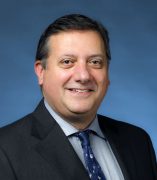
Joseph C. Watkins is a Professor in the Department of Mathematics at the University of Arizona, where he also serves as Director of the Data Sciences Academy. He holds affiliations with the Interdisciplinary Programs in Statistics and Data Science, Applied Mathematics, and Genetics, as well as the BIO5 Institute. His academic training includes a Ph.D. in Mathematics from the University of Wisconsin (1982), and degrees from the University of Tennessee. Department of Mathematics Interdisciplinary Program in Statistics and Data Science Interdisciplinary Program in Applied Mathematics Interdisciplinary Program in Genetics BIO5 Institute His research lies at the intersection of probability theory, stochastic processes, and biological applications. Key areas include theoretical population genetics, statistical genetics, human evolution, and biophysics. He has led collaborative projects on archaic admixture in human populations, coevolution of language and genes in Austronesian societies, and mathematical modeling of biological systems such as bacterial colonies and honey bee swarms. His work integrates deep mathematical theory with empirical genomic data. The 15 most recent publications highlight a sustained focus on human evolutionary genetics, particularly Neanderthal and Denisovan introgression, X chromosome evolution, and population structure in Africa and Oceania. His earlier work includes foundational contributions to stochastic modeling in genetics and biophysics. The research spans theoretical developments in probability and their application to real-world biological questions, demonstrating a consistent trajectory of interdisciplinary innovation. He has advised doctoral students such as Kevin R. Anderson, whose dissertation focused on bacterial colony dynamics. He teaches core graduate courses including Theory of Probability (Math 564) and Theory of Statistics (Math 566), and is actively involved in interdisciplinary training programs supported by the NSF and Flinn Foundation. His service includes roles as Vice Chair of the Graduate Interdisciplinary Program in Statistics and membership on the Executive Committee for the Computational and Mathematical Modeling of Biomedical Systems NIH training grant. He maintains active research collaborations across departments, including Anthropology and Biosciences, and with external institutions like the Carl Hayden Bee Research Center.