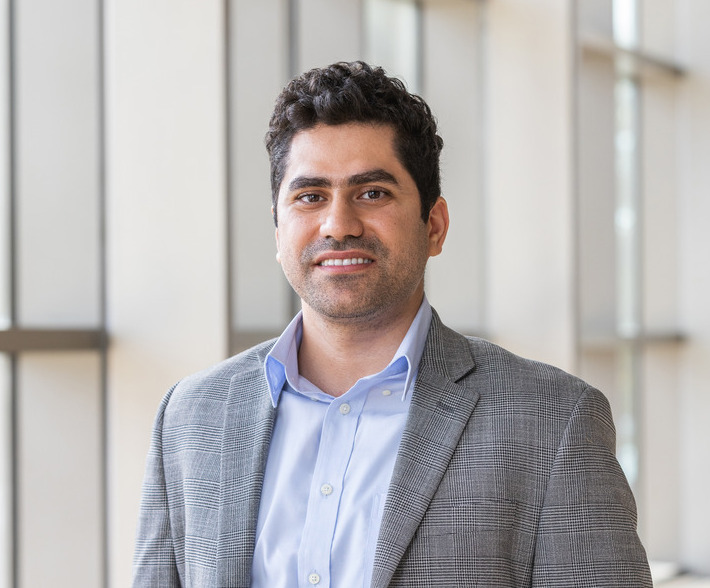
Heng Huang is the Brendan Iribe Endowed Professor in the Department of Computer Science and the Department of Electrical and Computer Engineering at the University of Maryland, College Park . He earned his Ph.D. in Computer Science from Dartmouth College and holds prior degrees from Shanghai Jiao Tong University. His research focuses on advancing the foundations and applications of artificial intelligence, particularly in machine learning, data mining, natural language processing, computer vision, and biomedical informatics . His work integrates large-scale optimization, fairness, and robustness in deep learning systems. Heng Huang’s recent publications demonstrate a strong trend in large language models, federated learning, model watermarking, continual learning, and medical image analysis . His work appears consistently in top venues like NeurIPS, ICML, CVPR, ICLR, and MICCAI, reflecting a broad impact across theoretical and applied AI. He actively mentors students and postdocs, seeking highly motivated researchers in machine learning and related domains. His work has significant implications for healthcare, privacy, and trustworthy AI.
Professor Chris Holmes is a Professor of Biostatistics at the University of Oxford, where he moved from Imperial College London in February 2004. He is a Fellow at St Anne's College and works in the Department of Statistics. His research focuses on applications and statistical methods development in genomic sciences and genetic epidemiology, holding a prestigious Programme Leaders Grant in Statistical Genomics from the Medical Research Council. Prior to his position at Oxford, Professor Holmes completed his doctorate in Bayesian statistics at Imperial College London, investigating novel nonlinear pattern recognition methods. This was followed by a post-doctoral position and then a lectureship at Imperial. Before his academic career, he worked in industry for several years in scientific computing, developing techniques for real-time pattern recognition models in defense and SCADA systems. Professor Holmes has a broad interest in the theory, methods and applications of statistics and statistical modeling, with a particular foundation in Bayesian statistics which he views as providing a unified framework for stochastic modeling and information processing. His specific research interests include: Bayesian statistics and stochastic simulation Markov chain Monte Carlo methods Pattern recognition and nonlinear, nonparametric methods Spatial statistics Statistical genetics and genomics Genetic epidemiology His recent publications (2023-2025) demonstrate a strong focus on the intersection of biostatistics, artificial intelligence, and healthcare applications. His work spans multiple domains including AI-driven disease classification in neurology, genomic data analysis for health equity, machine learning tools for healthcare prediction, and addressing bias in medical AI systems. A notable trend across his research is the application of advanced statistical methods to solve pressing problems in genomics, epidemiology, and medical diagnostics, with an increasing emphasis on health equity and the ethical implications of AI in healthcare. Professor Holmes currently supervises PhD students Oscar Clivio, Sahra Ghalebikesabi, and Natalia Garcia Martin. His research is supported by multiple grants, including the MRC Programme Leaders Grant in Statistical Genomics which funds his work in statistical genomics. He is actively involved in three research groups at Oxford that reflect the breadth of his scholarly interests: Computational Statistics and Machine Learning Statistical Genetics and Epidemiology Statistical Theory and Methodology
Mahdi Khodayar is an Assistant Professor of Computer Science at the University of Tulsa . He holds a Ph.D. in Electrical Engineering from Southern Methodist University (2020) and M.Sc./B.S. degrees in Artificial Intelligence and Software Engineering from K.N. Toosi University of Technology (2015, 2013). His research focuses on AI and machine learning applications in power systems, transportation systems, computer vision, and spatiotemporal pattern recognition. B.Sc. in Computer Engineering (2013), K.N. Toosi University of Technology M.Sc. in Artificial Intelligence (2015), K.N. Toosi University of Technology Ph.D. in Electrical Engineering (2020), Southern Methodist University Khodayar’s research bridges deep learning with energy systems , including fault detection in power grids, renewable energy forecasting, and traffic scene understanding. His work leverages graph neural networks , reinforcement learning , and generative models for robust spatiotemporal analysis. Recent publications highlight his focus on graph-based architectures for power systems, hybrid deep reinforcement learning in energy forecasting, and unsupervised domain adaptation in remote sensing. His work integrates physics-informed modeling with probabilistic frameworks . Scientific Awards : NSF ECCS Division Funding (2022) US DOT FHWA Grant (2023) Zelimir Schmidt Award for Early Career Research (2023) Honors Student Award (2015), K.N. Toosi University Khodayar has been funded by the NSF , US Department of Transportation , and the TU Cyber Fellows program . He serves as an associate editor for IEEE Transactions on Transportation Electrification and other journals.
Ari Holtzman is an Assistant Professor of Computer Science at the University of Chicago. His research spans dialogue systems, text generation, and foundational AI methodologies, including the development of Nucleus Sampling and contributions to the Amazon Alexa Prize. He holds an interdisciplinary degree from NYU in Computer Science and Philosophy of Language, and is nearing completion of his PhD at the University of Washington. Research interests include generative models, alignment challenges in LLMs, evaluation metrics like CLIPScore, and model efficiency techniques such as Qlora finetuning. His work bridges theoretical insights with practical applications, emphasizing both technical innovation and ethical considerations in AI. Key awards include the 2017 Amazon Alexa Prize and Phi Beta Kappa honors at NYU. His recent publications focus on benchmarking frameworks, cache optimization for large models, and understanding model limitations through AbsenceBench. Research contributions extend to multimodal systems, computational creativity, and machine unlearning protocols.
William Yang Wang serves as the Mellichamp Professor of Artificial Intelligence at the University of California, Santa Barbara (2019-present). He directs the UCSB Center for Responsible Machine Learning, the Mind and Machine Intelligence Initiative, and the UCSB NLP Group. His research focuses on theoretical foundations and practical algorithms for AI, particularly in NLP, LLMs, and neuro-symbolic reasoning. PhD in Computer Science from Carnegie Mellon University Active in AI theory and applications (2016-present) Research interests span multiple AI domains, with special emphasis on NLP and responsible machine learning. He has pioneered datasets like HybridQA, TabFact, and VaTeX, enabling advancements in multi-hop QA, fact verification, and video-language tasks. His work combines statistical relational learning with modern deep learning paradigms. Recent publications center around multimodal reasoning, knowledge graph integration, and responsible AI development. He has received numerous accolades including the IEEE SPS Pierre-Simon Laplace Award (2024) and NSF CAREER Award (2021). Karen Sparck Jones Award (2022) DARPA Young Faculty Award (2018) IBM Faculty Award Mentoring 15+ PhD and postdoc researchers who now hold positions at Microsoft Research, Amazon, Meta GenAI, and academic institutions like Arizona and Rutgers. His lab maintains active collaborations with industry partners through initiatives like ChipAgents.ai, which he founded as CEO.
Florian Schäfer is an Assistant Professor at the School of Computational Science and Engineering at Georgia Tech. His research spans numerical computation, statistical inference, and competitive games, with applications in materials science, turbulence modeling, computer graphics, and computational geometry. He will join the Courant Institute at NYU in September 2025. PhD in Applied and Computational Mathematics, Caltech Bachelor’s and Master’s in Mathematics, University of Bonn His work focuses on information geometric mechanics to design structure-preserving numerical methods for continuum mechanics. This includes: State-of-the-art solvers for elliptic PDEs via Gaussian elimination and conditional independence Efficient multi-agent optimization algorithms Information geometric regularization for compressible fluid dynamics Enabling the first compressible fluid simulation exceeding 100 trillion grid cells His recent research trends integrate: Machine learning for materials science (e.g., active learning, Bayesian approaches) Stochastic modeling of microstructures and phase-field problems Neural operators for super-resolution fluid dynamics Generative models for polycrystalline material datasets Optimal transport and diffusion models for conditional density transformations High-performance computing at extreme scales Florian collaborates with researchers including Houman Owhadi, Jessie Liu, Spencer Bryngelson, Tamer Zaki, and Ali Mani. He actively presents at conferences like SIAM and UCLA seminars, and is recruiting PhD students for work at the Courant Institute starting 2025.
Susanne Prediger is a Professor at the Institute for Development and Research in Mathematics Education (IEEM) at Technische Universität Dortmund and Vice Director of the Department of Subject-Related Knowledge Transfer at the Leibniz Institute for Science and Mathematics Education (IPN). She directs the DZLM research network (German Center for Mathematics Teacher Education) and holds leadership roles in mathematics education research. Her research focuses on: Design and Research on Professional Development of Mathematics Teachers and Facilitators Topic-Specific Design Research in Mathematics Education for Secondary Schools Diversity in Classrooms (especially Language Diversity) Empirical Studies on Students' Conceptions in Arithmetic, Algebra, and Stochastics Networking of Theories in Mathematics Education Research Recent work explores AI-driven formative assessment, educational innovation implementation, and inclusive pedagogical strategies for teaching percentages. She leads projects like ALwAI, Startchancen-Kompetenzzentrum Mathematik, and DigiProMIN. Current roles include: Vice Director (half-time), Department of Subject-Related Knowledge Transfer, IPN Director of DZLM Research Network, IPN (since 2021) Full Professor at IEEM, TU Dortmund University (since 2006) Her academic background spans Mathematics and History studies at Technical University of Darmstadt and Université Bordeaux I, a PhD in Mathematical Logic and Universal Algebra (1998), and a Habilitation in Mathematics Education (2004).
Christopher S. Tang is a UCLA Distinguished Professor and Edward W. Carter Chair in Business Administration at the Anderson School of Management , where he researches global supply chain management with a focus on social innovation in developing countries . He also serves as Senior Associate Dean for Global Initiatives and Faculty Director of the Center for Global Management . Education: Ph.D. in Management Science (1985, Yale University) M.Phil. in Administrative Science (1983, Yale University) M.A. in Statistics (1983, Yale University) B.Sc. in Mathematics (First Class Honors, 1981, King’s College, University of London) His research explores the intersection of corporate responsibility and supply chain innovation , addressing topics like microfinancing , mobile platforms for developing economies , direct agricultural procurement , and disaster response logistics . He emphasizes visibility, integrity, and agility in uncertain environments. Recent work highlights AI adoption benefits for supply chains , strategies to reduce forced labor risks , and policy impacts on ride-sharing platforms . His research bridges operations management and social justice , advocating for environmental stewardship alongside business growth. Scientific Awards: Salzberg Medallion (2017) Lifetime Fellow, INFORMS (2011) Responsible Research in Management Award (2017) Teaching Excellence Award (multiple years, UCLA-NUS) Dean’s Excellent Service Award (2014) As an influential adviser and consultant , Tang has worked with Amazon, HP, IBM, Nestlé, GKN , and Accenture . He has taught at Stanford University, UC Berkeley, Hong Kong University of Science and Technology , and served as visiting professor at Cambridge University and the Institute of Advanced Study at HKUST .
Anna Levina is an Assistant Professor for Computational Neuroscience at the University of Tübingen , affiliated with the Department of Computer Science under the Faculty of Science. Her research focuses on the self-organization of neuronal activity, critical dynamics in neural networks, and the excitation/inhibition balance in cortical circuits. Current positions: Assistant Professor (since 2018), Group Leader (2017-2018), Equality Officer (Computer Science) Previous roles: IST Fellow (2015-2017), Associated Researcher (2011-2015), Postdoc/PI (2011-2015), Postdoc (2008-2011) Her research integrates mathematical modeling , statistical physics , and computational neuroscience to study criticality phenomena, neural avalanches, and adaptive network dynamics. Key interests include: Self-organized criticality in neural systems Excitation/Inhibition balance mechanisms Network topology and dynamics Timescale analysis in neural processing Stochastic modeling of neural activity Recent publications reveal trends in understanding critical dynamics across biological and artificial networks, with applications to memory systems, sensorimotor integration, and disease modeling. She has received recognition as an IST Fellow .
Meng Li is the Noah Harding Associate Professor of Statistics at Rice University's School of Engineering. He specializes in Bayesian analysis, machine learning, and statistical theory. His research bridges methodological development and applications in biomedical sciences, materials informatics, and neuroimaging. Li holds a Ph.D. from North Carolina State University and a B.S. from Sun Yat-sen University. He has been recognized with awards including the 2020 Rice Engineering Excellence Award and the Ralph E. Powe Junior Faculty Enhancement Award. Li's research focuses on probabilistic modeling of complex data such as images, functional data, and networks. His funded projects include AI frameworks for pancreatic cancer biomarkers and Bayesian spatiotemporal modeling of marine ecosystems. He collaborates with institutions like Houston Methodist and Baylor College of Medicine on medical applications. His teaching includes advanced courses like Bayesian Statistics and Advanced Bayesian Inference. He advises over 30 students, many of whom have pursued academic and industry roles. Li serves as an associate editor for Bayesian Analysis and the new ACM Transactions on Probabilistic Machine Learning.
Lei Wu is a Professor and Anson Wood Burchard Chair Professor in the Department of Electrical and Computer Engineering at Stevens Institute of Technology. He holds a B.S. (2001) and M.S. (2004) in Electrical Engineering from Xi'an Jiaotong University, and a Ph.D. (2008) in Electrical Engineering from Illinois Institute of Technology. His research focuses on power system optimization, renewable energy integration, microgrid control, and cyber-physical systems resilience. Education: B.S. Electrical Engineering, Xi'an Jiaotong University (2001) M.S. Systems Engineering, Xi'an Jiaotong University (2004) Ph.D. Electrical Engineering, Illinois Institute of Technology (2008) Research Interests: Dr. Wu's work addresses challenges in power system operations, including optimization of renewable energy integration, electricity market design, and resilient microgrid control. He develops advanced algorithms for unit commitment, stochastic modeling of renewable resources, and cyber-physical security. His research emphasizes practical applications in grid resilience, demand response, and multi-energy system coordination. Awards: Fellow of IEEE (2022) NSF CAREER Award (2013) IBM Smarter Planet Faculty Innovation Award (2011) Grants & Professional Service: He leads grants on smart grid optimization, including projects from NSF, DOE, and industry partners. He serves as Editor for IEEE Transactions on Smart Grid and other journals, and has advised numerous students on energy-related research. His work on microgrid control and cyber-physical security has been widely recognized in industry and academia. Labs & Teams: Leads the Stevens Energy Systems Lab, focusing on advanced grid technologies and interdisciplinary collaborations between power systems, AI, and cybersecurity.
Mark S. Handcock is a Distinguished Professor in the Department of Statistics and Data Science at the University of California, Los Angeles (UCLA), where he leads research at the intersection of statistical methodology and applied problems in social sciences, epidemiology, and environmental science. His work bridges theoretical statistics with real-world challenges through innovative methodological development. His primary research interests encompass statistical models for social networks, network inference, methodology for hard-to-reach population surveys, spatial processes, demography, and environmetrics. Handcock has pioneered advances in exponential-family random graph models (ERGMs) and developed foundational R packages like ergm and tergm within the statnet suite, enabling sophisticated network analysis across disciplines. Analysis of his recent publications (2023-2025) reveals three dominant research thrusts: (1) Antarctic sea ice modeling using Bayesian reconstruction and temporal variability analysis, (2) epidemiological modeling of infectious disease transmission dynamics (particularly COVID-19), and (3) methodological innovations in network inference and causal analysis over stochastic networks. His work consistently integrates advanced computational statistics with domain-specific applications in climate science, public health, and social systems.
Sebastijan Dumancic is an Assistant Professor at Delft University of Technology, focusing on neuro-symbolic AI through program synthesis and probabilistic programming. He leads the RAIL lab and collaborates with institutions like Harvard, MIT, and CNRS. His research bridges symbolic AI and machine learning, applying program synthesis to scientific discovery, transportation, and robotics. He holds an FWO-funded PhD from KU Leuven and has participated in initiatives like ELLIS and the Symbolic Computation and Machine Learning Initiative. Program synthesis Probabilistic programming Neuro-symbolic AI Constraint-based learning His recent articles highlight advancements in program synthesis, neuro-symbolic integration, and constraint satisfaction. Projects like Find2Fix and Intelligent Greenhouse Horticulture (funded by NWO) demonstrate practical applications. ELLIS Membership University Teaching Qualification He supervises numerous MSc and PhD students in projects involving logic programming, program synthesis, and probabilistic modeling. Active in workshops and symposia, he contributes to neuro-symbolic AI and scientific discovery.
Francisco Camara Pereira is a Professor and Head of Section at the Department of Technology, Management and Economics at the Technical University of Denmark (DTU). His research focuses on Intelligent Transportation Systems, Machine Learning, and Data-Driven Decision-Making in transportation contexts. He actively contributes to advancing transportation science through interdisciplinary approaches combining simulation, optimization, and AI techniques. His work addresses challenges in public transport analysis, charging infrastructure planning, and multimodal demand prediction. Recent projects include developing graph-based optimization methods for electric vehicle networks and causal discovery frameworks for transportation systems. He supervises multiple PhD students in areas like federated learning for cyclist safety, causal graph neural networks, and socially aware AI models. Key contributions include publications on smart card data analysis for travel surveys, stochastic infrastructure expansion models, and transfer learning for bike-share systems. His research aligns with UN Sustainable Development Goals related to sustainable cities and innovation. Dr. Pereira collaborates internationally on transportation policy and infrastructure projects. His lab focuses on translating theoretical advancements into practical solutions for urban mobility challenges.
Dr. Victoria C. P. Chen is a Professor in the Industrial, Manufacturing, and Systems Engineering (IMSE) department at The University of Texas at Arlington (UTA), where she has served since 2002. She previously held positions at the Georgia Institute of Technology from 1993-2001. Dr. Chen has held several leadership roles at UTA, including Interim Department Chair (2012-2014), Director of the Center on Stochastic Modeling, Optimization, & Statistics (COSMOS) (2008-2012, and again from 2017-present), and Director of Doctoral Studies (2019-present). She was also the George & Elizabeth Pickett Professor from 2015-2017 and was inducted into the UT Arlington Academy of Distinguished Teachers in 2019. Dr. Chen is actively involved with INFORMS (Institute for Operations Research and the Management Science), where she currently serves as Secretary on the Executive Board. Dr. Chen earned her B.S. in Mathematical Sciences from The Johns Hopkins University, and her M.S. and Ph.D. in Operations Research and Industrial Engineering from Cornell University. Her academic journey includes visiting professorships at the University of Genoa, Italy, and Iowa State University. Dr. Chen's research utilizes statistical perspectives to create new methodologies for operations research problems appearing in engineering and science. Her expertise includes the design of experiments, statistical modeling, and data mining, particularly for computer experiments and stochastic optimization. Through her statistics-based approach, she has developed computationally-tractable decision-making methods for many high-dimensional complex systems. Her work spans multiple domains including sustainability, energy, water management, healthcare, and law enforcement. Specific application areas include inventory forecasting, airline optimization, water reservoir networks, wastewater treatment, air quality monitoring, green building design, nurse assignment systems, and pain management programs. Her recent publications demonstrate continued innovation in mixed integer programming for electric vehicle charging stations, vacuum ultraviolet spectroscopy prediction, and sustainable building education. Senior Member, Institute for Operations Research and the Management Sciences (INFORMS) (2024) Data Mining Prize (Lifetime Achievement Award), INFORMS Society on Data Mining (2023) College of Engineering Teaching Award, UT Arlington (2021) Third Place Award, C3.ai COVID-19 Grand Challenge (2020) Academy of Distinguished Teachers, University of Texas at Arlington (2019) George & Elizabeth Pickett Professorship (2015-2017) As an educator and mentor, Dr. Chen has advised over 25 doctoral students across diverse research topics in operations research and systems engineering. She has secured substantial research funding from multiple sources including the National Science Foundation (over $1.5 million in active projects), Environmental Protection Agency, National Institute of Justice, and industry partners like Luminant and Dallas-Fort Worth International Airport. Her current research projects focus on decision analytics for sustainable urban environments, optimization for Texas water management, and statistical methods for pain management programs. She has served as Principal Investigator or Co-PI on more than 20 externally funded research projects totaling over $3 million in funding. Dr. Chen co-founded the Center on Stochastic Modeling, Optimization, & Statistics (COSMOS) at UTA with Dr. H. W. Corley. This research center brings together faculty and students from multiple disciplines to address complex problems through advanced statistical and optimization methods. She also leads interdisciplinary research teams working on projects related to sustainable infrastructure, energy systems, and healthcare optimization, frequently collaborating with researchers from civil engineering, environmental science, and medical fields.