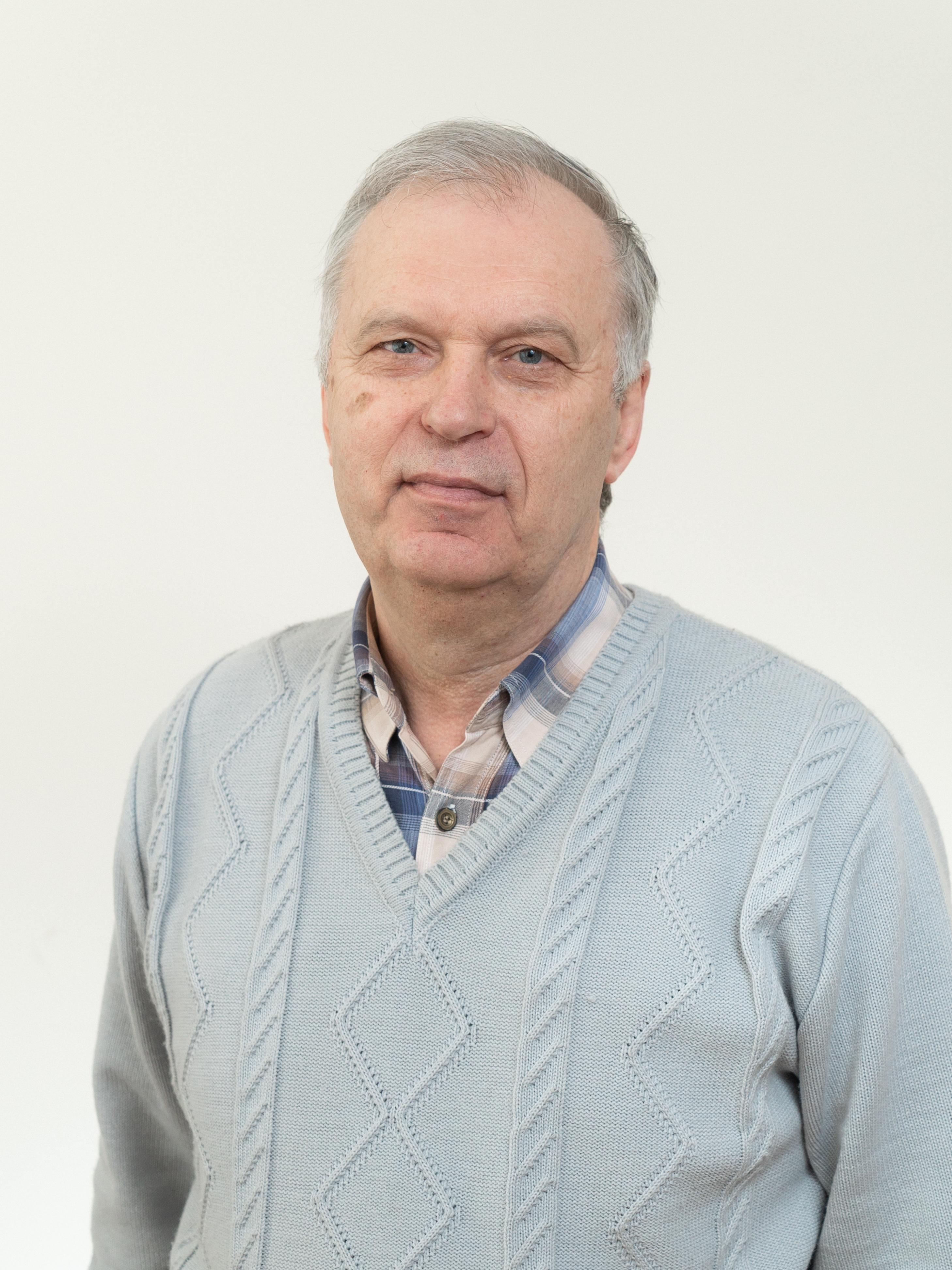
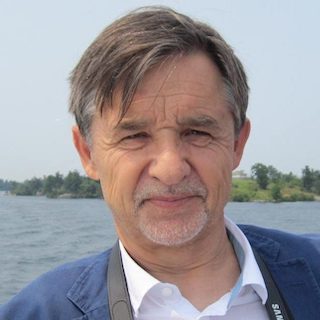
Mindaugas Bloznelis is a Professor at Vilnius University's Faculty of Mathematics and Informatics. His academic career spans decades, with active involvement in teaching and research as evidenced by his continuous presence in the university's schedules from 2016/2017 to 2025/2026. Professor Bloznelis specializes in Random Graph Theory , Network Analysis , and Probability Theory . His research focuses on connectivity thresholds, clustering coefficients, and statistical approximations in complex networks. Recent work includes advancements in modeling sparse and clustered dynamic networks, connectivity thresholds for Bernoulli random graph superpositions, and Edgeworth approximations for symmetric statistics. He co-authored the 2025 Modelling and Mining Networks workshop proceedings, highlighting his leadership in network analysis. His publications demonstrate deep expertise in stochastic processes, asymptotic theory, and finite population statistics. While no formal awards or student advisories are listed in the provided texts, his extensive publication record underscores significant contributions to probability and network science.
Prof. habil. dr. Jonas Kazys Sunklodas serves as an Affiliated Professor in the Interdisciplinary Statistical Research Group at Vilnius University's Institute of Data Science and Digital Technologies. His academic career spans decades of rigorous research in probability theory and mathematical statistics, maintaining an active publication record through 2023. His research focuses on asymptotic analysis of stochastic processes , particularly examining normal approximation techniques for various dependent and independent random variable structures. Key contributions include advancements in central limit theorems for φ-mixing processes, m-dependent sequences, and random sums with applications in theoretical statistics. Analysis of his 15 most recent publications reveals consistent specialization in convergence rates , distributional approximations , and limit theorems across diverse stochastic models. His methodological innovations frequently employ characteristic function analysis and L p norm convergence metrics. While no formal awards or student advisement records appear in the provided documentation, his sustained scholarly output demonstrates significant contributions to probability theory. His editorial work on Vytautas Statulevičius' Selected Mathematical Papers (2006) further establishes his standing in Lithuania's mathematical community. Professor Sunklodas maintains institutional affiliation through Vilnius University's Akademijos St. 4 facility (room 220), though no active research grants or laboratory affiliations are documented in the current materials. His textbook Tikimybių teorijos kursas (2003) remains a notable educational contribution to Lithuanian mathematics pedagogy.
Aleksejus Kononovičius is a Senior Researcher at Vilnius University's Institute of Theoretical Physics and Astronomy within the Faculty of Physics. His research spans interdisciplinary applications of physics principles to complex social and financial systems, with particular expertise in modeling collective behavior through statistical and computational approaches. Dr. Kononovičius's primary research interests focus on sociophysics, econophysics, and the physics of complex systems. His work explores opinion dynamics through various voter models (noisy voter model, compartmental voter model, scaled voter model), long-range memory phenomena in both physical and social contexts, and agent-based modeling of social and financial systems. He investigates how nonlinear stochastic dynamics can explain patterns in parliamentary elections, financial markets, and semiconductor physics. His research demonstrates how fundamental physical principles can elucidate complex phenomena across diverse domains. Analysis of his publication record reveals a consistent focus on developing and applying mathematical models to understand complex systems. His recent work (2023-2024) examines delayed interactions in voter models and 1/f noise in semiconductors, while maintaining his longstanding interest in long-range memory phenomena. The interdisciplinary nature of his research bridges statistical physics, social sciences, and finance, with applications ranging from understanding political behavior to financial market dynamics and physical material properties. 2020 Young scientist scholarship 'Effect of non-linearity on long-range memory properties of fractional Gaussian noise' awarded by Lithuanian Academy of Sciences Promotional scholarships for doctoral candidates (2013-2015) granted by Research Council of Lithuania IARIA Best Paper Award (2011) Dr. Kononovičius has supervised 3 bachelor degree theses, 1 master degree thesis, and 4 internship projects, demonstrating his commitment to mentoring the next generation of researchers. His research has been supported by multiple grants and scholarships from the Research Council of Lithuania. He actively contributes to the scientific community through his participation in the Complex Physical and Social Systems Group at Vilnius University. He maintains an active presence in the scientific community through the 'Physics of Risk' science blog (https://rf.mokslasplius.lt/), which serves as a platform for science popularization and educational activities related to his research interests. His work exemplifies the growing field of applying physics methodologies to understand complex social and economic phenomena.
Joana Katina is an Assistant Professor at the Faculty of Mathematics and Informatics, Vilnius University, Lithuania, teaching Internet Technologies and Algorithms and Data Structures continuously from 2016/2017 through 2025/2026 academic terms across multiple course formats including lectures, exercises, and subgroup sessions. Her research bridges computer science with energy systems and financial engineering, focusing on household energy behavior in Lithuania/Morocco, cryptocurrency forecasting using neural networks, Industrial Control Systems cybersecurity, and queueing theory. She integrates computational modeling with socio-technical analysis to address sustainability challenges and market prediction problems. Analysis of her 2023-2025 publications reveals a dominant trend toward renewable energy transitions (particularly waste-to-energy systems and cross-regional green strategies) combined with machine learning applications in finance. This evolution from earlier virtual stock exchange simulations demonstrates increasing interdisciplinary scope while maintaining core expertise in stochastic modeling and predictive analytics.
Dr. Mindaugas Juodis is a Researcher at the Blockchain and Quantum Technologies Group within Vilnius University's Institute of Data Science and Digital Technologies. His work centers on advanced statistical modeling of blockchain systems and decentralized networks. His research spans blockchain, cryptocurrency, quantum computing, and probability theory. Key investigations include Bitcoin price regime shifts using Bayesian methods, Ethereum transactional decentralization metrics, and wealth distribution analysis in blockchain networks. Earlier theoretical work focused on self-normalized sums, central limit theorems, and functional limit theorems for dependent processes. Publications reveal a clear trajectory from theoretical statistics (2004-2007) to applied blockchain analytics (2024-2025). Recent work bridges mathematical rigor with cryptocurrency applications, appearing in Mathematics, ICT Express, and IEEE conferences. His research demonstrates expertise in translating complex statistical frameworks to real-world decentralization problems. As part of the Blockchain and Quantum Technologies Group, he contributes to cutting-edge research in blockchain analytics and quantum computing intersections, focusing on empirical validation of decentralization metrics and network properties.
Dr. Marijus Vaičiulis is a researcher at the Institute of Mathematics and Informatics (Vilnius University) , affiliated with the Interdisciplinary Statistical Research Group . He holds a Doctor of Mathematics degree (awarded in 2004 by Vilnius Gediminas Technical University and MII). Education Bachelor's degree in Mathematics and Computer Science from Šiauliai University (1995) Master's degree in Mathematics and Computer Science from Šiauliai University (1997) Research interests focus on random processes with distant dependence and applied statistics , particularly in extreme value theory, tail index estimation, and network analysis. His work bridges theoretical probability with practical applications in stochastic processes and heavy-tailed data modeling. Publications demonstrate expertise in tail index estimation techniques, evolving random graph analysis, and extreme value statistics. Collaborations with Natalia Markovich and Maxim Ryzhov highlight interdisciplinary approaches to network theory and statistical inference. Pedagogical activities include teaching probability theory , mathematical statistics , and random processes at Šiauliai University and Vilnius University. Current affiliation is with the Interdisciplinary Statistical Research Group at Vilnius University's Institute of Mathematics and Informatics. His work address is Akademijos St. 4, room 218, Vilnius.
Dr. Stasys Steišūnas serves as an Affiliated Scientist at the Smart Technologies Research Group within Vilnius University Institute of Data Science and Digital Technologies (VU DMSTI), formerly known as the Institute of Mathematics and Informatics (MII), located at Akademijos St. 4, Vilnius. His academic profile centers on theoretical research in probability and stochastic modeling without indication of teaching responsibilities. His primary research domains include Queueing Theory , Stochastic Processes , and Mathematical Modeling , with specialized contributions to open/multiphase queueing networks, Brownian motion dynamics, and message switching systems. Collaborative work with Saulius Minkevičius constitutes the majority of his publications, demonstrating sustained focus on deriving limit theorems and performance metrics for complex stochastic systems. Publication analysis reveals concentrated output between 1999-2012 across journals like Nonlinear Analysis: Modelling and Control and International Journal of Pure and Applied Mathematics , with recurring themes in heavy traffic approximations, sojourn time analysis, and departure process modeling. The absence of recent publications suggests potential shift in professional focus while maintaining institutional affiliation. As part of VU DMSTI's research infrastructure, Steišūnas contributes to Lithuania's mathematical research ecosystem through rigorous theoretical work in stochastic network analysis, though no laboratory-specific affiliations or grant details are documented in available sources.
Prof. Kęstutis Kubilius serves as an Adjunct Professor within the Interdisciplinary Statistical Research Group at Vilnius University's Institute of Data Science and Digital Technologies. His research office is located at Akademijos Street 4, room 208 in Vilnius, with contact numbers +370 5 210 9731 and +370 618 06064. His research program centers on advanced stochastic processes, specializing in fractional Brownian motion and fractional stochastic differential equations (FSDEs). Key contributions include developing existence-uniqueness frameworks for FSDEs with stochastic forcing, creating numerical approximation schemes like the implicit Euler method, and advancing parameter estimation techniques for Hurst and Orey indices. His work bridges theoretical probability with applications in financial mathematics and statistical modeling of long-range dependent phenomena. Analysis of his 15 most recent publications reveals consistent focus on fractional calculus applications, with increasing emphasis on numerical methods since 2020. The research demonstrates methodological evolution from theoretical foundations toward practical implementation, particularly in volatility modeling and boundary-conditioned SDEs. Recent collaborative works (notably with Medžiūnas and Mishura) highlight interdisciplinary approaches combining statistical inference with computational mathematics. Prof. Kubilius actively supervises doctoral candidates, having guided Aidas Medžiūnas through completion of the 2018-2022 dissertation 'Parameter evaluation for mixed SDLs'. His research group maintains strong connections with international probability theory communities, evidenced by co-authorships with leading scholars in fractional calculus. As a core member of the Interdisciplinary Statistical Research Group, he contributes to Vilnius University's strategic focus on advanced statistical methodologies for complex data systems, with particular relevance to financial engineering and time-series analysis applications.
Rimantas Rudzkis is an Affiliated Professor at Vilnius University's Institute of Mathematics and Informatics, specifically within the Interdisciplinary Statistical Research Group. He serves as the Head of the Applied Statistics Department and has been working at the Institute since 1978. His academic credentials include a Doctor of Mathematics from Vilnius University (1978), a Habilitation Doctor from the Institute of Mathematics and Informatics (1993), and Professor title from Vytautas Magnus University (1996). Dr. Rudzkis has extensive educational background, having graduated from Kaunas Polytechnic Institute in 1973 with a specialization in computing technology and engineering mathematics. His professional journey began as an assistant at KPI (1973-1974), followed by postgraduate studies at the Institute of Mathematics and Informatics (1974-1977). His research primarily focuses on probability theory , mathematical statistics , and econometric modeling . He has developed methods for data clustering, nonparametric density estimation, and created mathematical models of Lithuanian macroeconomic indicators using VAR methodology. His work spans theoretical developments in statistical decision algorithms and practical applications in economic forecasting. Analysis of his recent publications reveals a consistent focus on statistical methodology development, particularly in goodness-of-fit testing, multivariate analysis, and applications to economic and financial data. His research shows a clear progression from theoretical probability work toward increasingly applied econometric modeling, with significant emphasis on Baltic region economic analysis in recent years. Dr. Rudzkis maintains significant professional engagement through multiple editorial roles, including membership on the editorial boards of 'Lithuanian Mathematical Collection' (since 1999), 'Lithuanian Statistical Works' (since 2000), and 'Money Studies' (since 2000). He has also served as Editor for proceedings of the '8th International Conference on Probability Theory and Mathematical Statistics'. His academic service includes leadership as Head of the Applied Statistics Department Seminar, membership on the program committee for international conferences, and serving as an Expert member of the Lithuanian Academy of Sciences since 1994. He has also been actively involved with professional societies, serving on the boards of both the Lithuanian Mathematical Society and Lithuanian Statistical Union since 1998. Dr. Rudzkis teaches probability theory, mathematical statistics, and specialized courses including multivariate statistics, time series analysis, correlation-regression analysis, and econometrics at multiple universities including VDU, KTU, and VGTU.
ISM University of Management and EconomicsLithuania
Dr. Fabio Sgarbossa is a Full Professor of Industrial Logistics at NTNU's Department of Mechanical and Industrial Engineering (MTP), leading the Production Management Research Group and overseeing the Logistics 4.0 Lab. He holds a PhD in Industrial Engineering from the University of Padova (2010) and previously served as an Associate Professor there. His research focuses on industrial logistics design, supply chain management, digitalization in logistics, and human factors in production systems, with contributions to over 150 international publications. He is an Associate Editor for the International Journal of Production Research and actively involved in organizing international conferences. His work integrates advanced technologies like Industry 4.0, additive manufacturing, and AI to address challenges in supply chain resilience, sustainable production, and ergonomic system design. Notable projects include optimizing warehouse systems, evaluating assistive technologies for worker well-being, and developing decision frameworks for spare parts management. His research bridges theoretical models with practical applications, emphasizing human-centered design and circular economy principles. Dr. Sgarbossa’s contributions extend to strategic frameworks for disassembly systems, collaborative logistics in rural contexts, and the mitigation of Lean implementation barriers through digitalization. His Logistics 4.0 Lab serves as a platform for experimental research and education, fostering innovation in smart manufacturing and logistics solutions. He collaborates extensively on EU-funded projects and guides industry partnerships to translate academic insights into actionable strategies.
Tadeusz Trzaskalik is a Professor at the University of Economics in Katowice, specializing in the Department of Operations Research. His work focuses on multiobjective dynamic programming, decision support systems, and stochastic optimization. Research Interests: Development of bipolar methods for multistage decision processes Multiobjective dynamic programming applications in project portfolio selection Stochastic programming for resource allocation and reliability analysis Interactive decision-making procedures with hierarchical criteria Preference modeling in complex economic systems Operations research in business and industrial applications Academic Contributions: Published extensively in journals like Annals of Operations Research, Central European Journal of Operations Research, and Croatian Operational Research Review Authored textbooks on linear programming, integer programming, and decision support systems Developed interactive procedures for multiobjective allocation and scheduling problems
Vygintas Gontis is a Research Professor at Vilnius University's Faculty of Physics, working at the Experimental nuclear and particle physics center. His research spans statistical physics, dynamically chaotic systems, econophysics, and agent-based stochastic modeling with significant contributions to financial market analysis. Professor Gontis has developed influential theoretical frameworks applying physics principles to financial phenomena, creating stochastic models that explain volatility patterns, return intervals, and long-range memory effects in markets. His interdisciplinary work bridges statistical physics and economic theory, revealing universal patterns in complex market behaviors. Stochastic modeling of financial markets Long-range memory phenomena Agent-based computational finance 1/f noise analysis Complex systems dynamics Econophysics applications His publication record shows consistent scholarly output from 1987 through 2016, with recent work focusing on financial applications while maintaining connections to fundamental physics concepts. The research demonstrates evolution from quantum physics topics toward interdisciplinary financial modeling. Professor Gontis has supervised doctoral student Aleksejus Kononovičius (2011-2015) and postdoctoral researcher Rytis Kazakevičius (2020-2022). He leads the Group of Complex Physical and Social Systems and has held significant international roles including national representative for COST projects on Physics of Risk (2003-2008) and Physics of Competition and Conflicts (2008-2012).
Dr. Kęstutis Svirskas is a researcher at the Institute of Applied Electrodynamics and Telecommunications (IAET) at Vilnius University. His work bridges wireless network technologies with theoretical physics, particularly gravitation and particle dynamics. Research Interests include wireless networks, gravitation, and computer networks. He has contributed to electromagnetic compatibility studies and channel modeling for next-generation telecommunications. His article trends reveal interdisciplinary work, combining gravitational theory (e.g., Kerr black holes) with practical wireless network challenges (e.g., LTE performance, DVB-T compatibility, LOS/NLOS channel models). Teaching involves courses like Theory of Relativity, Routing in Local Area Networks, and Computer Communication Technologies at the bachelor's level. He also supervised thesis projects on anechoic chamber calibration and LTE network analysis. Scientific activities include translating Stephen Hawking and Leonard Mlodinov's The Grand Project into Lithuanian, contributing to science education through academic projects.
Prof. habil. dr. Leonidas Sakalauskas is an Affiliated Scientist at the Smart Technologies Research Group within the Institute of Data Science and Digital Technologies at Vilnius University. His extensive research career spans mathematical modeling, stochastic programming, and statistical analysis with significant contributions across multiple disciplines. He maintains an active research profile with recent publications extending into 2025. Professor Sakalauskas' research focuses on stochastic programming, mathematical modeling, financial mathematics, statistical analysis, optimization, and queueing theory. His work demonstrates a consistent pattern of interdisciplinary research, bridging theoretical mathematics with practical applications in finance, social sciences, and computer science. He has developed innovative approaches to agent-based modeling, fractal analysis, and Monte Carlo methods, contributing significantly to both theoretical frameworks and practical implementations. His recent publications reveal a continuing evolution of research interests, with increasing emphasis on data science applications, computational social science, and advanced statistical modeling techniques. The articles demonstrate sophisticated methodological approaches to complex problems across diverse domains including financial modeling, social cohesion analysis, and network performance optimization. Throughout his career, Professor Sakalauskas has maintained a strong publication record in high-impact journals and conference proceedings, reflecting his ongoing engagement with the international research community. His work shows consistent methodological rigor combined with practical relevance across multiple application domains. Professor Sakalauskas has collaborated extensively with researchers across Lithuania and internationally, demonstrating strong teamwork and interdisciplinary engagement. His research has practical applications in financial modeling, social science analysis, and computational systems optimization, contributing to both theoretical advances and real-world implementations.
Associate Professor Vaida Bartkutė-Norkūnienė of Utena College is an active researcher in mathematics education, digital transformation, and mentoring communication. Her work bridges technical disciplines with practical applications in education and sustainability. Her primary research interests include: Mathematics education methodologies and computerized learning systems Digital CO2 footprint analysis for websites and e-commerce Cross-national mentoring communication frameworks Labor market policy efficiency in EU contexts Digital innovation adoption in tourism sectors Recent publications demonstrate a clear trajectory toward sustainable digital practices, with significant focus on quantifying environmental impacts of web technologies while advancing educational models through AI integration. Her cross-cultural mentoring studies reveal critical communication patterns between Lithuanian and Latvian academic systems. Dr. Bartkutė-Norkūnienė manages multiple high-impact projects including the National Education Agency's 'Digital Transformation of Education (EdTech)', NORDPLUS 'Network Water Quality and Food Safety', and Erasmus+ 'DICCMEM' communication competence initiatives. She secured Ministry of Education funding for youth programs 'Start a career with an idea' (2021) and 'Code - Keys to Success' (2020). She actively contributes to academic governance as editorial board member of 'Įžvalgos' journal, program committee member for ISC SAI 2022, and Scientific Activities Subgroup member developing ethical AI guidelines for science. Her professional affiliations include the Lithuanian College Mathematics Teachers Association, National Distance Learning Association, and European Working Group on Stochastic Programming.