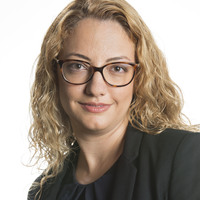
Silvia Jiménez Fernández is an Associate Professor in the Department of Signal Theory and Communications at Universidad Autónoma de Madrid. Her research focuses on optimization algorithms, smart grids, renewable energy systems, telemedicine, and machine learning applications. She holds a Ph.D. from Universidad Politécnica de Madrid (2009), supervised by Dr. Francisco del Pozo Guerrero and Dr. Paula de Toledo Heras. Her work integrates interdisciplinary approaches, such as combining evolutionary algorithms with engineering challenges in energy systems and healthcare. Key contributions include advancements in coral reefs optimization algorithms for energy management, machine learning for battery health estimation, and telemedicine systems for chronic disease monitoring. Recent research trends emphasize hybrid learning models in education, multi-objective optimization in renewable energy systems, and risk analysis in smart grids with electric vehicles. She is affiliated with the GHEODE Research Group (Modern Heuristics and Network Design).
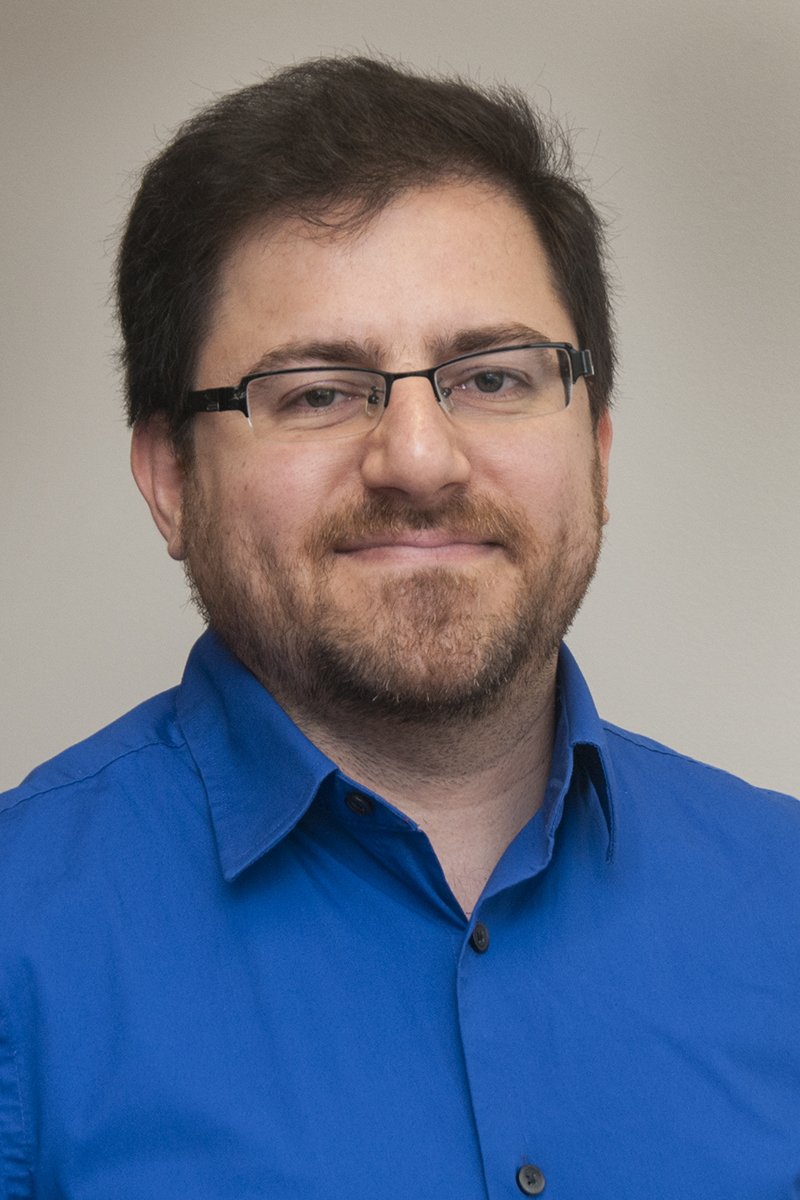
Dr. Leila Moslemi Naeni is a Senior Lecturer at the University of Technology Sydney (UTS), School of Built Environment, with a dual appointment in the Faculty of Design, Architecture and Building. She previously served as a Lecturer at UTS (2016-2018) and Sessional Lecturer at Curtin University (2015-2016). PhD in Computer Science (University of Newcastle, 2017) MSc in Industrial Engineering (Sharif University of Technology, 2007) BSc in Industrial Engineering (Iran University of Science and Technology, 2004) Her research focuses on project management under uncertainty, integrating fuzzy systems and mathematical modeling with applications in construction, ESG reporting, and disruptive technologies. She developed innovative methods for statistical control charts in project monitoring and leads research on leveraging blockchain and digital tools for sustainable infrastructure. Recent publications highlight her work on resource-constrained scheduling algorithms, ESG integration in megaprojects, and gamification in project management education. She serves as Review Editor for Frontiers in Environmental Science and on the Editorial Board of Smart and Sustainable Built Environment . 2016 PMI NSW Research Award 2022 Walt Lipke Award 2013 FEBE Postgraduate Research Prize As an active research mentor, she supervises PhD students in machine learning applications, disaster management technologies, and social infrastructure investments. Her teaching emphasizes simulation-based learning, collaborating with Oulo University (Finland) to quantify educational value.
Adam Bouland is an Assistant Professor of Computer Science at Stanford University, where he leads the CS Theory Group. His research focuses on quantum computation, computational complexity theory, and their connections to physics. He completed his Ph.D. at MIT under Scott Aaronson, followed by postdoctoral research at UC Berkeley and the Simons Institute under Umesh Vazirani. His research explores fundamental questions in quantum computing including quantum complexity classes, quantum supremacy demonstrations, pseudorandom quantum states, quantum algorithm design, and connections to high-energy physics through AdS/CFT correspondence. Recent work investigates computational aspects of quantum systems, quantum learning theory, and noise resilience in quantum devices. Professor Bouland leads an active research group including 6 PhD students and 1 postdoctoral researcher, with joint appointments across Computer Science, Physics, and ICME departments. He regularly teaches graduate courses on Quantum Computation (CS259Q) and Quantum Complexity Theory (CS359D). His service includes program committee membership for major theoretical computer science conferences including FOCS, STOC, ITCS, and QIP.
Kia Bazargan is an Associate Professor and the Leroy and Ruth Fingerson Co-op Professor at the University of Minnesota, College of Science and Engineering. He currently serves as Director of the Co-op Program and focuses on VLSI-CAD, FPGA physical design, and hybrid binary-unary computing. University: University of Minnesota School: College of Science and Engineering Department: Electrical and Computer Engineering His research emphasizes stochastic computing and unary computing, where numbers are encoded as streams of bits. He explores techniques to reduce hardware costs while maintaining efficiency, particularly for edge computing and neural network applications. Recent publications highlight his work on hybrid binary-unary computing, FPGA-based inference acceleration, and lossless compression of lookup tables. Grants from Cisco Systems and the National Science Foundation support his projects. Scientific Awards: PFI-TT Grant (2020-2024): Commercializing hybrid computing for modern applications Uniqomp NSF Grant (2020-2021) EAGER Grant (2015): Studying complex dynamical systems His lab (4-162 EE/CSci) investigates scalable computing paradigms to bridge the gap between ASICs and FPGAs in performance and energy efficiency.
Jilles Vreeken is a Professor of Computer Science at Saarland University and tenured faculty at the CISPA Helmholtz Center for Information Security, where he leads the Exploratory Data Analysis research group. He is also an ELLIS Fellow and Faculty of the Saarbrücken Unit on AI and ML. His work bridges theoretical foundations with practical applications in causal inference, unsupervised learning, and exploratory data analysis. Dr. Vreeken's research focuses on developing theory and algorithms for answering fundamentally exploratory questions about data: "what is going on in my data?", "what causes what and how?", and "what can we learn from this model?" without making unnecessary or unjustified assumptions. He takes a principled approach based on information theory to identify what is worth knowing, then develops efficient algorithms for extracting useful interpretable results. His work spans causal inference under realistic conditions (including hidden confounding, selection bias, and non-i.i.d. data), summarizing complex data and models in understandable terms, and combining these threads to create more robust and useful models across diverse data types. His recent publications demonstrate a strong trend toward causal discovery in increasingly realistic settings, including non-stationary time series, event sequences, and scenarios with hidden confounders. He has made significant contributions to federated learning, interpretable machine learning, and pattern mining. His work consistently applies information-theoretic principles to develop methods that are both theoretically sound and practically useful for extracting insights from complex data. Dr. Vreeken has received numerous prestigious awards including: IEEE ICDM'18 Tao Li Award for Excellence in Research IEEE ICDM'18 Best Paper Award UdS-CS'15 Busy Beaver Teaching Award ACM SIGKDD'11 Best Student Paper Award ACM SIGKDD'10 Doctoral Dissertation Runner-Up Award ECML PKDD'09 Best Student Paper Award As an advisor, Dr. Vreeken has mentored numerous doctoral researchers to completion, including Dr. Osman Ali Mian, Dr. David Kaltenpoth, Dr. Boris Wiegand, Dr. Sebastian Dalleiger, Dr. Janis Kalofolias, Dr. Jonas Fischer, Dr. Alexander Marx, Dr. Panagiotis Mandros, Dr. Kailash Budhathoki, Dr. Roel Bertens, Dr. Koen Smets, and Dr. Michael Mampaey. He has secured significant research funding as PI for multiple projects including "AI for Prediction and Therapy Guidance in Acute Stroke" (HAICU, 2025-2028), "Neuro-Explicit Models of Language, Vision and Action" (RTG, DFG, 2023-2028), and "Crushing Antimicrobial Resistance using Explainable AI" (HAICU, 2021-2024). Dr. Vreeken leads the Exploratory Data Analysis (EDA) research group at CISPA, which focuses on developing theory and algorithms for discovering novel insights from data, learning inherently interpretable models, and drawing reliable causal conclusions. The group has produced numerous influential algorithms and frameworks in causal inference, pattern mining, and exploratory data analysis, with applications spanning healthcare, materials science, and cybersecurity.
Tom Kempton is a Senior Lecturer in the Department of Mathematics at the University of Manchester, currently on leave while working as an AI Fellow at the Featurespace Innovation Lab in Helsinki. His research focuses on the intersection of machine learning and ergodic theory, with a background in thermodynamic formalism, fractal geometry, and number theory. Current Main Interests: Machine Learning, Ergodic Theory, Fractal Geometry, Number Theory Previous Affiliations: EPSRC Postdoc at University of St Andrews (w/ Kenneth Falconer), Postdoc at University of Utrecht (w/ Karma Dajani), PhD at University of Warwick (w/ Mark Pollicott) Education: PhD in Mathematics from University of Warwick (2011) Kempton's recent work explores decoding strategies in large language models through thermodynamic formalism and investigates local normalization distortion for machine-generated text detection. Earlier contributions include foundational research on Bernoulli convolutions, self-affine sets, and thermodynamic formalism in symbolic dynamics. Students Mentored: Postdocs Leticia Pardo Simon, Lawrence Lee, Demi Allen; PhD students Alex Batsis, Peej Ingarfeld, Alden Paige, Milo Edwardes. His research has been published in journals including Nonlinearity, Mathematische Zeitschrift, and International Mathematics Research Notices. Kempton's university email thomas.kempton@manchester.ac.uk remains active despite his leave status.
Erik Quaeghebeur is an Assistant Professor at Eindhoven University of Technology's School of Mathematics and Computer Science, focusing on uncertainty modeling in artificial intelligence. His work spans probabilistic circuits, imprecise probability theory, and wind energy applications. PhD in Applied Mathematics (Ghent University, 2002-2009) Master's in Applied Mathematics (Université catholique de Louvain, 2001-2002) Master's in Physics Engineering (Ghent University, 1998-2001) Research interests include probabilistic modeling under uncertainty, with applications in AI and wind energy systems. His recent work explores tensor factorizations, equivariant graph neural networks, and scalable probabilistic circuits. Scientific contributions include 60 research outputs and 2 datasets . Awards encompass the ERCIM Alain Bensoussan Fellowship (2013), BOF Postdoc (2010), and B.A.E.F. Francqui Fellowship (2009). He serves on committees for the Society for Imprecise Probability and acts as editorial board member for related conferences. Foundations of Artificial Intelligence course (since 2020) Uncertainty Representations and Reasoning course (since 2021)
Professor Emese Lazar serves as Professor of Finance and Deputy School Director of Teaching and Learning at the ICMA Centre, Henley Business School, University of Reading. She joined the institution in 2005 and is an active member of the Econometrics with Data Science research cluster, focusing on quantitative finance applications. Her educational background includes: PhD in Finance from the University of Reading BSc in Finance and Banking from the University of Economic Studies, Bucharest BSc in Computer Science from the University of Bucharest Research interests span risk measurement and management , model risk , financial econometrics , derivatives pricing , green finance , climate risk in finance , and machine learning applications . Her work bridges theoretical finance with practical risk management challenges, particularly in climate-related financial risks and algorithmic risk modeling. Recent publications reveal a pronounced shift toward integrating climate risk metrics with traditional financial models and developing neural network-based forecasting for tail risk measures. Her research demonstrates consistent innovation in volatility modeling, model risk quantification, and climate finance applications across top-tier journals. Professor Lazar teaches postgraduate modules in Market Risk and Climate Change and Risk Management, supervising PhD students in her specialized research areas. She actively contributes to the Econometrics with Data Science research cluster, fostering interdisciplinary collaboration between finance, data science, and climate risk modeling.
Patrick Jaillet is the Dugald C. Jackson Professor in the Department of Electrical Engineering and Computer Science at MIT's School of Engineering. He holds joint appointments with the Laboratory for Information and Decision Systems (LIDS), the Operations Research Center (ORC), the Operations Research and Statistics Group at MIT Sloan, and the Department of Civil and Environmental Engineering. Previously, he served as Head of Civil and Environmental Engineering at MIT (2002-2009) and Chair of the Department of Management Science and Information Systems at UT Austin (1997-2002). Dr. Jaillet's research focuses on online optimization and learning, sequential decision-making under uncertainty, and security and resilience in complex networks. His work spans theoretical foundations in optimization and machine learning with applications in transportation, online market analytics, and network security. He has developed mathematical frameworks for problems involving uncertainty, dynamic resource allocation, and strategic behavior in complex systems. His recent publications reveal strong trends in bridging theoretical optimization with practical machine learning applications. Key themes include Bayesian optimization for black-box functions, online learning with limited information, mechanism design for resource allocation, and network security applications. His work increasingly integrates large language models with traditional optimization techniques, reflecting the evolving landscape of AI-driven decision-making systems. Fulbright Scholar (1990) Fellow of the Institute for Operations Research and Management Science (INFORMS) Best Applications Paper Award at ICAPS 2019 Long-standing Associate Editor for top journals including Operations Research and Transportation Science Dr. Jaillet has advised over 40 doctoral students who now hold prominent positions in academia and industry, including faculty positions at MIT, Georgia Tech, and ETH Zurich, and research scientist roles at Amazon, Microsoft Research, and Google. His research has been consistently funded by major agencies including NSF, ONR, AFOSR, and international partners like Singapore NRF, with current projects focusing on learning algorithms for autonomous security and fundamental tradeoffs in optimization. He leads a vibrant research group spanning MIT's EECS department and ORC, with current funding supporting work on neural bandits, federated optimization, and network security applications. His research group operates at the intersection of theory and practice, with strong connections to industry through collaborations with IBM, Microsoft, Google, and various transportation and technology companies. The group maintains active partnerships with international institutions, particularly through SMART in Singapore, reflecting Dr. Jaillet's global research impact.
Neil Lawrence is the inaugural DeepMind Professor of Machine Learning at the University of Cambridge's Department of Computer Science and Technology. He also holds positions as a Senior AI Fellow at The Alan Turing Institute and a Visiting Professor of Machine Learning at the University of Sheffield. After three years as Director of Machine Learning at Amazon, Lawrence recently returned to academia, bringing extensive industry experience to his academic work. Lawrence's research focuses on the intersection of machine learning with the physical world, particularly in uncertainty quantification and end-to-end solutions for real-world applications. His work was initially inspired by deploying machine learning systems in African contexts, where comprehensive solutions are often required. His technical expertise spans over two decades in machine learning methods, with a growing interest in public understanding of machine learning, policy decisions, and data governance implications. His recent publications reveal a diverse research portfolio spanning climate science, healthcare applications, systems engineering for AI deployment, data governance, and theoretical machine learning. Lawrence's work demonstrates a consistent theme of bridging theoretical machine learning with practical applications across multiple domains, with particular attention to uncertainty quantification and the societal implications of AI systems. Lawrence serves on the board of the AISTATS conference and the ELLIS Foundation, and acts as the founding and series editor for the Proceedings of Machine Learning Research. He is also the co-host of the Talking Machines podcast, demonstrating his commitment to public engagement with machine learning concepts. At Cambridge, Lawrence teaches Advanced Data Science (Part II) and Machine Learning and the Physical World (MPhil ACS, Part III), contributing to both undergraduate and postgraduate education in computer science. His work with the Accelerate Programme for Scientific Discovery and the Data Trusts Initiative positions him at the forefront of developing frameworks for responsible and effective AI deployment in scientific and societal contexts.
Farzad Sabzikar is an Associate Professor in the Department of Statistics at Iowa State University, specializing in stochastic processes, fractional models, and optimization algorithms. He integrates mathematical theory with applications in machine learning and time series analysis. Education: PhD in Statistics (Michigan State University, 2014), MS in Mathematics (Sharif University, 2009), BS in Mathematics (Isfahan University of Technology, 2006) His research bridges fractional calculus and statistical modeling, focusing on tempered processes and their applications in turbulence analysis, geophysical flows, and high-frequency data. He employs wavelet methods and asymptotic theory to study heavy-tailed phenomena and long-range dependencies. Recent publications emphasize tempered fractional Brownian motion, stable noise modeling, and functional data analysis. Key trends include transient anomalous diffusion, machine learning for cognitive decline classification, and optimized signal processing techniques. Scientific Awards: None listed His work has implications for machine learning, geophysics, and astrophysics, though no formal advising, grant, or lab affiliations are detailed in available sources.
Mahdi Fazeli is an Associate Professor at the School of Information Technology, Halmstad University, Sweden, specializing in hardware security and trust, energy-efficient computing, and embedded and cyber-physical systems. His academic journey began with a Ph.D. in Computer Engineering from Sharif University of Technology, Iran, in 2011. His career progression includes positions as Associate Professor at Bogazici University (2019-2021) and Iran University of Science and Technology (2016-2019), and Assistant Professor at the same institution (2011-2016). His research interests focus on hardware security and trust, reliable VLSI circuits and systems, energy-efficient computing, and dependable embedded systems. His work bridges the gap between theoretical security concepts and practical implementations in real-world systems, particularly in IoT and embedded environments. He has established himself as a leading researcher in Physical Unclonable Functions (PUFs), hardware trojans detection, and energy-efficient security solutions for resource-constrained devices. His publication record shows a clear progression and deepening expertise in hardware security, with recent work focusing on cutting-edge applications in edge computing, vehicular networks, and IoT security. His 2023-2025 publications demonstrate significant contributions to magnetic memory-based security primitives, anomaly detection systems, and energy-efficient security mechanisms. Throughout his career, Fazeli has led multiple research initiatives including the Dependable Systems and Architecture Lab (DSA) and the Networked and Embedded Systems Lab at Iran University of Science and Technology. His leadership extends to heading the Hardware Group and serving as Vice Chair for Educational Affairs, demonstrating his commitment to both research excellence and academic administration.
Professor Dingxuan Zhou is a distinguished academic serving as Professor and Head of School of Mathematics and Statistics at The University of Sydney, joining the institution on August 29, 2022. He is also a member of The Net Zero Institute and has held significant editorial positions, including editor-in-chief of the journal "Analysis and Application" of "Mathematical Foundations of Computing" and serving on the editorial boards of over ten international journals. Educational Background: BSc in Mathematics from Zhejiang University, China (1988) PhD in Mathematics from Zhejiang University, China (1991) Professor Zhou's research spans learning theory, neural networks, wavelet analysis, and approximation theory, with his current focus on the theory of deep learning. His work aligns with the Faculty of Science Research Strengths in Complex Systems, Precision and Digital Health, Data and Decisions, and National Security. His research demonstrates a consistent progression from foundational mathematical theory to cutting-edge applications in machine learning and artificial intelligence, with particular emphasis on understanding the theoretical underpinnings of neural networks and deep learning systems. His extensive publication record reveals a strong trend toward distributed learning frameworks, approximation theory for neural networks, and the mathematical foundations of deep learning. Recent work focuses on federated learning, transformers, physics-informed neural networks, and the theoretical analysis of over-parameterized networks, reflecting the evolving landscape of machine learning research with increasing emphasis on theoretical guarantees and practical applications. Scientific Awards: Humboldt Research Fellowship (1993) Fund for Distinguished Young Scholars from the National Science Foundation of China (2005) Highly-cited Researcher by Thomson Reuters/Clarivate Analytics (2014-17) World's Top 2% Scientist by Stanford University (2021, 2022, 2023) Professor Zhou has demonstrated exceptional leadership in research and mentorship, having conducted over 40 research grants as Principal Investigator, supervised more than 20 PhD students, and co-organized over 20 international conferences. His collaborative approach is evident in his extensive co-authorship network across multiple institutions globally. He has also served in significant administrative roles including Head of Department of Mathematics (2006-12), Associate Dean of School of Data Science (2018-22), and Director of the Liu Bie Ju Centre for Mathematical Sciences (2019-22) at City University of Hong Kong.
Laurent Condat is a Senior Research Scientist at King Abdullah University of Science and Technology (KAUST) in Saudi Arabia, where he conducts research in optimization algorithms and their applications. He is affiliated with the College of Engineering, Department of Computer Science, and has previously held research positions at CNRS in France, working at GREYC in Caen and GIPSA-Lab in Grenoble. Dr. Condat received his PhD in 2006 from Grenoble Institute of Technology, followed by a 2-year postdoc in Munich, Germany. He was recruited as a permanent researcher by CNRS in 2008 and has been on leave from CNRS since November 2019 to work at KAUST. In February 2025, he was promoted to 'chargé de recherche hors classe' (senior research scientist) by CNRS. His research focuses on deterministic and stochastic optimization algorithms, convex relaxations, and applications to machine learning, signal and image processing. His work spans theoretical foundations of optimization methods to practical implementations for distributed and federated learning systems. He has developed several influential algorithms including RandProx, TAMUNA, and LoCoDL that address communication efficiency in distributed optimization. His recent publications demonstrate strong trends in communication-efficient distributed optimization, with particular emphasis on federated learning, compression techniques, and local training methods. His work bridges theoretical optimization with practical machine learning applications, showing consistent innovation in algorithmic design for large-scale problems. Best reviewer award at AISTATS 2025 Meritorious Service Award from Mathematical Programming Stanford's list of world's top 2% most influential scientists Dr. Condat has co-supervised PhD students including Daniele Picone and Julien Baderot. He serves as an Associate Editor for IEEE Transactions on Signal Processing and has presented his work at numerous international conferences including plenary talks at major optimization workshops. His research is supported through KAUST funding and collaborative projects with researchers worldwide.
Matt Koslovsky is an Assistant Professor of Statistics at Colorado State University. He completed his PhD in Biostatistics at The University of Texas Health Science Center School of Public Health (UTHealth) in 2016 and served as a Post-Doctoral Research Associate at Rice University's Marina Vannucci lab from 2018-2020. Prior to joining CSU in 2020, he worked as a statistical consultant at Johnson Space Center's Biostatistics Lab. PhD, Biostatistics (2016), UTHealth School of Public Health Post-Doctoral Research Associate (2018-2020), Rice University Assistant Professor (2020-Present), Colorado State University His research spans Bayesian methodology and its applications across diverse domains: Theory: Bayesian modeling, variable selection, graphical models, nonparametric Bayes Applications: Cancer prevention, mental health, microbiome analysis, space health, ecological momentary assessment Recent publications demonstrate methodological advancements in: Bayesian variable selection for rare variants Integrated population modeling Compositional data analysis Continuous-time hidden Markov models mHealth data processing Microbiome mediation effects Current advisees include: Hyungjoon Kim (PhD candidate) Brody Erlandson (PhD candidate) Suppapat Korsurat (PhD candidate)