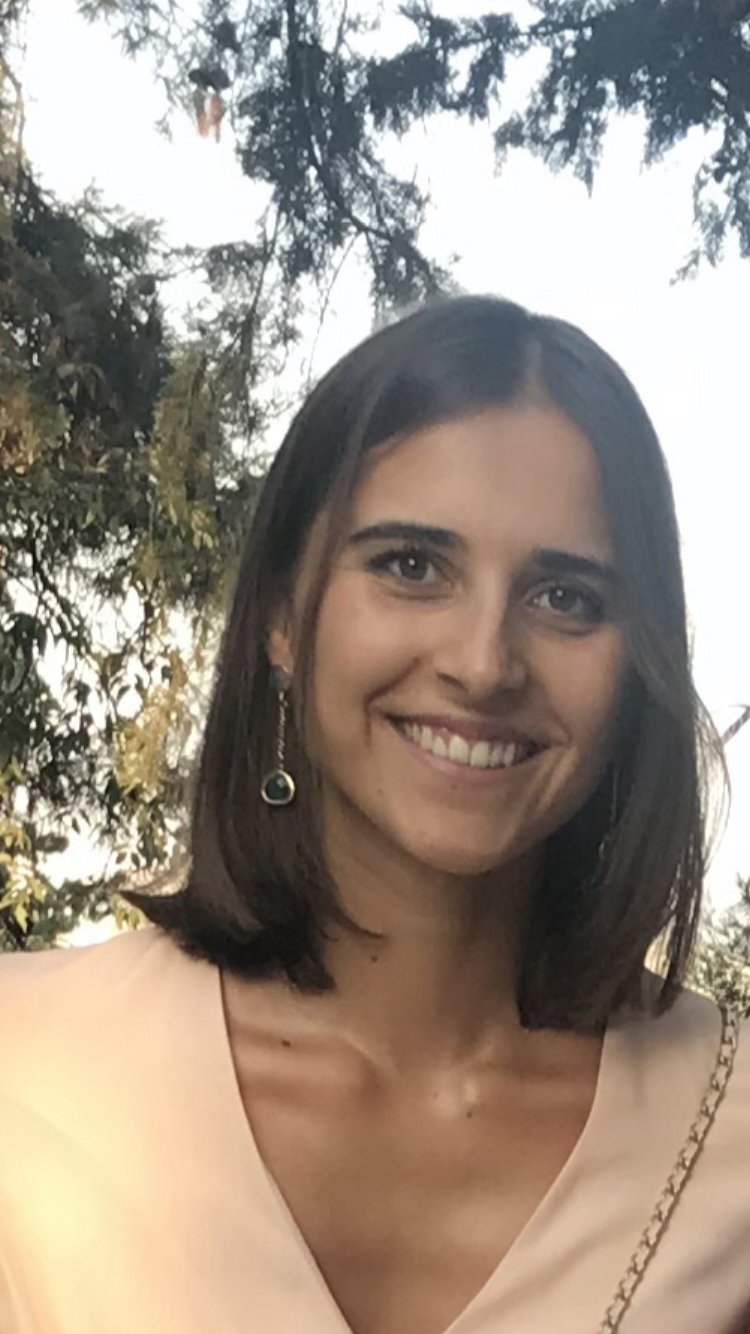
Christiane Barz is a Professor of Mathematics at the University of Zurich's Institute for Business Administration since 2016. Previously, she held academic roles at the UCLA Anderson School of Management, the Chicago Booth School of Business, and the Technical University (TU) Berlin. Her research focuses on stochastic dynamic systems, Markov decision processes, and their applications in revenue management. She emphasizes making mathematical tools accessible and practical for real-world problem-solving, particularly in optimizing decision-making under uncertainty. Education includes a degree in industrial engineering and a doctorate from the University of Karlsruhe (TH), Germany. Her career path includes postdoctoral research at the University of Chicago's Booth School of Business and roles as an Assistant Professor at UCLA. She combines academic excellence with balancing family life, advocating for gender equity in STEM fields. Her research explores risk-sensitive decision-making frameworks, dynamic pricing models for transportation and healthcare, and optimizing resource allocation in complex systems. Recent work includes applications in FlixBus, air cargo networks, and improving patient admission scheduling in hospitals. Barz's teaching philosophy prioritizes demystifying mathematics for students, encouraging critical engagement rather than fear of complexity. She collaborates with industry partners to apply operations research methods to real-world challenges, emphasizing both theoretical rigor and practical relevance.
Pietro de Anna is an Associate Professor at the Institute of Earth Sciences (ISTE), University of Lausanne, since August 2021. He holds an Italian nationality and completed a Master's in Theoretical Physics (2009) at the University of Florence, followed by a PhD in Earth Sciences at the University of Rennes 1 (2012). His research focuses on reactive transport in porous media, filtration, and interactions between bacteriological activity and flow dynamics. He directs the Environmental Fluid Mechanics Laboratory since 2015, employing microfluidics, numerical simulations, and theoretical models to study coupled physical, biological, and chemical mechanisms in confined systems. He has published 21 peer-reviewed articles, teaches environmental science courses at the Bachelor's and Master's levels, and supervised two PhD theses and four postdoctoral researchers. His work includes investigations into microbial biomass accumulation in porous media, diffusion-limited mixing, and biocementation processes. Key research themes are spatial heterogeneity effects, chemotaxis, and quorum sensing in microbial systems. He has pioneered methods combining microfluidics with microscopy to analyze transport at pore scales.
Johanna Ziegel is a Professor of Statistics at ETH Zurich, Switzerland, since 2024, and a Visiting Scientist at the Heidelberg Institute for Theoretical Studies (HITS). Previously, she held positions at the University of Bern, where she was promoted to Full Professor in 2023. Her research focuses on decision-theoretically sound methods for forecast evaluation, probabilistic forecasting, risk measures in finance, and applications in meteorology, medicine, and climate science. She is actively involved in editorial roles for journals like Bernoulli , JASA: Theory & Methods , and SIAM Journal on Financial Mathematics . Education: PhD in Stereological Analysis of Spatial Structures from ETH Zurich (2010), supervised by Paul Embrechts and Eva B. Vedel Jensen. Postdoctoral research at the University of Melbourne and Heidelberg University. Research Interests: Forecast evaluation, elicitable functionals, risk measures, isotonic regression, statistical calibration, and applications in finance, climate science, and biostatistics. Her work bridges theoretical statistics with practical challenges in uncertainty quantification and decision-making under uncertainty. Advising & Collaborations: Supervised 7 PhD students and mentored several postdocs. Collaborates with the Computational Statistics group at HITS and the Oeschger Centre for Climate Change Research. Her group explores distributional regression under order constraints and novel methods for forecast comparison. Recognition: Credit Suisse Award for Best Teaching (2022), H.I.T. Program for Academic Leadership (2021–2022). Active in professional service, including the Bernoulli Society Council and editorial boards.
Ueli Grossniklaus is an Ordinary Professor at the University of Zurich within the Faculty of Mathematical and Natural Sciences , affiliated with the Department of Plant and Microbiology . His work focuses on plant developmental biology, particularly epigenetic and genetic mechanisms governing reproduction and adaptation. Key Courses: Epigenetics, Plant Biology Workshop, Group Seminars on Current Research Laboratory Techniques: Advanced methods in plant cell mechanics, transcriptomics, and genome editing Research Interests span plant epigenetics, reproductive biology, and the interplay between environmental stress and genetic regulation. He investigates: Mechanistic control of gametogenesis and fertilization Epigenetic contributions to plant adaptation Evolutionary implications of asexual reproduction Biophysical forces in plant cell growth Publication Trends (2025–2018) reveal expertise in: Arabidopsis and fern model systems Epigenetic regulation (DNA methylation, histone dynamics) Apomixis and hybrid seed failure mechanisms Biomechanics of pollen tubes and carnivorous plants Genome editing tools (CRISPR) and long-read sequencing Scientific Collaborations include interdisciplinary projects on: Microfluidic devices for plant cell analysis Gene drive ecology and ethics 3D imaging of plant reproductive structures Advising and Grants focus on mentoring through research internships in developmental biology, genetics, and systems biology. His lab engages in: Epigenetic response to environmental stress Cell wall mechanics in reproduction Computational modeling of plant growth Laboratory Teams integrate plant biologists, bioengineers, and computational scientists to study: Mechanistic gene regulation Evolutionary developmental biology Microrobotics for cellular force measurement
Eva Cantoni is a Full Professor at the Research Center for Statistics within the Geneva School of Economics and Management , University of Geneva. Her expertise spans robust statistical methodology, model selection, and applications in ecology and medicine. Ph.D. from University of Geneva Accredited European Statistician (FENStatS) Research Interests : She specializes in Robust statistics for real-world data Variable/model selection in high-dimensional settings Nonparametric and semi-parametric regression Zero-inflated and overdispersed count models Longitudinal and spatiotemporal data analysis Her work addresses ecological challenges (fish stock assessment), medical applications (hospital congestion modeling), and housing market analysis. Recent Trends in Publications : Recent articles focus on Confidence intervals for robust mixed models Editorial leadership in robust statistics Applications to fisheries science and public health Flexible modeling frameworks for complex data Comparative studies of statistical measures Extremes modeling in healthcare Leadership & Grants : She has served as: Vice-Dean for Teaching (2020-2023) Director of Master's in Statistics (2012-2019) Director of Applied Statistics Certificate (2015-2019) President, Swiss Federal Statistics Committee (2024-2027) Specialty Chief Editor, Frontiers in Applied Mathematics (2024) Grants include projects on Robust solutions for modern data (2023-2025) Sustainable fisheries modeling (2018-2021) Advancements in state-space models (2014-2017) Software Contributions : Developed R packages for robust statistical methods: confintROB (bootstrap confidence intervals) RobSSM (robust state-space models) R2_LMM (explained variation measures)
Dr. Maren Boese is a Senior Research Scientist at the Swiss Seismological Service (SED) and Seismology and Geodynamics (SEG) groups at ETH Zurich. Her expertise spans seismology, earthquake early warning systems, and planetary seismology. She leads projects like the CISN ShakeAlert system for California and contributed to NASA's InSight mission to Mars. She earned her Ph.D. from Karlsruhe Institute of Technology (2006) and a Master's from Kiel University (2002). Research Focus: Real-time seismic event detection, finite-fault rupture analysis, ground-motion simulation, and Marsquake seismology. Key contributions include developing the FinDer algorithm for the ShakeAlert system and advancing early warning methodologies in Central America and Switzerland. Awards: 2011: Outstanding Publication Award (Luxembourg National Research Fund) 2010: Ausgewählter Ort im Land der Ideen (BMBF Project EWS Transport) 2006: European IST Prize (Early Warning for Strong Earthquakes) Grants & Leadership: Led the CISN ShakeAlert team (2009–2014), managed the German CRC 461 project, and coordinated international collaborations like the InSight Marsquake Service. Labs/Teams: Swiss Seismological Service (ETH Zurich), NASA InSight Mission, and the CHEAP smartphone network project in Chile.
Florent Krzakala is a Full Professor at École polytechnique fédérale de Lausanne (EPFL) in Switzerland, holding positions across multiple departments including the School of Basic Sciences (SB), School of Engineering (STI), and specifically within the Department of Physics (IPHYS) and Department of Electrical Engineering (IEM). He leads the Information, Learning and Physics Laboratory (IdePHICS) and maintains an office at ELD 239, Station 11, 1015 Lausanne. His research bridges statistical physics and computational disciplines, with significant contributions to understanding the theoretical foundations of machine learning and optimization problems. Dr. Krzakala received his MSc in Physics from Orsay, France in 1999, followed by a PhD in Statistical Physics from Orsay, Paris XI, France in 2002, and completed a postdoctoral position at Roma La Sapienza in 2004. This strong foundation in physics has informed his interdisciplinary approach to computational problems. His research interests span Statistical Physics, Machine Learning, Probability and Statistics, Computer Science, Information Theory, Inference on Graphs, Random Constraint Optimization, and Computational Optics. Krzakala's work focuses on applying methods from statistical physics to problems in theoretical computer science, probability, and machine learning. He investigates how concepts from disordered systems and phase transitions can illuminate computational barriers in optimization and inference tasks. His research has particular relevance for understanding the behavior of neural networks, compressed sensing, and high-dimensional statistical models. Analysis of his recent publications reveals a strong trend toward understanding the fundamental limits of learning in high-dimensional settings, with particular emphasis on phase transitions, statistical-to-computational gaps, and the theoretical properties of deep learning architectures. His work frequently bridges rigorous mathematical analysis with practical machine learning applications, demonstrating how insights from statistical physics can inform algorithm design and theoretical understanding in AI. Krzakala actively mentors the next generation of researchers, supervising numerous PhD students whose work continues to advance these interdisciplinary fields. His laboratory serves as a hub for researchers exploring the intersection of physics and computation, fostering collaborations across traditional disciplinary boundaries. He teaches advanced courses including Fundamentals of Inference and Learning, Statistical Physics, and Statistical Physics for Optimization & Learning, which examine the connections between physical principles and computational methods. His educational materials, including lecture notes on statistical physics methods in optimization and machine learning, have become valuable resources for students and researchers worldwide. As founder and scientific advisor of the startup Lighton, Krzakala has also demonstrated a commitment to translating theoretical insights into practical applications, particularly in the realm of optical computing for machine learning tasks.
Tom Beucler is a Conditional Pre-Tenure Assistant Professor in Geo-Environmental Data Science at the University of Lausanne’s Institute for Earth Surface Dynamics (IDYST). He holds a Master’s degree in Science and Mechanics from École Polytechnique (2014) and a PhD in Atmospheric Science from MIT (2019). Postdoctoral research at Columbia University and UC Irvine focused on machine learning applications in climate science under Professors Pierre Gentine and Michael Pritchard. Research Interests: Climate informatics, atmospheric physics, fluid dynamics, tropical meteorology, and integrating machine learning into climate models for extreme weather prediction and hydrological cycle modeling. Collaborations: Works with environmental scientists and computer engineers to improve climate models using neural networks and causal discovery methods. Initiatives: Organizes weekly brainstorming sessions to promote machine learning adoption in environmental sciences. Publications span climate-invariant machine learning, data-driven parameterizations, and hybrid AI-climate modeling frameworks like ClimSim. His work emphasizes causal consistency and generalizability across climate conditions.
Niklas Linde is a full professor at the University of Lausanne's Faculty of Geosciences and Environment, leading the Department of Earth Sciences. He holds a PhD in Geophysics from Uppsala University (2005) and has held roles including Assistant Professor (2008), Associate Professor (2013), and Full Professor (2019). His research focuses on transforming geophysical signals into realistic hydrogeological models with rigorous uncertainty quantification. Key areas include probabilistic inversion, Bayesian methods, and geostatistical modeling applied to environmental and subsurface processes. Education: PhD in Geophysics (Uppsala University, 2005), postdoctoral positions at Lawrence Berkeley National Lab (USA), CNRS-CEREGE (France), and ETH Zurich (Switzerland). He joined UNIL in 2008 as an Assistant Professor in Environmental Geophysics. Research interests span geophysical inversion techniques, subsurface heterogeneity characterization, and the integration of geophysical and hydrological data. Current projects emphasize Bayesian approaches for model selection and rare event estimation, supported by grants from the European Commission and Swiss National Science Foundation. Collaborations involve international teams addressing challenges in hydrogeology, rock fracture dynamics, and 4D hydrogeology. Publications reflect advancements in inverse problem solving, stochastic simulation, and machine learning applications. His work bridges theory and practice, with field studies in alpine environments, fractured media, and environmental monitoring. Students under his supervision have explored topics like deep generative networks and Bayesian hydrogeological inversion. Advising: Supervised over a dozen PhD students, including recent works on variational Bayesian methods and geophysical data fusion. Grants include projects on uncertainty quantification and experimental design. Active in scientific societies and editorial roles, contributing to methodological advancements in Earth sciences.
Dr. Yi Guo is an External Scientific Staff member at the Power Systems and High Voltage Lab, part of ETH Zurich's Department of Information Technology and Electrical Engineering. His research focuses on advancing smart grid technologies, particularly in power system coordination, stochastic control, and distributed energy resource integration. His work emphasizes real-time operational frameworks for integrated transmission-distribution systems, flexibility modeling, and robust optimization under uncertainty. Collaborations include projects funded by NCCR Automation (SNF). Key research areas include: - Real-time grid control and NMPC applications - Stochastic modeling of distributed energy resources (DERs) - Sparsity-promoting control design for power grids - Joint optimization-estimation architectures for distribution networks - Two-stage electricity market frameworks for DER participation Recent publications (2020-2024) highlight contributions to grid resilience, DER aggregation, and sensor placement optimization. His work addresses challenges in energy transition through advanced control systems and market mechanisms. Lab affiliations include the Power Systems and High Voltage Lab, collaborating on projects like NCCR Automation Phase I. His research bridges theoretical control advancements with practical grid implementation.
Myrto Limnios is a Bernoulli Instructor at the Institute of Mathematics at École Polytechnique Fédérale de Lausanne (EPFL), holding dual appointments as Lecturer in the School of Basic Sciences - Mathematics Section and Scientist in the Mathematics Department - Geometry section. Her office is located at CM 1 618 (Centre Midi), Station 10, 1015 Lausanne, Switzerland. Dr. Limnios's academic journey began with her PhD at Centre Borelli, ENS Paris-Saclay, Université Paris-Saclay, under the supervision of Prof. Nicolas Vayatis and Ioannis Bargiotas. Her doctoral thesis, Rank Processes and Statistical Applications in High Dimension , established her expertise in statistical methodology. Following her PhD, she completed a postdoctoral fellowship at the Copenhagen Causality Lab of the University of Copenhagen. Her research program focuses on nonparametric statistics, statistical learning theory, and stochastic processes with biomedical applications. She specializes in causal learning methods for event processes using conditional local independence testing (collaborating with Niels Richard Hansen) and concentration results for k-sample Rank and U-processes (with Prof. Stephan Clémençon of Télécom Paris). Her work bridges theoretical advances with practical implementations in epidemiology, neuroscience, and medical diagnostics. Analysis of her recent publications reveals a strong trend toward developing ranking-based statistical methods with applications to anomaly detection, two-sample testing, and causal inference. Her work demonstrates increasing sophistication in handling high-dimensional event processes while maintaining theoretical rigor in statistical guarantees. Among her notable achievements is the Bernoulli Instructorship at EPFL and organizing the Women in Mathematics conference at EPFL in May 2025, which hosted over 60 participants from Switzerland, France, and Spain. She was also honored with a research visit to the Simons Institute for the Theory of Computing at UC Berkeley in November 2024, hosted by Prof. Peter Bartlett. Dr. Limnios teaches advanced statistical methods at EPFL, including Regression Methods (covering linear regression, analysis of variance, diagnostics, and variable selection) and Empirical Processes (focusing on controlling nonasymptotic behavior of estimator collections). Her GitHub activity shows active development of statistical software for independence testing and anomaly ranking. She maintains active collaborations with the Copenhagen Causality Lab, Télécom Paris, and biomedical research groups, particularly through her work on postural control analysis for Parkinsonian syndromes and epidemiological modeling of infectious diseases.
Sai Praneeth Karimireddy is an Assistant Professor in the Thomas Lord Department of Computer Science at the University of Southern California (USC), with a courtesy appointment in the Ming Hsieh Department of Electrical and Computer Engineering. He previously held an SNSF postdoctoral fellowship at UC Berkeley under Michael I. Jordan and earned his PhD at EPFL advised by Martin Jaggi. He co-leads the Federated Learning and Data Quality working group at MONAI (NVIDIA) and collaborates with researchers at Apple Research. His research lies at the intersection of optimization, machine learning, statistics, and economics, with a strong focus on federated learning, privacy-preserving machine learning, data valuation, and AI for healthcare. He investigates how data quality, privacy, and incentives shape collaborative ML systems, especially in high-stakes domains like medicine. His work has been deployed at companies such as Meta, Google, OpenAI, and Owkin. His recent publications span top-tier venues including NeurIPS, ICML, ICLR, and JMLR, with influential contributions such as the SCAFFOLD algorithm for federated learning. His research shows a consistent trend toward building robust, private, and incentive-compatible collaborative learning systems, with increasing emphasis on real-world deployment in healthcare and decentralized data markets. 2023 SNSF Mobility Fellowship 2022 Patrick Denantes Memorial Prize for best thesis in computer science 2022 EPFL thesis distinction (top 8%) 2021 Chorafas Foundation Prize for exceptional applied research Capitol One Fellow (2025) He is actively mentoring PhD students and leads a research group focused on foundational and applied challenges in federated and privacy-preserving ML. He teaches graduate courses at USC, including CSCI 599 on Optimization for Machine Learning and CSCI 699 on Privacy-Preserving Machine Learning. He serves as an area chair for ICLR 2025 and co-organizes major workshops on incentives in data sharing and federated learning. His lab collaborates with institutions like NVIDIA, Apple, and Argonne National Laboratory, and he is building a research program centered on sustainable, equitable, and trustworthy AI ecosystems.
Peter Molnar is a Professor at ETH Zürich's Department of Civil, Environmental and Geomatic Engineering, where he leads research in hydrology, geomorphology, and environmental engineering. His work spans river basin dynamics, sediment transport, precipitation modeling, and climate-water interactions, with field sites focused on Alpine systems. His research interests center on river basin water and sediment dynamics , precipitation analysis and stochastic modeling , fluvial systems including river networks and riparian zones , and geomorphic processes in mountain streams . Key projects include the Maggia River Experimental Site, basin sediment cascade modeling, and hydroclimatic analysis of rainfall intensity-temperature relationships. His publication record shows consistent high-impact work in journals including Nature , Nature Climate Change , and Water Resources Research , with recent focus on climate change impacts, sensor development, and sustainable agriculture. Golden Owl Award for best teaching (2011) Organizer of international workshops on geomorphology complexity and urban precipitation Patron of CometX initiative Molnar actively mentors PhD students including current candidates working on droughts in Ethiopia, Alpine Rhine sediment budgets, and mountain ecohydrology. His research is supported by Swiss National Science Foundation grants, ETH funding, and international collaborations. He leads experimental work at the Maggia River site and develops warning systems for rainfall-triggered landslides.
Martin Rajman is a Senior Scientist at École Polytechnique Fédérale de Lausanne (EPFL) with multiple affiliations across the institution. He holds positions in the School of Computer and Communication Sciences (SIN - Teaching, SCI IC MR Group, SSC - Teaching) as well as in the Vice Presidency for Strategic Development (VPS Artificial Intelligence) and the Vice Presidency for Academic Affairs (SNAI Administration). He serves as the Executive Director of Nano-tera.ch, a large Swiss Research Program funding collaborative multi-disciplinary projects in Health and the Environment. Rajman's research spans the intersection of artificial intelligence, natural language processing, and information retrieval. His work demonstrates a consistent focus on developing practical applications of computational linguistics and machine learning techniques. Early in his career, he contributed significantly to syntactic parsing, stochastic language models, and vector space representations for text. More recently, his research has expanded into deep learning applications for 3D reconstruction, empathetic conversational agents, and distributed analytics systems. His publications reveal a trajectory from foundational NLP research toward increasingly applied and interdisciplinary work connecting AI with healthcare, environmental monitoring, and human-computer interaction. Analysis of his recent publications (2015-2024) shows a clear evolution toward more applied AI research with strong interdisciplinary connections. While maintaining his core expertise in natural language processing and information retrieval, his work has expanded into computer vision, healthcare applications, and sustainable computing. The publications demonstrate increasing collaboration across disciplines, with applications in medical imaging, mental health support systems, environmental monitoring, and human-centered AI. His leadership role in the Nano-tera.ch program reflects this interdisciplinary approach, connecting computing research with real-world challenges in health and environmental contexts. Rajman has mentored several PhD students including Ailomaa Marita, Eckard Emmanuel, Melichar Miroslav, and Veselý Martin. His research has been supported through the Nano-tera.ch program, which has funded more than 100 research projects with over 95 million CHF in public funding. He has also managed more than 20 European projects during his tenure as Director of the EPFL Global Computing Center. As Executive Director of Nano-tera.ch, Rajman leads a significant research initiative connecting EPFL with national and international partners. His work bridges academic research with industry applications, notably through collaborations with eBay on product ranking technology and with Elsevier on article recommendation systems. His leadership extends to managing large-scale research programs while maintaining an active research agenda and mentoring the next generation of computer scientists.
George Haller is a Professor at the Department of Mechanical and Process Engineering at ETH Zurich . He leads the Institute of Mechanical Systems and holds the Chair in Nonlinear Dynamics . His research focuses on: Nonlinear dynamical systems theory Data-driven model reduction Spectral submanifolds (SSMs) Coherent structure identification in fluids and solids Control of complex nonlinear systems His recent work emphasizes equation- and data-driven modeling across solids, fluids, and control systems . Key contributions include: SSMTool - a MATLAB package for nonlinear model reduction SSMLearn - open-source software for data-driven modeling Transport barrier detection algorithms with oceanographic applications Scientific accolades include: 2025 Lyapunov Award (ASME) 2023 Stanley Corrsin Award (APS) Fellowships: ASME, APS, SIAM External Member, Hungarian Academy of Sciences His group has trained notable alumni: Thomas Breunung (Assistant Professor, University of Wisconsin-Madison) Shobhit Jain (Assistant Professor, Delft University of Technology) Mattia Serra (Assistant Professor, UCSD) Publications span Nonlinear Dynamics, Nature Communications , and Physical Review Fluids , with a 2025 book Modeling Nonlinear Dynamics for Equations and Data (SIAM Press). Current projects include: Reduced-order modeling of fluid-structure interactions Control of soft robots via nonlinear dynamics Identifying material barriers in turbulence