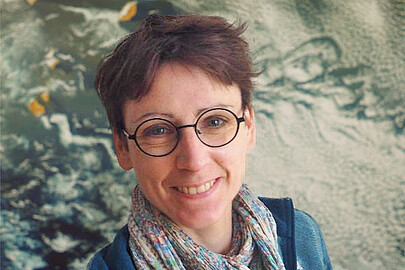
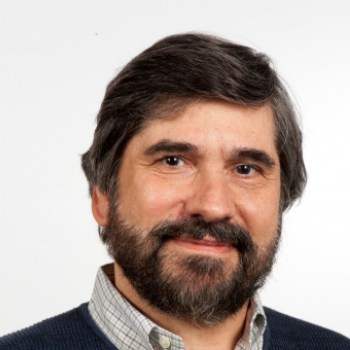
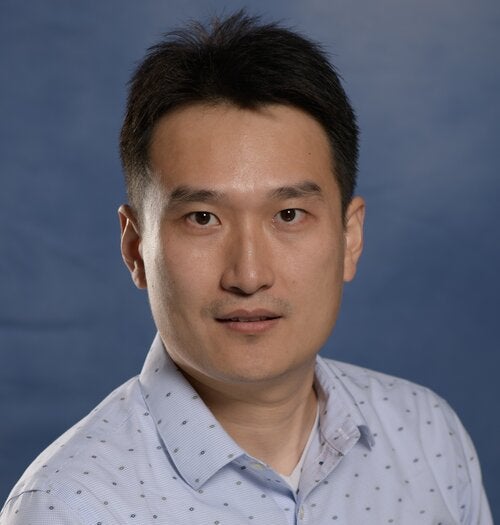
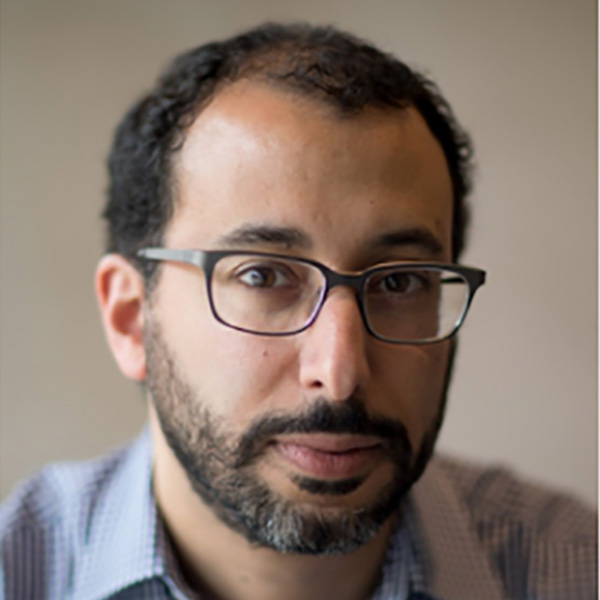
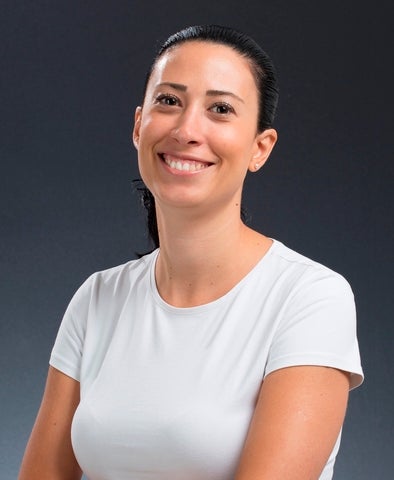
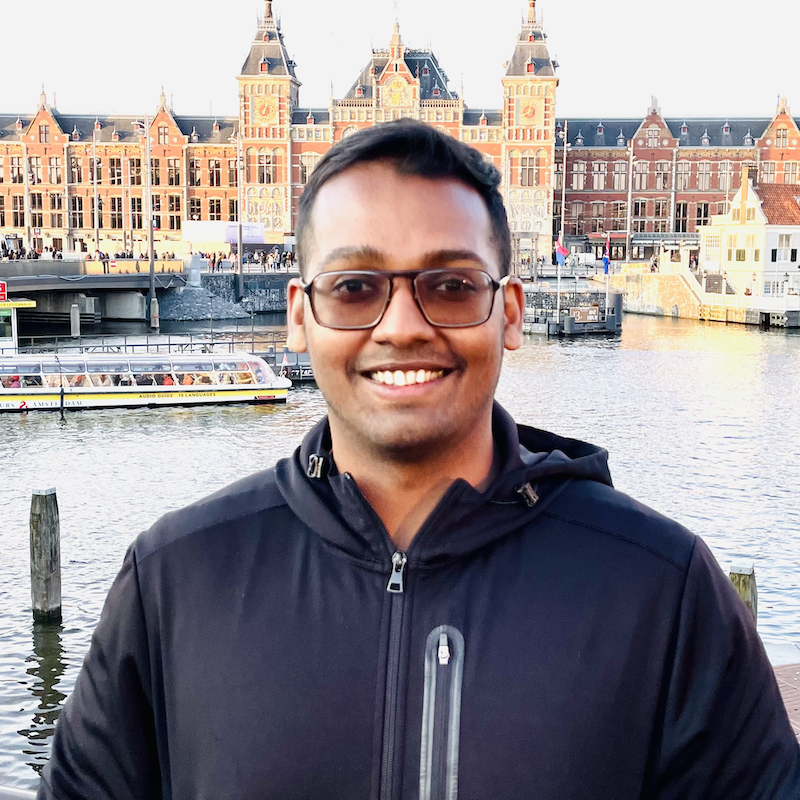
Gianni Franchi is an assistant professor at ENSTA Paris , affiliated with the Computer Science and Systems Engineering Unit (U2IS) . His work focuses on theoretical deep learning , with a strong emphasis on uncertainty quantification, robustness, and explainability in machine learning models. Current affiliation: ENSTA Paris (U2IS) Academic rank: Assistant Professor Key collaborators: David Filliat, Emanuel Aldea, Andrei Bursuc, Antoine Manzanera His research spans uncertainty quantification , explainable AI , and reliable machine learning . He investigates methods like Bayesian neural networks, ensemble approaches, and deterministic uncertainty models. His work also addresses domain adaptation , self-supervised learning , and autonomous systems , particularly in trajectory forecasting and semantic segmentation for autonomous driving. Recent publications analyze probabilistic modeling for robustness, symmetry-aware Bayesian methods , and multi-modal datasets like InfraParis. He develops frameworks like Torch-Uncertainty and benchmarks such as MUAD for uncertainty types in autonomous driving. Key themes: Uncertainty Quantification Deep Learning Theory Autonomous Systems Explainable AI Dataset Creation Bayesian Methods
Xiaoping Lu is an Associate Professor at the School of Mathematics and Applied Statistics, University of Wollongong, Australia. She has served as Academic Program Director for the Bachelor of Mathematics (Advanced) program since 2008 and holds an ORCID identifier (0000-0003-1090-8437). Her research focuses on applied mathematics and financial mathematics, particularly in option pricing, stochastic volatility models, and computational finance. Research Themes: Transaction cost modeling, regime-switching financial markets, numerical methods for PDEs, utility-indifference valuation, and stochastic optimization algorithms. Awards: 2024 AustMS-WIMSIG Anne Penfold Street Award 2024 Cheryl E. Praeger Travel Award Leadership: President of the Asia Pacific Consortium of Mathematics for Industry (APCMfI) since 2024; leadership roles in ANZIAM and WIMSIG committees. Teaching: Coordinated courses like MATH142, MATH141, and MATH283; currently available for PhD supervision in topics including financial derivatives and stochastic liquidity risk. Funding: Contributed to grants like 'The AI Tutor' (2024) and industry partnerships for advanced mathematics education.
Dr. Gaël Kermarrec is a researcher at the Boundary Layer Meteorology Group , part of the Institute of Meteorology and Climatology within the Faculty of Mathematics and Physics at Leibniz University Hannover . His work focuses on atmospheric turbulence, GNSS applications, and remote sensing for environmental monitoring. Boundary layer meteorology Turbulence theory GNSS signal processing Terrestrial laser scanning Climate change impacts Geodetic time series analysis His research integrates advanced mathematical models like LR B-splines and Matérn covariance with large eddy simulations to study: Atmospheric turbulence effects on optical/GNSS signals Hydrospheric mass loading Deformation analysis of terrain/port infrastructure Climatic sea-level changes Machine learning for remote sensing The 15 most recent articles (2025-2023) demonstrate his focus on: GNSS-based turbulence detection AI-enhanced climate mapping Advanced surface approximation techniques Multi-sensor data fusion Stochastic modeling of geodetic observations Environmental impacts on optical measurements He has developed tools like the Klimascanner QGIS plugin for urban climate resilience and contributes to: Understanding atmospheric scale lengths Improving TLS/GNSS deformation monitoring Analyzing hydrospheric changes Wavefront modeling Ionospheric corrections
Alexander Skopalik is an Assistant Professor in the Mathematics of Operations Research department, specializing in Game Theory, Congestion Games, and Algorithmic Game Theory. His work explores Strategic Resource Allocation, Equilibrium Analysis, and Network Games, with significant contributions to multi-agent systems and facility location optimization. Key research areas: Congestion Games Facility Location Nash Equilibrium Strategic Resource Allocation Algorithmic Game Theory His recent publications focus on equilibrium dynamics in facility location, battery charging games, and strategic resource allocation, emphasizing the interplay between theoretical guarantees and practical applications in AI and mobility systems. He actively participates as a committee member in leading conferences such as IJCAI and AAMAS.
Christos G. Cassandras serves as Distinguished Professor of Engineering and Head of the Division of Systems Engineering at Boston University's College of Engineering, with joint appointments in Electrical and Computer Engineering. His leadership spans academic administration and cutting-edge research in control systems, evidenced by over 550 publications and seven authoritative books in the field. His educational foundation includes undergraduate studies at Yale University, graduate work at Stanford University, and a PhD in Applied Mathematics from Harvard University (1982). This multidisciplinary background underpins his research approach. Dr. Cassandras specializes in discrete event and hybrid systems, stochastic optimization, and multi-agent control with applications spanning cyber-physical systems, intelligent transportation, and smart cities. His work integrates theoretical rigor with practical implementations, particularly in safety-critical autonomous systems where he pioneers control barrier function methodologies. Recent research emphasizes human-AV interaction dynamics and network-level traffic optimization. Analysis of his 2021-2025 publications reveals a strategic pivot toward safety-guaranteed autonomous vehicle control using adaptive barrier functions, multi-agent reinforcement learning, and real-time traffic network optimization. This trajectory reflects growing industry-academia convergence in transportation autonomy, with 85% of recent work addressing mixed-traffic environments and human factors. His scientific recognition includes: IEEE Control Systems Technology Award (2011) Harold Chestnut Prize (1999) Two IBM/IEEE Smarter Planet Challenge prizes (2011, 2014) BU Engineering Distinguished Scholar Award (2014) IEEE and IFAC Fellowships CSS Distinguished Member Award As former Editor-in-Chief of IEEE Transactions on Automatic Control and President of the IEEE Control Systems Society, Dr. Cassandras has shaped global research directions. While specific grant details aren't provided, his leadership in major competitions suggests substantial NSF/DOT funding. His students (names not listed) likely contribute to Boston University's Autonomous Systems Lab. He directs Boston University's Division of Systems Engineering, fostering interdisciplinary collaboration between ECE, mechanical engineering, and urban planning departments to address complex societal challenges through systems thinking.
Christina Nikitopoulos Sklibosios is an Associate Professor in the Finance Discipline Group at the University of Technology Sydney (UTS) Business School. She specializes in energy finance, renewable energy economics, sustainable finance, and commodity markets. Her research focuses on analyzing price dynamics and volatility in energy markets, particularly addressing challenges posed by renewable energy integration, green bond markets, and climate transition risks. She has held leadership roles including Finance PhD Program Coordinator (2015–2023) and currently serves on the UTS Business School's Faculty Board and HDR Director (acting). Education: Doctoral and academic background in finance and energy economics (details not explicitly provided in texts). Her research projects include modeling electricity prices in Australia’s National Electricity Market (NEM), assessing renewable energy impacts on grid stability, and evaluating green bond premiums. Key grants include ARC grants on energy market volatility and climate risk (2010–2017), and recent awards such as the UTS Strategic Research Accelerator grant (2024–2025) for net-zero decision-making tools. Research interests span energy economics, sustainable finance mechanisms, and commodity market dynamics. She collaborates with international organizations like CEMA, IAEE, and AFFECT, and contributes to policy discussions on energy transition and financial market reforms.
Dr. Xuzhen He is a Senior Lecturer at the School of Civil and Environmental Engineering, University of Technology Sydney (UTS). He holds a BSc from Tsinghua University and a PhD from the University of Cambridge, where he received the John Winbolt Prize (2015). His research focuses on geotechnics, geomechanics, and numerical methods, with an emphasis on AI integration. Notable contributions include studies on soil erosion, particle segregation, and tunnel engineering. He leads projects funded by ARC, including DECRA (2021) and a Discovery grant (2023). His work bridges experimental and computational approaches, addressing challenges in geotechnical infrastructure and environmental stability. Education: Bachelor of Science, Tsinghua University, China PhD in Civil Engineering, University of Cambridge, UK Research Interests: AI-driven geotechnical analysis (slope stability, tunnelling) Multiscale geomechanical modelling (hypoplasticity, multiphase systems) Numerical methods (DEM, SPH, material point method) Awards: ARC DECRA (2021) John Winbolt Prize (2015) Grants: "Modernise geotechnical investigation and analysis with machine learning" (ARC DP230100678) "Multiscale modelling of fluid–particle transport in porous media" (ARC DE220100763) Labs/Teams: Member of UTS Transport Research Centre (TRC) Associate member of Centre for Advanced Modelling and Geospatial lnformation Systems (CAMGIS)
Ruoqing Zhu is an Associate Professor in the Department of Statistics at the University of Illinois at Urbana-Champaign, with a primary appointment in the College of Liberal Arts & Sciences. He also serves as an inaugural member of the Carle Illinois College of Medicine, a Faculty Fellow at the National Center for Supercomputing Applications, and an affiliated researcher with the Carl R. Woese Institute for Genomic Biology and the Center for Genomic Diagnostics. His roles include PhD Program Director and Advisory Board member of Prenosis Inc. Dr. Zhu holds a Ph.D. in Biostatistics from the University of North Carolina at Chapel Hill (2013), an MA in Statistics from Bowling Green State University (2008), and dual B.S. degrees in Mathematics and Financial Engineering from Nanjing University (2006, 2005). His postdoctoral training was at Yale University’s Department of Biostatistics (2013–2015). His research focuses on developing statistical methods for decision-making in personalized medicine and reinforcement learning, addressing challenges such as model interpretability, high-dimensional data, and distributional shifts. Key areas include uncertainty quantification, causal inference, and applications in bioinformatics, nutrition, and infectious diseases. He co-teaches courses at Carle Illinois, including Data Science Project and Foundations: Molecules to Populations , and contributes to interdisciplinary initiatives like the Personalized Nutrition Initiative. His recent work emphasizes trustworthy AI in healthcare, including sepsis prediction tools, metabolomic analysis, and biomarker discovery. He is actively involved in translational research, bridging computational methods with clinical and public health applications.
Youssef M. Marzouk is the Breene M. Kerr (1951) Professor of Aeronautics and Astronautics at MIT and co-director of the MIT Center for Computational Science and Engineering (CCSE). He is affiliated with the MIT Schwarzman College of Computing, the Statistics and Data Science Center, and the Aerospace Computational Design Laboratory. His research focuses on computational science and engineering, with an emphasis on uncertainty quantification, Bayesian modeling, data assimilation, and machine learning applied to physical systems. He holds a Ph.D. in Mechanical Engineering from MIT (2004), preceded by S.M. (1999) and S.B. (1997) degrees in Aeronautics and Astronautics from the same institution. Marzouk’s work bridges computational mathematics, statistical inference, and fluid dynamics, addressing challenges in energy systems and environmental modeling. He has received numerous awards, including the 2018 AIAA Associate Fellowship and the 2012 MIT Class of 1942 Career Development Chair. His teaching spans computational mathematics, fluid dynamics, and uncertainty quantification. Key collaborations involve the MIT CCSE and external institutions, with funding from DOE and NSF. He advises students on topics like stochastic modeling and inverse problems, and his research lab explores advanced computational methods for high-dimensional systems.
Andrea W. Richa is a President's Professor at Arizona State University (ASU), holding positions in the School of Computing and Augmented Intelligence (SCAI), Barrett Honors College, and multiple research centers including the Biodesign Institute's Center for Biocomputing, Security, and Society. She specializes in distributed algorithms, programmable matter, and bio-inspired computing. Richa has led major research initiatives, including a DoD MURI award and an NSF CAREER Award, and has delivered keynote speeches at top conferences like DISC and LATIN. Her work focuses on self-organizing particle systems, wireless networks, and algorithmic foundations of active matter. Educations: PhD (Computer Science, Carnegie Mellon University, 1998), M.S. (Computer Science, Carnegie Mellon University, 1995), B.S. (Computer Science, Federal University of Rio de Janeiro, Brazil, 1989). Research Interests: Distributed algorithms, programmable matter, bio-inspired systems, wireless communication models, graph algorithms, combinatorial optimization, and resource allocation. She leads the Self-Organizing Particle Systems Lab and is part of SCAI's Theory and Algorithms group. Awards: 2024 ASU Mentorship Award, 2021 Mentor of the Year, 2017 SCAI Research Excellence Award, NSF CAREER Award (1999), and multiple grants including DoD MURI. Her research spans theoretical and applied domains, with over 150 publications in top venues. Grants: Current DoD MURI funding (2019-25), NSF awards on Markov chain algorithms and active matter (2021-25), and prior funding on programmable matter (2014-2017). Labs/Teams: SOPS Lab (sops.engineering.asu.edu), contributing to interdisciplinary research in algorithmic matter and bio-inspired systems.
Dr. Victoria C. P. Chen is a Professor in the Industrial, Manufacturing, and Systems Engineering (IMSE) department at The University of Texas at Arlington (UTA), where she has served since 2002. She previously held positions at the Georgia Institute of Technology from 1993-2001. Dr. Chen has held several leadership roles at UTA, including Interim Department Chair (2012-2014), Director of the Center on Stochastic Modeling, Optimization, & Statistics (COSMOS) (2008-2012, and again from 2017-present), and Director of Doctoral Studies (2019-present). She was also the George & Elizabeth Pickett Professor from 2015-2017 and was inducted into the UT Arlington Academy of Distinguished Teachers in 2019. Dr. Chen is actively involved with INFORMS (Institute for Operations Research and the Management Science), where she currently serves as Secretary on the Executive Board. Dr. Chen earned her B.S. in Mathematical Sciences from The Johns Hopkins University, and her M.S. and Ph.D. in Operations Research and Industrial Engineering from Cornell University. Her academic journey includes visiting professorships at the University of Genoa, Italy, and Iowa State University. Dr. Chen's research utilizes statistical perspectives to create new methodologies for operations research problems appearing in engineering and science. Her expertise includes the design of experiments, statistical modeling, and data mining, particularly for computer experiments and stochastic optimization. Through her statistics-based approach, she has developed computationally-tractable decision-making methods for many high-dimensional complex systems. Her work spans multiple domains including sustainability, energy, water management, healthcare, and law enforcement. Specific application areas include inventory forecasting, airline optimization, water reservoir networks, wastewater treatment, air quality monitoring, green building design, nurse assignment systems, and pain management programs. Her recent publications demonstrate continued innovation in mixed integer programming for electric vehicle charging stations, vacuum ultraviolet spectroscopy prediction, and sustainable building education. Senior Member, Institute for Operations Research and the Management Sciences (INFORMS) (2024) Data Mining Prize (Lifetime Achievement Award), INFORMS Society on Data Mining (2023) College of Engineering Teaching Award, UT Arlington (2021) Third Place Award, C3.ai COVID-19 Grand Challenge (2020) Academy of Distinguished Teachers, University of Texas at Arlington (2019) George & Elizabeth Pickett Professorship (2015-2017) As an educator and mentor, Dr. Chen has advised over 25 doctoral students across diverse research topics in operations research and systems engineering. She has secured substantial research funding from multiple sources including the National Science Foundation (over $1.5 million in active projects), Environmental Protection Agency, National Institute of Justice, and industry partners like Luminant and Dallas-Fort Worth International Airport. Her current research projects focus on decision analytics for sustainable urban environments, optimization for Texas water management, and statistical methods for pain management programs. She has served as Principal Investigator or Co-PI on more than 20 externally funded research projects totaling over $3 million in funding. Dr. Chen co-founded the Center on Stochastic Modeling, Optimization, & Statistics (COSMOS) at UTA with Dr. H. W. Corley. This research center brings together faculty and students from multiple disciplines to address complex problems through advanced statistical and optimization methods. She also leads interdisciplinary research teams working on projects related to sustainable infrastructure, energy systems, and healthcare optimization, frequently collaborating with researchers from civil engineering, environmental science, and medical fields.
Prof. Michael HALLING is a Full Professor in Sustainable Finance at the University of Luxembourg's Faculty of Law, Economics and Finance, Department of Finance. His work focuses on sustainable finance, corporate finance dynamics, climate risk assessment, and financial regulation. He holds the prestigious Chair in Sustainable Finance and has published extensively on topics like MiFID II compliance, mutual fund fee structures, and post-pandemic market recovery. Contact: michael.halling@uni.lu Research Interests : Prof. HALLING’s research bridges theoretical finance with practical applications, emphasizing sustainable investment practices, corporate debt management, and regulatory frameworks. Key themes include: Climate risk modeling using public news sentiment analysis Impact of behavioral preferences on corporate investment decisions Automated compliance systems for financial institutions Market dynamics during crises (e.g., pandemic effects on capital access) Recent Publications Trends : Recent works analyze MiFID II regulatory impacts (2024), stochastic modeling of corporate investment (2023), and firm-specific climate risk quantification. His 2020 studies explored pandemic-driven shifts in corporate financing strategies. Awards : No awards explicitly mentioned in the provided texts. Grants & Advising : No student advisees or grant details provided in available data. Labs/Teams : No specific research group affiliations listed.
Cody Hyndman is a Full Professor and Acting Department Chair at the Department of Mathematics and Statistics, Concordia University, with a focus on Mathematical Finance, Machine Learning, and Stochastic Analysis. He has held significant administrative roles including Department Chair (2017–2023) and Acting Graduate Programs Director (2025–2025). Education: PhD, University of Waterloo (2005) MSc, University of Alberta BCom, University of Alberta His research spans Mathematical Finance , Stochastic Differential Equations , and Machine Learning , with notable contributions to arbitrage-free modeling, neural networks, and computational methods. Recent publications emphasize geometric deep learning and regularization techniques in finance. Scientific Awards: 2023: Concordia Academic Leadership Award Hyndman supervises graduate students in Mathematics and Statistics and co-founded the NSERC CREATE Program on Machine Learning in Quantitative Finance and Business Analytics (FIN-ML) , fostering industrial internships and interdisciplinary training.
Sibel Alumur Alev is an Associate Professor and Associate Chair of Graduate Studies at the University of Waterloo. Her research focuses on logistics network design, hub location optimization, and sustainable transportation systems. She actively contributes to the fields of operations research and supply chain management, with a strong emphasis on addressing uncertainty in network design and strategic infrastructure planning. Her work spans applications in autonomous mobility systems, electric vehicle charging infrastructure, healthcare logistics, and pandemic response. She has published extensively on hub-and-spoke network models, reverse logistics for environmental sustainability, and multi-period resource allocation strategies. Notable areas of interest include the integration of stochastic and robust optimization methodologies into real-world logistics challenges. Dr. Alev’s research also bridges academic and industrial needs, addressing practical problems such as optimal testing center locations during pandemics and strategic freight hub expansions. Her contributions have been featured in peer-reviewed journals and conference proceedings, reflecting her commitment to advancing both theoretical and applied aspects of logistics and operations research.
Tathagata Srimani is an Assistant Professor in the Department of Electrical and Computer Engineering at Carnegie Mellon University (CMU), affiliated with the College of Engineering. He previously served as a Postdoctoral Scholar in Electrical Engineering at Stanford University. His academic journey includes a Ph.D. and S.M. in EECS from MIT (2022 and 2018 respectively) and a B.Tech. in E&ECE from IIT Kharagpur (2016). Research Focus: Srimani’s work centers on nanoelectronics and transformative NanoSystems. Key areas include: Carbon nanotube field-effect transistors (CNFETs) and their monolithic 3D integration with silicon Ultra-dense 3D integration of logic and memory to address the 'memory wall' in AI/ML Technology-architecture co-design frameworks for energy-efficient computing Key Achievements: Developed first silicon fab-compatible CNFET processes (TNANO ’18, Nature ’19) Enabled CNFET RISC-V microprocessor and monolithic 3D integration with Analog Devices/SkyWater Recipient of MIT Presidential Fellowship (2016) and Morris Joseph Levin Award (2018) Teaching & Outreach: Teaches semiconductor devices and hardware design, including hands-on 'Hacker Fab' courses. Leads the NEXUS Research Group exploring heterogeneous nanomaterials (e.g., magnetic and oxide semiconductors) and thermal/power management in 3D systems. Future Directions: Expanding into probabilistic computing hardware, co-design frameworks for application-specific systems, and scaling 3D NanoSystem technologies for industrial adoption.