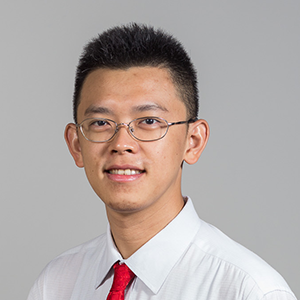
Dr. Ehsan Pashajavid is a Senior Lecturer at Curtin University's School of Electrical Engineering, Computing and Mathematical Sciences, within the Faculty of Science and Engineering. His research focuses on stochastic optimization, renewable energy integration, microgrid control, and electric vehicle systems. Research interests include: Microgrid and smart grid control algorithms Renewable energy resource management Power system stability and operation Energy storage optimization Electric vehicle-grid integration His publications demonstrate significant contributions to power system resilience, with recent work emphasizing battery storage economics, fault-tolerant converters, and model predictive control for grid stability. Article trends show strong focus on renewable integration challenges and optimization techniques for modern energy systems. Awards include Senior Member status in IEEE and its Power & Energy, Industrial Applications, and Power Electronics societies. Teaching responsibilities encompass graduate courses in Renewable Power Generation Systems, Smart Grid Control, and Renewable Energy Principles.
Lukasz Szpruch serves as Professor at the University of Edinburgh's School of Mathematics and Programme Director for Finance and Economics at The Alan Turing Institute. He leads the FAIR research programme on responsible AI adoption in financial services and co-investigates the UK Centre for Greening Finance & Investment (CGFI), directing partnerships with the National Office for Statistics, Accenture, Bill & Melinda Gates Foundation, and HSBC. He maintains affiliations with the Oxford-Man Institute for Quantitative Finance. His research focuses on probability theory , stochastic analysis , and theoretical machine learning , with current investigations into deep learning foundations, mean-field models, reinforcement learning, game theory, multiagent systems, and computational optimal transport. These theoretical frameworks are rigorously applied to financial economics problems including market dynamics, risk modeling, and regulatory compliance, emphasizing mathematical precision in AI system design. Recent publications reveal a strategic shift toward responsible AI deployment in finance , addressing large language model governance, synthetic data privacy, and non-asymptotic sampling theory. His work consistently bridges abstract mathematics with financial sector applications, particularly through the FAIR programme's industry collaborations that translate theoretical advances into practical frameworks for trustworthy AI adoption. As Principal Investigator of FAIR and CGFI co-Investigator, Szpruch manages significant research funding streams focused on AI ethics in financial services and sustainable finance. His academic leadership drives cross-sector initiatives where theoretical research directly informs regulatory policy development and industry best practices, though specific student mentoring details remain unspecified in source materials. Szpruch operates at the nexus of three critical research ecosystems: the FAIR programme's industry partnerships, CGFI's sustainability-focused finance research, and the Oxford-Man Institute's quantitative finance initiatives. These interconnected teams combine mathematical rigor with real-world financial applications, developing frameworks for AI assurance, green finance metrics, and synthetic data validation that address systemic challenges in modern financial systems.
Professor Tony Jan leads the Centre for Artificial Intelligence Research and Optimisation (AIRO) at Torrens University Australia's Design and Creative Technology school. He holds a PhD in Computing Science from the University of Technology Sydney (2004) and a Bachelor of Engineering from the University of Western Australia (1999). His research focuses on federated machine learning for IoT security, ensembled machine learning for real-time applications, cognitive machines for human-centric computing, and smart sensor networks for healthcare and security. He has secured ARC grants and industry partnerships with NVIDIA, IBM, and Microsoft. Awards include the 2024 SEI Global Academic Excellence Award and the 2023 Torrens University Excellence Award. Research collaborations span global partners, with contributions to UN Sustainable Development Goals in education and industry. His work bridges academia and industry, expanding AI program enrollments by 2,000+ students and enhancing student satisfaction by 15%. He advises PhD students on topics like IIoT cybersecurity and smart cities, and has produced over 97 publications since 1999. Education: PhD (UTS, 2004), BEng (UWA, 1999) Research Themes: AI for Industry 5.0, Cybersecurity, Smart Cities, Healthcare Technology Key Partnerships: NVIDIA, CIMIC, Palo Alto Networks Recent Projects: Federated learning for health IoT, drone vision intelligence, ransomware detection His work emphasizes ethical AI adoption in design and healthcare, with publications exploring AI ethics, generative AI applications, and sustainable technology integration.
Steven Halim is an Associate Professor (Educator Track) in the Department of Computer Science at the School of Computing, National University of Singapore (NUS). He has been a full-time educator since 2007, teaching a wide range of courses including Data Structures and Algorithms, Competitive Programming, and Design and Analysis of Algorithms. He currently serves as the Director of the Centre for Nurturing Computing Excellence (CeNCE) and is a Fellow of the NUS Teaching Academy. Ph.D. in Computer Science, National University of Singapore B.Sc. in Computer Science, National University of Singapore His research and teaching interests focus on algorithms, competitive programming, visualization, and optimization. He is renowned for creating VisuAlgo , an interactive online platform that visualizes data structures and algorithms, used by students and educators worldwide. He is also the co-author of the widely acclaimed book "Competitive Programming" , now in its fourth edition, which is a key resource for programming contest preparation. His recent scholarly work centers on pedagogical innovations in computer science education, particularly algorithm visualization and competitive programming methodologies. Earlier publications from his PhD work focused on stochastic local search, metaheuristics, and algorithm tuning through visualization. The articles span topics from educational technology to combinatorial optimization, reflecting a transition from research in algorithm engineering to leadership in computing education. Commendation Medal (Pingat Kepujian), National Day Awards 2018 NUS Annual Teaching Excellence Award (ATEA) 2014/15, 2017/18, 2018/19 (with Honour Roll) Faculty Teaching Excellence Award (FTEA) 2011/12, 2012/13, 2014/15 (with Honour Roll) Best Teaching Assistant Award 2007/08 Steven Halim has advised numerous students through his courses and competitive programming teams. He has served as the head coach for NUS ICPC teams since 2008 and team leader for Singapore IOI teams since 2009, leading them to multiple international medals. He has also held leadership roles in major international competitions, including Deputy Director for IOI 2020 and 2021, and Regional Contest Director for ICPC Asia Singapore 2015 and 2018. He was a Resident Fellow at NUS Sheares Hall for nine years, deeply engaging with student life. He leads the Centre for Nurturing Computing Excellence (CeNCE), where he manages programming competition activities for both NUS and Singapore national teams. His work integrates education, competition, and mentorship, creating a synergistic environment that has significantly elevated Singapore's performance in international informatics olympiads.
Dimitrios Gkamas is a Lecturer in Finance at the ICMA Centre, Henley Business School, University of Reading. He holds a PhD from Manchester Business School and an MSc from the ICMA Centre, with a focus on quantitative finance and risk management. Research interests: His work centers on capital markets, investment portfolio management, derivatives, and portfolio optimization strategies. He bridges theoretical finance with practical industry applications. Professional background: With over 25 years in financial services, he has held roles at institutions like BNP Paribas, Citi, and Towers Watson. He founded Ameru Financial Limited, a consultancy specializing in asset-liability management and derivatives strategies. Teaching: He serves as Convenor of the MSc Investment Portfolio Management Module (Module Code: ICM340), covering investment styles and optimal portfolio construction techniques.
Dr Francesca Pianosi is an Associate Professor in Water & Environmental Engineering at the University of Bristol 's School of Civil, Aerospace and Design Engineering. She contributes to the Cabot Institute for the Environment and leads research on data analysis, mathematical modelling, and uncertainty quantification for hydrology and water engineering. Specialises in simulation and optimisation methods for water resource management Focuses on uncertainty propagation in natural hazard models Developed the open-source SAFE Toolbox for sensitivity analysis Research Trends Her recent publications (2023-2025) demonstrate expertise in: Groundwater flow and recharge in data-scarce regions Digital Twin applications for watershed management Climate change impact on landslides and droughts Multi-objective optimisation for reservoir operations Integration of machine learning with hydrological models Scientific Awards Arne Richter Award for Outstanding Young Scientists (2015) Best Research Oriented Paper - Journal of Water Resources Planning and Management (2024) Early Career Research Excellence (ECRE) award (2014) Francesca leads the Water Management and Adaptation based on Watershed Digital Twins project (2024-2027) and contributes to the USARIS project on uncertainty quantification for infrastructure systems (2023-2025).
Martijn Mes is a full professor of Transportation and Logistics Management and chair of the Industrial Engineering & Business Information Systems section at the University of Twente, Netherlands. He leads research and education initiatives that integrate AI, simulation and optimisation into logistics and supply-chain innovation. Education: Ph.D. in Operations Research, University of Twente – 2008 M.Sc. in Applied Mathematics, University of Twente – 2002 Post-doctoral researcher, Princeton University, Dept. of Operations Research & Financial Engineering Research focus: Mes develops quantitative models and AI techniques for strategic, tactical and operational logistics challenges. His work spans three application pillars: Emergency & humanitarian logistics – rapid relief distribution with trucks and UAVs Urban logistics – city distribution, self-organising systems and last-mile innovations Sustainable logistics – synchromodal transport, green ports and electric/autonomous fleets Methodologically he combines approximate dynamic programming, reinforcement learning, multi-agent simulation, discrete-event simulation and stochastic optimisation to create decision-support tools for industry and government. Publications trend: Recent articles (2025-2022) exhibit a strong emphasis on integrating reinforcement learning and stochastic optimisation into dynamic vehicle routing, drone-assisted delivery and post-disaster inventory allocation, signalling a shift towards data-driven, real-time logistic systems. Grants & projects: Mes has coordinated and participated in numerous national and European projects on sustainable logistics, urban distribution, port optimisation and healthcare logistics, frequently collaborating with industry partners and public bodies. Teaching & supervision: He coordinates and lectures in the BSc and MSc programmes Industrial Engineering & Management, offering courses on simulation, queueing theory, dynamic programming, Markov chains, transportation management and technology management. He has authored a widely used Plant Simulation tutorial and supervises PhD candidates working on AI-driven logistics, autonomous vehicles and digital twins.
Dr. Cormac Lucas is a Senior Lecturer in the Department of Mathematics at Brunel University London, affiliated with the College of Engineering, Design and Physical Sciences. His work bridges mathematical optimization with practical applications in finance and operations management. Lucas specializes in Mathematical Optimisation Stochastic Optimisation Asset and Liability Management (ALM) Risk Analytics Portfolio Optimization Supply Chain Planning Under Uncertainty His research combines theoretical advancements with industrial projects, such as US Coast Guard Cutter Scheduling, Insight Investment's ALM, and Unilever's Natural Oil Buying Policy. Recent publications (2013–2024) highlight his focus on Portfolio Rebalancing with Transaction Costs Scenario Generation for Stochastic Programming Heuristic Algorithms for Cardinality Constraints Queuing Systems with Standby Servers Robust Supply Chain Planning Financial Derivative Modeling These works utilize methods like Variable Neighbourhood Search, Differential Evolution, and Lagrangian Relaxation. Email: cormac.lucas@brunel.ac.uk
Hanyu Gu is a Senior Lecturer in the School of Mathematical and Physical Sciences at the University of Technology Sydney (UTS), part of the Faculty of Science. He holds a PhD in Power Engineering and Automation from Shanghai Jiao Tong University (1999) and has extensive industry experience in telecommunications, airline optimization, and mining. His research focuses on combinatorial optimization, decomposition methods, stochastic programming, and machine learning applications. Notable awards include second place in the 2020 ROADEF competition. He collaborates with institutions like the UTS Transportation Research Centre and has contributed to projects such as optimisation engines for airline management and underground mining algorithms. Current research explores hybrid algorithms, Bayesian optimisation, and scheduling under uncertainty. Education: Bachelor in Industrial Automation, Shanghai Jiao Tong University (1994) Master in Control Theory and Application, Shanghai Jiao Tong University (1997) PhD in Power Engineering and Automation, Shanghai Jiao Tong University (1999) Industry Experience: ZTE (1999–2001): Senior Wireless Communication Engineer CTI, Melbourne (2007–2011): Airline Management Optimisation Researcher NICTA (2011–2013): Underground Mining Optimisation Researcher Grants: ARC Linkage Project LP0883855 (2008–2012): Developed optimisation tools for transportation crewing, valued at $840,000. Research interests span decomposition methods for large-scale problems (e.g., airline scheduling), stochastic programming for resource sharing, and hybridisation of mathematical programming with constraint programming. Recent work includes Bayesian optimisation for knapsack problems and relax-and-solve algorithms for project scheduling. His articles frequently address optimisation in logistics, healthcare, and transportation, emphasizing practical industry applications and algorithmic innovation. Awards: Second place in the ROADEF 2020 competition for maintenance planning solutions. Advising & Grants: Supervises Masters and PhD students in operations research and optimisation. Collaborates with Ausgrid, UGL, and ANC on optimisation projects (e.g., employee training timetabling, logistics). Active in the Optimisation Group of UTS Transportation Research Centre, he bridges academic research with real-world challenges in scheduling, logistics, and resource management. Ongoing efforts include advancing metaheuristics and integrating machine learning with traditional optimisation techniques.
Holger H. Hoos is the Alexander von Humboldt Professor of AI at RWTH Aachen University (Germany), Professor of Machine Learning at Universiteit Leiden (Netherlands), and Adjunct Professor of Computer Science at the University of British Columbia (Canada). He also serves as Faculty Associate at the Peter Wall Institute for Advanced Studies, UBC. Affiliations: RWTH Aachen University, Universiteit Leiden, University of British Columbia Research interests include methodological and technological advances in human-centred AI, AI for Good, and AI for All. His work focuses on improving AI efficiency and robustness, automated algorithm design (notably Programming by Optimisation and AutoML ), and interdisciplinary applications of AI. He leads the AI Center at RWTH Aachen. Scientific leadership includes roles as president of the European Association for AI (EurAI), co-founder of CLAIRE (now CAIRNE), and past president of the Canadian Association for Artificial Intelligence (CAIAC). His book on Stochastic Local Search (with Thomas Stützle) remains a foundational text in the field. Awards and recognition include: Alexander von Humboldt Professorship (2021) Fellow of ACM, AAAI, and EurAI German AI Innovation Prize (2021) for CLAIRE and ELLIS
Erik Ahlgren is Professor of Energy Technology at Chalmers University of Technology, Sweden. His research centres on energy-system transitions across scales, integrating techno-economic and systems-dynamics modelling to address urban and rural energy challenges in both Nordic and East African contexts. Research focus Energy-system transitions connecting technology, economy and environment Urban energy systems and sector coupling Rural electrification and mini-grid planning in East Africa District heating and cooling futures Clean cooking with biogas He leads or co-leads 25 projects funded by the Swedish Energy Agency, Swedish Research Council (VR), SIDA, the EU and other bodies, and collaborates closely with Addis Ababa University, University of Rwanda and Eduardo Mondlane University. Teaching & outreach Responsible for the public digital evening course Climate – the science, measures and policy . Grants & projects Buildings in the integrated energy system (2024–2028, Swedish Energy Agency) A multiperspective analysis of cost-efficient batteries in rural mini-grids (2023–2026, VR) PhD Programme in Electrical Power and Control Engineering with Addis Ababa University (2018–2025, SIDA) BREEMRES – research training partnership programme (2018–2025, SIDA) Flexibility for Smart Urban Energy Systems (FlexSUS, 2019–2024) Collaborations & networks Active in international consortia including the Strategic Research Centre for 4th Generation District Heating (4DH), FutureGas, and numerous East African capacity-building initiatives.
Gizem S. Nemutlu is Assistant Professor of Data Analytics at Brandeis International Business School and a research affiliate at Massachusetts General Hospital’s Institute for Technology Assessment. Trained in stochastic modelling and health economics, she applies operations-research methods to cancer-surveillance policy and immunisation programmes. Education: Ph.D. in Management Sciences, University of Waterloo, Canada B.S. in Statistics, Hacettepe University, Turkey Research Interests: Her work integrates stochastic modelling, data-driven optimisation and health-economic evaluation to inform policy design in immunisation and cancer surveillance. Recent projects quantify cost-effectiveness of risk-stratified hepatocellular-carcinoma surveillance, evaluate HPV-related cancer trends, and forecast global breast-cancer control trajectories toward 2030 SDG targets. Publication Trends: Across 16 peer-reviewed works (2013-2025) she consistently employs Markov and decision-process models to compare surveillance strategies for liver, anal and colorectal cancers, assess biomarker-based screening, and measure population-level impacts of HPV vaccination. Studies appear in high-impact oncology and health-policy venues. Scientific Awards: None disclosed in supplied materials. Advising & Grants: No students or funded-grant details are provided in the source text. Labs & Teams: She collaborates with the Institute for Technology Assessment at Mass General Hospital, indicating ongoing interdisciplinary teamwork in health technology assessment and economic evaluation.
Rakesh Nandi is a Research Fellow at the Aviation Studies Institute (ASI) of Singapore University of Technology and Design (SUTD). He previously held a research fellowship under Dr. Shrutivandana Sharma at the Engineering Systems and Design (ESD) school at SUTD. His work focuses on optimizing and analyzing air traffic networks, with projects such as Network Capacity and Network Collaboration under Professor Peter Jackson. Rakesh earned his Ph.D. in Mathematics from National Institute of Technology Raipur (2020) and an M.Sc. in Applied Mathematics from Guru Ghasidas University (2013). His research interests span queueing systems , stochastic modeling , numerical optimization , and network modeling/scheduling . He collaborates on projects requiring advanced computational and analytical methods for discrete-time queueing systems. His recent publications (2018–2022) emphasize queueing theory applications, stochastic processes, and optimization in discrete-time systems. Key topics include D-BMAP/G/1 queues, GI/D-MSP queue analysis, and N-policy control strategies. While no scientific awards are listed, Rakesh demonstrates active research in operations research and applied mathematics. He has no documented advisees or grants mentioned. He contributes to interdisciplinary teams at ASI and ESD, focusing on aviation systems and network efficiency.
Hardik Rajpal is a Researcher in the Mathematics Department at Imperial College London, affiliated with the Faculty of Natural Sciences. His work bridges applied mathematics, cognitive sciences, and complex systems. He completed his PhD at Imperial's Center for Complexity Science, focusing on modelling social, ecological, and brain dynamics using statistical mechanics and information theory. His research explores emergent phenomena in systems ranging from neuroscience to music performance. Education: Bachelor's in Physics at Indian Institute of Technology Kharagpur, India PhD in Complexity Science at Imperial College London Research Interests: His work centers on information-theoretic tools for analyzing brain complexity, social systems, and creative processes. Notable areas include: Neuroscience: Consciousness disorders and psychedelic effects Social Dynamics: Opinion formation and network nodality Music Science: Improvisation's impact on performer-audience synchrony Mathematical Modelling: High-order information in complex systems His recent publications (2020-2025) focus on: Interdisciplinary studies of music performance and biophysics Network analysis of political discourse on social media Machine learning applications in medical diagnostics Affiliations include the Center for Complexity Science and Mathematics Research Group at Imperial College.
Dan Steinberg is a senior research scientist and team leader of the Decisions & Statistical Learning team at CSIRO Data61 in Canberra, Australia. His expertise lies in probabilistic machine learning, variational inference, Bayesian deep learning, causal inference, and their application to domains spanning synthetic biology, geospatial analytics, and algorithmic fairness. Education PhD in Computer Vision / Machine Learning (2013) – University of Sydney, Australian Centre for Field Robotics Bachelor of Engineering (Mechatronics, First-Class Honours) – University of Sydney (2008) Bachelor of Commerce (Finance) – University of Sydney (2008) Research Interests Steinberg’s core research agenda revolves around building scalable probabilistic models that can learn efficiently from limited or noisy data and provide principled uncertainty estimates. Key themes include: Variational Inference & Bayesian Deep Learning: developing lightweight yet powerful algorithms for approximate posterior inference in complex models (e.g., Aboleth, Revrand). Active Learning & Experimental Design: creating methods that decide which experiments or measurements will maximise information gain, with recent focus on in-silico protein engineering via Variational Search Distributions (VSD). Causal Inference: leveraging machine-learning tools to perform robust observational causal studies for evidence-based policy, including work on youth well-being and academic outcomes. Algorithmic Fairness: translating normative notions of equity into quantifiable objectives for regression-based decision systems. Large-scale Spatial Analytics: Landshark—an open-source TensorFlow toolkit for supervised learning on massive geospatial raster datasets. Notable Software & Tools Aboleth: A minimal-overhead TensorFlow framework for Bayesian deep learning. Landshark: Command-line tools for large-scale spatial inference. Revrand: Scalable Bayesian generalised linear models with non-conjugate likelihoods. libcluster: Extensible C++ library for hierarchical Bayesian clustering. Scientific Awards Oral Presentation Award – ICML 2025 Workshop on Scaling up Intervention Models (SIMS) Oral Presentation Award – NeurIPS 2024 Workshop on Bayesian Decision-making and Uncertainty (BDU) Oral Presentation Award – NeurIPS 2023 Workshop on Adaptive Experimental Design and Active Learning Spotlight Paper Award – NeurIPS 2014 (Extended and Unscented Gaussian Processes) Research Team & Collaborations As Team Leader – Decisions & Statistical Learning at CSIRO Data61, Steinberg directs a multi-disciplinary group that partners with government agencies (e.g., Jobs and Skills Australia, Australian Institute of Health and Welfare) and industry to deploy machine-learning solutions at scale. He has previously held roles as Principal Researcher at Gradient Institute (2019-2023), Senior Research Engineer at CSIRO Data61 (2016-2019), Researcher at NICTA (2013-2016), and Research Associate at the University of Sydney (2012-2013).