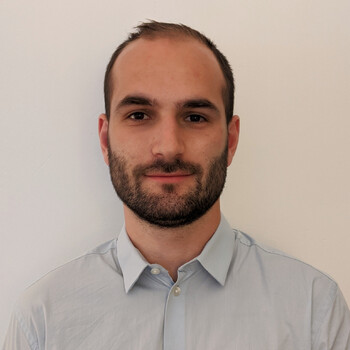
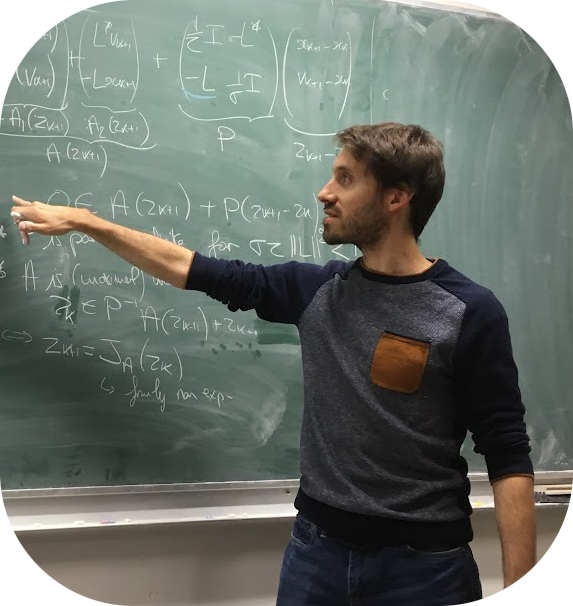
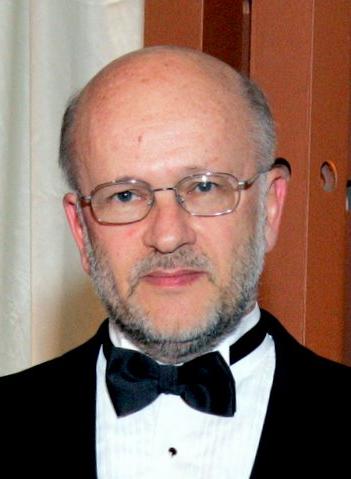
Paul Peter Hager serves as an Assistant Professor in the Department of Statistics and Operations Research at the University of Vienna, where he teaches courses including Linear Algebra and Applied Optimization. Previously, he held a junior research group leader position at Technische Universität Berlin. His research centers on: Mathematical Finance Machine Learning Stochastic Control Mean-Field Games Fractional Processes Gaussian Multiplicative Chaos Volatility Modeling Hager pioneers applications of rough path signatures in financial mathematics, developing novel frameworks for stochastic control and calibration problems. His work bridges theoretical probability with practical machine learning implementations, particularly in volatility modeling using fractional processes and log-correlated fields. Recent publications reveal a dominant trend in signature-based methods for optimal stopping and mean-field games, with significant contributions to fractional Brownian motion theory. His collaborative work with leading researchers like Peter Friz and Christian Bayer consistently targets high-impact journals in applied probability and financial mathematics. Dr. Hager maintains active research collaborations and has delivered invited talks at institutions including KAUST, focusing on computational implementations of signature methods in finance.
David A. Vasseur serves as Professor and Chair of the Department of Ecology and Evolutionary Biology at Yale University, where his research laboratory investigates fundamental questions in theoretical ecology. His work integrates mathematical modeling, laboratory experiments, and analysis of long-term ecological data to understand community dynamics in aquatic systems. Dr. Vasseur received his BSc (1999) and MSc (2002) from the University of Guelph, Canada, followed by a PhD from McGill University (2006). He completed a postdoctoral fellowship at the University of Calgary (2006-2008) before joining Yale University. His research program focuses on three interconnected themes: the maintenance of biodiversity in aquatic communities, spatial population synchrony, and eco-evolutionary dynamics of competitive communities. His laboratory has produced significant research on how environmental variability affects ecological systems, with recent publications examining temperature-nutrient interactions in primary producers, forecasting extinction risk using thermal performance curves, and the productivity-stability relationship in global food systems. His work bridges theoretical approaches with empirical validation to address pressing ecological questions with implications for conservation and ecosystem management. Dr. Vasseur teaches General Ecology (EEB 220a/520a EVST 223a) in the fall semester, covering ecological theory and practice across multiple scales. In spring, he leads graduate seminars on quantitative methods, fundamental readings in ecology, and time-series analysis. He serves as an associate editor for American Naturalist and Ecology and Evolution. His laboratory includes postdoctoral fellow Carling Bieg and graduate students Misha Kummel, Alison Robey, and Abby Skwara, continuing a tradition of mentoring that has produced numerous successful ecologists now at institutions including University of Guelph, University of Nebraska Lincoln, UCLA, and Oxford University.
Camille Castera is an Associate Professor in optimization and machine learning at the Mathematical Institute of the University of Bordeaux (IMB). Her academic journey includes a postdoctoral position at the University of Tübingen (2022-2024) working on the TRINOM-DS project under Peter Ochs and Jalal Fadili, and a PhD at the IRIT laboratory in Toulouse supervised by Cédric Févotte, Edouard Pauwels, and Jérôme Bolte as part of the FACTORY project. Her research focuses on optimization algorithms for machine learning, particularly second-order methods with applications to deep learning, and the emerging field of learning optimization algorithms. Her work spans continuous optimization (convex & non-convex, non-smooth, stochastic), learning to optimize, and optimization for deep learning with automatic hyper-parameter tuning. Her recent publications demonstrate significant contributions to the field of optimization algorithms, particularly in developing novel approaches that bridge classical optimization techniques with learning-based methods. Her research shows a clear trajectory toward creating more adaptive and versatile optimization algorithms that can generalize beyond their training settings. At the University of Bordeaux, she teaches advanced courses including Large-scale optimization (Master 2), Introduction to deep learning (Master 2), Convex optimization (Master 1), and Image processing (Licence 3), while also supervising student projects on image processing and machine learning. Her technical work is supported by substantial implementation efforts, with publicly available code repositories demonstrating practical applications of her theoretical contributions to optimization algorithms.
Prof. Dr. Corinna Hoose leads the Cloud Physics research group at the Institute of Meteorology and Climate Research - Tropospheric Research (IMKTRO) within Karlsruhe Institute of Technology (KIT) . She has held this W3 Professorship since 2013 and previously led a Helmholtz Young Investigators Group (2010-2016). Her work focuses on aerosol-cloud interactions , mixed-phase cloud processes , and numerical modeling of atmospheric systems . Professor of Theoretical Meteorology at KIT (2013-present) Former Helmholtz Group Leader (2010-2016) University of Oslo & ETH Zurich Postdoc experience Co-Editor of Atmospheric Chemistry and Physics Research Interests center on ice nucleation mechanisms , cloud dynamics , and climate sensitivity studies . Her group develops parameterizations for heterogeneous ice nucleation and investigates precipitation formation across different cloud types. Notable methodological contributions include SEVIRI satellite data analysis and ICON model modifications for microphysical-dynamic coupling. Publication Trends show consistent leadership in mixed-phase cloud modeling (2013-2025), with particular emphasis on Arctic cloud systems , heterogeneous ice formation , and aerosol impacts on precipitation . Her work bridges laboratory ice nucleation studies (e.g., dust-ash parameterizations) and regional climate modeling at various spatial resolutions. Teaching includes core courses in Theoretical Meteorology , Numerical Methods , and Cloud Physics at KIT. She has mentored multiple early-career researchers as evidenced by co-authorships with advisees like A. Oertel and L. Ickes. Collaborations span institutions including ETH Zurich, University of Oslo, and EU projects like EUCAARI. Her research group interacts with observational teams through field campaigns like Swabian MOSES and utilizes both in situ and remote sensing data for model validation.
Leon Bungert is a Professor of Mathematics of Machine Learning at the University of Würzburg, working in applied analysis and numerics with a particular focus on data science and machine learning. His research investigates PDEs and variational models on graphs, adversarial robustness of machine learning, variational regularization, and nonlinear optimization. Dr. Bungert serves as a guest editor for the European Journal of Applied Mathematics, an associate editor for Advances in Continuous and Discrete Models: Theory and Applications, and is a member of the program committee at SSVM 2025. He is also an ELLIS member and actively organizes conferences and workshops, including "MIA'25" at IHP in Paris (January 13-15, 2025), "Synergies of Machine Learning and Numerics" in Osaka (March 11-13, 2025), and "Mathematical Analysis of Adversarial Machine Learning" in Oaxaca (August 17-22, 2025). Research Interests Dr. Bungert's primary research areas include: PDEs on graphs Adversarial robustness in machine learning Inverse problems Optimization Variational problems in L-infinity Nonlinear eigenvalue problems Image reconstruction with structural priors His work bridges theoretical mathematics with practical applications in machine learning, particularly focusing on the mathematical foundations of deep learning and developing robust algorithms that can withstand adversarial attacks. He has made significant contributions to understanding the connections between partial differential equations and machine learning algorithms. Research Trends Analysis of Dr. Bungert's recent publications reveals a strong focus on the intersection of machine learning and mathematical analysis. A key theme is the application of variational methods and partial differential equations to machine learning problems, particularly in understanding and improving the robustness of neural networks against adversarial examples. His work on Lipschitz learning on graphs has established important theoretical foundations for graph-based semi-supervised learning. Additionally, his research on the infinity Laplacian and p-Laplacian equations provides deep insights into the mathematical structure of machine learning algorithms. The development of Bregman learning frameworks for sparse neural networks represents a significant contribution to efficient deep learning model training. Professional Activities Dr. Bungert is actively involved in the academic community through editorial roles and conference organization. His current professional activities include: Guest editor for the European Journal of Applied Mathematics Associate editor for Advances in Continuous and Discrete Models: Theory and Applications Member of the program committee at SSVM 2025 ELLIS member Co-organizer of multiple international conferences and workshops Technical Contributions Dr. Bungert has developed several open-source software packages that implement his theoretical contributions, including: Code for convergence rates of Lipschitz learning on graphs A Bregman training framework for sparse neural networks CLIP: Cheap Lipschitz Training of Neural Networks Nonlinear Power Method for Proximal Operators and Neural Networks Robust Image Reconstruction with Misaligned Structural Information These implementations are primarily in Python and MATLAB, demonstrating his commitment to making theoretical advances accessible for practical applications.
Franck Iutzeler is a Professor of Applied Mathematics at Université de Toulouse, working within the Statistics & Optimization team of the Institut Mathématique de Toulouse and teaching in the Department of Mathematics. He previously served as an Assistant Professor at Université Grenoble Alpes from 2015 to 2023 and completed his Habilitation à Diriger des Recherches in 2021. His research focuses on the intersection of optimization, statistics, and optimal transport theory to develop robust data-driven models. Key areas include numerical optimization, statistical learning, stochastic programming, and optimal transport. He is particularly interested in distributionally robust optimization using Wasserstein metrics and has developed the skwdro Python library for implementing these methods. Iutzeler's recent publications demonstrate a strong focus on Wasserstein Distributionally Robust Optimization (WDRO), with multiple papers in top venues like NeurIPS and SIAM Journal on Optimization. His work bridges theoretical guarantees with practical implementation, particularly through the skwdro library which provides efficient code for WDRO in machine learning applications. ANR JCJC grant for project STROLL: Harnessing Structure in Optimization for Large-scale Learning Co-PI of ANITI chair on Trust and Responsibility in Artificial Intelligence led by JM. Loubes and J. Bolte Iutzeler actively supervises PhD students including Yu-Guan Hsieh (awarded Université Grenoble Alpes's PhD award), Gilles Bareilles, Waïss Azizian, and Victor Mercklé. He has secured research funding through the ANR (MAD project on Automatic Differentiation) and ANITI. His current research includes statistical fairness using optimal transport theory and automatic differentiation for stochastic optimization. He leads the development of the skwdro library for Wasserstein Distributionally Robust Optimization and is involved with ANITI (Toulouse's AI Cluster), where he also took responsibility for the 2nd year of the Master SID in Data Science & Engineering in September 2024.
Prof. Dr. Peter Müller is a Professor at the Mathematical Institute of Ludwig Maximilian University of Munich (LMU), where he also serves as Dean of the Faculty of Mathematics, Informatics and Statistics. His research group focuses on Analysis, Mathematical Physics, and Numerics. Office: Room 439, Block B, Theresienstr. 39, 80333 Munich. Education: Habilitation in Mathematics, University of Göttingen (2006) Habilitation in Physics, University of Göttingen (2002) Ph.D. in Physics, University of Erlangen-Nürnberg (1996) Diploma in Physics, University of Erlangen-Nürnberg (1991) Research Interests: Müller's work spans mathematical physics, analysis, and probability theory, with emphasis on: Random Schrödinger operators and spectral theory Delocalization phenomena in disordered systems Quasiperiodic structures and ergodic properties Entanglement entropy in quantum systems His research bridges rigorous mathematical analysis with applications in quantum mechanics and statistical physics. Publication Trends: Recent articles (2013–2025) predominantly explore spectral theory in disordered quantum systems. Key themes include localization/delocalization transitions, asymptotic analysis of entanglement entropy, and spectral properties of random operators. Methodologically, his work combines functional analysis, stochastic processes, and operator theory to address fundamental questions in mathematical physics. Student Advising: Extensive mentorship of graduate students: 8 PhD students (e.g., Jakob Stern, Ruth Schulte) 17 Master's students (e.g., Leonard Wetzel, Julian Widl) Research Team: Leads the working group "Analysis, Mathematical Physics and Numerical Analysis" with postdoctoral researchers (e.g., Constanza Rojas-Molina) and PhD candidates. Regularly organizes international conferences on mathematical physics and disordered systems.
Prof. Dr. Matti Schneider serves as Professor of Engineering Mathematics and Head of the Institute of Engineering Mathematics within the Faculty of Civil Engineering at the University of Duisburg-Essen. His academic leadership spans computational mechanics research and teaching core mathematics courses for civil engineering students. His educational background includes: Diploma in Applied Mathematics with distinction from TU Bergakademie Freiberg (2009) PhD (Dr. rer. nat.) from Leipzig University (2013) on "The Leray-Serre spectral sequence in Morse homology on Hilbert manifolds and in Floer homology on cotangent bundles" Professor Schneider's research focuses on advancing computational methods for solid mechanics through FFT-based homogenization techniques, microstructure modeling, and multi-scale material analysis. His work bridges applied mathematics and engineering to solve complex problems in heterogeneous material systems, with particular emphasis on numerical stability, boundary condition implementation, and efficient solver development for industrial applications. His methodologies enable accurate prediction of material behavior across scales from microscopic structures to macroscopic components. Analysis of his 15 most recent publications reveals dominant trends in FFT-based computational homogenization, with significant contributions to thermal problems, porous media, and fiber-reinforced composites. He pioneers the integration of machine learning (particularly deep material networks) with traditional numerical methods to model complex material behaviors like shear-thinning suspensions and 3D-printed materials. His work consistently addresses computational challenges in boundary condition implementation and convergence for stochastic microstructures. Professor Schneider leads the Institute of Engineering Mathematics and directs research within the ERC-funded BeyondRVE project, which focuses on extending representative volume element concepts for advanced material modeling. His collaborative network includes major German research institutions like Fraunhofer ITWM and international partners in materials science.
Alexander Shapiro is the A. Russell Chandler III Chair and Professor at the H. Milton Stewart School of Industrial and Systems Engineering , Georgia Institute of Technology. His work bridges optimization and statistics, focusing on stochastic programming, risk analysis, and simulation-based optimization. He has received numerous accolades, including the Khachiyan Prize (2013) , Dantzig Prize (2018) , and John von Neumann Theory Prize (2021) . Education: Ph.D. in Applied Mathematics-Statistics (Ben-Gurion University, 1981), M.Sc. in Mathematics (Moscow University, 1971) His research explores stochastic programming , risk-averse optimization , and multivariate statistical analysis , with recent work on distributionally robust control, Bayesian stochastic methods, and convex multistage optimization. Publications highlight theoretical advancements and computational frameworks for uncertainty modeling. Recent articles focus on asymptotics (2025), duality in MDPs (2023-2024), and statistical inference (2014-2024). These span stochastic control , robustness , and time consistency , reflecting his expertise in bridging probability theory with large-scale optimization. Scientific awards : Khachiyan Prize of INFORMS (2013) Dantzig Prize (2018) John von Neumann Theory Prize (2021) Election to National Academy of Engineering (2020) Dr. Shapiro has served as Area Editor (Optimization) for the Operations Research Journal and Editor-in-Chief of Mathematical Programming, Series A , demonstrating sustained leadership in his field.
Abhishek Halder is an Associate Professor in the Department of Aerospace Engineering at Iowa State University and an Associate Adjunct Professor in the Department of Applied Mathematics at the University of California, Santa Cruz. He is also a member of the Translational AI Center at Iowa State University. His academic journey includes joining Iowa State University as an Assistant Professor in July 2023 and previously serving as faculty at UC Santa Cruz starting from October 2017. Dr. Halder's educational background includes studies at IIT Kharagpur and Texas A&M University, where he developed expertise in systems and control theory with applications to matrix analysis, probability, and optimization. His research has been recognized with prestigious awards including the O. Hugo Schuck Best Application Paper Award from the American Automatic Control Council, Applied Mathematics Research Award from UC Santa Cruz, Outstanding Doctoral Student Award from Texas A&M, and Best Dual Degree Thesis Award from IIT Kharagpur. His research focuses on stochastic systems, control and optimization with applications to large scale cyber-physical systems. Dr. Halder has made significant contributions to the fields of optimal transport, Schrödinger Bridge theory, distributional control, and uncertainty propagation in dynamical systems. His work bridges theoretical developments with practical applications in power systems, aerospace engineering, and machine learning. He has secured multiple research grants from NSF, including a CPS Frontier project on Computation-Aware Algorithmic Design for Cyber-Physical Systems. Dr. Halder has demonstrated leadership in the control systems community through editorial roles including Associate Editor for IEEE Transactions on Automatic Control (2025-present), ASME Journal of Dynamic Systems, Measurement, and Control (2025-present), Systems & Control Letters (2022-present), and previously for IEEE Control Systems Society Conference Editorial Board (2019-2025) and IEEE Transactions on Aerospace and Electronic Systems (2019-2022). He is a Senior Member of IEEE and a member of IFAC, SIAM and ASME. His research group has produced numerous publications in top-tier journals and conferences, with recent work focusing on connections between optimal transport theory, stochastic control, and machine learning. The publication trends show increasing integration of Schrödinger Bridge formulations with machine learning techniques for distributional control problems across various domains including power systems, aerospace applications, and resource allocation. O. Hugo Schuck Best Application Paper Award (2024) Applied Mathematics Research Award from UC Santa Cruz (2022) IEEE Senior Member (2021) Outstanding Doctoral Student Award from Texas A&M Best Dual Degree Thesis Award from IIT Kharagpur Dr. Halder has mentored numerous PhD students including Alexis, Georgiy, Iman, Shadi, and Kenneth, many of whom have received prestigious fellowships. His research group maintains strong collaborations with national laboratories including Lawrence Livermore National Lab and Los Alamos National Lab, as well as industry partners. Dr. Halder is also committed to education and outreach, having created and taught the 'Feedback Control' course for high school students in the California State Summer School for Mathematics and Science (COSMOS), introducing complex control theory concepts without calculus or linear algebra.
Pierre Nyquist is an Associate Professor and docent in the Department of Mathematical Sciences at Chalmers University of Technology and Gothenburg University. His research is sponsored by the Swedish Research Council, the Swedish e-science Research Center (SeRC), and the Wallenberg Artificial Intelligence, Autonomous Systems and Software Program (WASP). He is also an elected member of the Young Academy of Sweden for the period 2024-2029 and has served as a scientific ambassador for EURANDOM since November 2021. Dr. Nyquist's research interests lie at the intersection of probability theory, mathematical statistics, and applied mathematics. His main expertise is in probability theory, with a focus on large deviations theory and stochastic numerical methods. He has a general interest in all aspects of probability theory and much of what is categorized as applied mathematics, particularly questions related to partial differential equations, optimization, and stochastic optimal control. Recently, he has become increasingly interested in the mathematical foundations of complex data analysis and modeling, and the interplay with ideas from physics. His current research interests include large deviations, gradient flows and their generalizations, stochastic numerical methods, statistical learning theory, stochastic processes, and random dynamical systems. Pierre Nyquist has received research funding from several prestigious sources including the Swedish Research Council, the Swedish e-science Research Center (SeRC), and the Wallenberg Artificial Intelligence, Autonomous Systems and Software Program (WASP). His publications demonstrate a consistent focus on theoretical aspects of probability with applications to computational methods and data analysis, showing increasing integration with machine learning techniques in recent years. elected member of the Young Academy of Sweden (2024-2029) scientific ambassador for EURANDOM (since November 2021) Dr. Nyquist is actively involved in mentoring the next generation of researchers. He currently supervises several PhD students including Cinja Arndt (starting Aug. 2025), Niki Wilhemlson (started Aug. 2024), and Viktor Nilsson (started Aug. 2020). He has previously supervised successful PhD students such as Federica Milinanni (Aug. 2020-May 2025) and Carl Ringqvist (Aug 2015-June 2021). He regularly teaches graduate-level courses including "Modern methods of statistical learning" and has supervised numerous MSc theses on topics ranging from deep learning for time-series radar signals to neural network embedding in insurance pricing. His research group is active in both theoretical developments and practical applications, with current projects spanning from mathematical foundations of probability to applications in machine learning and data science. Dr. Nyquist maintains strong international collaborations, as evidenced by his frequent travel for conferences and research visits to institutions such as Brown University and TU Delft.
Dr. Paola Falugi is a Senior Lecturer in Electro-Mechanical Engineering at the University of East London and holds an honorary visiting researcher position at Imperial College London. Her expertise spans predictive control systems, data-driven modeling, and energy network optimization under uncertainty. Senior Lecturer, Department of Engineering & Construction, School of Architecture, Computing and Engineering, University of East London Honorary Visiting Researcher, Imperial College London Research focuses on: Predictive control strategies for uncertain systems Data-driven modeling for control applications Optimization methods in energy network expansion Energy management under stochastic conditions Control systems for robotics and mechatronics Recent publications highlight her contributions to: Robust co-design frameworks for building energy systems Machine learning integration in transmission expansion planning Automated scenario generation for optimal control Control strategies for residential buildings with energy storage Her work bridges theoretical advancements in control theory with practical applications in energy systems and building automation.
Daniel Boley is a Professor and Distinguished University Teaching Professor at the University of Minnesota, within the College of Science and Engineering, Department of Computer Science and Engineering. He serves as the Director of Graduate Studies for the Graduate Program in Data Science, which offers a Master's of Science and a Post-Baccalaureate Certificate. His office is located in Kenneth H. Keller Hall at 4-225C. Professor Boley's research spans computational methods in linear algebra, scalable data mining algorithms, and applications in systems biology and bioinformatics. His work focuses on scalable algorithms for convex optimization in machine learning, analysis of networks and graphs from metabolic biochemical networks, and wireless device networks. He has made significant contributions to numerical linear algebra methods for control problems, parallel algorithms, and iterative methods for matrix eigenproblems. His research interests also include algebraic models in systems and evolutionary biology, and biochemical metabolic networks. His recent publications demonstrate a strong focus on applying graph theory and network analysis to diverse domains including robot swarms, medical imaging (particularly for glioblastoma and COVID-19 diagnosis), and metabolic network analysis. His work bridges theoretical computer science with practical applications in biology and medicine, with a consistent emphasis on developing scalable computational methods. The trend shows increasing interdisciplinary collaboration, particularly with medical researchers. Distinguished Member by the ACM Top university award for post baccalaureate, graduate and professional education Distinguished University Teaching Professor title Professor Boley has advised numerous PhD students including Tatiana Lenskaia (2021), Shaozhe Tao (2018), Ham Ching Lam (2014), and others dating back to 1994. His research has been supported by various grants enabling work on scalable computation of elementary pathways through metabolic networks, Markov models of viral evolution, and scalable data mining algorithms for text analysis. He has developed software tools for clustering, dot plot visualization, and educational graphics. Professor Boley directs the Graduate Program in Data Science and has been involved in projects such as the Principal Direction Divisive Partitioning (PDDP) Project. His research group develops practical implementations of theoretical advances, including the PDDP clustering algorithm, Dot.py genome viewer, and various educational graphics tools for introductory programming courses. He maintains active collaborations across disciplines, particularly in bioinformatics and medical imaging applications.
Laurent Pfeiffer is a researcher at the Signals and Systems Laboratory , focusing on Optimization and Control Theory . His work bridges theoretical advancements in mean field games, stochastic optimization, and numerical methods with practical applications in energy systems and fluid dynamics. Research Interests: Optimal Control, Mean Field Games, Stochastic Optimization, Nonlinear Programming Recent Publications: Explore mean field games, nonconvex optimization, and control theory applications in nuclear energy, gas portfolios, and fluid dynamics. Labs: Signals and Systems Laboratory, specializing in control systems and mathematical modeling.
Prof. Dr. Katharina Oberpriller is a faculty member at the Department of Mathematics, University of Munich, working in the Financial and Insurance Mathematics research group. Her research focuses on model uncertainty, insurance risk markets, and credit risk modeling. She collaborates extensively on publications related to stochastic processes, affine models, and financial risk management.