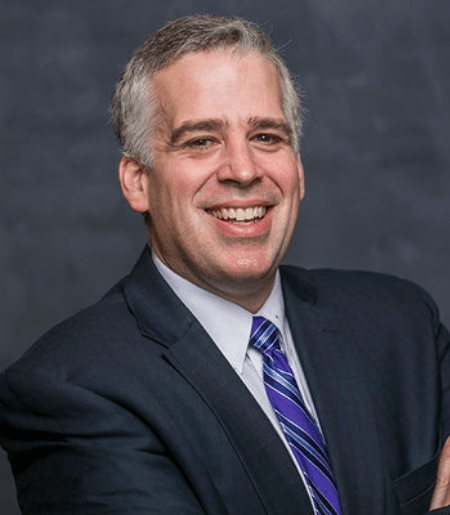
Sean Andersson is a Professor in Mechanical Engineering and Systems Engineering at the College of Engineering, Boston University, and serves as Director of the BU Robotics Lab. His research bridges systems and control theory with applications in nanotechnology , atomic force microscopy , and robotics . His work in nanobioscience focuses on single molecule tracking and high-speed imaging in atomic force and fluorescence microscopy, leveraging control theory to enhance imaging capabilities. In robotics, he develops stochastic control methods for autonomous systems operating in complex environments, emphasizing multi-agent systems , sparsely sampled data , and symbolic control frameworks . Recent publications highlight trends in receding horizon control , persistent monitoring , neural style transfer for imaging , and stochastic policy optimization . The Andersson Lab also explores compressive sensing and optimal control for sensor networks and nanoscale fluid dynamics.
Lev Levitin is a Distinguished Professor in the Department of Electrical & Computer Engineering and Division of Systems Engineering at Boston University, with office PHO 332 and contact email levitin@bu.edu. His primary academic focus spans information theory, quantum communication, and computer network architecture. Education: PhD, USSR Academy of Sciences, Gorky University, 1969 Levitin's research integrates fundamental physics with information systems, emphasizing quantum measurement theory, bioinformatics, and the physical limits of computation. His work explores critical phenomena in network dynamics, virtual cut-through routing algorithms, and thermodynamic constraints in information processing. This interdisciplinary approach bridges theoretical physics, computer engineering, and complex systems analysis to address foundational questions in reliable computing. Analysis of his 15 most recent publications reveals two dominant research threads: (1) rigorous modeling of interconnection networks with emphasis on latency, saturation, and phase transitions in multidimensional topologies, and (2) quantum information theory investigations into physical limits of communication, energy requirements, and measurement constraints. The network studies consistently employ virtual cut-through routing as a core methodology, while quantum works establish fundamental bounds on information retrieval and computational speed. Scientific Awards: Life Fellow, IEEE Member, International Academy of Informatization Levitin leads the Reliable Computing Laboratory at Boston University, teaching foundational and advanced courses including Introduction to Engineering, Logic Design, Probability Theory, and specialized graduate courses in Information Theory and Discrete Mathematics. His educational contributions span undergraduate instruction through doctoral supervision, though specific student names and current grant funding details are not documented in the provided materials.
Professor Christian Deutscher is a prominent sports economist at Bielefeld University's Faculty of Psychology and Sport Science, specializing in the Department of Sport Science within Division V - Sport and Business. As both Research Officer and Internationalization Officer, he leads significant work in sports economics, particularly focusing on betting markets, match-fixing detection, and sports integrity. His research has attracted funding from major institutions including the German Research Foundation. Deutscher's research interests span sports economics, betting market efficiency, match-fixing detection, sports management, and the business aspects of professional sports. His work combines advanced statistical modeling with practical applications in sports integrity monitoring. He has extensively analyzed live betting markets, Bundesliga economics, and the impact of technological innovations like VAR in football. His research often examines the intersection of sports performance, economic incentives, and market behavior. Analysis of his recent publications reveals a strong focus on empirical studies of sports betting markets, particularly live and in-play betting dynamics. His work demonstrates sophisticated use of state-space models and other advanced statistical techniques to detect market inefficiencies and potential integrity issues. Deutscher frequently collaborates with statisticians and economists to develop warning systems for match-fixing, with particular attention to German football leagues. His research bridges theoretical economics with practical applications in sports governance. Professor Deutscher actively contributes to the European Sport Economics Association (ESEA), having edited special issues of conference proceedings and serving in editorial capacities. His work has been published in leading journals including Journal of Sports Economics, Economic Inquiry, and Applied Stochastic Models in Business and Industry. As Research Officer for the Faculty of Psychology and Sport Science, Deutscher oversees research initiatives and international collaborations. His current projects include data-based fraud detection in live betting markets, funded by the German Research Foundation across multiple phases. He also serves on various university committees including the Quality Improvement Commission and Examination Board for the Department of Sport Science. Deutscher maintains strong connections with sports organizations and betting industry stakeholders, ensuring his research has practical relevance for sports integrity monitoring. His work on betting market inefficiencies has direct applications for regulatory bodies seeking to protect the integrity of sporting competitions.
Yassine Ghannane is a Research Fellow at the Department of Computer Science , University of Copenhagen , specializing in Algorithms and Complexity . University: University of Copenhagen Department: Department of Computer Science Research Focus: Theoretical computer science, permutation-based evolutionary algorithms, computational complexity His recent work includes runtime analysis and theory development for permutation-based evolutionary algorithms, as well as module-based neural network mapping heuristics. Publications span 2022–2024 with interdisciplinary applications in machine learning and optimization. Contact: yagh@di.ku.dk | Office: Universitetsparken 1, 2100 København Ø, Denmark
Maximilian Egger is a Doctoral Researcher at the Institute for Communications Engineering under Prof. Antonia Wachter-Zeh at the Technical University of Munich (TUM). His research focuses on distributed machine learning, privacy-preserving computing, and information theory. He holds an M.Sc. in Electrical Engineering and Information Technology (2022, TUM) and a B.Eng. in Electrical Engineering (2020). He has conducted research stays at École Polytechnique Fédérale de Lausanne (2024) and Imperial College London (2023). Egger has received several awards, including the DAAD Scholarship (2023) and the VDE Award Bavaria (2020). His work emphasizes secure federated learning, Byzantine-resilient systems, and efficient distributed algorithms. He is affiliated with the Chair of Coding and Cryptography and actively contributes to advancements in decentralized learning systems. Recent publications highlight breakthroughs in privacy preservation, channel capacity estimation, and scalable federated edge learning.
Professor Line Roald is a faculty member in the Department of Electrical and Computer Engineering at the University of Wisconsin-Madison. Her research focuses on power system optimization, renewable energy integration, grid resilience, and wildfire risk mitigation using stochastic optimization and data-driven methods. Education : PhD (2016), MS (2012), BS (2009) from ETH Zurich Key Research Areas : Power Systems Optimization, Renewable Energy Integration, Wildfire Risk Mitigation, Stochastic Programming, Grid Decarbonization Her work addresses critical challenges in sustainable energy systems, including balancing grid efficiency and risk, optimizing electrolyzer scheduling for flexibility, and predicting cascading blackout severity using graph neural networks. She has developed frameworks for carbon intensity comparison and wildfire risk assessment in power systems. Scientific Awards : 2024 Inclusion, Equity and Diversity in Engineering Award 2024 Vilas Faculty Early Career Investigator Award 2023 IEEE Power Tech Best Student Paper Award 2021 NSF CAREER Award 2019 MTLE Fellow Professor Roald mentors graduate students and teaches courses including Introduction to Optimization and On-Line Control of Power Systems . Her publications highlight innovative approaches to grid security, carbon-efficient energy markets, and climate resilience in infrastructure systems.
Travis Desell is a Professor in the Department of Software Engineering at Rochester Institute of Technology (RIT), part of the B. Thomas Golisano College of Computing and Information Sciences. His research focuses on data science and machine learning applied to large-scale datasets using high-performance and distributed computing. He specializes in neuro-evolution, combining evolutionary algorithms with neural networks, particularly through his EXACT and EXAMM algorithms. He leads the D2S2 Lab and has developed the SALSA programming language based on the actor model. Currently funded projects include the National General Aviation Flight Information Database (NGAFID) and an NSF award exploring contextual bandits for decision-making in cyber-physical systems. His work emphasizes practical scientific applications, including stock forecasting, power plant data prediction, and explainable time series models. Education details are not explicitly provided, but his roles and publications indicate advanced academic credentials. Research interests span neuro-evolutionary techniques, recurrent neural networks, and distributed computing frameworks. Key projects include EXAMM for time series forecasting and NGAFID for flight safety analysis. Collaborations involve students and teams at RIT and beyond, with a focus on advancing AI-driven solutions in dynamic environments. Lab affiliations include the D2S2 Lab, where he mentors students and conducts cutting-edge research. Current opportunities exist for PhD students with backgrounds in software engineering and expertise in areas like NLP, web development, and distributed systems.
Stefan Krastanov is an Assistant Professor at the University of Massachusetts Amherst, focusing on quantum hardware design, control, and optimization across multiple layers of quantum computing and networking technologies. His work bridges physical hardware descriptions with logical circuit compilation, emphasizing resilience in noisy quantum systems. Research Interests include Quantum Hardware Design, Entanglement-Based Networking, Quantum Error Correction, and Modeling Software for Quantum Systems. His primary lab is the Quantum Information Lab , with affiliations to the Advanced Classical and Quantum Information Research Lab. Recent work trends highlight advancements in quantum repeater networks, error-corrected compilation, and photonic neural networks. His publications span topics like non-Markovian dynamics simulation, NP-hard optimization in quantum dot arrays, and scalable spin quantum memory control. Labs and Teams: Quantum Information Lab (leading experimental/theoretical work) and collaborations through the Advanced Classical and Quantum Information Research Lab.
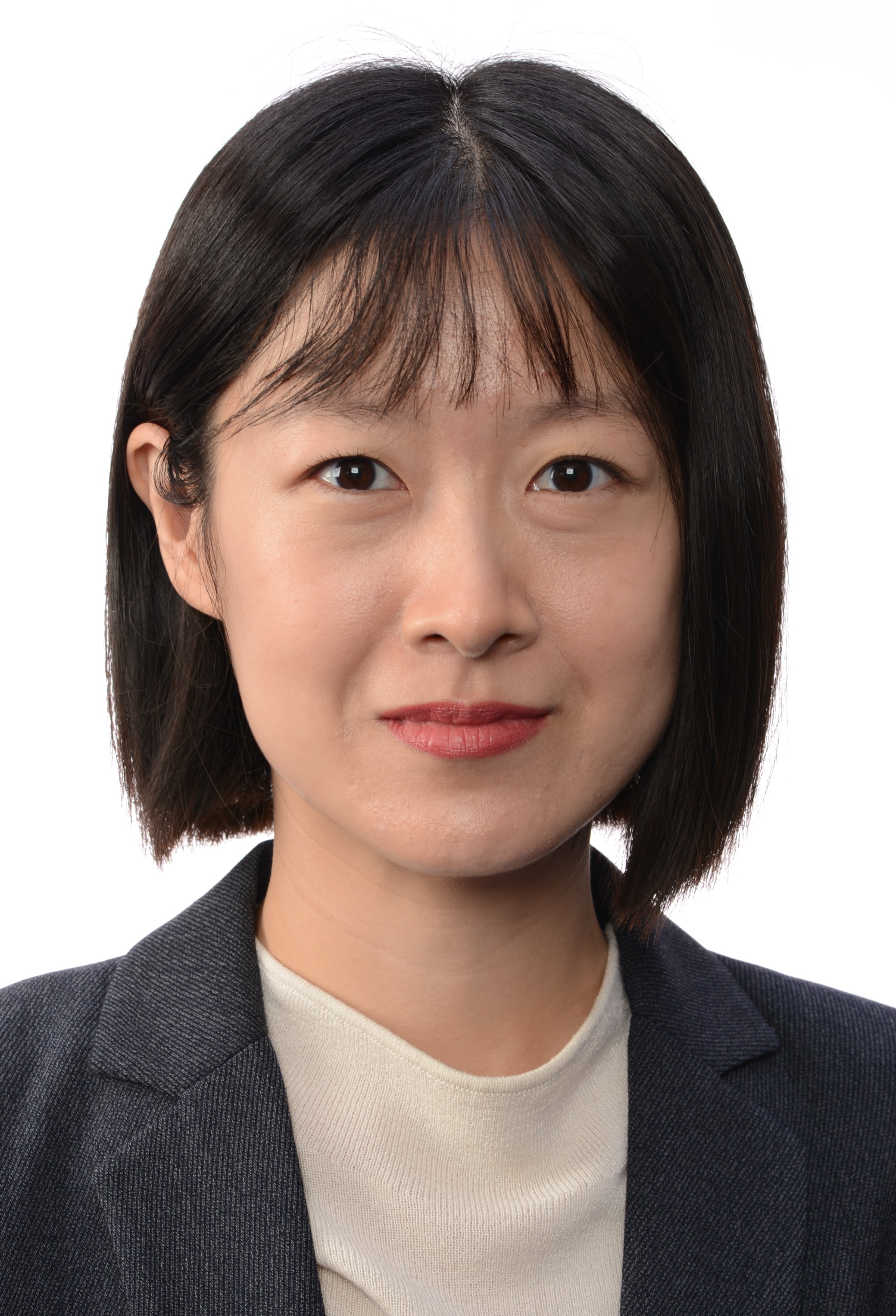
Dr. Liu Yang is an Associate Professor jointly appointed in the Department of Civil and Environmental Engineering and the Department of Industrial Systems Engineering and Management at the National University of Singapore (NUS). She holds a B.S. from Tsinghua University, an MPhil from the Hong Kong University of Science and Technology, and a Ph.D. from Northwestern University. Her research focuses on urban mobility and transport systems, including ridesharing, carsharing, traffic congestion management, and data-driven modeling. She leads the Lab for Urban Mobility Systems (LUMOS), comprising 15 members. Dr. Liu serves on editorial boards of journals like Transportation Science and Transportation Research Part C, and holds leadership roles in professional organizations such as the Chinese Overseas Transportation Association (COTA). Her work has been published in top journals including Transportation Research Part A/B/C/E and Transportation Science. Key awards include the CICTP Best Area Editor Award (2022) and the Faculty Teaching Excellence Award (2022). Her research is funded by agencies like the US Federal Highway Administration and Singapore's Ministry of Education. Education: B.S., Civil Engineering, Tsinghua University (2005) M.Phil., Civil Engineering, Hong Kong University of Science and Technology (2007) Ph.D., Transportation System Analysis and Planning, Northwestern University (2013) Professional Activities: Associate Editor, Transportation Science Co-Chair, WTC Shared Logistics and Transportation Systems Committee Member, Transportation Research Board Committee AP020 and AEP40 Her publications emphasize optimization, dynamic systems, and policy analysis in transportation networks. Recent work explores autonomous vehicles, incident-responsive traffic management, and shared mobility systems. She advises students on topics like ridesharing algorithms and congestion pricing strategies.
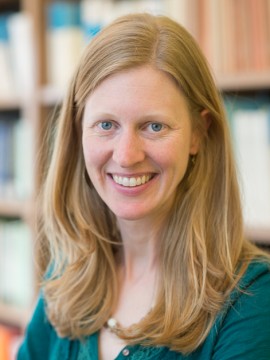
Jennifer Williams is a Professor in the Department of Geography at the University of British Columbia (UBC), located on the traditional, ancestral, and unceded territory of the Musqueam People. She holds a PhD from the University of Montana (2008) and a BA from the University of California, Berkeley. Her primary research focuses on understanding how interacting ecological and evolutionary processes influence species distributions and abundances, particularly in the context of global environmental changes like climate change, habitat fragmentation, and biological invasions. Her work integrates field experiments, observational studies, and mathematical modeling to address conservation challenges. Her current research themes include eco-evolutionary dynamics of range expansion, species interactions in Garry oak savannas, plant life history responses to climate change, and invasive species management. She received the prestigious Killam Research Fellowship in 2020, recognizing her contributions to biodiversity and climate science. Williams teaches courses in geography and ecology, and her lab actively collaborates with the Biodiversity Research Centre. Her recent work emphasizes forecasting species' responses to climate change and developing strategies for ecosystem resilience.
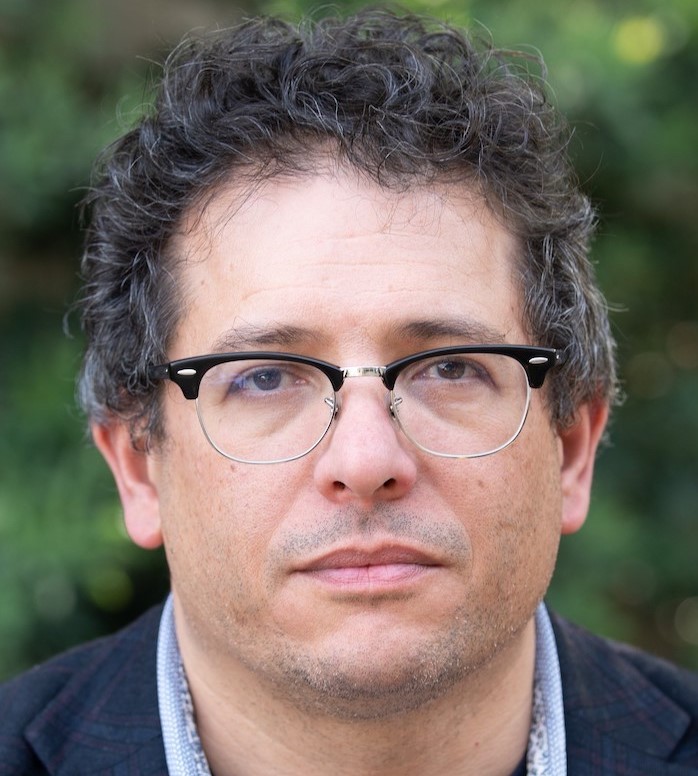
David R. Just is a Professor and Director of Graduate Studies at the Charles H. Dyson School of Applied Economics and Management at Cornell University. He holds a Ph.D. (2001) and MS (1999) from the University of California, Berkeley, and a BA (1998) from Brigham Young University. His research focuses on behavioral economics, examining how environmental and psychological factors influence economic decisions, particularly in food choices and agricultural contexts. His work on school lunch programs and low-cost behavioral nudges has been widely recognized. He co-directs the Cornell Center for Behavioral Economics in Child Nutrition Programs. Key research interests include the application of behavioral insights to public health, consumer decision-making, and agricultural policy. His studies often combine field experiments with econometric analysis to address real-world challenges, such as improving food accessibility and sustainability. His work has been featured in prominent media outlets and has influenced policy initiatives in food systems and nutrition. Roles: Professor, Director of Graduate Studies, Co-Director of Cornell Center for Behavioral Economics in Child Nutrition Programs. Education: Ph.D. and MS in Agricultural and Resource Economics (UC Berkeley), BA in Economics (BYU). Research: Behavioral economics, food policy, agricultural decision-making, and sustainable practices. Affiliations: Cornell SC Johnson College of Business, College of Agriculture and Life Sciences.
Dr Won-Ki Seo is a Senior Lecturer in the School of Economics at the University of Sydney. His research focuses on time series analysis, econometric theory, and functional data analysis. He holds a Ph.D. in Economics from the University of California, San Diego. Research Interests: Dr Seo's work centers on cointegration analysis in functional spaces, Hilbertian processes, and the application of advanced mathematical frameworks to econometric problems. His recent studies explore tail behavior of Lévy processes, functional principal component analysis, and nonlinear time series modeling. Recent work includes analyzing stopped Lévy processes with Markov modulation and developing methodologies for functional time series inference Key contributions to cointegration theory in Banach spaces and functional data econometrics Dr Seo has published extensively in top journals like Econometric Theory and Journal of Time Series Analysis . His research bridges theoretical econometrics and practical applications in financial and environmental economics. Contact: won-ki.seo@sydney.edu.au | Office: A02 Social Sciences Building
Dr. Aaron Schurger is an Assistant Professor in the Psychology Department at Chapman University’s Crean College of Health and Behavioral Sciences. He is also a member of the Institute for Interdisciplinary Brain and Behavioral Sciences. Schurger holds a BA from Indiana University, and MA and PhD from Princeton University. His research focuses on the neuroscience of volition, consciousness, and decision-making, particularly exploring the readiness potential (RP) and its implications for free will debates. His work challenges classical interpretations of the RP using computational models, suggesting it reflects stochastic neural processes rather than preconscious decisions. Recent contributions include studies on the origins of the RP in spiking neural networks, critiques of causal structure theories of consciousness, and interdisciplinary analyses of free will. His findings emphasize that the RP may not indicate preconscious decision-making but instead arise from natural neural fluctuations during decision thresholds. Schurger collaborates across neuroscience, philosophy, and cognitive science, contributing to debates on consciousness, action initiation, and neural correlates of subjective experience. His research also addresses methodological rigor in studying unconscious processing and integrates computational models with empirical data, as seen in studies on movement timing and neural stability during perception. While no specific grants or labs are explicitly listed, his affiliations suggest involvement in interdisciplinary projects at Chapman.
Johanna Ziegel is a Professor of Statistics at ETH Zurich, Switzerland, since 2024, and a Visiting Scientist at the Heidelberg Institute for Theoretical Studies (HITS). Previously, she held positions at the University of Bern, where she was promoted to Full Professor in 2023. Her research focuses on decision-theoretically sound methods for forecast evaluation, probabilistic forecasting, risk measures in finance, and applications in meteorology, medicine, and climate science. She is actively involved in editorial roles for journals like Bernoulli , JASA: Theory & Methods , and SIAM Journal on Financial Mathematics . Education: PhD in Stereological Analysis of Spatial Structures from ETH Zurich (2010), supervised by Paul Embrechts and Eva B. Vedel Jensen. Postdoctoral research at the University of Melbourne and Heidelberg University. Research Interests: Forecast evaluation, elicitable functionals, risk measures, isotonic regression, statistical calibration, and applications in finance, climate science, and biostatistics. Her work bridges theoretical statistics with practical challenges in uncertainty quantification and decision-making under uncertainty. Advising & Collaborations: Supervised 7 PhD students and mentored several postdocs. Collaborates with the Computational Statistics group at HITS and the Oeschger Centre for Climate Change Research. Her group explores distributional regression under order constraints and novel methods for forecast comparison. Recognition: Credit Suisse Award for Best Teaching (2022), H.I.T. Program for Academic Leadership (2021–2022). Active in professional service, including the Bernoulli Society Council and editorial boards.
Endre Süli is a Professor of Numerical Analysis at the University of Oxford, affiliated with Worcester College and Linacre College. He has held various academic roles since 1985, including Fellowships and Tutorships in Mathematics. University Education: B.Sc. in Mathematics, University of Belgrade (1974-1978) M.Sc. in Mathematics, University of Belgrade (1978-1980) Ph.D. in Mathematics, University of Belgrade (1985) M.A., University of Oxford (1985) British Council Visiting Student, Reading University and University of Oxford (1983/84) Süli's research focuses on numerical methods for partial differential equations (PDEs), with expertise in finite element methods, adaptive algorithms, error control, and computational modeling of fractures and non-Newtonian fluids. His work bridges mathematical theory and practical applications in fluid dynamics and material science. His recent publications emphasize finite element approximations, nonlinear PDEs, and stochastic models for polymer dynamics. Themes include multiscale methods, tensor-sparsity for high-dimensional problems, and compressible flow simulations. Scientific Awards: Fellow of the Royal Society (2021) London Mathematical Society Naylor Prize and Lectureship (2021) Pro Urbe Prize, City of Subotica (2021) SIAM Fellow (2016) Member, Academia Europaea (2020) Foreign Member, Serbian National Academy of Sciences and Arts (2009) IMA Service Award (2011) Fellow, European Academy of Sciences (EurASc) (2010) Fellow, Institute of Mathematics and its Applications (2007) London Mathematical Society/New Zealand Mathematical Society Forder Lecturer (2015) Professor Hospitus, Charles University, Prague (2012) Distinguished Visiting Chair Professor, Shanghai Jiao Tong University (2013) Invited Speaker, International Congress of Mathematicians, Madrid (2006) Süli has supervised numerous research projects and held visiting appointments globally. His contributions to numerical analysis span foundational work on error estimation, nonlinear stability, and advanced computational frameworks for complex physical systems.