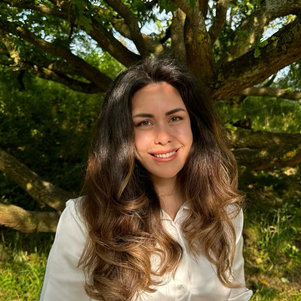
Yong Zhang is a Professor in the Department of Geological Sciences at the University of Alabama, serving as Undergraduate Program Director. His research focuses on stochastic hydrology, contaminant transport in soil/water/aquifers (including heavy metals, PFAS, microplastics, and antibiotics), and surface water-groundwater interaction. He has held postdoctoral positions at the University of California, Davis; Desert Research Institute; and Colorado School of Mines. Current research includes the 'Groundwater 2070' project in Baldwin County, Alabama, addressing climate change impacts and seawater intrusion. Education: BS in Hydrogeology and Geo-Engineering (Nanjing University, 1993), PhD in Hydrology and Water Resources (Nanjing University, 1998). He teaches courses like GEO 101, GEO 306, and specialized topics such as Fractional Calculus and Hydrogeophysics. His work integrates fractional calculus with hydrogeology, yielding models for non-Fickian transport and pollutant source identification. Students under his advisement include Jonathan Frame, Chaloemporn Ponprasit, and Hossein Gholizadeh. Research outputs emphasize environmental geochemistry, numerical modeling, and groundwater sustainability. Notable collaborations involve Dr. Geoff Tick on co-advised PhD students.
Christopher John O'Donnell is a distinguished Professor at the School of Economics, University of Queensland, Australia, where he holds a dual affiliation (50% each) with both the main School of Economics and the Centre for Efficiency and Productivity Analysis (CEPA). His research primarily focuses on efficiency and productivity analysis across various sectors including agriculture, fisheries, public services, and healthcare. As a leading scholar in his field, he has published extensively in top-tier economics and operations research journals and is recognized as being among the top 5% of authors globally according to multiple citation metrics. O'Donnell's research interests span several interconnected domains: efficiency analysis, productivity measurement, agricultural economics, econometrics, state-contingent production frontiers, and metafrontier analysis. His work often bridges theoretical methodology with practical applications, particularly in estimating efficiency and productivity changes under various constraints and uncertainties. He has developed innovative approaches for measuring productivity in public service providers, agricultural sectors, and healthcare institutions, with particular attention to how weather, climate change, and demand uncertainty affect performance metrics. His research output demonstrates consistent productivity, with publications spanning from the 1990s to the present, including significant contributions in the last five years. O'Donnell frequently collaborates with researchers internationally, particularly with scholars from Australia, Europe, and Asia, reflecting the global relevance of his work. His publications appear in leading journals such as the American Journal of Agricultural Economics, Journal of Productivity Analysis, European Journal of Operational Research, and Agricultural and Applied Economics journals. Ranked among top 5% authors by citation metrics (Number of Citations) Ranked among top 5% authors by citation metrics (Number of Citations, Discounted by Citation Age) Ranked among top 5% authors by citation metrics (Number of Citations, Weighted by Number of Authors) Ranked among top 5% authors by citation metrics (Number of Citations, Weighted by Number of Authors, Discounted by Citation Age) Ranked among top 5% authors by citation metrics (Euclidian citation score) O'Donnell has supervised numerous graduate students, as evidenced by his 'Record of graduates' noted in his RePEc profile. His research has been supported by various institutions, particularly focusing on agricultural productivity, public sector efficiency, and resource economics. He has contributed significantly to methodological developments in productivity measurement, including nonparametric approaches and metafrontier frameworks that allow for cross-technology comparisons. As a core member of the Centre for Efficiency and Productivity Analysis (CEPA) at the University of Queensland, O'Donnell contributes to one of the world's leading research centers in efficiency and productivity analysis. His work has practical applications for policymakers in agriculture, fisheries management, healthcare, and public service delivery, helping organizations measure and improve their performance in increasingly complex economic environments.
Dr. Jonathan Gair is a Group Leader in the Astrophysical and Cosmological Relativity Division at the Max Planck Institute for Gravitational Physics (Albert Einstein Institute) in Potsdam, Germany. Previously, he served as Professor of Astrostatistics at the University of Edinburgh (2018-2019) and as Reader (Associate Professor) in Statistics at the same institution (2015-2018). Dr. Gair's research focuses on gravitational wave data analysis and its applications to cosmology and fundamental physics. His work spans multiple areas of gravitational wave astronomy, with particular emphasis on: Developing and applying new methodologies for gravitational wave data analysis Using gravitational wave observations to derive cosmological parameters, particularly the Hubble constant Developing data analysis tools for the LISA space-based gravitational wave detector Exploring the scientific potential of gravitational wave observations for testing general relativity Creating computationally efficient techniques for parameter inference in gravitational wave astronomy Dr. Gair plays a leading role within the LIGO/Virgo collaboration in deriving cosmological constraints from gravitational wave observations. He currently chairs the LISA Science Group, overseeing the development of data analysis tools for the planned ESA-led LISA mission. His research has significantly contributed to our understanding of how gravitational wave observations can serve as "standard sirens" for measuring cosmic distances and probing the expansion history of the universe. Dr. Gair's work involves both theoretical development and practical application of data analysis techniques. He has developed methods for handling selection effects in rate estimation of gravitational wave events, techniques for mapping gravitational wave backgrounds using methods adapted from cosmic microwave background analysis, and approaches for incorporating model uncertainties into gravitational wave parameter estimation.
Riccardo Raheli is a Full Professor at the University of Parma , Department of Engineering and Architecture, with a career spanning over three decades in Information and Communication Technologies (ICT). He has served as Chair of the Councils for Telecommunications and Communication Engineering programs, and as representative of the University of Parma in CNIT and its Members' Assembly. Education: Laurea in Electronic Engineering (University of Pisa, 1983), M.Sc. in Electrical and Computer Engineering (University of Massachusetts, 1986), Postgraduate Diploma (Scuola Superiore Sant'Anna, 1987) Key Roles: President of Degree Councils (2002-2018), CNIT Committee Member (2000-2005), Editorial Board member for IEEE Transactions, Springer and MDPI journals His research bridges telecommunications , digital signal processing , and healthcare applications , producing extensive international publications and industrial patents. He has co-authored monographs including Detection Algorithms for Wireless Communications (Wiley, 2004) and LDPC Coded Modulations (Springer, 2009). Recent article trends show interdisciplinary work in automotive stress monitoring (IoT/Matlab-based systems), video processing for healthcare (neonatal seizures, respiratory monitoring), and acoustic field control (microphone virtualization, personal sound zones). His work spans machine learning applications in automotive systems, stochastic acoustic modeling , and power-line communications . Scientific Leadership : Co-Chair for IEEE conferences (ICC 2010, GLOBECOM 2011, ISPLC 2020) Editorial roles in 7+ international journals Grants & Collaborations : Led industrial patents in communications systems Coordinated CNIT Technical Reports series (2025) He teaches Wireless Communications and Digital Signals Laboratory , emphasizing Matlab/Simulink proficiency. His laboratory sessions focus on practical implementation of signal processing algorithms, requiring full software installation on personal devices.
Pietro Ortoleva is a Professor of Economics and Public Affairs at Princeton University , affiliated with the Department of Economics and the School of Public and International Affairs. His research spans Decision Theory , Behavioral Economics , Experimental Economics , and Political Economy , with a focus on understanding deviations from traditional economic models. Education: PhD in Economics, New York University (2009); BA in Economics, Università degli Studi di Torino (2004). Professional Roles: Coeditor of the American Economic Review (since 2021), former Editor of the Journal of Economic Theory (2018–2020), and editorial board member for multiple journals. His work investigates stochastic choice , ambiguity aversion , and reference-dependent preferences , often through incentivized experiments. Recent studies include the role of social norms in vaccine uptake , cautious utility models , and non-Bayesian belief updating . He has secured multiple National Science Foundation grants for projects on behavioral economics and decision-making under uncertainty. His 15 most recent publications reveal trends in behavioral decision theory , with emphasis on randomization preferences , time lotteries , cognitive biases , and political behavior . These studies frequently bridge economics, psychology, and public policy.
Dr. Yi-Ping Fang is an Assistant Professor at the EDF Chair SSEC with a joint appointment at the Industrial Engineering Laboratory, CentraleSupélec, Université Paris-Saclay, France. His research focuses on computational methods for risk, vulnerability, and resilience analysis of critical infrastructures including smart grids, electrified transportation, and interdependent lifeline systems. Risk Analysis Resilience Engineering Optimization Under Uncertainty Game Theory Applications His work applies advanced techniques like distributionally robust optimization, POMDP modeling, and interdependency analysis to enhance infrastructure resilience against climate change, natural hazards, and intentional attacks. Publications demonstrate expertise in hybrid optimization algorithms, stochastic modeling, and network vulnerability assessment. Recent trends include: Smart grid resilience enhancement Uncertainty quantification in infrastructure systems Multi-stage decision modeling Game-theoretic approaches for interdependent networks Integration of deep learning for dynamic system prediction
Igor Kortchemski is a CNRS researcher at the Department of Mathematics and Applications (DMA) at École Normale Supérieure, Paris, and a lecturer in the Department of Applied Mathematics at École Polytechnique. His primary research focuses on the continuous limits of random discrete models, particularly examining how discrete combinatorial structures converge to continuous objects under appropriate scaling. His educational background includes a PhD in Mathematics (2012) under Jean-François Le Gall at École Normale Supérieure and a Habilitation à diriger des recherches (HDR) in Mathematics (2016). Kortchemski's research spans several interconnected areas: Random trees and Galton-Watson processes with heavy-tailed distributions Random planar maps and their geometric properties Growth-fragmentation processes and their connections to Lévy processes Scaling limits of combinatorial structures and their continuous counterparts His publication record shows a consistent focus on the geometric properties of random discrete structures, with recent work (2023-2025) exploring uniform attachment processes with freezing, critical tree phenomena, and the mesoscopic geometry of sparse random maps. His research often involves sophisticated probabilistic analysis combined with combinatorial insights. Scientific recognition includes: prix de thèse solennel Perrissin-Pirasset / Schneider de la chancellerie des Universités de Paris (2012) Kortchemski actively contributes to academic service: Examiner for the minor math exam at École Polytechnique (FUF) since 2023 Member of the mathematics jury for ENS International Selection (2023) Member of the jury for the external mathematics competitive examination (Agrégation) since 2021 Member of the jury for the Arts and Economic and Social Sciences Bank (B/L) mathematics exams (2015-2018) He mentors the next generation of researchers as co-director of Antoine Aurillard's and Vanessa Dan's theses (both since 2023), and previously directed Etienne Bellin's (2020-2023) and Paul Thevenin's (2017-2020) theses.
Nezihe Merve Gürel is an Assistant Professor in Computer Science at Delft University of Technology (TU Delft), affiliated with the Pattern Recognition & Bioinformatics Group within the Intelligent Systems Department of the Faculty of Electrical Engineering, Mathematics and Computer Science. Her research focuses on developing robust, reliable, and efficient machine learning methods with enhanced reasoning capabilities, bridging theoretical rigor and practical applications. She emphasizes data-centric approaches to improve ML systems. Education: PhD in Computer Science from ETH Zurich, MSc from EPFL (Switzerland). Research Interests: ML robustness, reliability, reasoning, data-centric ML, federated learning, and explainable AI. Her recent work includes certified robustness for retrieval-augmented models and time-efficient learning algorithms. She has contributed to the Journal of Data-centric Machine Learning Research as an executive editor and served as a reviewer for top ML conferences (NeurIPS, ICML, ICLR). She previously held roles at IBM Research, Stanford University's Human-Centered AI Lab, and Westlake Institute for Advanced Study. Her awards include the Generation Google Scholarship and Cisco Research Funding . Scientific Awards : Generation Google Scholarship (2021) Cisco Research Center University Funding Labs & Teams : She leads research in the Pattern Recognition Laboratory at TU Delft and collaborates with international institutions like Stanford and Westlake Institute for Advanced Study.
Lars Augestad Lochstoer is a Professor of Finance at the UCLA Anderson School of Management, where he teaches Empirical Methods in Finance and Data Analytics and Machine Learning in the Master of Financial Engineering program. He previously held faculty positions at Columbia University and London Business School, and served on the Asset Allocation Advisory Committee for the Norwegian Sovereign Wealth Fund from 2016 to 2022. Dr. Lochstoer earned his Ph.D. in Finance from the University of California, Berkeley's Haas School of Business in 2005, following his Sivilingeniør Business Economics degree from the Norwegian University of Science and Technology in 1999. His research focuses on understanding the economic mechanisms that drive asset prices, including stock market return dynamics, cross-sectional stock returns, exchange rates, and commodity markets. He has made significant contributions to asset pricing literature, particularly in volatility expectations, risk-return tradeoffs, and currency risk. His publication record reveals a strong focus on behavioral aspects of asset pricing, with recurring themes of investor expectations, volatility dynamics, and market anomalies. His work often combines theoretical models with empirical evidence, frequently incorporating quantitative methods and data science approaches. Recent publications show increasing attention to currency risk and multi-horizon risk-return relationships, reflecting evolving market conditions and research interests. EFA Viz Risk Management Prize for best paper in Energy Markets, Securities and Prices (2009) Michigan Ross School of Business Mitsui Finance Symposium Best Discussant Award (2012) UCLA Anderson Excellence in Teaching Award (2017, 2020, 2021) RFS Distinguished Referee Award (2021) As an active member of the academic finance community, Lochstoer serves as an associate editor for the Review of Finance and the Critical Finance Review, having previously served in the same capacity for the Review of Financial Studies. His professional service includes committee roles in major finance associations and extensive reviewing for top finance and economics journals. He has also contributed to practical finance through his service on the Asset Allocation Advisory Committee for the Norwegian Sovereign Wealth Fund.
Sean Andersson is a Professor in Mechanical Engineering and Systems Engineering at the College of Engineering, Boston University, and serves as Director of the BU Robotics Lab. His research bridges systems and control theory with applications in nanotechnology , atomic force microscopy , and robotics . His work in nanobioscience focuses on single molecule tracking and high-speed imaging in atomic force and fluorescence microscopy, leveraging control theory to enhance imaging capabilities. In robotics, he develops stochastic control methods for autonomous systems operating in complex environments, emphasizing multi-agent systems , sparsely sampled data , and symbolic control frameworks . Recent publications highlight trends in receding horizon control , persistent monitoring , neural style transfer for imaging , and stochastic policy optimization . The Andersson Lab also explores compressive sensing and optimal control for sensor networks and nanoscale fluid dynamics.
Lev Levitin is a Distinguished Professor in the Department of Electrical & Computer Engineering and Division of Systems Engineering at Boston University, with office PHO 332 and contact email levitin@bu.edu. His primary academic focus spans information theory, quantum communication, and computer network architecture. Education: PhD, USSR Academy of Sciences, Gorky University, 1969 Levitin's research integrates fundamental physics with information systems, emphasizing quantum measurement theory, bioinformatics, and the physical limits of computation. His work explores critical phenomena in network dynamics, virtual cut-through routing algorithms, and thermodynamic constraints in information processing. This interdisciplinary approach bridges theoretical physics, computer engineering, and complex systems analysis to address foundational questions in reliable computing. Analysis of his 15 most recent publications reveals two dominant research threads: (1) rigorous modeling of interconnection networks with emphasis on latency, saturation, and phase transitions in multidimensional topologies, and (2) quantum information theory investigations into physical limits of communication, energy requirements, and measurement constraints. The network studies consistently employ virtual cut-through routing as a core methodology, while quantum works establish fundamental bounds on information retrieval and computational speed. Scientific Awards: Life Fellow, IEEE Member, International Academy of Informatization Levitin leads the Reliable Computing Laboratory at Boston University, teaching foundational and advanced courses including Introduction to Engineering, Logic Design, Probability Theory, and specialized graduate courses in Information Theory and Discrete Mathematics. His educational contributions span undergraduate instruction through doctoral supervision, though specific student names and current grant funding details are not documented in the provided materials.
Professor Christian Deutscher is a prominent sports economist at Bielefeld University's Faculty of Psychology and Sport Science, specializing in the Department of Sport Science within Division V - Sport and Business. As both Research Officer and Internationalization Officer, he leads significant work in sports economics, particularly focusing on betting markets, match-fixing detection, and sports integrity. His research has attracted funding from major institutions including the German Research Foundation. Deutscher's research interests span sports economics, betting market efficiency, match-fixing detection, sports management, and the business aspects of professional sports. His work combines advanced statistical modeling with practical applications in sports integrity monitoring. He has extensively analyzed live betting markets, Bundesliga economics, and the impact of technological innovations like VAR in football. His research often examines the intersection of sports performance, economic incentives, and market behavior. Analysis of his recent publications reveals a strong focus on empirical studies of sports betting markets, particularly live and in-play betting dynamics. His work demonstrates sophisticated use of state-space models and other advanced statistical techniques to detect market inefficiencies and potential integrity issues. Deutscher frequently collaborates with statisticians and economists to develop warning systems for match-fixing, with particular attention to German football leagues. His research bridges theoretical economics with practical applications in sports governance. Professor Deutscher actively contributes to the European Sport Economics Association (ESEA), having edited special issues of conference proceedings and serving in editorial capacities. His work has been published in leading journals including Journal of Sports Economics, Economic Inquiry, and Applied Stochastic Models in Business and Industry. As Research Officer for the Faculty of Psychology and Sport Science, Deutscher oversees research initiatives and international collaborations. His current projects include data-based fraud detection in live betting markets, funded by the German Research Foundation across multiple phases. He also serves on various university committees including the Quality Improvement Commission and Examination Board for the Department of Sport Science. Deutscher maintains strong connections with sports organizations and betting industry stakeholders, ensuring his research has practical relevance for sports integrity monitoring. His work on betting market inefficiencies has direct applications for regulatory bodies seeking to protect the integrity of sporting competitions.
Yassine Ghannane is a Research Fellow at the Department of Computer Science , University of Copenhagen , specializing in Algorithms and Complexity . University: University of Copenhagen Department: Department of Computer Science Research Focus: Theoretical computer science, permutation-based evolutionary algorithms, computational complexity His recent work includes runtime analysis and theory development for permutation-based evolutionary algorithms, as well as module-based neural network mapping heuristics. Publications span 2022–2024 with interdisciplinary applications in machine learning and optimization. Contact: yagh@di.ku.dk | Office: Universitetsparken 1, 2100 København Ø, Denmark
Maximilian Egger is a Doctoral Researcher at the Institute for Communications Engineering under Prof. Antonia Wachter-Zeh at the Technical University of Munich (TUM). His research focuses on distributed machine learning, privacy-preserving computing, and information theory. He holds an M.Sc. in Electrical Engineering and Information Technology (2022, TUM) and a B.Eng. in Electrical Engineering (2020). He has conducted research stays at École Polytechnique Fédérale de Lausanne (2024) and Imperial College London (2023). Egger has received several awards, including the DAAD Scholarship (2023) and the VDE Award Bavaria (2020). His work emphasizes secure federated learning, Byzantine-resilient systems, and efficient distributed algorithms. He is affiliated with the Chair of Coding and Cryptography and actively contributes to advancements in decentralized learning systems. Recent publications highlight breakthroughs in privacy preservation, channel capacity estimation, and scalable federated edge learning.
Professor Line Roald is a faculty member in the Department of Electrical and Computer Engineering at the University of Wisconsin-Madison. Her research focuses on power system optimization, renewable energy integration, grid resilience, and wildfire risk mitigation using stochastic optimization and data-driven methods. Education : PhD (2016), MS (2012), BS (2009) from ETH Zurich Key Research Areas : Power Systems Optimization, Renewable Energy Integration, Wildfire Risk Mitigation, Stochastic Programming, Grid Decarbonization Her work addresses critical challenges in sustainable energy systems, including balancing grid efficiency and risk, optimizing electrolyzer scheduling for flexibility, and predicting cascading blackout severity using graph neural networks. She has developed frameworks for carbon intensity comparison and wildfire risk assessment in power systems. Scientific Awards : 2024 Inclusion, Equity and Diversity in Engineering Award 2024 Vilas Faculty Early Career Investigator Award 2023 IEEE Power Tech Best Student Paper Award 2021 NSF CAREER Award 2019 MTLE Fellow Professor Roald mentors graduate students and teaches courses including Introduction to Optimization and On-Line Control of Power Systems . Her publications highlight innovative approaches to grid security, carbon-efficient energy markets, and climate resilience in infrastructure systems.