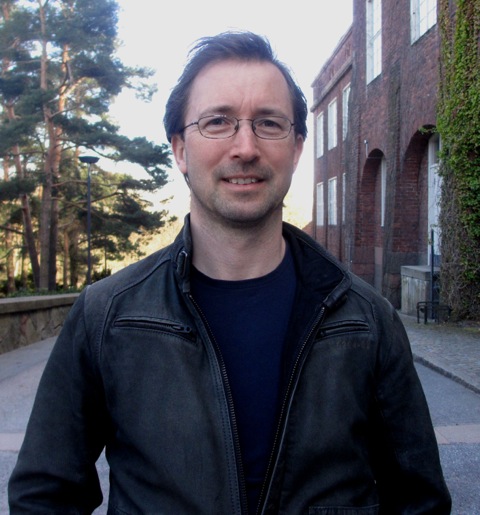
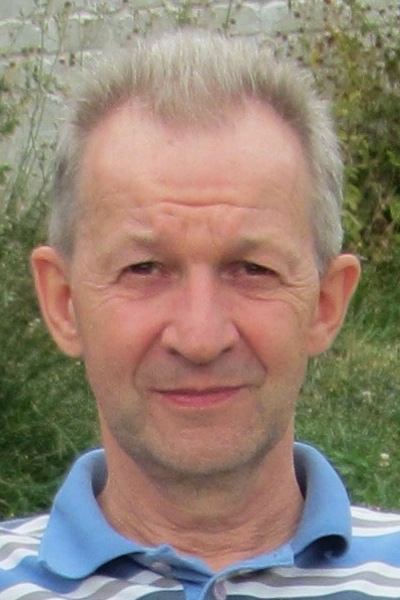
Per Krusell is Professor of Economics at Stockholm University and holds the Torsten and Ragnar Söderberg Chair at the Institute for International Economic Studies (IIES). He is a Fellow of the Econometric Society and served as President of the European Economic Association in 2020. He is currently the Secretary of the Prize Committee for the Sveriges Riksbank Prize in Economic Sciences in Memory of Alfred Nobel. Education: PhD in Economics, University of Minnesota Research Interests: Per Krusell’s research spans macroeconomics , inequality , climate economics , labor markets , and political economy . He has made foundational contributions to understanding incomplete markets, wealth distribution, optimal taxation, and the macroeconomic effects of climate change. His work often integrates dynamic stochastic general equilibrium (DSGE) models with heterogeneous agents to study long-run outcomes and policy impacts. Publications Trend: His recent publications (2022–2025) reflect a strong focus on climate policy , integrated assessment modeling , and macro-labor dynamics . Key themes include carbon taxation, labor supply responses to productivity growth, fiscal multipliers in heterogeneous-agent settings, and the macroeconomic consequences of vaccination and epidemic control. Awards & Honors: Fellow of the Econometric Society Torsten and Ragnar Söderberg Chair in Economics President, European Economic Association (2020) Secretary, Nobel Prize Committee in Economic Sciences Advising & Grants: While specific student names are not listed, his leadership roles in global economic associations and policy committees indicate extensive academic advising and grant involvement in macroeconomic policy and climate economics. Labs & Teams: He is affiliated with the Institute for International Economic Studies (IIES) at Stockholm University, a leading research institute in macroeconomics and international economics.
Henrik Sandberg is a Professor at the Division of Decision and Control Systems , KTH Royal Institute of Technology , Stockholm, Sweden. He holds the title of Deputy Head of Division and is affiliated with the School of Electrical Engineering and Computer Science . Education: MSc in Engineering Physics (1999) PhD in Automatic Control (2004) from Lund University Postdoctoral position at Caltech (pre-2007) Research Interests: Focus on cyber-physical systems security , power systems , model reduction , and fundamental limitations of control systems . Key sub-areas include attack detection , networked control , privacy-preserving estimation , and resilient control architectures . Publications: Over 150 papers across IEEE Transactions and Automatica , covering topics like stealthy attacks , distributed control , LQG optimization , and thermodynamic costs in filtering . Recent work includes LWE-based encrypted control and Bayesian deception mechanisms . Scientific Awards: Best Student Paper Award Finalist at IEEE CASE 2014; Best Student-Paper Award at IEEE CDC 2004. Grants & Projects: Leads the DYNACON project (WASP Cybersec cluster) and collaborates on CERCES (critical infrastructure resilience). Serves as examiner for multiple advanced courses in cybersecurity and control systems. Contact: Email: hsan@kth.se Phone: +46 (0)8 790 7294 Room: A:607, Malvinas Väg 10, Stockholm
Jennifer K. Ryan is a Professor and Division Head for Numerical Analysis, Optimization & Systems Theory at the Department of Mathematics, KTH Royal Institute of Technology, Stockholm. She is affiliated with the Digital Futures Faculty, a cross-disciplinary research center jointly established by KTH, Stockholm University, and RISE Research Institutes of Sweden. Her research focuses on developing numerical schemes for extracting enhanced accuracy from simulations, with applications in imaging, data analysis, and fluid dynamics. Ryan’s work emphasizes improving computational efficiency through theoretical insights and practical algorithms. Her academic roles include teaching courses like Numerical Methods for Differential Equations II and supervising student projects in numerical analysis. She has contributed to the SIAC MAGIC toolbox, a software package for accuracy-enhancing filtering techniques. Ryan’s research group actively explores discontinuous Galerkin methods, SIAC filtering, and multi-resolution analysis, addressing challenges in computational physics and engineering. Her publications span high-order numerical methods, mesh adaptivity, and applications in plasma physics and wave equations. Projects include error estimation for boundary integral methods and developing filters for noisy data. Ryan collaborates internationally, contributing to both theoretical advancements and practical implementations in computational science.
Xiaoming Hu is a Professor at the Division of Numerical Analysis, Optimization and Systems Theory within the Department of Mathematics at KTH Royal Institute of Technology (Kungliga Tekniska Högskolan) in Stockholm, Sweden. Born in Chengdu, China, he received his B.S. degree from University of Science and Technology of China in 1983, followed by M.S. and Ph.D. degrees from Arizona State University in 1986 and 1989 respectively. After serving as a research assistant at the Institute of Automation, Chinese Academy of Sciences (1983-1984), he was a Gustafsson Postdoctoral Fellow at KTH (1989-1990) before becoming a faculty member. His educational background includes: B.S. in Engineering, University of Science and Technology of China, 1983 M.S. in Engineering, Arizona State University, 1986 Ph.D. in Engineering, Arizona State University, 1989 Xiaoming Hu's research primarily focuses on multi-agent systems, nonlinear feedback stabilization, nonlinear observer design, and sensing and active perception. His work bridges theoretical control theory with practical applications in robotics and autonomous systems. He has made significant contributions to geometric control theory, mathematical systems theory, and nonlinear systems analysis and control. His research often involves developing theoretical frameworks for distributed control, formation control, and cooperative behavior in multi-robot systems. Professor Hu's publication record shows a consistent research trajectory with numerous high-impact publications in top-tier journals like Automatica, IEEE Transactions on Automatic Control, and Systems & Control Letters. His research has evolved from fundamental control theory to more applied problems in robotics and multi-agent systems, while maintaining strong mathematical foundations. Recent work shows increasing focus on safety-critical control, inverse problems in estimation, and networked systems. His scientific contributions include: Development of theoretical frameworks for multi-agent coordination and formation control Advances in nonlinear observer design for robotic systems Contributions to geometric control theory and systems theory Research on distributed estimation and control algorithms Applications of control theory to robotics and autonomous systems Professor Hu teaches several advanced courses including Mathematical Systems Theory, Geometric Control Theory, and Nonlinear Systems: Analysis and Control. He has supervised numerous degree projects at both undergraduate and graduate levels in mathematics, optimization, systems theory, and scientific computing. His teaching reflects his research expertise, providing students with both theoretical foundations and practical applications of control theory.
Olof Runborg is a Professor in Numerical Analysis at the Royal Institute of Technology (KTH) in Stockholm, Sweden. He works in the Division of Numerical Analysis, Optimization and Systems Theory within the Department of Mathematics at KTH. His research focuses on developing and analyzing numerical methods for partial differential equations, particularly for wave propagation problems. His educational background includes: MSc in Electrical Engineering from KTH (1992) BSc in Economics & Business Administration from SSE (1994) PhD in Numerical Analysis/Applied Mathematics from KTH (1998) Postdoc at Paris VI University (1999) Postdoc at Princeton University's Program in Applied and Computational Mathematics (2000-2001) Became Docent at NADA in 2003 Appointed Professor at KTH in 2010 Professor Runborg's research centers on the numerical treatment of partial differential equations, with special emphasis on wave propagation problems. His work spans multiple areas including high-frequency waves, multiscale phenomena, numerical homogenization, uncertainty quantification, multiresolution analysis, Gaussian beams, and mesh generation. A recurring theme in his research is developing methods to solve computationally expensive problems more efficiently while maintaining accuracy. His approach often involves coupling different numerical methods or reformulating equations to create more efficient computational approaches. His research has applications across physics and engineering domains where wave phenomena are important. An analysis of his recent publications (2015-2025) shows continued focus on high-frequency wave propagation with expanding applications to areas like the Landau-Lifshitz equation for magnetic materials and elastic wave propagation. His work bridges theoretical numerical analysis with practical computational techniques, often developing novel methods like the WaveHoltz iteration for solving the Helmholtz equation. The publications demonstrate increasing attention to uncertainty quantification and multiscale methods while maintaining strong theoretical foundations in error analysis. Professor Runborg teaches several courses at KTH including Numerical Methods (basic course), Applied Numerical Methods, Numerical Algorithms for Data-Intensive Science, and Selected Topics in Numerical Analysis II. He serves as examiner for degree projects in Scientific Computing. His teaching reflects his research expertise in numerical methods and computational mathematics, providing students with both theoretical foundations and practical implementation skills. Beyond his core research, Professor Runborg has engaged in interesting side projects, such as his analysis of 'Numbers on the Web' where he investigated the frequency of numbers 11-1000 in web content, revealing patterns related to dates, time, computer systems, and cultural phenomena. This demonstrates his broader interest in data analysis and computational approaches to understanding patterns in information.
Saurabh Amin is a Professor in the Department of Civil and Environmental Engineering at the Massachusetts Institute of Technology (MIT), where he also serves as the Edmund K. Turner Professor and Undergraduate Officer. He is a Principal Investigator at the Laboratory of Information and Decision Systems and holds affiliations with the Operations Research Center and the Center for Computational Science and Engineering. His educational background includes: B.Tech. 2002, Indian Institute of Technology (IIT) Roorkee M.S. 2004, University of Texas (UT) Austin Ph.D. 2011, University of California (UC) Berkeley Saurabh Amin's research focuses on the design and control of infrastructure systems using game theory and optimization in networks. His work spans three main areas: resilient network control, information systems and incentive design, and optimal resource allocation in large-scale infrastructure systems. By concentrating on critical infrastructure domains including highway transportation, electric power distribution, and urban water networks, his research develops innovative theory and tools to enhance system performance against both stochastic and adversarial disruptions. His approach involves modeling cyber-physical interactions in infrastructures to assess vulnerabilities, developing detection and response tools for failures at various scales, and designing economic incentive schemes that improve aggregate public good while accounting for dependencies and private information among strategic entities. Amin's work bridges mathematical systems theory with practical civil engineering applications, creating a rigorous theoretical foundation for infrastructure resilience that addresses diverse failure mechanisms from natural disasters to deliberate malicious actions. His recent publications demonstrate a strong focus on decarbonization of energy systems, resilient infrastructure planning under climate uncertainty, optimization methods for complex networked systems, and game-theoretic approaches to sustainable infrastructure management. His work increasingly integrates artificial intelligence and machine learning techniques with traditional control theory to address contemporary challenges in infrastructure resilience and sustainability. The research shows a clear trajectory toward addressing climate change impacts on infrastructure systems while maintaining economic efficiency and operational reliability. Professor Amin has received numerous prestigious awards and honors: Common Ground Excellence in Teaching Award, 2025 HSCC Test-of-Time Award, 2024 MIT CEE, Distinguished Service and Leadership Award, 2023 Samuel M. Seegal Prize (SoE) – inspiring students in pursuing and achieving excellence, 2022 Earll M. Murman for Excellence in Undergraduate Advising, 2022 C3.ai Digital Transformation Institute Research Award, 2020 MIT, Ole Madsen Mentoring Award, 2020 MIT, Energy Initiative Research Award, 2020 National Academy of Engineering, China-America Frontiers of Engineering Symposium speaker, 2019 MIT, Robert N. Noyce Career Development Professor, 2015-2018 Google Faculty Research Award, 2015 National Science Foundation CAREER Award, 2015 Siebel Energy Institute Research Award, 2015 MIT, Solomon Buchsbaum AT&T Research Fund Award, 2012 Professor Amin has been actively involved in significant research projects including the C3.ai DTI project on Causal Reasoning for Real-Time Attack Identification in Cyber-Physical Systems and another on Learning in Routing Games for Sustainable Electromobility. He serves as the chief scientist on multi-institutional NSF grants, including the $9 million Foundations of Resilient Cyber-Physical Systems (CPS) project. His teaching portfolio includes courses such as 1.008 Engineering for a Sustainable World, 1.104 Sensing and Intelligent Systems, 1.020 Engineering Sustainability: Analysis and Design, and 1.208 Resilient Networks. As Undergraduate Officer, he plays a key role in shaping the educational experience for civil and environmental engineering students at MIT. Professor Amin leads the Resilient Infrastructure Networks Lab at MIT, where his team develops theoretical foundations and practical tools for infrastructure resilience. The lab focuses on the intersection of control theory, game theory, and optimization applied to cyber-physical infrastructure systems. Current research directions include pandemic-resilient urban mobility and hurricane-resilient smart grid operations, reflecting the lab's commitment to addressing pressing societal challenges through rigorous systems engineering approaches.
Matteo Magnani is a Professor in the Division of Computing Science at the Department of Information Technology, Uppsala University. He leads the Uppsala University Information Laboratory and is a founding member of the Uppsala University Computational Social Science Lab. His research spans network science, artificial intelligence, data science, and computational social science, with a focus on social data mining and multilayer networks. PhD in Computer Science, University of Bologna, 2006 Graduated with honours in Information Sciences, University of Bologna, 2002 Studies in Computer Science at University of Marne la Vallée and Imperial College London Matteo Magnani's research interests include social network analysis, multilayer and probabilistic networks, community detection, visual analytics, and the application of AI to digital media and climate communication. His work bridges computer science and social sciences, particularly in analyzing online discourse and digital intermediaries. He has contributed significantly to the understanding of network structures, uncertainty in networks, and the ethical dimensions of algorithmic analysis. His recent publications highlight trends in fairness in community detection, visual saliency in network layouts, emotional reactions to climate visuals online, and deep learning applications in social media. Topics frequently involve YouTube, Twitter, and online public debates, using advanced network and machine learning methods. Rotary Prize for best student of the Science Faculty Best Paper Award Funniest Presentation Award Best Poster Award Pedagogical Prize from UTN Distinguished University Teacher (Sweden) Docent title (Sweden) Magnani has supervised numerous students and collaborated widely, particularly with Luca Rossi, Alexandra Segerberg, and Davide Vega. He has secured funding from major sources including VR, H2020, STINT, and MIUR. He leads active research labs focused on information systems and computational social science, fostering interdisciplinary collaboration and innovation in network-based research.
John Folkesson is an Associate Professor at the Department of Robotics, Perception and Learning at KTH Royal Institute of Technology. His research focuses on mobile robotics, underwater autonomous vehicles (AUVs), and Simultaneous Localization and Mapping (SLAM), particularly addressing challenges in dynamic underwater environments. He leads the AUV group within the Swedish Maritime Robotics Centre (SMaRC2.0) and supervises multiple PhD projects, including those funded by Ocean Infinity and Vinnova. Folkesson has pioneered work on sonar-based SLAM, bathymetric mapping, and autonomous underwater navigation without human intervention. He teaches courses such as Probabilistic Graphical Models (DD2420) and Applied Estimation (EL2320). Recent projects include developing neural rendering techniques for sidescan SLAM and automatic launch systems for AUVs in collaboration with Purdue University and SAAB. His research emphasizes long-term autonomy, environmental ambiguity, and sensor data interpretation in unstructured underwater scenarios. Education: PhD in Robotics (2005, KTH Royal Institute of Technology) Recent Funding: 2024 projects include ALARS (Vinnova), WASP WARA-PS, and industrial collaborations. Research Interests Folkesson's work spans underwater robotics, SLAM algorithms, and sensor fusion. Key areas include: Underwater SLAM and sonar modeling Bathymetric reconstruction using neural networks Autonomous decision-making in AUV missions Real-time terrain modeling and localization Articles Trends Recent publications emphasize neural networks for SLAM optimization, sonar data processing, and autonomous underwater systems. Themes include real-time bathymetric mapping, sensor fusion in dynamic environments, and neural rendering techniques for improving navigation accuracy. Folkesson's work bridges theory and practice, with applications in marine robotics and industrial surveys. Advising & Grants PhD supervision: AUV perception (2024), SLAM with Ocean Infinity, event-response AUV systems. Collaborations: Purdue University, SAAB, Ocean Infinity. Course responsibilities: Over 10 advanced robotics and engineering courses at KTH. Labs & Teams Lead of SMaRC2.0, KTH's official research center for maritime robotics. Active in developing AUV systems for long-duration missions, including ice-covered and deep-sea exploration.
Anders Karlström is a Professor at KTH Royal Institute of Technology, specializing in Transport Modelling and Economics. His research focuses on sustainable transportation systems, emissions reduction, and energy efficiency. Key interests include activity-based modelling, dynamic discrete choice frameworks, and policy analysis for urban mobility. He has contributed to studies on travel behavior, infrastructure planning, and environmental impacts of transport systems across multiple international cities. His work integrates advanced methodologies such as recursive logit models, spatial regression, and machine learning for predictive analytics. Notable research areas involve evaluating weather variability effects on travel patterns, optimizing traffic state estimation with sensor data, and developing scenario-based models for future employment growth. Karlström collaborates with industries to enhance the competitiveness of sustainable transport solutions globally.
Per Enqvist is an Associate Professor in the Division of Numerical Analysis, Optimization and Systems Theory within the Department of Mathematics at KTH Royal Institute of Technology, Stockholm, Sweden. He has held this position since 2009 after progressing from Assistant Professor (2006-2009) and post-doctoral roles at INRIA France and CNR Italy. His academic background includes: Ph.D. in Optimization and Systems Theory from KTH (2001), supervised by Professor Anders Lindquist M.Sc. in Engineering Physics (Civilingenjör) from KTH (1994) with Applied Mathematics focus Post-doctoral studies at INRIA Sophia-Antipolis (2003-2004) and CNR Padova (2001-2003) Enqvist's research centers on mathematical modeling of stochastic processes, scheduling, and queueing theory with applications across operations research, systems engineering, and signal processing. His principal interests span Optimization, Operations Research, Systems Engineering, Signal Processing, Mathematical Systems Theory, and Modeling and Simulation. He has made significant contributions to spectral estimation, covariance interpolation, and resource allocation frameworks. Publication analysis reveals an evolution from foundational systems theory work (2000s) on spectral estimation and minimal realization toward applied optimization in healthcare operations (2010s-2020s). Recent articles address radiation therapy scheduling and contact center modeling using queueing theory with risk-sensitive measures like CVaR, while earlier work established theoretical frameworks for covariance interpolation and passive system synthesis. No scientific awards are documented in the provided information. He has received funding from Vetenskapsrådet (Swedish Research Council) and led the ACCESS seed project on "Robust Spectral Estimation". Enqvist is course responsible for multiple master's program tracks including Aerospace systems and Industrial Engineering, and oversees the Optimization and Systems Theory seminar series. No student advisement details are provided. He maintains affiliations with the ACCESS Linnaeus centre, Center for Industrial and Applied Mathematics (CIAM), and serves on the Swedish Operations Research Society (SOAF) board.
Sebastian Throm is an Assistant Professor at the Department of Mathematics and Mathematical Statistics, Umeå University. His research focuses on mathematical analysis of partial differential equations, dynamical systems, and modeling of complex networks. His work explores the relaxation properties of Sobolev spaces, spectral gap analysis for dissipative Boltzmann equations with Maxwell interactions, and stability of self-similar solutions in inelastic kinetic models. He also investigates space-fractional Swift–Hohenberg equations for pattern formation and nonlinear dynamics. Recent publications highlight his contributions to spectral gap theory for Boltzmann equations, stability analysis of self-similar profiles in 1D inelastic collisions, and amplitude equations for fractional pattern-forming systems. These studies span mathematical physics, nonlinear analysis, and applied mathematics.
Pierre Flener is a Professor at the Department of Information Technology, Division of Computing Science at Uppsala University. He leads the Optimisation Group and is a member of the Centre for Interdisciplinary Mathematics. His work focuses on constraint programming and discrete optimization, addressing complex scheduling, routing, and resource allocation challenges. Flener is an Officer of the Order of Merit of Luxembourg and co-founder of NordConsNet, the Nordic Network for Constraint Programming researchers. Research Interests: Flener’s research spans constraint programming, combinatorial optimization, and algorithm design. He develops models and tools for automated decision-making in domains like air traffic management, sensor networks, and industrial robotics. His work emphasizes practical applications, leveraging constraint satisfaction techniques to solve real-world puzzles such as vehicle routing and personnel allocation. Key Contributions: Flener has authored over 100 publications on constraint solving, symmetry breaking, and CP-based approaches to industrial problems. Notable projects include airspace sectorization optimization, energy-efficient sensor networks, and financial portfolio design. He has led initiatives like Auto-Tabling for MiniZinc and collaborated on CP applications in bioinformatics and image processing. Labs & Teams: He heads the Optimisation Group at Uppsala, fostering research in CP and its applications. NordConsNet, co-founded by Flener, connects Nordic researchers and practitioners in constraint technology.
Mikael Johansson is a Professor at Kungliga Tekniska Högskolan (KTH), specializing in Control Technology . He teaches and coordinates courses such as Distributed Optimization (FEL3311) and various advanced-level degree projects in computer science, electrical engineering, and systems engineering. His research spans Control Systems , Machine Learning , and Optimization , with a focus on asynchronous algorithms, federated learning, and applications in energy systems and construction. His work includes 15 recent publications on topics like neural networks, distributed optimization, and battery technology. Notable areas of contribution are in asynchronous learning, federated learning with privacy constraints, and quasi-Newton methods for optimization. His research bridges theoretical advancements with practical applications in urban design, healthcare, and autonomous systems.
Ola Carlson is a Professor in Sustainable Electric Power Production at Chalmers University of Technology. He specializes in electrical systems for renewable power production and hybrid electric vehicles. Since 2022, he serves as a senior advisor to the Swedish Wind Centre, focusing on island operation with Chalmers wind turbine and battery systems. Research Interests His research spans renewable power systems, wind energy integration, grid stability, and microgrid optimization. Key projects include modeling Nordic transmission systems, analyzing wind turbine bearing currents, and developing maintenance schedules for aging components. Article Trends Recent publications emphasize wind turbine design, microgrid stochastic optimization, and dynamic state estimation for transmission protection. Topics cover machine learning applications in forecasting, fault handling, and battery degradation impacts on energy systems. Projects & Collaborations RESIST - Energy islanding for resilient systems (2026–2027) COSPACT - Nordic-Baltic co-simulation platform (2020–2023) Fossil Free Energy Districts (2016–2019) Collaborations with ABB, Swedish Energy Agency, and European Commission Labs & Teams Works with Power Grids and Components at Chalmers, leading projects like 'Detecting and eliminating bearing currents' (2018–2023) funded by the Swedish Energy Agency. Involved in Chalmers Campus as a testbed for intelligent grids.
Sigrid Källblad Nordin is an Associate Professor at KTH Royal Institute of Technology, affiliated with the Department of Mathematics (Division of Probability, Mathematical Physics, and Statistics). Her research focuses on Mathematical Finance, Probability Theory, and Stochastic Analysis, with an emphasis on measure-valued processes, martingale optimal transport, and model uncertainty. She holds a DPhil from the University of Oxford (2014). Her work bridges theoretical advancements in stochastic control, optimization, and financial applications. Recent research includes Bayesian optimal adaptive control, robust option pricing, and dynamically consistent investment strategies under uncertainty. She teaches courses such as Financial Mathematics and Financial Derivatives, and supervises PhD students Linn Engström and Chaorui Wang. Publications span journals like Annals of Applied Probability , Finance and Stochastics , and SIAM Journal on Control and Optimization , reflecting contributions to optimal transport, stochastic processes, and financial modeling. She is currently hiring a new PhD student and welcomes inquiries about master thesis supervision.