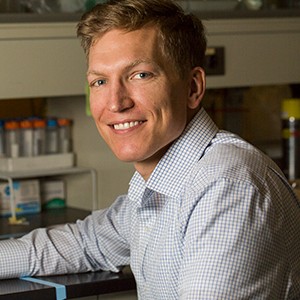
Daniel Fernández-Muñoz is an Associate Professor at the Universidad Politécnica de Madrid (UPM) , affiliated with the Department of Physical Electronics, Electrical Engineering and Applied Physics. He earned his PhD in 2021 with a thesis on "Generation scheduling in isolated power systems with high variable renewable generation and pump-storage," receiving both the Extraordinary Doctoral Award and Carlos González Cruz Award. He has held academic roles since 2006, including Assistant Professor positions from 2016-2021 and a current permanent Associate Professor appointment. Education : PhD in Electrical Engineering (UPM), DEA in Electrical Engineering (2010), Civil Engineering degree (2006) Research Focus : Renewable energy integration, power system optimization, battery degradation modeling, and frequency control in isolated grids Collaborations : Instituto de Sistemas Eléctricos de Potencia (Austria), EERA Joint Programme on Energy Storage, H2020 project eNeuron His work emphasizes hybrid wind-battery systems , pumped-storage hydropower , and virtual power plants , with notable publications in JCR Q1 journals. He has contributed to the Energy2Win project on sustainability education and served as a peer reviewer for multiple scientific journals. Scientific Awards Premio Extraordinario de Doctorado (UPM) Premio Carlos González Cruz Teaching activities include Physics for Biomedical Engineering and Energy Systems for Telecommunications. He has participated in international conferences as an invited speaker and contributed to projects funded by the Spanish government and private entities.
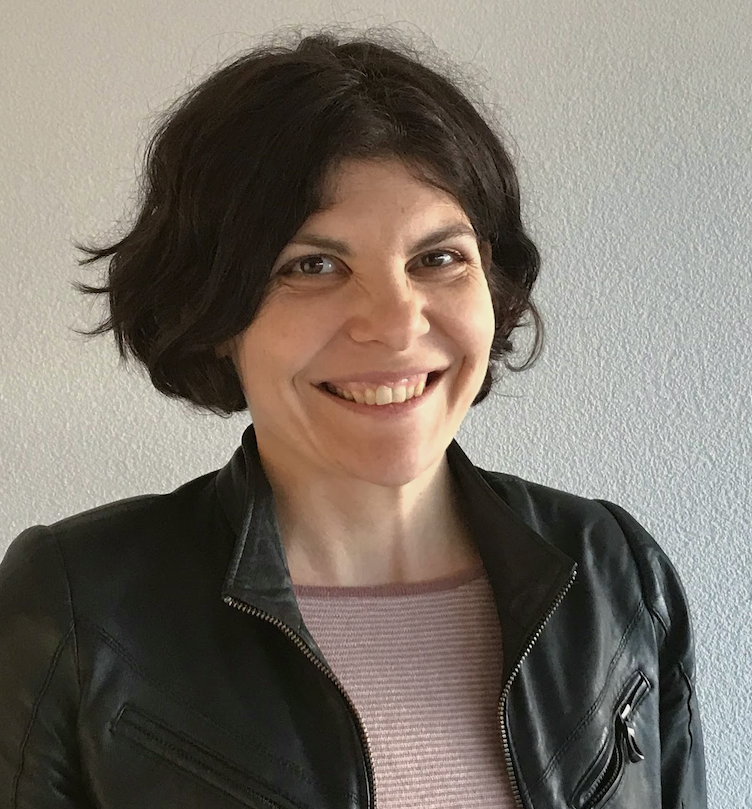
Valentina Breschi is an Assistant Professor in the Control Systems Group at the Department of Electrical Engineering, Eindhoven University of Technology (TU/e). She holds a Ph.D. from IMT School for Advanced Studies Lucca, with postdoctoral and junior faculty experience at Politecnico di Milano. Her research focuses on data-driven control, jump model learning, meta-learning for system identification, and human-centered policy design for mobility systems. She contributes to UN Sustainable Development Goals related to sustainable infrastructure and innovation. Education: B.Sc. in Electronic and Telecommunication Engineering (University of Florence, 2011) M.Sc. in Electrical and Automation Engineering (University of Florence, 2014) Ph.D. in Control Systems (IMT School for Advanced Studies Lucca, 2018) Research Interests: Her work spans data-driven control methodologies, including LPV control, predictive control, and ethical frameworks for policy design. She explores applications in sustainable mobility, energy systems, and healthcare, emphasizing fairness and social impact. Labs/Teams: She is part of the Control Systems Group, collaborating on projects like the CONSIDER study and the design of fair-MPC frameworks. Her work integrates theoretical control principles with real-world applications in smart systems and social networks.
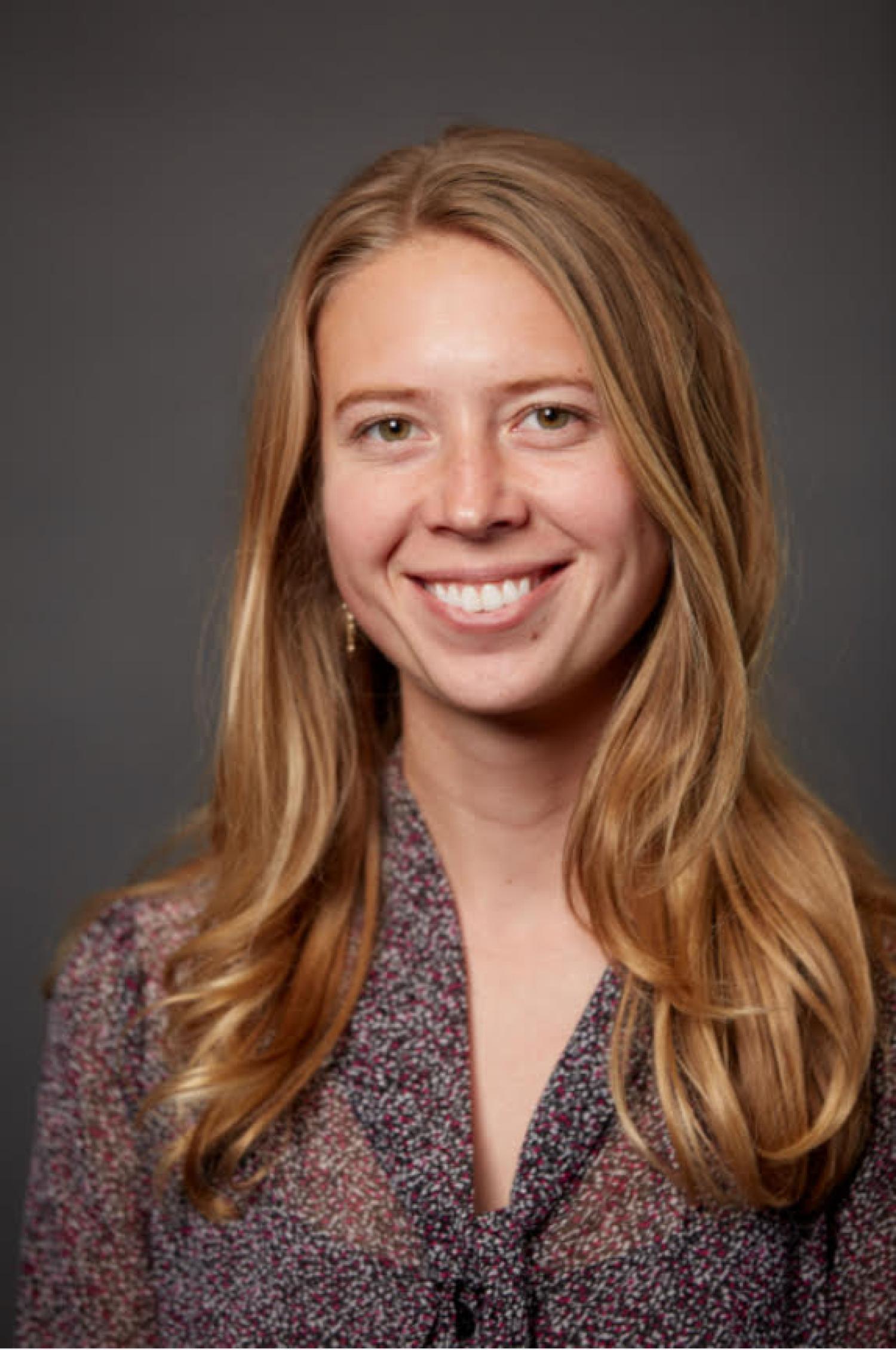
Dr. Aghdas Badiee serves as a Post-Doctoral Research Associate at Heriot-Watt University's Edinburgh Business School, affiliated with both the Centre for Logistics and Sustainability and the Centre of Sustainable Road Freight. Her academic foundation spans Industrial Engineering with specialized expertise in data-driven decision systems and logistics optimization. Educational Background: B.Sc. in Industrial Engineering - System Planning and Analysis (Grade: 18.07/20), Iran University of Science and Technology M.Sc. in Socio-economic System Engineering - Location-Allocation Optimization (Grade: 19.30/20), Iran University of Science and Technology Ph.D. in Socio-economic System Engineering - Supply Chain Modeling and Sustainable Logistics (Grade: 19.35/20), Iran University of Science and Technology Her research integrates Sustainable Supply Chain Management , Resilient Cold Chain Logistics , and Operations Research methodologies to address complex transportation challenges. Current projects include the Africa Centre of Excellence for Sustainable Cooling and Cold Chain Systems (ACES) and Zero-Emission Cold-Chain initiatives, focusing on food security through sustainable logistics solutions. Her methodological approach combines descriptive, predictive, and prescriptive analytics using simulation, optimization, and data science techniques. Publication trends reveal consistent contributions to high-impact journals like Annals of Operations Research and IEEE Transactions on Fuzzy Systems , with growing emphasis on sustainable cold chain systems (2023-2025). Her work bridges theoretical operations research with practical applications in agri-food distribution, humanitarian logistics, and transportation procurement. Scientific Recognition: Ranked 1st in all academic degrees (B.Sc. 2010, M.Sc. 2012, Ph.D. 2019) Global Talent designation by UKRI (2022) Distinguished PhD Dissertation Award (2019) Reviewer for Annals of Operations Research Journal (2021-present) Member of WORMS (Women in OR/MS) since 2022 Her professional trajectory demonstrates continuous engagement across academia and industry, having served as Lecturer at University of Tehran and Senior Business Analyst at National Iranian Oil Products Distribution Company. Current activities include developing the MILES simulation platform for cold chain optimization and contributing to UN Sustainable Development Goals through sustainable logistics research. She actively participates in professional networks including Production and Operations Management Society while mentoring students in operations research methodologies.
Dr. Weiwei Ai is a Research Fellow at the Auckland Bioengineering Institute , University of Auckland, New Zealand. With a multidisciplinary background in biomedical engineering and computational modeling, he focuses on developing energy-consistent physiological models and closed-loop validation frameworks for implantable medical devices. Education PhD in Bioengineering, University of Auckland (2019) Master of Engineering (ME) in Electrical Engineering, Beijing University of Technology (2005) BSc in Electronic Engineering, Qingdao University (2002) Dr. Ai's research centers on computational physiology and medical device validation , utilizing bond graph formalisms and hybrid automata to create thermodynamically consistent models for glucose transport, cardiac pacemakers, and gastrointestinal systems. His work bridges mathematical modeling with clinical applications through formal verification techniques. His recent publications highlight trends in closed-loop biomedical device design and energy-based physiological modeling , including: (1) bond graph models for SLC transporter dynamics, (2) adaptive respiratory pacemaker frameworks with biofeedback, (3) formal verification of cardiac devices using timed automata, and (4) compositional cyber-physical epidemiology models. He also explores AI-driven integration of digital twins in healthcare through FAIR data principles. Supervision Opportunities : Dr. Ai is an accredited PhD supervisor at the University of Auckland, offering projects on AI-driven energy-based platforms for credible digital twins in healthcare. Labs : Affiliated with the Auckland Bioengineering Institute, focusing on computational models and in-silico validation systems.
Russell King is the Henry Armfield Foscue Distinguished Professor of Industrial and Systems Engineering (ISE) at North Carolina State University's College of Engineering. He serves as the Director of Graduate Programs for the ISE department, responsible for administering degree programs serving approximately 190 graduate students. King is also a Fellow of the Institute of Industrial and Systems Engineers and has received numerous teaching and research awards throughout his 37-year career at NC State. Dr. King earned his Ph.D. in Industrial Engineering from the University of Florida (1986), following a Master of Industrial Engineering (1982) and Bachelor of Science in Systems Engineering (1980). His undergraduate journey was unconventional, having considered seven different majors including pre-med, biology, microbiology, biochemistry, math, and ornamental horticulture before selecting engineering. His doctoral work was completed under advisor Thom Hodgson, who moved from Florida to become NC State's ISE department head during King's studies. King's research focuses on solving practical problems across diverse areas including logistics, scheduling, and inventory control for additive manufacturing, remanufacturing, and military systems under risk. His work spans pricing strategies, stress control of 3D-printed parts, supply chain design, and military logistics optimization. His research approach bridges theoretical rigor with real-world applications, resulting in consulting engagements with Ford Motors, The Gap, Dillards Department Stores, and the Institute for Defense and Business. Analysis of his recent publications shows a consistent focus on military logistics applications (5 of 10 recent papers), additive manufacturing integration (3 papers), and supply chain risk management (4 papers), demonstrating how his research has evolved to address emerging challenges in manufacturing and defense logistics while maintaining practical relevance. C. A. Anderson Outstanding Faculty Award, ISE Department at NC State University (2020, 2014, 2008, 2002, 1996, 1986) Albert G. Holzman Distinguished Educator Award, Institute of Industrial Engineers (2010) Henry Armfield Foscue Distinguished Professor (2017) Edward P. Fitts Distinguished Professor (2012) NCSU George H. Blessis Outstanding Undergraduate Advisor Award (2010) Teaching Excellence Award in the OR Division, Institute of Industrial and Systems Engineers (2019) Technical Innovation in Industrial Engineering, Institute of Industrial Engineers (2003) Fellow, Institute of Industrial Engineers (2006) As an academic leader, King has developed innovative programs including a dual Master of Industrial Engineering/Master of Business Administration program and a distance education Master of Engineering degree. His mentorship has produced three students who placed in the top 3 of IIE's dissertation award competition, with two taking first place. He has served as associate editor for the Journal of Manufacturing Systems and IIE Transactions, contributing to the scholarly community beyond his own research. Outside academia, King and his daughter are Masters of Taekwondo under Grand Master K.S. Lee of Morrisville, NC.
Kyle J. M. Bishop is Professor of Chemical Engineering at Columbia University's Fu Foundation School of Engineering and Applied Science (Columbia Engineering), where he leads research at the intersection of active matter, soft materials, and micro-robotics. Appointed in 2016 after serving as Assistant Professor at Penn State and postdoctoral fellow with George Whitesides at Harvard, his work focuses on non-equilibrium assembly of colloidal systems. Education: BS in Chemical Engineering (highest distinction), University of Virginia PhD, Northwestern University Professor Bishop's research pioneers strategies for directing colloidal assembly outside thermodynamic equilibrium, with emphases on magnetic micro-robot navigation, synchronization phenomena in active matter, and electrochemical control of soft materials. His lab develops fundamental principles for programming collective behavior in synthetic systems, bridging chemical engineering, physics, and robotics to create materials with lifelike functionalities. Recent work explores biomolecular condensates, field-driven transport, and non-equilibrium information processing. Analysis of his 2023-2025 publications reveals a cohesive trajectory toward autonomous control of active systems: magnetic micro-robots navigate complex landscapes through field programming, enzymatic coacervates implement biological feedback loops, and oscillator networks achieve emergent synchronization. These studies span soft matter physics, electrochemistry, and microfluidics, consistently targeting applications in programmable materials and environmental engineering while advancing non-equilibrium thermodynamics. Scientific Awards: 3M Non-tenured Faculty award NSF CAREER award for 'Contact Charge Electrophoresis for Mobile Microfluidics' Professor Bishop secures substantial research funding including his NSF CAREER grant developing contact charge electrophoresis for microfluidic applications. While current students aren't listed in source materials, his lab trains graduate researchers in experimental soft matter physics and micro-robotics. His group collaborates across disciplines to translate fundamental discoveries into technologies for targeted delivery and environmental remediation. The Bishop Lab at Columbia Engineering operates as an interdisciplinary hub where chemical engineers, physicists, and materials scientists develop experimental platforms for manipulating colloids at fluid interfaces, with recent work focusing on magneto-capillary dynamics and field-programmable micro-robot swarms.
Prof. Rolf Findeisen is a Professor in the Department of Control and Cyber-Physical Systems (CCPS) at Technische Universität Darmstadt. His work focuses on advancing control theory and its applications in cyber-physical systems, autonomous systems, and energy storage systems. Key areas include model predictive control (MPC), battery management systems, machine learning integration into control frameworks, and optimization of crystallization processes. He leads research on safety-critical systems, data-driven control methods, and interdisciplinary applications in robotics and biotechnology. His research spans theoretical advancements in MPC stability, stochastic control, and Gaussian process modeling, alongside practical implementations in autonomous vehicles, lithium-ion battery systems, and bioprocess optimization. Notable contributions include frameworks like HILO-MPC for integrating machine learning with control systems, and methodologies for safe exploration in autonomous navigation. Prof. Findeisen's publications emphasize energy-efficient trajectory planning, fault detection in battery systems, and real-time optimization of manufacturing processes. His work bridges academic theory with industrial applications, addressing challenges in scalability, safety, and computational efficiency. His lab collaborates on national projects like IN-Fly-Tec and INFLIGHT, focusing on innovative flight control systems and sensor technologies. Current research trends include hybrid intelligent optimization, cybergenetic control of microbial systems, and safe reinforcement learning for control systems.
Cristian Rojas is a Professor of Automatic Control at KTH Royal Institute of Technology, specializing in system identification. His research bridges control theory, statistics, and machine learning to develop data-driven methods for analyzing and controlling dynamical systems. He holds an MS in Electronics Engineering from Universidad Técnica Federico Santa María (Chile) and a PhD in Electrical Engineering from the University of Newcastle (Australia). Research focuses on efficient utilization of data for self-learning systems, including topics like continuous-time system identification, robust control, and statistical estimation. Notable contributions include work on subspace identification, input design for sparse systems, and algorithms for H-infinity norm estimation. His methodologies emphasize practical applications in industrial automation, smart infrastructure, and autonomous systems. Recent publications highlight advancements in inverse filtering, decentralized learning systems, and the theoretical underpinnings of data-driven control. He collaborates widely on projects involving Bayesian methods, adversarial systems, and privacy-protected decision-making frameworks. Rojas' work often addresses challenges such as undersampling effects, model consistency, and computational efficiency in real-world control scenarios. His academic contributions include organizing academic ceremonies at KTH and mentoring researchers in the Department of Automatic Control. Current research explores intersections between machine learning interpretability and control theory, with applications to explainable AI in engineering systems.
Johannes Gräff is an Associate Professor at EPFL, affiliated with the Bioengineering Institute (BMI) under the School of Life Sciences (SV). He also serves as Director of the Neuroscience Doctoral Program (EDNE) and holds roles in the Synapsy Research Center (SRC). His research focuses on interdisciplinary applications of control systems, robotics, and data-driven optimization in bioengineering and manufacturing. Gräff leads the Prof. Gräff Unit (UPGRAEFF) and teaches courses on neuroscience and general biology. He advises multiple doctoral students and contributes to academic governance through roles in doctoral commissions and program management. His expertise spans adaptive control, Bayesian optimization, and closed-loop systems, with applications in precision engineering, additive manufacturing, and neuroscientific instrumentation. Gräff’s work bridges theoretical control methodologies with practical industrial and biomedical challenges, emphasizing safety and efficiency in automation. He oversees the Neuroscience Doctoral Program, guiding interdisciplinary research training, and maintains administrative responsibilities in EPFL’s academic and research structures. His lab (graefflab.epfl.ch) focuses on advancing technologies for autonomous systems and precision control in dynamic environments.
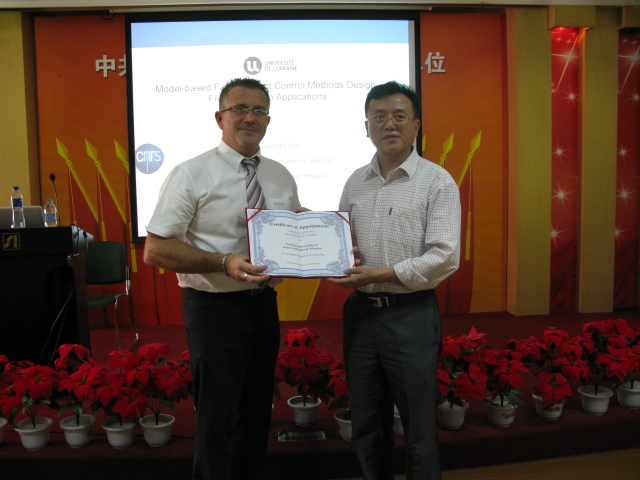
Didier Theilliol is a Professor of Control Engineering at the University of Lorraine, France, since 2004. He holds a Ph.D. in Control Engineering from Nancy-University (1993). He was awarded the CAS Visiting Professorship by the Chinese Academy of Sciences (CAS) in 2012, during which he collaborated with the Shenyang Institute of Automation (SIA) on flight control and fault-tolerant systems. His research focuses on model-based fault diagnosis (FDI), fault-tolerant control (FTC) for complex systems, and reliability analysis, with applications in aerospace, industrial automation, and robotics. Education: Ph.D. in Control Engineering (Nancy-University, 1993). Research interests include advanced control strategies for linear and nonlinear systems, multi-agent coordination, and safety-critical applications. His work integrates theoretical advancements with practical implementations across industries such as steel production, wastewater treatment, and aerospace. Notable contributions include methodologies for degradation management, distributed observer design, and health-aware control. Recent article trends emphasize fault-tolerant control in multi-agent systems, reinforcement learning for safety-critical tasks, and integration of physics-informed neural networks for system modeling. His publications span topics from model-based diagnostics to real-world applications in UAVs and propulsion systems. Awards: CAS Visiting Professorships for Senior International Scientists (2012). Collaborations include co-working with SIA’s rotorcraft UAV project team and leading European R&D initiatives. He serves as Associate Editor for ISA Transactions and Unmanned Systems , and chairs conferences on fault-tolerant control systems. His research also extends to Bayesian networks for system reliability and particle filter-based prognostics in industrial settings. Labs/Teams: Active in the State Key Laboratory of Robotics (visited during his CAS tenure) and coordinates projects within the German-French Institute for Automation and Robotics.
Emily Jensen is an Assistant Professor in the Department of Electrical, Computer & Energy Engineering at the University of Colorado, Boulder. She specializes in the analysis and control of spatially-distributed systems with applications in power grids, satellite constellations, and bio-inspired robotics. Her work focuses on developing theoretical frameworks to optimize system performance under constraints such as communication limitations and nonlinear dynamics. Education: B.S. in Engineering Mathematics & Statistics, UC Berkeley, 2015 M.S./Ph.D. in Electrical & Computer Engineering, UC Santa Barbara, 2020 Professional Appointments: Postdoctoral Researcher at UC Berkeley (2022-2023) Postdoctoral Researcher at Northeastern University (2021) Her research interests center on optimal distributed control, system-level synthesis, and the interplay between system structure and controller design. Key projects include multi-timescale power network control, nonlinear wave dynamics in engineering systems, and distributed parameter systems with limited communication. Dr. Jensen has delivered invited talks at high-profile venues such as the International Symposium on Mathematical Theory of Networks & Systems (2024) and the System Level Synthesis Workshop (2022). She currently advises a team of graduate and undergraduate researchers, including Addie McCurdy, Andy Gusty, and Matt Baughman (co-advised with Prof. Hodge). Awards: UC Regents’ Graduate Fellowship (2016) Zonta Amelia Earhart Fellowship (2019) IFAC Conference Young Author Award Honorable Mention (2022) She teaches ECEN 3300 (Linear Systems) and ECEN 5738 (Nonlinear Control Systems) at CU Boulder. Her work has been published in IEEE journals and conferences, emphasizing theoretical contributions with practical engineering relevance.
Mark Goldman is a Professor in the Department of Neurobiology, Physiology and Behavior at the University of California, Davis. His research focuses on computational neuroscience, neuroengineering, and the study of neural circuits underlying memory, learning, and sensorimotor control. He is affiliated with the Center for Neuroscience and the Ophthalmology and Vision Science program. His work integrates mathematical modeling with experimental data to understand neural mechanisms in systems such as the cerebellum, oculomotor systems, and reinforcement learning circuits. Key research themes include synaptic plasticity rules, dynamics of neural circuits during memory consolidation, and the interplay between circuit architecture and adaptive behavior. Recent studies explore closed-loop systems, oscillatory mechanisms in short-term memory, and context-dependent neural control. His computational frameworks bridge theoretical neuroscience with experimental observations in both vertebrate and microbial systems. Goldman has contributed to education through innovative course-based research programs combining microbial biology with mathematical modeling. His publications reflect a deep engagement with interdisciplinary methods, including systems theory, machine learning, and biophysical modeling.
Professor Alexandre Dolgui is the Director of the Department of Automation, Production, and Computer Science (DAPI) at IMT Atlantique, France. A Fellow of IISE and Highly Cited Researcher (Clarivate), he serves as Editor-in-Chief of the International Journal of Production Research. His expertise spans production systems, supply chain engineering, and operational research, with over 360 journal articles and 37 books. Education: HDR (University of Technology of Compiègne, 2000), PhD in Cybernetics (Academy of Science of Belarus, 1990) Research focuses on production system design , supply chain resilience , and discrete optimization , addressing challenges in human-robot collaboration, Industry 5.0, and yield uncertainty. His work integrates machine learning with stochastic programming for adaptive manufacturing solutions. Key contributions include constraint programming models for assembly lines, robust optimization frameworks for biorefineries, and digital twin methodologies for supply chain risk management. He has received multiple best paper awards and led international research projects like DREAMS and DISC. Scientific leadership: Board member of IFPR, Senior advisor to Chinese Academy of Sciences, founder of EVI European Virtual Institute
Qinyun Li is a Senior Lecturer in Supply Chain Dynamics at Cardiff Business School, Cardiff University, where he also earned his PhD. His research focuses on production planning, inventory management, supply chain contracts, supply network design, and forecasting methodologies. His educational background includes: PhD in “A System Dynamics Perspective of Forecasting in Supply Chains” from Cardiff University Postgraduate Certificate in University Teaching and Learning Fellow of The Higher Education Academy Li’s research centers on supply chain dynamics, particularly the intersection of forecasting methods and inventory control systems. His work analyzes how damped trend forecasting interacts with order-up-to policies to mitigate bullwhip effects and improve supply chain stability. He investigates closed-loop supply chains, food supply networks, and the impact of social media on operational performance, employing mathematical modeling and system dynamics approaches to address real-world logistics challenges. His publication portfolio reveals a consistent focus on inventory control theory and forecasting accuracy, with recent work expanding into digital supply chain applications like online review systems and flexible production networks. Articles predominantly appear in top-tier journals such as International Journal of Production Economics , European Journal of Operational Research , and Omega , demonstrating methodological rigor in operations research. Scientific recognition includes: Outstanding Non-Government Sponsored Student Abroad Award from Chinese Government (2014) Li actively supervises doctoral research in inventory management, production system design, and supply network optimization. His industry experience informs practical teaching in operations management courses, where he bridges academic theory with real-world applications from his six years in multinational corporations managing production, logistics, and procurement systems.
Dr Christos Papanagnou is a Senior Lecturer in Logistics Engineering at Aston University's School of Infrastructure and Sustainable Engineering, part of the College of Engineering and Physical Sciences. He serves as Programme Director for MSc programs in Supply Chain Management and Engineering Management, and leads research and enterprise initiatives for the Engineering Systems and Supply Chain Management Group. A Fellow of the Higher Education Academy, he holds a PhD in Control Engineering from City University of London. His expertise spans logistics modeling, control theory, and supply chain dynamics, with a focus on Industry 4.0 and IoT integration. Dr Papanagnou has held adjunct roles at several Greek institutions and contributed to R&D in steel manufacturing. He has secured funding from Horizon 2020, ERDF, Innovate UK, and Santander Universities, and evaluates projects for the Regional Digital Health Accelerator and Horizon 2020's Marie Sklodowska-Curie Actions. His research addresses supply chain volatility, inventory control, and disruption mitigation through control theory and big data analytics. Education: MSc (Information Engineering), PhD (Control Engineering), both from City University London. Awards: Dean's Recognition Award (2015) Vice-Chancellor's Distinguished Teaching Award (2017) CILT(UK) LRN Conference 2022 Best Paper Award His work emphasizes sustainable procurement practices, digital twin technologies, and the application of operational research to enhance supply chain resilience. He collaborates with the European Commission on environmental management and advises the International Journal of Strategic Engineering.