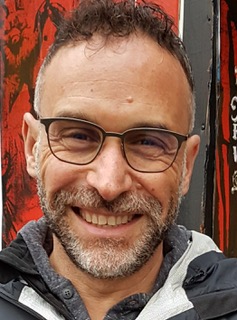
Christian Smith is an Associate Professor and Lecturer at the Department of Robotics, Perception and Learning at Kungliga Tekniska Högskolan (KTH Royal Institute of Technology). His research focuses on robotics and applications in human-centered environments like home environments, small workshops, and healthcare facilities, including the development of new robotic systems for research. Teaching Roles: Course Coordinator/Teacher/Examiner for courses such as Introduction to Robotics (DD2410), Research Project in Robotics (DD2411), and Java Programming for Python Programmers (DD1380) Research Themes: Human-Robot Interaction, Behavior Trees, Exoskeletons, Intent Recognition, and Multimodal Perception Awards: No specific scientific awards mentioned in the provided text His KTH profile highlights work on adaptive robotics systems and formalized control strategies. The research portfolio spans from theoretical studies on behavior tree programming to applied work in assistive technologies and teleoperation systems.
Holger Dette is a Professor and Chair Holder of Stochastics (specializing in Statistics) at the Faculty of Mathematics, Ruhr University Bochum. He leads the prominent Group Dette within the Institute of Statistics, overseeing a team of researchers, doctoral students, and administrative staff including Birgit Tormöhlen as team assistant. His research group is deeply integrated within the university's mathematical ecosystem, collaborating with other research groups across algebra, analysis, numerics, and topology. Dette's research spans mathematical statistics with strong applications in real-world problems. His primary interests include optimal experimental design, time series analysis, functional data, change point problems, nonparametric regression, biostatistics, special functions, goodness-of-fit tests, and random matrices . His work bridges theoretical statistics with practical applications, particularly evident in his collaborations with pharmaceutical giants Novartis and Bayer AG in biostatistics, as well as Quasol, a spin-off company from his statistics institute. His recent publications (2024-2025) reveal a research program increasingly focused on high-dimensional and functional data analysis, privacy-preserving statistics, and novel methodological approaches to longstanding statistical problems. Dette's work shows strong interdisciplinary connections, particularly with biomechanics (analyzing joint angles during fatigue phases) and data science (addressing challenges in the era of big data). His research group is actively involved in multiple DFG-funded projects including the newly established 'Small Data' collaborative research center (Sonderforschungsbereich 1597) and the Spatio-temporal Statistics for the Transition of Energy and Transport (Transregio 391). Dette has received significant recognition including the prestigious Humboldt Research Award . His paper 'With Great Power Come Great Side Channels: Statistical Timing Side-Channel Analyses with Bounded Type-1 Errors' achieved second place at the CSAW'24 Applied Research Competition MENA. His research group has also secured multiple significant funding awards from the German Research Foundation (DFG). As an advisor, Dette supervises numerous doctoral and master's students including Pascal Quanz, Marius Kroll, and Carina Graw. His group offers statistical consulting services for scientists and students across bachelor's, master's, and doctoral phases. The group maintains strong industrial partnerships, particularly in biostatistics applications, demonstrating Dette's commitment to translating theoretical statistics into practical solutions for real-world challenges.
Prof. Dr. ir. Hans Heesterbeek is a full Professor of Theoretical Epidemiology at Utrecht University's Faculty of Veterinary Medicine. He holds a dual appointment in the Department of Farm Animal Health within the Population Health Sciences sector. His research focuses on the dynamics of infectious diseases at the intersection of biology, medicine, and mathematics, with emphasis on wildlife epidemiology and complex systems. He chairs Utrecht University's Committee for Research Integrity and has held leadership roles in departments like Animals in Science and Society. Education: MSc Phytopathology (Wageningen University, 1986), MSc Mathematics (University of Amsterdam, 1988), PhD in Mathematical Biology from Leiden University (1992) Affiliations: Editor-in-Chief of Epidemics journal, Senior Editor at Proceedings of the Royal Society B , Chair of ZonMw's Open Competition grant program Research interests include: Mathematical modeling of disease spread Ecological epidemiology of zoonotic pathogens Role of wildlife in disease transmission Historical analysis of epidemic understanding Key contributions: Co-developer of the R₀ reproduction number framework, foundational to global epidemiological modeling. Active in interdisciplinary work linking theoretical ecology to societal systems. Currently writing a book on the history of epidemic science. Grants: Vici laureate (€1.3M, 2005-2010). Organizes biannual Epidemics conferences. Advises on public health policy during outbreaks like the 2020 COVID-19 pandemic.
Tancredi Caruso is an Associate Professor at the School of Biology and Environmental Science, University College Dublin. He holds a PhD in Ecology from the University of Siena (2006) and a Postgraduate Certificate in Higher Education Teaching (2015). His career includes roles as Reader and Lecturer at Queen's University Belfast, and research fellowships at Freie Universität Berlin and the University of Siena. Research Interests : Caruso's work focuses on biodiversity processes, aboveground-belowground linkages, ecological networks, and ecosystem responses to perturbations. His research has led to over 100 peer-reviewed publications and grants from the Alexander von Humboldt Foundation, NERC, EU Marie Sklodowska-Curie program, and others. Teaching & Professional Activities : Coordinates modules on environmental science, soil ecology, and conservation. Active in professional committees, including the IEA Committee. Languages: Italian, English, German (fluent), and French (reading). Grants & Collaborations : Leads projects like the ReEcoNet initiative. Recent grants include funding for wheat genetic diversity (EU), soil-microbe interactions (Leverhulme Trust), and climate-land use impacts (NERC). Key Contributions : Pioneered studies on mycorrhizal networks, soil microbial responses to drought, and the ecological role of oribatid mites. His work bridges theoretical ecology and applied conservation, emphasizing stochastic processes and biodiversity resilience.
Benjamin Recht is a Professor in the Department of Electrical Engineering and Computer Sciences and Department of Statistics at the University of California, Berkeley. Previously, he was an Assistant Professor in the Department of Computer Sciences at the University of Wisconsin-Madison. Recht received his BS in mathematics from the University of Chicago and his MS and PhD from the MIT Media Laboratory, followed by a postdoctoral fellowship at Caltech's Center for the Mathematics of Information. His research interests span Machine Learning, Optimization, Control Theory, and Statistics , with a focus on both theoretical foundations and practical applications. Recht's work addresses fundamental questions in reproducibility, generalization, and robustness of machine learning systems, while also developing novel methods for control, computer vision, and data analysis. Recht's recent publications reveal a strong focus on reproducibility in machine learning , with papers like "The Mechanics of Frictionless Reproducibility" (2024), alongside continued contributions to statistical learning theory ("Interpolating Classifiers Make Few Mistakes", 2023) and computer vision ("Plenoxels", 2022; "K-planes", 2023). His work increasingly addresses societal implications of AI , including papers on systemic harm detection and post-deployment evaluation. NSF Career Award Alfred P. Sloan Research Fellowship 2012 SIAM/MOS Lagrange Prize in Continuous Optimization Presidential Early Career Award for Scientists and Engineers 2014 Jamon Prize 2015 William O. Baker Award for Initiatives in Research 2017 and 2020 NeurIPS Test of Time Awards Recht has advised numerous PhD students who have gone on to faculty positions at top universities and research roles at leading technology companies. His work on optimization algorithms has been widely influential, including the development of methods like HOGWILD! for parallel stochastic gradient descent. He co-founded the Conference on Learning for Decision and Control and has served on editorial boards for the Journal of Machine Learning Research and Mathematical Programming. His research group spans both theoretical and applied work, with connections to healthcare (adaptive medication tapering), computer vision (radiance fields), and social impact (systemic harm detection in deployed systems).
Dr. Chenhao Ma is an Assistant Professor at the School of Data Science , The Chinese University of Hong Kong, Shenzhen , where he works on large-scale data management and data mining. Previously, he was a Postdoctoral Fellow at the University of Hong Kong (2021–2022) and earned his PhD in Computer Science from the University of Hong Kong (2021) and B.Eng. from Shandong University (2017). Current research focuses on graph computing (dense subgraph discovery, motif analysis, graph learning), AI+DB (Text-to-SQL, vector search), and traffic data mining (trajectory analysis, outlier detection). He has published over 40 papers in top venues including SIGMOD, PVLDB, KDD and received the ACM SIGMOD Research Highlight Award 2021 and Best of SIGMOD 2020 (4/458). Scientific Awards : ACM SIGMOD Research Highlight Award 2021 Best of SIGMOD 2020 (4/458) Presidential Young Fellow at CUHK-Shenzhen (2023) Hong Kong and China Gas Scholarship (2019-2020) Reaching Out Award (2019) HKU Postgraduate Scholarship (2017-2021) ACM-ICPC Gold Medal (2015) National Scholarship (2014, 2015) Advising and Research Team : He leads a team including Postdoc Dr. Yuanyuan Zeng, PhD students Lujie Ban, Yuwei Xu, and MPhil students Yi Yang, Yuyang Liang. Former mentees like Yichen Xu (PhD at Berkeley) and Jiayang Pang (Master at UC San Diego) have achieved academic placements. Professional Service : He has served as PC member/reviewer for VLDB, KDD, ICDE, WWW, NeurIPS, TKDE , and guest editor for Applied Sciences and Frontiers in Big Data . He chairs sessions at ICDE and VLDB.
Arto Anttila is an Associate Professor in the Department of Linguistics at Stanford University and holds an Adjunct Professor (dosentti) position in General Linguistics at the University of Helsinki. His research spans multiple linguistic subfields with particular focus on the interfaces between phonology, syntax, and prosody. Dr. Anttila's research interests include phonology, morphology, syntax, metrics, and language variation. His work often explores how phonological constraints interact with syntactic structures and how variation manifests across different linguistic domains. He has made significant contributions to Optimality Theory, MaxEnt grammar, and probabilistic approaches to phonology. His recent publications demonstrate a strong focus on metrical patterns, stress systems, syllable structure, and the relationship between prosody and syntax. Anttila frequently collaborates with researchers like Giorgio Magri, Adams Bodomo, and Ryan Heuser, examining phenomena across diverse languages including English, Finnish, and Dagaare (an African language). Anttila has developed several computational tools for linguistic research, including CoGeTo (Convex Geometry Tools for constraint-based phonology), MetricalTree (for English phrasal stress prediction), Prosodic (for automatic metrical scansion), T-Order Generator, and OTOrder. These tools reflect his interest in the mathematical and computational aspects of linguistic theory.
Prof. Dr. Andreas S. Schulz is a faculty member at Technische Universität München (TUM), holding a chair in the Department of Mathematics and the Department of Business and Economics. He previously served as the Patrick J. McGovern Chair of Management and Professor of Mathematics at MIT. His research focuses on mathematical optimization, algorithm design, and their applications in logistics, production, healthcare systems, and online advertising. He has held visiting professorships at institutions such as the Sauder School of Business (UBC) and ETH Zurich. Prof. Schulz’s research bridges operations research, theoretical computer science, and economics. He develops analytical methods to solve complex decision-making problems in business, including scheduling, resource allocation, and network optimization. A key interest is applying mathematical approaches to enhance healthcare delivery and system efficiency. Education: PhD in Operations Research (MIT), prior academic roles at MIT and visiting institutions. Key Achievements: Alexander von Humboldt Professorship (2014), Humboldt Research Award (2010), Glover-Klingman Prize (2006). Research Themes: Robust optimization, approximation algorithms, scheduling theory, and algorithmic game theory. His publications span topics like integer programming, optimal transport, and congestion games. He collaborates across disciplines, emphasizing practical applications of theoretical insights.
Scott Armstrong is a Professor of Mathematics at the Courant Institute of Mathematical Sciences, New York University. His research focuses on partial differential equations, calculus of variations, and probability theory, with a specialization in stochastic homogenization of PDEs in random media and related statistical mechanical systems. He holds a Ph.D. from UC Berkeley (2009) and a B.S. from Texas A&M University (2002). Education: Ph.D. in Mathematics, University of California, Berkeley, USA (2009) B.S. in Mathematics, Texas A&M University, USA (2002) Research Interests: Scott's work addresses fundamental questions in homogenization theory, including quantitative estimates for elliptic and parabolic equations in random media, renormalization group methods, and applications to statistical mechanics. His contributions bridge analysis, probability, and mathematical physics, with a focus on rigorous mathematical frameworks for understanding macroscopic behavior from microscopic models. Publications: His recent work includes studies on anomalous diffusion, renormalization group techniques, and quantitative homogenization in high-contrast media. Over 50 peer-reviewed articles highlight his expertise in stochastic PDEs, elliptic regularity, and variational methods. Awards: No specific awards listed in the provided text. Advising & Grants: No student advisees or grant details explicitly mentioned in the text. Labs/Teams: No dedicated labs or collaborative teams explicitly noted, though his research likely involves interdisciplinary collaborations within the Courant Institute.
Curt Bronkhorst is the Harvey D. Spangler Professor of Engineering and Professor of Applied Mechanics in the Department of Mechanical Engineering at the University of Wisconsin-Madison. He received his B.S. in Mechanical Engineering and Mathematics (1985), M.S. (1988), and Ph.D. (1991) in Mechanical Engineering from the Massachusetts Institute of Technology. His career includes roles as Senior Scientist at Weyerhaeuser (1991–2002) and Scientist/Project Leader at Los Alamos National Laboratory (2002–2019) before joining UW-Madison. He leads the Army Research Laboratory's Center for Extreme Events in Structurally Evolving Materials and contributes to the Theoretical and Computational Mechanics of Materials Group . PhD (1991) - Massachusetts Institute of Technology MS (1988) - Massachusetts Institute of Technology BS (1985) - University of Wisconsin-Madison Bronkhorst's research focuses on theoretical and computational mechanics of materials , particularly under extreme conditions. Key themes include: Coupled thermo-mechanical deformation Finite elasticity and dislocation slip plasticity Deformation twinning and phase transformations Pore nucleation and adiabatic shear banding Brittle-to-ductile transition mechanisms Multi-scale modeling of damage evolution His 2025–2023 publications emphasize data-driven modeling , void nucleation , and machine learning integration in EBSD analysis. Recent work explores gradient nanostructured metals and low-grain polycrystal stress heterogeneity . 2019: Harvey D. Spangler Professorship 2012: DOE Defense Programs Award (Implosion Predictive Capability) 2009: DOE Outstanding Mentor Award 2007–2008: Los Alamos Distinguished Performance Awards Fellow, American Society of Mechanical Engineers Member, Phi Kappa Phi and Tau Beta Pi Honor Societies Bronkhorst serves as Associate Editor for the International Journal of Plasticity and president of Northland Partners, LLC. He is affiliated with UW-Madison's Nuclear Engineering & Engineering Physics and Materials Science & Engineering departments. No formal advisees are listed, but his computational framework has been adopted in grants like the DMREF collaborative research on grain-interface design.
Dr. Wibowo Hardjawana is a Senior Lecturer in Telecommunications Engineering at the School of Electrical & Computer Engineering , University of Sydney. He holds a PhD from the University of Sydney and serves as an ARC DECRA Research Fellow. His research focuses on wireless network softwarisation, enabling programmable radio interfaces to address traffic elasticity in 5G/6G systems. Education : PhD (University of Sydney) Grants : ARC DP210100744 (2021), ARC DECRA DE140101114 (2014) His work spans 5G/6G network architectures , machine learning for wireless systems , and open radio interfaces . Key contributions include graph representation learning for interference management, Bayesian neural network detectors for OTFS modulation, and NOMA decoding techniques . Recent publications analyze ultra-reliable low-latency communications , UAV-enabled networks , and stochastic geometry in wireless systems . He has collaborated with institutions in China, Indonesia, and UAE, and engaged with industry partners like Telstra and Ausgrid.
Shahin Sirouspour is a Professor in the Department of Electrical and Computer Engineering at McMaster University. His research focuses on robotics, autonomous systems, control systems, and optimization, with applications in aerial robotics, teleoperation, haptics, medical robotics, and smart energy grids. He is affiliated with the Telerobotics, Haptics and Computational Vision Laboratory and teaches courses such as Non-linear Control Systems and Electrical Systems Integration Project. He holds a Ph.D. from the University of British Columbia and has supervised numerous graduate students. His lab includes advanced equipment like multi-axis robotic manipulators, haptic interfaces, and real-time computing systems. Education: B.Sc. and M.Sc. from Sharif University of Technology (Iran), Ph.D. from University of British Columbia (Canada). Current roles include accepting graduate students and leading research clusters in Digital & Smart Systems, Energy, and Transportation. Awards include the McMaster President's Award for Excellence in Graduate Supervision. His work bridges theoretical control systems with practical applications in healthcare, energy, and autonomous systems. Research highlights include developing control strategies for multi-agent robotic systems, smart grid optimization, and medical robotics. Collaborations with institutions like MacAUTO and industry partners (e.g., MDA Space Missions) enhance translational impact. His lab supports projects on asymmetric teleoperation, deformable tissue simulation, and microgrid energy management.
Jeremy Quastel is a University Professor in the Department of Mathematics at the University of Toronto, within the Faculty of Arts and Science. He has been a prominent figure in the department since returning to Canada in 1998, serving as Chair of the Department of Mathematics from 2017 to 2021. Under his leadership, the mathematics department has become a world center for research in random interface growth and the KPZ universality class. His educational background includes: Undergraduate studies at McGill University PhD from the Courant Institute (NYU) in 1990 under S.R.S. Varadhan Professor Quastel is a specialist in probability theory, stochastic processes, and partial differential equations . His research focuses on the large scale behavior of interacting particle systems and stochastic partial differential equations, with particular emphasis on the Kardar-Parisi-Zhang (KPZ) universality class. He made groundbreaking contributions by discovering the first exact distributional solutions of the KPZ equation in 2010 and the KPZ fixed point in 2017 - the scaling invariant, integrable Markov process at the center of the KPZ universality class. His work bridges probability theory, mathematical physics, and statistical mechanics, with applications to interface growth models and directed polymers. Analysis of his recent publications reveals a consistent focus on KPZ-related phenomena, with increasing sophistication in understanding the KPZ fixed point and its properties. His work has evolved from discovering exact solutions to establishing convergence results and exploring connections to other integrable systems like the Toda lattice. The research spans theoretical developments in stochastic PDEs, connections to random matrix theory, and applications to physical growth models. His scientific achievements have been recognized with numerous prestigious awards: Sloan Fellow (1996-98) Invited session speaker at the International Congress of Mathematicians (2010) Current Developments in Mathematics lectures (2011) St. Flour lectures (2012) Plenary speaker at the International Congress of Mathematical Physics (2012) Fellow of the Royal Society of Canada (2016) Fellow of the Royal Society (2021) CRM-Fields-PIMS prize (2018) Jeffery-Williams Prize of the Canadian Mathematical Society (2019) Professor Quastel has supervised numerous PhD students who have gone on to successful careers in academia and industry, including Xuicai Ding at UC Davis, Hanna Jankowski at York University, and Konstantin Matetski at Columbia University. His research group has attracted many postdoctoral fellows who have become leading researchers in probability theory. While specific grant information isn't detailed in the provided text, his sustained research output and leadership position suggest significant grant funding supporting his work in probability theory and stochastic processes. Though not explicitly mentioned in the provided text, Professor Quastel's work has established the University of Toronto as a global hub for research on the KPZ universality class. His collaborations span institutions worldwide, and his research group likely includes graduate students, postdocs, and visiting scholars working on various aspects of stochastic processes, interface growth models, and integrable probability. His recent work on the KPZ fixed point represents the culmination of decades of research in this field.
Yuan Gao is an Assistant Professor of Mathematics at Purdue University's Department of Mathematics (College of Science). His research focuses on analysis and computations of PDEs in materials science, biology, and microfluidics, with recent emphasis on optimal control, Hamilton-Jacobi equations, and non-equilibrium chemical reactions. His work is supported by NSF awards DMS-2204288 and DMS-2440651. Previously, he held the William W. Elliott Assistant Research Professor position at Duke University (2019-2021). Research interests include PDE analysis in materials science (crystal growth, dislocation dynamics), numerical methods for interface dynamics, applied stochastic analysis (Langevin dynamics, transition path theory), and mean-field games for fluid systems. He organizes the PSU-Purdue-UMD Joint Seminar on Mathematical Data Science. Key publications span topics like dislocation evolution, Wasserstein gradient flows, and stochastic algorithms for rare events. Awards include NSF CAREER funding recognizing his contributions to mathematical analysis of non-equilibrium systems.
Kathryn Hess Bellwald is a Full Professor at École Polytechnique Fédérale de Lausanne (EPFL) in both the School of Life Sciences and School of Basic Sciences . She leads the Laboratory for Topology and Neuroscience and serves as Academic Director for the Euler Programme . Her work bridges pure mathematics and interdisciplinary applications in neuroscience, materials science, and data analysis. Education : PhD in Mathematics (MIT, 1989), preceded by positions at Stockholm, Nice, and Toronto universities. Her research spans algebraic topology , homotopy theory , operad theory , and algebraic K-theory , with applications in neuroscience and materials science . She has pioneered topological data analysis methods for classifying neuronal morphologies , microglia phenotypes , and nanoporous materials , creating a parameter-free framework linking neural network structure to activity. The 15 most recent publications highlight her work on topological inverse problems , neuroinflammation , and equivariant homotopy . These studies often involve collaborations with the Blue Brain Project and EPFL teams in neuroscience , machine learning , and materials science . Scientific Awards : Fellow, American Mathematical Society (2017); Distinguished Speaker, European Mathematical Society (2017); Crédit Suisse Teaching Prize (2012); Polysphère d'Or (2013); Full Member, Swiss Academy of Engineering Sciences (2016); Chaire de la Vallée Poussin (2023); Fellow, Association for Women in Mathematics (2024). She has mentored numerous PhD students in mathematics and neuroscience, including Adélie Eliane Garin , Varvara Karpova , and Dimitri Zaganidis . Her EPFL Mathematics affiliations include the DIVISION MATH , while her Neuroscience lab operates under the Brain Mind Institute (BMI) in the School of Life Sciences (SV). Grants and collaborations are evident in her work on neurodegenerative diseases , synthetic materials , and machine learning frameworks .