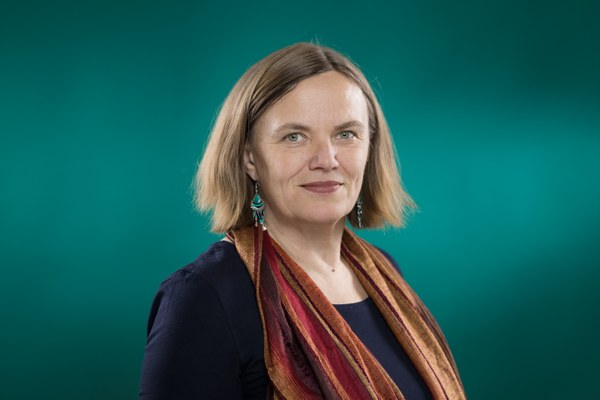
Professor Caterina Zeppieri is a faculty member at the Institute for Analysis and Numerics within the Faculty of Mathematics and Computer Science at the University of Münster, Germany. She serves as an investigator in Mathematics Münster and specializes in optimization and calculus of variations. Her research spans multiple collaborative projects within the Excellence Cluster EXC 2044. Her primary research interests focus on Calculus of Variations , Homogenization Theory , and Free-Discontinuity Problems , with significant contributions to the mathematical understanding of material science phenomena. Her work bridges theoretical mathematics with practical applications in material modeling, fracture mechanics, and multi-scale analysis. She has developed sophisticated mathematical frameworks for understanding stochastic homogenization, phase-field approximations, and gradient damage models in heterogeneous materials. Analysis of her recent publications reveals a consistent trajectory toward increasingly complex multi-scale problems involving randomness and discontinuities. Her work demonstrates deep connections between Γ-convergence theory, stochastic processes, and applications to material science, particularly in modeling fracture phenomena and composite materials. A notable trend is her development of global methods that unify deterministic and stochastic approaches to homogenization problems. Zeppieri actively contributes to teaching at the University of Münster, regularly offering courses on Partial Differential Equations, Calculus of Variations, and Advanced Topics in Mathematical Modeling. Her teaching spans both undergraduate and graduate levels, including specialized seminars on cutting-edge research topics in her field. She is deeply involved in the EXC 2044 collaborative research center, particularly in project units C1 (Evolution and asymptotics), C2 (Multi-scale phenomena and macroscopic structures), and C3 (Interacting particle systems and phase transitions), where she contributes her expertise in variational methods and homogenization to multi-disciplinary research efforts.