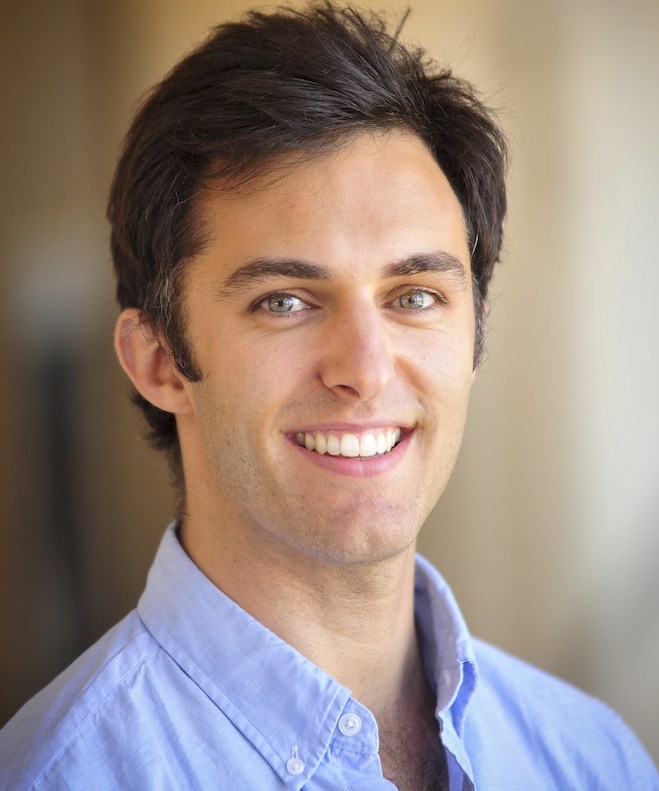
Daniel M. Roy is a Full Professor at the University of Toronto, with cross-appointments in the Department of Computer Science, Department of Statistical Sciences, and Department of Electrical and Computer Engineering. He serves as Research Director at the Vector Institute and holds the CIFAR Canada AI Chair. Research Focus: Foundational principles of prediction, inference, and decision-making under uncertainty across machine learning, statistics, mathematical logic, applied probability, and computer science. Scientific Contributions: Key work in learning theory, statistical network analysis, probabilistic programming, and information-theoretic frameworks for generalization. Awards: ICML 2024 Best Paper Award for "Information Complexity of Stochastic Convex Optimization" and promotion to Full Professor in 2024. Student Advising: Actively mentors Ph.D. candidates and postdoctoral researchers with strong quantitative backgrounds, particularly at the intersection of machine learning, statistics, and computer science. Email: daniel.roy@utoronto.ca
Norwegian University of Science And TechnologyNorway
Lars O. Nord is a Professor in the Department of Energy and Process Engineering at NTNU, specializing in thermal energy systems, CO2 capture technologies, and dynamic process modeling. He holds a PhD from NTNU (2010) and a Master's from Virginia Tech (2001). His research focuses on power cycles, turbomachinery optimization, and decarbonization strategies for energy systems. Nord has led projects such as DEXPAND and InnCapPlant, addressing CO2 capture under variable loads and expander efficiency in renewable systems. Current roles: Head of the Thermal Energy research group and teaches courses like Engineering Thermodynamics. Research highlights include thermal energy storage integration, moving bed adsorption processes, and offshore hybrid energy systems. His work spans over 80 publications, emphasizing CO2 capture dynamics, turbine design, and control strategies for flexible power plants. Notable collaborations include SINTEF and Aker Solutions. Nord advises multiple PhD candidates and has mentored alumni now leading roles in industry and academia.
Norwegian University of Science and TechnologyNorway
Morten Hovd is a Professor at the Department of Engineering Cybernetics, Norwegian University of Science and Technology (NTNU). His work focuses on advanced control systems, particularly in model predictive control, optimization, and power electronics. He has contributed to control design for uncertain systems, bilinear models, and modular multilevel converters. Research Interests Control Theory and Model Predictive Control (MPC) Optimization Techniques in Control Systems Power Electronics and Smart Grid Applications Stability Analysis of Hybrid and Discrete-Time Systems Teaching TTK4210 - Advanced Control of Industrial Processes TK8118 - Mini-seminar in Cybernetics
Christian Hirsch is an Associate Professor for Data Science and Statistics at Aarhus University, where he studies random networks motivated from biology and health sciences through techniques from topological data analysis and stochastic geometry. He is a member of the Stochastics group at the Department of Mathematics and holds additional affiliations as an Associate Fellow of the Aarhus Institute for Advanced Studies, and with the AU DIGIT Centre and the AU Quantum Campus. Current Position: Associate Professor for Data Science and Statistics, Aarhus University Previous Positions: Assistant Professor at University of Groningen and University of Mannheim Postdoctoral Experience: Aalborg University, LMU Munich, WIAS Berlin Education: PhD from Ulm University Christian Hirsch's research focuses on the statistical foundations of topological data analysis, large deviations theory in stochastic geometry, and percolation theory of spatial random networks. His work bridges theoretical mathematics with practical applications in data science, particularly in analyzing complex structures through topological methods. He investigates how topological features form and disappear in growing data structures, developing statistical tests to determine whether observed patterns are significant or merely random occurrences. His recent publications reveal a strong trend toward applying topological data analysis to increasingly complex structures, with significant focus on statistical validation of topological features. Hirsch has made substantial contributions to understanding the probabilistic behavior of persistent homology, developing functional central limit theorems and large deviation principles for topological functionals. His work spans theoretical foundations in stochastic geometry while finding applications in materials science, neural networks, and wireless communication systems. As an educator, Hirsch teaches graduate courses including Topological Data Analysis, Stochastic Geometry, Monte Carlo Simulation, Markov Decision Processes, Probability Theory, and Stochastic Processes. He has supervised numerous PhD, MSc, and BSc students, with several of his former students securing academic positions at institutions like University of Leiden, Tokyo Institute of Technology, and Budapest University of Technology. Hirsch leads a research group within the Stochastics group at Aarhus University, collaborating extensively with researchers across Europe and North America. His work demonstrates how topological methods can provide rigorous statistical insights into complex data structures, making significant contributions to both theoretical mathematics and practical data analysis techniques.
Mi Hu is a researcher at the Department of Mathematics, Faculty of Mathematics and Natural Sciences, University of Oslo, Norway, since August 2023. She collaborates with Prof. Tuyen Trung Truong and Prof. John Erik Fornæss on projects involving dynamical systems, several complex variables, and algebraic geometry, focusing on optimization solutions and improved Newton's methods for solving systems of equations. Education: PhD in Mathematics from the University of Parma, Italy (2024) Thesis: Complex Dynamics Inside Fatou Sets Advisor: Prof. John Erik Fornæss Research Interests: Complex Dynamics in one and higher dimensions Interior dynamics of Fatou sets Parabolic basins Geometric complexity of Julia sets Hybrid applications of Newton's methods Algebraic geometry in dynamical systems Recent Work Trends: Her publications emphasize theoretical advancements in Newton's methods (e.g., Backtracking New Q-Newton's Method), connections to Schröder's theorem, and computational techniques like stochastic root finding. Articles also explore geometric and topological properties of complex dynamical systems. Conference Participation: On geometric complexity of Julia sets V (2024, Bedlewo, Poland) KAUS and Nordan (2024, Östanskär, Sweden) UiO seminar (2024, Oslo) Topics in Complex Dynamics (2023 & 2021, Barcelona) Let's Face Complexity (2017, Como, Italy) Recent developments on d-bar equations (2023, Oslo)
Norwegian University of Science And TechnologyNorway
Mathias Michael Klaui is a Professor at the Johannes Gutenberg-Universität Mainz and an Adjunct Professor at the Center for Quantum Spintronics, Norwegian University of Science and Technology (NTNU). He has held leadership roles including Director of the Graduate School of Excellence: Materials Science in Mainz (MAINZ) since 2012 and Founding Director of the Gutenberg Council for Young Researchers (2014-2017). Education Diploma in Physics (with distinction/Springorum Medal), RWTH Aachen (2001) PhD in Physics, University of Cambridge (2003) Habilitation, Universität Konstanz (2008) His research focuses on spin structures in confined geometries, spin transfer torque , and magnetoresistance effects , extending to multiferroic materials and graphene . He investigates electronic properties of complex thin films like Heusler compounds and superconductors , funded by EU, Swiss, German, and industrial grants. Recent publications highlight trends in skyrmion dynamics , spin-orbit torque manipulation , and antiferromagnetic spin transport , often involving van der Waals materials and orbital angular momentum . His work bridges fundamental physics and applied spintronic devices like MRAM and magnon polaritons . Scientific Awards Fellow of the IEEE (2022) Fellow of the American Physical Society (2020) Member of the European Academy of Sciences (2020) Fellow of the Institute of Physics (2014) Nicholas Kurti Prize (2011) Physics Prize of the Göttingen Academy of Sciences (2003) He has secured significant grants including an ERC Starting Grant (2008) and DAAD Fellowship (2003). His group includes researchers like Fabian Kammerbauer and José Omar Ledesma-Martin, with active recruitment for PhD candidates and internships .
Norwegian University of Science and TechnologyNorway
Alex Hansen is a Professor and Center Director at PoreLab SFF (Porous Media Laboratory) at the Norwegian University of Science and Technology (NTNU), Department of Physics. His research focuses on complex systems, transport phenomena in disordered systems, porous media physics, and non-equilibrium statistical physics. He leads interdisciplinary projects in porous media dynamics, with applications in energy, geophysics, and materials science. Research interests include immiscible two-phase flow dynamics, granular media mechanics, and statistical mechanics of disordered systems. His work bridges microscopic pore-scale processes with macroscopic continuum models, using both theoretical frameworks and computational simulations. Key contributions address fingering phenomena, co-moving velocity theory, and effective rheology of multiphase flows. Publications highlight advancements in porous media rheology, Bingham fluid dynamics, and hyper-ballistic diffusion in active matter systems. Collaborations span academia and industry, with a focus on pore network modeling and energy applications. Leadership roles include editorial positions in Frontiers in Physics and the PoreLab SFF center. No scientific awards explicitly listed, though his extensive publication record and center directorship reflect significant contributions. Advising and collaborations involve international teams, though formal student listings are not provided. PoreLab serves as a hub for interdisciplinary porous media research, integrating physics, mathematics, and engineering approaches.
Mohammad Masoudi is a Postdoctoral Fellow at the University of Oslo , Department of Geosciences, Section for Environmental Geosciences. His research focuses on CO2 and H2 storage , water-rock interactions , and pore-scale modeling of reactive transport in subsurface environments. Education PhD in Geosciences (University of Oslo, 2021) M.Sc. in Reservoir Engineering (University of Tehran, 2016) B.Sc. in Reservoir Engineering (Petroleum University of Technology, 2014) His work addresses salt precipitation , mineral nucleation , and permeability-porosity relationships during carbon and hydrogen storage. Recent publications highlight microfluidic experiments , thermodynamic modeling , and environmental implications of subsurface energy systems. Key projects include Hystorm (hydrogen storage in petroleum reservoirs), SaltPreCO2 (salt precipitation kinetics), and Polish-Norwegian CCS Network (carbon capture technologies). He collaborates with the CO2 Storage research group at UiO.
Lars Magnus Hvattum is a Professor in Quantitative Logistics at Molde University College, Faculty of Logistics. His work focuses on developing mathematical models and optimization methods for complex planning problems across various domains including transportation, maritime logistics, and sports analytics. Professor Hvattum's primary research interests span several key areas in operations research and optimization: Mathematical modeling of complex planning situations Methods to solve combinatorial optimization problems Dealing with uncertainty in planning Development of decision support systems His research portfolio demonstrates a strong focus on both theoretical and applied aspects of optimization. In recent years, he has published extensively on tabu search algorithms, vehicle routing problems, maritime inventory routing, and the application of machine learning techniques to optimization challenges. His work bridges the gap between theoretical advances in operations research and practical applications in logistics and beyond. Professor Hvattum is actively involved in multiple research groups including ABC-AI (Applied, Basic, and Conscientious Artificial Intelligence), the Center for Healthcare Operations Management, and the Energy Logistics Research Group (EneLog). His collaborative research extends across international boundaries with frequent co-authorship with researchers from various institutions worldwide.
Torstein Kastberg Nilssen is an Associate Professor in the Department of Mathematical Sciences at the University of Agder, Norway (since 2019). He has held postdoctoral positions at Technische Universität Berlin (2017-2019), University of Oslo (2014-2017), and guest researcher roles at University of Southern California (2015-2016), University of Manchester (2014), and Humboldt University Berlin (2013). Current affiliation: University of Agder Prior institutions: TU Berlin, University of Oslo, USC, University of Manchester, Humboldt University Berlin Research Focus: Nilssen's work revolves around nonlinear stochastic partial differential equations, rough path analysis, Malliavin calculus, and regularization effects of noise in systems with irregular coefficients. His research explores pathwise solutions for rough PDEs, stochastic transport equations, and robust methods in fluid dynamics under rough perturbations. Publication Trends: Recent articles (2019-2025) emphasize rough path applications to fluid mechanics, geometric rough paths in infinite dimensions, McKean-Vlasov dynamics for Kalman filters, and regularization of SDEs/PDEs with singular drift. Key keywords include stochastic differential equations, fractional Brownian motion, variational principles, and nonlocal diffusions.
Dr. Jarle André Johansen serves as an Associate Professor in the Department of Automation and Process Technology within the Faculty of Engineering Science and Technology at UiT The Arctic University of Norway. His academic profile demonstrates sustained research activity from 2000 through 2021, with recent publications indicating ongoing scholarly work. His institutional affiliation appears consistently across university platforms, with contact information listing his office at Teknologibygget Tromsø 4.011 and direct communication channels including email and telephone. Professor Johansen's research focuses primarily on semiconductor physics and sensor technology, with particular expertise in low-frequency noise analysis in silicon-germanium heterojunction bipolar transistors (SiGe HBTs). His work spans fundamental device physics, noise characterization methodologies, and more recent applications in maritime navigation systems. The evolution of his research shows progression from pure semiconductor device analysis toward applied sensor systems, including biosignal processing for maritime applications as evidenced by his 2021 publication. His publication record reveals consistent scholarly output with particular concentration between 2003-2004 and 2015, suggesting periods of intensive research activity. The articles collectively demonstrate expertise in both theoretical modeling and experimental characterization of electronic devices, with strong international collaboration patterns evident in the author lists. His work bridges fundamental semiconductor physics with practical engineering applications, particularly in harsh environments as suggested by maritime-focused research. Professor Johansen's teaching responsibilities include Electronics, Control Engineering, Industrial Data Communication, and LabVIEW Programming, indicating a well-rounded engineering education profile that complements his research specialties. His position within the Automation and Process Technology department suggests integration of his semiconductor expertise with broader automation systems engineering.
Geir Dahl is a Professor in the Department of Mathematics at the University of Oslo, specializing in Differential Equations and Computational Mathematics. His research focuses on combinatorial matrix theory, including majorization order, polytopes, and (0,1)-matrices. He teaches courses such as Linear Algebra, Linear Optimization, and Mathematical Optimization. Dahl's work spans topics like doubly stochastic matrices, spectral graph theory, and applications in tennis rankings. His extensive publications include studies on permutation polytopes, matrix classes, and combinatorial optimization. He is actively involved in the Computational Mathematics research group and has collaborated extensively with researchers like Richard Brualdi.
Queen Maud University College of Early Childhood EducationNorway
Oliver Thiel is a Professor of Early Childhood Mathematics Education at Queen Maud University College in Trondheim, Norway. With a PhD in Philosophy (Pedagogy) from Humboldt-University of Berlin, he has dedicated over two decades to researching and teaching mathematics education, focusing on preschool and kindergarten contexts. Current role since 2024: Professor at Queen Maud University College 2011–2024: Associate Professor at same institution 2010–2011: Substitute Professor at Schwäbisch Gmünd University College 1998–2005: Assistant Professor at Humboldt-University His research spans teacher beliefs about mathematics, children's mathematical development, and innovative pedagogy through video production and automata construction . He co-developed Norway's first Mathematics Room for experiential learning and co-authored the textbook Matematikkens kjerne , widely used in early childhood teacher training. Key research areas include: Quantitative methods in educational research Spatial reasoning in children Stochastic concepts in play Math anxiety among preservice teachers STEM integration through mechanical toys His recent publications focus on video-based learning, automata for STEM, and affective-motivational teacher training. Notable projects include ViduKids (video production) and AutoSTEM (mechanical learning). Academic achievements: Summa cum Laude doctoral distinction (Humboldt-University, 2005) He has supervised both bachelor's and master's students, emphasizing the integration of teaching and research through student participation in active projects. The Mathematics Room at Queen Maud University College exemplifies his approach, combining Bishop's six fundamental mathematical activities with Dewey's experiential learning theory in a social constructivist framework.
Jonas Paulsen is a Professor in the Department of Biosciences at the University of Oslo, Faculty of Mathematics and Natural Sciences. He leads the Paulsen group, established in early 2020, which is affiliated with the Centre for Bioinformatics and the Section for Genetics and Evolutionary Biology. His research focuses on the three-dimensional organization of DNA within the cell nucleus and its relationship to critical cellular functions including epigenetic regulation of gene expression. Paulsen's research interests center on computational 3D genomics, with an emphasis on understanding how nuclear architecture relates to cellular functions. His work involves developing computational tools and bioinformatics software to explore comparative 3D genomics across cell types, tissues, and species. The Paulsen group utilizes the Hi-C technique as a central technology, building computational tools to analyze these and related data to increase understanding of eukaryotic genome organization. Key projects include Chrom3D (a genome 3D modeling platform), statistical models of genome contact frequency maps, and research on genome domains and their functional and evolutionary basis. His publication record shows consistent output in top computational biology and genomics journals, with a clear trend toward increasingly sophisticated modeling of 3D genome organization. His work spans multiple subfields including chromatin architecture, computational modeling, bioinformatics tool development, epigenetics, and the relationship between genome architecture and disease processes like cancer. The research demonstrates strong interdisciplinary collaboration, particularly with Philippe Collas and other computational biologists. Paulsen teaches Bioinformatics (BIOS3010) and Bioinformatics for Molecular Biology (MBV-INF4410), continuing his commitment to training the next generation of computational biologists. His group's work has significant implications for understanding fundamental biological processes and disease mechanisms through the lens of spatial genome organization.
Tore Selland Kleppe is a Professor of Mathematics at the University of Stavanger, affiliated with the Faculty of Science and Technology and the Department of Mathematics and Physics. His research focuses on computational statistics, Bayesian methods, Monte Carlo techniques, and their applications in econometrics and energy economics. Key research interests include Hamiltonian Monte Carlo (HMC) methods, stochastic volatility modeling, commodity price dynamics, and Markov-switching models. He has contributed to advancements in numerical integration for stochastic differential equations, adaptive sampling algorithms, and efficient computation in high-dimensional Bayesian models. Notable work includes developing dynamically rescaled HMC algorithms, incorporating transport maps and importance sampling for hierarchical models, and analyzing commodity futures using state-space frameworks. His publications span top journals like Journal of Computational and Graphical Statistics , Statistics and Computing , and Energy Economics . Collaborations involve experts in econometrics (e.g., Roman Liesenfeld, Atle Oglend) and computational methods. His recent work addresses challenges in restricted domain sampling, storage constraints in energy markets, and adaptive step-size strategies for MCMC efficiency. No awards or grants are explicitly mentioned, but his extensive publication record reflects sustained academic contributions. He actively participates in conferences like the International Conference on Econometrics and Statistics and Norwegian Statistical Association meetings.