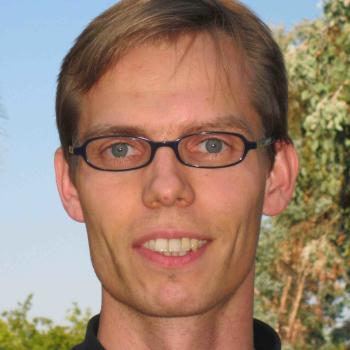
Mikael Johansson is a Professor at Kungliga Tekniska Högskolan (KTH), specializing in Control Technology . He teaches and coordinates courses such as Distributed Optimization (FEL3311) and various advanced-level degree projects in computer science, electrical engineering, and systems engineering. His research spans Control Systems , Machine Learning , and Optimization , with a focus on asynchronous algorithms, federated learning, and applications in energy systems and construction. His work includes 15 recent publications on topics like neural networks, distributed optimization, and battery technology. Notable areas of contribution are in asynchronous learning, federated learning with privacy constraints, and quasi-Newton methods for optimization. His research bridges theoretical advancements with practical applications in urban design, healthcare, and autonomous systems.
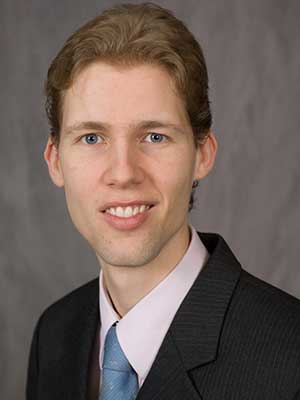
Peter J. Thomas is a Professor in the Department of Mathematics, Applied Mathematics, and Statistics at Case Western Reserve University's College of Arts and Sciences, with secondary appointments in Electrical Engineering and Computer Science, Cognitive Science, and Biology. He serves as Co-Editor-in-Chief of Biological Cybernetics and leads the Computational Biomathematics Laboratory. Primary Affiliation: Department of Mathematics, Applied Mathematics, and Statistics Secondary Affiliations: Department of Electrical Engineering and Computer Science, Department of Cognitive Science, Department of Biology Leadership: Co-Editor-in-Chief of Biological Cybernetics Thomas earned his B.A. in Physics and Philosophy from Yale University (1990), M.S. in Mathematics from the University of Chicago (1994), and both M.A. in Conceptual Foundations of Science and Ph.D. in Mathematics from the University of Chicago (2000). His research spans mathematical neuroscience, theoretical biophysics, and information theory applications to biological systems. Thomas specializes in understanding how noise and stochasticity affect neural coding, developing mathematical frameworks for gradient sensing in cells, and applying graph theory to biological networks. His work on stochastic shielding has provided novel approaches to simplifying complex stochastic models while preserving essential dynamics. His research bridges theoretical mathematics with experimental neuroscience through collaborations with the Chiel laboratory and others. Thomas's recent publications demonstrate a strong focus on stochastic oscillators, sensory feedback mechanisms, and information theory applications to biological systems. His work consistently develops novel mathematical frameworks to address specific biological questions, with significant contributions to understanding phase dynamics in neural oscillators and information processing in biochemical signaling. Core Fulbright Scholar Program (2013) Simons Fellow in Mathematics Program (2014) Multiple NSF grants as Principal Investigator Co-Editor-in-Chief of Biological Cybernetics Thomas has mentored numerous students at all levels, from undergraduates to postdoctoral researchers. His laboratory has produced successful scholars who have gone on to faculty positions at institutions like New Jersey Institute of Technology and the University of Nevada, Reno. He has actively organized workshops at the Banff International Research Station and served on editorial boards for leading journals in computational neuroscience. The Computational Biomathematics Laboratory focuses on developing mathematical frameworks to understand neural dynamics, cellular signaling, and pattern formation. The lab maintains strong collaborations with experimental neuroscience groups and has made significant contributions to understanding rhythmic neural systems, respiratory control mechanisms, and information processing in biological systems.
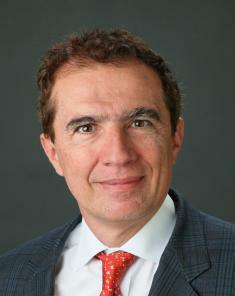
Ola Carlson is a Professor in Sustainable Electric Power Production at Chalmers University of Technology. He specializes in electrical systems for renewable power production and hybrid electric vehicles. Since 2022, he serves as a senior advisor to the Swedish Wind Centre, focusing on island operation with Chalmers wind turbine and battery systems. Research Interests His research spans renewable power systems, wind energy integration, grid stability, and microgrid optimization. Key projects include modeling Nordic transmission systems, analyzing wind turbine bearing currents, and developing maintenance schedules for aging components. Article Trends Recent publications emphasize wind turbine design, microgrid stochastic optimization, and dynamic state estimation for transmission protection. Topics cover machine learning applications in forecasting, fault handling, and battery degradation impacts on energy systems. Projects & Collaborations RESIST - Energy islanding for resilient systems (2026–2027) COSPACT - Nordic-Baltic co-simulation platform (2020–2023) Fossil Free Energy Districts (2016–2019) Collaborations with ABB, Swedish Energy Agency, and European Commission Labs & Teams Works with Power Grids and Components at Chalmers, leading projects like 'Detecting and eliminating bearing currents' (2018–2023) funded by the Swedish Energy Agency. Involved in Chalmers Campus as a testbed for intelligent grids.
Summary Luis A. Duffaut Espinosa is an Assistant Professor in the Department of Electrical and Biomedical Engineering at the University of Vermont (UVM), affiliated with the College of Engineering and Mathematical Sciences. His research focuses on control theory, estimation, robotics, and nonlinear systems with applications in autonomy, quantum control, and environmental monitoring. He holds a Ph.D. in Electrical and Computer Engineering from Old Dominion University (2009) and has held academic positions at George Mason University and postdoctoral roles at Johns Hopkins University and the University of New South Wales. Education: Ph.D. in Electrical and Computer Engineering (2009), Old Dominion University M.S. in Mathematics (2005), Pontificia Universidad Católica del Perú B.S. in Physics (2003), Universidad Nacional de Ingeniería, Peru Research Interests: His work emphasizes data-driven control and estimation methodologies, including model-free approaches for power systems, environmental monitoring, and quantum control. Current projects include real-time data assimilation in harsh environments, resilient robotics in GPS-denied conditions, and SAR with small satellites. He co-directs the Autonomous and Intelligent Systems Research Laboratory (AIRLab) and is part of the CREATE center. Recognition: 2024 NSF CAREER Award for work on safety-aware data-driven control frameworks Teaching & Advising: He teaches courses in estimation theory, control systems, and signal processing. Advises a team of graduate and undergraduate students focusing on autonomy, robotics, and control systems. Notable students include Danial Waleed (Ph.D. 2024), Jacob Friz-Trillo (M.S. 2025), and Farnaz Boudaghi (Ph.D. candidate). Labs & Collaborations: AIRLab: Focuses on data-driven control for autonomy in robotics and engineered systems CREATE: Research on resilient energy and autonomous technologies
Bernt-Erik Sæther is a Professor in population ecology at the Department of Biology, Norwegian University of Science and Technology (NTNU), and Director of the Centre for Biodiversity Dynamics (CBD), a Norwegian Centre of Excellence (SFF). His research focuses on integrating ecological and evolutionary processes, particularly in population and community dynamics. He has led major field projects on species like the house sparrow and elk, emphasizing stochastic influences on evolutionary change and population resilience. Education and Background: Sæther has held roles including Professor II at NTNU (20% since 1996), Senior Scientific Advisor at the Norwegian Institute for Nature Research (NINA), and researcher positions at the Directorate for Nature Management and Game Research institutes. His academic journey spans over four decades, with a PhD and early research in wildlife ecology. Research Interests: His work bridges population dynamics, climate change impacts, and conservation strategies. Key areas include density dependence, metapopulation dynamics, and eco-evolutionary feedbacks. He investigates how environmental stochasticity and human activities (e.g., harvesting) affect population stability and biodiversity. Awards and Recognition: He has received the Møbius Prize (2013) for outstanding research, an ERC Advanced Grant (2011–2016), and membership in prestigious academies like the Norwegian Academy of Science and Letters. His contributions to conservation science and ecological modeling are globally recognized. Professional Roles: Sæther chairs the Swedish Research Committee in Wildlife Research and serves on steering boards for environmental research initiatives like NORKLIMA and MISTRA. He advocates for sustainable land-use policies and improved biodiversity monitoring in Norway. Publications: Over 200 peer-reviewed articles, including seminal works on metapopulation ecology, climate-driven demographic shifts, and the evolutionary implications of stochastic processes. Recent studies highlight the effects of harvesting on population fluctuations and the role of telomeres in life-history strategies.
Sigrid Källblad Nordin is an Associate Professor at KTH Royal Institute of Technology, affiliated with the Department of Mathematics (Division of Probability, Mathematical Physics, and Statistics). Her research focuses on Mathematical Finance, Probability Theory, and Stochastic Analysis, with an emphasis on measure-valued processes, martingale optimal transport, and model uncertainty. She holds a DPhil from the University of Oxford (2014). Her work bridges theoretical advancements in stochastic control, optimization, and financial applications. Recent research includes Bayesian optimal adaptive control, robust option pricing, and dynamically consistent investment strategies under uncertainty. She teaches courses such as Financial Mathematics and Financial Derivatives, and supervises PhD students Linn Engström and Chaorui Wang. Publications span journals like Annals of Applied Probability , Finance and Stochastics , and SIAM Journal on Control and Optimization , reflecting contributions to optimal transport, stochastic processes, and financial modeling. She is currently hiring a new PhD student and welcomes inquiries about master thesis supervision.
Dr. Christos Papavassiliou is an Associate Professor in the Department of Electrical and Electronic Engineering at Imperial College London, part of the Faculty of Engineering. His research focuses on instrumentation electronics, memristor modeling, signal integrity, and novel device technologies such as SiGe devices, RF MEMS, and ReRAM. He leads the Space Lab and collaborates with the National Centre for Scientific Research in Athens. He holds senior membership in IEEE and is a member of the IET. Education: Ph.D. in Applied Physics, Yale University (1983–1989) MPhil in Applied Physics, Yale University (1983–1988) MS in Applied Physics, Yale University (1983–1985) B.S. in Physics, MIT (1979–1983) Research Interests: Memristor-based neuromorphic computing and stochastic systems High-performance instrumentation hardware and data acquisition Multi-state memristive memory and selectorless arrays Integration of memristors with CMOS for hybrid circuits Applications in biomedical wearables and edge AI deployment Key Contributions: Developed novel memristor models for circuit simulation Pioneered work on memristor-based true random number generators Advanced understanding of resistive drift and energy-constrained storage Designed FPGA-based systems for analog circuit emulation Labs & Teams: Active in the Space Lab at Imperial College, focusing on interdisciplinary research in electronics and space applications.
C. Lanier Benkard is the Gregor G Peterson Professor of Economics at the Graduate School of Business, Stanford University. He is a prominent researcher in industrial organization, game theory, and econometrics, focusing on dynamic models of market competition and structural estimation. Research Interests: His work spans Dynamic games and equilibrium modeling Hedonic pricing and demand estimation Econometric tools for imperfect competition Computational methods for large-scale industries Publication Trends: His research emphasizes oblivious equilibrium approximations, strategic interactions in concentrated industries, and empirical analysis of markets with heterogeneous consumers. He frequently collaborates with scholars like Gabriel Weintraub and Patrick Bajari. Tools & Extensions: He has developed computational resources, including C++ and Matlab code, to analyze oblivious equilibrium. Current work includes extensions to Markov Perfect Industry Dynamics and aggregate shock modeling.
Andreas Malikopoulos is a Professor at Cornell University's School of Civil & Environmental Engineering and Director of the Information and Decision Science Lab (IDS Lab). Previously, he held roles as the Terri Connor Kelly and John Kelly Career Development Professor at the University of Delaware (UD) and founding Director of UD's Sociotechnical Systems Center. He also served as the Alvin M. Weinberg Fellow at Oak Ridge National Laboratory (ORNL), Deputy Director of ORNL's Urban Dynamics Institute, and Senior Researcher at General Motors R&D. His research focuses on cyber-physical systems (CPS), stochastic control, and learning-driven approaches for optimizing energy efficiency and sustainable mobility in smart cities and transportation systems. Education: PhD (Mechanical Engineering, University of Michigan, 2008), M.S. (Mechanical Engineering, University of Michigan, 2004), Diploma (National Technical University of Athens, 2000). Research Interests: Analysis and control of CPS, stochastic scheduling, game theory, and mechanism design applied to emerging mobility systems (e.g., autonomous vehicles, electric vehicles). He emphasizes integrating learning and control for socially optimal solutions in transportation networks. Awards: IEEE ITS Young Researcher Award (2019), UD’s Outstanding Junior Faculty Award (2020), Alvin M. Weinberg Fellowship (2010), and recognition as a NAS Kavli Frontiers of Science Scholar (2012). He is an IEEE Senior Member, ASME Fellow, and serves on editorial boards of leading journals. Teaching: Focuses on optimal decision-making, control theory, and emerging mobility systems. Courses include stochastic optimal control and game theory at Cornell. Labs: Leads the IDS Lab, which develops scalable frameworks for CPS and smart city applications. Current projects include coordinated routing for mixed-traffic systems and AI-driven recommendations for autonomous vehicles.
Steve Hanneke is an Assistant Professor in the Computer Science Department at Purdue University, specializing in statistical learning theory, machine learning, and algorithmic information theory. His research focuses on understanding the fundamental limits of learning from data, including questions about what can be learned and how efficiently it can be done. Prior to Purdue, he held positions at Toyota Technological Institute at Chicago (2018–2021), Carnegie Mellon University (2009–2012), and Princeton University (2018 visiting lecturer). He earned his PhD from Carnegie Mellon University in 2009, advised by Eric Xing and Larry Wasserman, with a thesis on active learning foundations. Key research interests include active learning, adversarial robustness, online learning, and the theoretical analysis of learning algorithms. He has contributed to foundational work on PAC learning, sample complexity, and universal learning frameworks. Notable awards include the Best Paper Awards at ALT 2021 and COLT 2020, and his 2007 ICML paper received an Honorable Mention for the ICML Test of Time Award in 2017. Teaching experience includes courses at Purdue (Machine Learning Theory, Data Mining and Machine Learning), Princeton (Statistical Learning and Nonparametric Estimation), and Carnegie Mellon (Advanced Probability and Statistical Theory). His work has been published in top venues like COLT, NeurIPS, and the Journal of Machine Learning Research, with over 50 peer-reviewed articles. Research highlights include developing the theory of universal learning under general stochastic processes, characterizing minimax rates in active and online learning, and exploring adversarial robustness in PAC learning frameworks. Current projects focus on bandit learning, non-stationary environments, and the theoretical limits of learning algorithms.
Johan Chu is the Sarofim Family Career Development Assistant Professor and an Assistant Professor of System Dynamics at the MIT Sloan School of Management. His research focuses on the dynamics of social power, corporate advantage, and competitive strategies in the digital age. He explores how technological advancements reshape markets, inequality, and organizational structures. Chu holds dual PhDs: a PhD in Physics (Artificial Life) from Caltech (1990s) and a later PhD in Management & Organizations from the University of Michigan Ross School of Business. Prior to academia, he consulted in the U.S., Korea, and China; led enterprise software ventures; and managed a global executive search firm's Asia-Pacific Consumer Practice. His research streams include: 1) durable dominance of firms/ideas; 2) mass attention direction via technology; and 3) evolving work/organizational power in the 21st century. Empirical methods include simulations, large datasets, social network analysis, machine learning, and qualitative interviews. His work bridges physics-inspired computational models with social science theory, addressing topics like scientific collaboration decline, corporate governance shifts, and elite dynamics. Recent insights highlight slowed scientific progress in large fields and the strategic role of attention economies.
Mahsa Ghasemi is an Assistant Professor in the Elmore Family School of Electrical and Computer Engineering at Purdue University, leading the AKADEMI Group. Her research focuses on theoretical advancements in trustworthy sequential decision-making for autonomous systems, emphasizing human-aware collaboration and adaptation to dynamic environments. She is affiliated with the Institute for Control, Optimization and Networks (ICON). Education: PhD in Electrical and Computer Engineering from The University of Texas at Austin (2021), MSE in Mechanical Engineering (2017), and BSc in Mechanical Engineering from Sharif University of Technology (2014). Research Interests: Reinforcement learning, control theory, active perception, multi-agent systems, robotics, and online learning. Applications span disaster response, healthcare, and autonomous systems design. Key methodological directions include compositional learning, human-AI collaboration, and adaptive decision-making under uncertainty. Teaching: Courses include Reinforcement Learning Theory (ECE 59500), Introduction to Reinforcement Learning (ECE 49595), and Python for Data Science (ECE 20875). Awards: Finalist for Student Best Paper Award at the 2018 American Control Conference (ACC). Students: Current advisees include Maheed H. Ahmed, Jayanth Bhargav, and Somtochukwu Oguchienti. Past members include Lai Wei and Juan Sebastian Mateo Ruiz Bulla. Service: Editorial roles at ICRA, ICCPS, and IFAC workshops. Reviewer for top conferences (NeurIPS, ICML) and journals (Automatica, IEEE TAC). Labs/Teams: Leads the AKADEMI Group, focusing on algorithmic and theoretical research in autonomous decision-making systems.
Matthias Ihme is a Professor in the Department of Mechanical Engineering and Photon Science Directorate at Stanford University. His research focuses on large-eddy simulation (LES) of turbulent reacting flows, aeroacoustics, combustion-generated noise, numerical methods, and high-order schemes. He holds a Ph.D. from Stanford University (2008), an M.Sc. in Computational Engineering from the University of Erlangen (Germany, 2002), and a Dipl.-Ing. in Mechanical Engineering from Munich University of Applied Sciences (Germany, 2000). His work bridges computational fluid dynamics, combustion science, and photon science, with notable contributions to supercritical fluid dynamics, machine learning integration in fluid simulations, and high-fidelity atmospheric transport modeling. Recent research emphasizes ultrafast cluster dynamics, shock-induced interface behavior, and stochastic ignition mechanisms in advanced fuel systems. Publications highlight interdisciplinary advancements, including physics-informed ML frameworks for reacting flows and experimental studies using X-ray photon correlation spectroscopy. His projects often involve high-performance computing and collaboration with national labs like SLAC.
Ton Dieker is an Associate Professor in the Department of Industrial Engineering and Operations Research at Columbia University's School of Engineering and Applied Science. He is a DSI Member and affiliated with the Center for Financial and Business Analytics. His research focuses on stochastic models, simulation techniques, and high-dimensional stochastic analysis. Dieker holds a Master’s in Operations Research from Vrije Universiteit Amsterdam (2002) and a PhD in Mathematics from the University of Amsterdam (2006). Dieker’s research explores stochastic processes, queueing theory, and rare-event simulation. He has contributed to methodologies like QPLEX for stochastic systems and advanced techniques in sequential analysis and exact simulation. His work bridges theoretical foundations with computational applications, addressing challenges in large-scale networks and high-dimensional problems. Education: PhD in Mathematics, University of Amsterdam, 2006 Master’s in Operations Research, Vrije Universiteit Amsterdam, 2002 Dieker’s articles emphasize computational modeling, stochastic calculus, and optimization, reflecting his focus on bridging theory and practice. His work often addresses efficiency in simulation, exactness in algorithms, and scalability in complex systems. Awards: Goldstine Fellowship (IBM Research) NSF CAREER Award Erlang Prize (INFORMS) Fouts Family Early Career Professorship (Georgia Tech) He serves on editorial boards for Operations Research and Mathematics of Operations Research . His research also addresses capacity management in stochastic networks and applications in cloud computing and commodity sourcing.
Giovanni De Micheli is a Professor of Electrical Engineering and Computer Science at EPF Lausanne, Switzerland. He also serves as Director of the Integrated Systems Centre and the Institute of Electrical Engineering at EPFL, and chairs the Scientific Committee of CSEM in Neuchatel. Previously, he held academic roles at Stanford University for 18 years, including Full Professor, Associate Professor, and Assistant Professor in the Department of Electrical Engineering. His research spans synthesis of digital circuits, hardware/software co-design, low-power design, and Networks on Chip (NoC) technology. 2003: IEEE Emanuel Piore Award 2000: Golden Jubilee Medal of the IEEE CAS Society 2000: ACM Fellow 1994: IEEE Fellow 1990: IEEE/CS Distinguished Service Award 1988: NSF Presidential Young Investigator Award His seminal contributions include pioneering C-based synthesis and Boolean matching algorithms for digital circuits, foundational work in dynamic power management using stochastic control, and the development of Network-on-Chip (NoC) technology. His publications, such as "Networks on Chips: A New SoC Paradigm" and "Dynamic Power Management for Portable Systems" , have shaped modern SoC design practices. With over 400 technical articles, 9 books, and an H-index of 56, his work remains highly influential.