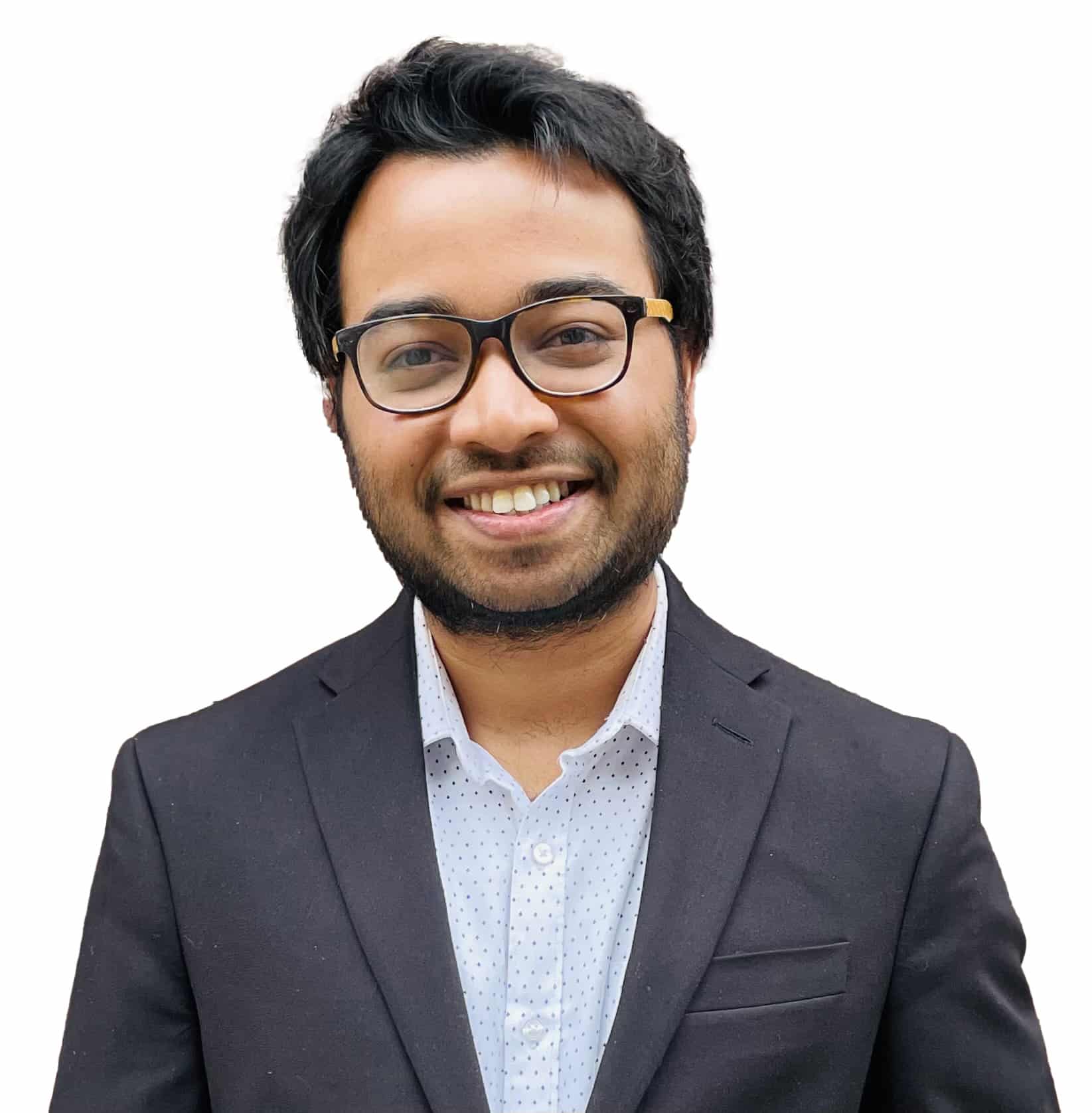
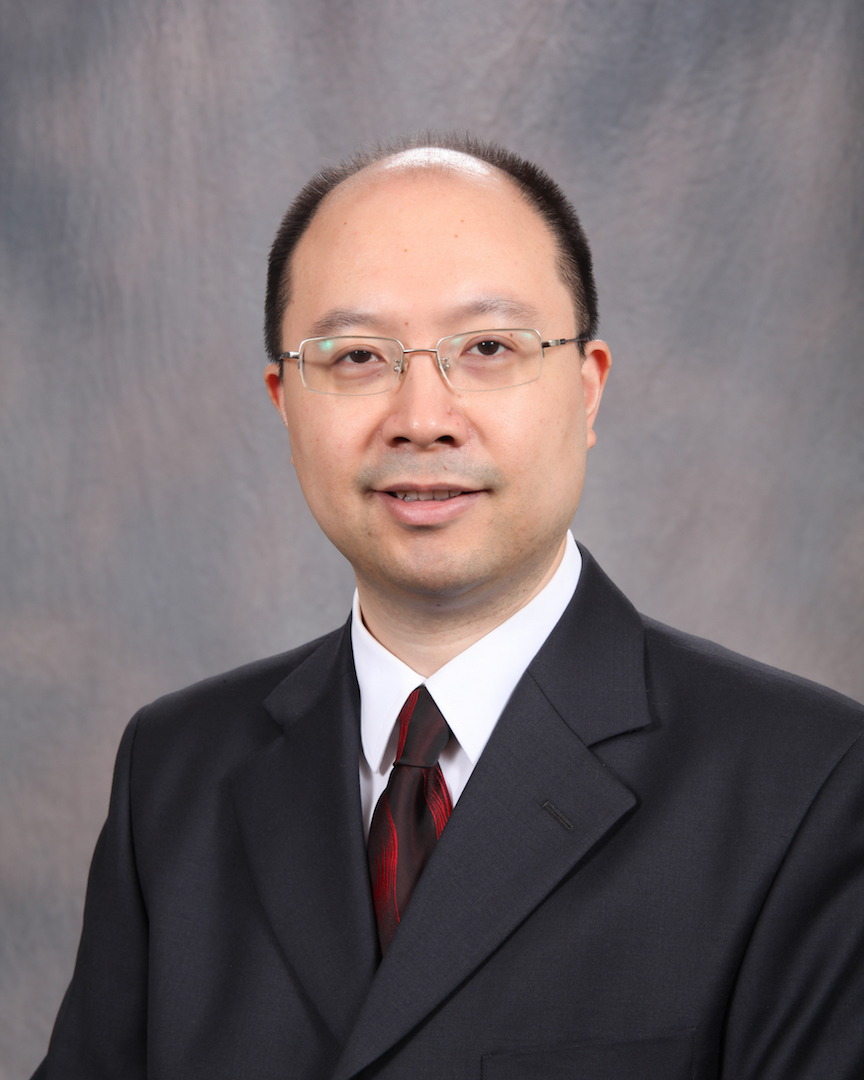
Rebecca Dziedzic is an Assistant Professor in the Department of Building, Civil, and Environmental Engineering at Concordia University. Her research focuses on asset management, water system sustainability, and infrastructure resilience. She holds a PhD in Civil and Environmental Engineering from the University of Toronto. Dr. Dziedzic's work integrates machine learning, data science, and policy analysis to address challenges in urban infrastructure systems. Her research explores topics such as water distribution network optimization, climate change adaptation in infrastructure, and circular economy strategies for construction. Recent projects include predicting water main breaks using multivariate models, developing frameworks for energy-efficient pump operation, and assessing carbon footprints in industrial facilities. Dr. Dziedzic supervises graduate students in Civil Engineering (MASc/PhD) and maintains an active research group through the UrbanLinks initiative. Her work has been published in over 30 peer-reviewed articles, with a strong focus on smart city technologies, disaster risk reduction, and sustainable infrastructure design.
Prof. Karl Kunisch is the Scientific Director at RICAM (Johann Radon Institute for Computational and Applied Mathematics) and a Full Professor of Mathematics at the University of Graz, Austria. He has held academic positions worldwide, including visiting roles at Brown University, INRIA, and Technical University Berlin. His research focuses on Optimization and Optimal Control, Partial Differential Equations (PDEs), Inverse Problems, and their applications in mathematical imaging, medicine, and computational science. Education: 1975: Diploma Degree, Technical University of Graz, Austria 1975: Master Degree, Northwestern University, Evanston, Illinois, USA 1978: Ph.D. Degree, Technical University of Graz 1980: Habilitation, Technical University of Graz Research Interests: Prof. Kunisch’s work spans theoretical and applied aspects of optimal control, including stabilization of PDEs, infinite horizon control problems, and feedback design. He explores numerical methods for PDE-constrained optimization and their applications in medical imaging, cardiac electrophysiology, and machine learning. His projects also address shape optimization and mathematical models for fluid dynamics and quantum systems. Publications Trends: His recent articles emphasize feedback stabilization for nonlinear systems, sparse control approaches, and the intersection of optimal control with machine learning. Key themes include robust algorithms for uncertainty handling, efficient numerical methods for high-dimensional problems, and applications in biomedical engineering. Awards: Pro Scientia-Scholarship (1974–1977) Research Award of Theodor-Körner-Fonds (1979) Fulbright Travel Scholarship (1979/80, 1985) Max Kade Scholarship (1982–83) Japanese Society for the Promotion of Science Fellowship (1990) Christian Doppler Laboratory Fellowship (1992) Advising & Grants: Prof. Kunisch leads the Optimization and Optimal Control research group at RICAM and has directed projects on mathematical data science and inverse problems. His work involves collaborations with institutions globally and has been supported by grants from NASA, the European Union, and national funding bodies. He has advised numerous researchers, though specific student names are not listed here. Labs/Teams: Group Leader of the Group "Optimization and Optimal Control" at RICAM since 2004, contributing to interdisciplinary research in computational mathematics and its applications.
Karl Kunisch is a Professor at the Department of Mathematics and Scientific Computing at the University of Graz and serves as Scientific Director of the Radon Institute of the Austrian Academy of Sciences in Linz. With a distinguished career spanning several decades, he has established himself as a leading researcher in optimization and control theory. Prof. Kunisch completed his PhD and Habilitation at the Technical University of Graz in 1978 and 1980, respectively. His academic journey includes significant positions at Brown University's Lefschetz Center for Dynamical Systems, INRIA Rocquencourt, Universite Paris Dauphine, and he previously served as a professor of numerical mathematics at the Technical University of Berlin. Research Interests: Prof. Kunisch's research focuses on optimization and optimal control, inverse problems and mathematical imaging, numerical analysis and applications, with current emphasis on life sciences applications. His specific areas include Optimal Control of Partial Differential Equations, Nonsmooth Optimization in Function Spaces, and Applications of Optimization and Control in the Life Sciences. His work bridges theoretical mathematics with practical applications across various scientific domains. His recent publications demonstrate a continued focus on advancing the theoretical foundations of optimal control while developing practical numerical methods. Key trends include work on infinite horizon control problems, feedback stabilization techniques, applications to PDE-constrained optimization, and the integration of machine learning approaches with traditional control theory. His research group actively explores connections between theoretical developments and applications in the life sciences. Scientific Recognition: W.T. and Idalia Reid Prize 2021 SIAM Fellow (2017) European Research Council Advanced Grant (2015) Alwin Walther Medaille (2008) SIAM Outstanding Paper Prize (2006) Prof. Kunisch has made substantial contributions to the mathematical community through his editorial work, serving as editor for prestigious journals including SIAM Journal on Control and Optimization, SIAM Journal on Numerical Analysis, and the Journal of the European Mathematical Society. He leads the Research Group on Optimization and Optimal Control at the Johann Radon Institute for Computational and Applied Mathematics (RICAM) and is involved in the ERC-Project OCLOC "From Open to Closed Loop Control".
Zhou Zhou is a Senior Lecturer in the School of Mathematics and Statistics at the University of Sydney. His academic roles include Senior Lecturer (2022–present) and Lecturer (2018–2021) at the University of Sydney, as well as postdoctoral positions at the University of Michigan and University of Minnesota. He holds a Ph.D. in Applied & Interdisciplinary Mathematics from the University of Michigan (2015) and a B.S. in Mathematics from Nankai University (2010). His research focuses on stochastic control, mathematical finance, and game theory, with particular emphasis on time-inconsistent problems, optimal stopping, and equilibrium strategies. Key areas include applications in financial mathematics, stochastic processes, and dynamic optimization. His work has been published in journals such as Mathematical Finance, SIAM Journal on Control and Optimization, and Finance and Stochastics. Zhou has secured grants including the 2023 Faculty of Science Startup Scheme for time-inconsistent control research and the 2022 Australian Research Council grant on green investment impacts. He teaches courses like Arbitrage Pricing in Continuous Time and supervises research students in financial mathematics. His academic contributions span over 50 publications, with notable work on binomial-tree approximations for stopping problems, equilibrium strategies in mean-field games, and policy iteration for stochastic control. Presentations include talks at international conferences and universities worldwide, emphasizing interdisciplinary applications of stochastic analysis.
Associate Professor Jungsoo Kim holds a position in the School of Architecture, Design and Planning at the University of Sydney, specializing in Building Science. His research focuses on occupant-building interactions, particularly how environmental factors influence user behavior and energy demand. He teaches courses in architectural science and building performance. Key affiliations include membership in: NatHERS Technical Advisory Committee CSIRO's Thermostat Behavior Expert Group IEA-EBC Annexes 87, 69, and 66 NABERS Technical Working Group International Society of Indoor Air Quality and Climate Research interests span Indoor Environmental Quality (IEQ), occupant behavior modeling, building performance assessment, and translating research into building codes. Recent grants include studies on decarbonizing multi-residential buildings and work-from-home environments' impact on productivity. His lab, the IEQ Lab, explores acoustic comfort and thermal adaptation in workplaces and residential contexts. Notable work includes developing probabilistic behavioral models for HVAC usage and advancing adaptive thermal comfort theory.
Dr. Gabor Karsai is a Distinguished Professor of Computer Science and Professor of Electrical and Computer Engineering at Vanderbilt University's School of Engineering. He also serves as Senior Research Scientist at the Institute for Software-Integrated Systems (ISIS), where he contributes to the Executive Council. With over 30 years in software engineering, his research focuses on embedded systems, model-driven development, resilient software platforms, and AI-driven autonomous systems assurance. He holds a PhD from Vanderbilt and degrees from the Technical University of Budapest. Education: Ph.D. in Electrical and Computer Engineering, Vanderbilt University Dr.Tech. in Computer Engineering, Technical University of Budapest M.S. and B.S. in Electrical Engineering, Technical University of Budapest Affiliations: Co-Associate Chair for Computer Engineering External Member of the Hungarian Academy of Sciences His research interests span model-integrated computing , autonomous systems assurance , and radiation-hardened systems . Recent work emphasizes AI integration into engineered systems and radiation effects mitigation for space applications. He has led major projects on distributed control for smart grids and resilient CPS architectures. Over 200 peer-reviewed publications and four patents reflect his contributions to software engineering and systems integration. Awards & Recognition: External Membership in Hungarian Academy of Sciences Leadership roles in ISIS and Vanderbilt's academic governance Advisees & Grants: While no student list is provided, his projects involve collaborative teams across academia and industry. Major sponsors include NSF, NASA, and DARPA. Current work includes the ALC (Assurance-based Learning-enabled CPS) and MIDAS (Model-based Intent-Driven Adaptive Software) initiatives. Labs & Platforms: Co-developer of the RIAPS distributed CPS platform and the SEAM assurance modeling framework. His labs focus on cyber-physical system design, radiation effects analysis, and autonomous system reliability.
Zihao Qu is an Assistant Professor in the Department of Operations & Information Management at the Isenberg School of Management, University of Massachusetts Amherst. He holds a Ph.D. from The University of Texas at Dallas (2024) and a BBA from The Chinese University of Hong Kong, Shenzhen (2018). His research focuses on revenue management, emerging technologies, and operations optimization with applications in healthcare and cloud computing. Ph.D., The University of Texas at Dallas (2024) BBA, The Chinese University of Hong Kong, Shenzhen (2018) His work addresses challenges in real-time decision-making systems, cloud cost optimization, and spatial matching algorithms. Recent publications include advancements in postacute healthcare service algorithms and cloud resource provisioning models. He teaches courses on supply chain management and emerging technologies. His research demonstrates expertise in combining theoretical operations research with practical industry applications, particularly in healthcare and technology sectors. No specific awards or grants are listed in the provided materials.
Ashish Cherukuri is an Associate Professor at the University of Groningen's Faculty of Science and Engineering, affiliated with the Optimization and Decision Systems group. His research focuses on optimization-based control, game theory, and multi-agent systems applied to energy, transportation, and robotics. He holds a Ph.D. from UC San Diego and postdoctoral experience at ETH Zurich. Education: Ph.D., University of California, San Diego (2012–2017) M.Sc., ETH Zurich (2008–2010) B.Tech, Indian Institute of Technology Delhi (2004–2008) Research Interests: Data-driven optimization, distributed algorithms, networked cyber-physical systems, and uncertainty handling in energy and transportation systems. Recent work emphasizes stochastic optimization, game-theoretic routing, and risk-aware control. Awards: Robert E. Skelton Dissertation Award (2017) Outstanding Graduate Student Award (2016) Focht-Powell Fellowship (2012–2015) Grants & Service: Editor for the IEEE Control Systems Society, organizer of Energy-Open 2019, and member of professional societies (IEEE, INFORMS, SIAM). Active in conference organization and academic leadership roles. Labs/Teams: Part of the Jan C. Willems Center for Systems and Control and the Engineering and Technology Institute Groningen (ENTEG). Research integrates theoretical advancements with practical applications in energy networks and smart systems.
Professor Yahya Fathi specializes in optimization and operations research at North Carolina State University. His research includes mathematical programming, production systems, and quality engineering, with applications in manufacturing and data analytics. Awarded multiple teaching excellence honors.
Do Young Eun is a Professor in the Department of Electrical and Computer Engineering at North Carolina State University (NC State), with affiliations in Computer Science and Operations Research. He holds a Ph.D. from Purdue University and M.S./B.S. degrees from KAIST, Korea. His research focuses on distributed optimization for machine learning, network modeling, and algorithms for social/wireless networks, with applications in epidemic analysis and graph analytics. Education: Ph.D. in Electrical and Computer Engineering, Purdue University (2003) M.S. in Electrical Engineering, KAIST (1997) B.S. in Electrical Engineering, KAIST (1995) Research Interests: Distributed optimization and machine learning Network modeling and performance analysis Epidemic modeling and control Graph analytics and social network analysis Stochastic processes and algorithms Highlighted Awards: NSF CAREER Award (2006) Outstanding Paper Award, ICML 2023 Best Paper Awards at IEEE ICCCN (2005), IPCCC (2006), NetSciCom (2015) Best Student Paper Award, ACM MobiCom 2007 Advising & Grants: Current advisees include Jie Hu, Yi-Ting Ma, and Feiya Xiang NSF Grant (2024–2027): 'Toward Maximally Efficient Sampling and Optimization for Decentralized Learning' Supervised over 10 Ph.D. students, many in academic or industry leadership roles Labs/Teams: His research group focuses on interdisciplinary projects at the intersection of networking, machine learning, and stochastic systems, with collaborations in academia and industry.
Aritra Mitra is an Assistant Professor in the Department of Electrical and Computer Engineering at North Carolina State University. He holds a Ph.D. from Purdue University (2020), an M.Tech. from IIT Kanpur (2015), and a B.E. from Jadavpur University (2013). Before joining NC State, he was a postdoctoral researcher at the University of Pennsylvania. His research focuses on enabling reliable, efficient learning and decision-making in large-scale distributed systems, addressing challenges like computation, communication constraints, and adversarial robustness. Key areas include control theory, machine learning, signal processing, and network science. Education: Ph.D., Electrical and Computer Engineering, Purdue University (2020) M.Tech., Electrical Engineering, Indian Institute of Technology Kanpur (2015) B.E., Electrical Engineering, Jadavpur University (2013) Research Interests: Dr. Mitra’s work bridges theoretical foundations with practical applications in distributed systems. He designs algorithms for federated learning, reinforcement learning, and adversarial robustness, with applications in control systems and networked environments. Recent efforts emphasize finite-time analysis of TD learning, heterogeneous federated systems, and resilient control under communication constraints. His contributions often integrate tools from stochastic approximation, optimization, and signal processing. Publications: His articles explore cutting-edge topics like federated TD learning, robust system identification under heavy-tailed noise, and distributed multi-agent optimization. Recent trends highlight advancements in asynchronous algorithms, delay-adaptive systems, and model-free control under communication bottlenecks. Grants & Labs: While specific grants are not detailed, his research aligns with themes in distributed computing and control, suggesting potential involvement in NSF or industry-funded projects. No lab-specific details are provided in the text.
Yang Shen is an Associate Professor in the Department of Electrical and Computer Engineering at Texas A&M University, affiliated with the Department of Computer Science and Engineering and the Institute of Biosciences and Technology. He holds a B.E. in Automation from the University of Science and Technology of China (2002) and a Ph.D. in Systems Engineering from Boston University (2008). His research focuses on algorithms for modeling biological molecules, systems, and data, with applications in protein docking, drug design, systems biology, and omics. He has received prestigious awards such as the NSF CAREER Award (2020) and MIRA Award (2017). His work integrates machine learning, optimization, and graph theory to address challenges in computational biology. Notable contributions include generative AI for protein design, interpretable models for compound-protein affinity prediction, and Bayesian active learning for protein docking. Shen has advised numerous students, including Yuning You, Mostafa Karimi, and Arghamitra Talukder, who have received awards like the Chevron Scholarship and NSF Graduate Fellowships. His lab actively collaborates on projects in drug discovery, synthetic biology, and precision medicine. Shen has led funded projects totaling over $3.5 million from NIH and NSF, exploring topics like molecular mechanisms of cancer mutations and AI-driven drug design. He serves on editorial boards for journals like the Journal of Biological Systems and has organized workshops such as the International Workshop on Biomedical Informatics with Optimization and Machine Learning (BOOM). His research bridges computational methods and biological systems, advancing both theory and practical applications in healthcare and biotechnology.
Professor Peter Chin is a Professor of Engineering at Dartmouth College and Director of the Learning, Intelligence + Signal Processing (LISP) Lab. He holds affiliations with the Thayer School of Engineering and serves as Associate Editor of IEEE Transactions on Computational Social Systems. His research bridges signal processing, machine learning, game theory, and differential geometry, with applications in cybersecurity, healthcare, and network analysis. Education: Bachelor of Science in Electrical Engineering, Computer Science, and Mathematics from Duke University (1993) Doctor of Philosophy in Mathematics from MIT (1998) Research Interests: Chin’s work focuses on fundamental questions at the intersection of machine learning, game theory, and signal processing. His lab explores topics like adversarial defense mechanisms, topological machine learning, and computational neuroscience. Recent projects include cybersecurity resilience modeling, medical imaging enhancements via GANs, and multi-agent reinforcement learning frameworks. Publications Trends: His most recent articles address cutting-edge challenges in cybersecurity (e.g., autonomous defense systems), medical AI (e.g., Alzheimer’s classification), and adversarial robustness. A notable 2025 focus is on quantitative resilience modeling for cyber defense, reflecting growing demand for AI-driven security solutions. Awards: Faculty Scholar Award, Duke University George Sherred III Award, Duke University Julia Dale Memorial Award, Duke University Grants & Leadership: Recipient of DARPA cybersecurity research grants Co-chair for SPIE/DSS Cyber Sensing Conference (2013–2020) Developed novel compressive sensing microscope for biological imaging LISP Lab: This interdisciplinary lab pioneers projects like nFlip (multiplayer security game models) and topological machine learning frameworks, emphasizing practical applications of theoretical advancements.
Dr. Jianqiang Cheng is an Associate Professor in the Department of Systems and Industrial Engineering at the University of Arizona, College of Engineering. He is also a member of the Graduate Faculty and affiliated with the Applied Mathematics and Statistics Graduate Interdisciplinary Programs. His research is centered on optimization under uncertainty with applications in energy systems and logistics. Research Interests: His primary research areas include stochastic programming, robust optimization, distributionally robust optimization, semidefinite programming, and chance-constrained optimization. He applies these methodologies to challenges in power systems, renewable energy integration, microgrid design, and resilient supply chains. The recent publications (2020–2022) reflect a strong trend toward data-driven and computationally efficient methods in optimization. Key themes include distributionally robust optimization under moment and Wasserstein ambiguity, chance-constrained AC optimal power flow, and resilient supply chain modeling under disruptions such as the COVID-19 pandemic. His work frequently appears in top journals like INFORMS Journal on Computing , IEEE Transactions on Power Systems , and European Journal of Operational Research . Scientific Awards: Best Short Paper Award, INFORMS Workshop on Data Science (Fall 2022) NSF CAREER Award, National Science Foundation (Spring 2022) Science Foundation Arizona's 2017 Bisgrove Scholar (Spring 2017) Dr. Cheng has secured significant research funding, including the NSF CAREER Award, supporting his work in data-driven optimization. He collaborates extensively with researchers in energy systems and operations research, including K. Pan, M. Cheramin, A. M. Fathabad, and A. Lisser. While specific advisees are not listed, his role as a member of the Graduate Faculty indicates active supervision of graduate students in systems engineering, applied mathematics, and statistics. His research contributes to the development of advanced optimization models for real-world systems affected by uncertainty, particularly in energy and logistics. Though no specific lab is mentioned, his work implies involvement in computational optimization and energy systems modeling research groups within the College of Engineering.
Silvia Jiménez Fernández is an Associate Professor in the Department of Signal Theory and Communications at Universidad Autónoma de Madrid. Her research focuses on optimization algorithms, smart grids, renewable energy systems, telemedicine, and machine learning applications. She holds a Ph.D. from Universidad Politécnica de Madrid (2009), supervised by Dr. Francisco del Pozo Guerrero and Dr. Paula de Toledo Heras. Her work integrates interdisciplinary approaches, such as combining evolutionary algorithms with engineering challenges in energy systems and healthcare. Key contributions include advancements in coral reefs optimization algorithms for energy management, machine learning for battery health estimation, and telemedicine systems for chronic disease monitoring. Recent research trends emphasize hybrid learning models in education, multi-objective optimization in renewable energy systems, and risk analysis in smart grids with electric vehicles. She is affiliated with the GHEODE Research Group (Modern Heuristics and Network Design).