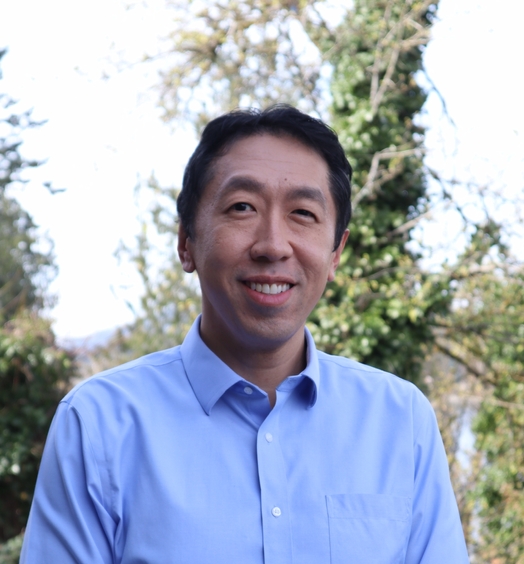
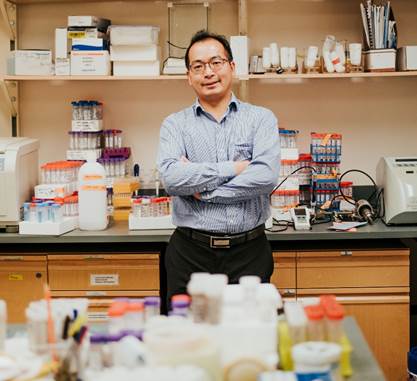
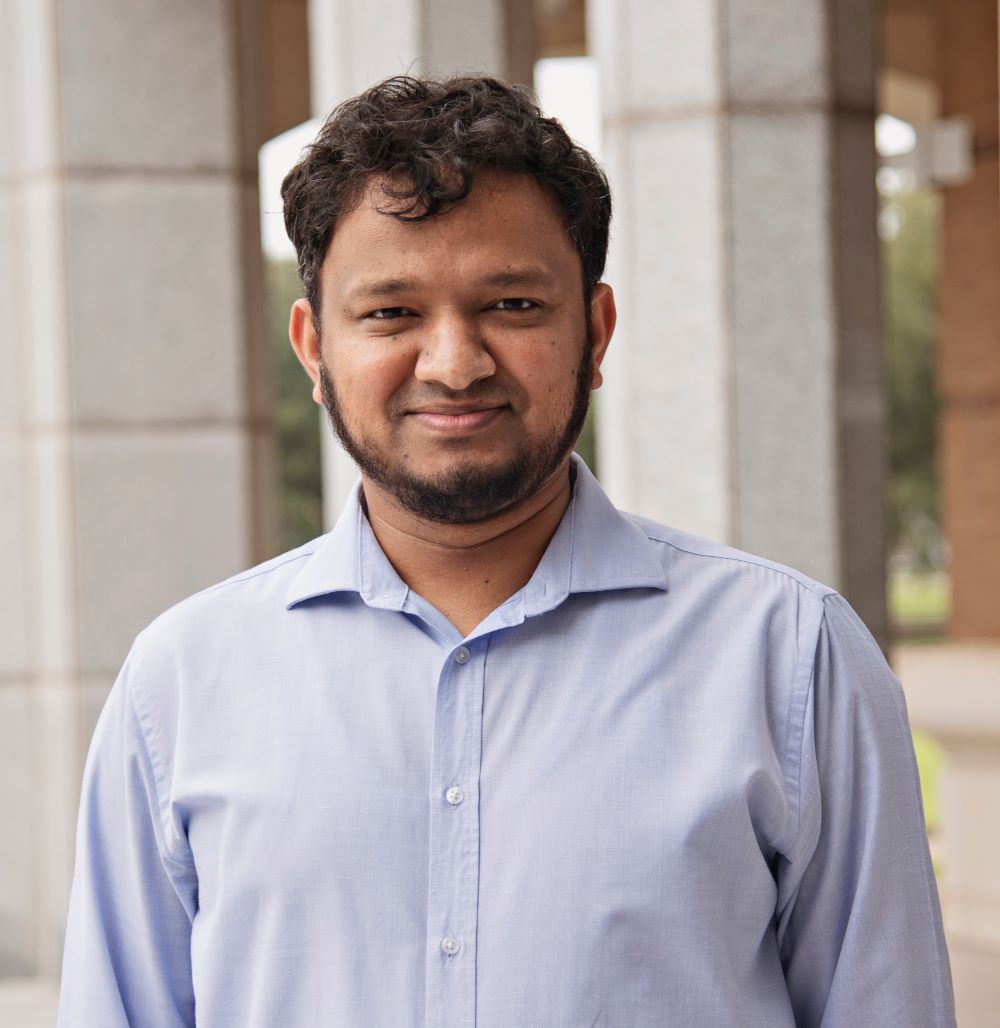
Dr. Cheng-Chew Lim is a Professor in the School of Electrical and Mechanical Engineering at the University of Adelaide. He specializes in control theory, autonomous systems, and multi-agent reinforcement learning. His research focuses on trusted autonomous systems, secure cyber-physical networks, and decentralized decision-making models. He has published over 300 articles and supervised 50+ PhD and master’s students. Dr. Lim teaches courses in control systems, autonomous systems, and engineering project management. He has held editorial roles, including Associate Editor for IEEE Transactions on Systems, Man, and Cybernetics, and is actively involved in professional associations like the IEEE Control and Aerospace Electronic Systems Joint Chapter. His current projects include physics-informed neural networks for medical imaging, secure distributed autonomous systems, and resilient formation control under cyberattacks. Dr. Lim has secured research grants from ARC and industry partnerships, emphasizing practical applications in robotics, cybersecurity, and smart systems.
Camilla Fiorini is an Associate Professor at the National Conservatory of Arts and Crafts (CNAM) in Paris, where she conducts research at the Mathematical and Numerical Modeling Laboratory (M2N). She serves as Principal Investigator for the ANR-funded SPARCL project (2025-2029) focusing on structure-preserving reduced order models for conservation laws. Her academic background includes a PhD in Applied Mathematics from the University of Versailles and both MSc/BSc degrees in Mathematical Engineering from Politecnico di Milano. Her research centers on computational fluid dynamics, numerical analysis of PDEs, and sensitivity methods, with specific applications in uncertainty quantification and reduced order modeling. Current projects develop novel approaches for conservation laws that maintain structural properties while improving computational efficiency and reliability. Fiorini's publication record demonstrates consistent focus on sensitivity analysis techniques for complex fluid systems, shock-capturing methods, and uncertainty propagation in hyperbolic PDEs. She received the SMAI-GAMNI PhD Award 2019 (French ECCOMAS Award) for her doctoral dissertation on sensitivity analysis for nonlinear hyperbolic systems. As Principal Investigator of the SPARCL project, she leads a team developing new reduced basis construction techniques for conservation laws. Fiorini actively advises graduate researchers including PhD students Nathalie Nouaime (2021-2024) and Nicolas Lepage (2022-present), plus multiple Master's candidates. Her research group collaborates with institutions including Inria, Sorbonne University, ONERA, and CEA. Current projects include ANR JCJC-funded SPARCL and ANR AHEAD initiatives. She leads the SPARCL research group at M2N laboratory, collaborating with researchers including Alessia Del Grosso, Iraj Mortazavi, and Taraneh Sayadi on reduced order modeling techniques. The team focuses on developing computationally efficient ROMs that preserve physical structures in conservation laws.
Yan Zhang is a scientific leader at Meshcapade and a guest lecturer at ETH Zurich's Computer Vision and Learning Group (VLG). He previously served as a postdoctoral researcher at ETH Zurich (2020-2023) and research intern at Max Planck Institute for Intelligent Systems (2018-2020). His research focuses on generative human foundation models, human motion and behavior synthesis, 3D human perception, and applications in AR/VR, embodied AI, and interactive avatars. He has pioneered methods for scene-conditioned motion generation, contact-aware reconstruction, and egocentric interaction modeling. His recent publications (2025-2020) span Real-time motor models for avatars (PRIMAL, ICCV'25) Diffusion architectures for motion (RoHM, CVPR'24) Scene-population algorithms (Odysseus, CVPR'22) Physics-aware reconstruction (EgoHMR, ICCV'23) Whole-body grasping models (SAGA, ECCV'22) Multi-modal datasets (EgoBody, ECCV'22) Scientific recognition includes the Qualcomm Innovative Fellowship Europe 2023 . He organized workshops at CVPR'25, ECCV'24, and ECCV'22, and served on senior program committees (AAAI'26) and area chairs (CVPR'25). As co-supervisor, he mentored student projects on diffusion-based hand motion capture, 3D pose estimation, body-scene interaction, and mixed reality navigation at ETH Zurich (2020-2023). His work bridges computer vision, machine learning, and computer graphics to advance human-centric AI systems.
Hsiao-Dong Chiang is a Professor in the School of Electrical and Computer Engineering at Cornell University. He holds a Ph.D. in Electrical Engineering from the University of California, Berkeley, and has made significant contributions to nonlinear system theory and power system stability. His research spans theoretical development and practical applications in electric power systems, nonlinear optimization, and machine learning. B.S., Electrical Engineering, National Taiwan University, 1979 M.S., Electrical Engineering, National Taiwan University, 1981 Ph.D., Electrical Engineering, University of California, Berkeley, 1986 Chiang's research interests focus on nonlinear system theory , power system stability and control , nonlinear optimization , and their applications to modern power grids with high penetration of inverter-based resources. He is renowned for developing the BCU method and TRUST-TECH methodology , which have enabled fast direct stability assessment and global optimization in complex systems. His work bridges fundamental theory with industrial deployment through his companies, Bigwood Systems, Inc. and Global Optimal Technology, Inc. His recent publications (2024–2025) reflect a strong trend toward integrating machine learning and deep neural networks with power system analysis , particularly in state estimation, optimal power flow, and voltage control. There is a clear emphasis on handling uncertainty, non-convexity, and multi-scale dynamics in active distribution networks and integrated energy systems . His work increasingly focuses on resilience , real-time control , and user-centered methodologies for modern grid operations. Chiang has received numerous scientific honors, including: IEEE Fellow (1997) United States Presidential Young Investigator Award (1989) Multiple DOE Grid Optimization Challenge Awards (2020–2023) Best Paper Awards from IEEE Transactions and Conferences Outstanding Education Award, Cornell University (1990) He has successfully managed over 100 research projects and holds 28 U.S. and international patents. As the founder of Bigwood Systems, Inc., he has commercialized advanced software for utility companies across the U.S. and Japan. His team has published over 480 refereed papers and received more than 17,500 citations. He advises a large research group and leads innovations in computational methods for energy systems. His lab is actively involved in developing next-generation tools for grid security, optimization, and machine learning integration.
Awi Federgruen is the Charles E. Exley Professor of Management and Chair of the Decision, Risk, and Operations (DRO) Division at Columbia University’s Graduate School of Business. He joined Columbia’s faculty in 1979 after earning his DSc in Operations Research from the University of Amsterdam and holding roles as a Research Fellow at the Mathematical Centre in Amsterdam and faculty member at the University of Rochester. He also holds a courtesy appointment in Columbia’s School of Engineering and Applied Sciences. Education: BA, University of Amsterdam, 1972 MS, University of Amsterdam, 1975 DSc (Operations Research), University of Amsterdam, 1978 Research Interests: Federgruen’s work focuses on optimizing supply chain and service systems through advanced operations research methodologies. Key areas include supply chain coordination, inventory management under uncertainty, service system design, and dynamic pricing. His theoretical contributions span applied probability, queuing models, and dynamic programming. Recent applications include pharmaceutical supply chains, healthcare operations, and vaccine distribution strategies. Awards & Recognition: 2004 Distinguished Fellowship Award (MSOM Society) INFORMS Presidential Fellow (highest honor) National Science Foundation & ARPA grants Consulting & Industry Impact: Federgruen advises companies in pharmaceuticals, consumer electronics, and logistics. Notably, he developed marketing mix models for the pharmaceutical industry and advised the Israeli Air Force on logistics policies. His work bridges academic theory with real-world applications in industries like retail, healthcare, and transportation. Editorial Roles: Editor-in-Chief of Naval Research Logistics ; former Departmental Editor for Manufacturing & Service Operations Management and Associate Editor of Operations Research .
Andrew Ng is an Adjunct Professor at Stanford University's Computer Science Department and a globally recognized leader in AI. He is the Founder of DeepLearning.AI, Executive Chairman of LandingAI, General Partner at AI Fund, and Co-Founder of Coursera. His work has revolutionized machine learning and online education, with over 200 research papers in AI, robotics, and related fields. He was named to the 2023 Time100 AI list of most influential figures in AI. Ng's research focuses on machine learning, deep learning, reinforcement learning, and their applications in robotics and education. He pioneered the development of massive open online courses (MOOCs), notably through Stanford's early experiments in 2011 that attracted hundreds of thousands of learners. His contributions include foundational work in algorithms like Latent Dirichlet Allocation (LDA) for text analysis and advancements in spectral clustering and inverse reinforcement learning. His publications span topics from robotic hand design to scalable deep learning systems, emphasizing practical and scalable solutions. Ng's educational initiatives, such as the Machine Learning and Deep Learning Specializations, have educated millions worldwide. He advocates for accessible AI education and ethical AI development, emphasizing collaboration between academia and industry.
Peng Sun is the J.B. Fuqua Professor of Decision Sciences at Duke University's Fuqua School of Business. His research focuses on mathematical models for resource allocation under uncertainty, dynamic mechanism design, and incentive structures in operations, finance, healthcare, and sustainability contexts. He holds editorial roles at top journals including Management Science and Operations Research . Dr. Sun earned his Ph.D. in Operations Research from MIT in 2003. His teaching includes MBA core courses on decision models and strategic dynamics, as well as PhD courses on dynamic programming. His work bridges theory and application across sectors like healthcare policy, renewable energy, and pandemic control. Key research areas include: Dynamic contracts and incentive design Optimization under uncertainty Healthcare resource allocation Sustainability policy modeling Recent research explores topics like optimal drug approval mechanisms, epidemic control strategies through information design, and dynamic pricing in service systems. His work frequently appears in leading journals and addresses real-world challenges in public policy and business operations.
Dr. Erika Marsillac is Dean and Professor of Supply Chain Management at Old Dominion University's Strome College of Business. She has led research and taught internationally since 2004, specializing in sustainable supply chains, renewable energy systems, and international partnerships. Her leadership includes overseeing academic programs and research initiatives focused on logistics, sustainability, and business innovation. Education: Ph.D. in Manufacturing Management, University of Toledo (2010) M.B.A. in Information Technology, Goldey-Beacom College (2002) M.B.A. in Comprehensive General MBA, Goldey-Beacom College (2000) B.A. in Psychology, Pennsylvania State University (1992) Research Focus: Dr. Marsillac's work centers on integrating sustainability into global supply chains, with emphasis on photovoltaic systems, circular economy models, and automotive industry transformations. She investigates variability in production systems, renewable energy infrastructure, and strategies for mass customization. Publication Trends: Her recent articles emphasize renewable energy supply chains (particularly photovoltaics), queueing theory applications in manufacturing, and sustainable operations. Methodologies include case studies, simulation modeling, and bibliometric analysis. Awards & Fellowships: EV Williams Fellowships for Service & Teaching (2022) Outstanding Faculty Service Award (2021) Provost Fellowship (2021) Distinguished Alumni Award (2015) Grants & Projects: Secured $368,600+ in funding for renewable energy and educational initiatives, including solar tracking systems, photovoltaic facilities, and business pedagogy enhancements.
Jorge Louçã is a Full Professor in the Department of Information Science and Technology at ISCTE-IUL, where he has been a faculty member since 2000. He is also an Integrated Researcher at ISTAR-Iscte, the Research Center in Information Sciences, Technologies and Architecture, and leads the research group The Observatorium . He holds a PhD in Computer Science and Artificial Intelligence from Université Paris Dauphine and the University of Lisbon, and completed his Aggregation in Complexity Sciences in 2019. PhD in Computing – University of Lisbon & Université Paris-Dauphine (2000) Master’s in Informatique: Intelligent Systems – Université Paris-Dauphine (1995) Aggregation in Complexity Sciences – ISCTE-IUL (2019) His research centers on computational modeling of social systems, focusing on data-intensive analysis of human communication, knowledge generation in large networks, and the dynamics of complex systems. He founded the Doctoral Program in Complexity Sciences and has been instrumental in advancing the field through international collaborations such as the UNESCO Unitwin network for the Complex Systems Digital Campus and participation in the Conference on Complex Systems (CCS/ECCS). The recent publications highlight a strong interdisciplinary focus, combining network science, data analysis, and social theory. Key themes include the modeling of malaria transmission, information diffusion in social media, structural inequality in education, and the dynamics of opinion and popularity. His work often employs agent-based models, temporal network analysis, and entropy-based measures, reflecting a deep integration of computational and theoretical approaches. Research Methods for Doctorate in Complexity Sciences Advanced Topics in Complexity Sciences Data Science Fundamentals Development for the Internet and Mobile Applications Web Interfaces for Data Management Advanced Network Analysis Jorge Louçã has supervised over a dozen doctoral and master’s students, with completed theses on topics such as malaria modeling, information diffusion, temporal networks, and social inequality. His research has been supported by projects like NESS (Non-Equilibrium Social Science in ICT and Economics), reflecting his leadership in interdisciplinary science. He has held significant academic management roles, including Director of the Department of Information Science and Technology and head of multiple degree programs. His work continues to bridge computer science, social science, and policy, positioning him as a key figure in the global complexity science community.
Dr. Jianbing Li is a Professor and Professional Engineer (P.Eng.) in the Environmental Engineering Program at the University of Northern British Columbia (UNBC), holding prestigious fellowships from CSCE, CSSE, EIC, and Engineers Canada. His research program addresses critical environmental challenges with significant real-world impact, particularly in northern and remote communities of British Columbia. Education: PhD in Environmental Systems Engineering, University of Regina Research Focus: Dr. Li's work centers on environmental pollution control , petroleum waste management , soil and groundwater remediation , environmental modeling , risk assessment , and oil spill response . His innovative approaches integrate machine learning, advanced materials, and sustainable engineering principles to develop practical solutions for complex environmental problems, with particular emphasis on resource recovery from waste streams. Publication Trends: Analysis of his 15 most recent publications (2023-2025) reveals a strategic focus on oil spill response technologies, wastewater treatment innovations, and waste valorization. Key advancements include nano/micro bubble flotation systems, chitosan-based adsorbents, and machine learning models for pyrolysis optimization, demonstrating his leadership in translating laboratory research to field applications. Scientific Recognition: 2024 Fellow of Engineers Canada and Engineering Institute of Canada 2023 CSCE Dr. Albert E. Berry Medal (Canada's top environmental engineering award) Multiple UNBC Research Excellence Awards (2010, 2014, 2019, 2023) 2013 Northern BC Business and Technology Award with Husky Energy Best paper awards from International Academy of Science and Environmental Geotechnology Society Research Leadership: Dr. Li has secured over $800,000 in 2023 and $1.9 million in 2020 for oil spill response research through NSERC, DFO, and NRCan. His current portfolio includes groundwater protection for Indigenous communities, next-generation decanting technologies, and water security for remote regions. He actively mentors PhD, MSc, and MASc students while serving on NSERC evaluation committees and co-directing the UNBC/UBC environmental engineering program (2013-2017). Collaborative Networks: Dr. Li leads multi-institutional partnerships with UBC, government agencies, industry (including Husky Energy), and Indigenous communities like Lheidli T'enneh First Nation. His work through the Multi-Partner Research Initiative addresses practical challenges in rural British Columbia while advancing fundamental knowledge in environmental systems engineering.
Dong Ngo Duy is an Associate Professor in the Department of Civil & Environmental Engineering at Monash University, where he serves as the Head of the Transport Section. He holds a PhD in Traffic Flow Theory and Simulation from Delft University of Technology and has held academic positions at the University of Leeds (UK), University of Canterbury (NZ), and now Monash University (Australia). PhD, Traffic Flow Theory, Technische Universiteit Delft (2006) MSc, Traffic Engineering, Linköpings Universitet (2002) His research focuses on Connected and Autonomous Vehicles (CAVs) , Traffic Flow Theory , Data Fusion , and Urban Network Optimization . He applies AI and machine learning to model, predict, and control multi-modal traffic systems, aiming to develop smart city platforms for sustainable transport in mega-cities. The recent trend in his publications (2022–2025) reflects a strong focus on intelligent transportation, including trajectory planning, risk-aware control, car-following modeling using neural symbolic regression, and intercity mobility analysis. His work bridges theoretical modeling with practical applications in emerging connected environments. Scientific Awards: UK Research Council (EPSRC) Advanced Fellow Award (2011–2016) in Connected and Autonomous Vehicles Dong Ngo Duy actively supervises PhD students and contributes to major research initiatives in intelligent transport systems. His work aligns with UN Sustainable Development Goals, particularly in sustainable cities and transport. He previously chaired the Connected Traffic Systems Lab at the University of Canterbury and continues to lead impactful research in transport innovation.
Jes Frellsen is an Associate Professor at the Department of Applied Mathematics and Computer Science (DTU) since 2016. Previously, he held academic positions at the IT University of Copenhagen (2016-2019), postdoctoral roles at University of Cambridge (2013-2016) and University of Copenhagen (2011-2013). Education: PhD in Bioinformatics (2011), University of Copenhagen MSc in Bioinformatics (2007), University of Copenhagen BSc in Mathematics and Computer Science (2005), University of Copenhagen EAP Exchange at University of California, Santa Cruz (2004-2005) Research Focus Jes Frellsen specializes in statistical machine learning , particularly generative AI and deep generative models with applications in bioinformatics . His work integrates Bayesian inference , directional statistics , and Markov chain Monte Carlo methods to address challenges in macromolecular structure prediction and missing data imputation . Recent efforts explore uncertainty quantification in image segmentation and generative modeling for materials science. Advising & Collaborations He actively supervises PhD students and postdoctoral researchers in projects spanning news recommendation systems , medical imaging , and 3D structure generation . Collaborations include work with Zoubin Ghahramani (Cambridge) and Thomas Hamelryck (Copenhagen), with contributions to protein structure prediction and statistical methods in structural bioinformatics .
Tauhidul Alam serves as Assistant Professor in the Department of Computer Science within the College of Arts and Sciences at Louisiana State University Shreveport (LSUS), where he has taught since 2019. His research focuses on advancing autonomous robotic systems through innovations in artificial intelligence and cyber-physical applications. Dr. Alam holds a Ph.D. in Computer Science awarded in 2018. His scholarly work centers on robotics challenges including motion planning for underwater vehicles, multi-robot coordination under resource constraints, and energy-aware autonomous navigation. Key research domains span artificial intelligence, cyber-physical security using blockchain, and persistent monitoring in constrained environments. Analysis of his 14 recent publications reveals a strong emphasis on solving real-world robotics problems in marine and aquatic settings. His work consistently addresses uncertainty handling, multi-agent coordination, and security vulnerabilities, with increasing integration of data-driven methodologies across autonomous systems research. Scientific recognition includes: Best Student Paper Finalist at MTS/IEEE OCEANS Conference (2018) Dr. Alam teaches undergraduate courses including Computer Architecture (CSC 242), Database Systems (CSC 315), and Artificial Intelligence (CSC 465), alongside graduate-level instruction in Programming Languages (CSC 620) and Cloud Computing (CSC 690). Information regarding advised students, research grants, or laboratory affiliations is not specified in available materials.
Prof. Jörn Meissner, PhD, is a Full Professor of Supply Chain Management & Pricing Strategy at Kühne Logistics University (KLU) since 2011. He holds a PhD and Master’s in Management Science from Columbia Business School and a Diploma in Business from University of Hamburg . As an academic and entrepreneur, he founded Manhattan Review and Lancaster Executive . Education: PhD in Management Science, Columbia University (2005) Master of Philosophy, Columbia University (2005) Diplom-Kaufmann, University of Hamburg (1997) Research Expertise: Focus on stochastic and dynamic decision-making using mathematical optimization and machine learning Key projects: Global supply chain optimization , Inventory control , Revenue management , and Operations & service management Industry collaborations with British Telecom , British Airways , Apple Europe , and SAP Germany Publication Trends: Recent work addresses intermittent demand forecasting for spare parts, lateral transshipment optimization , and risk-sensitive capacity control Historical contributions include progressive interval heuristics for multi-item lot sizing and dynamic pricing with customer choice models Teaching Experience: Previously held academic positions at Lancaster University Management School , University of Hamburg , and University of Mannheim Developed MBA electives in Advanced Decision Models , Supply Chain Management, and Revenue Management
Sebastian Trimpe is a Full Professor and Head of the Institute for Data Science in Mechanical Engineering at RWTH Aachen University, concurrently serving as Co-Executive Director of the RWTH Center for Artificial Intelligence since 2023. Previously, he led a Max Planck Research Group at the Max Planck Institute for Intelligent Systems from 2018 to 2022. His educational background includes: Ph.D. in Dynamic Systems and Control from ETH Zurich (2013) Dipl.-Ing. (M.Sc.) in Electrical Engineering from TU Hamburg (2007) MBA in Technology Management from TU Hamburg (2007) B.Sc. in General Engineering from TU Hamburg (2005) Professor Trimpe's research integrates machine learning with control theory to address safety and efficiency challenges in autonomous systems. His work spans theoretical frameworks for robust decision-making under uncertainty and practical implementations in robotics, with particular emphasis on event-triggered control, distributed systems, and data-efficient learning methodologies. Key contributions include novel approaches to safe reinforcement learning and model predictive control with guaranteed stability. Analysis of his recent publications reveals a pronounced focus on bridging machine learning with control engineering, especially in safety-critical robotics applications. Common themes include distribution-aware learning for medical diagnostics, diffusion-based control approximation, and hardware-in-the-loop validation of theoretical frameworks, demonstrating strong alignment between algorithmic innovation and real-world deployment. His scientific achievements have been recognized with prestigious honors: IFAC World Congress Interactive Paper Prize (2011) Klaus Tschira Award for public understanding of science (2014) Best Paper Award at International Conference on Cyber-Physical Systems (2019) Future Prize by Ewald Marquardt Stiftung (2020) As institutional leader, he directs the Institute for Data Science in Mechanical Engineering and co-leads the RWTH AI Center, overseeing strategic research initiatives and industry collaborations. His academic service includes editorial roles for IEEE Control Systems Society conferences and participation in the Cluster of Excellence 'Internet of Production'. The Institute for Data Science in Mechanical Engineering operates as a multidisciplinary hub where fundamental research in learning-based control meets industrial applications. Current projects focus on drone swarm coordination, deformable object manipulation, and medical diagnostics systems, leveraging both simulation environments and physical testbeds like the Mini Wheelbot platform.