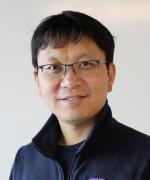
Bo Dai is an Assistant Professor at the School of Computational Science and Engineering, Georgia Institute of Technology, and a Staff Research Scientist at Google DeepMind. His research focuses on Agent AI, Generative Models, and Representation Learning, aiming to create decision-making agents through world modeling. He holds a Ph.D. from Georgia Tech (2013–2018) and previously worked at Google Brain. Dai has authored numerous influential papers in top conferences like NeurIPS, ICML, and ICLR, and received the AISTATS Best Paper Award (2016). Education: Ph.D., School of Computational Science and Engineering, Georgia Tech (2013–2018) Research Interests: Reinforcement Learning and Representation Learning for decision-making agents Generative Models and their integration with Agent AI Provable and scalable algorithms for real-world applications His work bridges theory and practice, emphasizing spectral representations and provable guarantees in complex systems. Key Article Trends: His recent work emphasizes scalable spectral methods for multi-agent systems, diffusion policies, and representation-based techniques in reinforcement learning. He also explores LLM alignment and sim-to-real transfer learning. Awards: AISTATS Best Paper Award (2016) NeurIPS Workshop Best Paper (2017) Ross Fellowship (2011–2012) Advising & Grants: Supervises 6 current Ph.D. and M.S. students. Active in organizing workshops on reinforcement learning and serves as an Area Chair for top conferences. Labs & Software: Leads development of Representation-based Reinforcement Learning and Repr-Control toolboxes for nonlinear control and stochastic systems.
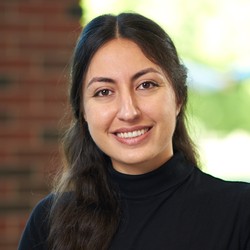
Mahsa Ghasemi is an Assistant Professor in the Elmore Family School of Electrical and Computer Engineering at Purdue University, leading the AKADEMI Group. Her research focuses on theoretical advancements in trustworthy sequential decision-making for autonomous systems, emphasizing human-aware collaboration and adaptation to dynamic environments. She is affiliated with the Institute for Control, Optimization and Networks (ICON). Education: PhD in Electrical and Computer Engineering from The University of Texas at Austin (2021), MSE in Mechanical Engineering (2017), and BSc in Mechanical Engineering from Sharif University of Technology (2014). Research Interests: Reinforcement learning, control theory, active perception, multi-agent systems, robotics, and online learning. Applications span disaster response, healthcare, and autonomous systems design. Key methodological directions include compositional learning, human-AI collaboration, and adaptive decision-making under uncertainty. Teaching: Courses include Reinforcement Learning Theory (ECE 59500), Introduction to Reinforcement Learning (ECE 49595), and Python for Data Science (ECE 20875). Awards: Finalist for Student Best Paper Award at the 2018 American Control Conference (ACC). Students: Current advisees include Maheed H. Ahmed, Jayanth Bhargav, and Somtochukwu Oguchienti. Past members include Lai Wei and Juan Sebastian Mateo Ruiz Bulla. Service: Editorial roles at ICRA, ICCPS, and IFAC workshops. Reviewer for top conferences (NeurIPS, ICML) and journals (Automatica, IEEE TAC). Labs/Teams: Leads the AKADEMI Group, focusing on algorithmic and theoretical research in autonomous decision-making systems.
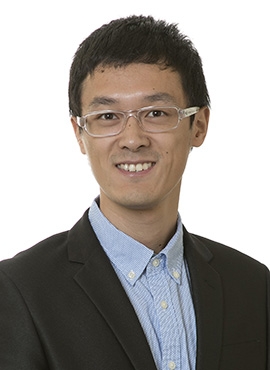
Minshuo Chen is an Assistant Professor in the Department of Industrial Engineering and Management Sciences at Northwestern University. He previously served as an Associated Research Scholar in the ECE department at Princeton University, collaborating with Prof. Mengdi Wang. His research focuses on developing methodologies and theoretical foundations in generative AI, reinforcement learning, and optimization. He holds a Ph.D. from Georgia Tech (supervised by Prof. Tuo Zhao and Wenjing Liao), a Master's from UCLA, and a Bachelor's from Zhejiang University. Key research areas include diffusion models for distribution estimation, foundations of learning (approximation and optimization), and reinforcement learning applications in complex systems. He has presented at major conferences like INFORMS 2024 and NeurIPS 2023, and serves as an area chair for NeurIPS 2023. His recent work emphasizes theoretical guarantees for diffusion models, including statistical rates and optimization perspectives. He has received awards such as the ARC-TRIAD Student Fellowship and William S. Green Fellowship. Collaborations include studies on POMDPs, policy evaluation, and manifold learning.
Nisar Ahmed is an Associate Professor at the University of Colorado within the Aerospace Engineering Sciences department. His research focuses on the intersection of Artificial Intelligence , Robotics , and Autonomous Systems , emphasizing decision-making under uncertainty, sensor fusion, and human-machine collaboration. Key research interests include: Active Inference for autonomous planning Decentralized Data Fusion in multi-robot systems Machine Self-Confidence and competency assessment Reinforcement Learning for spacecraft and robotic guidance Uncertainty Quantification in dynamic environments Recent publications highlight trends in Pareto-optimal decision-making , Bayesian optimization , contextual bandits , and trust calibration for UAS and planetary rovers. His work integrates probabilistic modeling with real-time autonomy , ensuring robustness in applications like search-and-rescue missions and lunar exploration. Contact: Nisar.Ahmed@Colorado.EDU
Krishnendu Chatterjee is a Professor at the Institute of Science and Technology Austria (IST Austria) , Department of Computer Science. His research spans formal verification, probabilistic systems, game theory, and evolutionary dynamics, with over 300 peer-reviewed publications in top venues such as DISC, AAAI, LICS, PNAS, Nature , and Journal of the ACM . His research focuses on developing theoretical foundations and practical algorithms for analyzing complex systems, including Markov decision processes, stochastic games, probabilistic programs, and evolutionary models. He has made significant contributions to topics such as reachability analysis, termination of probabilistic programs, synthesis of controllers, and evolutionary game dynamics. Chatterjee's work is highly interdisciplinary, bridging computer science, mathematics, and biology. He has collaborated extensively with leading researchers worldwide and has been involved in editorial roles and program committees for major conferences in formal methods and theoretical computer science.
Lu Feng is an Associate Professor of Computer Science at the University of Virginia, affiliated with the Link Lab, a center specializing in Cyber-Physical Systems (CPS). She holds a Ph.D. in Computer Science from the University of Oxford. Her research focuses on ensuring safety and trustworthiness in CPS, with applications in medical devices, autonomous robotics, and smart cities. She has received prestigious awards including the NSF CRII Award (2018) and NSF CAREER Award (2020). Her work integrates formal methods, AI, and robotics to address challenges in CPS assurance and human-machine collaboration. Notable contributions include developing risk-assessment tools for heart failure patients, predictive monitoring frameworks for CPS, and trust-aware planning algorithms for autonomous systems. She has pioneered frameworks like DP-RuL for clinical decision support systems and IrrMap for precision agriculture. Her research bridges theoretical foundations (e.g., model checking, reinforcement learning) with practical applications in healthcare, transportation, and urban systems. She collaborates across disciplines, contributing to initiatives like the Link Lab’s smart city simulations and safety-critical medical CPS assurance. Education: Ph.D., Computer Science, University of Oxford Awards: NSF CRII (2018), NSF CAREER (2020) Labs: Link Lab (Cyber-Physical Systems Center) Focus Areas: Runtime safety, human-AI trust, medical device assurance, smart city systems
Hanna Kurniawati is a Professor at the ANU School of Computing and holds the SmartSat CRC Professorial Chair for System Autonomy, Intelligence, and Decision-Making. She leads the ANU Node and Planning & Control theme of the ARIAM Hub, and founded the Robot Decision Making group. Her research focuses on scalable algorithms for decision-making under uncertainty, particularly in robotics and autonomous systems. She has received prestigious awards, including the RSS 2021 Test of Time Award and multiple best-paper recognitions. She is an active conference organizer and editorial board member for journals like IEEE Transactions on Robotics. Education: BSc Computer Science, University of Indonesia PhD Computer Science (Robot Motion Planning), National University of Singapore (2008) Research Interests: Planning under uncertainty and POMDP frameworks Robot motion planning and computational geometry Integration of planning and reinforcement learning Autonomous system assurance and safety Service and Leadership: Former President of the Australian Robotics and Automation Association (2019–2020) Keynote speaker at ICRA 2025, IROS 2018, and ICAPS 2025 Program Co-Chair for ICRA 2022 and Editor roles for IEEE TRO and RA-L Teaching: Advanced Topics in AI (COMP4620/8620) Advanced Topics in Machine Learning (COMP4680/8650) Algorithms (COMP3600/6466)
David McAllester is a Professor at the Toyota Technological Institute at Chicago (TTIC) and holds a part-time Professor position at the University of Chicago's Department of Computer Science. He earned his B.S., M.S., and Ph.D. from MIT (1978, 1979, 1987). His research spans Artificial Intelligence, Machine Learning, and Theoretical Computer Science , with notable contributions to automated theorem proving (Ontic system), reinforcement learning, probabilistic programming, and computer vision. He is a Fellow of AAAI (since 1997) and has received multiple test-of-time awards for seminal papers in AI planning, constraint solving, and computer vision. Key Contributions: Developed the Ontic verification system for mathematical proofs. Pioneered conspiracy numbers in game tree search (influenced Deep Blue). Co-authored foundational work on policy gradient methods in reinforcement learning. Advanced PAC-Bayesian learning theory and co-training methods. Teaching: Teaches TTIC31230 (Fundamentals of Deep Learning), emphasizing mathematical rigor and research skills in computer vision, NLP, and reinforcement learning. Labs/Teams: Co-founded TTIC's research initiatives in AI and machine learning. Collaborates with industry and academia on foundational AI challenges. Awards: AAAI Fellow (1997) Test-of-Time Awards (AAAI, ICLP, CVPR)
Dr. Yi-Ping Fang serves as an Assistant Professor at the EDF Chair SSEC with a joint appointment at the Industrial Engineering Laboratory, CentraleSupélec, Université Paris-Saclay, France. His research focuses on developing computational methodologies for risk, vulnerability, and resilience analysis of critical infrastructure systems including smart grids, electrified transportation networks, and interdependent lifeline systems. His core research interests encompass: Risk Analysis Resilience Engineering Reliability Engineering Optimization under Uncertainty Decision Making under Uncertainty Critical Infrastructure Systems Smart Grids Interdependent Systems Dr. Fang's recent publications reveal a concentrated research trajectory applying distributionally robust optimization, stochastic programming, and game theory to infrastructure resilience challenges. His work demonstrates particular expertise in microgrid hardening, distribution network restoration, and maintenance optimization under uncertainty, with significant contributions to modeling supply-demand fluctuations, random contingencies, and climate change impacts. Key application domains include energy systems (microgrids, wind farms), transportation networks (electric vehicle integration), and communication infrastructures. Scientific Awards: No scientific awards documented in the provided materials Dr. Fang actively advises students in risk/resilience analysis and optimization methodologies, though specific advisee names are not listed. His research program involves substantial collaboration with industry partners like EDF and academic colleagues including Anne Barros and Henry Uncle, focusing on practical implementations of resilience frameworks for critical infrastructure protection. Current projects emphasize prescriptive analytics for infrastructure networks, maintenance optimization under imperfect monitoring, and game-theoretic approaches to interdependent system vulnerabilities. He operates within the Industrial Engineering Laboratory at CentraleSupélec, which serves as the primary research hub for his work on computational methods in industrial engineering contexts, particularly for complex infrastructure systems requiring advanced decision-making frameworks under uncertainty.
Olivier Buffet is a Researcher at INRIA, working at the INRIA Center at Université de Lorraine / LORIA since November 2007. He is affiliated with the LORIA laboratory (Lorraine Laboratory of Computer Science and its Applications), which focuses on computer science research. His work spans multiple institutions, having previously held positions at NICTA's Statistical Machine Learning program (2004-2006), RSISE at ANU (2004-2006), and LAAS at CNRS (2006-2007). Dr. Buffet received his engineering degree from Supélec and a DEA (Diplôme d'Etudes Approfondies) from Henri Poincaré University. He completed his PhD in computer science under the supervision of François Charpillet and Alain Dutech at LORIA / INRIA Nancy Grand-Est, defended on September 10, 2003. He later defended his habilitation to supervise research (HDR) on December 18, 2017. Dr. Buffet's research focuses on artificial intelligence, particularly in the areas of automated planning and scheduling, reinforcement learning, and decision-making under uncertainty. His work extensively explores Markov Decision Processes (MDPs), Partially Observable MDPs (POMDPs), and Decentralized POMDPs (Dec-POMDPs), with applications ranging from multi-agent systems to traffic management and adaptive conservation strategies. His research often bridges theoretical foundations with practical applications, developing algorithms that can handle complex decision problems in uncertain environments. His publication record demonstrates a consistent focus on advancing methods for planning and decision-making under uncertainty. Over the past decade, his work has increasingly addressed decentralized and multi-agent settings, developing novel approaches for coordination among multiple decision-makers with partial information. More recently, his research has explored interpretable solutions for adaptive management problems, particularly in environmental contexts, and advanced theoretical understanding of properties like Lipschitz continuity in POMDP value functions. Dr. Buffet has received recognition for his contributions to the field, including: Winner of the probabilistic track in the Fifth International Planning Competition (IPC-06) Best Paper award at AAMAS-14 for "Exploiting separability in multi-agent planning with continuous-state MDPs" Best Paper award at JFSMA-13 for "Synchronisation de véhicules autonomes aux croisements d'un réseau de routes" Best Paper award at CAp'11 for "Une extension des POMDP avec des récompenses dépendant de l'état de croyance" As an educator and mentor, Dr. Buffet has supervised numerous PhD students including Arnaud Glad, Mauricio Araya-Lòpez, Mohamed Tlig, Arsène Fansi, and Manel Tagorti. He has also guided many interns and research projects. His teaching experience includes tutored sessions on discrete and deterministic optimization, decision making under uncertainty, and computer science for industrial engineering at École des Mines de Nancy, as well as courses on Unix shell and C programming at Université Henri Poincaré. Dr. Buffet has been actively involved in the academic community, serving as Co-Conference Chair of the 30th International Conference on Automated Planning and Scheduling (ICAPS 2020) in Nancy. He has organized multiple meetings of the French workgroup JFPDA (formerly PDMIA) and chaired several workshops on planning and scheduling under uncertainty. He previously served on the editorial boards of Revue d'Intelligence Artificielle (RIA) and Journal of Artificial Intelligence Research (JAIR), and has been a reviewer for numerous prestigious journals and conferences in artificial intelligence.
Michael L. Littman is a University Professor of Computer Science at Brown University, specializing in machine learning and decision-making under uncertainty. He previously served at Rutgers University as department chair. His research focuses on reinforcement learning, probabilistic planning, and algorithms for uncertainty management. Littman holds a PhD from Brown University (1996) and degrees from Yale University (BS and MS, 1988). He has received multiple awards, including the Warren I. Susman Award for Teaching and induction into AAAI and ACM Fellowships. His work includes contributions to POMDPs, reinforcement learning frameworks, and applications in robotics and human-AI interaction. Education: PhD in Computer Science, Brown University, 1996 BS & MS in Computer Science, Yale University, 1988 Research emphasizes reinforcement learning, algorithmic decision-making, and applications in smart systems. Notable contributions include the Proverb crossword solver and foundational work on partially observable Markov decision processes. He has served as program chair for ICML and co-founded Oneacross.com. Teaching includes courses on machine learning and discrete structures. Awards: Classic Paper Award (AAAI-13) Fellow of AAAI and ACM Best Paper Awards (ICML, UAI, IJCAI) Collaborations include roles as adjunct professor at Rutgers and Georgia Tech, and affiliations with robotics initiatives at Brown. Current work explores human-AI interaction and end-user programming via reinforcement learning.
Dr. Nan Ye is a Senior Lecturer in Statistics and Data Science at the University of Queensland's School of Mathematics and Physics. His research focuses on machine learning, statistics, and optimization, with contributions to sequential decision making, weakly supervised learning, and probabilistic graphical models. He holds a PhD in Computer Science from the National University of Singapore (NUS) and double first-class honors in Computer Science and Applied Mathematics from NUS. Previously, he held postdoctoral positions at QUT, UC Berkeley, and NUS. Dr. Ye teaches advanced courses such as STAT3007/7007 Deep Learning, covering topics from foundational machine learning to state-of-the-art deep learning architectures and applications. His work has been published in top venues like NeurIPS, ICML, and UAI, earning awards including the IJCAI-JAIR Best Paper Prize (2022) and UAI Best Student Paper Award (2014). His research interests span theoretical and applied machine learning, including reinforcement learning, optimization algorithms, and their applications in fields like healthcare and environmental science. He actively supervises students in these areas and collaborates on interdisciplinary projects. Dr. Ye's academic profile includes extensive contributions to open-source tools and educational materials, reflecting his commitment to advancing both research and pedagogy in data science.
Jan Kretinsky is a full professor at the Faculty of Informatics, Masaryk University, Brno, Czech Republic, and holds an affiliated professorship at the Chair for Foundations of Software Reliability and Theoretical Computer Science at Technical University of Munich (TUM), Germany. He specializes in formal methods, focusing on verification and synthesis of probabilistic systems, applications of machine learning in verification, and explainable AI. His research bridges theoretical foundations with practical tools, including the Automata Tutor teaching platform and the Rabinizer tool for LTL-to-automata translation. Education: PhD from TU Munich (advisor: Javier Esparza) and Masaryk University (advisor: Antonín Kučera), both with distinction. Previously an IST Fellow at IST Austria and a tenure-track assistant professor at TUM. Research interests span verification of neural networks, probabilistic model checking, temporal logics, and automata theory. He leads the LiVe Lab and collaborates on EU projects like the ERC grant InOVationCS. Active in organizing workshops (LiVe series, Dagstuhl seminars) and serves on program committees for conferences like CONCUR, LICS, and TACAS. Teaching includes courses on complexity, automata theory, and quantitative verification at both institutions. Supervised numerous PhD and master's students, with notable projects in decision tree controllers, runtime monitoring, and attack-defense analysis. Key grants include DFG projects (e.g., GOPro, ConVeY) and EU initiatives. Tools developed: Automata Tutor, Rabinizer series, dtControl, SeQuaiA, and QUADTool. Research highlights include PAC guarantees for MDPs, semantic abstraction for motion planning, and formal methods for cybersecurity.
Dr. Sebastian Junges is an Assistant Professor at the Software Science Group of Radboud University (Nijmegen, Netherlands) since September 2021. He previously held postdoctoral and research assistant positions at UC Berkeley and RWTH Aachen University respectively, working under prominent researchers like Sanjit Seshia and Joost-Pieter Katoen . Education: Ph.D. in Computer Science, RWTH Aachen University (2020) M.Sc. in Computer Science, RWTH Aachen University (2015) B.Sc. in Computer Science, RWTH Aachen University (2012) His research focuses on trustworthy algorithms for system dependability , particularly in safety-critical domains like autonomous systems and infrastructure automation. Key technical contributions include: Verification algorithms for Markov decision processes (MDPs) Parameter synthesis in probabilistic models Finite state controller generation Runtime monitoring with imprecise sensors Recent work (2022-2024) has explored multi-objective verification , neuro-symbolic reasoning , and scalable analysis of probabilistic models . His methodological approach combines formal methods with machine learning and automated reasoning techniques, often implemented in the state-of-the-art Storm probabilistic model checking framework. Selected scientific contributions include: Keynote speaker at MODEM 2024 Invited tutorial presenter at Dagstuhl 2024 Co-organizer of multiple VeriProp workshops (2021-2024) Program committee member for TACAS 2026, CONCUR 2024, and CAV 2024 He actively supervises Bachelor and Master student projects in algorithm development for probabilistic systems, including topics on: MDP model checking acceleration Runtime monitoring frameworks Syntax-guided controller synthesis State estimation for fault trees Probabilistic inference transpilation His academic service includes: Radboud Science Faculty Diversitee Committee Steering Committee of ETAPS (2025-2026) Program committee roles across 15+ top venues
Hugo Gimbert is a Researcher at the LaBRI (Laboratoire Bordelais de Recherche en Informatique) within the Méthodes Formelles Team . His work bridges computational theory and practical applications, focusing on algorithmic game theory, stochastic processes, and formal methods in computer science. Research interests include: Decidability problems in distributed and stochastic games Partial observation in multi-player systems Cooperation and competition in bridging scenarios Social choice theory implementation Precision farming automation Probabilistic logics and humanoid robot control via MDPs Advising roles: PhD advisor for Soumyajit Paul, Edon Kelmendi, Quentin Rouxel, and Ludovic Hofer PhD co-advisor for Simon Mauras Former advisor for Youssouf Oualhadj Key projects: Stamina - Stabilisation monoids and regular language analysis Marmotte - CNRS committee digitalization platform Rhoban System - Real-time robotics for agriculture and soccer Parcoursup - Algorithmic college admission system for French government