Katherine Grzesik is an Assistant Professor of Statistics at the University of Rochester's Department of Mathematics within the School of Arts and Sciences. Her office is located at 709 Hylan Building, and she can be contacted via email or phone (585-275-4338). Her research spans biostatistics, epidemiology, and maternal-child health, with particular focus on immune responses during pregnancy, neurodevelopmental outcomes, and diagnostic methods for infections. Her work integrates statistical modeling with biological applications to address public health challenges. Her publications demonstrate strong methodological innovation in: Longitudinal analysis of developmental cohorts Transcriptomic biomarker discovery Statistical genetics and environmental epidemiology
Wouter Den Haan is a Professor of Economics at the London School of Economics and Political Science (LSE), where he has held the position since 2011. He previously served as a professor at the University of Amsterdam (2006–2011), London Business School (2003–2007), and UC San Diego (2001–2004). His research focuses on macroeconomics, dynamic stochastic equilibrium models, heterogeneous agents, and numerical solution techniques. Den Haan has held editorial roles at journals like Quantitative Economics and the Economic Journal and serves as a research consultant for the European Central Bank. He holds a Ph.D. in Economics from Carnegie Mellon University (1991) and an MSc in Economics (cum laude) from Erasmus University Rotterdam (1986). His awards include multiple Excellence in Education Awards (2018–2021) and the Alexander Henderson Dissertation Award (1991). Den Haan’s work has been published in leading journals such as the Journal of Monetary Economics, Journal of Economic Dynamics and Control, and the American Economic Review. His research emphasizes frictions in financial and labor markets, business cycle models with heterogeneous agents, and computational economics. Notable contributions include studies on uncertainty in search and matching models, agnostic structural disturbances in macroeconomic models, and the role of debt and equity finance in business cycles. Den Haan has advised numerous PhD students and holds grants from organizations like the ESRC and the Dutch Science Council (NWO). He has been affiliated with institutions such as the Centre for Economic Policy Research (CEPR) and the Centre for Macroeconomics (CFM), contributing to policy debates on quantitative easing, central bank independence, and financial innovation. His teaching evaluations reflect consistently high ratings across undergraduate and graduate courses in macroeconomics.
Moody T. Chu is a Professor in the Department of Mathematics at North Carolina State University since 1982, holding a PhD from Michigan State University. His research focuses on numerical linear algebra, dynamical systems, inverse problems, and quantum computing. He has received prestigious teaching awards including the Alumni Distinguished Undergraduate Professorship (2006) and multiple Board of Governors Awards (2010, 2013, 2014). His work bridges computational mathematics with applications in physics, engineering, and data science. Research interests include numerical methods for differential equations, tensor approximation, and quantum simulation. His articles explore topics like Cartan decomposition for quantum Hamiltonians, Lax dynamics, and low-rank tensor approximations. Over 200 publications span numerical analysis, inverse eigenvalue problems, and optimization techniques. Chu’s contributions also address algorithm design for matrix completion and structured low-rank approximations. He has advised numerous graduate students (details not listed here) and led projects on adaptive optics and stochastic processes. His work on nonnegative matrix factorization and Markov chain dynamics has influenced data mining and machine learning applications. Chu’s lab focuses on advancing computational frameworks for complex systems, emphasizing interdisciplinary collaboration.
Professor Oliver M Jenkinson is a faculty member at the School of Mathematical Sciences, Queen Mary University of London. He holds the academic rank of Professor of Mathematics and is affiliated with the Centre for Complex Systems. His research focuses on ergodic theory, dynamical systems, and related areas such as fractal geometry and statistical mechanics. Jenkinson has contributed to topics like Lyapunov exponents, invariant measures, and Hausdorff dimension estimation. His work spans theoretical and computational aspects of dynamical systems, including studies of transfer operators, spectral radii, and entropy optimization. Notable contributions include rigorous bounds on fractal dimensions, analysis of continued fractions, and investigations into ergodic optimization problems. He collaborates with institutions globally and maintains an active research profile with over 40 publications since 2001. Research trends in his articles emphasize interdisciplinary applications of ergodic theory, with recurring themes in mathematical physics and nonlinear dynamics. His papers often bridge pure mathematics with computational methods, addressing questions in chaos theory, measure theory, and operator spectra. Jenkinson’s work is supported by grants and collaborations, though specific funding details are not listed. He is associated with the Centre for Complex Systems, reflecting his focus on complex, multi-component systems in mathematics. No formal awards are mentioned in the provided texts, though his prolific publication record indicates significant scholarly impact.
Anna Seigal is an Assistant Professor of Applied Mathematics at Harvard University's School of Engineering and Applied Sciences (SEAS), with an affiliation in the Department of Statistics. Her research focuses on applied algebraic geometry, tensors, multilinear algebra, and algebraic statistics, particularly in the context of data science. She explores algebraic approaches to data analysis, including matrix/tensor factorizations, parameter estimation, causal inference, and optimization, with applications to physical and biological systems. Her work is supported by the Sloan Foundation and Harvard's Dean’s Competitive Fund. Research Interests: Algebraic statistics, tensors and multilinear algebra, applied algebraic geometry, and the mathematics of data science. She investigates group symmetries in models, dimensionality reduction techniques, and machine learning algorithms. Current projects include causal disentanglement via cumulants and invariant theory applications to maximum likelihood estimation. Her academic contributions span theoretical advancements and interdisciplinary applications, such as genomic template analysis and COVID-19 molecular phenotyping. She collaborates with postdocs and students on research projects and teaches courses like Applied Math 210. Awards and Funding: Supported by the Alfred P. Sloan Foundation and Harvard's internal grants. No explicit named awards listed, but her research is institutionally recognized. Labs/Teams: Leads a research group focused on applied algebra and geometry in data science. Collaborates across departments in SEAS and the Statistics Department.
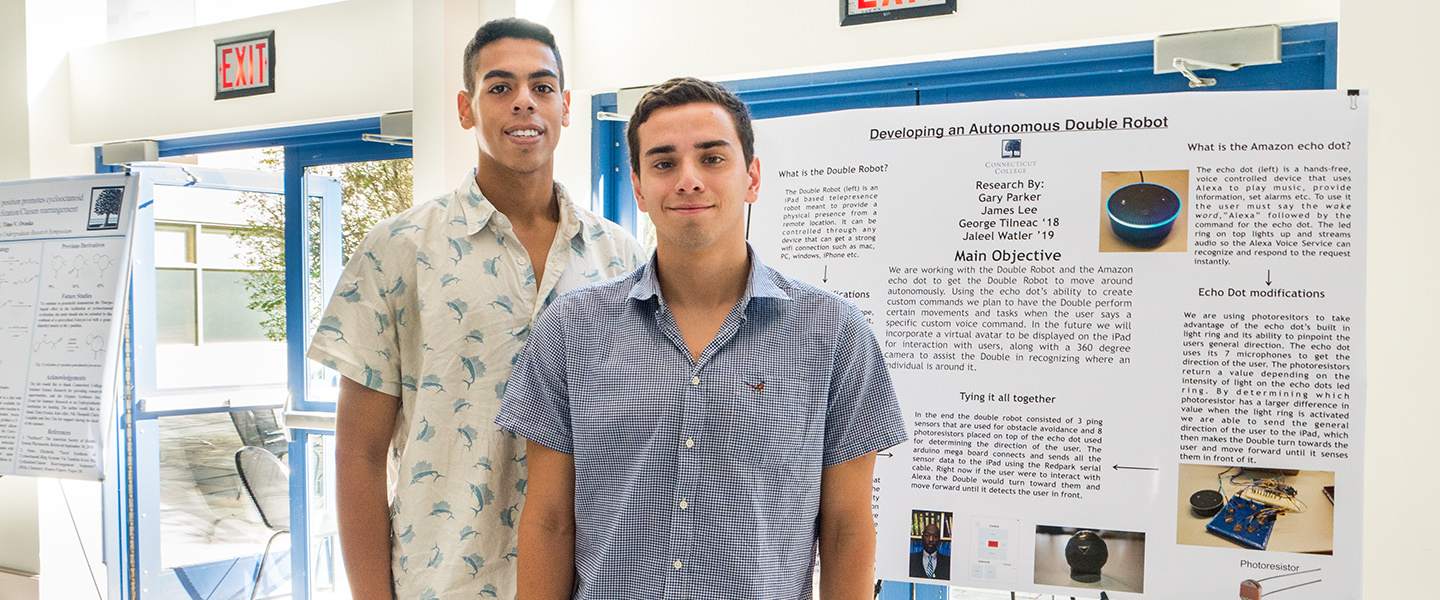
Christine Chung is an Associate Professor and co-Chair of the Department of Computer Science at Connecticut College. She holds degrees from Cornell University (B.A., M.Eng.), Teachers College Columbia University (M.A.), and the University of Pittsburgh (Ph.D.). Her research focuses on algorithm design and analysis, particularly online and approximation algorithms (e.g., scheduling, matching, transportation) and algorithmic game theory (e.g., social choice, auction mechanisms). She has received the John S. King Excellence in Teaching Award for her commitment to student development both inside and outside the classroom. Chung teaches core CS courses like COM110 (Intro to CS and Problem Solving), advanced courses such as COM313 (Algorithmic Game Theory), and supervises undergraduate research through COM495/496 seminars. She advises student organizations including Women in STEM and Conn College Ultimate. Her office is located in New London Hall 220, and she can be reached via email at cchung@conncoll.edu. Education History: B.A., M.Eng., Cornell University M.A., Teachers College, Columbia University Ph.D., University of Pittsburgh Research Interests: Chung's work spans algorithm design for combinatorial optimization problems, with emphasis on dial-a-ride systems, scheduling, and approximation algorithms. In game theory, she explores inefficiency of equilibria, voting mechanisms, and auction design. Her research emphasizes practical applications of theoretical algorithms. Teaching & Advising: Besides course instruction, Chung oversees undergraduate research projects in CS, emphasizing cross-disciplinary collaboration. She has taught over a dozen courses including COM496 Research Seminar, which focuses on independent research methodologies. Her teaching philosophy integrates hands-on projects and real-world problem-solving. Awards: The John S. King Award (2025) recognizes her transformative impact on student learning and mentorship. This rare award is given only when a faculty member demonstrates exceptional dedication to student growth. Labs/Teams: Active in the CS research community at Connecticut College, she collaborates with peers like Timothy Becker (genomics) and James Lee (visual computing). Her lab focuses on theoretical algorithm development with practical implementations.
Neill Campbell is a Professor of Visual Computing and Machine Learning in the Department of Computer Science at the University of Bath . He is the Director of the Centre for the Analysis of Motion, Entertainment Research and Applications (CAMERA) and co-director of the Centre for Mathematics and Algorithms for Data (MAD) . He holds an external position as Honorary Associate Professor at University College London and is a Royal Society Industry Fellow. His research spans visual computing, machine learning, and their applications in graphics, vision, and healthcare. His educational background includes a Master of Engineering and a Doctor of Philosophy in Engineering from the University of Cambridge, with his PhD focusing on Automatic 3D Model Acquisition from Uncalibrated Images. Neill Campbell’s research interests lie at the intersection of shape modeling , machine learning , and computer vision . He develops probabilistic and deep learning models to understand and generate visual content, with applications in digital humans, virtual production, biomechanics, and medical imaging. His work emphasizes uncertainty quantification, generative modeling, and alignment learning using Gaussian processes and Bayesian nonparametrics. He leads interdisciplinary projects that bridge computer science and mathematical sciences. The recent publications reflect a strong trend in probabilistic modeling , geometric deep learning , and medical applications . Topics include Gaussian process-based shape modeling, anomaly detection in safety-critical systems, and sparse approximations for geometric representations. His work increasingly integrates theoretical machine learning with real-world applications in health, engineering, and creative industries. Royal Society Industry Fellow Neill Campbell actively supervises PhD students across multiple Centres for Doctoral Training (ART-AI, SAMBa, CDE) and leads significant research grants such as MyWorld (UKRI Strength in Places Fund) and REMODEL (EPSRC). His group collaborates with industry leaders like Rolls-Royce, NVIDIA, Adobe, and DNEG, and he supports student internships and industrial placements. He is also involved in spin-out activities, including contributions to Forceteck Ltd. He leads the Visual Computing Group and is deeply embedded in research centers including CAMERA , MAD , and MyWorld . His team includes postdoctoral researchers and PhD students working on 3D reconstruction, biomechanics, inverse problems, and generative models, fostering a collaborative and interdisciplinary research environment.
Francesca Parise is an Assistant Professor in the School of Electrical and Computer Engineering at Cornell University. Her research focuses on multi-agent systems, particularly analyzing large networks of autonomous decision-makers in transportation, finance, and social systems, employing tools from control theory, game theory, and optimization. She holds a PhD from ETH Zurich and was a Postdoctoral Research Fellow at MIT's Laboratory for Information and Decision Systems under Prof. Asuman Ozdaglar. Her work bridges theoretical foundations with practical applications in networked systems and interventions. Education: Bachelor's and Master's from University of Padua, Italy PhD in Control Engineering from ETH Zurich (2016) Her research interests span game-theoretic models for network analysis, learning dynamics in time-varying systems, and optimal intervention strategies. Key themes include synchronization in power grids, epidemic control via testing, and dynamic resource allocation. Recent work emphasizes graphon-based frameworks for large-scale network games and computational methods for equilibrium analysis. She explores both theoretical guarantees and real-world applications in transportation and energy systems. Publications highlight contributions to networked game theory, stochastic systems, and control applications, with a focus on scalable solutions for complex systems. Her work often intersects with interdisciplinary challenges in systems biology and socio-technical networks. She currently holds an office at Frank H. T. Rhodes Hall, Cornell University.
Erdal Erel is a Professor of Operations Management (OM) and currently serves as the Vice Rector in charge of administrative and financial affairs at Bilkent University's Faculty of Business Administration. He holds a B.S. in Industrial Engineering from Istanbul Technical University (1981), an M.S. from Stanford University (1983), and a Ph.D. from Virginia Polytechnic Institute and State University (1987). His academic career has been dedicated to advancing research in Production Operations Management, focusing on manufacturing systems design, assembly/disassembly line balancing, scheduling, and project management. Erel's educational background includes: B.S. in Industrial Engineering, Istanbul Technical University (1981) M.S. in Industrial Engineering, Stanford University (1983) Ph.D. in Industrial Engineering and Operations Research, Virginia Polytechnic Institute and State University (1987) His research interests span several critical areas of operations management, including manufacturing systems design, assembly and disassembly line balancing, scheduling and sequencing methodologies, and project management. He has made significant contributions to robust optimization techniques applied to time-cost trade-offs and stochastic modeling in production systems. His work emphasizes practical solutions for complex operational challenges through advanced algorithms like ant colony optimization and beam search methods. Erel's publications reflect a focus on optimization in production systems, scheduling algorithms, and decision models under uncertainty. His research bridges theoretical advancements with real-world applications in manufacturing and service industries, addressing issues such as cost minimization, robust scheduling, and efficiency improvements in assembly line operations. Erel has contributed extensively to his field but no specific scientific awards are mentioned in the provided text. No specific information about advising students or grants is provided in the text. Erel's involvement in collaborative projects, including work with colleagues like I. Sabuncuoglu and J.B. Ghosh, highlights his role in interdisciplinary research teams focused on operational efficiency and advanced manufacturing technologies.
Madhav Marathe is a tenured Professor of Computer Science and the Distinguished Professor in Biocomplexity at the University of Virginia, where he also serves as Executive Director of the Biocomplexity Institute. He has held leadership roles at Virginia Tech and Los Alamos National Laboratory, and his work is deeply rooted in transdisciplinary team science. His research spans a wide range of domains including network science, artificial intelligence, computational epidemiology, high-performance computing, and complex systems. He develops foundational methods to model, analyze, and control large-scale biological, information, social, and technical (BIST) systems. His work integrates theoretical computer science with practical applications in public health, disaster response, and infrastructure resilience. The recent publications reflect a strong trend toward data-driven modeling of societal challenges—especially in pandemic response, forced migration, and energy systems. His team leverages agent-based simulations, machine learning, and high-performance computing to create scalable, policy-relevant models that support real-world decision-making. Fellow, American Association for the Advancement of Science (AAAS) Fellow, Association for Computing Machinery (ACM) Fellow, Institute of Electrical and Electronics Engineers (IEEE) Fellow, Society for Industrial and Applied Mathematics (SIAM) Distinguished Researcher Award, University of Virginia (2023) Honorary Doctoral Degree, Chalmers University (2023) Best Paper Award, SIGKDD 2021 (Applied Data Science) Endowed Distinguished Professor of Biocomplexity (2019) Dean’s Award for Excellence in Research, Virginia Tech (2018) Constellation Group’s Supernova Award (2016) Dr. Marathe has mentored over 30 doctoral students, 20+ MS students, and 15 postdoctoral fellows, and has led major federally funded projects including those related to computational epidemiology and national security. His lab, the Biocomplexity Institute, develops high-performance computing services and data analytics platforms for policymakers and emergency planners. He is also involved in initiatives such as the National Security Data and Policy Institute and the Expeditions in Global Pervasive Computational Epidemiology.
Ryan Cory-Wright is an Assistant Professor in the Analytics and Operations Group at Imperial College Business School . He previously held a Goldstine Postdoctoral Fellowship at IBM Research and earned his PhD in Operations Research from MIT in 2022 under Dimitris Bertsimas , after obtaining a BE (1st class Hons) in Engineering Science from the University of Auckland. Education : MIT (PhD), University of Auckland (BE) Affiliations : Imperial College Business School, IBM Research, MIT His research bridges optimization, machine learning, and sustainability, focusing on extending optimization methods to solve practical problems like rank-constrained product recommendations and low-carbon economy transitions . Collaborations include projects with OCP to guide two billion USD solar-battery investments . Recent work includes AI-Hilbert (2024 Nature Communications , Outstanding Technical Achievement Award ), Stability Regularized Cross-Validation , and Matrix Goemans-Williamson Rounding . He has developed scalable algorithms for sparse portfolio selection and certifiably optimal matrix completion . Honors : Goldstine Fellowship (2022-23) Nicholson Prize (2020) Pierskalla Award (2020) INFORMS DMDA Best Paper (2024) ICS Student Paper Award (2019) Advising : Co-advises Lingjun Meng as a doctoral student. He teaches Decision Making Under Uncertainty (PhD), Optimization and Decision Models (Online MSc), and Data Structures/Algorithms (UG Econ/Finance), with a focus on Python-based computational methods.
Professor Ralf Werner serves as Professor of Business Mathematics at the University of Augsburg, where he leads the Computational Statistics and Data Analysis working group within the Institute of Mathematics at the Faculty of Mathematics, Natural Sciences and Technology. His academic career spans both theoretical research and practical industry applications in quantitative finance. Werner's research interests encompass: Computational Statistics and Data Analysis Optimization under Uncertainty Financial Engineering and Risk Management Actuarial Science and Insurance Mathematics Portfolio Optimization and Asset Allocation His scholarly output demonstrates a consistent focus on robust mathematical methods applied to financial problems, particularly in replicating portfolios for insurance applications, credit risk modeling, and statistical approaches to financial risk management. Werner's publications appear in leading journals across operations research, mathematical finance, and actuarial science. Professional qualifications include his habilitation at the Karlsruhe Institute of Technology (2011) and doctorate from Friedrich-Alexander University Erlangen (2001). He maintains active industry connections through his role as Scientific Advisor for DEVnet since 2010. Werner serves as Internship Coordinator and DAV (German Actuarial Society) correspondent, supporting students pursuing actuarial careers. He is an active member of multiple professional organizations including the Society for Operations Research (GOR), German Mathematical Society (DMV), and German Society for Insurance and Financial Mathematics (DGVFM).
Jean-Cédric Chappelier is a Senior Lecturer and Researcher at École Polytechnique Fédérale de Lausanne (EPFL) in the School of Computer and Communication Sciences. He works in computational linguistics and natural language processing, with a focus on robust parsing techniques, semantic indexing, and clustering algorithms. His research interests span computational linguistics, natural language processing, machine learning, tree substitution grammars, and semantic indexing. His publications from 2000-2006 demonstrate expertise in stochastic parsing, ontology-based indexing, and community structure analysis in complex networks. He has supervised multiple EPFL PhD students including Florian Seydoux and Emmanuel Eckard. Jean-Cédric holds an Ms.Sci. and Ph.D. in Computer Science from École Nationale Supérieure des Télécommunications de Paris. He teaches courses on object-oriented programming, computer systems, and natural language processing at EPFL.
Olivier Verscheure serves as the Executive Director of the Swiss Data Science Center (SDSC), a national R&D center organizationally hosted by both École Polytechnique Fédérale de Lausanne (EPFL) and ETH Zurich. He also holds multiple Adjunct Professor appointments at EPFL, specifically within the School of Computer and Communication Sciences (SIN and SSC) and the School of Engineering (SEL). His educational background includes: Ph.D. in Computer Science from École Polytechnique Fédérale de Lausanne (EPFL), June 1999 Verscheure's research focuses on the intersection of data science and real-world applications. His work centers on stream and big data mining, geospatial analysis, and large-scale data management. These technical capabilities are applied across diverse domains including personalized health and medicine, Intelligent Transportation Systems, telecommunications, smart building technologies, Smart Grid infrastructure, healthcare analytics, and waste water management systems. His approach emphasizes creating practical data science solutions that address complex challenges in these sectors while considering the constraints of real-world deployment. An analysis of his recent publication record reveals a strong focus on real-time data processing and analytics, particularly for transportation and urban systems. His work frequently addresses challenges in handling massive time series data, developing efficient architectures for low-latency analytics, and creating practical applications for smart city infrastructure. There's a clear progression from theoretical data science contributions to production-ready systems that can process billions of data points daily, demonstrating his ability to bridge research and practical implementation. His notable achievements include: Two IBM Outstanding Technical Achievement Awards Best Paper Award for his research Student Best Paper Award Verscheure has substantial experience in research leadership and mentoring. During his tenure at IBM, he managed the Exploratory Stream Analytics research group and led a technical and management team of approximately 40 people at the IBM Research lab in Ireland. He has served on PhD committees at major universities and published nearly 100 research papers that have garnered over 2,400 citations. His work has resulted in more than 40 US and international patents, demonstrating both academic and practical impact. As Executive Director of the Swiss Data Science Center, Verscheure oversees a distributed multi-disciplinary team working across domains including personalized health, transportation, earth and environmental science, social science and digital humanities, and economics. The center aims to federate data providers, data and computer scientists, and subject-matter experts around a cutting-edge analytics platform while addressing security and privacy issues. Under his leadership, the SDSC develops embedded data science support, offers end-to-end data science services, and fosters a community to share tools and knowledge in data science.
Prof. Dr. Robert Klein is a Professor at the University of Augsburg within the Faculty of Business and Economics . He holds the Chair of Analytics & Optimization , focusing on the application of mathematical models from operations research to solve real-world decision problems. Research Interests: Pricing and revenue management, last-mile logistics, mobility-on-demand systems, integration of demand management and vehicle routing, discrete choice analysis, integer programming, and approximate dynamic programming. Teaching: Undergraduate mathematics for business, advanced courses in operations research, logistics, and revenue management. His chair offers seminars on Smart Logistics & Mobility and supervises bachelor’s and master’s theses. Publications: Over 20 years, he has co-authored 25+ peer-reviewed articles in journals like Transportation Science , European Journal of Operational Research , and OR Spectrum . His work spans theoretical advancements and practical applications in revenue management and logistics. Students: Supervised 15+ PhD students including David Fleckenstein (2025), Julia Heger (2025), and Jochen Mackert (2019). Collaborations: Works with IBM on mathematical software applications and has co-edited textbooks such as Decision Optimization with IBM ILOG CPLEX (2022).