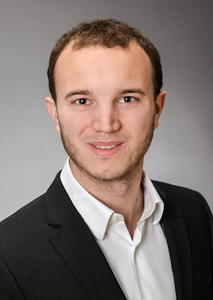
Sharat Ibrahimpur is a Postdoctoral Researcher at the Research Institute for Discrete Mathematics (University of Bonn, Germany). His research focuses on approximation algorithms for combinatorial optimization problems, with recent emphasis on stochastic optimization in network design, scheduling, and caching systems. Previously, he held postdoctoral positions at the London School of Economics (Mathematics Department) and Google Research (Discrete Algorithms Group). Education: PhD and M.Math in Combinatorics and Optimization (University of Waterloo), B.Sc. in Applied Mathematics (IIT Roorkee) Advisor: Chaitanya Swamy (University of Waterloo) Research interests span network design , load balancing , caching , and stochastic optimization . His publications in venues like IPCO , ICALP , and MathProg demonstrate expertise in primal-dual methods, independent rounding, and uncrossable functions. Key collaborations include Vera Traub, László Végh, and Manish Purohit.
Yaakov Malinovsky is a Professor in the Department of Mathematics and Statistics at the University of Maryland, Baltimore County (UMBC). His research focuses on decision theory, stochastic ordering, sequential selection methods, group testing, and nonparametric methods. He has held editorial roles at journals including Enumerative Combinatorics and Applications , Methodology and Computing in Applied Probability , and The American Statistician . His work bridges theoretical probability and applied statistics, with contributions to group testing optimization, sequential analysis, and combinatorial probability. Malinovsky earned his Ph.D. in Statistics from The Hebrew University of Jerusalem in 2009. He has secured research funding from the United States-Israel Binational Science Foundation for projects on minimax online learning policies in stochastic sequential selection. His teaching portfolio includes courses such as Probability Theory, Mathematical Statistics, and specialized topics in stochastic processes and nonparametric methods. His recent research explores round-robin tournament models, prime number distribution via dice rolls, and optimal stopping rules. He has published extensively in top-tier journals like Statistica Sinica , Biometrics , and Sequential Analysis , demonstrating expertise in statistical inference and combinatorial problems. His work often addresses practical applications in epidemiology and algorithm design while advancing foundational probability theory.
Emiliano Traversi is an Associate Professor in the Department of Information Systems, Data Analytics and Operations at ESSEC Business School. He holds a PhD in Operations Research from the University of Bologna and previously served as a Full Professor at LIRMM, University of Montpellier. His research focuses on mathematical optimization, decomposition methods, and machine learning, with recent emphasis on network slicing in UAV-based 5G systems and multi-drone formation strategies. His work bridges theoretical optimization frameworks with practical applications in telecommunications and autonomous systems. Education: PhD in Operations Research, University of Bologna Habilitation à diriger des recherches, Business Administration, Sorbonne Université (2023) Research Interests: Mathematical Optimization (Convex/Non-Convex) Decomposition Algorithms (e.g., Benders, Dantzig-Wolfe) Network Slicing & Resource Allocation for 5G/6G Autonomous Systems & Multi-Agent Coordination Applications in Telecommunications and Transportation Recent Research Trends: His 2025 publications highlight advancements in UAV-enabled 5G network slicing frameworks (EASIER) and mathematical foundations for drone fleet formations. Earlier work extends to optimization methods for transportation systems, quantum computing challenges, and power grid management through semidefinite relaxations. Professional Contributions: 20+ peer-reviewed articles in top journals/conferences (e.g., Computer Networks, AICA) Development of optimization frameworks with real-world applications Labs/Teams: Active collaborations in ESSEC's data analytics initiatives and international projects on UAV communication systems.
Wayne Enright is a Professor of Computer Science at the University of Toronto, specializing in numerical analysis and scientific computing. His research focuses on numerical methods for ordinary differential equations (ODEs), integro-differential equations (IDEs), and delay differential equations (DDEs), with an emphasis on reliability, error analysis, and software development. He has held leadership roles, including Chair of the Department of Computer Science (1993–1998) and President of the Canadian Applied and Industrial Mathematics Society (CAIMS). Enright’s contributions include advancements in numerical software like MUSN and pioneering work on defect control and sensitivity analysis. He has received the IFIP Silver Core Award and contributed to international conferences and editorial boards. His work bridges theoretical foundations with practical applications in computational biology, engineering, and stochastic modeling. Education: BSc in Mathematics (1968, University of British Columbia) MSc in Mathematics (1969, University of Toronto) PhD in Computer Science (1972, University of Toronto) Research Interests: Enright’s work centers on developing robust numerical methods for solving ODEs, IDEs, and DDEs. He emphasizes reliable error estimation, algorithm efficiency, and software implementation. Key areas include: - Superconvergent interpolants for collocation methods - Sensitivity analysis for delay differential equations - Contouring of PDE solutions on unstructured meshes - Stochastic models in biochemical kinetics Publications: Over 150 peer-reviewed articles, including seminal works on numerical methods for differential equations and computational tools. Recent trends focus on enhancing algorithm reliability, adaptive time-stepping, and exploiting problem structure for efficiency. Awards & Recognition: IFIP Silver Core Award Past President, CAIMS Executive Member, IFIP WG2.5 on Numerical Software Editorial Board Member, ACM Transactions on Mathematical Software Grants & Collaborations: Extensive funding from NSERC and international collaborations. Leads projects integrating numerical methods with real-world applications in computational science and engineering. Labs & Teams: Head of the Numerical Analysis and Scientific Computing Group at the University of Toronto, fostering interdisciplinary research in computational mathematics and software development.
Dr. Christopher Kirkbride is a Senior Lecturer in Management Science at Lancaster University's Management School. His research focuses on decision-making under uncertainty, employing methodologies such as stochastic dynamic programming, simulation, and approximate dynamic programming to address challenges in project scheduling, nuclear decommissioning, workforce planning, and asset management. He actively supervises PhD students and participates in interdisciplinary research groups like STOR-i and the Lancaster Intelligent Systems Centre. Key research projects include optimizing nuclear decommissioning processes and developing resource allocation strategies for dynamic environments. He has presented at major conferences such as EURO and IFORS, contributing to both academic and applied operational research communities. His work bridges theoretical advancements with practical applications, emphasizing robust solutions for stochastic systems. Dr. Kirkbride advises PhD students on topics including reinforcement learning applications and optimization for dynamic systems. His grants include projects funded through STOR-i, focusing on reinforcement learning safety and machine learning-optimization integration. He collaborates with teams specializing in simulation, stochastic modeling, and intelligent systems, further enhancing interdisciplinary research impact.
Gianluigi Pillonetto is an Assistant Professor at the Department of Information Engineering , University of Padova , where he has been employed since 2005. His academic career focuses on system identification, stochastic systems, and nonparametric regularization techniques. Born: January 21, 1975 in Montebelluna, Italy Education: Doctoral degree (1998) and PhD (2002) in Computer Science/Engineering Research roles: Visiting scholar (2000), Visiting scientist (2002), Research Associate (2002-2005) His research spans system identification, stochastic processes, and deconvolution problems, with a particular emphasis on Bayesian methods and kernel-based regularization. He has contributed to areas like distributed Gaussian regression, sparse system identification, and nonlinear stochastic modeling in physiological systems. Recent publications (2016-2021) examine Gaussian regression techniques for distributed systems, entropy-based kernel design, and nonlinear stochastic deconvolution. These works incorporate machine learning principles into control theory, focusing on applications in wireless communications, robotics, and biomedical engineering.
Miles Lopes is an Associate Professor in the Department of Statistics at the University of California, Davis. His research focuses on developing and analyzing bootstrap methods for high-dimensional statistical problems, with particular attention to error estimation in randomized algorithms and high-dimensional inference. He holds a Ph.D. from UC Berkeley. Research interests include bootstrap approximation techniques, high-dimensional covariance estimation, spectral statistics, and applications of randomized algorithms in numerical linear algebra. His work bridges theoretical statistics and computational methods, addressing challenges in modern data analysis. Recent publications emphasize bootstrap methods for eigenvalue analysis in high-dimensional PCA, operator norm approximation, and robust statistical inference in complex models. His methodologies have applications in functional data analysis, multivariate testing, and software development for randomized algorithms.
Rami Tabri is a Senior Lecturer in the Department of Econometrics & Business Statistics at Monash University. His research focuses on econometric methodologies, statistical inference, and their applications in poverty analysis, health economics, and social sciences. He has contributed to advancements in stochastic dominance testing, moment inequality models, and bootstrap methods. His work often addresses challenges in survey nonresponse and data imputation. Key collaborations include studies on public institutions in Lebanon and poverty evaluation in Australia. He has published in top journals such as the Journal of Econometrics and Health Economics . Notable contributions include frameworks for testing health concentration curves and methodologies for restricted stochastic dominance. Tabri’s media engagement includes an article analyzing the 2022 Lebanese Elections, which reached multiple platforms. His research aligns with UN Sustainable Development Goals, particularly addressing inequality and economic prosperity.
Dr. Guannan Hu is a Researcher at the Department of Meteorology, University of Reading, School of Mathematical, Physical and Computational Sciences. With a focus on data assimilation and numerical weather prediction, their work addresses critical challenges in high-impact weather forecasting. Research Interests: Specializing in data assimilation methodologies, observation impact assessment, and computational efficiency improvements for weather prediction systems. Their work spans convection-permitting models, error covariance estimation, and multiscale modeling. Publication Trends: Recent research (2021–2025) explores advanced computational methods like localized fast multipole algorithms, observation error covariance estimation, and ensemble-based sensitivity analysis for hazardous weather prediction. Key themes include optimizing data assimilation frameworks and improving extreme weather forecasting accuracy. Collaborative Projects: Active participant in the DARE (Data Assimilation for the REsilient city) initiative (2020–2022) and the Centaur Publications program. Former Principal Researcher in the DARE Pilot Project (2021).
Professor Thomas Erlebach is a faculty member in the Department of Computer Science at Durham University. Previously, he held roles at the University of Leicester (2004–2021), where he was a Reader and later a Professor. His academic journey includes a PhD from TU München (1999) and postdoctoral research at ETH Zürich (2000–2004). He is affiliated with the NESTiD (Network Engineering, Science, and Theory) and ACiD (Algorithms and Complexity in Durham) research groups. Erlebach's research focuses on algorithmic aspects of communication networks, time-varying graphs, computing with explorable uncertainty, approximation algorithms, and online combinatorial optimization. He has supervised numerous PhD students, including recent advisees like Kunanon Burathep and Jakob T. Spooner. His publications span conferences like ESA, APPROX/RANDOM, and ICALP, with recent work addressing temporal graph exploration, scheduling under uncertainty, and parameterized algorithms. Erlebach actively participates in program committees for theoretical computer science events and holds editorial roles in journals like Algorithmica and The Computer Journal . Grants include EPSRC funding for projects like ACUTE (Algorithms for Computing with Uncertainty) and collaborations on network-related research. His work bridges theoretical foundations and practical applications in distributed systems and algorithm design.
Dr. Minh-Ngoc Tran is an Associate Professor in Business Analytics at the University of Sydney Business School and an Associate Investigator in the ARC Centre of Excellence for Mathematical and Statistical Frontiers. His research develops Bayesian and machine learning methods for complex models with big data. His methodological innovations include quantum-enhanced variational Bayes, manifold optimization techniques, and subsampling MCMC algorithms. Current research focuses on time series modeling for financial markets, quantum computing applications in statistics, and variational inference for models with intractable likelihoods. Dr. Tran teaches quantitative methods, data mining, and predictive analytics. He currently supervises PhD students in deep learning for financial time series, explainable AI, and quantum machine learning. Recent research grants support quantum computation in business analytics and deep learning-based financial forecasting. His work has been recognized through awards including the University of Sydney Business School Emerging Scholar Research Fellowship and designation as Australia's top researcher in Probability and Statistics with Applications in 2021.
Martin Bullinger is a Research Associate at the University of Oxford's Department of Computer Science. His research focuses on computational social choice, algorithmic game theory, and combinatorial algorithms. He completed his PhD at the Technical University of Munich (TUM) under Felix Brandt, with a thesis on computing desirable outcomes in coalition formation, and holds a master's degree in Mathematics from TUM. His work bridges theoretical computer science and economics, addressing challenges in coalition formation dynamics, hedonic games, and stability mechanisms. Key contributions include studies on individually stable coalition structures, welfare guarantees in Schelling segregation models, and algorithmic strategies for popular coalition recognition. Prominent publications include 'Reaching Individually Stable Coalition Structures' (ACM TEAC 2023) and 'Welfare Guarantees in Schelling Segregation' (JAIR 2021). His recent research explores online coalition formation stability and fairness in public transportation modeling. No academic awards or grants are explicitly listed in the provided materials. He advises no students, though collaborates with researchers like Edith Elkind (Oxford) and Warut Suksompong (NUS). No dedicated lab affiliations are mentioned.
David Spieler is a Professor of Machine Learning at the University of Applied Sciences Munich since September 2018. Previously, he served as a product owner for big data topics at Audi AG (2015–2018), a system developer at Bosch SoftTec (2014–2015), and completed his PhD in Modeling and Simulation at Saarland University (2009–2014). His research focuses on stochastic systems, biochemical modeling, parameter estimation, and oscillatory behavior analysis in Markovian systems. He has contributed to numerical methods for steady-state analysis, formal verification techniques, and applications in systems biology. Research interests include stochastic hybrid systems, sensitivity analysis of biochemical networks, geometric bounds for CTMC steady-state distributions, and oscillatory dynamics in chemical reaction networks. He has published extensively on topics like model checking, parameter estimation, and algorithmic solutions for stochastic processes. His work bridges theoretical computer science with practical applications in bioinformatics and engineering. Spieler has taught courses on data networks, quantitative model checking, and stochastic simulation techniques. He has reviewed manuscripts for over 20 conferences including CAV, CMSB, HSCC, and QEST, contributing to the advancement of formal methods and computational systems biology.
Anna De Mier Vinue is an Associate Professor at the Department of Mathematics, Universitat Politècnica de Catalunya (UPC), affiliated with the Facultat d'Informàtica de Barcelona (FIB). She leads research in combinatorics, graph theory, and matroid theory as part of the UPC's GAPCOMB research group (Geometric, Algebraic and Probabilistic Combinatorics). Her work focuses on structural combinatorics, polynomial invariants, and discrete geometry. Education: Holds a PhD in Applied Mathematics from UPC. Research Interests: Combinatorial enumeration, graph polynomials (Tutte, U-polynomials), matroid representations, non-crossing structures, and algorithmic combinatorics. Her contributions bridge algebraic methods with geometric and probabilistic approaches. Publications: Over 77 works including articles in Discrete Mathematics, European Journal of Combinatorics, and SIAM Journal on Discrete Mathematics. Recent research explores marked graphs, Tutte polynomial evaluations, and lattice approximations in clutter theory. Active in international projects like COCOA and R+D+I initiatives. Grants & Collaborations: Co-leads projects on extremal combinatorics, geometric algorithms, and mathematical education. Collaborates with researchers from BarcelonaTech and international institutions. Involved in initiatives addressing gender equality in STEM education through statistical analysis. Labs/Teams: Core member of the UPC's GAPCOMB group, contributing to interdisciplinary projects at the Institut de Matemàtiques de la UPC-BarcelonaTech. Supervises research in combinatorial geometry and algebraic structures.
Andrea Bertazzi is a Researcher (POST-DOCTORANT) in the Centre de Mathématiques Appliquées (CMAP) at École Polytechnique. His work focuses on stochastic processes, differential privacy in algorithms, and computational statistics, with a particular emphasis on Markov chain Monte Carlo (MCMC) methods and piecewise deterministic models. His recent research explores the theoretical guarantees of privacy-preserving algorithms and the development of adaptive sampling techniques. Research interests include differential privacy, stochastic modeling, and numerical analysis of MCMC algorithms. He has contributed to advancing piecewise deterministic Monte Carlo methods, including their convergence properties and applications in generative models. His work bridges theoretical foundations with practical computational tools for statistical inference and machine learning. Publications highlight trends in algorithmic design for privacy, stochastic process analysis, and numerical methods. While no awards or grants are explicitly listed, his active publication record reflects ongoing engagement in cutting-edge research areas at the intersection of mathematics and computer science.