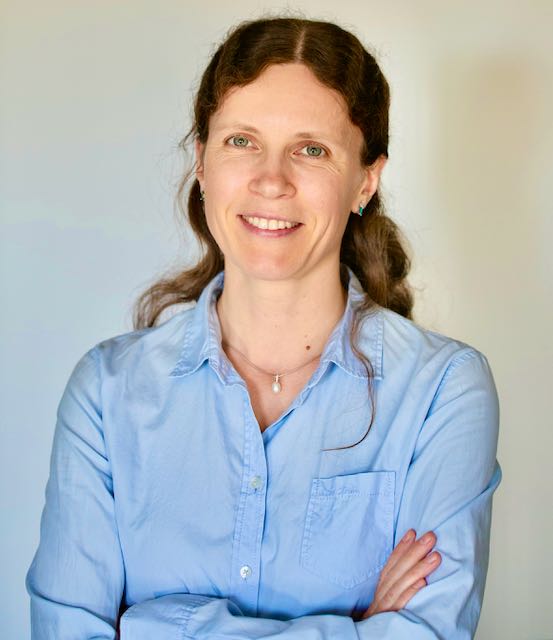
Natalia Nolde is a Professor in the Department of Statistics at the University of British Columbia, Faculty of Science. Her research focuses on multivariate extreme value theory , probabilistic modeling , and applications in quantitative risk management across finance, insurance, hydrology, and geosciences. Her work explores non-classical approaches to multivariate extremes, particularly through limit set geometry and asymptotic dependence structures , offering novel insights into tail dependence and risk assessment. Recent publications highlight her expertise in copula-based risk modeling , financial stress testing , and geohazard prediction . Current students include: Daniel Hadley Jonathan O.K. Agyeman
Dr. Miguel Rico-Ramirez serves as Associate Professor of Radar Hydrology and Hydroinformatics at the University of Bristol's School of Civil, Aerospace and Design Engineering. His research integrates advanced radar technology with hydrological modeling to address critical water resource challenges including flood forecasting, drought management, and precipitation measurement across diverse global contexts from South Korea to Mexico City. Education: Bachelor of Engineering (Eng.) Master of Engineering (M.Eng.) Ph.D. in Engineering, University of Bristol His research program focuses on radar-based precipitation estimation, hydroinformatics, and flood prediction systems. He pioneers deep learning applications for rainfall nowcasting and develops innovative methods for uncertainty quantification in hydrological modeling. Current work emphasizes cosmic-ray neutron sensor validation, satellite-based flood mapping, and seasonal forecast applications for reservoir operations, with strong emphasis on translating research into operational water management solutions. Recent publications (2023-2025) reveal three dominant research thrusts: (1) deep learning frameworks for spatiotemporal rainfall prediction, (2) global validation of precipitation and soil moisture datasets using novel sensor networks, and (3) operational implementation of seasonal forecasts for drought mitigation in South Korea. His work consistently bridges radar meteorology with practical hydrological applications across urban and data-scarce environments. Scientific Awards: No specific awards documented in source materials Dr. Rico-Ramirez supervises postgraduate researchers in radar hydrology and hydroinformatics, with projects spanning flood early warning systems, precipitation nowcasting, and climate adaptation strategies. His research receives funding for international collaborations focused on water security challenges, particularly in drought-prone regions and data-scarce basins like the Nile Delta. Current grants support development of integrated forecasting systems combining global datasets with machine learning for extreme event management. He leads the Radar Hydrology research group within Bristol's Water and Environmental Engineering division, collaborating closely with Professor Dawei Han on hydroinformatics and Dr. Rafael Rosolem on water-climate interactions. The team maintains active partnerships with meteorological agencies and water authorities globally, particularly in flood forecasting system implementation across South Korea and Mexico.
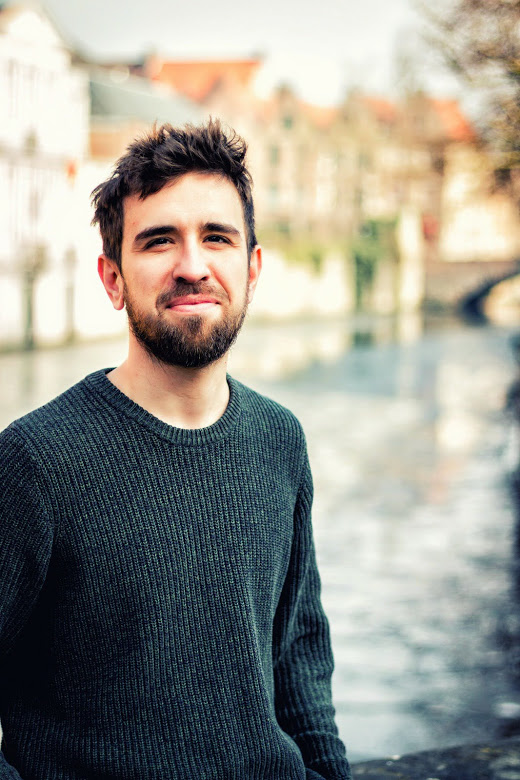
Michele Salvi is an Associate Professor in Mathematics at Università degli Studi di Tor Vergata in Rome. He previously held a Marie Skłodowska-Curie fellowship, conducting research in Berlin, Munich, and Paris. His work focuses on Probability Theory, with emphasis on random processes in random media, random graphs, and statistical mechanics, bridging applications in Physics, Computer Science, and Biology. Random processes in random media Random graphs Mathematics of Neural Networks Stochastic homogenization Mixing times for Markov chains Statistical mechanics Salvi’s recent publications highlight interdisciplinary trends, particularly in the spectral analysis of deep neural networks, scale-free percolation dynamics, and spanning tree geometry in random environments. His collaborations span Europe, with projects involving probabilistic models in epidemiology, reinforcement learning, and stochastic homogenization. He has received the Marie Skłodowska-Curie fellowship, reflecting his international research experience. His work is aligned with the Department of Mathematics at Tor Vergata, which holds the "Department of Excellence" MatMod@TOV 2023-2027 grant.
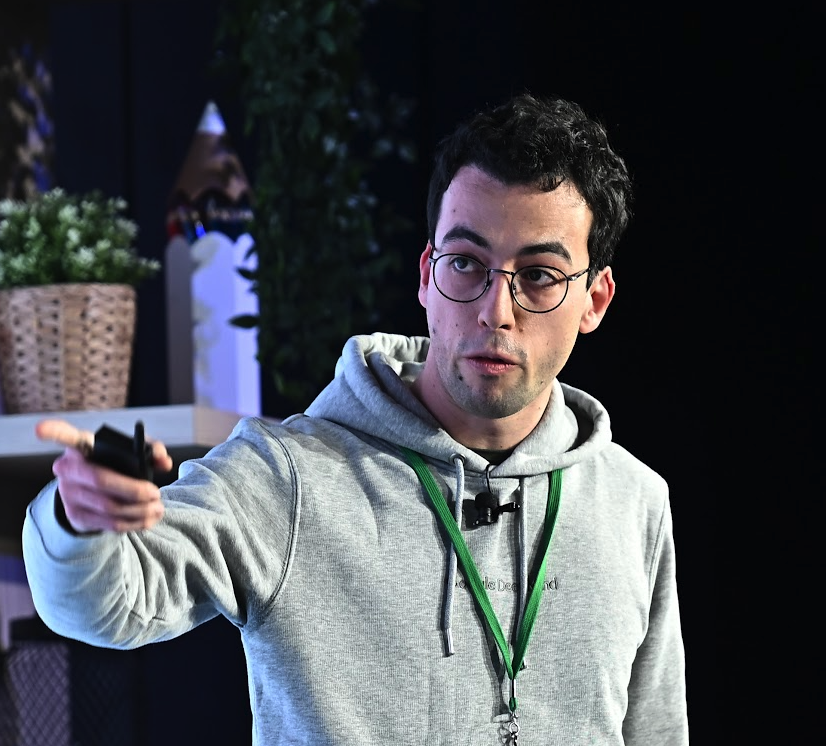
Pierre Marion is a Researcher at INRIA Paris, working within the Sierra research team since September 2025. His work focuses on the theoretical foundations of deep learning and he is beginning to explore applications of AI in mathematics. Marion has established collaborations across multiple institutions including EPFL, Sorbonne Université, and Google DeepMind. His educational background includes: Engineering degree from École polytechnique (2015-2018) with specialization in Applied Mathematics Master's degree from Sorbonne Université (2019-2020) PhD from Sorbonne Université (2020-2023) under the supervision of Gérard Biau and Jean-Philippe Vert Postdoctoral research at EPFL (2024) supervised by Lénaïc Chizat Marion's research interests primarily focus on the theory of deep learning, where he investigates the optimization and statistical properties of various neural network architectures. His work spans from shallow networks to complex generative models, with a particular emphasis on understanding the mathematical foundations that govern deep learning performance. Recently, he has begun exploring applications of AI in mathematical research, aiming to bridge the gap between theoretical machine learning and mathematical discovery. His research often combines rigorous theoretical analysis with practical implications for training deep neural networks. Analysis of Marion's recent publications reveals several key trends in his research. He has made significant contributions to understanding the role of large learning rates in optimization dynamics, demonstrating how they can accelerate convergence in logistic regression and prevent memorization in score-based generative models. His work on attention mechanisms has provided theoretical guarantees for their effectiveness in specific tasks like single-location regression and clustering. Additionally, Marion has extensively studied the connections between residual networks and neural ordinary differential equations , establishing generalization bounds and exploring scaling properties in the large-depth regime. His earlier work included contributions to natural language processing and quasi-Monte Carlo methods, reflecting a broad mathematical foundation that informs his current deep learning research. Marion has received several notable scientific awards: Runner-up PhD Award of AFIA (French Association for Artificial Intelligence) in 2024 Google PhD Fellowship in 2022 Ecole polytechnique Grand Prize of Research Internships in 2018 As an advisor, Marion currently supervises PhD student Yu-Han Wu (since 2024), with whom he has co-authored multiple publications on large learning rates and denoising score matching. Previously, he co-supervised several Master's students including Seorim Park, Yerkin Yesbay, and Nathan Doumèche. Marion has been actively involved in the machine learning community through conference organization (NeurIPS@Paris meetups), session chairing (ICSDS 2022), and extensive reviewing activities. He has served as a reviewer for top journals including JASA and Annals of Statistics, and conferences including NeurIPS and ICLR, where he was recognized as a top reviewer at NeurIPS 2023. Marion is a member of the Sierra research team at INRIA Paris, which focuses on machine learning theory and applications. He has also collaborated with researchers at CREST (Center for Research in Economics and Statistics), as evidenced by his participation in seminars organized by Anna Korba and Karim Lounici. His work often bridges theoretical computer science, statistics, and applied mathematics, reflecting the interdisciplinary nature of modern machine learning research.
Nathan van de Wouw is a Full Professor at the Mechanical Engineering Department of Eindhoven University of Technology (TU/e), affiliated with ICMS, EAISI Mobility, EAISI High Tech Systems, EAISI Foundational, and EIRES. He also holds an adjunct Full Professor position at the University of Minnesota and a part-time Full Professorship at Delft University of Technology. His research focuses on dynamics and control of mechanical systems, including mechatronics, robotics, smart manufacturing, energy systems, and networked control. He has supervised over 150 students and led numerous projects funded by industry partners like ASML, Philips, and Shell. Education: M.Sc. (with Honors) in Mechanical Engineering, TU/e (1994) Ph.D. in Mechanical Engineering, TU/e (1999) Research Interests: Nonlinear systems and control Model reduction and complexity analysis Data-driven and networked control strategies Applications in high-tech systems, autonomous vehicles, and energy systems Awards: IEEE Control Systems Technology Award (2015) for variable-gain control in motion systems Grants & Projects: Lead projects on mechatronic design, lithography systems, and thermodynamic optimization Collaborations with TNO, ASML, and industrial partners Labs & Teams: Member of TU/e’s Dynamics and Control group Affiliated with EAISI (Eindhoven AI Systems Institute)
Federico Toschi is a Full Professor at Eindhoven University of Technology (TU/e), holding joint appointments in Applied Physics and Mathematics and Computer Science departments. His research focuses on multi-scale transport phenomena, combining statistical physics, fluid dynamics, and computational methods. He leads projects in the 4TU Centre for Multiscale Phenomena and EAISI. Education: PhD in Physics (University of Pisa, 1998) and academic background at Scuola Normale Superiore di Pisa. Interdisciplinary expertise in fluid dynamics turbulence, Lagrangian turbulence, crowd dynamics, and Lattice Boltzmann methods. Recipient of APS Fellow (2015), Euromech Fluid Mechanics Fellow (2012), and Ig Nobel Prize for Physics (2021). Research emphasizes turbulence modeling, pedestrian dynamics, and active matter, with applications in environmental flows and crowd management. His work bridges computational innovations with experimental validations. Recent articles explore kinetic data-driven turbulence modeling, pedestrian flow optimization, and turbulence effects in biological systems. Projects include digital twins for seismicity modeling and rarefied gas dynamics. Teaches fluid mechanics, computational physics, and chaos theory courses. Founded Flow Matters Holding BV, applying research to practical solutions.
Professor Igor Wigman is a Professor of Number Theory at King's College London, affiliated with the Department of Mathematics within the Faculty of Natural, Mathematical & Engineering Sciences. He completed his PhD in Number Theory at Tel-Aviv University under Zeev Rudnick, followed by postdoctoral roles at CRM Montreal and KTH Stockholm. He joined King's in 2012 as a Lecturer, becoming a Reader in 2014 and Professor in 2018. His research focuses on analytic number theory, probability, and mathematical physics, with emphasis on nodal lines, random fields, and quantum chaos. Notable contributions include studies on the Gauss circle problem, eigenvalue clusters, and nodal volume distributions of random functions. Wigman co-organized the 2016 'Random Waves in London' workshop and delivered an inaugural lecture in 2023 on the interplay of number theory, random functions, and music geometry. His work bridges pure mathematics with applications in spectral geometry and stochastic processes.
Sourav Sarkar is a University Associate Professor in Probability at the Department of Pure Mathematics and Mathematical Statistics (DPMMS), University of Cambridge (since July 2024) and a Fellow of Trinity Hall. Previously, he held positions as an Assistant Professor at DPMMS (2021–2024), Postdoctoral Fellow at the University of Toronto (2019–2021), and completed his Ph.D. in Statistics at UC Berkeley (2019) under Prof. Alan Hammond. His education includes a BSc (2013) and MSc (2015) in Statistics from the Indian Statistical Institute, Kolkata, advised by Prof. Parthanil Roy. Research Interests : Probability theory with a focus on KPZ universality class, random growth models (e.g., last passage percolation, exclusion processes), Coulomb gas, and percolation theory. His work bridges stochastic processes, mathematical physics, and statistical mechanics. Teaching : Teaches advanced courses in Probability and Stochastic Calculus at the University of Cambridge, including Part II courses on Applied Probability and Probability & Measure. Previously taught at UC Berkeley, where he received the Outstanding Graduate Student Instructor Award (2019). Publications : Focuses on KPZ fixed point, geodesic properties, and phase transitions in interacting particle systems. Recent work includes studies on the directed landscape, stable random fields, and competitive erosion dynamics. Awards : Recognized for exceptional teaching at Berkeley and sustained contributions to probability theory research.
Perla Sousi is a Professor of Probability at the University of Cambridge's Statistics Laboratory, part of the Department of Pure Mathematics and Mathematical Statistics (DPMMS). She is also a Fellow of Emmanuel College. Her research focuses on Probability Theory, Stochastic Processes, and their applications, including Random Walks, Brownian Motion, Mixing Times of Markov Chains, Percolation Theory, and Dynamical Systems. Notably, she explores phase transitions in stochastic models, cutoff phenomena in Markov chains, and the interplay between geometry and probability. Her work often involves collaboration with leading researchers in the field, addressing questions in both theoretical and applied stochastic processes. She has taught courses such as Probability IA, Percolation and Random Walks on Graphs, Advanced Probability, and Applied Probability. Her research has been published in top-tier journals like Annals of Probability , Probability Theory and Related Fields , and Communications in Mathematical Physics . Key contributions include studies on mixing times in dynamic environments, phase transitions in random walks, and capacity analysis in high-dimensional settings. Her articles highlight advancements in understanding stochastic systems' behavior, with a focus on cutting-edge topics like dynamical percolation, branching processes, and cutoff phenomena in complex networks. She actively contributes to both foundational theory and applications in stochastic modeling.
Lionel Levine is a Professor in the Department of Mathematics at Cornell University, affiliated with the College of Arts and Sciences. His academic research focuses on abelian networks, interacting particle systems, and the emergence of complex patterns from simple rules. He has held prestigious fellowships, including the Simons Fellowship and Sloan Research Fellowship, and has been honored with an endowed professorship. Levine's work bridges probability theory, combinatorics, and statistical physics, with notable contributions to the study of sandpile models and internal diffusion-limited aggregation (IDLA). Education: Ph.D. in Mathematics (2007), University of California, Berkeley. Research Interests: Applied Mathematics, Combinatorics, Probability, Abelian Networks, Sandpile Models, and their intersections with computer science and statistical physics. His research explores how local rules generate large-scale structures, such as in abelian networks and sandpile models. Awards and Honors: Simons Fellowship, Sloan Research Fellowship, Endowed Professorship in the College of Arts and Sciences. Teaching: Courses include Probability Theory (MATH 6710/6720), Topics in Probability: Math for AI Safety (MATH 7710), and undergraduate mathematics courses like Strategy, Cooperation, and Conflict (MATH 1340). Grants and Funding: Supported by the National Science Foundation (NSF), Simons Foundation, Sloan Foundation, and Institute for Advanced Study. Collaborations: Collaborates with prominent researchers such as Yuval Peres, Cris Moore, and Jim Propp. His work has been published in leading journals like the Annals of Probability and Duke Mathematical Journal. Future Work: Continues investigating AI safety, causal models, and multi-agent learning, including research on mathematical frameworks for transformer circuits and hidden incentives in AI systems.
Professor James Scanlan is a Professor of Design within the Faculty of Engineering and Physical Sciences at the University of Southampton. He leads research in design, logistics, simulation, and optimization, focusing on aerospace systems and unmanned aerial vehicles (UAVs). His work is funded by BAE Systems, Airbus, Rolls-Royce, and the EPSRC. Previously, he held roles at BAe Systems and the University of the West of England, completing a PhD on aerospace design process modeling. He has launched a spin-off business commercializing design process research. Education: MSc in Aerospace Design (Salford University), PhD in Computer Modeling of Aerospace Design (University of the West of England). Research groups include the Computational Engineering and Design Group and the Centre for Defence and Security Research. External roles include membership in the US National Science Foundation and European Programme Committee for Value Driven Design. Teaching: Leads MSc courses in aerospace IGDS. Awards: 2008 Rolls-Royce R&T award for Creativity. Personal interests include squash, flying Piper Warrior aircraft, and BBC interviews on UAV civil applications.
Pierre Flener is a Professor at the Department of Information Technology, Division of Computing Science at Uppsala University. He leads the Optimisation Group and is a member of the Centre for Interdisciplinary Mathematics. His work focuses on constraint programming and discrete optimization, addressing complex scheduling, routing, and resource allocation challenges. Flener is an Officer of the Order of Merit of Luxembourg and co-founder of NordConsNet, the Nordic Network for Constraint Programming researchers. Research Interests: Flener’s research spans constraint programming, combinatorial optimization, and algorithm design. He develops models and tools for automated decision-making in domains like air traffic management, sensor networks, and industrial robotics. His work emphasizes practical applications, leveraging constraint satisfaction techniques to solve real-world puzzles such as vehicle routing and personnel allocation. Key Contributions: Flener has authored over 100 publications on constraint solving, symmetry breaking, and CP-based approaches to industrial problems. Notable projects include airspace sectorization optimization, energy-efficient sensor networks, and financial portfolio design. He has led initiatives like Auto-Tabling for MiniZinc and collaborated on CP applications in bioinformatics and image processing. Labs & Teams: He heads the Optimisation Group at Uppsala, fostering research in CP and its applications. NordConsNet, co-founded by Flener, connects Nordic researchers and practitioners in constraint technology.
Alex Shestopaloff is a Lecturer in Statistics at Queen Mary University of London (QMUL), affiliated with the School of Mathematical Sciences. Previously, he was a Research Fellow at the Alan Turing Institute (2017–2020) and a Junior Research Fellow at Campion Hall, Oxford. He holds a PhD in Statistics from the University of Toronto (2016), supervised by Radford M. Neal. His research focuses on developing efficient MCMC methods, high-dimensional time series analysis, network science, and applications in financial market microstructure. Education: PhD in Statistics, University of Toronto (2016) Supervisor: Radford M. Neal Research Interests: Bayesian online learning in non-stationary environments Limit order book modeling and trading strategies Graph clustering and network analysis Statistical methods for high-dimensional data Algorithmic trading and cryptocurrency markets His recent work spans financial engineering, machine learning, and statistical methodologies. Notable contributions include cluster-based trading strategies (ClusterLOB), generalized Bayesian filtering frameworks, and scalable graph analysis techniques. Collaborations with industry partners (e.g., Wise Plc) highlight applied research in financial systems. Advising & Alumni: Current advisees include Yichi Zhang (Oxford), Maria Fernanda Pintado (QMUL), and Dave Lui (Oxford) Alumni: Gerardo Duran-Martin (Postdoc at Oxford-Man Institute), Claudio Bellani (Citadel Securities) Labs/Teams: Leads interdisciplinary projects at QMUL and collaborates with the Alan Turing Institute on financial and network science initiatives.
Assoc. Prof. Zehra Eksi-Altay holds a position at the Institute for Statistics and Mathematics at Vienna University of Economics and Business (WU). Her research focuses on financial mathematics, stochastic modeling, and partial information control problems in finance. She has expertise in credit risk modeling, derivatives pricing, and commodity markets. Eksi-Altay has a PhD in Financial Mathematics (2011) and completed her Habilitation in 2017. She has advised one doctoral thesis and has published extensively in top-tier journals like Quantitative Finance and Journal of Computational and Applied Mathematics . Her work bridges theoretical advancements with practical applications in areas such as regime-switching models, optimal portfolio strategies, and liquidity analysis. Education: BSc, MSc (2005), PhD (2011) Habilitation: 2017 Key Research Themes: Partial Information Models, Stochastic Control, Credit Risk, Algorithmic Trading Her recent work explores regime-switching affine term structures, optimal trading strategies under uncertainty, and dark pool liquidity analysis. Eksi-Altay has received one academic prize, though its specific name is not detailed in the provided text. Her contributions span both theoretical developments and applied finance, often collaborating with institutions like WU’s Institute for Statistics and Mathematics.
Francisco Camara Pereira is a Professor and Head of Section at the Department of Technology, Management and Economics at the Technical University of Denmark (DTU). His research focuses on Intelligent Transportation Systems, Machine Learning, and Data-Driven Decision-Making in transportation contexts. He actively contributes to advancing transportation science through interdisciplinary approaches combining simulation, optimization, and AI techniques. His work addresses challenges in public transport analysis, charging infrastructure planning, and multimodal demand prediction. Recent projects include developing graph-based optimization methods for electric vehicle networks and causal discovery frameworks for transportation systems. He supervises multiple PhD students in areas like federated learning for cyclist safety, causal graph neural networks, and socially aware AI models. Key contributions include publications on smart card data analysis for travel surveys, stochastic infrastructure expansion models, and transfer learning for bike-share systems. His research aligns with UN Sustainable Development Goals related to sustainable cities and innovation. Dr. Pereira collaborates internationally on transportation policy and infrastructure projects. His lab focuses on translating theoretical advancements into practical solutions for urban mobility challenges.