Dr. Saree Alnaghy is an Honorary Associate Professor at the University of Wollongong's Faculty of Engineering and Information Sciences, affiliated with the Centre for Medical Radiation Physics. She holds a Bachelor of Medical and Radiation Physics (Honours) and a PhD in Physics from the University of Wollongong (2009–2017). Her research focuses on advanced medical imaging and radiation therapy technologies, including photon counting detectors, dosimetry systems, and robotic motion phantoms for quality assurance. Key research areas include: Development of novel X-ray detectors for radiotherapy guidance High-resolution dosimetry techniques using silicon and polymer-based systems Integration of real-time imaging in radiation therapy Robotic systems for motion management in oncology Her work has been supported by grants such as 'Sharper Targeting, Brighter Future' (2024) and 'Bringing Colour to Radiotherapy' (2021–2025). She currently supervises PhD and MRes students on projects involving photon counting CT scanners and radiotherapy imaging. Alnaghy also serves as a Radiation Oncology Medical Physics Registrar at the Nelune Comprehensive Cancer Centre.
Christophe Meunier is a researcher specializing in hybrid materials, particularly focusing on biohybrid systems that integrate biological components with inorganic matrices. His work emphasizes environmental applications and biomedical innovations through advanced material design. Key Collaborations: Su, B. L., Michiels, C., Wang, L. Research Themes: Photosynthesis mimicry, cell therapy microcapsules, hybrid alginate-TiO₂ systems Research Focus: Meunier has pioneered the biomimicry of photosynthesis via biosystem immobilization in silica matrices, aiming to create 'living materials' with functional biological-inorganic interfaces. His recent projects explore alginate@TiO₂ hybrid microcapsules for controlled insulin delivery and cell therapy applications, demonstrating high biocompatibility and stability. Academic Contributions: With 34 research outputs spanning material science, biomedical engineering, and environmental applications, Meunier's work aligns with UN Sustainable Development Goals through innovative hybrid material design. His collaboration network includes experts in chemistry, physics, and medical fields.
Zion Zibly, MD, MBA is an Associate Professor in the Department of Neurosurgery at Yale School of Medicine . He holds multiple leadership roles including Director of the Center of Neuromodulation , Director of the Center of Neurosurgical Cancer Pain , and Head of Stereotactic & Functional Neurosurgery and the Focused Ultrasound Institute . Previously served as Chair of Neurosurgery at Sheba Medical Center after graduating from Technion’s Faculty of Medicine (MD) and Coller School of Management (MBA). Research Interests: Specializes in Neuromodulation for movement disorders (Parkinson’s, tremors, dystonia), Deep Brain Stimulation , Gene Therapy for pediatric neurodegenerative conditions, Oncological Neurosurgery , and Neurological Pain Management . Combines Functional Neurosurgery with Focused Ultrasound technology. Scientific Contributions: Participated in pioneering Alzheimer’s brain stimulator procedures and Gene Therapy applications. Active member of the North American Association of Functional Neurosurgery and Israeli Neurosurgical Society . Clinical Expertise: Implantation of electrostimulators for Parkinson’s and essential tremor, treatment of Benign/Malignant CNS Tumors , and management of Neurological Pain Conditions . Affiliated with Yale Cancer Center and Center for Brain & Mind Health .
Christin A. Knowlton, MD, MA serves as Associate Professor of Therapeutic Radiology at Yale School of Medicine, where she holds dual leadership roles as Vice Chair for Accreditation in Therapeutic Radiology and Medical Director of Smilow Cancer Hospital Care Center-Hamden. Her clinical practice focuses on delivering high-quality, patient-centered radiation oncology services with specialization in breast cancer, lung cancer, bone metastases, and thymoma treatments. Dr. Knowlton's educational background includes a BA from Oberlin College (1994), MA from New York University (1998), MD from SUNY at Stonybrook (2006), and residency training at Hahnemann University Hospital/Drexel University College of Medicine (2011). Her research program centers on optimizing radiation therapy protocols, with particular emphasis on hypofractionation techniques, stereotactic body radiation therapy (SBRT), and management of radiation-related toxicities including pneumonitis and esophagitis. Analysis of her 15 most recent publications reveals a consistent research trajectory focused on improving outcomes in thoracic and breast radiation oncology through dose optimization, toxicity prediction modeling, and innovative treatment approaches for oligometastatic disease. Her work frequently addresses the balance between therapeutic efficacy and radiation-induced complications, with growing emphasis on molecular risk assessment and personalized treatment planning. Smilow Luminary Award of Excellence in Patient Care (2019) National Comprehensive Cancer Network (NCCN) Fellows Recognition Program As a clinician-educator, Dr. Knowlton emphasizes the importance of patient communication and multidisciplinary teamwork, collaborating closely with nursing, physics, dosimetry, and therapy staff to deliver comprehensive cancer care. Her leadership in accreditation reflects her commitment to maintaining the highest standards in radiation oncology practice and education. Dr. Knowlton's clinical trial involvement, including the DD3 trial of dose-deescalated SBRT for centrally located lung cancer, demonstrates her active contribution to advancing evidence-based radiation oncology practice.
Dr. Sotirios Stathakis is Chief of Physics at the Mary Bird Perkins Cancer Center (2023–Present) and Associate Director of the Medical Physics Division at the University of Texas Health Science Center San Antonio (2017–2022). He holds an Adjunct Professor position at Louisiana State University's Department of Physics and Astronomy (2023–Present). His expertise lies in radiation oncology and medical physics, with a focus on patient-specific quality assurance, dose verification, and advanced treatment techniques like adaptive radiation therapy and SBRT. Education: Ph.D., Medical Physics, University of Patras (2005) M.S., Medical Physics, University of Aberdeen (1997) B.S., Physics (minor in Mathematics and Computer Science), University of Waterloo (1995) Research Interests: Patient-specific quality assurance Daily dose verification Treatment planning techniques Adaptive radiation therapy Stereotactic body radiation therapy (SBRT) Automation and workflow optimization in radiation oncology Publications: Over 20 peer-reviewed articles since 2020, focusing on topics like Monte Carlo simulations, AI-driven beam analysis, and AAPM task group recommendations for IMRT verification. Key themes include improving dose accuracy, equipment validation, and clinical implementation of advanced radiation technologies. Grants & Awards: Not explicitly listed in provided text. Labs/Teams: Collaborates with institutions like Fox Chase Cancer Center, South Texas Veterans Health Administration, and LSU on medical physics research and clinical applications.
Professor Ananya Choudhury serves as Chair and Honorary Consultant in Clinical Oncology at the University of Manchester, where she is also Co-Group Leader of the Translational Radiobiology Group within the Division of Cancer Sciences. She joined The Christie NHS Foundation Trust in 2008, specializing in urology and sarcoma, and has since focused on radiotherapy-related research in prostate and bladder cancers. Professor Choudhury is clinical lead for advanced radiotherapy, including the groundbreaking MRLinac project, and plays a key role in national radiotherapy research initiatives. Professor Choudhury earned her BA (Hons) in 1993, MB. BChir (Cantab) in 1995, and MA (Cantab) in 1997 from Trinity College, Cambridge. She completed her Clinical Oncology training at the Yorkshire Deanery from 2000-2008, during which she earned her MRCP in 2000 and F.R.C.R in 2004. She completed her PhD in 2008 through the University of Leeds and Princess Margaret Hospital in Toronto, Canada, where she studied the molecular epidemiology of DNA double strand break repair in bladder cancer. Professor Choudhury's research program focuses on optimizing and personalizing radiotherapy using advanced imaging technology to deliver high doses while minimizing side effects. Her work centers on prostate and bladder cancers, with particular interest in predictive biomarkers, hypoxia, and the integration of magnetic resonance imaging to improve treatment precision. She has pioneered research in radiotherapy dose optimization, biomarker development, and the identification of patients who would benefit most from different treatment approaches. Her extensive publication record demonstrates a strong focus on radiation therapy, particularly in genitourinary cancers. Recent work explores MRI-guided radiotherapy, hypoxia biomarkers, and personalized treatment approaches across multiple cancer types. She has made significant contributions to understanding how imaging technology can improve radiotherapy precision and effectiveness while reducing side effects, with several publications appearing in top journals through 2025. Professor Choudhury has received multiple prestigious awards recognizing her contributions to the field: Cancer Research-UK/Royal College of Radiologists Clinical Training Fellowship (2005) Fellowship for the 10th ECCO-AACR-ASCO Workshop on Methods in Clinical Cancer Research (2007) Outstanding Contribution, Greater Manchester Clinical Research Awards (2017) RCR Research Fellowship (2005) Research Fellowship, Princess Margaret Hospital, Toronto (2004) Professor Choudhury has supervised numerous doctoral and master's students across multiple cancer types, with current students expected to complete through 2024. She is Principal Investigator on multiple research grants, including 'Measuring tumour radioresistance to improve radiotherapy outcomes' and the 'MAESTRO Programme' as part of CRUK RadNet. Her research program is supported by significant funding from NIHR Manchester Biomedical Research Centre and other major funding bodies. As Co-Group Leader of the Translational Radiobiology Group, Professor Choudhury collaborates extensively with leading researchers including Peter Hoskin, Catharine West, Corinne Faivre-Finn, and Marcel van Herk. Her team is at the forefront of integrating advanced imaging with radiotherapy to improve cancer treatment outcomes, with active projects spanning from basic radiobiology to clinical implementation of novel radiotherapy techniques.
Huixiao Chen is an Assistant Professor and Clinical Medical Physicist II in the Department of Therapeutic Radiology at Yale School of Medicine. She holds a primary appointment in Therapeutic Radiology and is actively engaged in clinical and research activities related to radiation oncology physics. Assistant Professor, Department of Therapeutic Radiology, Yale School of Medicine Clinical Medical Physicist II, Therapeutic Radiology Education: Resident, Yale University (2016) Postdoctoral Fellow, Harvard University (2013) Postdoctoral Fellow, Virginia Commonwealth University (2011) PhD, University of Heidelberg, Germany (2010) MS, Zhejiang University, China (1998) BS, Zhejiang University, China (1995) Huixiao Chen's research centers on medical physics in radiation oncology, with a focus on treatment planning optimization, dosimetry, and image-guided radiotherapy. Her work includes the development and evaluation of advanced radiotherapy techniques such as VMAT and SBRT, with applications in spine, lung, and prostate cancers. She has contributed to improving the accuracy of dose calculations using Monte Carlo methods and has explored the impact of patient motion on treatment delivery. Her research also extends to the design of clinical devices to support safe and effective radiotherapy for diverse patient populations. Her recent publications demonstrate a consistent focus on enhancing the precision and efficiency of radiotherapy. Key themes include multicriteria optimization in treatment planning, dosimetric validation of radiochromic films, and the development of supportive devices for image-guided radiotherapy. These works reflect a strong commitment to advancing clinical medical physics through both computational and engineering innovations. Scientific Contributions: Characterization of GafchromicTM EBT4 film for clinical dosimetry Design of a small-footprint couch-top support for heavy patients in IGRT Application of multicriteria optimization in VMAT planning for spine and prostate cancers Comparison of Monte Carlo vs. pencil beam algorithms in lung SBRT Analysis of diaphragm motion effects on spine SBRT Huixiao Chen has collaborated with researchers such as Emily Draeger and Zhe Jay Chen on various projects. While no formal students or grants are listed, her role as a clinical medical physicist and faculty member suggests active mentorship and potential involvement in funded research. She is a key contributor to the medical physics team at Yale, ensuring high standards in treatment planning and delivery.
Brian Kavanagh, MD, MPH is a Professor and Department Chair of Radiation Oncology at the University of Colorado Anschutz Medical Campus School of Medicine. He serves as Department Chair and maintains clinical practice at multiple UCHealth locations including the University of Colorado Cancer Center, Cherry Creek Medical Center, Longs Peak Medical Center, and the Rocky Mountain Gamma Knife Center. His leadership extends to serving as Chair of the American Society for Radiation Oncology since 2017. MD, Tulane University School of Medicine (1988) MPH, Tulane University (1988) BSE, Tulane University (LA) (1984) Internship: Tulane University Program (1989) Residency: Duke University Hospital Program, Radiation Oncology (1993) Dr. Kavanagh's research primarily focuses on stereotactic body radiation therapy (SBRT), functional lung avoidance radiation therapy using 4DCT-ventilation imaging, and treatment of brain metastases from oncogene-driven lung cancers. His work bridges clinical practice, medical physics innovation, and outcomes research, with particular emphasis on optimizing radiation therapy techniques while minimizing toxicity. Recent publications demonstrate his leadership in developing novel approaches to image-guided radiation therapy, including antiscatter grid technology for CBCT imaging and functional avoidance techniques for lung cancer treatment. Analysis of Dr. Kavanagh's recent publications (2019-2024) reveals a strong focus on precision radiation therapy for lung cancer and brain metastases. His research spans technical innovations in medical physics (such as 2D antiscatter grid development), clinical trials evaluating functional avoidance radiation therapy, and studies examining outcomes for patients with oncogene-driven cancers. A significant portion of his work addresses the integration of radiation therapy with targeted therapies for lung cancer with brain metastases, reflecting the evolving treatment paradigms in this field. Top Doctor, 5280 Magazine (2023) Dr. Kavanagh has been instrumental in developing national radiation oncology curriculum frameworks through stakeholder consensus processes. His leadership in the American Society for Radiation Oncology has positioned him to influence practice guidelines and educational standards in the field. His research has been supported through multi-institutional clinical trials and collaborations with major cancer centers across the United States. Dr. Kavanagh leads research efforts in the Rocky Mountain Gamma Knife Center and contributes to the University of Colorado Cancer Center's radiation oncology program. His work with 4DCT-ventilation imaging has established a clinical research program focused on functional avoidance radiation therapy, which aims to preserve lung function while effectively treating tumors.
Kelli Connolly is an Associate Research Scientist at the Yale School of Medicine, Yale University. Her research focuses on cancer immunology, with a particular emphasis on tumor immunity, T cell biology, and neoantigen-driven immune responses. She develops and utilizes mouse models to investigate mechanisms underlying anti-tumor immunity, including T cell exhaustion, tertiary lymphoid structures in cancer, and the role of stem-like T cells in sustaining immune responses. Her work bridges basic immunology and translational cancer research, aiming to improve immunotherapy strategies. Key Collaborations: Works closely with researchers like Nikhil Joshi, Gena Gora Foster, and Julie F. Cheung. Research Themes: Neoantigen expression, tumor-draining lymph node dynamics, and combination therapies targeting the immune microenvironment. Her studies highlight the importance of lineage fidelity in CD8 T cells and the role of transcription factors like KLF2 in suppressing exhaustion. She also explores how modulating chemokine axes (e.g., CCR2/CCR5) enhances radiotherapy efficacy. Connolly’s contributions span preclinical models for lung and pancreatic cancers, emphasizing the interplay between tumor biology and immunological mechanisms. Publications span journals like Science , Cell , and Nature Biotechnology , reflecting her impact in cancer immunology and translational research.
Haoming Qiu, M.D. serves as an Associate Professor in the Department of Radiation Oncology at the University of Rochester School of Medicine and Dentistry. He practices clinically at both Wilmot Cancer Center in Rochester and Sands Cancer Center in Canandaigua, providing radiation oncology services for gastrointestinal, lung, and prostate cancers. Board-certified by the American Board of Radiology, Dr. Qiu specializes in advanced radiotherapy techniques including external beam radiation and radiopharmaceutical therapies. Education: MD, Johns Hopkins University (2011) Residency in Radiation Oncology, University of Rochester Medical Center (2013-2016) Residency in Radiation Oncology, Loyola University Medical Center (2012-2013) Internship in Internal Medicine, Sinai Hospital of Baltimore (2011-2012) Research Focus: Dr. Qiu's work centers on optimizing radiation therapy for gastrointestinal malignancies, prostate cancer, and neuroendocrine tumors. His investigations into theranostics explore novel applications of Lutathera for neuroendocrine tumors, Pluvicto for prostate cancer, and Therasphere for liver cancers. Current research emphasizes combining stereotactic body radiotherapy with immunotherapeutic agents to overcome treatment resistance in pancreatic and rectal cancers. Publication Trends: Recent publications (2023-2025) reveal a strategic shift toward adaptive radiotherapy techniques for pelvic malignancies and immunoradiotherapy combinations. His work demonstrates growing emphasis on modulating tumor immune microenvironments through radiation, particularly in pancreatic and rectal cancers. The integration of mRNA nanotechnology with SBRT represents a cutting-edge frontier in his research portfolio. Scientific Recognition: Roentgen Resident/Fellow Research Award (2015) Excellence in Medical Student Research (2011) Clinical Leadership: Dr. Qiu directs multiple clinical trials at the University of Rochester focusing on radiopharmaceutical applications and adaptive radiotherapy protocols. His patient-centered approach is reflected in consistently high patient satisfaction scores (4.9/5 stars) across communication, empathy, and treatment explanation metrics. Care Coordination: As part of the Wilmot Cancer Center and Sands Cancer Center teams, Dr. Qiu collaborates with multidisciplinary groups including medical oncologists, surgeons, and radiologists to deliver integrated cancer care through Accountable Health Partners network.
University of Texas Southwestern Medical CenterUnited States
Andrew Godley, Ph.D., is the Associate Vice Chair of Clinical Physics Operations and Quality and an Associate Professor of Radiation Oncology at UT Southwestern Medical Center. He is part of the Department of Radiation Oncology’s Division of Medical Physics and Engineering. Dr. Godley holds a Texas Medical Physics License and is board-certified in therapeutic radiologic physics by the American Board of Radiology. Education: Received his Ph.D. in high-energy physics from the University of Sydney as part of the NOMAD experiment at CERN. Completed a postdoctoral fellowship at the University of South Carolina with the MINOS experiment at FermiLab. Transitioned to medical physics at the Medical College of Wisconsin. Research Interests: Focus on advanced radiation therapy techniques including brachytherapy, SBRT, Gamma Knife, MR-linac integration, and adaptive radiotherapy. His work emphasizes improving treatment accuracy, patient-specific quality assurance, and innovative approaches to personalized oncology care. Publications: Over 118 peer-reviewed articles, with recent work emphasizing adaptive radiotherapy strategies, MR-guided therapies, and computational tools for dose verification. Professional Contributions: Active in developing clinical protocols for radiation physics operations, including machine QA/commissioning and program development for new technologies like MR-linac systems.
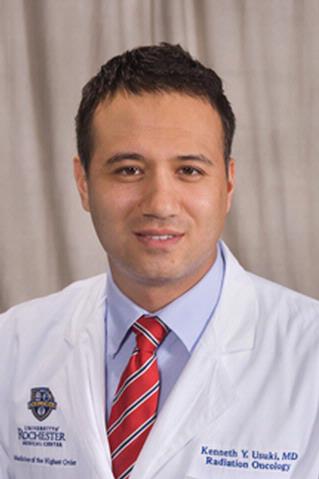
Dr. Kenneth Y. Usuki serves as an Associate Professor in the Department of Radiation Oncology at the University of Rochester School of Medicine and Dentistry. He is a board-certified Radiation Oncologist actively practicing at the Wilmot Cancer Center and Strong Memorial Hospital, specializing in neuro-oncology, radiosurgery, and gastrointestinal cancers. His clinical leadership includes roles as Co-Director of the Spinal Radiosurgery Program, Associate Radiation Oncology Residency Director, and Medical Student Clerkship Director. Dr. Usuki earned his MD from Jefferson Medical College (2004), completed a Transitional Year Internship at Penn Presbyterian Medical Center (2004-2005), and underwent Radiation Oncology Residency at the University of Rochester Medical Center (2005-2009), where he served as chief resident. His research focuses on optimizing radiation techniques for brain/spine tumors, skin cancers, and gastrointestinal malignancies. His research demonstrates consistent innovation in stereotactic radiosurgery, with recent publications (2023-2024) emphasizing brain metastasis management, cognitive preservation during whole-brain radiation, and advanced dosimetry techniques. Key trends include hippocampal avoidance protocols, multi-target radiosurgery planning, and systemic disease interactions with CNS control – reflecting his dual focus on technical precision and patient-centered outcomes. His work frequently appears in high-impact journals like International Journal of Radiation Oncology, Biology, Physics and Advances in Radiation Oncology . Dr. Usuki actively mentors residents and medical students through formal educational leadership roles. His departmental responsibilities include residency program oversight, medical student clerkship direction, and serving as Wellness Representative for the Department of Radiation Oncology. He contributes to major collaborative trials including NRG Oncology CC001. As Co-Director of the University of Rochester Spinal Radiosurgery Program, he leads a specialized team applying cutting-edge techniques like Brain Lab Cranial Elements SRS, VMAT, and Image-Guided Radiation Therapy to complex spinal pathologies. The program emphasizes multidisciplinary collaboration between radiation oncology, neurosurgery, and medical oncology teams.
Knut Håkon Hole is an Associate Professor at the University of Oslo's Department of Radiology and Nuclear Medicine. His research focuses on diagnostic imaging applications in oncology, particularly in prostate and rectal cancers. He specializes in MRI, PET, and radiogenomics techniques to assess tumor biology, treatment response, and recurrence. Expertise: Prostate cancer imaging, neoadjuvant therapy response, tumor hypoxia, and imaging biomarkers Key affiliations: Oslo University Hospital (Rikshospitalet), Radium Hospital Research interests include: Developing MRI and PET protocols for cancer staging and recurrence detection Integrating imaging with genomic data (radiogenomics) Optimizing therapeutic approaches using imaging biomarkers Recent work highlights: Prostate cancer radiogenomics and hypoxia biomarkers (2024) MRI/PET comparisons for tumor localization (2021-2023) Neoadjuvant therapy response assessment in rectal and breast cancers (2020-2023) Publications span over 50 peer-reviewed articles with a focus on translational imaging research. Collaborates extensively with oncology and urology teams.
University of California, Los AngelesUnited States
Amar U. Kishan, MD , a tenure Professor at the David Geffen School of Medicine, UCLA , serves as Executive Vice Chair for the Department of Radiation Oncology and as Chief of the Genitourinary Service since 2019. His clinical expertise focuses on radiation treatment of prostate and bladder cancers , with pioneering work in stereotactic body radiation therapy (SBRT) and image-guided radiotherapy . Dr. Kishan graduated magna cum laude from Harvard Medical School after dual BA degrees at UC Berkeley in Molecular and Cell Biology and Public Health, followed by residency at UCLA and internship at Scripps Mercy Hospital . Education : Harvard Medical School (MD, 2012), UC Berkeley (BA in Molecular/Cell Biology & Public Health) Awards : Leonard Tow Humanism in Medicine (2021), UCLA Exceptional Physician (2024), Super Doctors® Rising Stars (2020-2024) Dr. Kishan leads translational research connecting radiation oncology with genitourinary cancer biology. His 310+ publications in journals like JAMA , Lancet Oncology , and European Urology emphasize radiation technology innovations , including MRI-guided SBRT and adaptive radiation therapy. Key trials he spearheads include ILLUSION (CT-guided SBRT) and HEATWAVE (apalutamide + SBRT). Major funding sources include National Institutes of Health , Department of Defense , and Prostate Cancer Foundation . His work has redefined prostate cancer treatment paradigms , demonstrating that high-dose radiation can match surgery in aggression cases, while multi-modal approaches improve survival rates. Dr. Kishan also contributes to re-irradiation protocols and radioresistance proteogenomics , advancing precision oncology. Key Grants : NIH, DoD, PCF, ASTRO Clinical Trials : ILLUSION, HEATWAVE, PET imaging-based radiation targeting
Andrew Fielding is an Associate Professor in the School of Chemistry & Physics at Queensland University of Technology (QUT), Faculty of Science. His research and teaching focus on medical physics, particularly in radiation therapy, medical imaging, and Monte Carlo dosimetry techniques. He is the Course Coordinator for the Graduate Diploma and Master of Applied Science in Medical Physics programs at QUT. He holds a PhD in Physics from the University of Portsmouth and a B.Sc. (Hons) from the University of Surrey. He completed postdoctoral research at the Institute of Cancer Research / Royal Marsden Hospital and the University of Liverpool before joining QUT in 2004. His academic progression includes Lecturer (2004–2008), Senior Lecturer (2008–2022), and Associate Professor (2023–present). His research interests lie in medical imaging, radiation therapy, image-guided radiotherapy, Monte Carlo techniques for dosimetry, and radiation oncology physics. He emphasizes translating research into clinical practice to improve cancer care. His recent publications reflect a strong focus on Monte Carlo simulations, small-field dosimetry, preclinical irradiation, and the integration of AI and simulation in radiotherapy education and treatment verification. His scientific achievements are recognized through professional memberships including Fellow of the Institute of Physics (FInstP), Chartered Physicist (CPhys), and Member of the Australasian College of Physical Scientists and Engineers in Medicine (MACPSEM). Fellow of the Institute of Physics (FInstP) Chartered Physicist (CPhys) Member of the Australasian College of Physical Scientists and Engineers in Medicine (MACPSEM) Andrew Fielding actively supervises PhD and research master’s students in areas such as Monte Carlo dosimetry, tumor motion tracking, and radiotherapy optimization. He has secured competitive research grants, including Australian Competitive Grants for projects on tumor motion monitoring and in-vivo dosimetry verification. His teaching philosophy emphasizes authentic, clinically aligned learning using simulation, virtual reality, and real-world applications. He leads or teaches several core medical physics units, including Radiation Physics, Radiotherapy, Medical Imaging Science, and Research Methodology. He is involved in developing and evaluating innovative tools such as 3D volumetric outlining systems and immersive simulation environments for radiotherapy training. His work bridges physics, clinical application, and education, contributing significantly to the advancement of medical physics both in research and pedagogy.


.png)