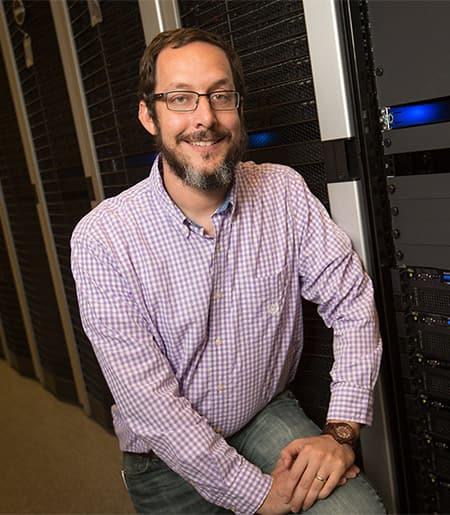
David Bindel is an Associate Professor in the Department of Mathematics at Cornell University, affiliated with the College of Arts and Sciences, College of Engineering, and Cornell Ann S. Bowers College of Computing and Information Science. He earned his Ph.D. in Mathematics from the University of California, Berkeley in 2006. His research focuses on applied numerical linear algebra, eigenvalue problems, and their applications in plasma physics, network analysis, and nonlinear systems. He develops methods for analyzing complex systems, including magnetic confinement in stellarators, stability of MHD systems, and community detection in networks. His work bridges theoretical foundations with practical computational tools, such as formal verification of linear algebra algorithms and scalable Gaussian process models. Bindel’s research explores the interplay between structure and computation, leveraging eigenvalue analysis to address challenges in computer vision, opinion dynamics, and engineering design. He has contributed to advancements in numerical methods for large-scale systems, including iterative solvers, spectral approximation techniques, and stochastic optimization. His interdisciplinary approach spans applied mathematics, computer science, and physics, with applications in fusion energy, machine learning, and network science. Recent work highlights include high-order expansions for magnetic confinement, adaptive filtering for dynamical systems, and Bayesian optimization strategies. His publications emphasize rigorous analysis alongside computational scalability, addressing both theoretical and practical aspects of modern scientific computing. Despite no explicitly listed awards, his contributions reflect significant impact in his fields.
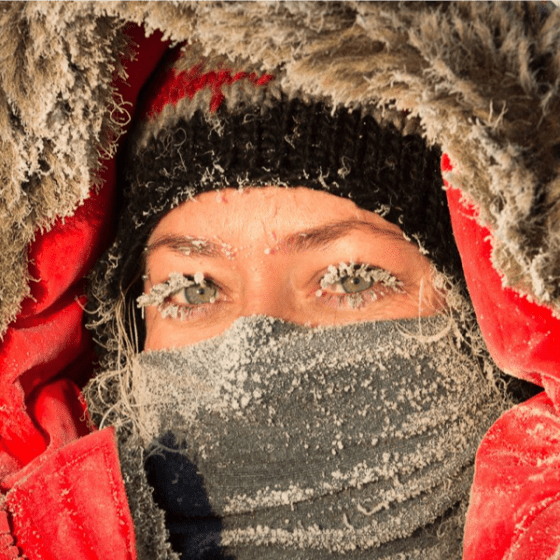
Britney Schmidt is Associate Professor in Earth and Atmospheric Sciences and Astronomy at Cornell University, where she leads the Planetary Habitability and Technology Lab. She develops robotic tools like the Icefin underwater vehicle to study Earth's ice shelves and glaciers, providing insights into climate change and analogs for ocean worlds like Europa. Her research bridges glaciology, planetary science, and astrobiology. Research focuses on ocean world habitability, ice-ocean interactions, and Antarctic climate systems. Fieldwork includes extensive campaigns in Antarctica and the Arctic using robotic explorers. Recent publications explore Europa's habitability, Thwaites Glacier dynamics, microbial communities in hypersaline environments, and planetary analog studies. Technical developments include novel instrumentation for under-ice exploration. Awarded the 2024 Blavatnik National Award for groundbreaking research. Leads multiple international collaborations including NASA's Europa Clipper mission and Thwaites Glacier projects.
Prof. Dr. Dominik Schwarz is a faculty member at the Faculty of Physics , Bielefeld University. His research focuses on Cosmology and Particle Physics , particularly in the areas of Dark Energy , Dark Matter , Cosmological Inflation , and Large-Scale Structure Formation . He contributes to projects like the International LOFAR Telescope Consortium and the SFB-TRR 211 on strongly interacting matter. APART Fellow of Austrian Academy of Sciences Humboldt Fellow CERN Fellow His recent work explores the cosmic dipole anisotropy , axion density perturbations , and multi-wavelength cosmic web mapping . He also advances data science infrastructure through the PUNCH4NFDI consortium.
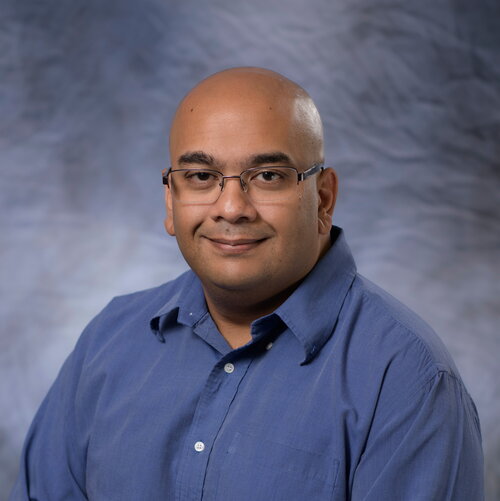
Gautham Narayan is an Associate Professor in the Department of Astronomy at the University of Illinois at Urbana-Champaign (UIUC), with affiliations in Physics and the National Center for Supercomputing Applications (NCSA). He holds roles as Deputy Director for Astrophysics Research at the NSF-Simons SkAI Institute and Deputy Director of the Center for AstroPhysical Surveys. His research focuses on multi-messenger and time-domain astrophysics, cosmology, and machine learning applications in astronomy. Education: PhD in Physics from Harvard University (2013) and BS (Hons) in Physics from Illinois Wesleyan University (2005). His work includes pioneering AI methods for transient detection, leading collaborations like the Young Supernova Experiment (YSE), and developing standards for LSST and WFIRST. He is a Simonyi NSF-CAREER Fellow and Analysis Coordinator for the LSST Dark Energy Science Collaboration. Research interests span cosmology, supernovae, and survey science. Key projects include establishing spectrophotometric standards via HST observations and advancing real-time analysis pipelines like ANTARES. Recent work emphasizes Bayesian models for supernova cosmology and multi-messenger astrophysics. Awards: Simonyi NSF-CAREER Fellowship. Collaborations include DESC, SCiMMA, and the KEGS team. Teaching includes courses on astrophysics and data science, with mentorship of students across undergraduate and graduate levels. Public outreach efforts include Astronomy on Tap events and science communication initiatives.
Matthew J. Graham is a Research Professor of Astronomy at the California Institute of Technology (Caltech), serving as the Project Scientist for the Zwicky Transient Facility (ZTF). His work bridges astronomy, machine learning, and data science, focusing on time-domain sky surveys that produce hundreds of thousands of public transient alerts per night. Previously, he has worked on the Catalina Real-time Transient Survey (CRTS), NOAO DataLab, Virtual Observatory, and Palomar-Quest Digital Sky Survey. Dr. Graham's primary research interests involve applying machine learning and advanced statistical methodologies to astrophysical problems, particularly the variability of quasars and other stochastic time series. His work addresses the unprecedented data volumes generated by 21st-century astronomy while expanding our ability to work with complex information systems beyond simple correlations. His current projects include real-time low latency inferencing via the NSF-funded A3D3 Institute, reinforcement learning for optimizing astrophysical follow-up campaigns, neural differential models for supermassive black hole variability, and functional analysis of multivariate time series. Analysis of Graham's recent publications reveals a strong focus on time-domain astronomy, particularly leveraging the capabilities of the Zwicky Transient Facility. His work spans multiple areas including gravitational wave counterpart identification, active galactic nuclei variability, supernova characterization, and machine learning applications for transient detection. A notable trend is the integration of artificial intelligence techniques to handle the massive data streams from modern sky surveys, enabling real-time analysis and decision-making that would be impossible with traditional methods. Dr. Graham has been instrumental in developing infrastructure for time-domain astronomy, including the alert distribution system for ZTF and data processing pipelines for handling massive transient datasets. His work on the Catalina Real-time Transient Survey established important methodologies for identifying variable and transient sources that continue to influence the field. As Project Scientist for ZTF, Graham leads a major international collaboration involving Caltech, IPAC, and numerous partner institutions worldwide. The facility represents a significant advancement in time-domain astronomy, providing unprecedented coverage of the dynamic sky and enabling discoveries across multiple areas of astrophysics.
Professor Andrew Newsam is a faculty member at Liverpool John Moores University's Astrophysics Research Institute (ARI), where he serves as Professor of Astronomy Education and Engagement since 2012. He has been instrumental in developing the National Schools' Observatory and astronomy distance learning courses, bridging observational astronomy with STEM education initiatives. Education: PhD in Astrophysics from University of Glasgow (1994), BSc in Physics with Computing from University of Warwick (1991) His research spans observational astronomy, high-energy astrophysics, and science education. Recent publications focus on nova remnants (RS Ophiuchi), gamma-ray bright novas (Nova Persei 2018, V392 Persei), microlensing surveys (Angstrom Project), and educational outreach. He has contributed to planetary eclipse studies and interstellar dynamics research. Key trends in his publications include: binary star systems (56% of works), transient phenomena (43%), and educational technology (35%). His citations show strong engagement with nova studies (22% of total citations) and microlensing research (19% of total citations). Scientific Awards: Teaching Fellowship Award for Individual Excellence (2009) Curriculum Innovation Award (2007) Queens Anniversary Prize for Higher and Further Education (2005) As chair of multiple education and outreach panels (2016-2025), he has shaped astronomy policy and public engagement strategies. He received STFC grants for STEM capacity building (2020) and BBSRC funding for citizen science projects (2019).
Kyle Dawson is a Professor of Physics and Astronomy at the University of Utah, where he has been employed since 2009. He currently serves as both a full Professor and Director of Graduate Studies in the Department of Physics and Astronomy, having progressed from Assistant Professor (2008-2015) to Associate Professor (2015-2019) before achieving his current position in 2019. His institutional affiliation places him within the College of Science at the University of Utah, a major research university in the western United States. Dawson earned his BA in Physics from Cornell University in 1998, followed by a PhD in Physics from the University of California, Berkeley in 2004. After completing his doctoral studies, he served as a postdoctoral researcher at the Lawrence Berkeley National Laboratory before joining the University of Utah faculty. His educational background in physics provided the foundation for his transition into observational cosmology, where he has made significant contributions through large-scale spectroscopic surveys. Professor Dawson's research focuses on observational cosmology through large spectroscopic surveys designed to measure the fundamental properties of the universe. He is currently the co-Spokesperson for the Dark Energy Spectroscopic Instrument (DESI), a major cosmological survey that has produced numerous high-impact publications in 2024-2025. Previously, he served as Principal Investigator for the Extended Baryon Oscillation Spectroscopic Survey (eBOSS), which concluded in 2020 with final cosmological measurements. His work centers on measuring baryon acoustic oscillations to constrain cosmic expansion history, dark energy properties, neutrino masses, and to test General Relativity. His research group employs techniques including galaxy clustering analysis, quasar astrophysics, and large-scale structure mapping to address fundamental questions in cosmology. The analysis of Dawson's recent publications reveals a strong focus on extracting cosmological constraints from the DESI survey data. His work spans multiple aspects of cosmological analysis, including baryon acoustic oscillation measurements, full-shape power spectrum analysis, imaging systematics mitigation, and cross-correlation studies with cosmic microwave background data. The publications demonstrate collaborative work with large international teams and contribute to increasingly precise measurements of cosmological parameters, with particular attention to dark energy equation of state, neutrino masses, and potential deviations from General Relativity. Professor Dawson has secured significant research funding throughout his career, including multiple grants from the Department of Energy (DOE), NASA, and the National Science Foundation. His grant portfolio includes leadership roles in major cosmological surveys like DESI and eBOSS, as well as support for postdoctoral researchers and graduate students. His research group has mentored numerous students who have gone on to successful careers in academia, industry, and data science fields. Dawson leads a vibrant research group at the University of Utah focused on cosmological data analysis from large spectroscopic surveys. His current team includes two postdoctoral researchers (Angela Berti and Sarah Eftekharzadeh) and a graduate student (Allyson Brodzeller). The group specializes in galaxy clustering analysis, quasar astrophysics, and machine learning applications to spectroscopic data. The research environment fosters collaboration with international teams working on DESI and related cosmological surveys, providing students with opportunities to engage with cutting-edge cosmological research and large-scale data analysis techniques.
Richard Anantua is an Assistant Professor in the Department of Physics and Astronomy within the College of Sciences at the University of Texas at San Antonio (UTSA), and also serves as an Adjunct Professor at Rice University since 2024. His research group is pioneering Event Horizon Telescope (EHT) science in Texas, focusing on computational and theoretical astrophysics related to black holes and relativistic phenomena. Assistant Professor, UTSA – 2022–Present Adjunct Professor, Rice University – 2024–Present Postdoctoral Fellow, Harvard-Smithsonian Center for Astrophysics – 2019–2021 Postdoctoral Fellow, UC Berkeley – 2016–2019 Education: Ph.D. in Physics – Stanford University M.S. in Physics – Stanford University B.S. in Physics and Philosophy – Yale University B.S. in Economics and Mathematics – Yale University Ed.M. in Education Policy and Management – Harvard University Richard Anantua’s research focuses on computational astrophysics , particularly the modeling of emission near supermassive black holes using general relativistic magnetohydrodynamic (GRMHD) simulations. His work bridges theoretical models with observational data from cutting-edge instruments like the Event Horizon Telescope (EHT) and its next-generation counterpart (ngEHT). Key areas include black hole accretion flows, relativistic jets, plasma physics, and neutrino emission. He has developed methodologies to connect simulation variables—such as electron temperature, magnetic field strength, and current density—to observable signatures across the electromagnetic spectrum. The recent publications from his group reflect a strong trend in high-resolution modeling of black hole environments , with emphasis on M87, Sgr A*, and theoretical constructs like primordial black holes and dark matter alternatives. These works integrate numerical simulations with observational predictions, particularly for EHT and ngEHT capabilities, covering emission morphology, jet stability, plasma composition, and neutrino physics. The interdisciplinary nature of his research spans astrophysics, plasma physics, and computational science. Scientific Engagement and Mentorship: Active mentor of postdoctoral researchers, PhD students, master’s students, and undergraduates at UTSA. Group members regularly present at national conferences such as the American Astronomical Society (AAS) and SCEECS. Supervised master’s thesis on GRMHD emission modeling. Anantua has been involved in major collaborations, including the Event Horizon Telescope Collaboration during his postdoc at Harvard, and continues to lead a vibrant research group at UTSA. His lab focuses on advancing computational tools for black hole imaging and theoretical modeling of extreme astrophysical environments.
Alysson Neves Bessani is an Associate Professor at the Informatics Department of Faculdade de Ciências da Universidade de Lisboa, Portugal, and a member of the LaSIGE research group. His work focuses on distributed systems, Byzantine fault tolerance, and cybersecurity, with significant contributions to blockchain consensus and intrusion-tolerant architectures. Academic Rank: Associate Professor University: Universidade de Lisboa School: Faculdade de Ciências Department: Informatics Department Research Groups: LaSIGE, Navigators Research Interests span distributed systems design, Byzantine fault tolerance, adaptive consensus protocols, and secure multi-cloud storage. His work bridges theoretical foundations with practical implementations like the BFT-SMaRt library and the Vawlt startup. Scientific Awards include multiple Test-of-Time Awards (DSN'24, DSN'21), IBM Faculty Award (2017), and Best Student Paper at Middleware'19. He has advised numerous PhD and Master’s students, contributing to advancements in fault-tolerant systems. Publications (15 most recent) reveal trends in Byzantine consensus optimization, blockchain integration, and AI-driven threat detection. His interdisciplinary work combines distributed computing with genomics and IoT security, reflecting a broad impact across computer science.
Aprajita Hajela is a Postdoctoral Researcher at the Niels Bohr Institute, University of Copenhagen, working within the DARK Cosmology Centre. Her research focuses on high-energy astrophysical transients, particularly tidal disruption events and supernovae, using multi-wavelength observations spanning X-ray, optical, and radio regimes. Her research portfolio centers on time-domain astrophysics, with primary emphasis on tidal disruption events where stars are destroyed by supermassive black holes, relativistic jet formation, and gravitational wave counterparts. She investigates phenomena such as quasi-periodic X-ray eruptions in TDEs, late-time evolution of cosmic transients, and Hubble constant measurements through standard sirens. Her work integrates data from major observatories to unravel black hole physics and explosive stellar phenomena. Dr. Hajela is embedded within the DARK Cosmology Centre, a premier research environment at the Niels Bohr Institute dedicated to observational and theoretical studies of dark matter, dark energy, and cosmic evolution. This affiliation provides critical infrastructure for her investigations into transient cosmic events and their cosmological implications.
Elaina Hyde is an Associate Professor in the Department of Physics and Astronomy at York University, serving as Director of the York Allan I. Carswell Observatory. She is affiliated with the Faculty of Science and eligible to supervise graduate students in the Physics and Astronomy program. Her research focuses on galactic archaeology, galaxy formation, and data science for astrophysics, leveraging cloud computing and machine learning. She has contributed to major initiatives like the GALAH survey and studies of the Sagittarius stream. Her work combines observational astronomy with technical leadership in telescope operations and public outreach. Hyde is also a certified Google Cloud Trainer and Engineer, integrating industry-level data science practices into academic and educational contexts. Education & Professional Background : While specific educational details are not listed, her roles indicate advanced expertise in astrophysics and data science. She has held technical and leadership positions in telescope operations and academic observatories. Research Interests : Hyde's work bridges computational and experimental astrophysics, emphasizing: Galactic archaeology via chemical and kinematic analysis of stellar populations Data-driven approaches to galaxy formation modeling Development of automated spectroscopic pipelines (e.g., GALAH survey) Machine learning applications for spectral classification and dimensionality reduction (e.g., t-SNE techniques) Astronomy education through public telescope access and interdisciplinary training Publications Overview : Her recent work focuses on the GALAH survey's chemical and kinematic inventory of the solar neighborhood, Sagittarius stream dynamics, and machine learning-enhanced spectral analysis. Key themes include stellar abundance trends in open clusters, tidal debris identification, and multi-survey data integration with Gaia. Labs & Teams : Leads the York Allan I. Carswell Observatory, fostering observational astronomy research and public engagement. Collaborates with global telescope networks and industry partners in cloud computing.
Henrik Nils Latter is a Professor at the Department of Applied Mathematics and Theoretical Physics (DAMTP), University of Cambridge, and a Fellow of Girton College. His research focuses on astrophysical fluid dynamics, particularly in protoplanetary disks, Saturn's rings, and galaxy cluster plasmas. Doctorate in Astrophysics (2006), University of Cambridge Master of Science (2003), University of Sydney Bachelor of Arts and Science (2000), University of Sydney Latter's research spans instabilities, waves, and turbulence in astrophysical disks. Key areas include the vertical shear instability (VSI) in protoplanetary disks, gravitoturbulence, and magnetothermal instability (MTI) in galaxy clusters. His work combines analytical methods with large-scale numerical simulations. His recent publications (2022-2025) address topics such as streaming instability in debris disks, thermal hysteresis in planetary rings , and MHD dynamos in gravitoturbulent systems . These studies often appear in journals like MNRAS and A&A, reflecting his expertise in disk dynamics and magnetic plasma behavior. Scientific Awards: Adams Prize Latter has supervised numerous PhD and Master's students on disk turbulence, planetary ring instabilities, and magnetic field dynamics. He contributes to outreach through the Faculty of Mathematics' Astrophysical Fluid Dynamics group and maintains active collaborations in computational astrophysics.
Katherine Freese is the Jeff & Gail Endowed Chair of Physics at the University of Texas at Austin and a Guest Professor at Stockholm University. She previously held the George E. Uhlenbeck Professor of Physics position at the University of Michigan until her move to Texas in 2019. Freese is renowned for her work in theoretical cosmology and astroparticle physics, focusing on dark matter, dark energy, and models of the early universe. She received a $13M grant (2014–2024) for cosmoparticle physics research at Stockholm University and served as Director of NORDITA (Nordic Institute for Theoretical Physics) from 2014 to 2016. Education: B.A. in Physics from Princeton University (1977), M.A. from Columbia University (1981), and Ph.D. from the University of Chicago (1984). She held postdoctoral positions at Harvard-Smithsonian Center for Astrophysics, the Institute for Theoretical Physics (Santa Barbara), and a Presidential Fellowship at UC Berkeley. Her career milestones include becoming the first woman on the physics faculty at the University of Michigan and being elected to the National Academy of Sciences (2020). Research Interests: Dark Matter and Dark Energy detection Dark Stars (first stars powered by dark matter annihilation) Primordial Black Hole formation Early universe inflationary models cosmic microwave background (CMB) experiments Paleo-detector methods using ancient minerals Publications Trends: Her recent work emphasizes observational cosmology (e.g., JWST and SPIDER experiments), dark matter detection strategies, and redefining inflationary scenarios. She has explored novel stellar phenomena like dark stars as potential seeds for supermassive black holes, and proposed interdisciplinary approaches like using minerals as paleo-detectors for neutrinos and dark matter. Awards: 2021: University of Chicago Alumni Professional Achievement Award 2019: Lilienfeld Prize for bridging cosmology and particle physics 2012: Honorary Doctorate from Stockholm University Simons Foundation Fellowship (2012) APS Fellow Advising & Grants: Supervised over 20 students and postdocs, many now leading roles in academia and industry. Grants include NSF Presidential Young Investigator Award (1990–1995) and a decade-long Stockholm University grant. Her research teams collaborate on CMB projects (Simons Observatory, LiteBIRD) and dark matter searches (DAMA/LIBRA, IceCube). She co-leads global initiatives like the Cosmic Microwave Background collaboration and paleo-detector networks. Labs & Teams: Active in the Physics Randall Lab (formerly at Michigan), the Weinberg Institute for Theoretical Physics , and the Nordita institute. Collaborates with SPIDER balloon teams and the Simons Observatory for CMB studies. Also involved in James Webb Space Telescope (JWST) analyses and mineral-based detection projects.
Laura S. Storch is an Assistant Professor of Mathematics at Bates College, specializing in theoretical ecology and applied mathematics. Her research focuses on spatial pattern change, ecological transitions, and population dynamics using topological data analysis. She holds a PhD in Applied Mathematics from the University of New Hampshire and has conducted postdoctoral research at William & Mary and Oregon State University. Laura collaborates with faculty at William & Mary to co-advise undergraduate summer research projects in mathematical ecology. Her work bridges mathematics and ecology, addressing critical transitions, pattern formation, and population sustainability in complex systems. Her research interests include chaotic dynamical systems, mathematical ecology, and topological methods for analyzing ecological systems. Laura emphasizes applied mathematics in understanding ecological phenomena such as oyster population dynamics in Florida estuaries and spatial gradients affecting species productivity. She is currently on leave for the fall 2025 semester. Though no scientific awards are explicitly mentioned, her contributions to theoretical ecology and interdisciplinary collaboration highlight her scholarly impact. Laura’s advising efforts reflect her commitment to mentoring students in mathematical research, particularly in ecology-related projects.
Robb W Lindgren is a Professor at the University of Illinois at Urbana-Champaign with appointments in Curriculum and Instruction and Educational Psychology . He serves as Associate Dean for Research in the College of Education and holds affiliations with the National Center for Supercomputing Applications (NCSA) , Beckman Institute for Advanced Science and Technology , and Center for Social & Behavioral Science . His research focuses on Embodied learning through gesture and physical interaction Design of mixed/augmented reality educational systems Collaborative STEM education with immersive technologies Recent publications highlight his work in: Biochemistry simulations using haptic feedback (2024) VR-based spatial reasoning for astronomy education (2023) Metaverse learning environments with theory-driven design (2023) Climate change simulations with full-body tracking (2022) His research group explores how physical movement and gestural interfaces shape scientific understanding and conceptual change. Key collaborations include work with Jee Hyang Park , Jun Kang , and Thomas Kim , focusing on Gesture-mediated collaboration XR learning analytics Agency in embodied design