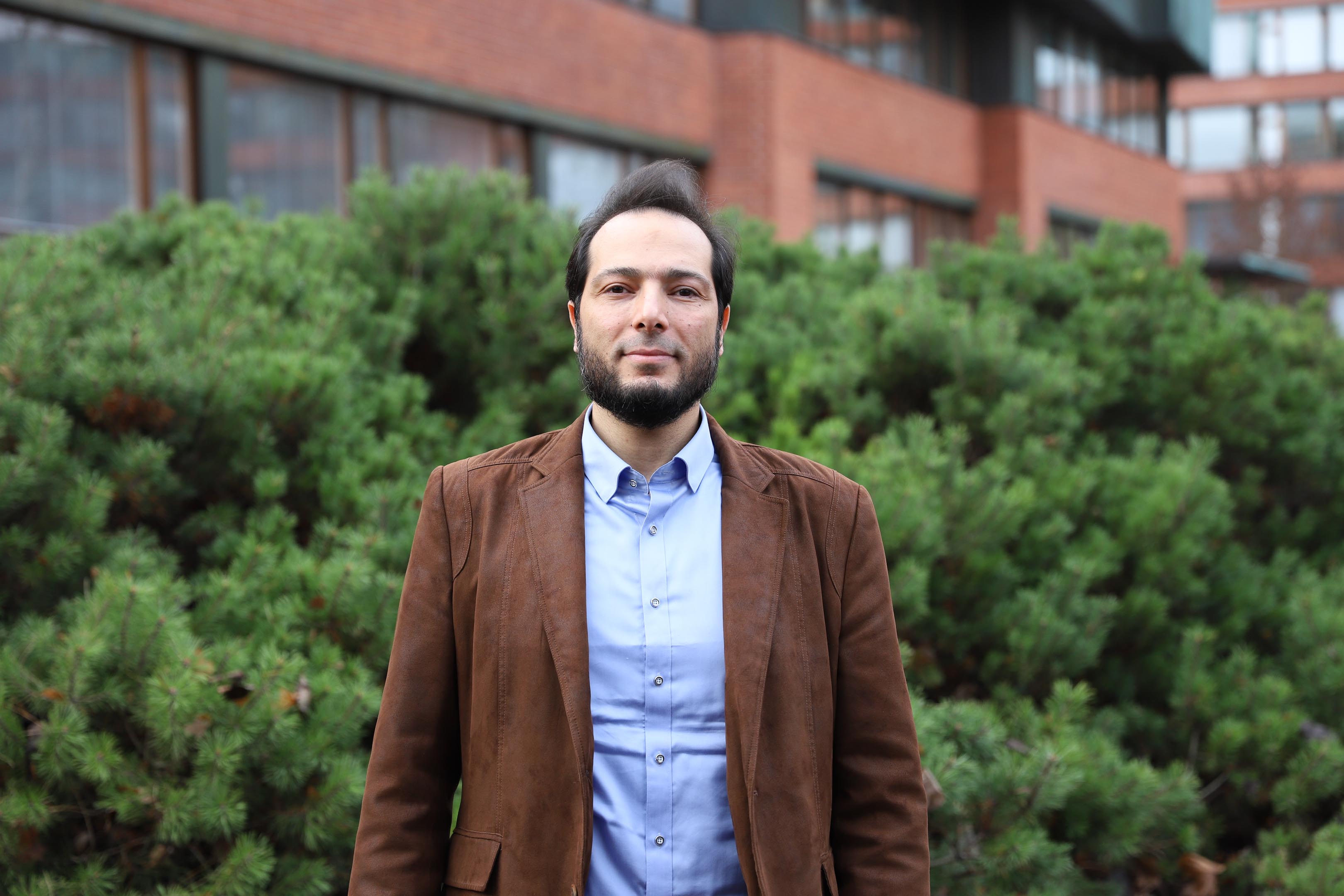
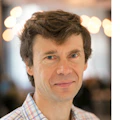
Mohamed Noureldin is an Assistant Professor at the Department of Civil Engineering, Aalto University , Finland, with prior academic roles at Sungkyunkwan University, South Korea (2015–2022). His expertise lies in integrating Artificial Intelligence (AI) with Structural Health Monitoring (SHM) , Structural Digital Twin , Predictive Maintenance , and Seismic Retrofitting . Research Focus : AI-powered sustainable structural design, smart retrofitting, predictive maintenance, structural material innovation, and next-generation performance-based seismic/wind design. Industrial Experience : 20+ years in offshore/onshore structural engineering (Hyundai Heavy Industries, Samsung Engineering, Arab-Swiss Engineering Company, Zuhair Fayez Partnership). Teaching : Courses in structural analysis, seismic design, dynamics, and reinforced concrete at Aalto and Sungkyunkwan Universities. Laboratory : Leads the Structural Design AI Lab (SDAI), focusing on AI-driven resilient infrastructure. Contact : mohamed.noureldin@aalto.fi , +358504544861. His publications explore cutting-edge applications of AI, ML, and DL in seismic retrofitting, structural durability, soil stabilization, and hybrid damping systems. Collaborative work emphasizes life-cycle cost assessment and augmented reality for predictive maintenance.
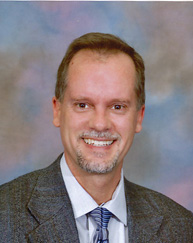
Paolo Gardoni is the Alfredo H. Ang Family Professor and an Excellence Faculty Scholar in the Department of Civil and Environmental Engineering at the University of Illinois Urbana-Champaign, with additional professorial appointments in Industrial & Enterprise Systems Engineering and Biomedical & Translational Sciences. He also serves as Director of the MAE Center and Editor-in-Chief of Reliability Engineering & System Safety. Education Ph.D. in Civil Engineering, University of California, Berkeley (2002) M.A. in Statistics, University of California, Berkeley (2001) M.Eng. in Structural Engineering, University of Tokyo (1997) Laurea (BS+MS equivalent) in Structural Engineering, Politecnico di Milano (1997) Research Interests Gardoni’s scholarship integrates probabilistic methods with large-scale infrastructure systems to advance reliability, risk, and life-cycle analysis. His work quantifies the performance of deteriorating systems under natural and anthropogenic hazards, models societal impacts of disasters, and develops decision frameworks for sustainable and resilient infrastructure. He also examines ethical, social, and legal dimensions of risk, and investigates optimal strategies for hazard mitigation, disaster recovery, and climate adaptation. Across more than 250 refereed journal papers, he has advanced sub-fields ranging from probabilistic mechanics and earthquake engineering to catastrophe bond pricing and engineering ethics, leveraging tools such as stochastic differential equations, Bayesian networks, and physics-informed machine learning. Awards & Honors Alfredo Ang Award on Risk Analysis and Management of Civil Infrastructure (ASCE, 2021) Best Paper Awards in ASCE Journal of Sustainable Water in the Built Environment (2019) and Geotechnical Research (2018 Telford Premium Prize) Fellowships and named professorships: Alfredo H. Ang Family Professor, Excellence Faculty Scholar, and courtesy or honorary professorships at Tsinghua, IIT Guwahati, Tongji, Jianghan, and Loughborough universities. Research Leadership & Funding Gardoni has secured over $58 million in research funding from NSF, DHS, NIST, USAID, Qatar National Research Fund, and other agencies. He directs the MAE Center—formerly an NSF Engineering Research Center—focused on multi-hazard engineering approaches, and is Editor-in-Chief of Reliability Engineering & System Safety (Elsevier, IF 9.4). He founded and formerly led the journal Sustainable and Resilient Infrastructure (Taylor & Francis) and serves on editorial boards of nine additional journals. Advising & Mentorship He has graduated 27 PhD and 35 Master’s students, many of whom now hold faculty positions worldwide. His group maintains an active pipeline of doctoral and post-doctoral researchers working on resilience analytics, infrastructure monitoring, and risk-informed decision-making. Laboratories & Collaborations He leads the MAE Center and is affiliated with the Critical Infrastructure Resilience Institute (CIRI) and the Biomedical and Translational Sciences group. International collaborations span the UK (Loughborough), India (IIT Guwahati), and China (Tsinghua, Tongji, Jianghan), fostering cross-disciplinary research in reliability and resilience engineering.
Dr. Arpit Dua is an Assistant Professor in the Department of Physics at Virginia Tech. Previously, he held positions including a joint Simons-IQIM postdoc at Caltech under Xie Chen and a PhD at Yale University under Meng Cheng and Liang Jiang. His research focuses on theoretical quantum information systems, with emphasis on quantum error correction, topological order, and integrating machine learning principles into physics frameworks. Education: PhD in Physics from Yale University, Postdoctoral research at Caltech. Research Interests: Quantum error correction (developing novel codes using conventional and machine learning methods), thermalization in topological systems, self-correcting models, and applying physics-based insights to AI architecture design. His current projects explore fault-tolerant protocols, fracton orders, and Floquet codes. Publications reflect contributions to topological codes, subsystem symmetries, and fracton physics. His work bridges quantum information theory with condensed matter physics.
Anne BOUTIN is a Research Director at the French National Center for Scientific Research (CNRS) and Professor at the École Normale Supérieure (ENS) in Paris, France. She leads the Department of Chemistry at ENS, focusing on the thermodynamics of confined fluids and molecular simulations of porous materials like metal-organic frameworks (MIL-53, ZIF-8) and zeolites. Education: Habilitation (1999), PhD in Chemical Physics (1992), Graduate of École Normale Supérieure (1992), MSc (1990) – all from University of Paris XI, Orsay. Positions: CNRS Research Fellow (1994–2009, University of Paris XI; 2009–present, ENS), Visiting Scientist at UC Santa Barbara (1999), Postdoctoral at Imperial College London (1993–1994). Research spans thermodynamic modeling of adsorption-induced structural transitions, polarizable force fields for charged materials, fluid dynamics in nanopores, and stability analysis of flexible frameworks. Google Scholar highlights recent work on electrolyte intrusion (2023) and defect impacts in zeolites (2023). Publications emphasize computational approaches to water confinement , gas separation , and material flexibility . Her 41+ peer-reviewed articles reflect expertise in Monte Carlo , molecular dynamics , and force field development . Awards: Nathalie Demassieux PhD Award (1993) CNRS Bronze Medal (1999) Legion of Honor (2017) Teaching: Statistical thermodynamics. Students: Supervised 17 PhD/postdoc directions.
Amilcare Porporato is the Thomas J. Wu '94 Professor of Civil and Environmental Engineering at Princeton University, with joint appointment at High Meadows Environmental Institute. His research integrates hydrology, ecology, and thermodynamics to study soil-water interactions and sustainable resource management. Education includes: Ph.D. Polytechnic of Milan (1996) M.S. Civil Engineering, Polytechnic of Milan (1992) Research explores nonlinear hydrologic systems, soil moisture dynamics, ecohydrology, and environmental complexity using theoretical and experimental approaches. His work advances understanding of water-biota interactions across scales from pore-level processes to landscape evolution. Honors and Awards: Hydrologic Sciences Award, AGU Borland Lecturer American Geophysical Union Fellow Inaugural Landolt Chair, EPFL Teaches courses on Environmental Thermodynamics (ENV 385/CEE 385) and Ecohydrology (CEE 587/ENV 587).
Na Du is an Assistant Professor in the Department of Informatics and Networked Systems at the University of Pittsburgh's School of Computing and Information. She holds a PhD in Industrial & Operations Engineering from the University of Michigan (2021) and a Graduate Certificate in Data Science. Her research focuses on human factors in smart cities, human-centered computing, and user experience design. She is affiliated with the Intelligent Systems Program, Pitt Cyber, and the Center for Governance and Markets. Education: PhD in Industrial & Operations Engineering (University of Michigan, 2021); Undergraduate in Psychology (Zhejiang University). Research emphasizes explainable AI, human-AI teaming, and smart technologies. Recent grants include funding from Honda Research Institute and Pitt Cyber Accelerator for projects on emotions in Human-AI interaction and Metaverse privacy awareness. Her work has been recognized with awards like the HFES Best Paper Award and the IOE Outstanding Student Award. Advising includes PhD students and researchers in human factors and UX design. The HAT Lab under her leadership explores interdisciplinary challenges in human-computer interaction and smart systems.
Mary Silber is a Professor in the Department of Statistics and the College at the University of Chicago, and serves on the Executive Committee of the Committee on Computational and Applied Mathematics (CCAM). Her research focuses on dynamical systems and bifurcation theory, with applications to climate science, ecological dynamics, and pattern formation. She investigates tipping points in climate systems and self-organized vegetation patterns in drylands, exploring mathematical mechanisms behind abrupt transitions and noise-driven instability. Her work bridges theoretical mathematics with real-world phenomena, including Arctic sea ice melt processes and feedback mechanisms in ecosystems. Notable grants include a $50M interdisciplinary initiative between Northwestern and UChicago for life sciences data science and a collaborative Institute for Foundational Data Science. Silber’s contributions span bifurcation theory, spatio-temporal chaos, and control of unstable dynamical systems, with a focus on symmetry-breaking and model reduction techniques. Her recent research emphasizes resilience in dryland ecosystems under climate variability and the role of percolation thresholds in Arctic melt pond dynamics. Despite no formal student listings, her work is supported by interdisciplinary collaborations and federal grants in applied mathematics and environmental science.
Dr. Primoz Skraba is a Professor in Applied and Computational Topology at the School of Mathematical Sciences, Queen Mary University of London. As Deputy Head of the Centre for Probability, Statistics and Data Science, he bridges theoretical topology with practical applications in data analysis, machine learning, and optimization. Education : PhD in Electrical Engineering from Stanford University (2009) Prior Roles : Positions at INRIA, France; Jozef Stefan Institute, Slovenia; University of Primorska; University of Nova Gorica His research focuses on applying topological methods to analyze complex data. Key areas include: Stability of persistence diagrams for quantitative control in finite sampling Variants of persistence (zig-zag, robustness, multiparameter) Algorithmic Complexity in computational topology Stochastic Topology for random geometric models (Poisson, Boolean) Recent publications emphasize persistent homology in random geometric complexes, universality theorems, and integrating topological methods into machine learning. He received grants from the Leverhulme Trust, EPSRC, and Alan Turing Institute for projects on topological universality and AI foundations. His advisee Gabryel Mason-Williams explores wireless sensor network applications of homology.
John D. Murray is the Gregg L. Engles Associate Professor of Psychological and Brain Sciences at Dartmouth College and an Adjunct Associate Professor of Psychiatry at Yale School of Medicine. He holds a PhD in Physics from Yale University (2013) and a BS in Physics and Mathematics from Yale (2006). His research focuses on computational neuroscience and computational psychiatry, with secondary appointments in Physics and Neuroscience at Yale until 2023. His work integrates computational modeling, neuroimaging, and systems neuroscience to study decision-making processes, cortical organization, and psychiatric disorders. Collaborators include prominent researchers like Dr. John Krystal and Dr. Anticevic. Research interests include hierarchical brain organization, neuroimaging analysis techniques, and pharmacological effects on neural circuits. His lab (Murray Lab) develops computational tools like PsychRNN for cognitive task modeling. Notable contributions include linking transcriptomic data to neuroimaging patterns and modeling LSD’s effects on brain topography. He has been featured in YaleNews and Nature Communications for innovations in mapping mental illness variability and neural circuit dynamics. Grants and collaborations span translational neuroscience, addiction, and PTSD research through partnerships with Yale’s Center for Biomedical Data Science and VA National Center for PTSD. His interdisciplinary approach bridges physics, computer science, and clinical psychiatry to advance understanding of brain function and dysfunction.
Daniel M. Kane is a Professor at the University of California, San Diego (UCSD), holding a joint appointment in the Department of Mathematics and the Department of Computer Science and Engineering (CSE). His research spans mathematics and theoretical computer science, with a focus on number theory, combinatorics, complexity theory, and computational statistics. He earned a Ph.D. in Mathematics from Harvard University (2011) and dual BS degrees in Mathematics with Computer Science and Physics from MIT (2007). Prior to UCSD, he was a postdoctoral researcher at Stanford University (2011–2014) on an NSF fellowship. His research interests include robust statistics, machine learning, polynomial threshold functions, and algorithmic methods for high-dimensional data. Notable achievements include co-authoring the book Algorithmic High-Dimensional Robust Statistics (Cambridge University Press, 2023) and receiving the Best Paper Award at the Conference on Computational Complexity (2013), as well as gold medals at the International Mathematical Olympiad (2002 and 2003). Current teaching includes courses such as Math 96 (Putnam Seminar), Math 154 (Graph Theory), CSE 101 (Algorithms), and CSE 203A (Randomized Algorithms). He has consulted for companies like CASPER Labs and AIble, and his work extends to cryptographic protocols, including quantum money schemes based on quaternion algebras. Key contributions include breakthroughs in robust mean estimation, list-decodable learning, and the development of efficient algorithms for statistical problems. His research often bridges foundational theory with practical applications in machine learning and data analysis.
Dr. Jean-Christophe Nave is an Associate Professor in the Department of Mathematics and Statistics at McGill University, specializing in applied mathematics, numerical analysis, and computational methods. His research focuses on numerical methods for partial differential equations, fluid mechanics, interface problems, and computer graphics. He holds a PhD from UCSB (2004) and has held academic positions at MIT and McGill since 2005. Currently, he serves on committees such as the Steering Committee of the Institut des Sciences Mathematiques and the CRM Applied Mathematics Lab. His educational background includes a PhD under Professors Xu-Dong Liu and Sanjoy Banerjee. Key research areas include level set methods, fluid-structure interaction, and invariant numerical methods. Notable works include the Correction Function Method for interface problems and the Characteristic Mapping Method for advection problems. Nave’s publications span topics like Poisson equations with discontinuous coefficients, fluid dynamics simulations, and high-order numerical schemes. He has advised numerous graduate and undergraduate students, contributing to their research in applied mathematics and computational science. His work bridges theoretical rigor and practical applications in engineering and physics. He teaches advanced courses such as Numerical Analysis I/II and Computational Methods in Applied Mathematics. His research group collaborates on projects involving fluid dynamics, elasticity, and geometric algorithms, with a focus on developing robust numerical tools for complex systems.
Aram Harrow is a Professor of Physics at the Massachusetts Institute of Technology (MIT) , affiliated with the MIT Center for Theoretical Physics and MIT Center for Quantum Engineering . He focuses on quantum information science and quantum algorithms , with additional interests in representation theory and optimization . His recent work explores quantum computing applications in chemical physics and statistical mechanics . Undergraduate and graduate degrees in Physics at MIT Faculty positions: MIT (2013-present), University of Washington (2010-12), University of Bristol (2005-10) Research Interests: His work bridges quantum information theory and many-body physics , including: Quantum algorithm design for chemistry and optimization Quantum circuit complexity and t-designs Entanglement dynamics in quantum systems Quantum-classical hybrid computing models Key Publications: Recent articles demonstrate quantum speedups for biomolecular free energy calculations , Hamiltonian simulation , and jet clustering algorithms . His research combines quantum complexity theory with practical implementations on near-term quantum devices. Scientific Awards: 2023 Simons Investigator 2018 APS Bennett Award 2017 IEEE Best Paper Award 2016 Kavli Frontiers Fellow Mentorship: He advises current PhD students Shankar Balasubramanian , Angus Lowe , and Norah Tan , with 12 former advisees including Anand Natarajan and Saeed Mehraban . His 2026 recruitment seeks one new graduate student.
Ashli Owen-Smith is a behavioral scientist affiliated with the School of Public Health at Georgia State University , where her research focuses on mental health disparities, suicide prevention, and integrative/complementary approaches for complex mental-physical health conditions. She works with underserved populations including refugees/immigrants, incarcerated individuals, and LGBTQ+ communities through community-based participatory research and mixed-methods frameworks. Her current projects are funded by CDC , DBHDD , and DPH . Education: Ph.D. in Behavioral Sciences (Emory, 2009), S.M. in Public Health (Harvard, 2005), B.A. in Psychology (Smith College, 2001) Her research spans mental health , trauma , suicide prevention , and mindfulness-based interventions . Recent work examines telehealth adaptations for chronic pain and mental health, vaccine hesitancy in refugee communities, and social determinants of suicide . She leads studies on gender-affirming care and health disparities in LGBTQ+ populations. Key article trends include epidemiological analysis of suicide risk factors, COVID-19 impacts on mental health, ICD-10 coding for autism, and complementary medicine in trauma recovery. Subfields span telehealth , health equity , mental-physical comorbidity , and community engagement . Students she has mentored include C.A. Scarlett , T. Griner , and M.M. Sesay . Her work integrates public health policy , clinical research , and health systems analysis .
Alexei Kitaev is the Ronald and Maxine Linde Professor of Theoretical Physics and Mathematics at the California Institute of Technology (Caltech). His research focuses on quantum computation, topological quantum phases, anyons, topological insulators and superconductors, and the black hole information paradox. He has pioneered the concept of topological quantum computation, where quantum information is protected through topological properties of many-body systems. His recent publications explore quantum error correction, scrambling dynamics, and holographic principles in SYK-like models, reflecting his interdisciplinary impact on quantum physics, computer science, and condensed matter. His work on the Sachdev-Ye-Kitaev model has advanced understanding of quantum chaos and gravitational phenomena. Kitaev has received numerous accolades, including the MacArthur Award (2008), Breakthrough Prize in Fundamental Physics (2012), Dirac Medal (2015), and Oliver Buckley Condensed Matter Prize (2017). He has taught advanced courses such as 'Quantum Computation' and 'Advanced Condensed-Matter Physics' at Caltech. Scientific Awards: MacArthur Award (2008) Breakthrough Prize in Fundamental Physics (2012) Dirac Medal (2015) Oliver Buckley Condensed Matter Prize (2017)
Steven L. Manly is a Professor of Physics at the University of Rochester within the College of Arts, Sciences and Engineering. He has been affiliated with the University of Rochester since 1998, following a decade at Yale University as both a postdoc and faculty member. Professor Manly received his BA in chemistry, mathematics, and physics from Pfeiffer College in 1982 and his PhD in experimental high-energy physics from Columbia University in 1989 under Charles Baltay. His research spans high energy, nuclear, and gravitational physics, with a current focus on neutrino physics across multiple major experiments. His primary research interests include neutrino interactions and oscillations, with significant contributions to the T2K experiment (for which he shared the 2016 Breakthrough Prize in Fundamental Physics), the MINERvA experiment at Fermilab, and the Deep Underground Neutrino Experiment (DUNE). His work aims to understand neutrino properties, measure oscillation parameters, and investigate potential connections to matter-antimatter asymmetry in the universe. The recent publications reflect a strong focus on neutrino cross-section measurements, detector calibration techniques, and data analysis methods for the T2K and DUNE experiments. His research group contributes significantly to advancing our understanding of neutrino properties and interactions through precision measurements. NY State Professor of the Year (2003) Mercer Brugler Distinguished Teaching Professor (2002-2005) American Association of Physics Teachers (AAPT) Award for Excellence in Undergraduate Teaching (2007) Breakthrough Prize in Fundamental Physics (2016, shared as member of T2K) Professor Manly has authored or co-authored numerous publications in leading physics journals, with recent work focusing on neutrino interaction measurements, detector development, and data analysis techniques. His research has involved collaborations with major international facilities including Fermilab, J-PARC in Japan, and Brookhaven National Laboratory. While specific grant information isn't detailed in the provided text, his participation in large-scale international collaborations suggests significant research funding support.